

Does Wound Debridement Hurt? Pain Control & What To Expect
If you or a loved one has been told that a wound needs debridement, one of the first questions that comes to mind is: does wound debridement hurt? It’s a fair concern, especially for patients already dealing with the discomfort of a chronic or non-healing wound. The short answer is that pain during debridement is manageable, and in many cases, minimal, thanks to modern pain control techniques.
At Philadelphia Wound Care, our physician-led mobile practice performs debridement procedures at the patient’s bedside, whether that’s a private home, skilled nursing facility, or assisted living community. Dr. Lee, a licensed General Surgeon, routinely manages wound debridement for patients who can’t easily travel to a clinic, and pain management is built into every step of the process.
This article breaks down what actually happens during debridement, how pain is controlled before and during the procedure, and what recovery feels like afterward. Whether you’re a patient preparing for your first debridement or a caregiver trying to understand the process, you’ll leave with a clear picture of what to expect, and why it’s far less intimidating than it sounds.
Why wound debridement can hurt for some people
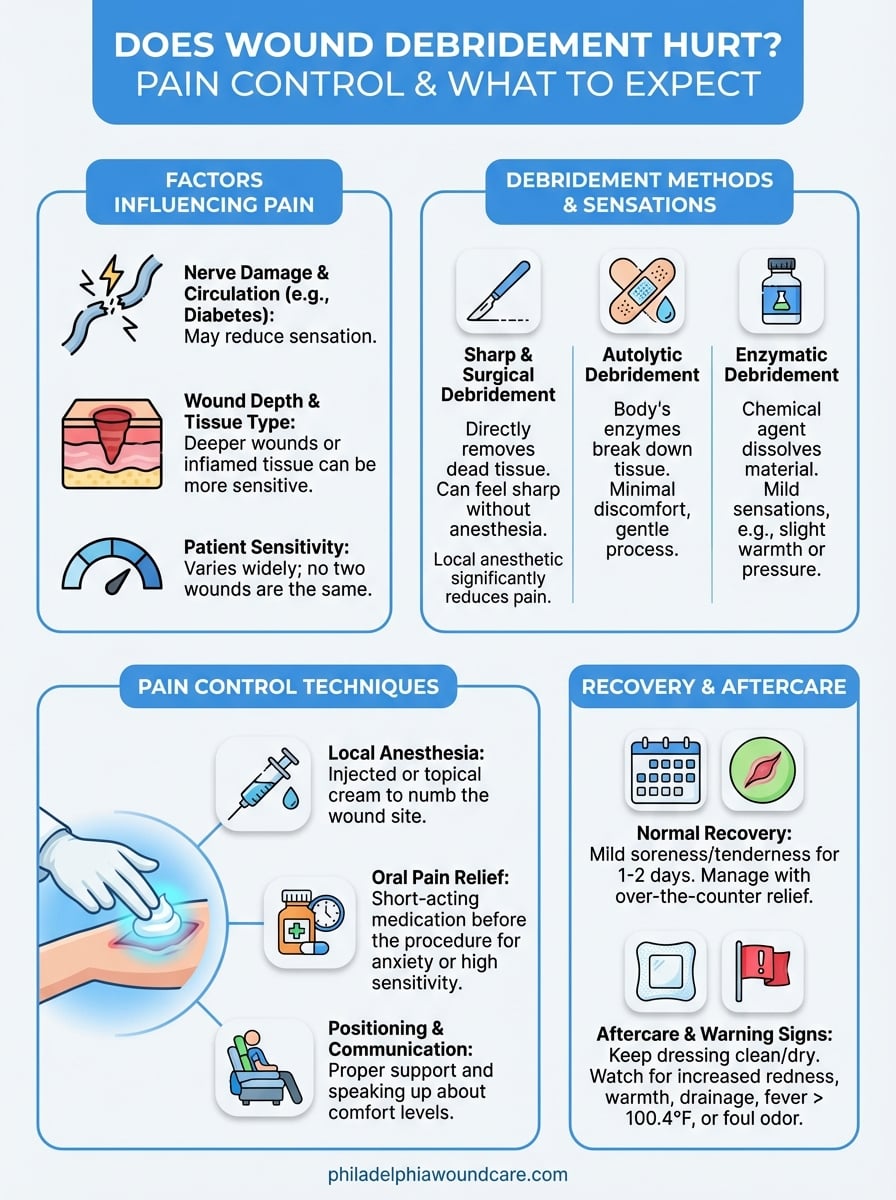
Pain during debridement depends on several factors, and no two wounds are exactly the same. Whether debridement is uncomfortable comes down to the type of tissue involved, the depth of the wound, and the sensitivity of the nerves surrounding it. Some patients feel significant discomfort, while others feel very little, particularly when circulation to the area is already reduced.
The role of nerve damage and circulation
Many patients asking "does wound debridement hurt" are dealing with conditions like diabetes or peripheral vascular disease, which can actually reduce pain sensation in the affected limb. When blood flow is poor and nerves are damaged, the tissue around a wound becomes less sensitive. That might sound like good news, but it means these patients often don’t feel the warning pain that signals a wound is getting worse in the first place.
Reduced sensation in a wound site doesn’t mean debridement is pain-free for everyone; sensation levels vary widely even within the same patient.
For patients with intact nerve function, debridement of deeper or inflamed tissue can register as sharp or stinging, especially if the wound extends into tissue that still has active blood supply and nerve coverage.
Why wound characteristics matter
The size, depth, and condition of the wound all directly influence how much discomfort you’ll feel. A shallow surface wound with clean edges typically involves far less sensation than a deep pressure ulcer with necrotic tissue pulling against surrounding healthy skin. Infected wounds also tend to be more inflamed, which amplifies sensitivity in the tissue around the wound bed. Your clinician will assess all of these factors before starting the procedure and adjust pain management accordingly.
Types of debridement and what they feel like
Understanding whether does wound debridement hurt depends heavily on which method your clinician uses. Different debridement techniques interact with tissue in distinct ways, and each produces a different level of sensation during and after treatment.
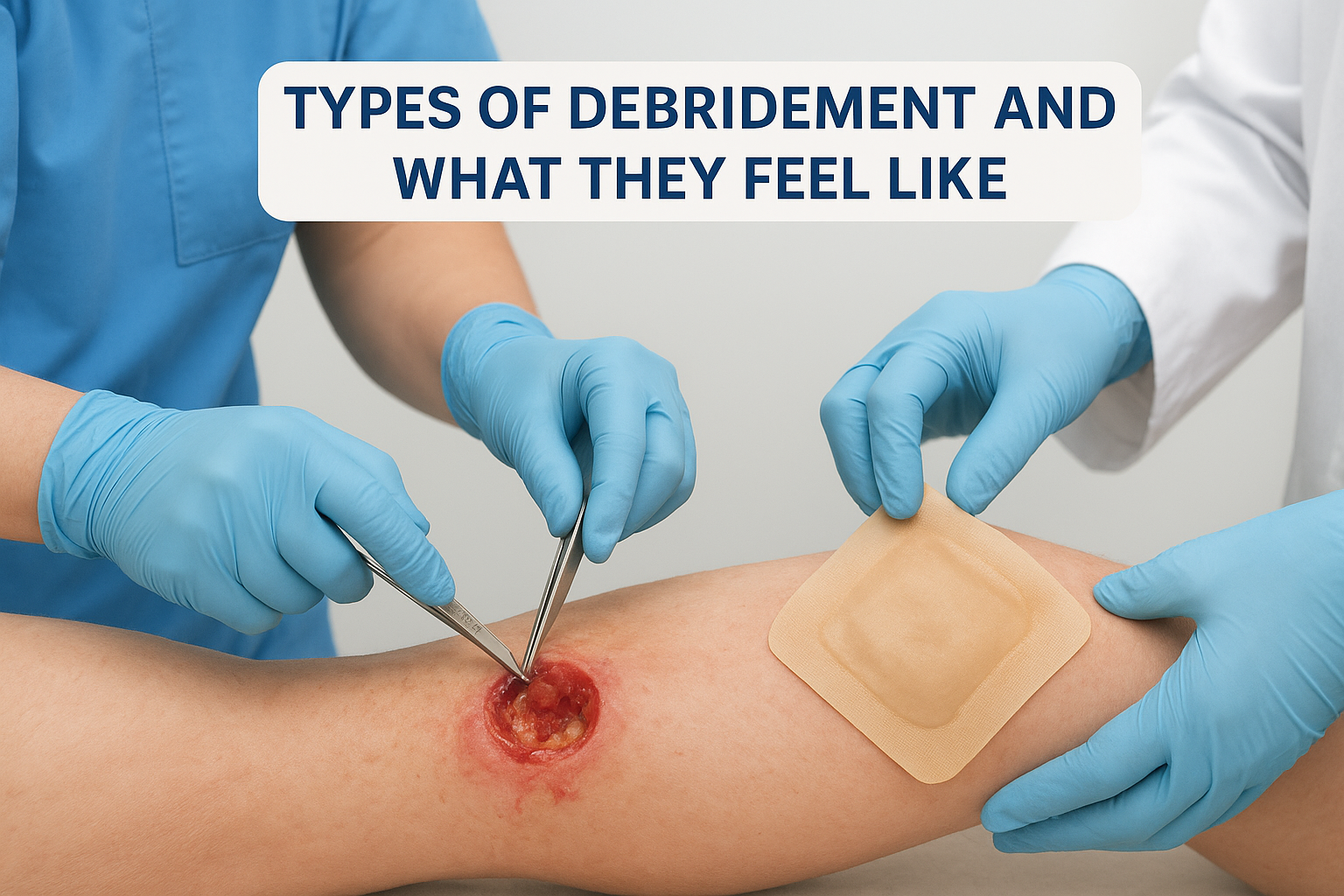
Sharp and surgical debridement
Sharp debridement involves a clinician using a scalpel or surgical scissors to physically remove dead or infected tissue from the wound bed. This is the most direct method, and without local anesthesia, it can feel sharp or stinging, particularly near tissue that still has an active blood supply. Your clinician will apply a topical or injected local anesthetic before starting, which significantly reduces what you feel during the procedure itself.
Sharp debridement on a properly anesthetized wound is far more tolerable than most patients expect before their first treatment.
Autolytic and enzymatic debridement
These methods work more gently. Autolytic debridement uses moisture-retaining dressings to let your body’s own enzymes break down dead tissue over time, which involves minimal discomfort. Enzymatic debridement applies a chemical agent directly to the wound to soften and dissolve necrotic material. Both approaches tend to produce only mild sensations, such as slight warmth or pressure, making them a practical choice for patients with lower pain tolerance or fragile surrounding skin.
How clinicians control pain during debridement
One of the most important things to understand when asking does wound debridement hurt is that clinicians have multiple tools to minimize what you feel. Pain control is not an afterthought; it’s built into the procedure from the start.
Local anesthesia at the wound site
Your clinician will typically apply a topical anesthetic cream or inject a local anesthetic directly around the wound before beginning sharp debridement. This numbs the tissue in and around the wound bed, reducing sensation to mild pressure at most.
The anesthetic takes effect within a few minutes, and your clinician will confirm you’re comfortable before proceeding. If you still feel sharp discomfort after the anesthetic is applied, always speak up so your clinician can add more.
Effective local anesthesia often makes the difference between a tolerable procedure and unnecessary distress, so always tell your clinician if you feel discomfort during treatment.
Oral pain relief and positioning
For patients with heightened sensitivity or anxiety, your clinician may also recommend a short-acting oral pain reliever taken before the appointment. Proper positioning also plays a role; keeping the wound area supported and the patient relaxed reduces muscle tension, which can amplify pain signals. Communicating openly with your care team about your comfort level gives them the information they need to adjust their approach in real time.
What to expect during the procedure
Knowing the sequence of events helps reduce anxiety about whether does wound debridement hurt more than it should. Your clinician will walk you through each step before starting, and the entire process is typically completed within 30 to 45 minutes, depending on wound size and complexity.
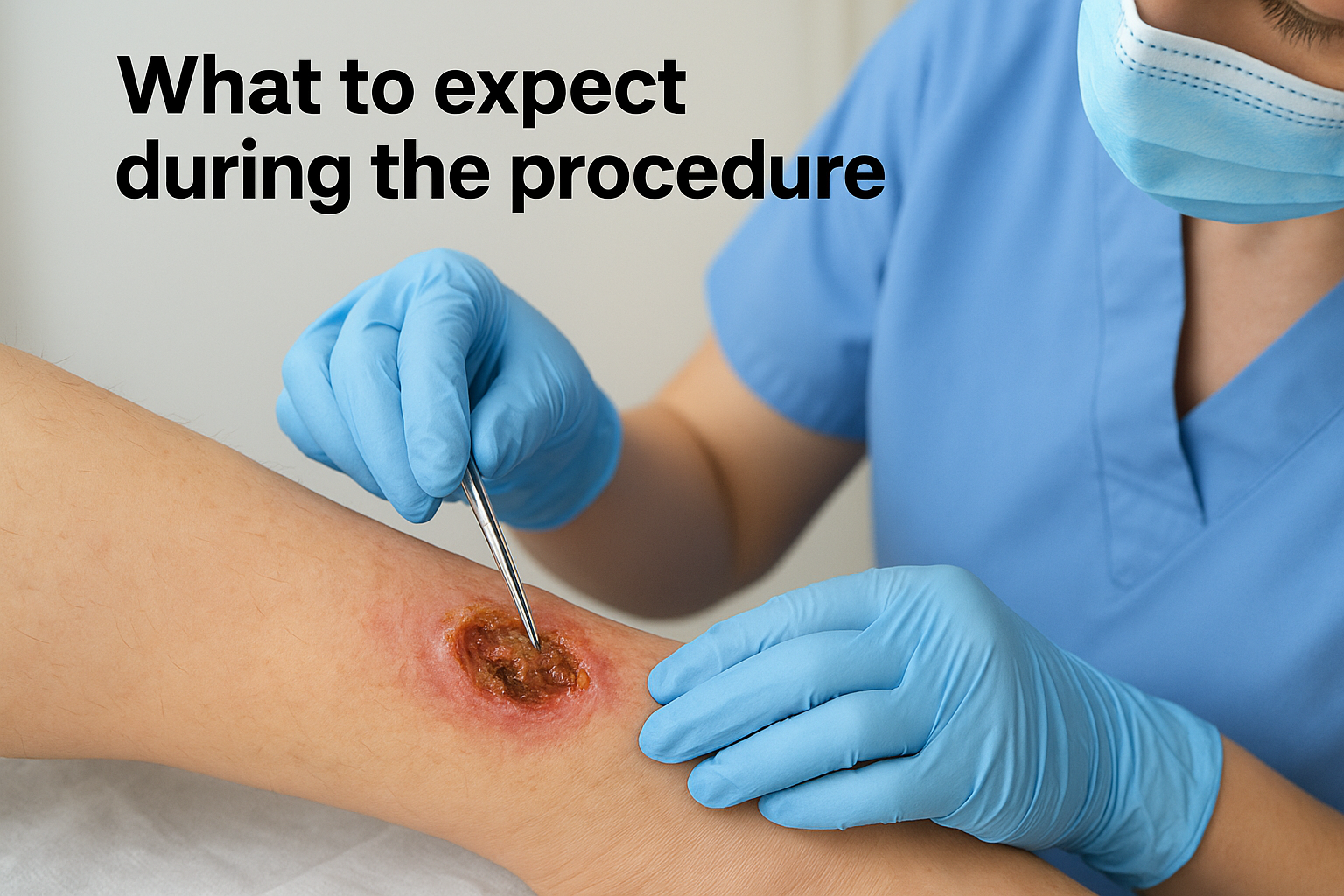
From arrival to first contact
Your clinician begins by cleaning and assessing the wound under good lighting. They’ll check the wound edges, measure depth, and identify which tissue needs removal. Before any debridement begins, local anesthesia is applied and given time to work. You’ll be asked to confirm when the area feels numb before the clinician proceeds.
Most patients are surprised by how quickly the anesthetic takes effect and how little they feel once it does.
During the debridement itself
Once the anesthesia is active, your clinician will remove dead or infected tissue using the method best suited to your wound. You may feel mild pressure or a pulling sensation, but sharp pain at this stage is not expected and should be reported immediately. After the tissue is cleared, the wound is cleaned, reassessed, and dressed with an appropriate bandage to support healing and protect the wound bed until your next visit.
Recovery, aftercare, and warning signs
After debridement, most patients report mild soreness or tenderness at the wound site for one to two days. This is normal and typically managed with over-the-counter pain relief like acetaminophen. Knowing what to expect helps you gauge whether does wound debridement hurt beyond what’s considered normal during recovery.
What normal healing looks like
Your wound may appear slightly more red or swollen in the first 24 to 48 hours. This is your body’s natural inflammatory response to cleared tissue, not a sign that something went wrong. Keep the dressing clean and dry between scheduled visits, and avoid applying any creams or ointments unless your clinician specifically instructs you to.
Mild redness and tenderness after debridement are expected; they usually resolve within a few days as the wound begins healing properly.
Warning signs to watch for
Contact your clinician promptly if you notice increasing redness, warmth, or drainage that worsens rather than improves. A fever above 100.4°F or a foul odor from the wound site can indicate infection and requires prompt evaluation.
Attending scheduled follow-up visits lets your care team monitor healing progress and decide if additional debridement is needed. These appointments give your clinician the opportunity to adjust your treatment plan before a minor setback becomes a serious problem.
Conclusion
The question "does wound debridement hurt" rarely gets a simple yes or no answer because pain levels vary by wound type, nerve function, and the debridement method your clinician uses. What stays consistent is that modern pain control techniques make the procedure far more manageable than most patients anticipate before their first appointment.
Your clinician will assess your wound, apply appropriate anesthesia, and guide you through each step so discomfort stays minimal. Mild soreness during recovery is normal and typically resolves within a couple of days. Watching for warning signs like increasing redness or fever helps you catch complications early and keep your healing on track.
If you’re in the Philadelphia area and need expert wound care at home, Philadelphia Wound Care’s mobile wound care services bring physician-led treatment directly to your door, so you never have to manage a complex wound without the right support.