

Why Does Infection Stink? Causes of Wound Odor and What to Do
You’ve noticed it before you even changed the dressing. A sour, rotten smell coming from a wound that wasn’t there last week. It’s alarming, and you’re right to pay attention. Why does infection stink so distinctly? The short answer is bacteria. As bacteria colonize a wound, they break down dead tissue and release waste products, including sulfur compounds and other byproducts, and that process produces the sharp, foul odor you’re smelling.
That smell is your body’s way of signaling that something has gone wrong beneath the surface. Different bacteria produce different signature odors, from a sweet, grape-like scent tied to certain strains to a heavier, rotten smell linked to anaerobic infections deep in the tissue. Understanding what’s causing the odor helps you figure out whether you’re dealing with a minor issue or a wound that needs urgent medical attention.
In this article, we’ll break down exactly what causes wound odor, how to tell a mildly smelly wound from one that’s seriously infected, and what steps actually help control the smell. We’ll also cover when home care isn’t enough and a wound care specialist needs to step in, especially for diabetic ulcers, pressure sores, or post-surgical wounds that aren’t healing on their own.
Why infected wounds produce a foul smell
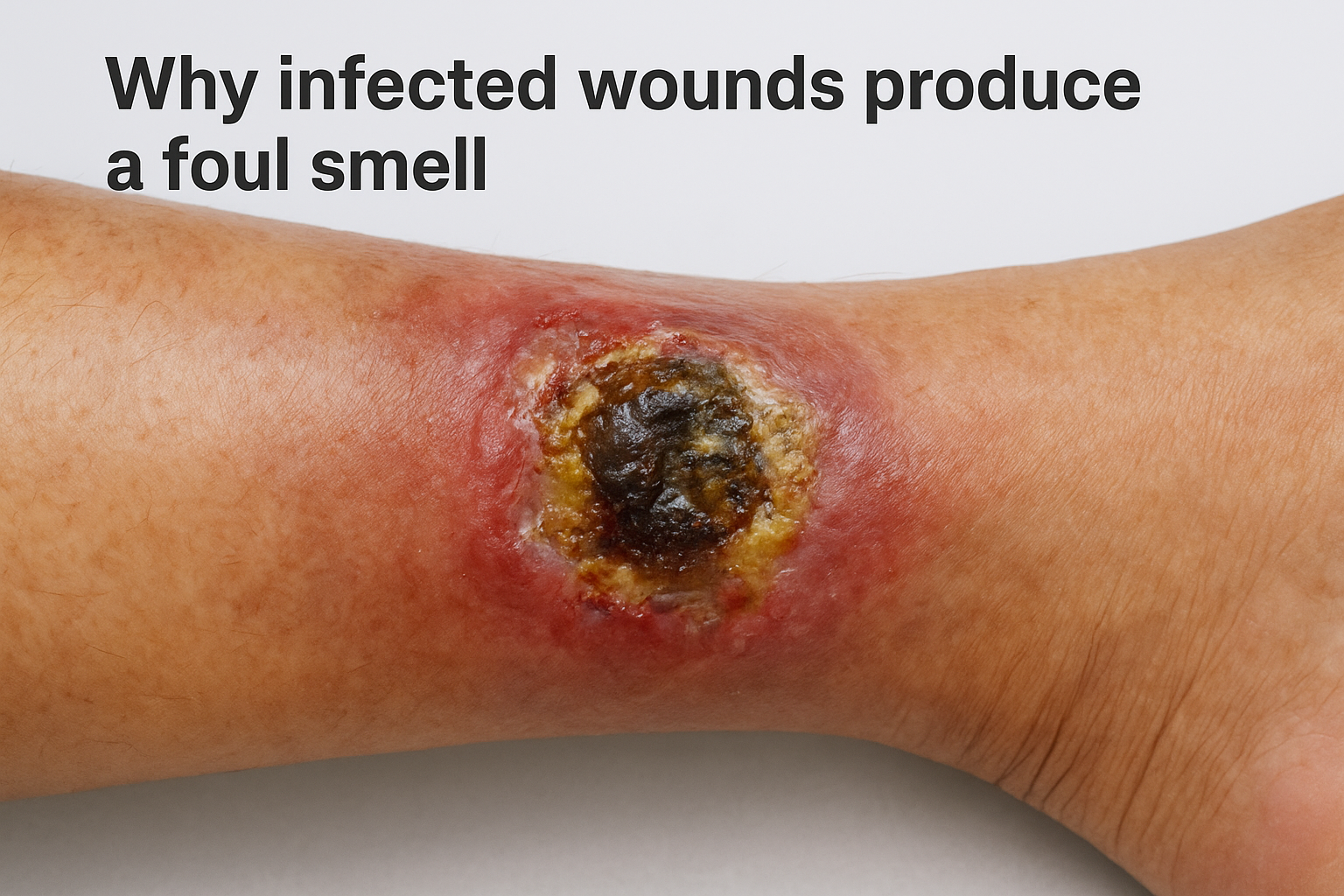
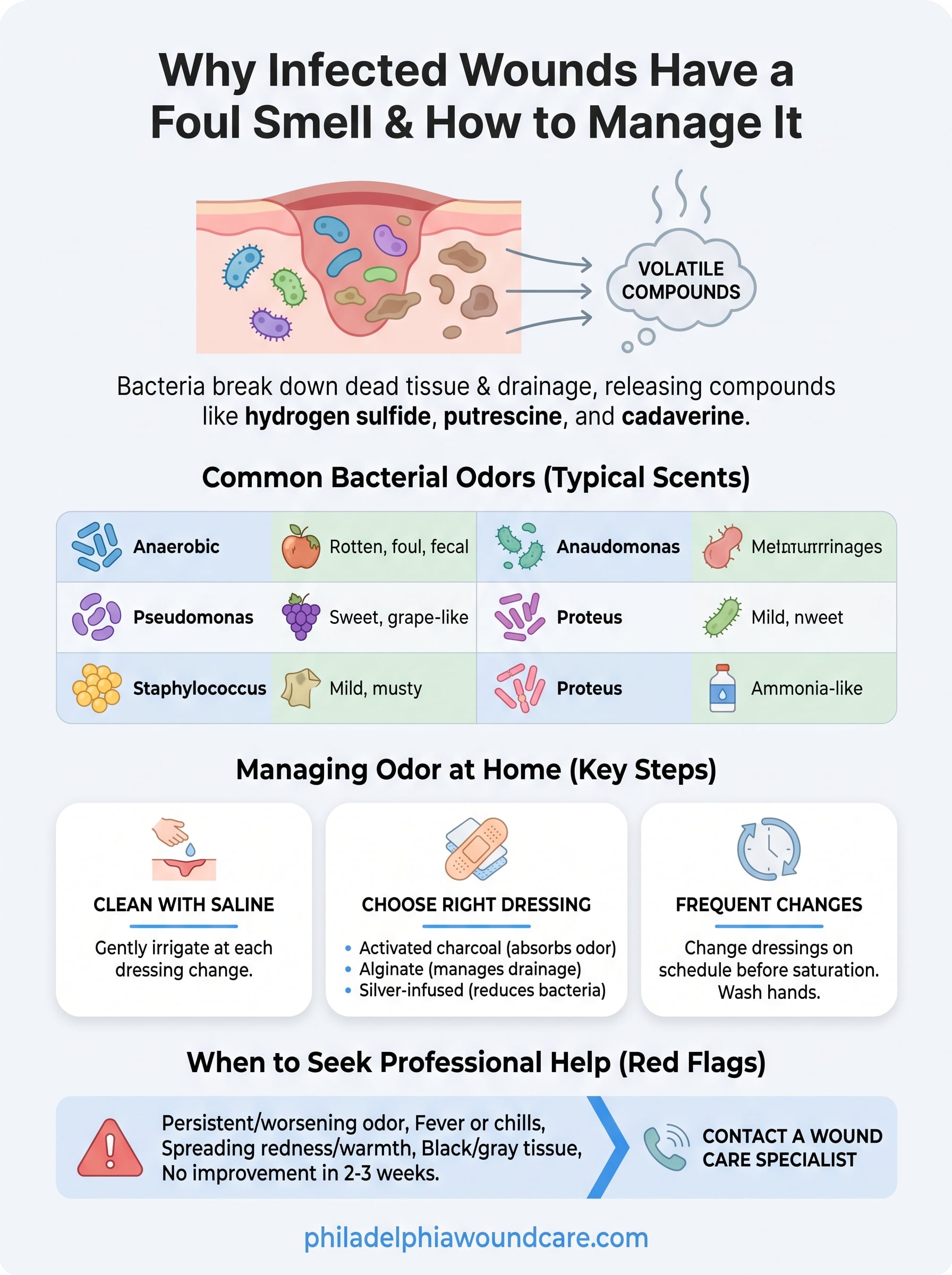
Bacteria don’t just sit quietly in a wound. They actively feed on dead tissue, drainage, and proteins in the wound bed, and that metabolic process releases volatile compounds like hydrogen sulfide, putrescine, and cadaverine. These are the same chemical byproducts responsible for the smell of rotting food, which explains why an infected wound can smell shockingly similar to spoiled meat.
Necrotic tissue feeds the problem
Once tissue dies from lack of blood flow or ongoing infection, it becomes a breeding ground for anaerobic bacteria, the type that thrives without oxygen and produces the strongest odors. This is common in pressure ulcers and diabetic foot wounds, where poor circulation slows healing and leaves dead tissue sitting in place longer than it should. The longer necrotic tissue remains, the more bacteria multiply and the worse the smell becomes.
The smell isn’t the infection itself, it’s the byproduct of bacteria consuming dead tissue.
Different bacteria, different smells
Certain organisms produce recognizable odor signatures, which is actually useful information for clinicians assessing a wound without lab results in hand.
| Bacteria | Typical Odor |
|---|---|
| Pseudomonas aeruginosa | Sweet, grape-like |
| Anaerobic bacteria (e.g., Bacteroides) | Rotten, foul, sometimes fecal |
| Staphylococcus aureus | Mild, musty |
| Proteus species | Ammonia-like |
Recognizing these patterns doesn’t replace a diagnosis, but it gives you a clue about what’s happening beneath the dressing.
Biofilm makes it worse
Slow-healing wounds often develop a biofilm, a slimy protective layer bacteria build to shield themselves from antibiotics and the immune system. Biofilm traps moisture and dead cells against the wound bed, creating the perfect environment for odor-producing bacteria to keep multiplying undisturbed. According to the Centers for Disease Control and Prevention, biofilms are a major reason chronic wounds resist standard treatment, which is part of why smell tends to intensify the longer a wound goes untreated. Understanding this cycle matters because odor almost always points to a wound that needs more than a simple bandage change.
How to manage and reduce wound odor at home
Managing odor starts with consistent, careful wound cleaning, not masking the smell with sprays or perfume. Gently irrigating the wound with saline at each dressing change removes drainage and loose debris before bacteria have a chance to multiply further. Skipping cleanings, even for a day or two, lets odor-causing bacteria rebuild quickly.
Choose the right dressing
Certain dressings are specifically designed to control smell while supporting healing, and picking the right one makes a noticeable difference.
- Activated charcoal dressings absorb odor molecules directly at the source
- Alginate dressings manage heavy drainage that fuels bacterial growth
- Silver-infused dressings reduce bacterial load between changes
- Hydrocolloid dressings keep the wound bed moist without trapping excess fluid
A clean, properly dressed wound will always smell better than one covered and forgotten.
Watch what you’re covering up
Frequency matters as much as product choice. Changing dressings on schedule, rather than waiting until they look saturated, keeps bacterial buildup from reaching the point where odor becomes overwhelming. Handwashing before and after each change also protects the wound from introducing new bacteria that could worsen the smell.
Still, home care has limits. If odor returns within hours of a fresh dressing, or if it’s paired with increasing drainage, that’s a sign the wound is producing more bacteria than home measures can control. Odor control products treat the symptom, not the underlying infection driving it, so ongoing smell despite diligent care deserves closer attention rather than a stronger deodorizing dressing.
What different wound odors can tell you
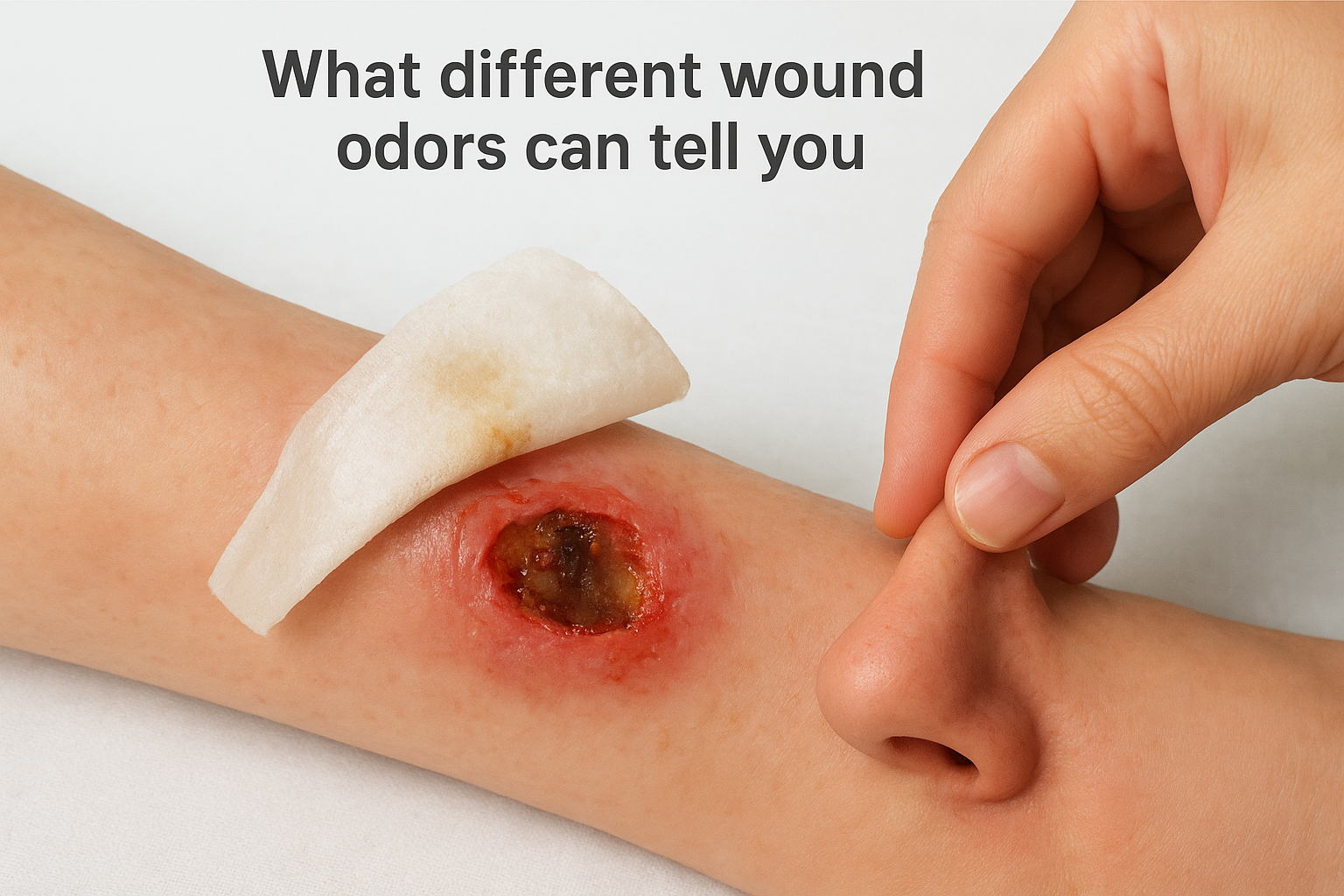
Not every odor means the same thing, and learning to read the signal helps you respond appropriately instead of panicking or ignoring a warning sign. A faint, slightly musty smell right after a dressing change is often normal, especially with certain absorbent dressings or minor drainage. Sudden changes in odor, though, especially a shift from mild to strong within a day or two, usually point to a bacterial population that’s grown out of control.
Intensity often tracks with severity
Generally, the stronger and more persistent the smell, the deeper the infection has spread into surrounding tissue. A mild odor that clears up after cleaning suggests surface-level bacteria. A strong, rotting smell that returns almost immediately after a fresh dressing suggests bacteria have colonized deeper layers, possibly reaching necrotic tissue that needs debridement rather than home cleaning alone.
Smell alone doesn’t diagnose an infection, but it rarely appears without a reason.
Pair the smell with other clues
Odor becomes far more meaningful when you look at it alongside other symptoms. Watch for:
- Increased or discolored drainage (yellow, green, or gray)
- Redness or warmth spreading beyond the wound edges
- Swelling that wasn’t there before
- Fever or chills
- Increased pain at the wound site
Combine two or more of these with a foul smell, and you’re likely looking at an active infection, not just a wound that needs a dressing change.
When wound odor signals you need professional care
Some warning signs mean it’s time to stop managing things yourself and call in a wound care specialist. Odor that returns within hours of a clean dressing, despite proper technique, tells you the infection has outpaced what topical care can handle. The same goes for wounds that keep producing foul-smelling drainage day after day with no improvement, especially in patients with diabetes or poor circulation, where infections spread faster and hide longer beneath the skin.
Red flags that require a phone call
Certain combinations of symptoms shouldn’t wait for a scheduled follow-up appointment. Reach out to a physician right away if you notice:
- Foul odor paired with fever, chills, or confusion
- Black or gray tissue appearing in or around the wound
- Red streaking extending away from the wound site
- Odor that worsens despite daily cleaning and dressing changes
- A wound that hasn’t visibly improved in two to three weeks
Persistent odor after consistent home care almost always means the infection needs medical treatment, not a better dressing.
Why bedside evaluation matters
A wound that smells bad and won’t respond to home care often needs debridement, tissue removal, or advanced therapies that aren’t available in a bathroom cabinet. Physician-led mobile wound care brings that level of evaluation directly to the patient, whether they’re at home, in a skilled nursing facility, or under hospice care. Catching a worsening infection early through a house call can prevent a trip to the emergency room, which matters most for elderly or mobility-impaired patients who struggle to travel for routine clinic visits.
Keeping your wound on the path to healing
Foul odor is never something to ignore or mask with a stronger deodorizing dressing. It’s a clear signal that bacteria have taken hold and your body needs help clearing them before healing can restart. Consistent cleaning, the right dressing, and close attention to changes in smell, drainage, or surrounding skin give you a real chance to catch problems early, but they only go so far once an infection has settled into deeper tissue.
Understanding why does infection stink puts you in a better position to act instead of wait. If your wound keeps smelling bad despite diligent care, or you’re seeing red flags like fever, spreading redness, or dark tissue, don’t wait for the next scheduled appointment. Reach out to Philadelphia Wound Care and request a mobile wound care visit so a physician can evaluate the wound at your bedside, wherever you’re recovering.