

Cauterize with Silver Nitrate: How It Works and What to Expect
If your doctor mentioned using silver nitrate on a wound that won’t stop weeping or won’t close, you probably have questions before you agree to it. Cauterize silver nitrate treatments sound intimidating, but they’re one of the oldest and most reliable tools in wound care for a reason: they work fast on stubborn tissue that other treatments can’t touch.
In plain terms, silver nitrate cauterization chemically burns away overgrown or unhealthy tissue, sealing small blood vessels and calming down wounds that refuse to progress toward healing. It’s commonly used for hypergranulation tissue, minor bleeding at wound edges, and certain chronic ulcers in older adults, exactly the kinds of wounds we see daily in homebound and facility patients across the Philadelphia area.
Below, we walk through how the procedure actually happens at bedside, what sensations to expect during and after treatment, realistic healing timelines, and the aftercare steps that determine whether the wound closes cleanly or flares back up. We’ll also cover side effects to watch for, so you know when a reaction is normal and when it’s time to call your wound care team.
Why silver nitrate is used to cauterize wounds
Doctors reach for silver nitrate because it does something few other bedside treatments can: it destroys unwanted tissue on contact without a scalpel or an operating room. The compound reacts with proteins and moisture in soft tissue, causing a controlled chemical burn that seals off small capillaries and stops overgrown cells from spreading. This makes it especially useful for wounds that have stalled in the healing process, where normal tissue growth has turned into a problem rather than a solution.
Common conditions treated with silver nitrate
Most patients encounter this treatment for one of a handful of recurring issues, and clinicians choose it because it’s fast, targeted, and doesn’t require anesthesia.
- Hypergranulation tissue, the raised, shiny, red overgrowth that sometimes forms around healing wounds or ostomy sites
- Chronic ulcers, including diabetic foot ulcers and venous leg ulcers that ooze or fail to close on their own
- Minor bleeding at wound edges during dressing changes, particularly in elderly patients on blood thinners
- Stubborn granulomas around feeding tubes, tracheostomy sites, or surgical drains
Allograft and regenerative therapies work well for wounds ready to rebuild tissue, but silver nitrate serves a different purpose entirely, it clears the path first. Overgrown or bleeding tissue can block newer treatments from taking hold, so cauterizing it away often becomes a necessary first step rather than a final one.
Silver nitrate doesn’t heal a wound directly; it removes the obstacle standing in the way of healing.
Older adults with mobility limits and chronic conditions like diabetes or vascular disease are frequent candidates, since their wounds tend to stall longer and bleed more easily during routine care. That’s precisely why mobile wound specialists carry silver nitrate applicators on every home visit.
How the cauterization procedure works
Most patients picture a dramatic burn, but a silver nitrate application is quick and controlled. The clinician first cleans the wound bed, then dries the surrounding skin to protect it from accidental contact with the compound, since silver nitrate reacts with any moisture it touches. A thin silver nitrate stick, sometimes called a caustic pencil, gets pressed directly onto the target tissue for a few seconds at a time.
Step-by-step at the bedside
During a typical mobile visit, the process follows a consistent pattern:
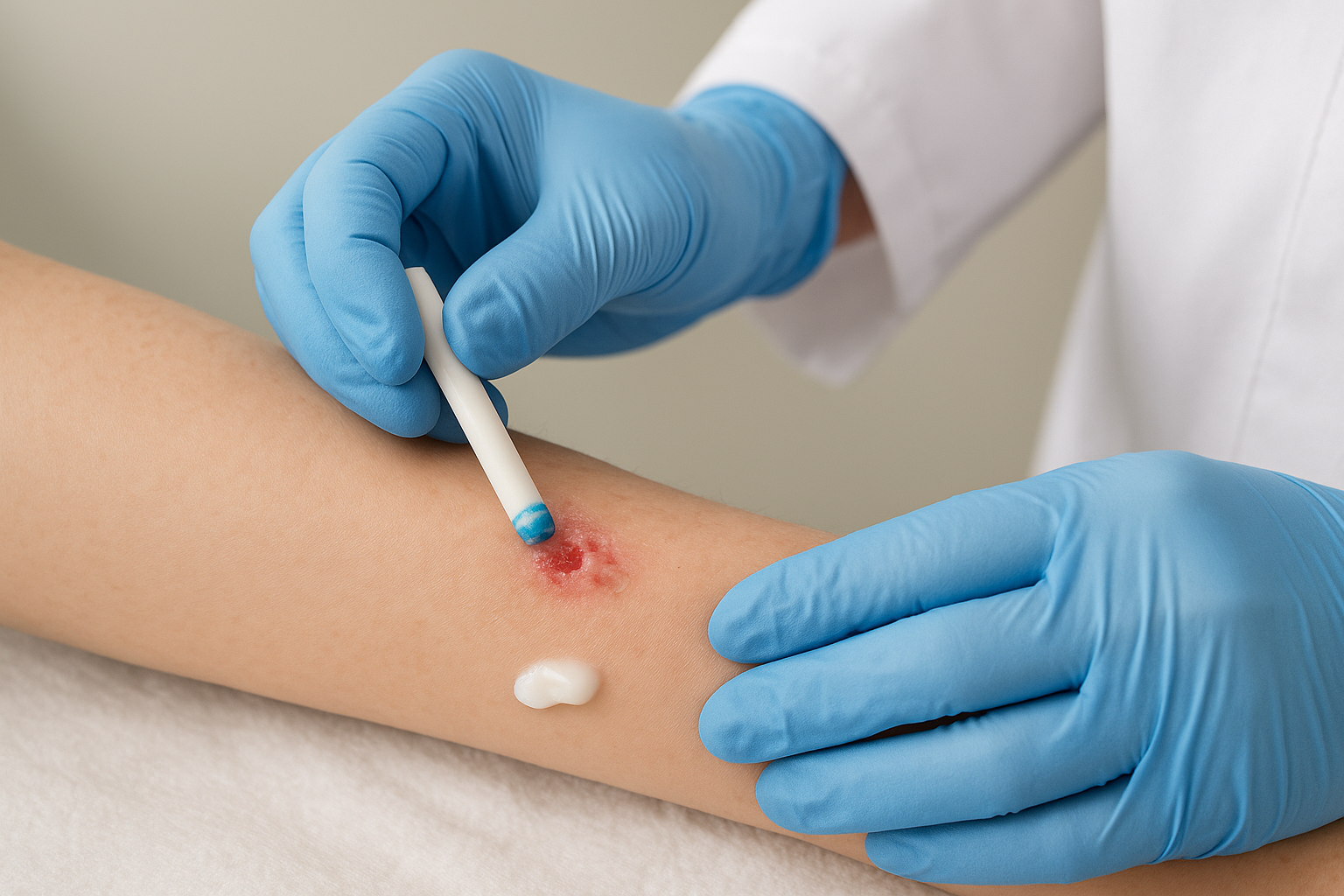
- Clean and dry the wound and surrounding skin
- Apply petroleum jelly or barrier cream to nearby healthy tissue
- Touch the silver nitrate stick to the overgrown or bleeding area
- Watch for the tissue to turn gray or white, signaling the reaction is working
- Rinse or blot away excess residue with saline
- Apply a fresh dressing
A few seconds of contact is usually all it takes to stop bleeding or shrink overgrown tissue.
No anesthesia gets used for most applications, and the entire procedure often takes less than five minutes. Repeat treatments across several visits are common when tissue is stubborn.
What to expect: pain and healing time
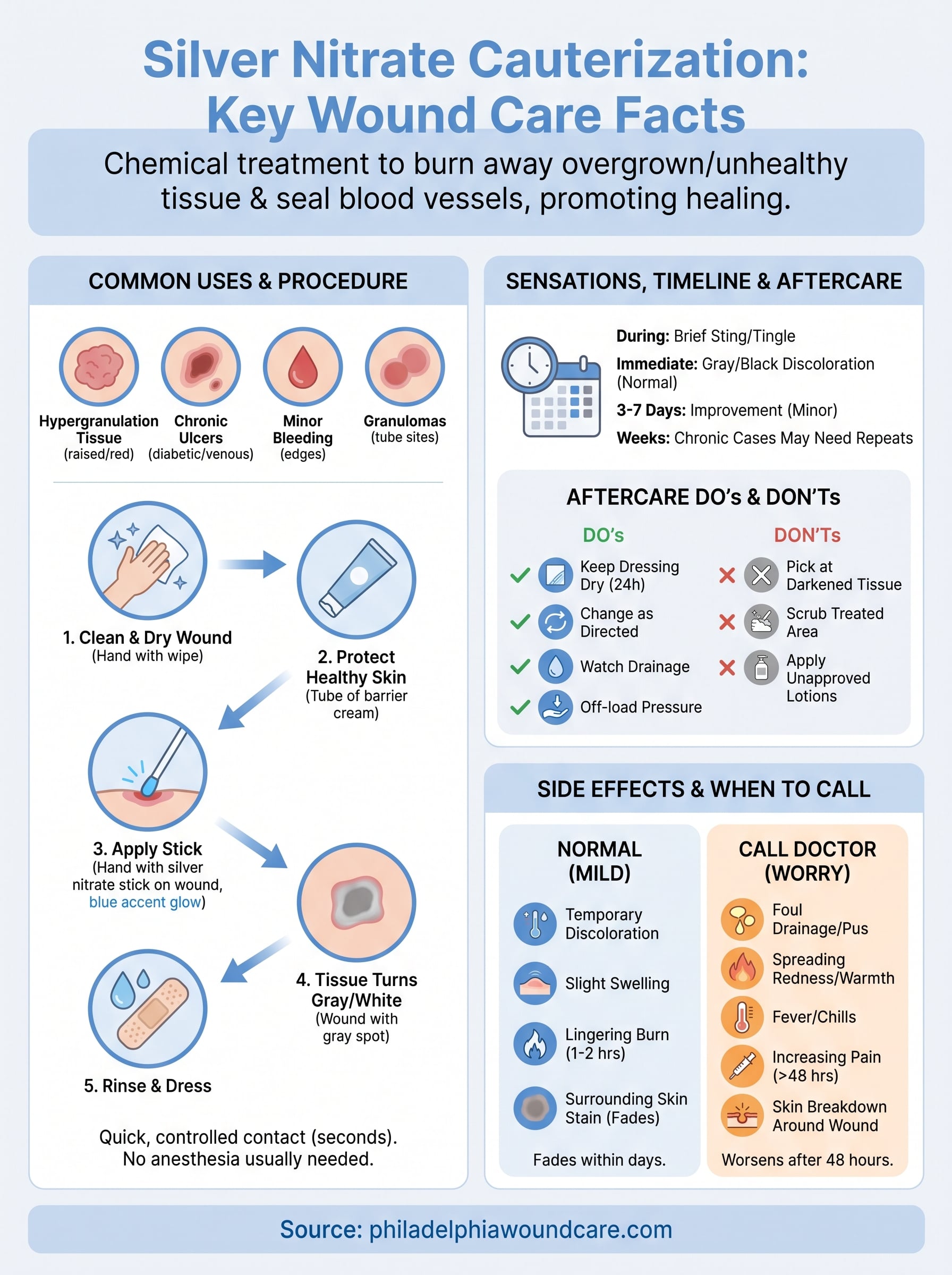
Patients often brace for a sharp burn, but most describe silver nitrate cauterization as a stinging or tingling sensation rather than true pain. It lasts only as long as the stick touches the tissue, usually a few seconds, and fades quickly once the area is rinsed. Some people feel nothing at all, especially over granulation tissue that has less nerve sensitivity than intact skin.
Right after treatment, you’ll likely notice a gray or blackish discoloration where the silver nitrate reacted with the tissue. That’s normal and not a sign of infection. The treated spot may look darker for several days before it sloughs off naturally.
Expect a brief sting, a gray mark that fades, and noticeable improvement within a week for most minor cases.
Healing time depends on what’s being treated. A small area of hypergranulation tissue often flattens within three to seven days. Chronic ulcers with underlying vascular or diabetic complications take longer, sometimes requiring several rounds of cauterization spaced a week or two apart before the wound bed responds fully.
Caring for the wound after cauterization
Aftercare determines whether the treated area heals cleanly or reopens within days. Once the clinician finishes the silver nitrate application, the wound gets a protective dressing designed to keep the area moist but shielded from friction, since newly cauterized tissue is fragile and prone to reinjury during normal movement or repositioning.
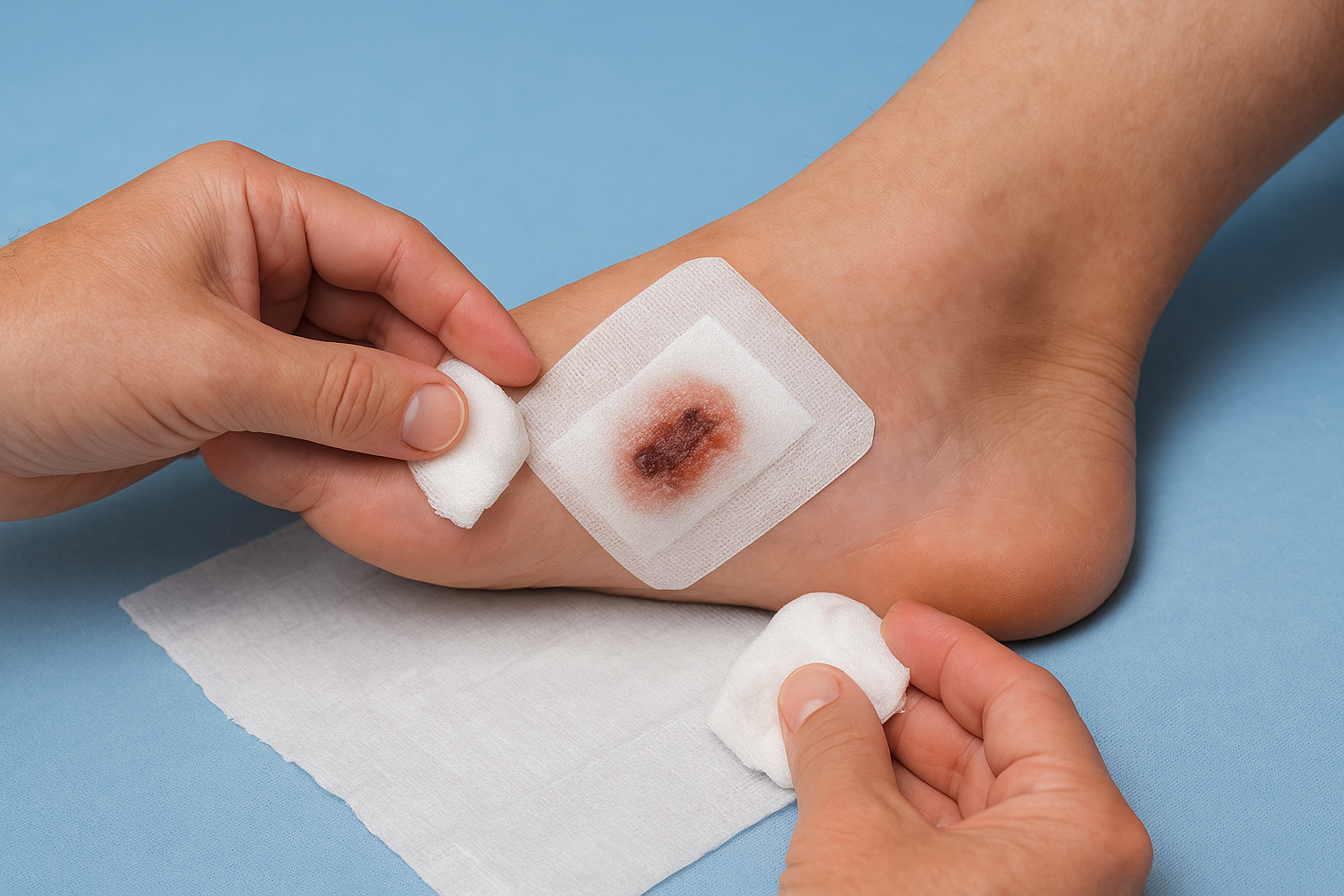
Following these steps at home keeps healing on track:
- Keep the dressing dry for the first 24 hours
- Change dressings as directed, usually daily or every other day
- Avoid scrubbing or picking at the darkened tissue
- Watch for excess drainage soaking through bandages quickly
- Keep pressure off the area if it’s on a foot, heel, or sacrum
Gently patting the surrounding skin clean during dressing changes prevents irritation without disturbing the healing surface underneath. Never apply lotions, ointments, or home remedies over the treated spot unless your wound care provider specifically approves them, since some products interfere with the natural sloughing process.
Good wound care aftercare is less about doing more and more about avoiding disruption while the tissue resets.
Caregivers managing homebound patients should log any changes in color, odor, or drainage between visits, since that record helps the clinical team catch problems early.
Possible side effects and when to worry
Most reactions to a silver nitrate treatment stay mild and predictable. Temporary discoloration, slight swelling, or a burning sensation that lingers for an hour or two falls within normal limits. Some patients notice the surrounding skin turns brown or gray if the compound touches healthy tissue accidentally, which usually fades on its own within a week without lasting damage.
Watch for signs that go beyond typical wound healing side effects. Chemical burns that spread past the treated area, increasing pain days after the procedure, or skin breakdown around the wound edge all warrant a call to your clinician rather than a wait-and-see approach.
Normal side effects fade within days; anything that worsens after the first 48 hours deserves a phone call.
Contact your wound care team if you notice:
- Foul-smelling drainage or pus
- Spreading redness or warmth around the wound
- Fever or chills
- Increasing pain instead of gradual improvement
- Skin breakdown extending beyond the original treatment site
Rarely, patients with silver allergies develop a rash, though true allergic reactions to silver nitrate remain uncommon in routine bedside use.
When to seek specialized wound care
Silver nitrate handles a lot, but it’s not a fix for wounds that keep stalling, growing, or bleeding despite repeated treatment. If a wound looks worse two weeks after cauterization, or if hypergranulation tissue keeps coming back, that’s your signal to bring in a wound specialist rather than repeat the same approach. Chronic ulcers tied to diabetes or poor circulation especially need physician-level oversight, since underlying vascular issues won’t resolve with cautery alone.
Homebound patients and their caregivers shouldn’t have to choose between waiting weeks for a clinic appointment and letting a wound worsen. A physician-led team that comes to you catches these problems early and adjusts treatment before a small issue becomes a hospital admission. If you’re managing a stubborn wound in the Philadelphia area right now, reach out through our mobile wound care services page and get a clinician to your door.