

Vohra Wound Care: Who They Are and What Services They Offer
If you searched Vohra Wound Care while trying to figure out who treats chronic wounds in nursing homes and assisted living facilities, you’re in the right place. Vohra is a national physician group known for training wound care specialists and staffing facilities across the country, and understanding their model helps you know what to expect from a wound care visit, whether it’s from Vohra or another provider in your area.
This article breaks down exactly who Vohra Wound Physicians are, what wound care services they provide, how their physician certification program works, and where they operate. You’ll get a clear picture of their approach to treating pressure ulcers, diabetic wounds, and post-surgical complications in long-term care settings.
We also compare that facility-based model to mobile, physician-led care like what we provide here in Philadelphia, so families and case managers can see the differences in access, response time, and continuity of care. If you’re weighing your options for a loved one’s wound treatment, this comparison matters more than most people realize.
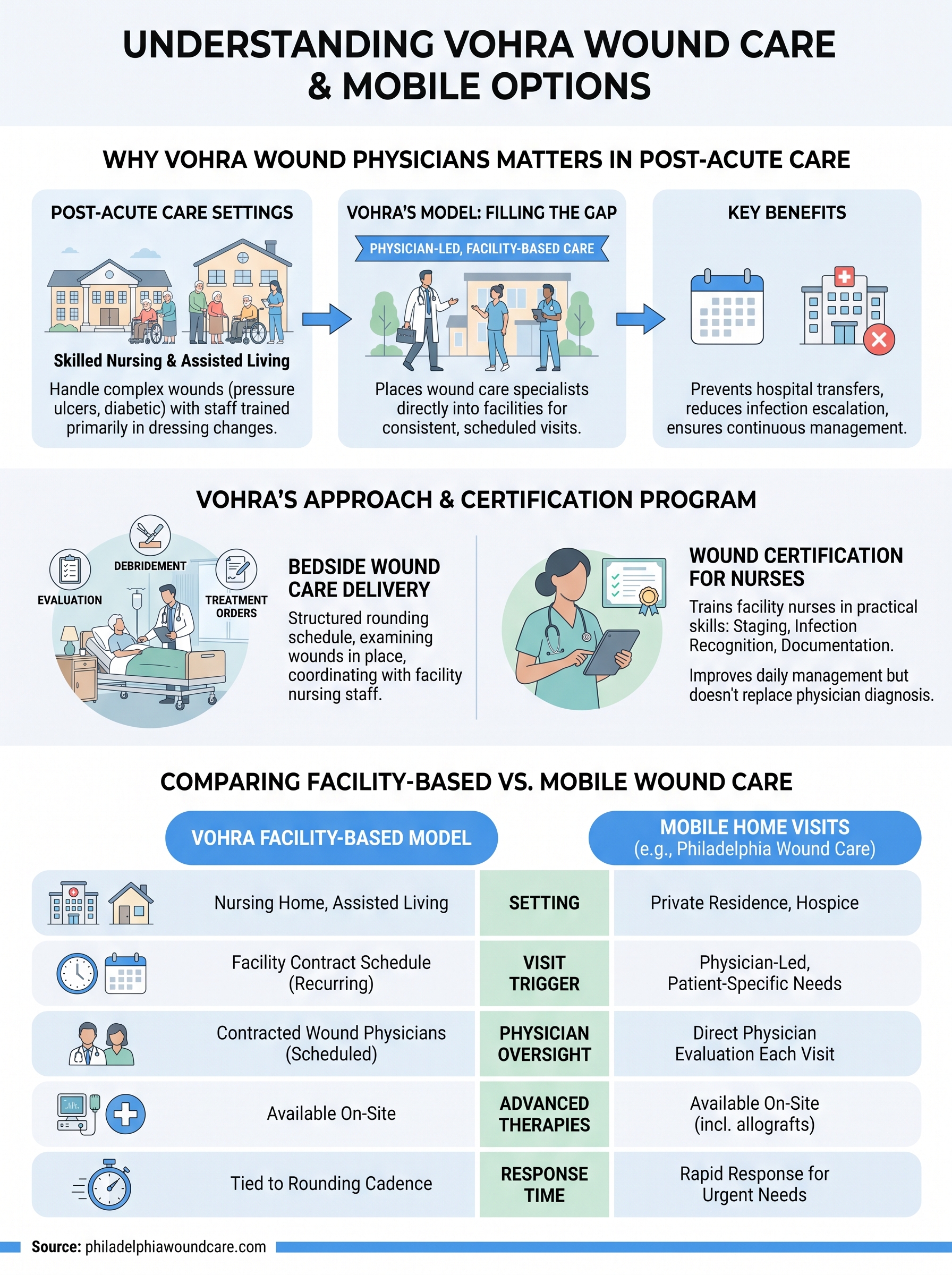
Why Vohra Wound Physicians matters in post-acute care
Skilled nursing facilities and assisted living communities handle some of the toughest wound cases in medicine, yet most facility staff aren’t trained to manage them beyond basic dressing changes. Vohra Wound Care built its entire business around filling that gap: placing physicians who specialize in wound management directly into these facilities so residents don’t have to be transported to a hospital or outpatient clinic every time a wound worsens. That model matters because untreated or poorly managed wounds in older adults don’t just linger, they escalate into infections, hospitalizations, and sometimes amputations.
The scale of the problem in long-term care
Pressure ulcers alone affect a significant share of nursing home residents, and diabetic and vascular wounds add to that burden every year. The Centers for Disease Control and Prevention has tracked pressure injuries as a persistent quality-of-care issue in long-term care settings, which is part of why facilities actively seek outside wound specialists rather than relying solely on general practitioners or nursing staff. Consider the mismatch these facilities face:
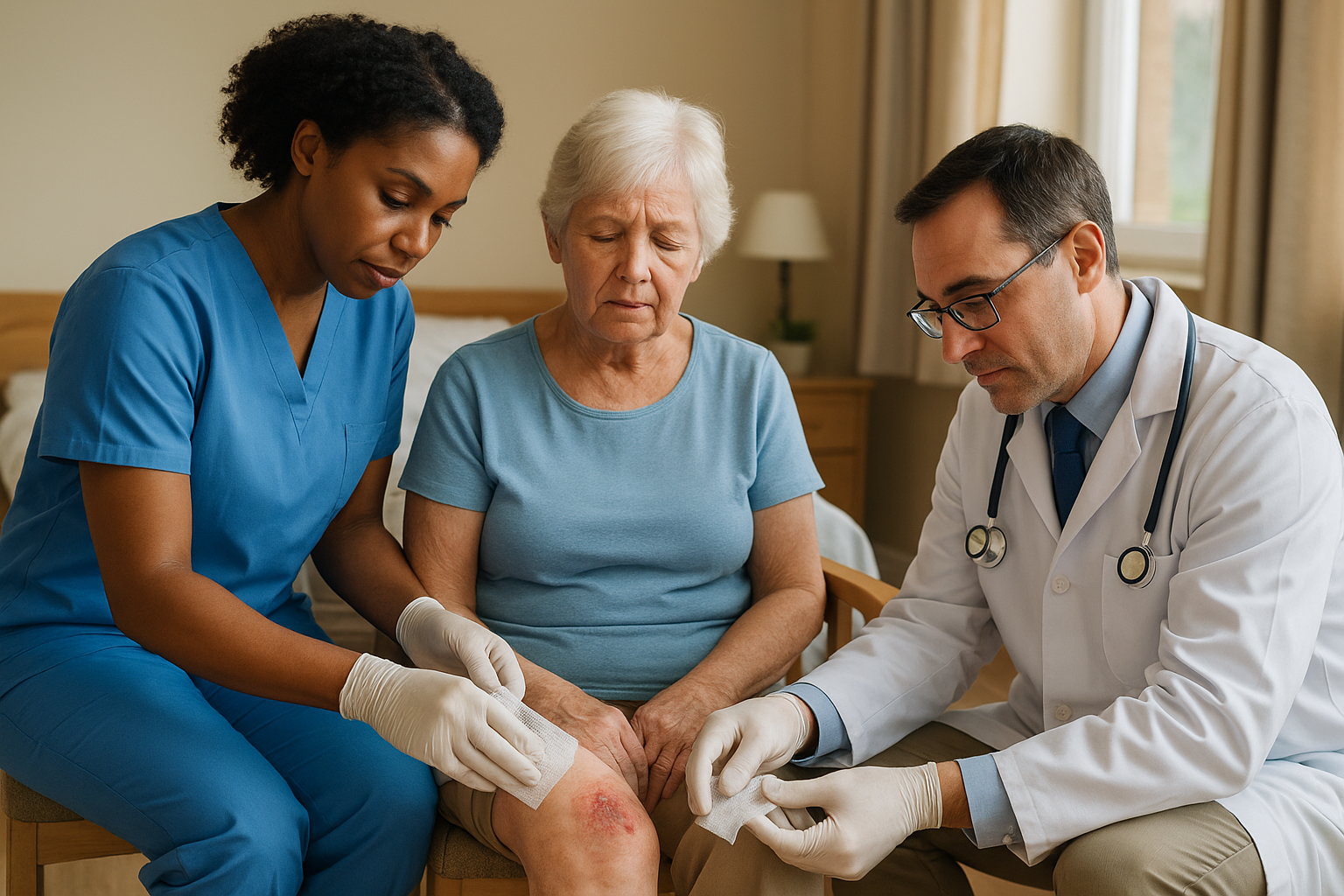
- Nursing staff are trained in wound cleaning and dressing changes, not in diagnosing why a wound isn’t healing.
- General practice physicians often lack the specific training to select advanced treatments like debridement techniques or grafts.
- Hospital transport for wound evaluation is costly, disruptive, and risky for frail patients.
A resident with a stalled wound doesn’t need another dressing change, they need a specialist who can diagnose why it stopped healing.
Vohra’s national footprint
Vohra Wound Physicians operates across a large network of skilled nursing facilities in dozens of states, contracting physicians who visit on a recurring schedule to evaluate residents with chronic or complex wounds. This scale is the company’s main selling point to facility administrators: instead of hunting for a local wound care doctor, a facility can plug into Vohra’s existing physician network and get consistent, scheduled coverage. For case managers and administrators, that predictability is valuable, since it means wound rounds happen on a set cadence rather than depending on whichever physician happens to be available.
Bridging hospital discharge and long-term recovery
Where this model earns its reputation is in the handoff from hospital to facility. A patient discharged after surgery or a vascular procedure often arrives at a nursing home with a wound that still needs active management, not just observation. Vohra’s physicians step into that gap, picking up the treatment plan and adjusting it as the wound progresses. That continuity matters just as much for patients recovering at home, which is where mobile, physician-led models like ours come in, offering the same specialist-level attention without requiring a facility stay.
How Vohra Wound Physicians delivers bedside wound care
When a Vohra physician visits a facility, the process looks less like a hospital consult and more like a structured rounding schedule built around the resident’s bed. Bedside evaluation means the physician examines the wound in place, measures it, checks for signs of infection, and reviews the treatment plan without moving a frail patient anywhere. That approach cuts down on the transport risk that comes with sending an elderly resident to an outpatient wound clinic just for a checkup.
The typical visit cadence
Most facilities under contract with Vohra get physician visits on a recurring weekly or biweekly schedule, depending on the acuity of the wound caseload. A resident with a slow-healing pressure ulcer might be seen every visit cycle until the wound closes, while lower-risk cases get spaced-out follow-ups. This is where scheduled coverage becomes the selling point over ad hoc physician availability.
What happens during a typical evaluation
- The physician reviews wound measurements and photos from the prior visit to track progress.
- Debridement is performed if dead tissue is slowing healing.
- Treatment orders are updated, including dressing changes, offloading devices, or advanced therapies.
- Notes are shared with facility nursing staff and the resident’s primary care team.
A wound that isn’t measured and tracked visit to visit is a wound nobody is actually managing.
Coordination with facility staff
None of this works without tight coordination with nursing staff, since they’re the ones changing dressings and monitoring the wound between physician visits. Vohra’s model leans on documentation and communication to keep everyone aligned, from facility nurses to the resident’s family, so the treatment plan doesn’t drift between visits. That same coordination principle carries over to mobile wound care outside facilities, where a physician still needs a reliable line to family caregivers or home health aides to keep a plan on track between house calls.
Vohra’s wound care certification program for nurses
Beyond staffing facilities with physicians, Vohra Wound Care built a separate business line training nurses through its Wound Certification Program, often marketed as a way for nursing staff to sharpen skills without leaving their current job. The program targets the exact gap described earlier: nurses handle dressing changes daily, but few get formal training in wound assessment, staging, or when to escalate a case to a physician. Certification aims to close that knowledge gap facility by facility.
What the training actually covers
The curriculum focuses on practical skills a nurse uses every shift, not abstract theory. Courses typically walk through wound staging, infection recognition, and documentation standards that hold up during state surveys or Medicare audits. Common topics include:
- Accurate wound staging for pressure ulcers and diabetic wounds
- Recognizing early infection signs before a wound worsens
- Proper offloading and positioning techniques
- Documentation practices that satisfy regulatory reviews
A nurse who can stage a wound correctly on day one prevents weeks of mismanaged treatment down the line.
Why facilities push for it
Facility administrators often require or strongly encourage this nurse certification because it reduces reliance on physician visits for routine assessments. A certified nurse can flag a worsening wound faster and communicate more precisely with the visiting physician, which shortens the time between a problem appearing and treatment changing. That efficiency matters in facilities juggling dozens of residents with active wounds at once.
Where the model has limits
Certification improves the quality of nursing observations, but it doesn’t replace physician-level diagnosis or advanced treatment authority. A nurse can identify that a wound looks worse; only a physician can order debridement, prescribe advanced therapies, or adjust a treatment plan based on underlying vascular or metabolic causes. That distinction matters for families evaluating facility care, since certified staff strengthen the team around a resident but still depend on scheduled physician visits for the medical decisions that actually change a wound’s trajectory.
Wound care options when home visits are the better fit
Vohra’s facility-based model works well inside nursing homes, but plenty of patients never enter one. Someone recovering at home after a hospital stay, an assisted living resident whose community doesn’t contract with a wound physician group, or a hospice patient who simply can’t tolerate transport all need a different path. That’s where mobile wound care steps in, bringing the same specialist-level evaluation to a bedroom, a living room, or a hospice suite instead of a facility hallway.
When home-based treatment makes more sense
A patient managing a diabetic ulcer or a post-surgical wound at home doesn’t have facility nursing staff checking dressings every shift, so gaps in care show up faster. A physician house call closes that gap by putting a wound specialist directly at the bedside on a schedule built around the patient’s needs, not a facility contract. This matters most for patients with limited mobility, since every unnecessary trip to a clinic raises the risk of falls, exhaustion, and missed follow-up.
Skipping a clinic trip isn’t a convenience, it’s often the safer medical choice for a fragile patient.
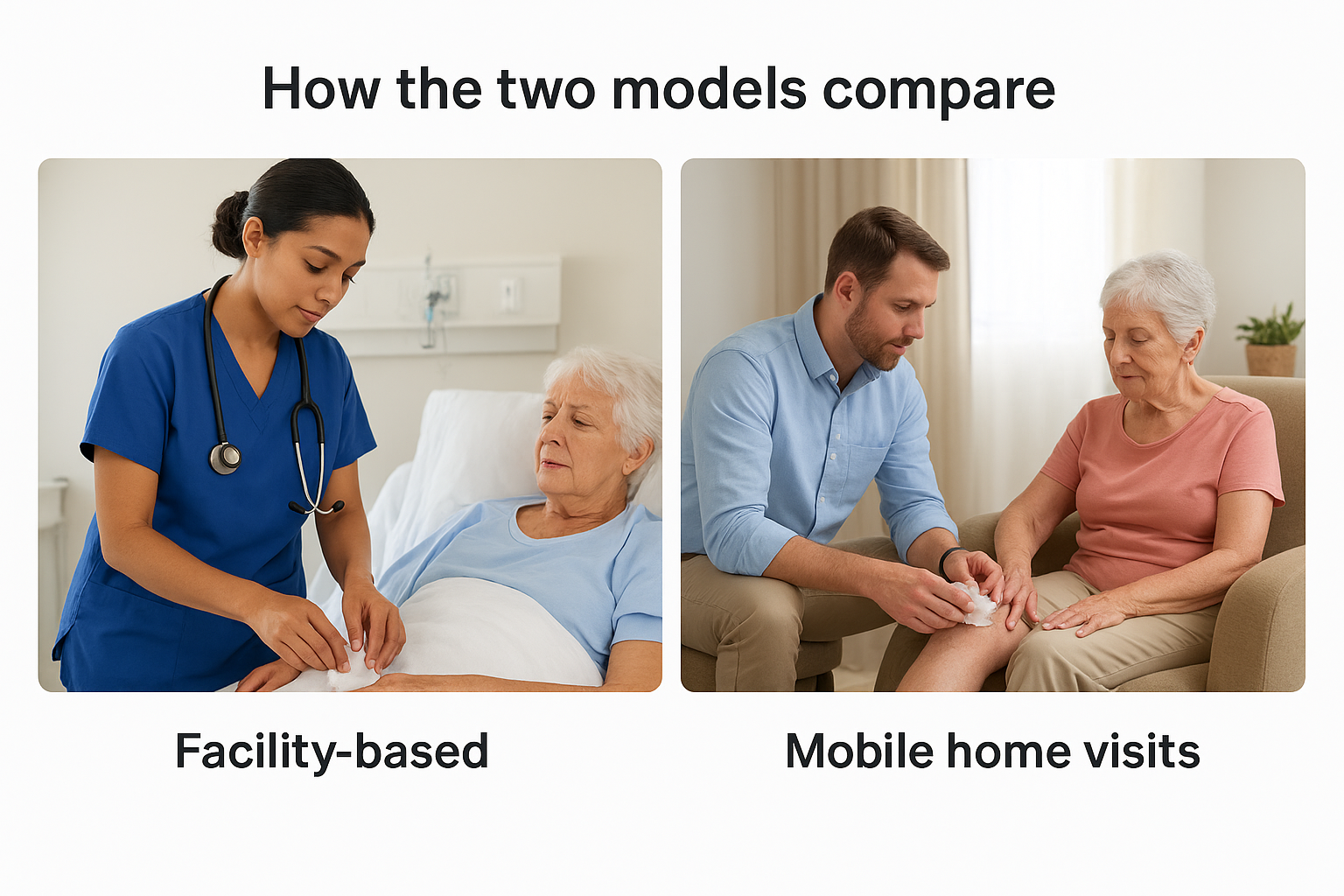
How the two models compare
| Factor | Facility-based (Vohra model) | Mobile home visits |
|---|---|---|
| Setting | Nursing home, assisted living | Private residence, hospice |
| Visit trigger | Facility contract schedule | Physician-led, patient-specific |
| Physician oversight | Contracted wound physicians | Direct physician evaluation each visit |
| Advanced therapies | Available on-site | Available on-site, including allografts |
| Response time | Tied to rounding cadence | Rapid response for urgent needs |
Coverage and access still matter
Regardless of setting, Medicare Part B coverage for advanced treatments like allograft therapy removes much of the financial barrier that once kept these therapies inside hospitals. Families and case managers weighing a facility contract against a mobile physician group should ask the same questions either way: how fast can a specialist respond, and who actually makes the medical decisions between visits.
Choosing the right wound care partner
Vohra Wound Physicians built a solid model for facility-based care, and if your loved one lives in a nursing home under contract with them, that scheduled physician coverage is worth appreciating. But facility coverage only helps if the patient is actually in a facility. For anyone recovering at home, in assisted living without a wound contract, or under hospice care, the better fit is a physician who comes to them on a schedule built around their wound, not a rounding calendar.
That’s the gap Philadelphia Wound Care fills. We bring the same physician-led evaluation, debridement, and advanced therapies like allografts directly to the bedside, with rapid response when a wound takes a turn. If you’re a family caregiver, case manager, or referring physician trying to find the right path for a patient outside a facility setting, start with our mobile wound care services page to see exactly what a house call looks like.