

Complex Wound Management Philadelphia: Care Options & Costs
Finding the right provider for complex wound management Philadelphia residents can trust is often urgent, and overwhelming. Whether you’re recovering from surgery, living with a diabetic ulcer, or caring for a loved one with a chronic pressure wound, you need clear answers about what treatments exist and what they’ll cost.
Complex wounds don’t follow simple healing timelines. They stall, they worsen, and they frequently require interventions that go beyond what a primary care physician can offer. In Philadelphia, care options range from hospital-based wound centers to mobile physician-led services like Philadelphia Wound Care, where a General Surgeon brings advanced treatments, including allograft and regenerative therapies, directly to patients at home, in skilled nursing facilities, or in hospice settings.
This article breaks down what complex wound management actually involves, the types of providers available across the Philadelphia area, what advanced therapies look like in practice, and how costs are typically handled through Medicare and commercial insurance. The goal is to give you enough real information to make a confident next step, whether that’s for yourself, a family member, or a patient in your care.
What complex wound management means
Complex wound management is a medical specialty focused on wounds that fail to progress through the normal stages of healing within an expected timeframe. A wound becomes complex when standard wound care, such as cleaning, dressing changes, and basic antibiotics, is no longer sufficient. These wounds require assessment by a clinician with specialized training, access to advanced therapies, and ongoing monitoring to adjust the treatment plan as the wound responds. The term covers both the clinical decision-making and the hands-on interventions involved.
When a wound becomes "complex"
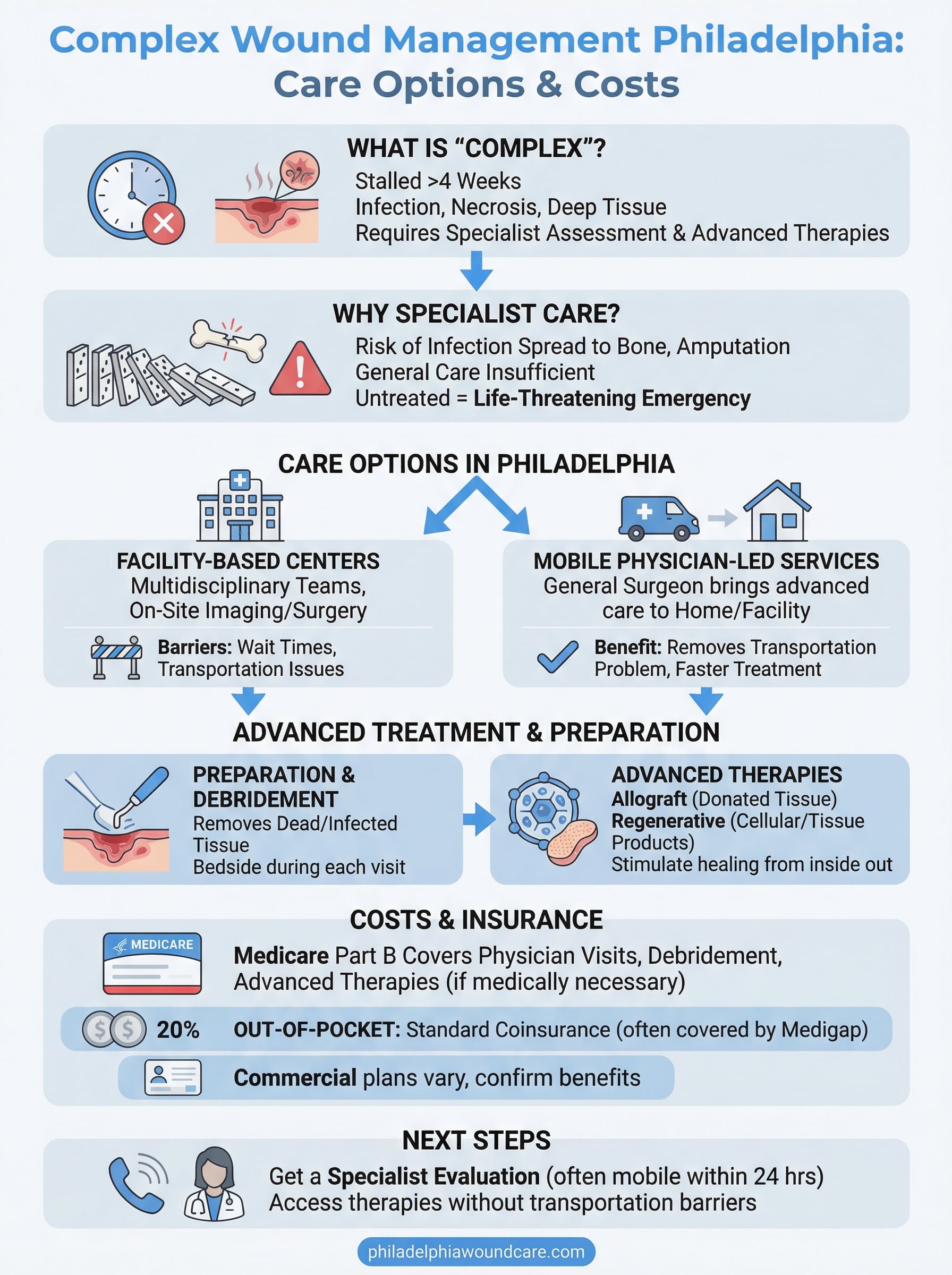
Not every wound qualifies as complex. A wound earns that classification when it stalls in healing for four weeks or longer, shows signs of infection, tissue death (necrosis), or deep tissue involvement, or exists in a patient whose systemic conditions actively interfere with recovery. Diabetes, poor circulation, and immune suppression are common contributors. Pressure ulcers at stage 3 or 4, non-healing diabetic foot wounds, and post-surgical dehiscence are the wound types you’ll most often encounter in the context of complex wound management Philadelphia specialists handle.
A wound that hasn’t improved after four weeks of standard care almost always points to an underlying issue that basic dressings alone cannot fix.
What "management" actually involves
Management means more than treating the wound surface. It means identifying the root cause of the healing stall, then addressing factors like pressure offloading, nutritional status, vascular health, and infection control alongside the wound itself. A specialist evaluates the wound bed, surrounding tissue, and your overall health together. Treatment protocols are adjusted at each visit based on measurable changes in wound size, depth, and tissue quality, which is fundamentally different from simply reapplying a dressing on a fixed schedule.
Why complex wounds need specialist care
Complex wounds don’t just heal slowly. They create cascading medical problems if the underlying causes aren’t addressed by someone with the right clinical tools. A general practitioner can manage a minor wound, but once tissue death, deep infection, or systemic complications enter the picture, you need a specialist with access to advanced diagnostics and therapies that aren’t available in a standard office setting.
Delaying specialist involvement in a stalled wound increases the risk of infection spreading to bone, which can lead to amputation.
What happens without specialist intervention
When complex wounds go without proper care, the consequences escalate fast. Wound infection can spread to surrounding tissue and bone, requiring hospitalization or surgery. For diabetic patients, an untreated foot ulcer carries significant amputation risk, and a pressure wound left unmanaged can reach bone within days. Without proper oversight, what starts as a manageable wound can become a life-threatening medical emergency.
For people seeking complex wound management Philadelphia providers, the goal is connecting with a physician who can evaluate, diagnose, and treat within a single visit. A General Surgeon-led mobile service brings that specialist capacity directly to you, so advanced care reaches the patient rather than the patient struggling to reach the clinic.
Care options in Philadelphia
Philadelphia has several types of providers for complex wound management, and the right fit depends on your mobility, wound severity, and how quickly you need to be seen. Your main options fall into two broad categories: facility-based centers and mobile physician services.
Hospital-based wound centers
Several major health systems in the Philadelphia region operate dedicated outpatient wound care centers. These facilities offer multidisciplinary teams, on-site imaging, and surgical backup, which makes them a strong option for patients who can travel and whose wounds may require procedures in a clinical setting. Wait times, transportation, and scheduling can create real barriers for patients with limited mobility or those living in skilled nursing facilities.
Mobile physician-led services
Mobile services bring specialist-level care directly to you, which removes the transportation problem entirely. Philadelphia Wound Care is a physician-led mobile practice where a licensed General Surgeon evaluates and treats wounds at your home, assisted living facility, skilled nursing facility, or hospice setting. This model is built specifically for patients who need expert intervention but cannot safely or comfortably travel to a clinic.
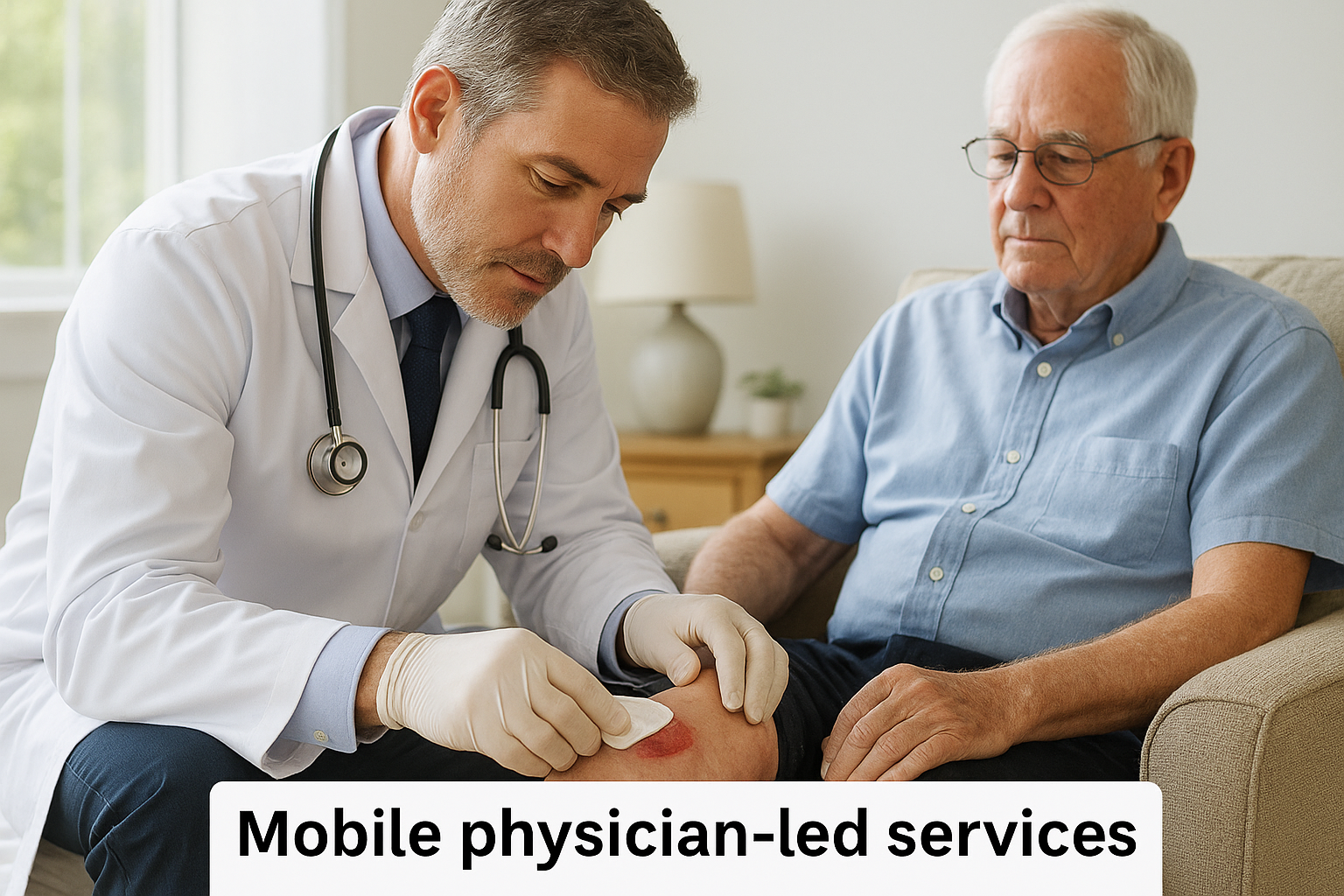
For patients managing complex wound management Philadelphia providers typically see, getting specialist care to the patient rather than the reverse often means faster treatment and better outcomes.
What treatment can include
Treatment for complex wounds varies based on wound type, depth, and your overall health. A specialist managing complex wound management Philadelphia patients typically combines multiple therapies within the same visit, adjusting the approach as the wound responds to each intervention.
Advanced wound therapies
The most significant treatments available through specialist care go well beyond standard dressings. Allograft therapy uses donated human tissue to cover and stimulate healing in wounds that haven’t responded to conventional approaches. Regenerative therapies, including cellular and tissue-based products, encourage the wound bed to rebuild from the inside out rather than simply closing at the surface.
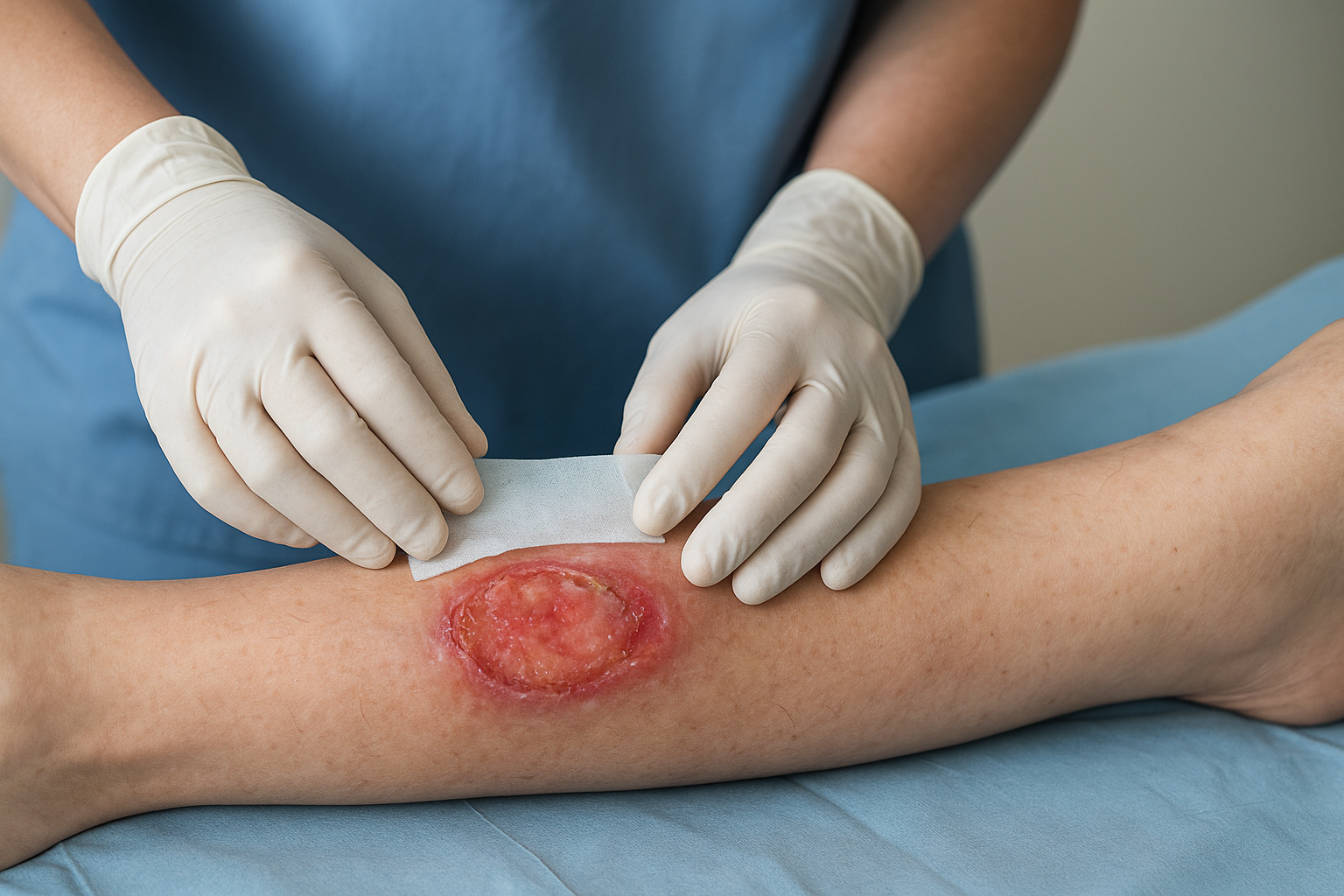
These therapies are covered under Medicare Part B, which means most eligible patients access them with no out-of-pocket cost for the treatment itself.
Wound bed preparation and debridement
Before advanced therapies can work, the wound bed must be properly prepared. Debridement removes dead or infected tissue that blocks healing, and a specialist performs this directly at your bedside during each visit. Ongoing monitoring of wound dimensions, tissue quality, and infection markers gives the physician the data needed to adjust the plan at each visit rather than repeating the same steps when the wound isn’t responding.
Costs and insurance in Philadelphia
Cost is one of the first concerns patients and families raise when looking into complex wound management Philadelphia providers. The good news is that advanced wound care therapies, including allograft and regenerative treatments, are covered under Medicare Part B when provided by an eligible physician in a home or facility setting. This means most Medicare-eligible patients access specialist-level wound care with little to no direct cost for the treatments themselves.
Medicare Part B covers medically necessary wound care services, including advanced biological therapies, when ordered and performed by a licensed physician.
What Medicare covers
Medicare Part B covers physician visits, wound debridement, and cellular or tissue-based products when the care is deemed medically necessary. Philadelphia Wound Care bills Medicare and Medicare Advantage directly, so you don’t manage that process on your own. Coverage extends to mobile visits at your home, skilled nursing facility, or assisted living community.
What you’ll likely pay out of pocket
Your standard Medicare cost-sharing applies, which typically means a 20% coinsurance after your deductible. If you carry a supplemental Medigap policy, that coinsurance is usually covered as well. Commercial insurance plans vary, so confirming your specific benefits before the first visit is worth a quick call to your insurer.
Next steps for care
If you’ve read this far, you likely have a wound that isn’t responding to standard treatment, or you’re helping someone who does. The clearest next step is getting a physician evaluation from a specialist who can assess the wound directly and recommend a treatment plan based on what they actually see, not a general protocol. For most patients dealing with complex wound management Philadelphia providers specialize in, that evaluation can happen at your home or care facility within 24 hours of contact.
You don’t need to arrange transportation, wait weeks for a clinic appointment, or navigate a hospital system to access advanced wound therapies. Philadelphia Wound Care bills Medicare and most major insurance plans directly, so cost rarely becomes a barrier. If you’re a patient, caregiver, or healthcare professional ready to get specialist wound care started, request a mobile wound care visit or submit a referral today.