
Contraindications For Compression Therapy: Safety Checklist
Compression therapy is one of the most effective treatments for venous leg ulcers and chronic lower-extremity edema. But it’s not safe for every patient. Applying sustained pressure to a limb with undiagnosed arterial disease, active infection, or certain other conditions can cause serious harm, including tissue death. That’s why understanding the contraindications for compression therapy is a critical step before wrapping a single bandage.
At Philadelphia Wound Care, our physician-led mobile practice treats complex wounds at the bedside, in private homes, skilled nursing facilities, and hospice settings across the Philadelphia area. A thorough vascular assessment is part of every treatment plan we develop, because knowing when not to use compression matters just as much as knowing when to use it.
This article breaks down the absolute and relative contraindications for compression therapy, explains the reasoning behind each one, and provides a practical safety checklist you can reference before treatment begins. Whether you’re a caregiver, a facility case manager, or a referring clinician, this guide will help you identify the red flags that should pause or prevent compression use in your patient population.
Why contraindications matter for compression therapy
Compression therapy works by applying graduated external pressure to the lower limb, pushing fluid out of the tissue and supporting the venous system in returning blood toward the heart. When a patient has a healthy vascular system, this mechanism reduces swelling, speeds ulcer healing, and prevents recurrence. But the same pressure that benefits a patient with venous insufficiency can severely damage tissue in a patient whose arterial circulation is already compromised. Screening for contraindications for compression therapy is not a formality. It is a clinical requirement that directly determines whether a patient gets better or gets worse.
How compression changes blood flow
When you wrap a limb, you increase the tissue pressure around it. Venous blood, which flows at low pressure back to the heart, responds well to that external support. Arterial blood, however, travels at much higher pressure from the heart outward. If arterial flow is already restricted by peripheral arterial disease or a significant blockage, adding external compression can cut off that already-reduced blood supply entirely. The result can range from worsening ischemia to full-thickness tissue necrosis, outcomes that are the direct opposite of what wound care is meant to achieve.
Applying compression to a limb with undetected arterial insufficiency can accelerate tissue death faster than leaving the wound untreated.
Why the risks extend beyond arterial disease
Arterial compromise is the most recognized danger, but it is not the only one. Active infection in the wound or surrounding tissue creates a separate problem: compression can push bacteria deeper into tissue or restrict the body’s ability to mount a local immune response. Cardiac conditions such as decompensated heart failure are also directly relevant, because compression moves large volumes of fluid back into the central circulation rapidly. In a patient whose heart is already struggling, that fluid shift can trigger pulmonary edema and respiratory distress.
Recognizing all of these risks before treatment begins protects your patient and protects your clinical judgment. Missing a contraindication is not just a procedural error. It can turn a manageable wound into a medical emergency that requires acute hospitalization. Thorough pre-treatment screening is what separates a well-executed compression protocol from a harmful one.
How to screen a patient before applying compression
Screening a patient before applying compression is a structured clinical process, not a casual assessment. Every clinician involved in wound care should follow a consistent pre-treatment protocol that identifies the contraindications for compression therapy before any bandage or stocking goes on. Skipping this step is where most preventable harm in wound care originates.
Measure the ankle-brachial index
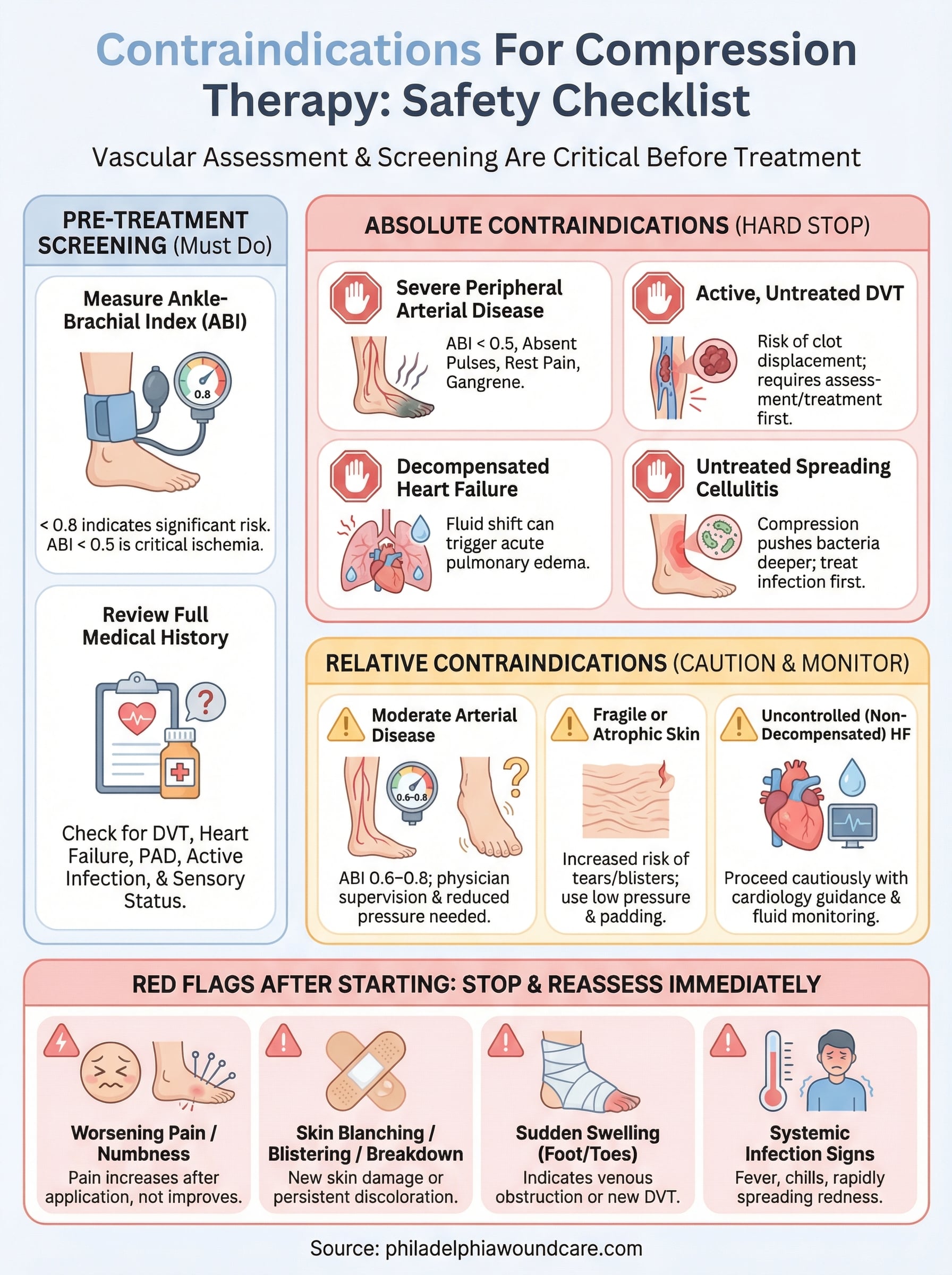
The ankle-brachial index (ABI) is the single most important objective tool in your pre-compression screening. It compares the blood pressure at the ankle to the blood pressure at the arm, giving you a reliable indicator of peripheral arterial circulation. An ABI below 0.8 signals significant arterial compromise and is a firm reason to hold compression. An ABI between 0.8 and 0.6 indicates moderate arterial disease and requires specialist judgment before any compression protocol proceeds.
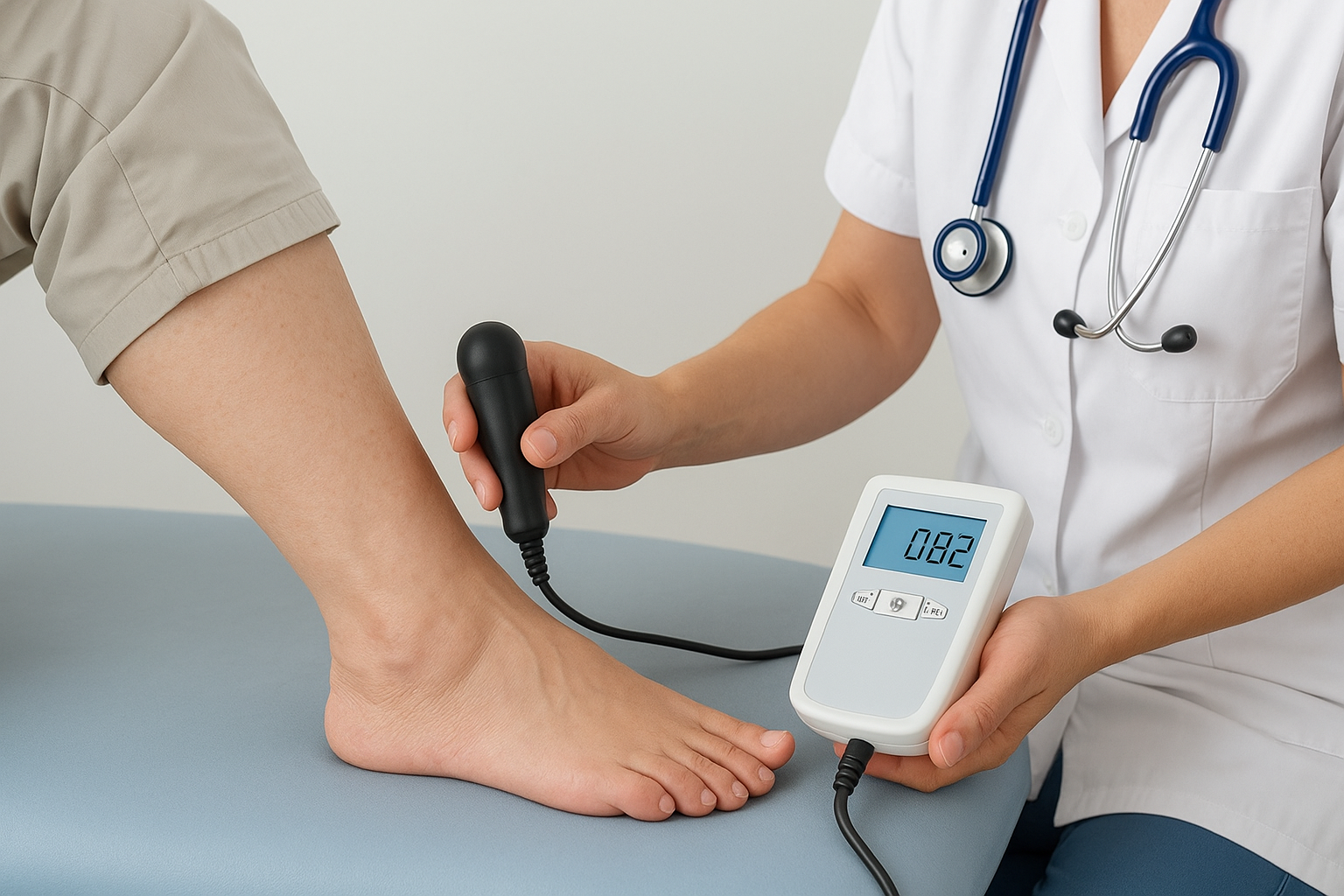
Always obtain an ABI measurement before applying any form of compression to a lower extremity wound.
Review the patient’s full medical history
Beyond the ABI, you need a thorough medical history review that covers cardiac status, current medications, and any active or recent infections. Ask specifically about a history of deep vein thrombosis, heart failure, or peripheral arterial disease, as each condition carries distinct safety implications for compression use. Review the current wound for signs of cellulitis or spreading erythema, both of which require treatment before compression begins. Confirm that the patient can reliably communicate discomfort, because patients with cognitive impairment or sensory neuropathy may not report pain from a poorly fitted or over-tightened wrap.
Absolute contraindications and when to avoid compression
Absolute contraindications for compression therapy are conditions that make compression unsafe under any circumstances. When you identify any of the following clinical situations, compression must stop immediately or never begin at all.
Severe peripheral arterial disease
An ABI below 0.5 represents critical limb ischemia and is the clearest absolute contraindication in wound care practice. At this threshold, the limb is receiving dangerously low arterial perfusion, and any external compression will further reduce blood flow and accelerate tissue loss. You must also hold compression when a patient presents with clinical signs of arterial compromise, such as absent pedal pulses, dependent rubor, or rest pain, even before a formal ABI has been completed.
If a patient reports foot pain at rest or has absent pedal pulses, treat it as critical ischemia until proven otherwise.
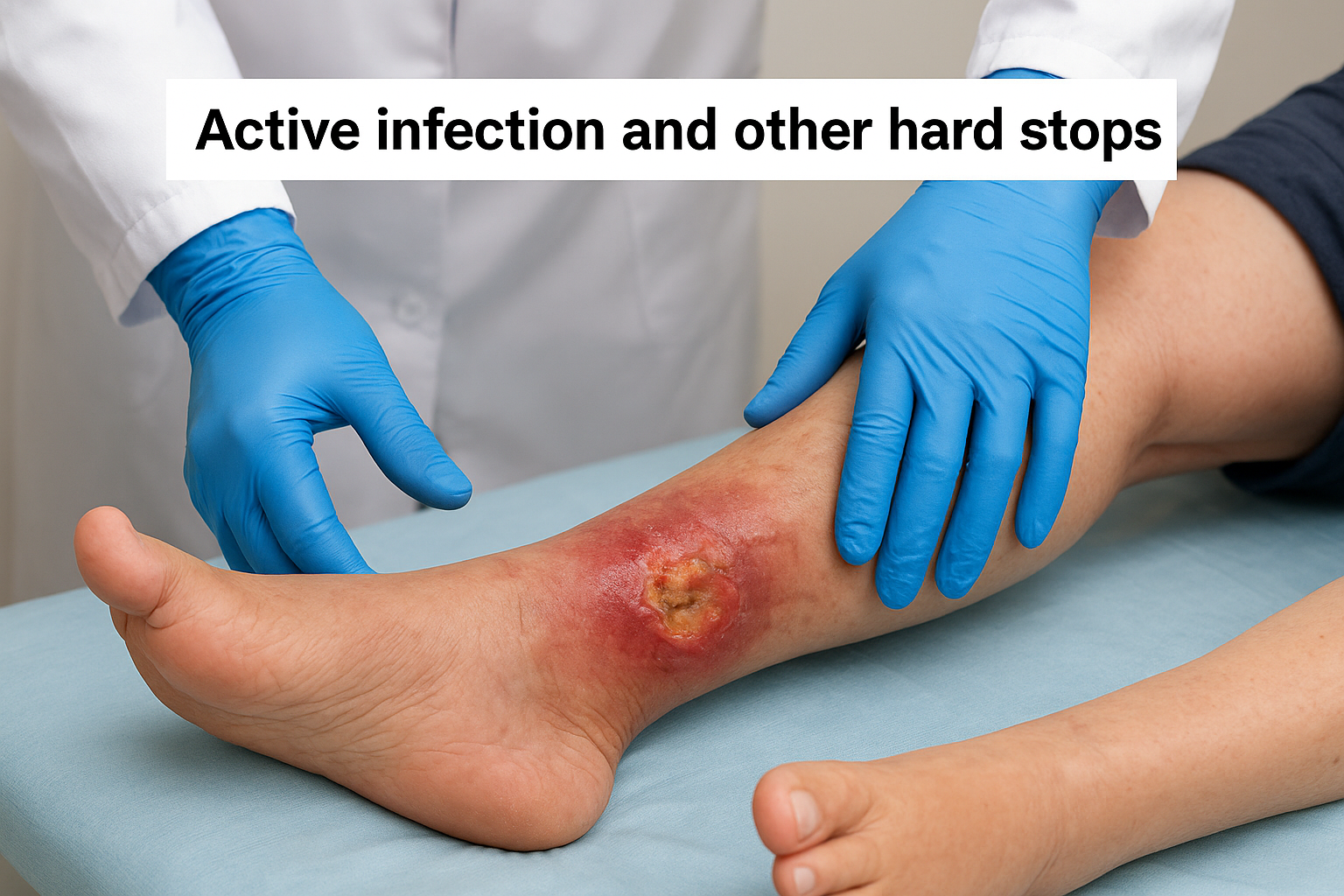
Active infection and other hard stops
Deep vein thrombosis (DVT) that has not yet been assessed or treated is another firm stop. Applying compression to a limb with an acute, untreated DVT carries a real risk of clot displacement. Beyond DVT, decompensated heart failure prevents safe compression because the sudden fluid shift into central circulation can overwhelm a failing heart and cause acute pulmonary edema. Untreated cellulitis spreading beyond the immediate wound margin also falls in this category, since compression can force bacteria deeper into tissue and delay the immune response your patient needs.
Relative contraindications and when to use caution
Relative contraindications for compression therapy are conditions that don’t automatically rule out compression but demand careful clinical judgment and close monitoring. Unlike absolute contraindications, these situations allow compression in some cases, but only when you adjust the pressure level, modify the product choice, or schedule frequent reassessment to catch problems early.
Moderate arterial disease and sensory impairment
An ABI between 0.5 and 0.8 places a patient in moderate arterial compromise territory. Compression may still be appropriate in this range, but only under physician supervision and typically at reduced pressure levels. Diabetic patients with peripheral sensory neuropathy present a related challenge: they may not feel pain from a poorly applied wrap, which means standard discomfort signals that warn of over-compression won’t reach you in time.
If your patient has diabetes and sensory neuropathy, increase your frequency of wound checks and confirm circulation status at every visit.
Conditions requiring adjusted protocols
Fragile or atrophic skin in elderly patients increases the risk of skin tears and blisters under compression wraps. You need to select lower-compression products and pad bony prominences before applying any bandage system.
Uncontrolled but non-decompensated heart failure is another condition where compression may proceed cautiously, with cardiology guidance and close monitoring of fluid balance. Active malignancy affecting the limb also falls in this category, since compression can still reduce swelling and discomfort in palliative care settings when the treating physician has reviewed the overall risk.
Red flags after you start compression and when to stop
Once compression is in place, your clinical responsibility does not end. Some adverse reactions develop hours or days into treatment, not immediately, which means structured reassessment at every visit is a core part of safe practice. Knowing when to stop is as important as recognizing the contraindications for compression therapy before you begin.
Warning signs that require immediate removal
Pain that worsens after application, rather than improving with treatment, signals that the wrap is too tight or that the patient cannot tolerate the pressure level. Act on this right away. Other signs that require you to remove the bandage immediately include:
- Skin blanching, blistering, or new breakdown beneath the wrap
- Numbness or tingling in the foot or toes
- Discoloration that does not resolve when the limb is elevated
Do not wait until the next scheduled visit if a patient reports severe pain or notices skin color changes under their bandage.
Systemic signs that point to a larger problem
Sudden swelling of the foot or toes during a compression course may indicate worsening venous obstruction or an acute DVT developing. Stop compression and contact the supervising physician immediately for vascular reassessment.
Signs of systemic infection, including fever, chills, or rapidly spreading redness beyond the wound margin, also require you to halt compression immediately. Continuing to apply pressure to an actively infected limb restricts the local immune response and increases the risk of bacterial spread into deeper tissue layers.
Key takeaways and what to do next
Compression therapy is a powerful clinical tool, but it requires careful patient screening before you apply it. The contraindications for compression therapy range from absolute stops like critical limb ischemia and decompensated heart failure, to relative cautions like moderate arterial disease and sensory neuropathy. Missing any of these before treatment begins can turn a healing intervention into a serious injury. Ongoing monitoring after application is equally critical, because some adverse reactions develop gradually and require you to act fast when warning signs appear.
Your patient deserves a wound care plan built on thorough vascular assessment and physician-led clinical judgment, not guesswork. If you are managing a complex wound at home, in a skilled nursing facility, or in another care setting, request a mobile wound care evaluation to connect with a specialist who can determine whether compression is appropriate and develop a safe, effective treatment plan from the start.