

Signs Of Arterial Insufficiency: Symptoms, Causes, Treatment
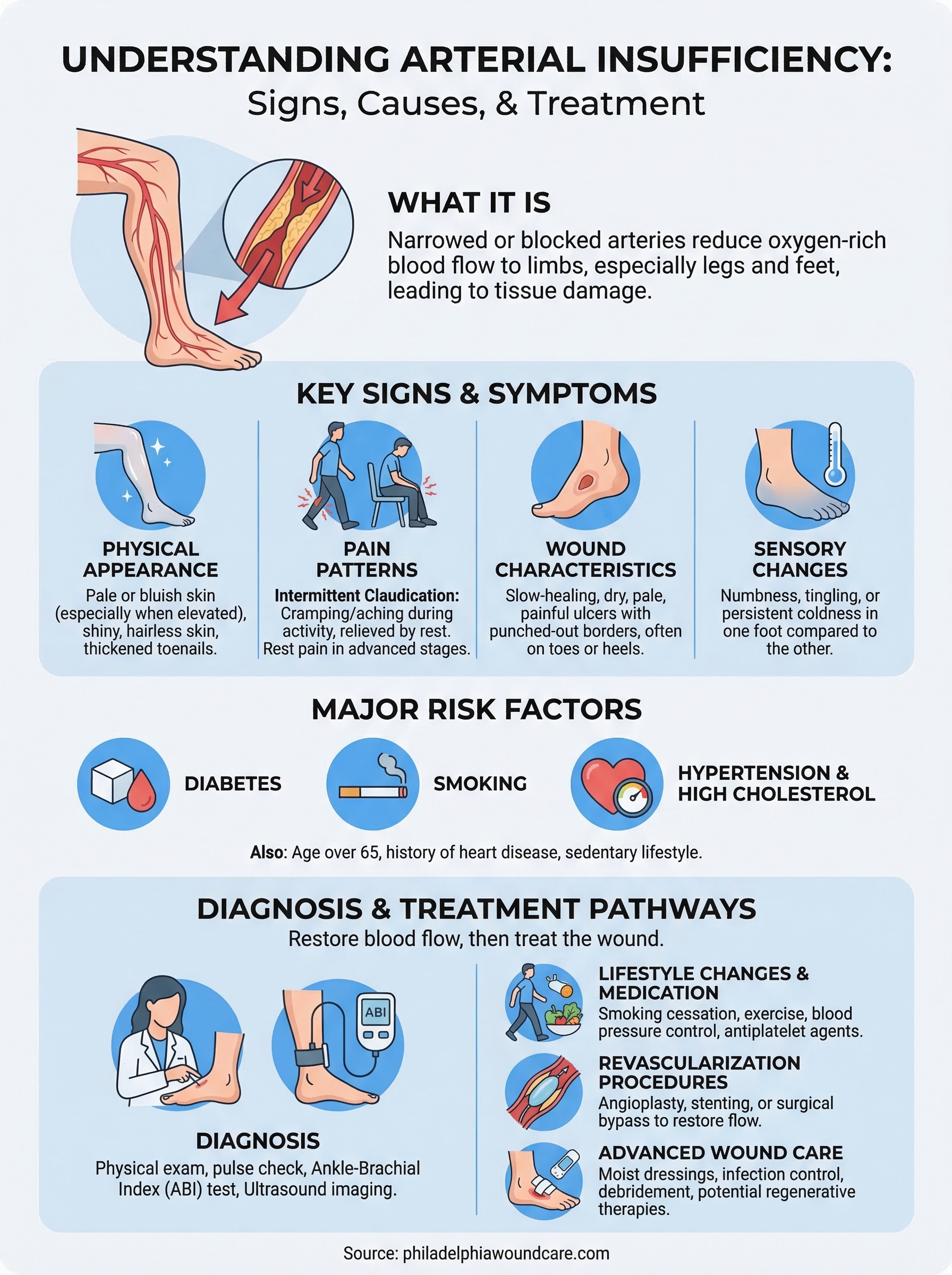
Arterial insufficiency happens when narrowed or blocked arteries reduce blood flow to the limbs, most often the legs and feet. Left unrecognized, it leads to tissue damage, chronic wounds that resist healing, and in serious cases, amputation. Knowing the signs of arterial insufficiency early gives you or your loved one the best chance at effective intervention before complications escalate.
The condition is closely tied to peripheral artery disease (PAD), and it disproportionately affects older adults, especially those managing diabetes or cardiovascular disease. Symptoms can start subtly, cramping during a short walk, cool skin on one foot, a wound that simply won’t close. These warning signs are easy to dismiss, but each one points to a circulation problem that demands medical attention. For patients who are homebound or living in skilled nursing facilities, recognizing these signs is critical because delayed diagnosis often means harder-to-treat wounds.
At Philadelphia Wound Care, our physician-led mobile practice treats the direct consequences of arterial insufficiency every day, particularly non-healing vascular ulcers in patients across the Philadelphia area. This article breaks down the symptoms, underlying causes, risk factors, and treatment pathways for arterial insufficiency so you can act with confidence when something doesn’t look right.
Why arterial insufficiency matters
Arterial insufficiency isn’t a rare or obscure diagnosis. According to the CDC, peripheral artery disease affects more than 6.5 million Americans age 40 and older, making it one of the most widespread vascular conditions in the country. When your arteries narrow due to plaque buildup, less oxygen-rich blood reaches your legs and feet. Tissue that doesn’t receive adequate circulation begins to deteriorate. The damage is gradual and cumulative, which means the longer it goes unrecognized, the harder it becomes to treat effectively.
The connection between arterial insufficiency and PAD
Peripheral artery disease and arterial insufficiency are closely related but not identical. PAD refers to the structural narrowing of arteries outside the heart, while arterial insufficiency describes the functional consequence of that narrowing: inadequate blood delivery to the tissue. Most people with PAD will develop some degree of arterial insufficiency over time, particularly in the lower extremities. Because PAD often progresses slowly, many patients don’t connect the early warning signs of arterial insufficiency to a vascular problem until a wound appears or routine walking becomes painful.
Identifying arterial insufficiency before a wound opens gives clinicians a significantly wider range of effective treatment options.
Who carries the highest risk
Certain chronic conditions and lifestyle factors put you at meaningfully greater risk. Diabetes is among the most influential, because it damages both blood vessels and peripheral nerves simultaneously, which can mask the pain signals that would otherwise prompt a visit to a doctor. Other major risk factors include:
- Hypertension and elevated cholesterol, both of which accelerate arterial plaque buildup
- Smoking, which constricts vessels and speeds atherosclerosis
- A prior history of heart disease or stroke
- Obesity combined with a sedentary lifestyle
- Age over 65, particularly in men
If you or a family member fits several of these categories, even mild or intermittent symptoms warrant a clinical evaluation. Waiting for severe pain or an open wound before seeking care is one of the most common patterns that leads to amputations and prolonged recovery.
Why wounds become the most visible consequence
Many patients receive a formal diagnosis only after a wound stops healing. Arterial ulcers typically appear on the toes, heels, or the bony prominences of the foot because those areas receive the least blood flow under normal conditions. These wounds tend to look dry, pale, and sharply bordered, and they are often intensely painful, especially at rest or when the leg is elevated. That pain pattern is a key clinical marker that separates them from other wound types.
For homebound patients or residents in skilled nursing facilities, these wounds can escalate quickly without specialist oversight. Mobile physician services exist precisely to close that gap, bringing expert vascular wound evaluation directly to the patient rather than placing the burden of travel on someone who is already managing significant health challenges.
Signs and symptoms to watch for
The signs of arterial insufficiency often appear gradually, which makes them easy to rationalize or overlook. You might chalk up leg cramping to overexertion or assume that cold toes are nothing more than a circulation quirk. But these symptoms follow a predictable pattern, and recognizing that pattern early gives clinicians room to intervene before the tissue breaks down.
Physical signs you can see
Your skin tells you a great deal about what is happening beneath it. When blood flow drops in the lower extremities, the tissue begins to reflect that deficit visually. Common observable signs include:
- Pale or bluish skin on the feet or toes, particularly when the leg is elevated
- Shiny, taut skin with little to no hair growth on the lower leg
- Thickened or discolored toenails
- Slow-healing cuts or sores, especially on the toes, heels, or outer ankle
- Visible skin breakdown with a dry, punched-out appearance at the wound edges
If you notice more than one of these signs together, that combination points strongly toward a vascular cause rather than a simple skin or infection issue.
Pain patterns that signal a problem
Intermittent claudication is one of the earliest functional symptoms: a cramping or aching sensation in the calf, thigh, or buttock that appears during activity and eases within a few minutes of rest. It happens because working muscles demand more oxygen than the restricted arteries can supply. As the condition progresses, that threshold drops and pain begins occurring at rest, typically at night or when the leg is elevated.
Rest pain that forces you to hang your foot off the bed for relief is a red flag that requires urgent medical evaluation.
Numbness, tingling, or a persistent feeling of coldness in one foot compared to the other also warrants attention. In patients with diabetes, nerve damage can blunt these pain signals, which means the absence of discomfort does not rule out serious arterial compromise.
Arterial vs venous insufficiency
Both arterial and venous insufficiency affect circulation in the legs, but they arise from completely different mechanisms and produce distinct physical signs that require separate treatment approaches. Confusing the two carries genuine clinical risk, because treatment strategies that support one condition can actively worsen the other. Compression therapy is a cornerstone of venous insufficiency care, but applying compression to an arterially compromised leg reduces blood flow further and can accelerate tissue damage.
Key differences in appearance and pain
Arterial insufficiency results from arteries too narrow to deliver adequate oxygenated blood to the tissue. Venous insufficiency, by contrast, happens when damaged or incompetent valves in the veins fail to return blood efficiently toward the heart, causing fluid to pool in the lower legs. The wounds each condition produces look noticeably different when you examine them closely.

| Feature | Arterial Insufficiency | Venous Insufficiency |
|---|---|---|
| Wound location | Toes, heels, bony prominences | Inner ankle, lower leg |
| Wound appearance | Dry, pale, punched-out borders | Moist, irregular, shallow |
| Skin around wound | Shiny, hairless, cool to touch | Thickened, discolored, warm |
| Pain pattern | Worse at rest or with elevation | Relieved by elevation |
| Pulse | Diminished or absent | Usually present |
A simple pulse check at the foot can quickly differentiate the two conditions and guide the next clinical step.
Why the distinction changes your treatment path
Recognizing the signs of arterial insufficiency versus venous disease shapes every decision that follows, from wound dressing selection to whether you need a vascular specialist involved. Arterial wounds require restoring blood flow first, through revascularization procedures or medications that improve peripheral circulation. Venous wounds respond to compression, leg elevation, and moisture-balanced dressings.
Some patients carry both conditions at the same time, a presentation called mixed insufficiency, which makes accurate diagnosis even more important. A clinician who treats the venous component aggressively without addressing the arterial deficit can cause serious harm. Getting the right diagnosis before starting any treatment protocol is not optional; it is the foundation of safe wound care.
How clinicians diagnose arterial insufficiency
When you or a family member shows signs of arterial insufficiency, a clinician’s first goal is to measure how much blood flow the limb is actually receiving. Diagnosis relies on a combination of physical examination, non-invasive testing, and imaging, and most of the core assessments can be completed at the bedside or in an outpatient setting without any invasive procedures.
The ankle-brachial index (ABI) test
The ankle-brachial index is the standard first-line diagnostic tool for arterial insufficiency. A clinician uses a handheld Doppler device and blood pressure cuffs to compare the systolic blood pressure at your ankle to the pressure at your arm. A healthy ratio sits between 1.0 and 1.4. A result below 0.9 indicates arterial narrowing, and a result below 0.4 points to critical limb ischemia that requires urgent intervention. The test is painless, takes roughly 15 minutes, and delivers objective data that guides every treatment decision that follows.
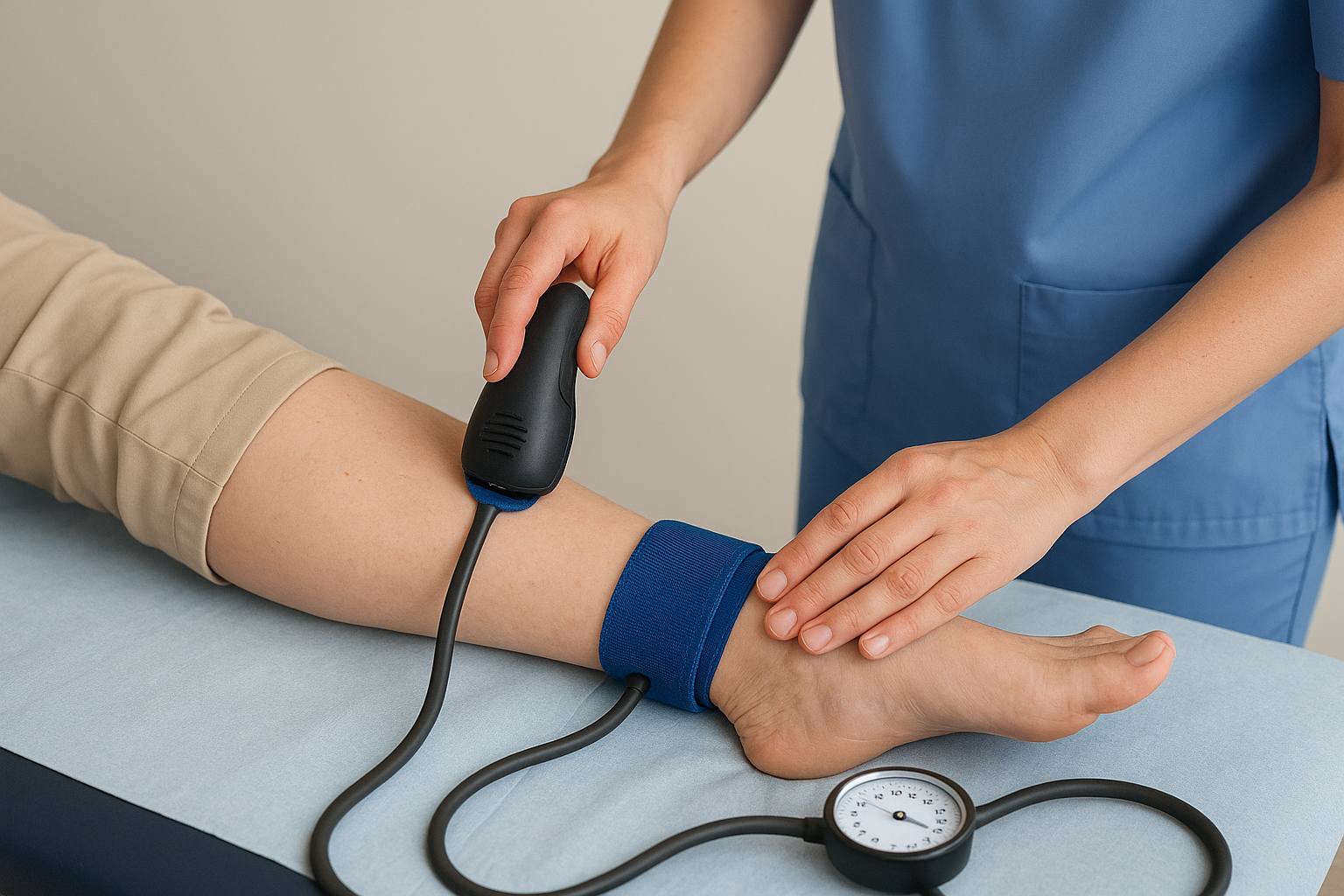
An ABI result alone doesn’t tell the whole story, but it gives clinicians a reliable, reproducible baseline to track how the condition responds to treatment over time.
Patients with diabetes present a diagnostic challenge because calcified arterial walls can produce falsely elevated ABI readings, making the vessels appear less compromised than they are. In those cases, clinicians rely on additional measurements such as the toe-brachial index, which uses smaller cuffs on the toe and tends to be more accurate in diabetic patients.
Imaging and additional assessments
When the ABI or clinical exam suggests significant disease, the next step is typically duplex ultrasound imaging, which maps blood flow velocity and identifies where blockages are located along the vessel. This guides decisions about whether a revascularization procedure is appropriate.
For complex cases, CT angiography or magnetic resonance angiography provides detailed three-dimensional images of the arteries. These studies help vascular surgeons plan interventions with precision. Your clinician will choose the right imaging tier based on how severe your symptoms are and what treatment options are being considered.
Treatment options and what to expect
Treatment for arterial insufficiency follows a clear priority: restore adequate blood flow first, then address the wound. A wound on a limb with compromised circulation will not heal regardless of how well it is dressed or cleaned. Once you and your clinician have identified the signs of arterial insufficiency and confirmed the severity through testing, the treatment plan divides into two parallel tracks: improving circulation and protecting the affected tissue while healing takes place.
Restoring blood flow through revascularization
When arterial narrowing is moderate to severe, a vascular specialist will evaluate whether a revascularization procedure is appropriate. The two most common approaches are angioplasty with stenting, which opens the blocked vessel from the inside using a small balloon and mesh tube, and surgical bypass, which routes blood around the obstruction through a graft. Your vascular surgeon will choose based on the location and extent of the blockage.
Not every patient is a candidate for revascularization, and your overall cardiovascular health plays a direct role in determining which option carries an acceptable risk.
For patients who are not surgical candidates, medications such as cilostazol or antiplatelet agents can improve walking distance and reduce clot risk, though they do not reverse structural arterial disease. Lifestyle changes including smoking cessation, blood pressure control, and structured walking programs also support circulation and slow disease progression meaningfully.
Managing wounds and protecting tissue
Once blood flow is stabilized or maximized, wound care focuses on creating the conditions the tissue needs to close. Arterial ulcers require moist wound environments, debridement of non-viable tissue, and infection control. For wounds that remain non-responsive to standard care, advanced therapies such as allograft and regenerative tissue products can stimulate healing by introducing biological scaffolding that supports new tissue growth.
Pain management is a parallel concern because arterial wounds are frequently painful at rest. Coordinating wound care with pain control improves your tolerance for necessary treatments and supports overall recovery.
What to do next
The signs of arterial insufficiency are rarely dramatic at first, but each one carries real clinical weight. If you recognize any of the symptoms covered in this article, including rest pain, pale or hairless skin on your lower leg, or a wound that refuses to close, waiting does not make those problems easier to treat. The earlier a clinician evaluates your circulation, the broader the range of effective options that remains available to you.
For patients and families in the Philadelphia area, Philadelphia Wound Care brings physician-led wound evaluation directly to your home, skilled nursing facility, or assisted living community. You don’t need to arrange transportation or wait for a clinic opening. If you are managing a non-healing wound or want a specialist’s assessment of vascular symptoms, schedule a mobile wound care visit today and get the expert care you need exactly where you are.