

Home Wound Care Services Philadelphia: What To Expect
Getting to a wound care clinic isn’t always realistic. Between limited mobility, chronic pain, and the logistics of transporting a loved one across the city, the trip itself can feel like its own medical event. That’s exactly why home wound care services Philadelphia families rely on have become a critical piece of the recovery process, bringing physician-led treatment directly to the bedside, whether that’s a private residence, skilled nursing facility, or hospice setting.
At Philadelphia Wound Care, this is all we do. Our General Surgeon provides advanced wound management in your home or facility, handling everything from diabetic ulcers to post-surgical wounds that aren’t healing on schedule. We work with Medicare, Medicare Advantage, and major commercial insurers so that access to specialist-level care doesn’t hinge on your ability to get to a clinic.
This article breaks down what home wound care actually involves in practice, the types of wounds treated, what a typical visit looks like, how referrals work, and what you or your loved one should expect from the first call through ongoing treatment. If you’re weighing your options or a case manager exploring external wound care resources, this guide covers the details that matter before you make a decision.
Why home wound care matters in Philadelphia
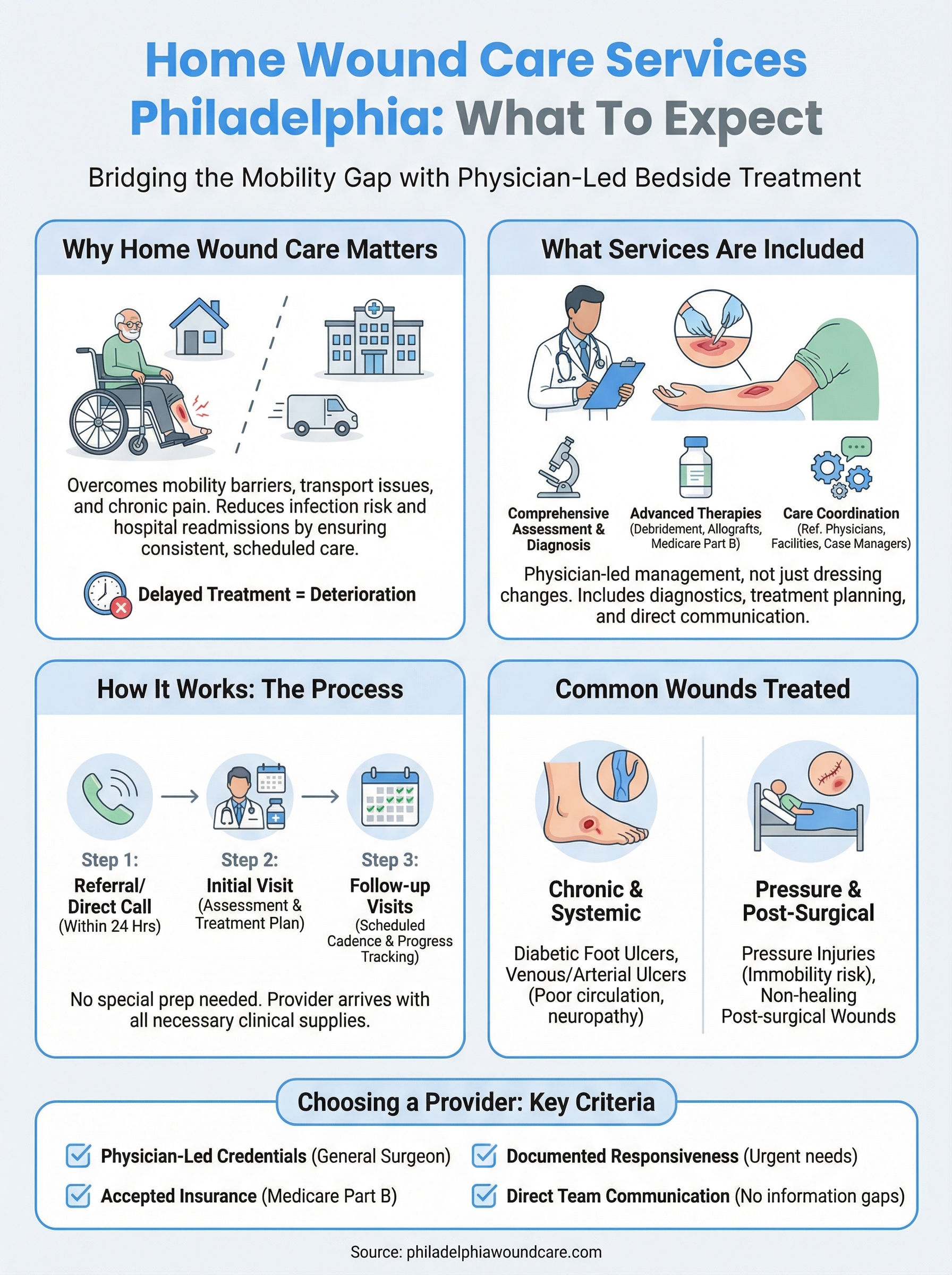
Philadelphia has one of the largest senior populations on the East Coast, and that reality shapes the demand for wound care delivery. Many patients dealing with chronic wounds like diabetic foot ulcers, pressure injuries, and vascular ulcers also face mobility limitations that make getting to a clinic difficult or impossible. When those patients miss follow-up appointments or delay treatment, wounds deteriorate fast. What starts as a manageable ulcer can progress to a deep tissue infection, a hospital readmission, or, in severe cases, an amputation.
The mobility gap in wound care access
When a wound isn’t healing, it needs consistent, hands-on clinical attention on a regular schedule. That’s hard to maintain when your loved one uses a wheelchair, lives in a skilled nursing facility, or doesn’t have reliable transportation. Philadelphia’s mix of dense row-home neighborhoods, aging housing stock, and limited transit options means many patients are technically near a wound care clinic but face real logistical barriers getting there safely and consistently.
Skipping even one wound care visit can allow an infection to take hold, turning a manageable wound into a serious medical emergency that lands a patient back in the hospital.
Home wound care services Philadelphia providers offer close that gap directly. Instead of coordinating medical transport, managing pain during the trip, and waiting in a clinic, your loved one receives physician-level wound evaluation and treatment in their own space. For patients in assisted living or skilled nursing facilities, this also means the clinical team maintains direct visibility into wound status rather than relying on nursing notes between visits. Consistent specialist access, delivered where the patient already is, changes the recovery trajectory in a way that sporadic clinic visits simply can’t.
What home wound care services include
Home wound care services Philadelphia providers offer go well beyond basic dressing changes. A physician-led program delivers comprehensive wound assessment, diagnosis, and treatment planning at every visit, not just wound cleaning and bandaging. That distinction matters: a General Surgeon evaluating your wound can identify early signs of infection, adjust treatment protocols on the spot, and order labs or imaging without routing you back through a clinic.
Clinical treatments and therapies
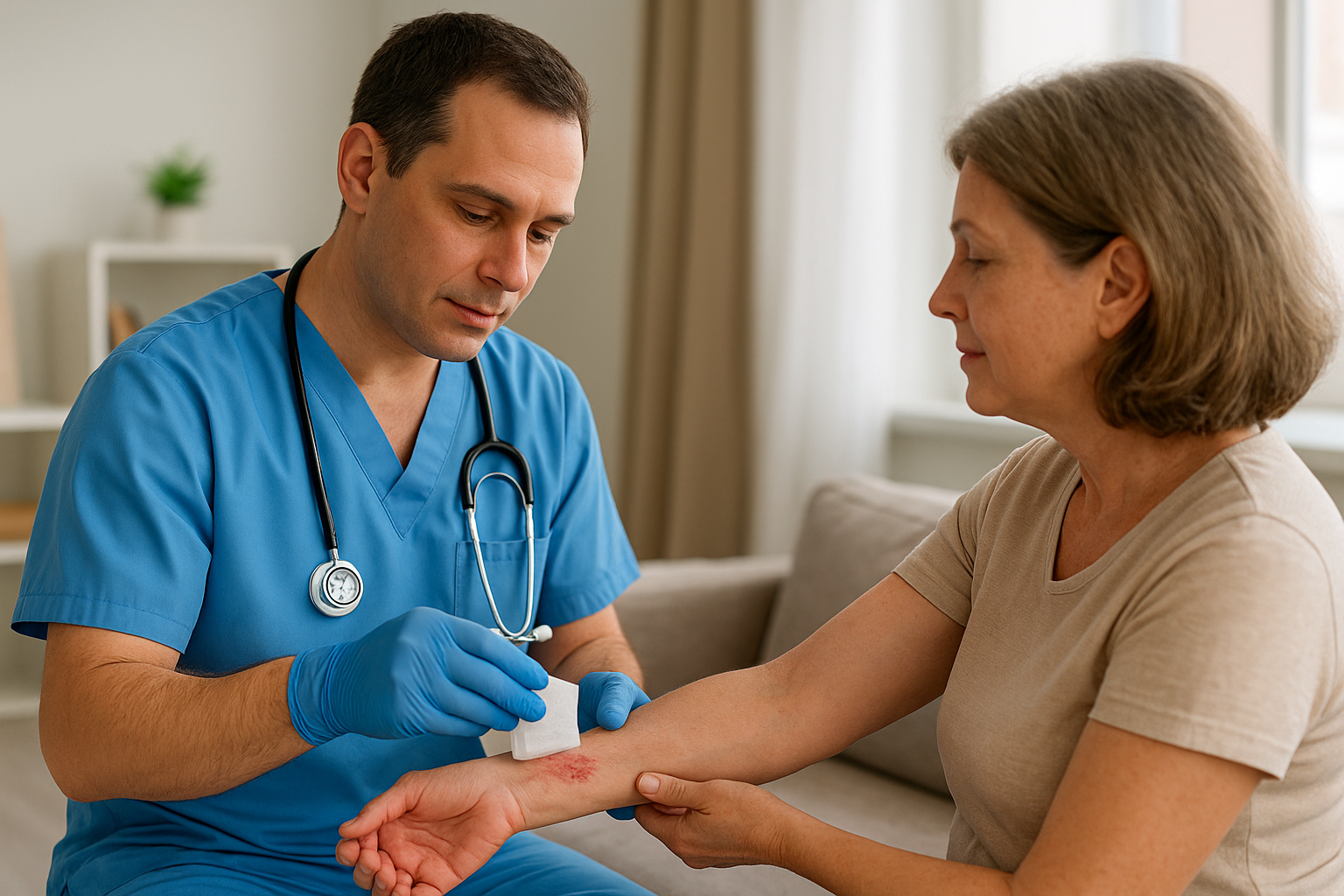
At a typical visit, your provider will debride wound tissue, apply prescription-grade wound care products, and reassess healing progress against a documented baseline. For wounds that haven’t responded to standard care, allograft and regenerative therapies are available and covered under Medicare Part B, which eliminates the cost barrier that pushes many patients toward less effective options.
Access to advanced therapies in your own home, covered by Medicare, removes one of the biggest obstacles between a chronic wound and actual healing.
Your provider also handles care coordination, communicating directly with your referring physician, facility nursing staff, or hospital case manager to keep everyone aligned on the current treatment plan. Nothing falls through the cracks between visits because everyone involved stays informed throughout the entire course of care.
How in-home wound care visits work
The process starts with a referral or direct call, after which we schedule an initial evaluation within 24 hours. You don’t need to prepare anything special. Your provider arrives at your home or facility with the clinical supplies needed to assess and treat your wound on the same visit.
What happens at the first visit
Your provider conducts a full wound assessment, documenting size, depth, tissue quality, and any signs of infection. From that baseline, a treatment plan is built around your specific wound type and medical history. A typical first visit covers:
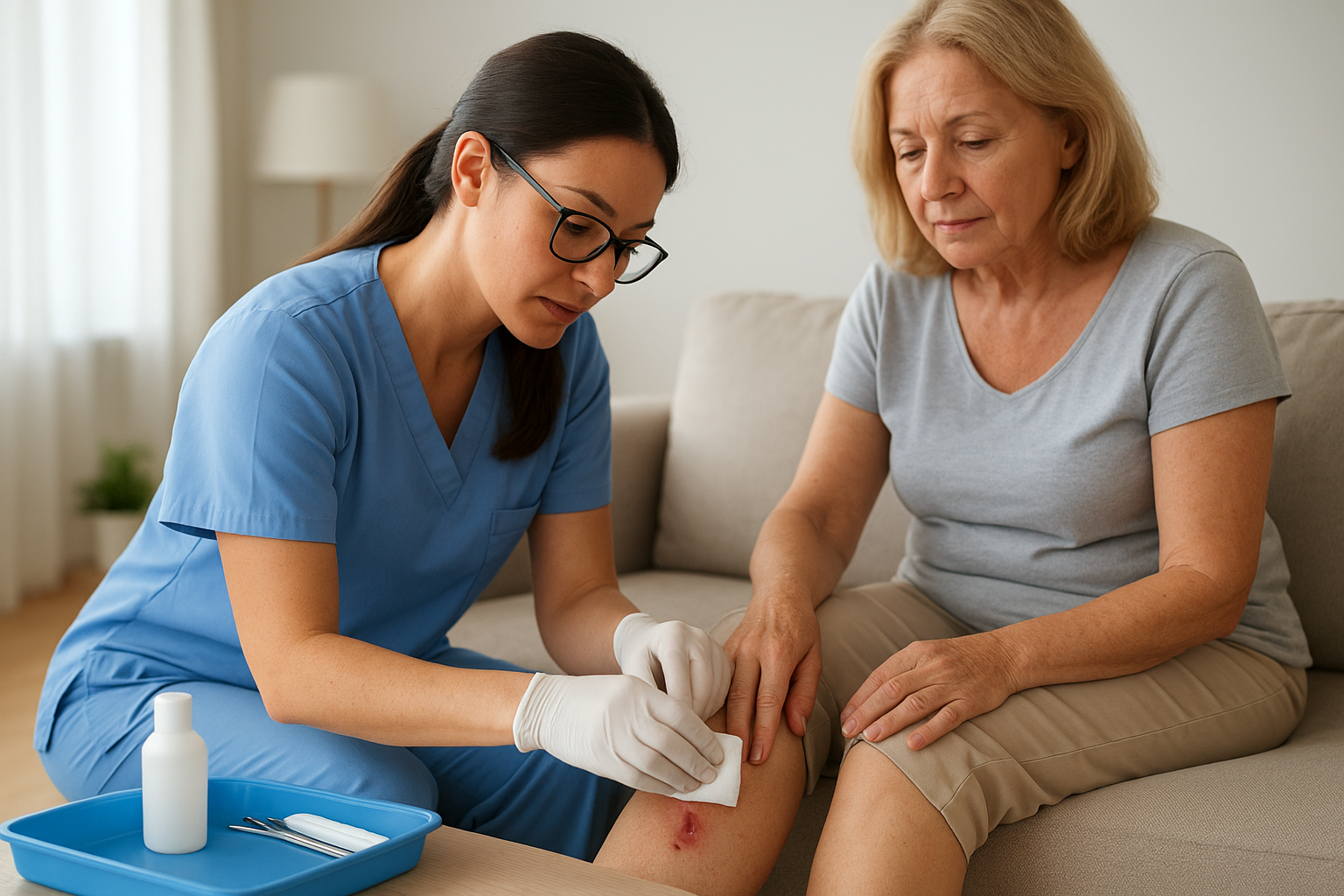
- Wound measurement and photographic documentation
- Debridement and dressing application
- Insurance verification for advanced therapies if needed
Starting with a thorough baseline assessment on day one is what separates a structured treatment program from a routine dressing change.
Follow-up visits and ongoing care
Subsequent visits follow a scheduled cadence, typically weekly or more frequent depending on wound severity. Each appointment builds on the previous one, tracking progress against your documented baseline and adjusting the plan if healing stalls. Home wound care services Philadelphia patients receive also include direct communication between your provider and any referring physicians or facility nursing staff, so your entire care team stays aligned without you having to coordinate it yourself.
Common wounds treated with at-home care
Not every wound requires a hospital stay, but some wounds need specialist-level intervention to heal safely. The most common wound types treated at home fall into a few well-defined categories, each with distinct clinical demands and required treatments.
Chronic wounds tied to systemic conditions
Diabetic foot ulcers and venous or arterial ulcers are among the most frequently managed wounds in home settings. Poor circulation and nerve damage prevent the body from signaling injury effectively, which means these wounds can progress rapidly without regular physician oversight. Home wound care services Philadelphia patients dealing with diabetes or vascular disease rely on provide the consistent, hands-on evaluation these wound types require to avoid serious complications.
Patients at high risk for chronic wounds typically share a few common factors:
- Uncontrolled blood sugar or peripheral neuropathy
- Reduced circulation from vascular disease
- Limited mobility that delays self-detection of early wound changes
Pressure injuries and post-surgical wounds
Patients who are largely immobile due to illness or post-surgical recovery face constant risk for pressure injuries, which can advance through multiple tissue-damage stages faster than most families expect. Deep-stage pressure ulcers require physician-prescribed debridement and advanced dressings to heal correctly. Post-surgical wounds that fail to close on schedule also fall into this category, needing structured monitoring to catch infection before it takes hold.
Treating a pressure injury at an early stage is far more effective than managing one that has already progressed to deep tissue damage.
Choosing a home wound care provider in Philadelphia
Not every provider offering home wound care services Philadelphia patients can access brings the same level of clinical expertise. The difference between a nurse-led home health agency and a physician-led wound care practice is significant, especially for complex or non-healing wounds that require diagnosis, debridement, or access to advanced therapies.
What to look for in a provider
When evaluating your options, focus on the credentials behind the service, the insurance plans accepted, and the provider’s responsiveness. A practice staffed by a licensed General Surgeon can adjust your treatment plan on the spot, prescribe advanced wound therapies, and document clinical findings in a way that nursing-only services typically cannot.
The right provider manages your wound as an active medical case, not just a recurring dressing change.
Your referring physician or facility case manager should also be able to communicate directly with the wound care provider between visits. That coordination keeps your entire care team aligned and prevents the information gaps that stall healing or lead to unnecessary hospitalizations.
Key factors to evaluate when choosing a provider:
- Clinical credentials (physician-led vs. nurse-led)
- Accepted insurance, including Medicare Part B for advanced therapies
- Documented response time for urgent wound needs
- Direct communication with your existing care team
Next steps
If you or someone in your care is dealing with a wound that isn’t closing on schedule, the next step is straightforward: connect with a physician-led wound care provider who can evaluate the wound in person, build a treatment plan, and start care without requiring a clinic visit. Home wound care services Philadelphia patients need most don’t require lengthy intake processes or referral paperwork to get started. A direct call or a submitted referral gets the process moving within 24 hours.
Your existing care team doesn’t get left out of the process either. Philadelphia Wound Care coordinates directly with referring physicians, facility nurses, and case managers so that everyone involved stays aligned from the first visit forward. If you’re ready to get specialized wound care started for yourself or a patient in your care, request a mobile wound care visit or reach out through our contact page to speak with our team directly.