

Jefferson Health Wound Care: Services, Locations & Options
If you’re dealing with a chronic or non-healing wound in the Philadelphia area, you’ve likely come across Jefferson Health wound care during your search for treatment options. Jefferson Health operates multiple wound care centers across the region, offering specialized therapies for patients with complex wounds, from diabetic ulcers to venous insufficiency wounds and post-surgical complications.
Choosing the right wound care provider matters. The difference between a wound that heals and one that lingers often comes down to timely access to specialist-level treatment and the type of therapies available. At Philadelphia Wound Care, we understand this firsthand, as a physician-led mobile practice, we work alongside hospital systems and facilities throughout the area, and many of our patients come to us after discharge from programs like those at Jefferson Health. We see the full picture of what’s available and what gaps remain, especially for patients who struggle to travel to clinic-based appointments.
This article breaks down Jefferson Health’s wound care services, locations, and treatment options so you can make an informed decision about your care. We’ll also cover how their approach compares to other models, including mobile wound care, so you know the full range of choices available to you in the Philadelphia region.
What Jefferson Health wound care includes
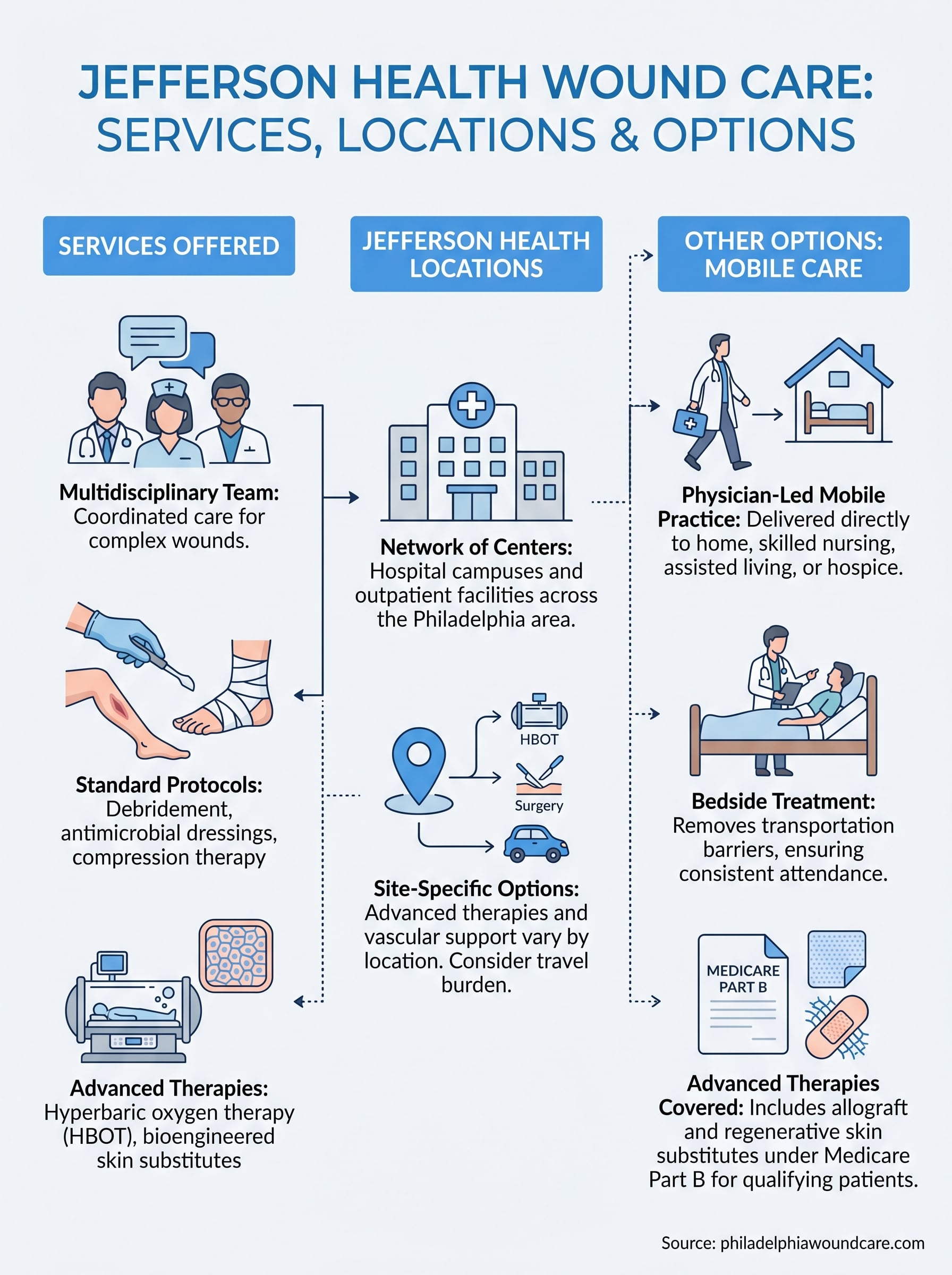
Jefferson Health operates a network of outpatient wound care centers throughout the greater Philadelphia area. These centers follow a multidisciplinary model, meaning your care team typically includes physicians, nurses, and wound specialists who coordinate around your specific wound type and medical history. The program is designed for patients whose wounds haven’t responded to standard treatments and need a higher level of clinical attention.
Multidisciplinary wound care has been shown to significantly reduce healing times compared to single-provider management for complex wounds.
The clinical team involved
Jefferson Health wound care centers are typically staffed by wound care physicians, vascular surgeons, and certified wound care nurses. You’ll receive an initial evaluation to assess wound depth, size, and underlying causes before a treatment plan is created. That plan gets adjusted at each visit based on how your wound responds.
Your referring physician can coordinate directly with the Jefferson team, which helps avoid gaps in your overall care. This is especially important if you’re managing a condition like diabetes or peripheral artery disease alongside your wound, since communication between providers reduces the risk of conflicting treatments or missed warning signs.
What a typical visit looks like
During a visit, your care team will debride the wound if needed, which means removing damaged or dead tissue to encourage healthy tissue growth. They’ll also apply appropriate dressings, assess for infection, and document changes since your last appointment. Advanced therapies such as bioengineered skin substitutes or hyperbaric oxygen therapy may be introduced if your wound isn’t progressing on a standard protocol.
Most patients attend appointments once or twice per week, depending on wound severity. Each visit takes roughly 30 to 60 minutes, though initial evaluations tend to run longer as the team gathers a full clinical picture. Frequency typically decreases as your wound shows consistent improvement over time.
Conditions and wounds they commonly treat
Jefferson Health wound care centers focus on wounds that haven’t responded to basic treatment over several weeks. If your wound has stalled or is getting worse despite routine care, you’re likely a candidate for the specialized level of assessment their teams provide.
Chronic wounds tied to underlying health conditions
Most patients referred to Jefferson’s wound care program have wounds directly tied to a systemic condition affecting circulation or immune response. Diabetic foot ulcers are among the most common, since elevated blood sugar slows healing and reduces sensation, which means wounds can worsen before you notice them. Venous leg ulcers, caused by poor blood return in the veins, also make up a significant portion of cases, as do arterial ulcers resulting from reduced blood flow to the limbs.
Without treatment targeting the root cause, diabetic and vascular wounds are among the most likely to recur or progress to serious complications.
Pressure injuries and post-surgical wounds
Pressure injuries, commonly called bedsores or pressure ulcers, develop when prolonged pressure cuts off blood flow to tissue. These are especially common in patients who are bedridden or have limited mobility. Jefferson’s team classifies these by stage and depth to determine the right level of intervention.
Post-surgical wounds that fail to close properly are another frequent reason for referral. Infection, poor circulation, or compromised tissue at the surgical site can all prevent normal healing, and these cases often need more than standard wound dressing protocols.
Services and therapies you may be offered
Jefferson Health wound care centers offer a range of treatments that go well beyond basic dressing changes. What you receive depends on your wound type, severity, and how it has responded to prior treatment. Understanding the options available helps you ask the right questions when you meet with your care team.
Standard wound care protocols
Your first line of treatment will typically include professional debridement, antimicrobial dressings, and compression therapy for wounds with a venous component. The team monitors healing progress at each visit and adjusts dressings or cleaning protocols based on what they observe. Consistent documentation of wound measurements helps the team spot when a wound is stalling and needs a different approach.
Advanced therapies for non-healing wounds
When a wound does not respond to standard care, your provider may introduce therapies with stronger clinical evidence behind them. Hyperbaric oxygen therapy (HBOT) is one of the more well-known options, where you breathe concentrated oxygen in a pressurized chamber to boost tissue repair at the wound site.
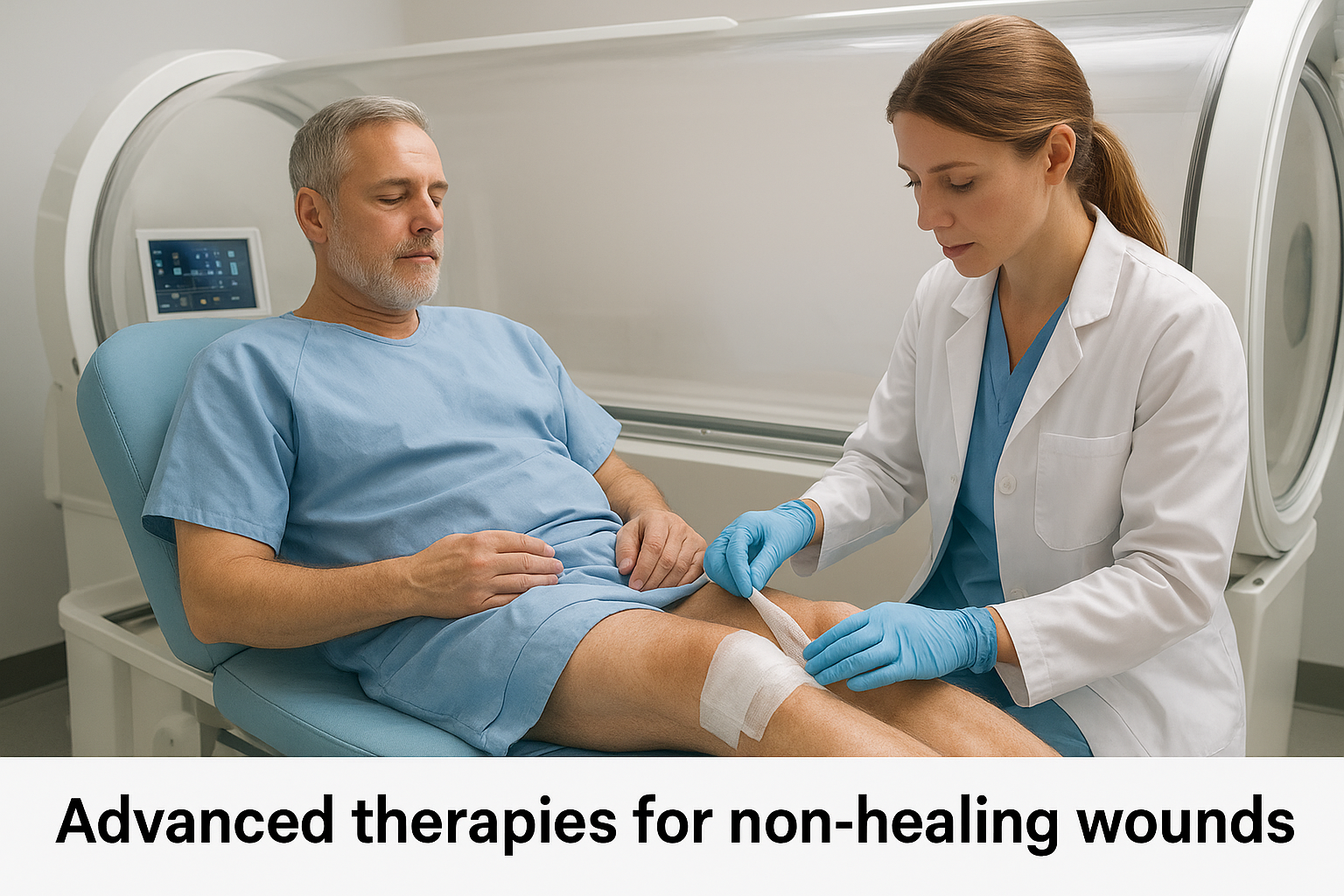
Hyperbaric oxygen therapy is covered by Medicare for approved indications, including diabetic foot ulcers that have not improved after 30 days of standard treatment.
Bioengineered skin substitutes and cellular tissue products, sometimes called allografts, are another option. These grafts help stimulate healing in wounds where the body’s natural repair process has stopped making progress.
Locations and how to choose the right site
Jefferson Health operates wound care centers at multiple hospital campuses and outpatient facilities across the Philadelphia region. Before you book an appointment, it’s worth comparing your options, since travel burden and site-specific services can significantly affect how consistently you attend and how quickly your wound heals.
Jefferson Health wound care locations
Jefferson Health wound care is available at several sites across the Philadelphia area, including Thomas Jefferson University Hospital in Center City. Additional outpatient locations serve patients in the surrounding suburbs, which means you likely have more than one option depending on where you live or receive primary care.
Each location may differ slightly in which advanced therapies are available on-site, such as whether hyperbaric oxygen chambers are present or whether vascular surgical support is accessible at that campus. Calling ahead to confirm what a specific site offers helps you avoid being redirected mid-treatment.
Confirming therapy availability at your preferred site before your first visit prevents unnecessary delays in your care plan.
Picking the right site for your situation
When choosing a location, think about how you will get there and how often. If you need twice-weekly visits, a facility 45 minutes away creates a real barrier to consistent attendance. Ask your referring physician which site has the strongest match for your specific wound type, since some locations carry more specialized staff for vascular conditions or surgical wound complications than others.
Other options for wound care in Philadelphia
Jefferson Health wound care is one strong option in the region, but it is not your only one. If you have trouble traveling to a clinic, live in a long-term care facility, or were recently discharged from a hospital and need immediate follow-up, other care models may fit your situation better.
Mobile wound care for patients who cannot travel
Philadelphia Wound Care offers physician-led wound care delivered directly to your home, skilled nursing facility, assisted living community, or hospice setting. A licensed General Surgeon assesses and treats your wound at your bedside, which removes the transportation barrier entirely. Advanced therapies including allograft and regenerative skin substitutes are available under this model and are covered by Medicare Part B for qualifying patients.
If you miss appointments because of transportation or mobility challenges, mobile wound care can directly improve your healing outcomes by keeping your treatment schedule consistent.
How to decide which option fits you
Your wound type, mobility level, and living situation all factor into this decision. Clinic-based programs work well if you can travel reliably and need on-site imaging or hyperbaric therapy. Mobile care works better when consistent attendance is the bigger obstacle. Talk to your referring physician about which setting matches your actual circumstances, not just which one is closest, since access to treatment is only useful if you can consistently show up for it.
Next steps
You now have a clear picture of what jefferson health wound care offers, from standard debridement and dressings to advanced therapies like hyperbaric oxygen and allograft treatments. The right next step depends on your mobility, wound type, and how consistently you can access clinic-based care. If travel is manageable and your wound needs on-site imaging or hyperbaric therapy, booking with Jefferson is a reasonable path forward.
For patients who struggle to get to a clinic reliably, a mobile care model removes that barrier completely. Philadelphia Wound Care brings physician-led wound treatment directly to your home, nursing facility, or assisted living setting, with advanced therapies covered under Medicare Part B. Consistent attendance drives healing outcomes, and mobile care keeps your treatment on schedule regardless of transportation challenges. If that fits your situation, contact our team to request mobile wound care in Philadelphia and get your care started quickly.