

Advanced Wound Care Philadelphia: Options, Costs, Next Steps
If you or someone you care for is dealing with a wound that won’t close, a diabetic ulcer, a surgical site that stalled, a pressure injury that keeps getting worse, you already know that standard treatment isn’t cutting it. Searching for advanced wound care Philadelphia options means you need a higher level of intervention, and you need it from someone who actually specializes in these cases. The good news: Philadelphia has several pathways to expert wound management, from hospital-based clinics to mobile physician services that come directly to you.
At Philadelphia Wound Care, we provide physician-led mobile wound treatment across the Philadelphia region, bringing advanced therapies, including allograft and regenerative treatments, to patients at home, in skilled nursing facilities, and in hospice settings. We built this practice around the reality that many people with chronic wounds can’t easily get to a clinic. But whether our model fits your situation or another provider does, you deserve a clear picture of what’s available, what it costs, and how to move forward. That’s exactly what this article covers.
What advanced wound care includes
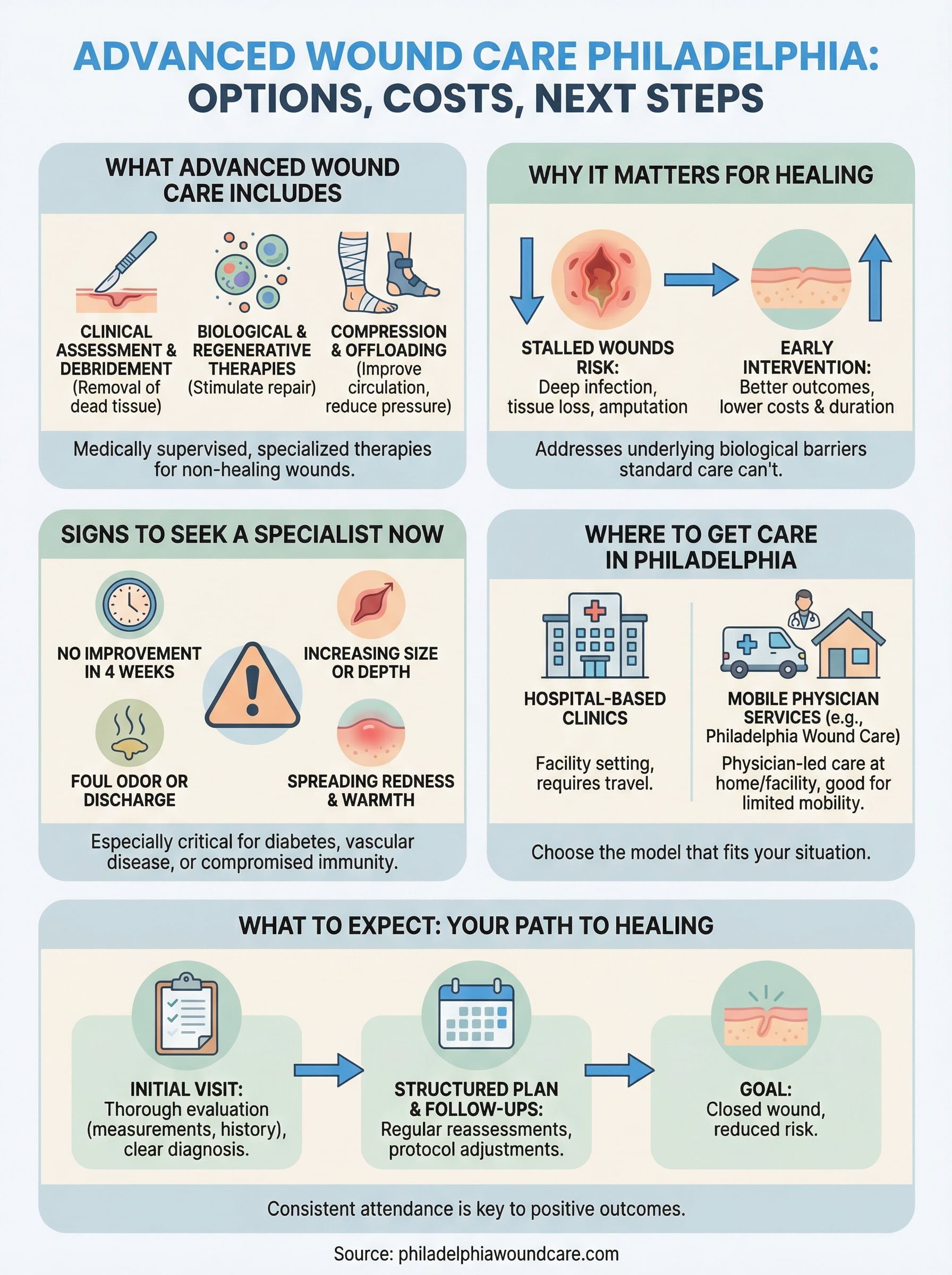
Advanced wound care goes well beyond cleaning and bandaging. It’s a medically supervised approach that uses clinical assessment, specialized therapies, and ongoing monitoring to treat wounds that haven’t responded to standard care. The goal isn’t just to protect the wound. It’s to actively change the healing environment so the body can finally close what it couldn’t before.
When a wound hasn’t improved within four weeks of standard treatment, that’s a signal you need a specialist-level approach, not more of the same.
Diagnostic evaluation and tissue management
Your specialist starts by examining wound depth, tissue health, circulation, and infection risk to build an accurate picture of what’s happening beneath the surface. From there, debridement, the removal of dead or non-healing tissue, is often the first active treatment. This can involve sharp instruments, enzymatic agents, or mechanical methods, depending on your wound type and overall health status.
Debridement alone is often what breaks a wound out of its stalled state. Once the wound bed is clean and well-prepared, other therapies become significantly more effective.
Biological, pressure, and adjunct therapies
Advanced wound care in Philadelphia increasingly includes allograft and regenerative tissue products, which deliver growth factors directly to the wound bed and stimulate the body’s own repair response. For diabetic foot ulcers, offloading devices redistribute pressure away from the wound site. For venous leg ulcers, compression therapy reduces swelling and improves circulation. Your care plan may also include negative pressure wound therapy or targeted antibiotic management, depending on what your wound actually requires.
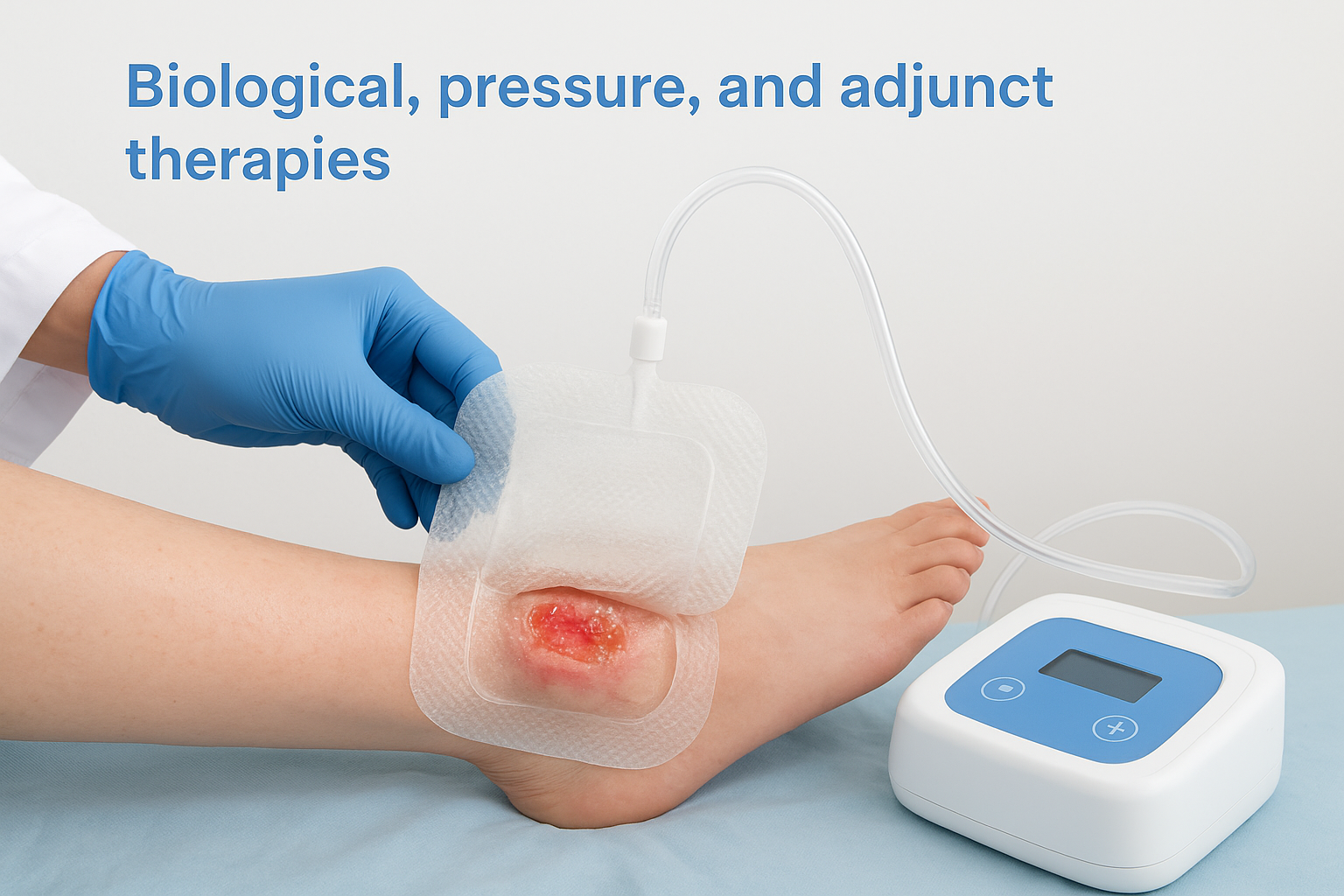
Medicare Part B covers many biological therapies when a physician performs them, which makes high-level treatment accessible without requiring a hospital admission or a costly out-of-pocket arrangement.
Why advanced wound care matters for healing
A wound that stalls isn’t just a skin problem. It’s a sign that your body’s natural repair mechanisms have broken down, and standard treatment isn’t built to restart them. Chronic wounds carry real risks: deep infection, tissue loss, and in serious cases, limb amputation. Specialist-level care addresses the underlying biological barriers that standard wound protocols simply weren’t designed to handle.
A stalled wound doesn’t just threaten the wound site; it puts your circulation, bone, and overall health at increasing risk the longer it stays open.
The longer a wound stays open, the harder it is to close
Every week a wound remains open, the surrounding tissue degrades further and the risk of deep infection climbs. Bacteria build biofilms that resist standard antibiotics, and healthy tissue at the wound margins begins to break down. That’s why patients who access advanced wound care Philadelphia providers early typically see better outcomes with fewer complications.
Acting before the wound reaches bone or develops severe infection gives your specialist far more to work with. Early intervention also reduces the overall cost and duration of treatment, which matters whether you’re covered by Medicare or a private plan.
Signs you should seek a wound specialist now
Most wounds follow a predictable path: they hurt, they scab, they close. When that sequence breaks down, you’re dealing with something that standard care won’t fix on its own. Specific warning signs indicate your wound has crossed into territory that requires specialist-level evaluation rather than more gauze and antibiotic ointment.
If your wound hasn’t shown clear improvement within four weeks of treatment, waiting longer rarely helps and almost always makes things worse.
Warning signs that point to specialist care
Pay attention if your wound is increasing in size or depth despite consistent care, or if it produces a foul odor or unusual discharge. Redness that spreads outward from the wound margin, combined with swelling and warmth, signals an infection that may already be moving deeper into surrounding tissue.
Patients with diabetes, vascular disease, or a compromised immune system face higher risk and should act faster than the average timeline suggests. If you’ve had a wound for more than a month with no measurable progress, searching for advanced wound care Philadelphia providers is the right next step, not a last resort.
Where to get advanced wound care in Philadelphia
Philadelphia gives you two main pathways to specialist-level wound treatment: hospital-based outpatient clinics and mobile physician services. Each model carries different tradeoffs around access, scheduling, and the level of physician oversight you receive. Choosing the right one depends on your mobility, your wound complexity, and how quickly you need to begin treatment.
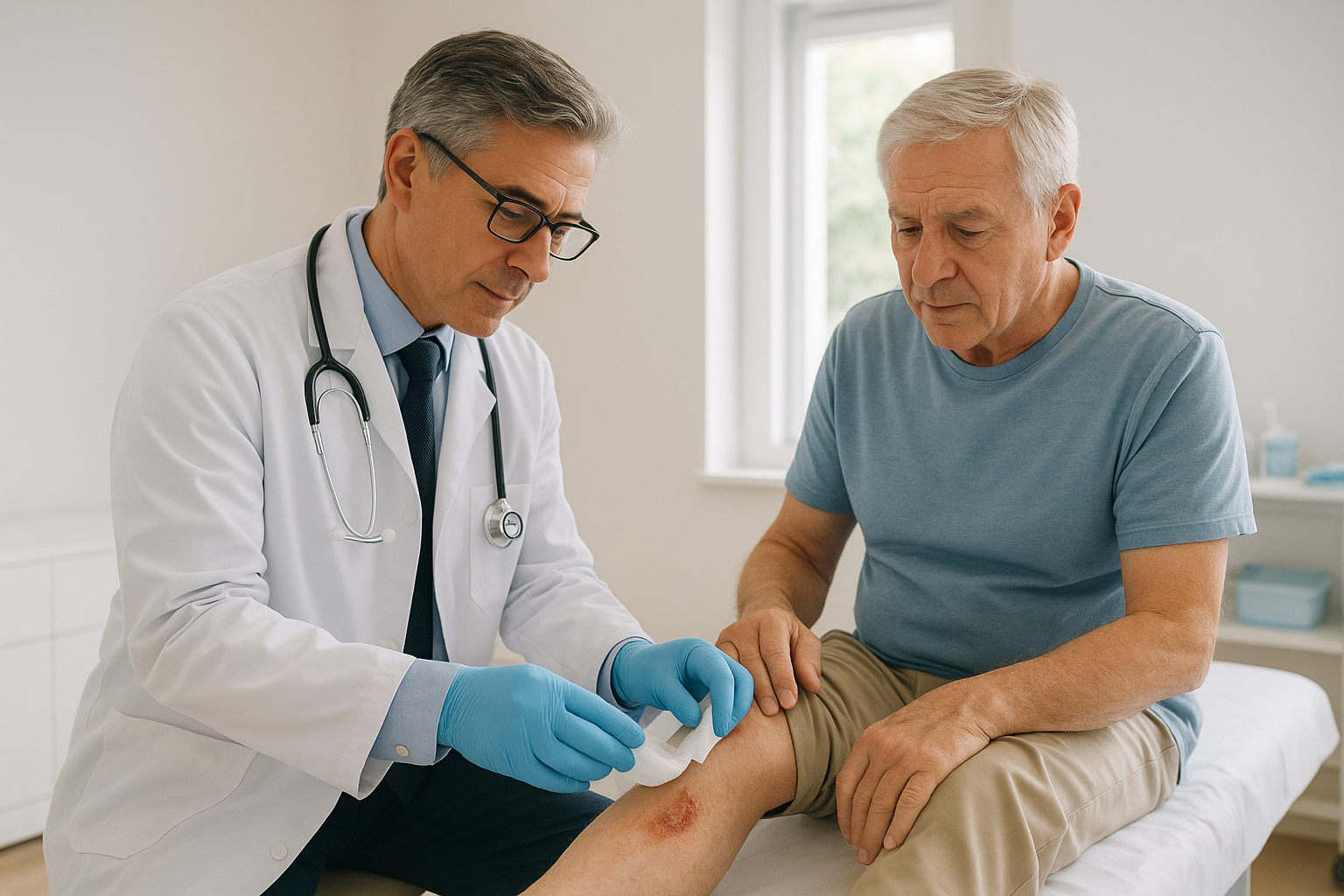
The right provider isn’t necessarily the closest one; it’s the one whose care model actually fits your real-world situation.
Hospital-based wound care centers
Several major Philadelphia health systems run dedicated outpatient wound clinics where you’ll see nurses and sometimes physicians in a structured setting. These centers work well for patients who can travel reliably and prefer a facility-based environment with on-site imaging and laboratory resources nearby. If your wound is complex and you’re already connected to a health system, ask your primary care physician for a direct referral to their wound clinic.
Mobile physician services
Philadelphia Wound Care brings physician-led advanced wound care Philadelphia directly to your home, skilled nursing facility, or hospice setting. A licensed General Surgeon evaluates your wound, performs debridement, and applies biological therapies right at your bedside. This model removes transportation barriers entirely and keeps treatment consistent without requiring you to coordinate multiple appointments at an outside facility. It’s particularly well-suited for seniors and anyone with limited mobility.
What to expect at your first visit and follow-ups
Your first visit with an advanced wound care Philadelphia provider is a thorough clinical evaluation, not a routine checkup. Your specialist will measure the wound, assess tissue quality, circulation, and infection risk, and review your full medical history to understand what’s driving the problem. By the end of that appointment, you should have a clear diagnosis and a structured treatment plan with specific measurable goals.
Bringing your current medication list and any prior wound treatment records gives your specialist a head start on building an accurate picture.
How follow-up visits work
Follow-up appointments run on a regular schedule, typically every one to two weeks, depending on how your wound responds to treatment. Each visit includes a reassessment of wound size and tissue health, along with any necessary adjustments to your protocol. If a therapy isn’t delivering results within a defined timeframe, your physician should walk you through the alternatives rather than continue the same approach without explanation.
Consistent attendance at your follow-up visits is one of the strongest predictors of a positive outcome. Gaps in care allow the wound environment to worsen and can undo the progress made during earlier treatments.
A simple next step
If you’ve read this far, you’re dealing with a wound that isn’t healing on its own. The path forward starts with one action: get a specialist to evaluate it. Advanced wound care Philadelphia providers exist precisely for situations like yours, where standard treatment has already failed and the wound is either stagnating or getting worse. You don’t need a perfect plan before making contact. You need an accurate assessment from a physician who treats complex wounds every week.
Philadelphia Wound Care brings that evaluation directly to you. A licensed General Surgeon will examine your wound, review your history, and build a structured treatment plan around what your specific case actually requires. Medicare Part B and most major insurance plans cover the visit and many of the therapies involved. If you’re ready to stop waiting and start treatment, schedule a mobile wound care visit and get a physician to your door within 24 hours.