

Main Line Health Wound Care Center: Locations & Services
If you or a loved one is dealing with a chronic or non-healing wound in the Philadelphia region, you’ve likely come across the Main Line Health Wound Care Center during your search for treatment options. Main Line Health operates dedicated wound healing and hyperbaric medicine programs across several suburban Philadelphia locations, offering clinic-based care for conditions like diabetic ulcers, venous insufficiency wounds, and surgical wounds that won’t close on their own.
This article breaks down what Main Line Health’s wound care centers offer, where they’re located, the types of conditions they treat, and how to connect with their specialists. We’ll also cover what to expect from a clinic-based wound care model, and where a service like Philadelphia Wound Care fits in for patients who need physician-led treatment brought directly to their home, nursing facility, or hospice setting.
Whether you’re comparing providers, coordinating care after a hospital discharge, or simply trying to understand your options, this guide gives you the practical details you need to make an informed decision about wound care that matches your situation.
What Main Line Health wound care centers offer
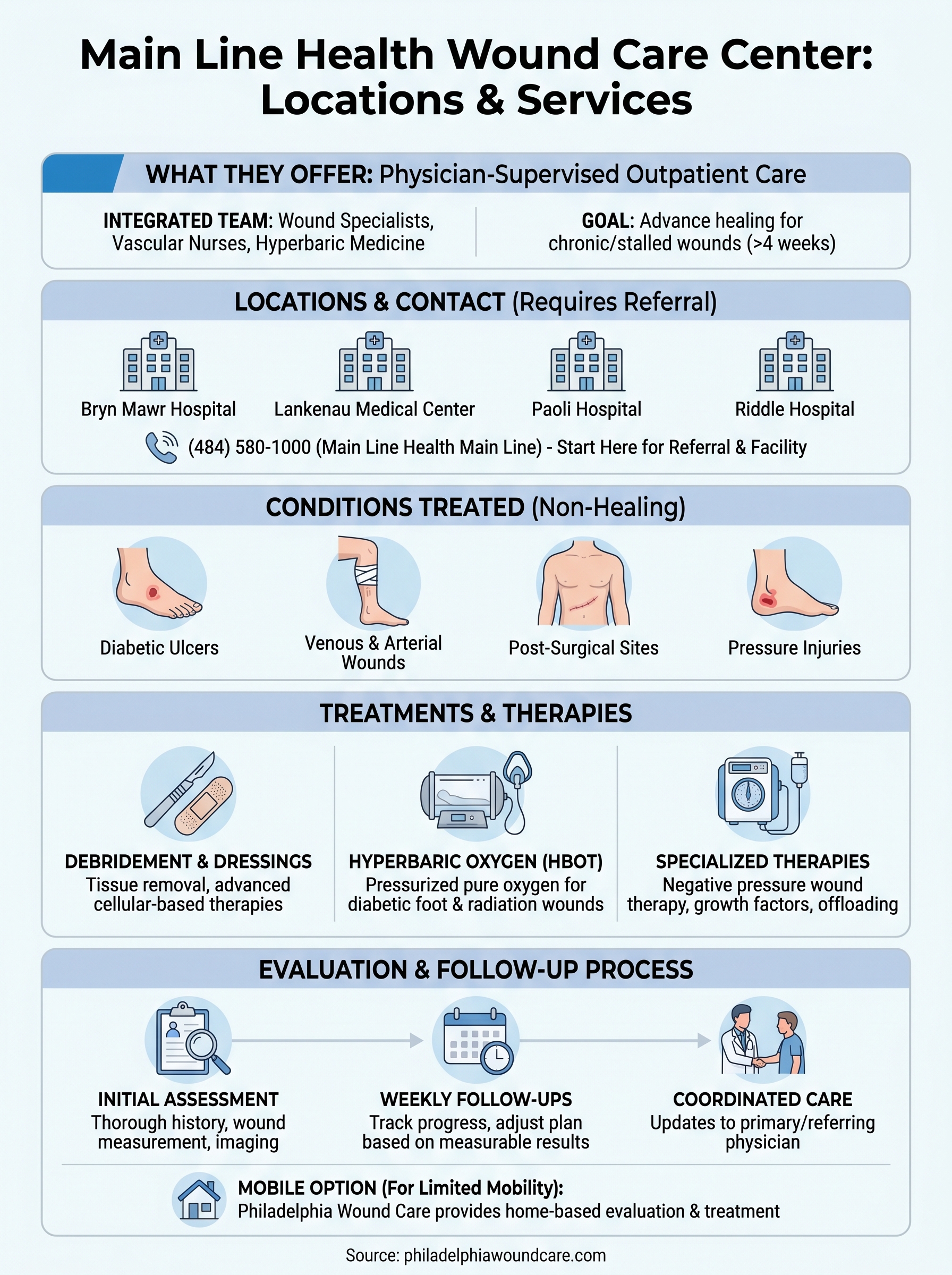
The Main Line Health wound care center program operates as a physician-supervised outpatient service, designed for patients whose wounds have not improved with standard treatment over time. These clinics bring together wound care specialists, vascular nurses, and hyperbaric medicine teams under one roof, so your care plan moves forward without requiring you to coordinate between disconnected providers on your own.
A wound that shows no measurable improvement after four weeks of standard care is generally considered chronic and qualifies for a specialized wound care evaluation.
Clinical services available
Each location provides a structured range of advanced wound interventions, from debridement and infection management to the application of bioengineered skin substitutes and cellular-based therapies. If your wound has stalled, the clinical team performs a thorough assessment to identify whether an underlying issue, such as poor circulation or uncontrolled blood sugar, is interfering with the healing process.
Beyond topical treatments, the centers offer hyperbaric oxygen therapy (HBOT), a pressurized chamber treatment that saturates damaged tissue with concentrated oxygen. This is particularly effective for diabetic foot ulcers, crush injuries, and wounds caused by radiation damage that don’t respond to surface-level wound care alone.
Care coordination and follow-up
Consistent follow-up is one of the hardest parts of managing a chronic wound outside of a hospital. Main Line Health’s teams track your measurable healing progress at every visit and adjust your treatment protocol accordingly, rather than continuing a plan that isn’t producing results.
Your primary care physician or referring specialist receives regular updates throughout the process, keeping your broader medical care connected and informed. Referrals are typically required before your first appointment, and the staff handles insurance verification upfront so you understand your coverage before treatment begins.
Locations and how to contact a center
The Main Line Health wound care center program operates across multiple suburban Philadelphia hospital campuses, making it accessible to patients throughout the western and southern parts of the region. Current clinic locations include Bryn Mawr Hospital, Lankenau Medical Center, Paoli Hospital, and Riddle Hospital, each offering outpatient wound care and hyperbaric medicine services within their respective medical centers.
To reach any of these locations, your best starting point is the Main Line Health main line at (484) 580-1000, where staff can direct you to the right facility and help initiate a referral.
What to prepare before calling
When you contact a center, having a few key details on hand will move the intake process faster. Your referring physician’s name and contact information is typically required before scheduling your first wound evaluation, so confirm that your primary care provider or specialist has already sent or is prepared to send a referral. You should also have your insurance card and a brief wound history ready, including how long the wound has been present and what treatments you’ve already tried. This helps the intake team route you to the right specialist from the start.
Conditions treated and who should consider care
The main line health wound care center program focuses on wounds that have stopped responding to routine care. Common diagnoses include diabetic foot ulcers, venous leg ulcers, pressure injuries, arterial wounds, and post-surgical sites that remain open weeks after a procedure. If your wound has been present for four or more weeks without measurable closure, that is the threshold that typically signals a referral to a specialized center is appropriate.
Wounds linked to poor circulation or uncontrolled diabetes carry the highest risk of infection and amputation, making early specialist involvement critical.
Who benefits most from clinic-based wound care
Patients who are mobile enough to travel to a suburban Philadelphia campus and whose wounds require consistent in-person monitoring are the strongest candidates for Main Line Health’s outpatient model. This includes people managing diabetic complications, vascular disease, or post-operative healing challenges who have an established primary care provider coordinating their overall treatment.
If you or a family member cannot safely travel to a clinic due to limited mobility, a recent hospitalization, or residence in a nursing facility, an in-home wound care service may be a better fit for your specific situation and recovery needs.
Treatments you may receive, including hyperbaric oxygen
The main line health wound care center program offers several treatment options depending on your wound type and how far it has progressed. Your care team selects evidence-based therapies matched to the specific biology of your wound, rather than applying a one-size-fits-all protocol.
Advanced wound therapies
Debridement is often the first active step, removing dead or infected tissue to expose healthy cells and allow healing to begin. Your provider may also apply bioengineered skin substitutes or cellular tissue products to stimulate regeneration in wounds that have stalled despite standard care. Common advanced treatments include:
- Negative pressure wound therapy (wound VAC)
- Collagen-based dressings
- Growth factor applications
- Offloading devices for diabetic foot wounds
Hyperbaric oxygen therapy
Hyperbaric oxygen therapy (HBOT) involves breathing pure oxygen inside a pressurized chamber, which drives concentrated oxygen deep into oxygen-deprived tissue. This treatment is particularly effective for diabetic foot ulcers, radiation-damaged tissue, and certain non-healing surgical wounds.
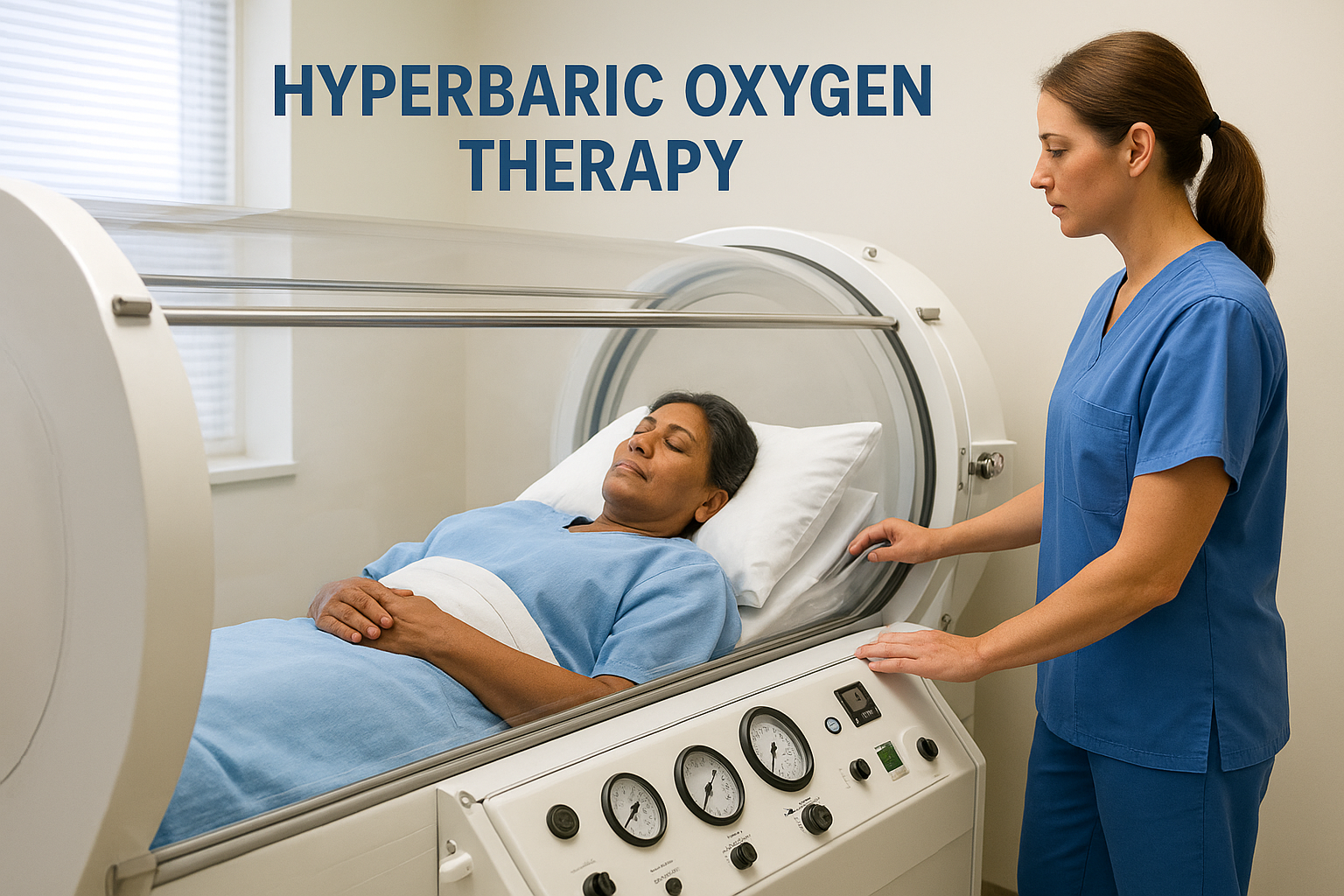
HBOT is typically administered in a series of sessions ranging from 20 to 40 treatments, depending on your wound’s response and your overall health status.
Sessions generally last about 90 minutes, and most patients tolerate the process well with minimal side effects.
What to expect at an evaluation and follow-up care
Your first visit to a main line health wound care center follows a structured intake process. The clinician reviews your full medical history, current medications, and any prior wound treatments before examining the wound directly. This baseline assessment determines which interventions are appropriate and sets the measurable targets your care team tracks going forward.
Expect your first appointment to last longer than a standard office visit, often 60 to 90 minutes, since the intake process is thorough by design.
What the wound assessment covers
During the evaluation, your provider measures the wound’s dimensions, assesses tissue quality, and checks for signs of infection or underlying vascular compromise. You may also receive imaging or lab work if circulation problems or systemic issues are suspected as contributing factors.
Follow-up visits and tracking progress
Follow-up appointments typically occur weekly, allowing the team to compare measurements and determine whether your current treatment protocol is producing results. If the wound is not closing at an acceptable rate, your care plan gets adjusted at that visit rather than waiting another month to reassess. This frequent monitoring is one of the core advantages of structured outpatient wound care.
Next steps if you need wound help
If your wound has not improved in four weeks or more, waiting longer rarely produces a different outcome. The right next step depends on your mobility and living situation. If you can travel to a suburban campus, contacting the main line health wound care center through Main Line Health at (484) 580-1000 gives you access to their outpatient team and hyperbaric medicine program.
Getting to a clinic is not always possible, especially when limited mobility, a nursing facility stay, or a recent hospital discharge makes travel difficult. In those cases, in-home wound care is often the more practical path. Philadelphia Wound Care brings physician-led evaluation and advanced treatment directly to your location, including skilled nursing facilities, assisted living communities, and private residences throughout the greater Philadelphia area. You don’t have to choose between quality care and staying where you are.
Request a mobile wound care evaluation and get expert treatment without leaving your home.