
Top 5 SNF Wound Care Physician Options in Philadelphia (2026)
Finding a reliable SNF wound care physician in Philadelphia can feel overwhelming when you’re responsible for patient outcomes and facility performance. Chronic wounds like pressure ulcers and diabetic foot ulcers are common in skilled nursing populations, and they demand more than routine nursing intervention, they require physician-level expertise delivered consistently at bedside.
The challenge is that not every wound care provider operates the same way. Some offer only nurse-led visits, while others lack the advanced therapies needed for non-healing wounds. For SNF administrators, case managers, and referring physicians, choosing the right partner directly affects healing rates, readmission numbers, and overall quality metrics.
At Philadelphia Wound Care, we provide mobile, physician-led wound management inside skilled nursing facilities across the Philadelphia region, so we know this space well. Below, we’ve outlined five strong options for SNF wound care physicians in the area, including what each brings to the table, to help you make a well-informed decision for your patients and residents.
1. Philadelphia Wound Care
Philadelphia Wound Care is a physician-led mobile practice that brings a licensed General Surgeon directly to patients inside skilled nursing facilities across the Philadelphia region. This is the only entry on this list built entirely around bedside care in SNF settings.
Care model and what makes it different for SNFs
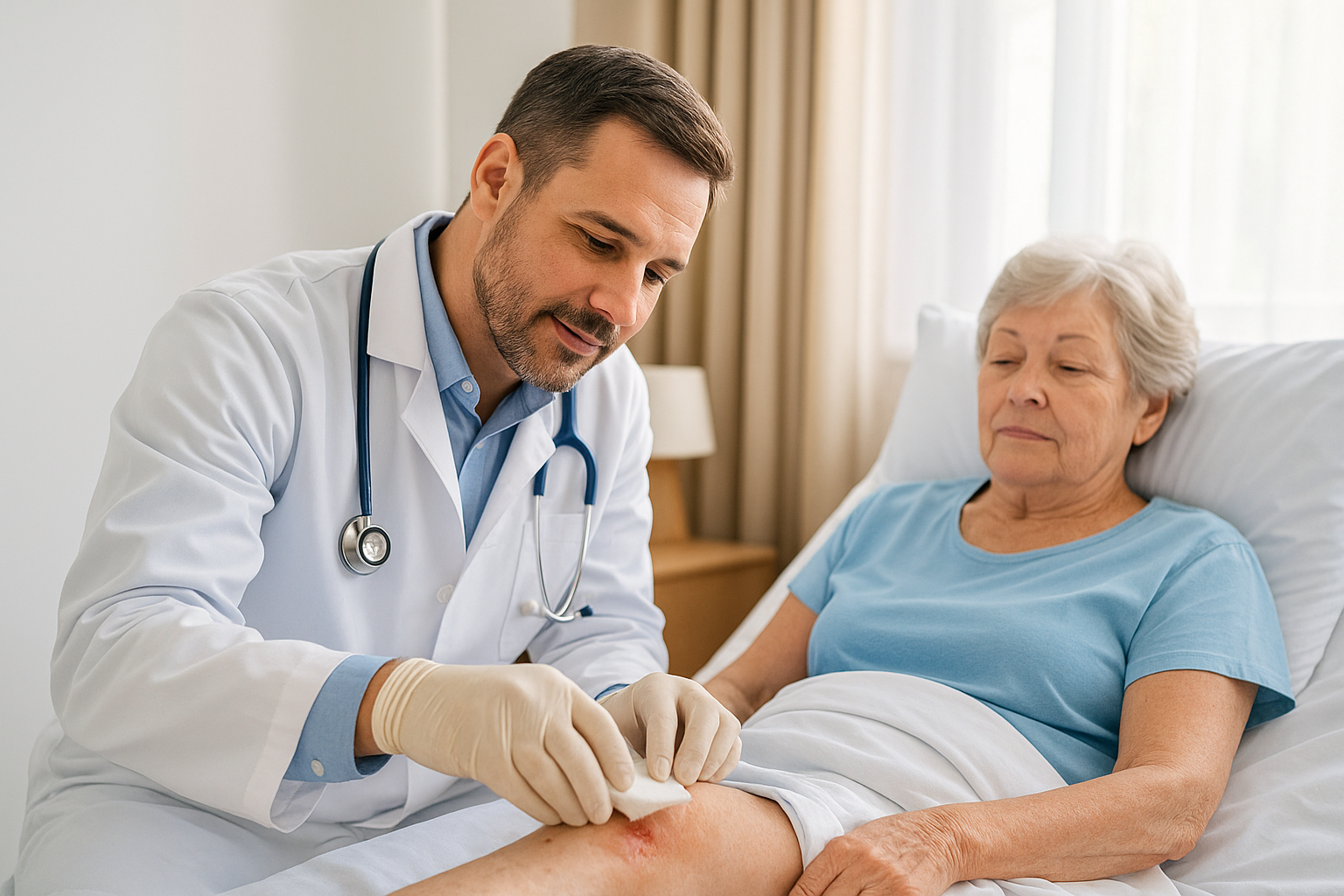
Unlike nurse-led services, Philadelphia Wound Care puts a General Surgeon at bedside for every visit. That means you get diagnostic and procedural capability on-site, including the authority to order labs, adjust treatment plans, and apply advanced therapies without waiting for a separate physician consult.
Wound types and bedside procedures they typically handle
The practice treats pressure ulcers, diabetic foot ulcers, venous and vascular ulcers, and post-surgical wounds. Bedside procedures include debridement, wound measurement, and application of allograft and regenerative therapies for wounds that have stopped responding to standard treatment.
How referrals work and how fast they can see a patient
You can submit a referral directly through the practice, and Philadelphia Wound Care commits to a 24-hour response time for urgent cases. Once a referral is received, a physician schedules a bedside visit at the facility with minimal coordination burden on your staff.
A 24-hour response window makes a measurable difference when a wound is deteriorating and a hospitalization needs to be avoided.
Insurance, billing, and what SNF staff should document
The practice bills Medicare Part B directly, which covers advanced treatments like allograft therapy. Your staff should document wound measurements, treatment history, and physician orders in the resident’s chart to support clean billing and avoid authorization delays.
Best fit and limits to know up front
Philadelphia Wound Care works best for SNFs that need a consistent physician partner for complex, non-healing wounds. The service area covers the Philadelphia area and surrounding Pennsylvania regions, so facilities outside that geography will need to look at other options on this list.
2. Jefferson Health Wound Care and Hyperbaric Oxygen Therapy
Jefferson Health runs wound care and hyperbaric oxygen therapy clinics tied to its hospital network across Philadelphia. Care happens at outpatient clinic locations, which means your residents need transportation to receive treatment.
Care model and where care happens
The model is clinic-based, with physicians, nurses, and specialists collaborating on treatment plans at Jefferson facilities. No bedside visits occur inside your SNF.
Strengths for complex wounds and multidisciplinary coordination
Jefferson offers hyperbaric oxygen therapy alongside standard wound care, which benefits wounds tied to radiation damage or osteomyelitis. Their multidisciplinary team can pull in vascular surgery, endocrinology, or infectious disease when a wound has a systemic driver.
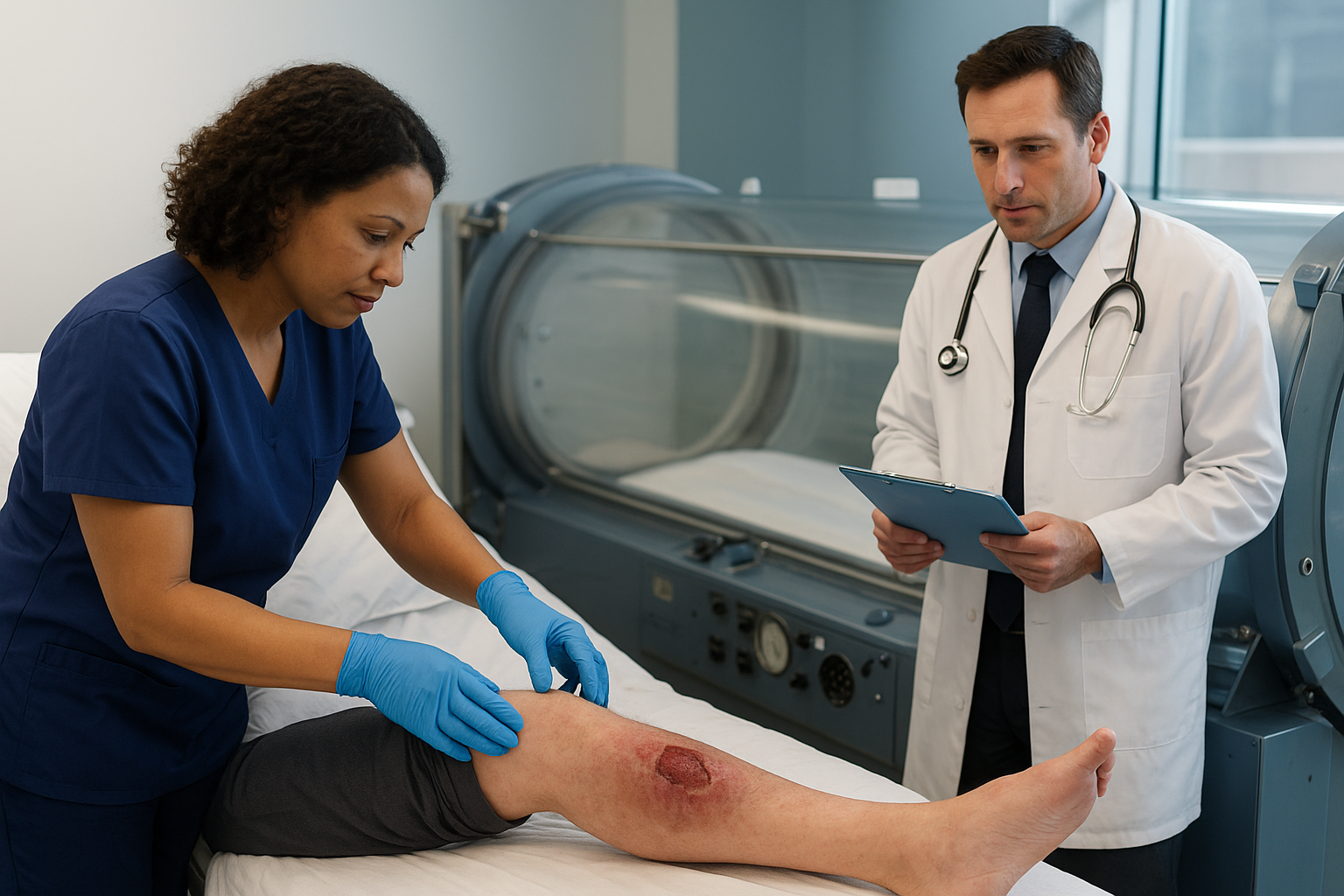
For residents with a wound driven by an underlying systemic condition, Jefferson’s specialist depth is worth the coordination effort.
How SNFs can coordinate consults and follow-up
Your care coordination team handles transportation and physician orders before each visit. Ongoing follow-up requires the same logistics, so factor that in for residents with limited mobility.
Insurance and authorizations to ask about
Medicare and most commercial insurance plans are accepted, but hyperbaric therapy often requires prior authorization. Confirm coverage and authorization requirements before the first appointment to avoid billing delays.
Best fit and limits to know up front
Jefferson suits medically complex residents who can travel and need specialist-level diagnostics alongside wound treatment. For patients who cannot leave the facility, a mobile snf wound care physician Philadelphia service is a more practical fit.
3. Penn Medicine Wound Care and Hyperbaric Medicine
Penn Medicine runs wound care and hyperbaric medicine clinics at multiple Philadelphia-area outpatient locations, staffed by physicians and wound specialists.
Care model and available services
Penn’s model is clinic-based and physician-directed, covering debridement, advanced wound dressings, hyperbaric oxygen therapy, and vascular assessments. The team can escalate to Penn’s broader specialist network when a wound requires subspecialty involvement.
Strengths for hard-to-heal wounds and specialty access
The main advantage here is direct access to subspecialists including vascular surgery, podiatry, and plastic surgery within the same health system. When a wound has a complex underlying cause, that connectivity speeds up the diagnostic process considerably.
When a wound is not healing despite standard treatment, fast access to vascular or surgical subspecialists can change the outcome.
How to arrange evaluation when the patient lives in an SNF
Your team needs to arrange transportation and secure physician orders before each clinic visit. Penn’s scheduling staff can guide you through the referral steps, but the coordination burden stays with your facility.
Insurance and referral requirements to confirm
Before scheduling, verify these points with Penn’s team:
- Medicare and most commercial plans are accepted
- Hyperbaric therapy requires prior authorization in most cases
- A referring physician order is needed to start a consult
Best fit and limits to know up front
Penn suits residents who can travel and need specialty-level diagnostics or hyperbaric access. For patients who cannot leave the facility, a mobile snf wound care physician Philadelphia service is the more practical fit.
4. Temple Health Advanced Wound Care
Temple Health operates outpatient wound care clinics connected to its North Philadelphia hospital network, with care delivered by physicians and wound care specialists in a clinic-based setting.
Care model and services typically offered
Temple’s team handles debridement, advanced wound dressings, infection management, and vascular evaluations. Like Jefferson and Penn, this is clinic-based care, so patients travel to Temple locations for each appointment.
Strengths for diagnosing why a wound is not healing
The clinic’s key advantage is its ability to order imaging, lab work, and subspecialty consults quickly within its own system. For wounds tied to vascular insufficiency or uncontrolled infection, that in-house diagnostic speed can shorten the path to the right treatment.
When the root cause of a non-healing wound is unclear, fast access to diagnostics within one health system cuts delays significantly.
How SNFs can coordinate transportation, timing, and orders
Your team arranges patient transportation and secures a referring physician order before each visit. Build extra lead time into scheduling for residents with complex transfer needs.
Insurance and paperwork checklist for smoother scheduling
Confirm these before the first appointment:
- Medicare and major commercial plans are accepted
- Prior authorization may be required for advanced therapies
- A physician referral order must be in the chart
Best fit and limits to know up front
Temple suits ambulatory or transportable residents who need diagnostic depth within a single health system. If your patient cannot travel, an snf wound care physician philadelphia mobile service is the more practical choice.
5. Skilled Wound Care
Skilled Wound Care is a national physician-led service that sends wound care physicians directly into skilled nursing facilities. Unlike clinic-based options, this service operates entirely inside your facility, making it relevant if you’re searching for an snf wound care physician philadelphia option that travels to the bedside.
Care model for SNF-based wound consults
Skilled Wound Care deploys physicians and advanced practice providers into SNFs on a scheduled basis. Their model is built around facility-embedded wound rounds, which reduces the transportation burden on your staff and keeps wound oversight consistent across your resident census.
Consistent scheduled rounds reduce the risk of wounds progressing undetected between visits.
Bedside procedures and documentation support to expect
Providers perform debridement and wound assessments at bedside and generate documentation that integrates with your facility’s existing records workflow. They also support MDS coding and regulatory documentation, which can directly affect your quality metrics.
How to start service in a facility and set visit cadence
Your administrator or director of nursing initiates service by contacting Skilled Wound Care directly. Once onboarded, visit frequency is set based on your facility’s census and wound acuity.
Insurance, coverage boundaries, and compliance considerations
The service bills Medicare Part B for physician services. Confirm which specific therapies are covered under your residents’ plans before starting advanced treatments.
Best fit and limits to know up front
Skilled Wound Care fits facilities with higher wound volumes that benefit from scheduled rounds. Service availability in the Philadelphia area may vary, so confirm local coverage before committing.
Next Steps
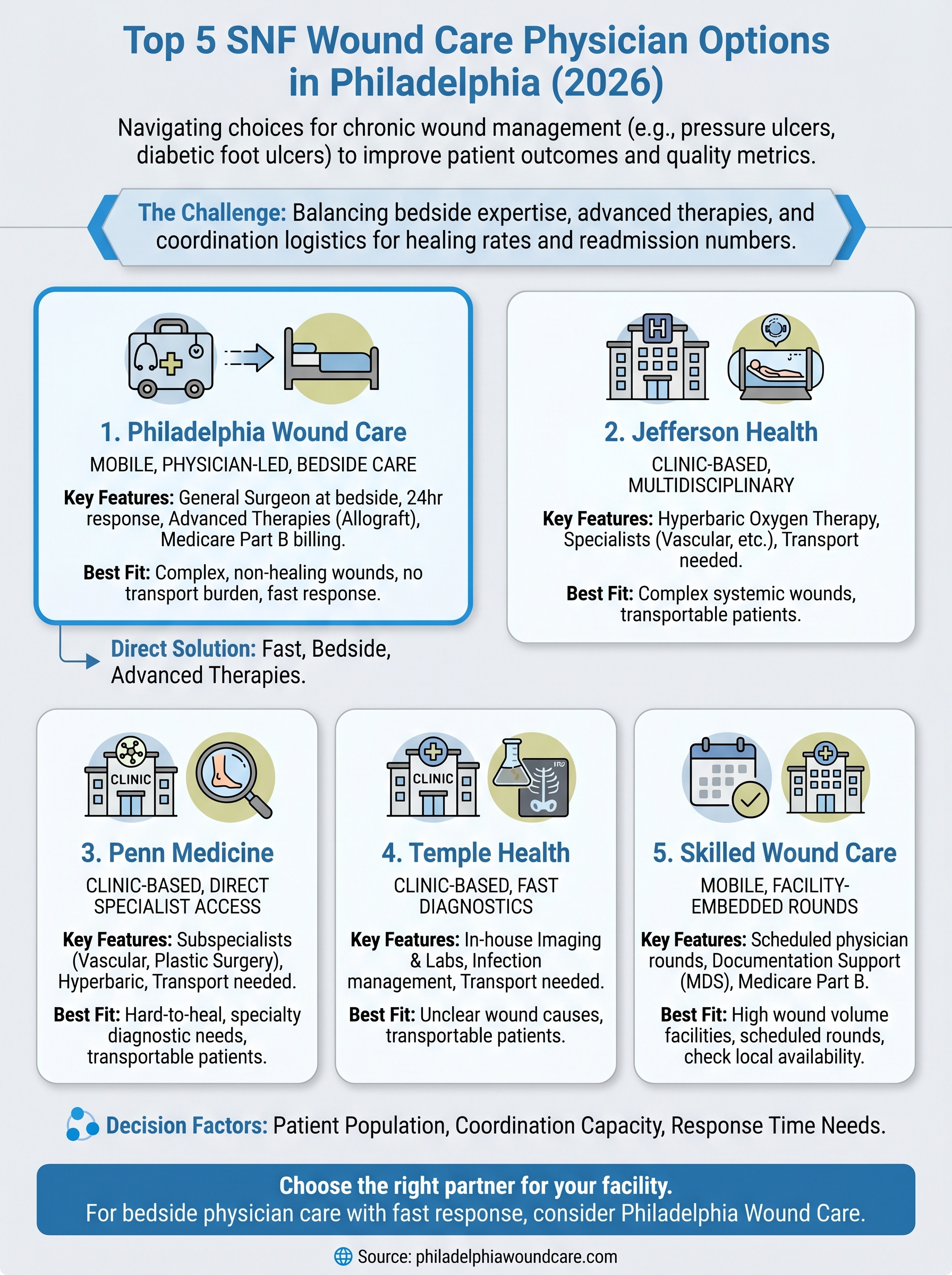
Each of the five options on this list serves a different type of facility and patient. If your residents can travel and need specialist diagnostics, Jefferson, Penn, or Temple offer strong clinic-based pathways. If your facility needs scheduled wound rounds without transportation logistics, Skilled Wound Care fits that model. For SNFs that want a physician at bedside with no transport burden, fast response times, and Medicare Part B billing for advanced therapies, Philadelphia Wound Care is the most direct solution in the region.
Choosing the right snf wound care physician philadelphia partner comes down to your patient population, your facility’s coordination capacity, and how quickly you need a physician on-site. You do not have to navigate that decision alone. If you want to discuss whether Philadelphia Wound Care is the right fit for your facility, submit a referral or reach out to our team and we will follow up within 24 hours.