

Wound Care Specialist Philadelphia: 5 Care Options Near You
Finding a wound care specialist Philadelphia patients and families can trust isn’t always straightforward. Chronic wounds, diabetic ulcers, pressure injuries, venous ulcers, post-surgical complications, demand more than general medical attention. They require focused clinical expertise and consistent follow-through, often over weeks or months of treatment.
The challenge is that not every patient can easily get to a clinic. Many people dealing with non-healing wounds are elderly, homebound, or recovering in skilled nursing facilities. For them, accessing specialist-level care means either arranging difficult transportation or going without. Neither option leads to good outcomes. That’s exactly why our team at Philadelphia Wound Care exists, we bring physician-led wound management directly to patients across the Philadelphia region, whether they’re at home, in assisted living, or in hospice.
This article breaks down five care options available to you or your loved one right here in the Philadelphia area. We’ll cover what each type of provider offers, who they’re best suited for, and what to expect so you can make a well-informed decision about the next step in your wound healing journey.
1. Philadelphia Wound Care Mobile Physician Visits
Philadelphia Wound Care is a physician-led mobile practice that brings specialist-level wound management directly to you, removing the need for difficult clinic transportation entirely.
What This Option Is
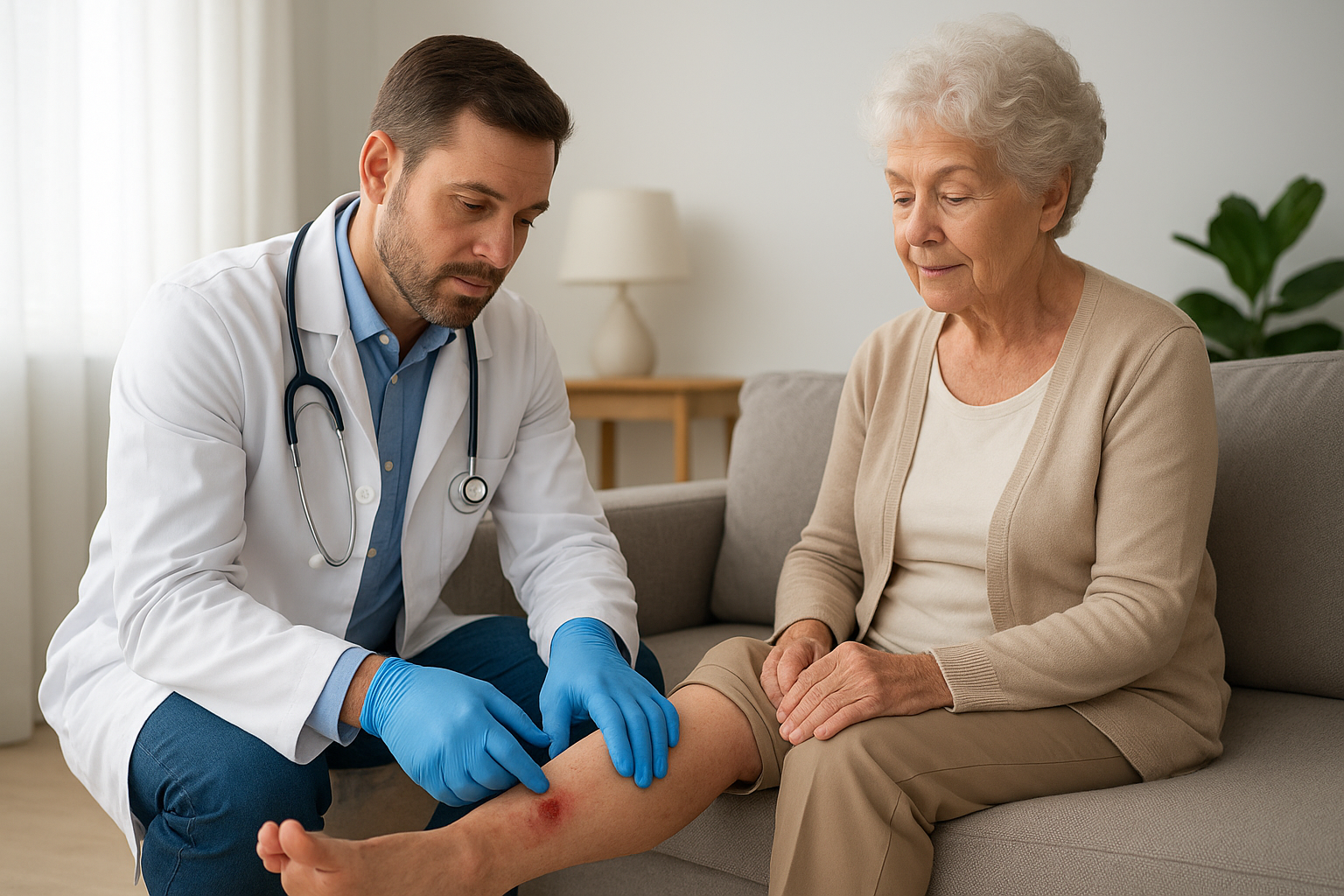
This service operates as a mobile medical practice run by a licensed General Surgeon. Rather than asking you to travel, a physician comes to your home, skilled nursing facility, assisted living community, or hospice setting to evaluate and treat your wound on-site.
Common Wounds This Option Treats
The practice focuses on chronic, non-healing wounds including diabetic foot ulcers, pressure ulcers (bedsores), venous and vascular ulcers, and post-surgical wound complications. These wound types require consistent specialist oversight over weeks or months of care.
Treatments and Services You Can Expect
Your visit includes a full wound evaluation, debridement, advanced dressing application, and allograft and regenerative therapies for wounds that standard care has not resolved. The physician also manages care coordination with your referring doctor or facility staff throughout treatment.
Allograft therapy, typically a hospital-level treatment, is covered under Medicare Part B when delivered through this mobile service.
Who This Option Fits Best
Homebound patients, seniors in the Philadelphia region, and residents of long-term care facilities who need a wound care specialist Philadelphia families and case managers can depend on will find this option the strongest fit. It also serves assisted living and skilled nursing facilities that need a reliable external wound care partner.
How to Get Started and What to Prepare
You can schedule a visit directly or through a physician referral. Having your insurance card, a current medication list, and any prior wound care records or discharge paperwork ready will help your physician plan treatment from the first visit.
Cost and Insurance Basics
Philadelphia Wound Care bills Medicare, Medicare Advantage, and major commercial insurers directly. Most patients face minimal out-of-pocket costs for both physician visits and advanced therapies like allograft treatment.
2. Jefferson Health Wound Care and Hyperbaric Therapy
Jefferson Health operates dedicated wound care centers across the Philadelphia area, providing both outpatient wound treatment and hyperbaric oxygen therapy for wounds that have not healed with standard care.
What This Option Is
Jefferson runs clinic-based wound care centers at several Philadelphia-area locations. You schedule appointments and travel to the facility, where a multidisciplinary clinical team evaluates and treats your wound directly.
Common Wounds This Option Treats
The program handles diabetic foot ulcers, venous leg ulcers, pressure injuries, and wounds related to radiation damage or poor circulation. This makes Jefferson a relevant wound care specialist Philadelphia option for patients managing complex vascular or metabolic conditions.
Treatments and Services You Can Expect
You can access advanced debridement and bioengineered skin substitutes, along with hyperbaric oxygen therapy for qualifying wounds. Hyperbaric sessions involve breathing pure oxygen inside a pressurized chamber to accelerate tissue repair.
Hyperbaric oxygen therapy at Jefferson requires a clinical evaluation and a physician referral before sessions are scheduled.
Who This Option Fits Best
Jefferson suits ambulatory patients who can travel to a clinic and who may need hyperbaric therapy alongside standard wound management.
How to Get Started and What to Prepare
You will need a physician referral and your insurance information at your first appointment. Bring any records of previous wound treatments to help the team build an accurate treatment history.
Cost and Insurance Basics
Jefferson accepts Medicare, Medicaid, and most major commercial insurance plans. Your out-of-pocket costs will vary based on your specific coverage and the treatments your care team recommends.
3. Penn Medicine Wound Care and Hyperbaric Medicine
Penn Medicine offers outpatient wound care and hyperbaric medicine programs through its hospital network, giving Philadelphia-area patients access to academic medical center-level treatment at multiple locations.
What This Option Is
Penn’s program combines specialized wound care clinics with a structured hyperbaric medicine service. Patients travel to a Penn facility and work with a team that typically includes physicians, nurses, and wound care specialists trained in managing complex, slow-healing wounds.
Common Wounds This Option Treats
The program addresses diabetic foot ulcers, venous and arterial ulcers, pressure injuries, and wounds connected to compromised circulation or radiation treatment. This makes Penn a credible wound care specialist Philadelphia option for patients with underlying vascular disease or cancer-related tissue damage.
Treatments and Services You Can Expect
Your care may include advanced debridement, bioengineered skin substitutes, compression therapy, and hyperbaric oxygen sessions for wounds that qualify under clinical guidelines.
Hyperbaric oxygen therapy at Penn requires a qualifying diagnosis and physician-ordered referral before treatment begins.
Who This Option Fits Best
Penn suits ambulatory patients who can reach a clinic independently and prefer receiving care within a large academic hospital system.
How to Get Started and What to Prepare
Contact Penn Medicine directly through their website to request a referral or schedule a wound care consultation. Bring prior treatment records and your insurance card to your first appointment.
Cost and Insurance Basics
Penn accepts Medicare, Medicaid, and most commercial insurance plans. Your specific cost will depend on your coverage and which treatments your care team recommends.
4. Temple Health Advanced Wound Care
Temple Health runs a dedicated outpatient wound care program serving Philadelphia-area patients who need structured, clinic-based treatment for chronic or complex wounds.
What This Option Is
Temple’s wound care service operates through its North Philadelphia hospital network, where a clinical team manages wound assessment and treatment on a scheduled outpatient basis.
Common Wounds This Option Treats
The program treats diabetic foot ulcers, pressure wounds, venous leg ulcers, and wounds resulting from vascular conditions. Temple functions as a strong wound care specialist Philadelphia option for patients managing multiple chronic illnesses alongside their wound.
Treatments and Services You Can Expect
Your care plan can include debridement, advanced wound dressings, and bioengineered skin substitutes when clinically indicated.
Temple’s wound care team coordinates with your primary care physician and specialists to manage the underlying conditions contributing to your wound.
Who This Option Fits Best
Temple fits ambulatory patients in North Philadelphia and surrounding neighborhoods who can travel to appointments and want treatment within a well-established hospital system.
How to Get Started and What to Prepare
Request a referral through your primary care physician or contact Temple directly. Bring your insurance card and prior wound care records to your first visit.
Cost and Insurance Basics
Temple accepts Medicare, Medicaid, and major commercial insurance plans. Your out-of-pocket cost will depend on your coverage level and the treatments your care team prescribes.
5. Prevention Point Wound Care Clinic
Prevention Point Philadelphia is a community health organization offering a low-barrier wound care clinic for patients who face significant obstacles accessing traditional medical settings.
What This Option Is
Prevention Point operates a street-level clinic that provides basic wound care alongside harm reduction and primary health services. This is not a specialist-level surgical practice, but it fills a critical gap for underserved patients in Philadelphia who cannot navigate conventional healthcare systems.
Common Wounds This Option Treats
The clinic addresses skin wounds, abscesses, and infected injuries, particularly those connected to injection drug use, homelessness, or prolonged skin breakdown from limited medical access.
If your wound involves a deep ulcer, bone involvement, or failed previous treatment, you will need a wound care specialist Philadelphia practices like this one can refer you to.
Services You Can Expect at a Low-Barrier Clinic
You can receive wound cleaning, dressing changes, and basic infection management without requiring insurance or a physician referral.
Who This Option Fits Best
Prevention Point fits uninsured or underinsured patients and individuals experiencing homelessness who need immediate wound attention with no paperwork barriers.
How to Get Started and What to Prepare
Walk-ins are accepted. No appointment or insurance card is required to receive care.
Cost and Insurance Basics
Services are provided at no cost to patients regardless of insurance status.
What to Do Next
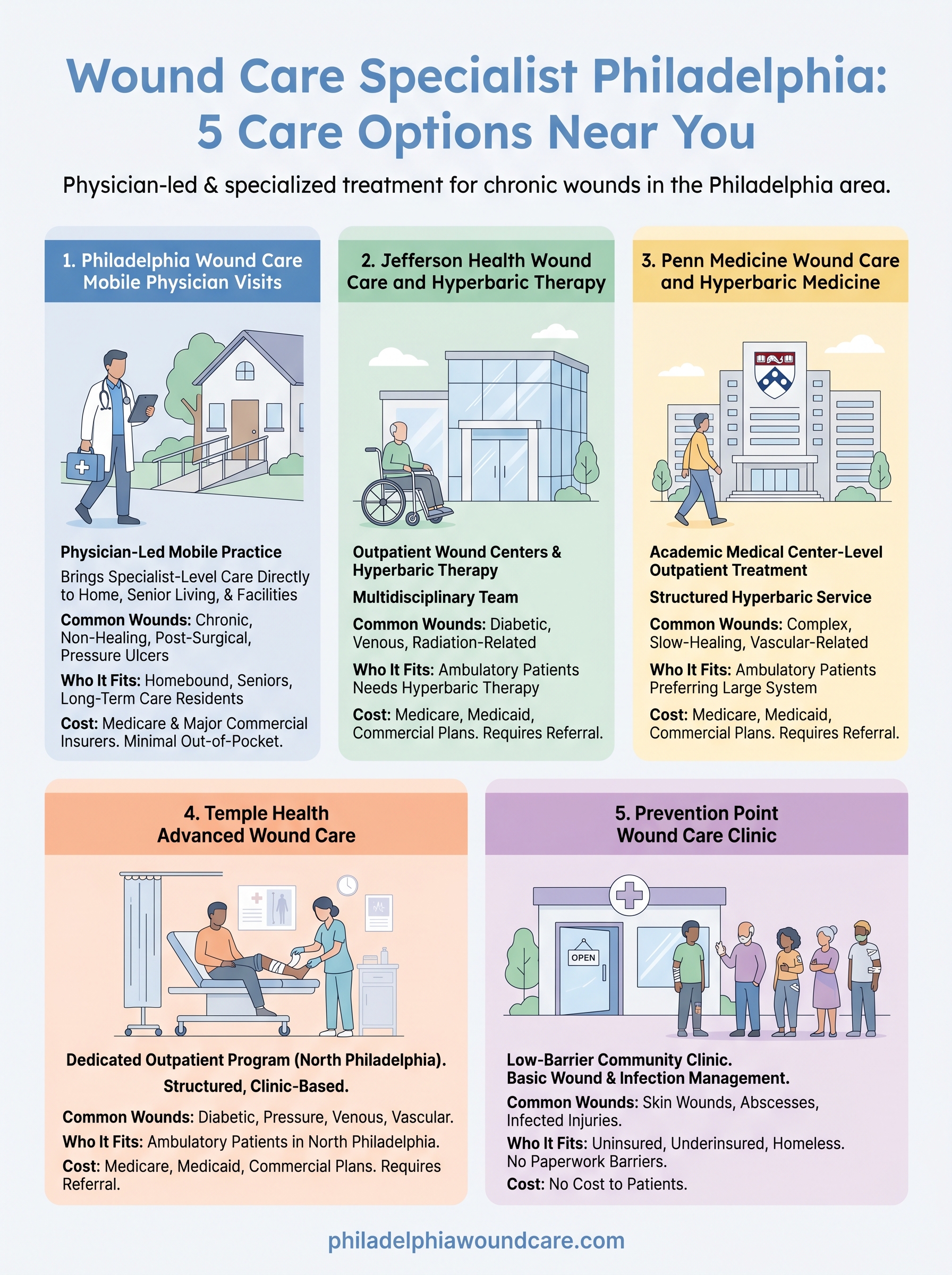
You now have a clear picture of the five main wound care options available in the Philadelphia area. The right choice depends on your mobility, insurance coverage, and how complex your wound is. If you can travel and your wound is straightforward, a hospital-based clinic like Jefferson, Penn, or Temple may serve you well. If cost and access are your primary barriers, Prevention Point offers no-barrier care. But if you or someone you care for is homebound, living in a facility, or dealing with a chronic wound that has not responded to standard treatment, Philadelphia Wound Care is the most direct path to physician-led, specialist-level care without leaving your location.
You do not need to figure out the next step alone. Our team responds within 24 hours and works directly with your insurance. Reach out to a wound care specialist Philadelphia patients and families rely on to start the conversation today.