
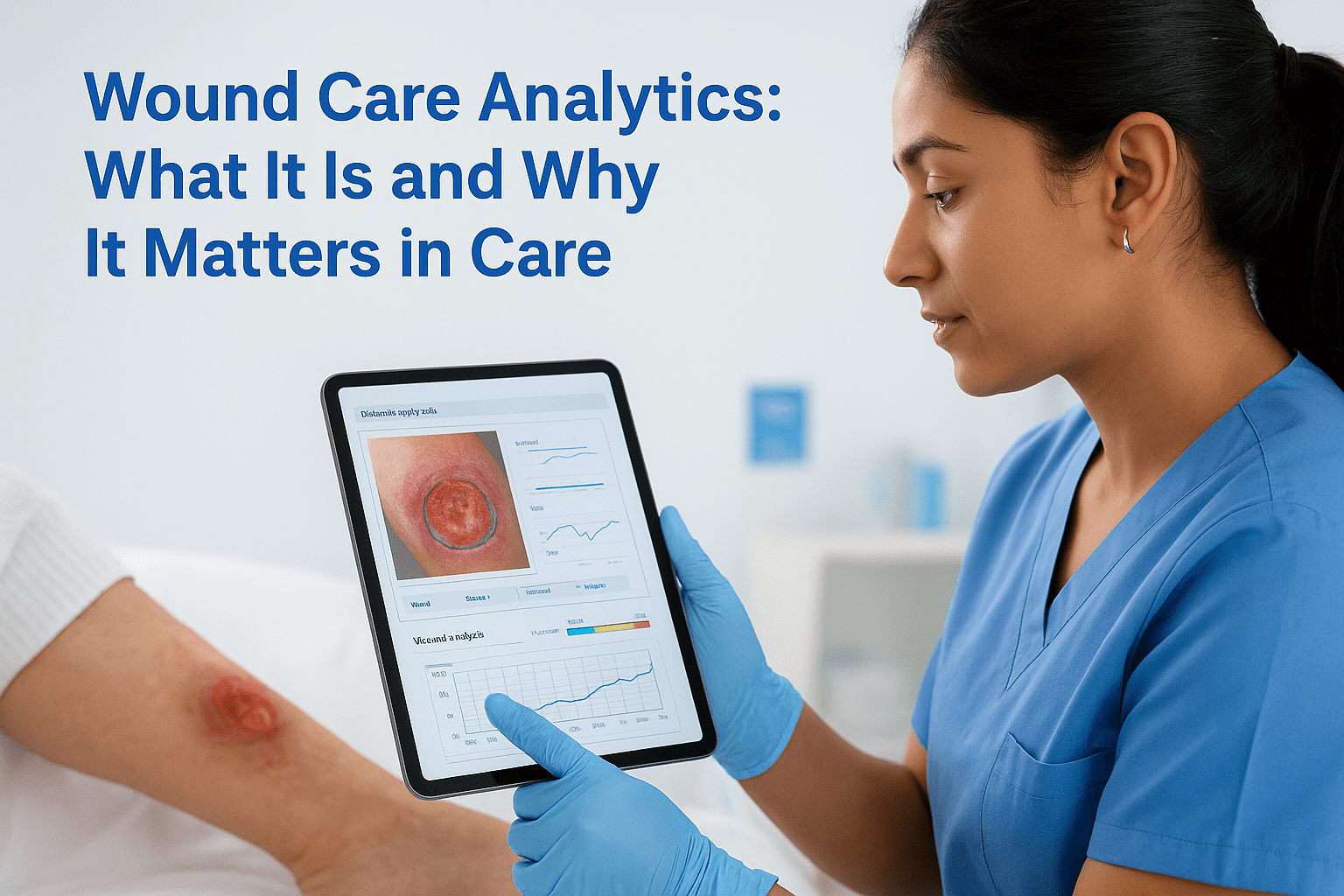
Wound Care Analytics: What It Is and Why It Matters in Care
Every chronic wound tells a story through data, measurements, healing rates, tissue composition, infection markers. The challenge has always been collecting that data consistently and turning it into something actionable. That’s where wound care analytics comes in: a category of technology that uses AI-powered platforms and software to automate wound assessment, track outcomes over time, and flag complications before they escalate.
For clinicians managing complex wounds, diabetic ulcers, pressure injuries, vascular wounds, these tools represent a shift from subjective documentation to objective, reproducible measurement. Instead of estimating wound dimensions by eye or relying on inconsistent progress notes, analytics platforms generate precise data that can guide treatment decisions in real time. That precision matters most when patients are healing outside of hospital walls, in homes, skilled nursing facilities, and assisted living communities where oversight gaps are common.
At Philadelphia Wound Care, our physician-led mobile practice treats patients in exactly those settings. We see firsthand how data-driven wound management improves continuity of care between visits, strengthens communication with referring physicians, and helps identify wounds that aren’t responding to current treatment plans. Analytics isn’t a replacement for clinical expertise at the bedside, it’s a tool that makes that expertise more effective.
This article breaks down what wound care analytics actually involves, the core technologies behind it, and why it’s becoming essential for providers, facilities, and the patients who depend on them.
Why wound care analytics matters in care
Chronic wounds affect millions of patients, and inconsistent documentation is one of the biggest reasons they don’t heal on time. When different clinicians assess the same wound without a standardized system, measurements shift, tissue descriptions vary, and the picture of whether a wound is progressing or deteriorating becomes unclear. Wound care analytics directly addresses this problem by replacing guesswork with structured, reproducible data that every member of a care team can act on, regardless of who performed the last assessment or where that assessment took place.
Inconsistent documentation is not just a paperwork problem. It leads to delayed treatment changes, missed complications, and hospitalizations that could have been prevented.
The cost of inconsistent wound documentation
Documentation gaps create real clinical and financial harm. When a wound assessment depends on the clinician’s individual judgment rather than objective measurement tools, treatment delays become common and facilities carry increased liability exposure. Pressure injuries alone cost the US healthcare system billions of dollars annually, a figure driven largely by late detection and inadequate tracking of wound progression across care visits.
For facilities like skilled nursing homes and assisted living communities, the stakes are particularly high. Regulators review wound documentation closely, and gaps in records can trigger deficiency citations, reduced reimbursement rates, and worse outcomes for residents. A consistent, analytics-driven documentation workflow gives your facility a defensible, auditable trail from the initial assessment through full wound closure, which protects both your patients and your organization.
How analytics changes outcomes for patients
Patients with chronic wounds, whether caused by diabetes, poor circulation, or prolonged pressure, need consistent monitoring to prevent small setbacks from turning into serious infections or surgical emergencies. Analytics platforms track wound dimensions, tissue type, and exudate characteristics across multiple visits, so gradual changes that might look minor in isolation become visible as actionable trends over time.
When you can see that a wound has been slowly increasing in surface area across three consecutive visits rather than holding steady, you can escalate the treatment plan before the wound becomes infected or requires more invasive intervention. That kind of early, data-supported escalation is only possible when your measurements are continuous, structured, and directly comparable across visits. Without that baseline, each clinical encounter starts from scratch and the history of the wound exists only in fragmented notes.
The practical result is fewer hospitalizations, faster healing timelines, and a meaningfully better quality of life for patients who are already navigating difficult, long-term health conditions.
The gap it fills in post-acute and mobile care settings
Mobile and community-based wound care creates a specific documentation challenge: patients are seen less frequently than in a hospital, and the clinicians visiting them often work independently from the broader care team. Coordinating care between a visiting physician, a referring doctor, and a skilled nursing facility depends on timely, accurate documentation that can follow the patient across every setting and handoff.
Analytics platforms close this gap by centralizing wound data in a format that any authorized care team member can access and interpret. When a wound care physician documents a visit using objective measurements and structured imaging, the referring physician receives a clear picture of healing progress without needing to request a separate consultation or wait for faxed notes to arrive.
This coordination matters especially for patients covered by Medicare and Medicare Advantage, where care coordination requirements are strict and documentation gaps can lead to claim denials. A well-implemented analytics system protects both the patient’s continuity of care and your ability to bill accurately for the services your team delivers.
What data wound care analytics uses
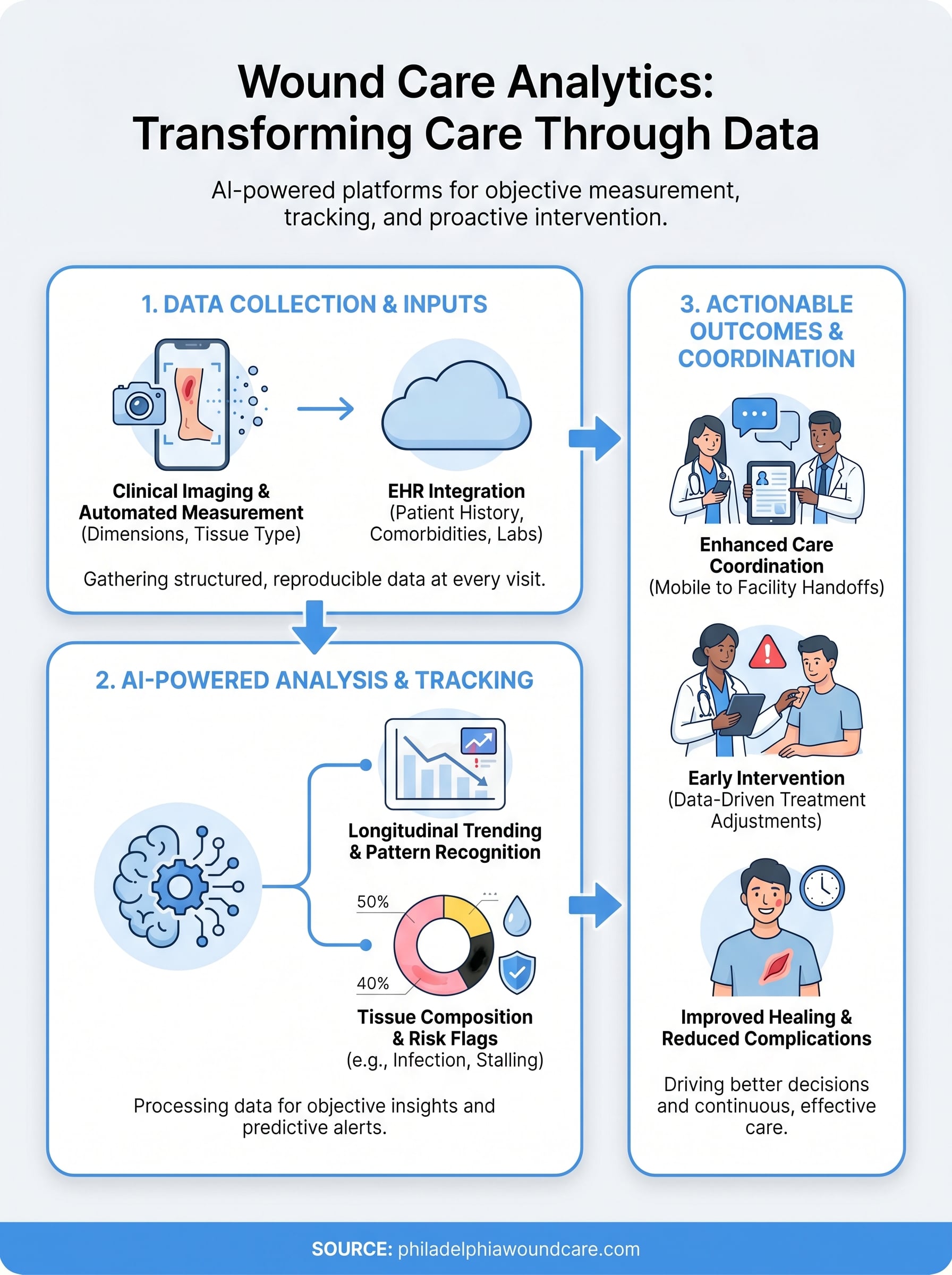
Wound care analytics pulls from multiple data sources to build a complete picture of a wound’s status at any given point in time. The quality of the insights your platform produces depends directly on the quality and completeness of the inputs going in. Understanding what types of information these systems collect is just as important as knowing how they process it, so you can evaluate whether your current documentation workflow supports the data requirements.
Clinical imaging and wound measurements
The most immediate data source is direct wound imaging and physical measurements captured at each clinical visit. Platforms typically use smartphone cameras, specialized imaging devices, or infrared scanners to photograph the wound and automatically calculate dimensions including length, width, depth, and surface area. Many systems also analyze tissue composition directly from the captured image, distinguishing granulation tissue, slough, eschar, and periwound skin changes without requiring manual categorization from the clinician performing the visit.
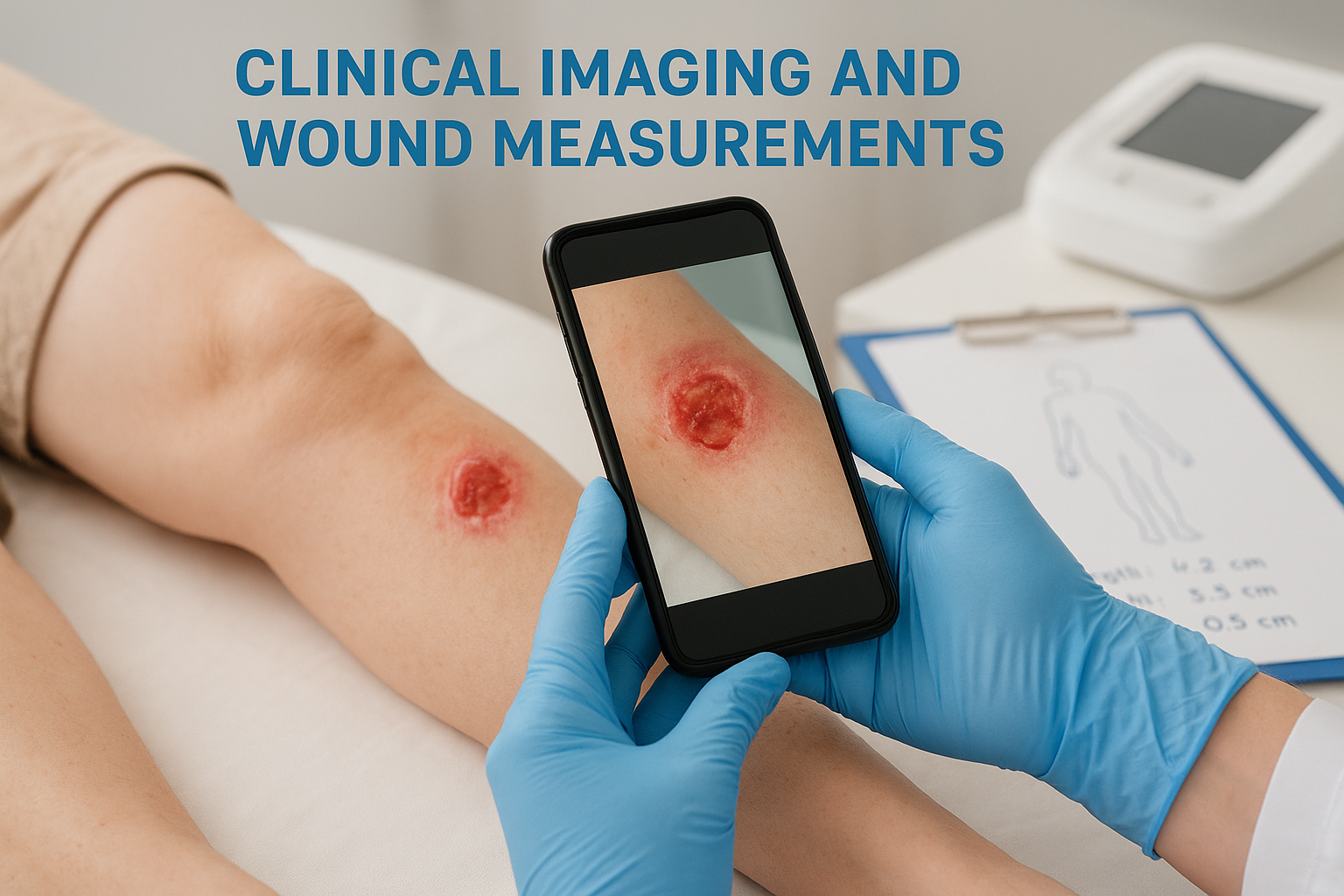
Automated image analysis removes the subjectivity that comes with visual estimation, which means two clinicians assessing the same wound at different visits produce comparable, directly stackable data.
This consistency is what makes longitudinal tracking reliable. When your measurements come from the same algorithmic process at every visit, the trend lines your analytics platform generates reflect the wound’s actual biology rather than variations in how different clinicians describe what they observe.
Patient history and systemic health data
Wound healing does not happen in isolation from the rest of a patient’s health picture. Comorbid conditions including diabetes, peripheral vascular disease, and nutritional deficiencies directly affect how fast tissue regenerates, which means your analytics platform needs access to relevant patient history to contextualize what the wound measurements are showing.
Most platforms integrate with electronic health record systems to pull diagnosis codes, medication lists, and lab values such as HbA1c and albumin levels. This integration allows the system to flag when a wound’s slow progress aligns with a modifiable systemic factor, giving your care team a clear clinical starting point for adjusting the treatment plan rather than simply recording that healing has stalled.
Care setting data also feeds into the overall picture. Whether a patient recovers at home, in a skilled nursing facility, or in an assisted living community affects offloading compliance, nutrition access, and wound hygiene, all of which analytics platforms incorporate as variables when generating risk scores and projecting healing outcomes.
The metrics that show healing and risk
Not every data point in a wound record carries the same clinical weight. Wound care analytics platforms are designed to surface the specific measurements that reliably predict whether a wound is progressing toward closure or drifting toward a complication. Knowing which metrics matter most helps your team focus attention where it changes outcomes rather than collecting data for its own sake.
Wound size and tissue composition
The most fundamental measurement set covers wound dimensions and tissue quality. Surface area is the primary size metric most platforms track automatically, using imaging data to calculate the wound bed area at each visit. What makes surface area useful as a trending metric is that even a small, consistent reduction confirms that the treatment approach is working, while a plateau or increase signals a need for reassessment before the situation becomes harder to reverse.
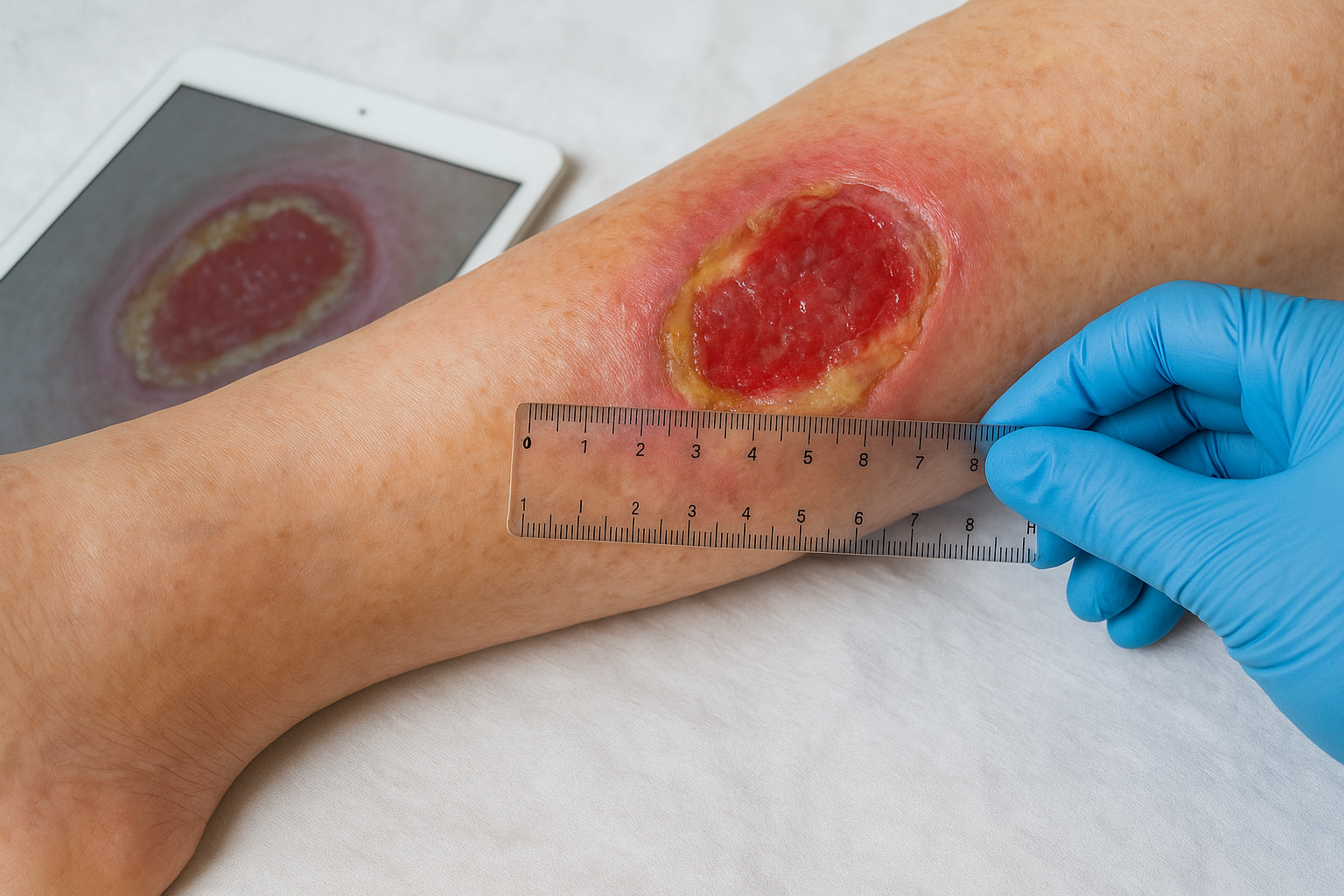
A wound that holds the same surface area across three consecutive visits is not stable. It is stalling, and that distinction requires immediate clinical attention.
Tissue composition percentages matter equally because a wound can maintain the same dimensions while the biological environment shifts underneath. Platforms that analyze imaging data can quantify what proportion of the wound bed is granulation tissue versus slough or necrotic tissue. A wound with 70% viable granulation tissue is healing differently than one with the same surface area but 50% slough coverage, and the treatment plans for each should reflect that difference directly.
Risk indicators that predict complications
Beyond direct wound measurements, systemic and behavioral risk indicators give your analytics platform context for interpreting what the wound measurements mean. Exudate volume and character, for example, directly signal infection risk. A wound producing high volumes of purulent or malodorous exudate warrants a different clinical response than one producing low volumes of serous fluid, even when surface area measurements look similar.
Periwound skin condition is another metric that platforms capture through imaging analysis. Maceration, induration, or erythema spreading beyond the wound margin each carry specific risk implications that a structured metric captures more reliably than a free-text clinical note. When these indicators appear in a platform’s tracking data, your care team can respond to the developing pattern rather than waiting for the wound to declare a clear infection or breakdown. That lead time is exactly what reduces emergency interventions for patients managing chronic wounds in home and community-based settings.
How AI improves wound measurement and tracking
Manual wound measurement introduces variation every time a different clinician picks up a ruler or estimates tissue coverage by eye. AI-driven imaging tools eliminate most of that variation by applying the same computational process to every photograph, producing consistent, objective measurements that your team can compare directly across weeks and months of treatment without adjusting for individual clinical interpretation.
Automated measurement accuracy
AI measurement tools use computer vision algorithms to identify wound boundaries in a captured image and calculate dimensions in seconds. These systems detect surface area, depth when 3D imaging is used, and tissue type distribution across the wound bed simultaneously. The process takes the same amount of time whether the wound is straightforward or complex, and it produces a structured data record your platform can incorporate into trending calculations immediately after each visit.
The accuracy advantage compounds over time. When every measurement in your database comes from the same algorithmic method, the trend lines your wound care analytics platform generates reflect real biological change rather than documentation inconsistency. That reliability is what makes AI measurement genuinely useful for clinical decision-making rather than just record-keeping.
Measurement consistency across visits is the single most important factor that determines whether your outcome trends are clinically meaningful or statistically unreliable.
Predictive pattern recognition
Beyond measurement, AI pattern recognition identifies relationships between wound characteristics and clinical outcomes that would be difficult to detect through manual chart review. These systems process imaging data alongside patient health records to surface early indicators of infection, delayed healing, or deterioration before the wound shows obvious clinical signs.
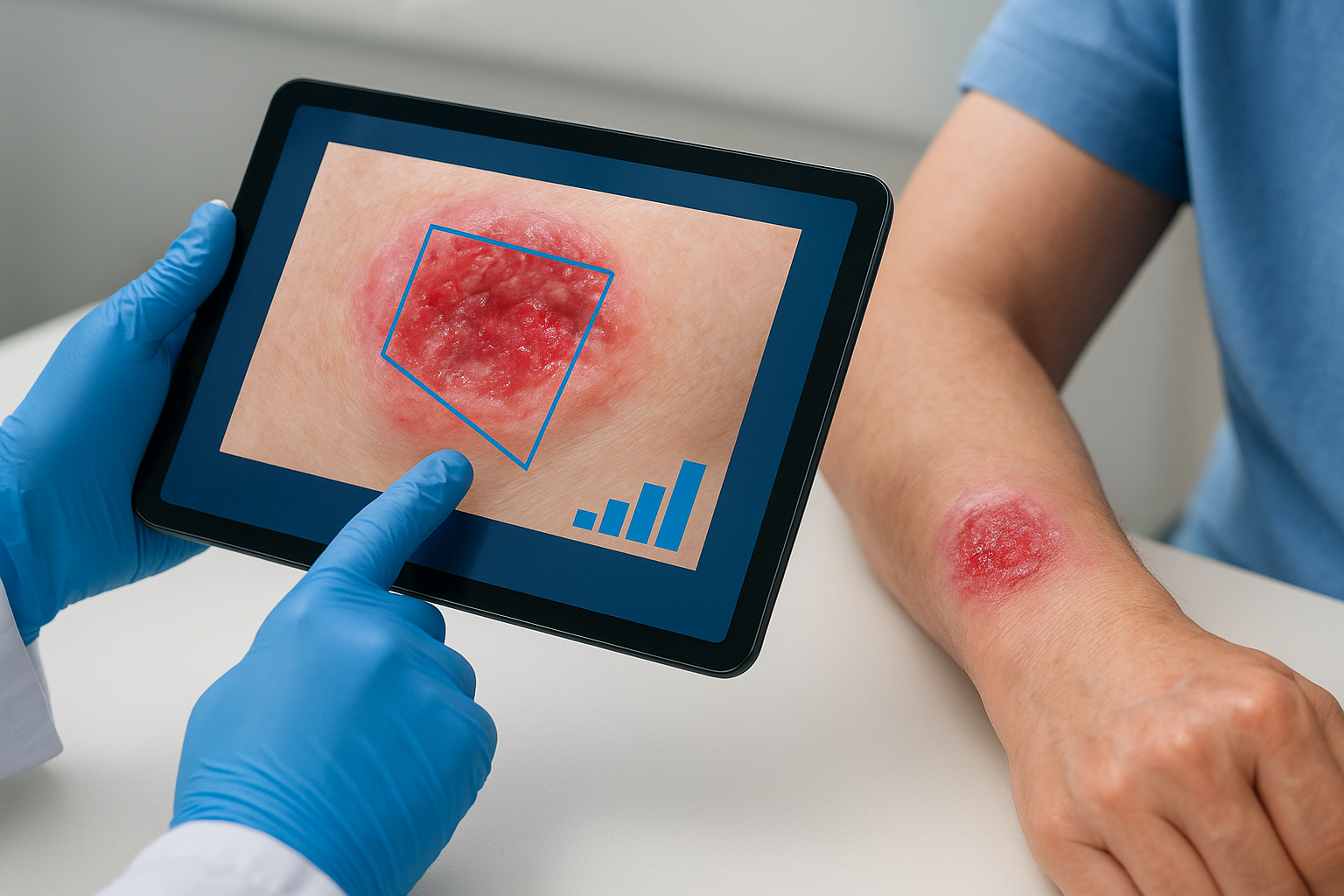
Machine learning models trained on large wound datasets can flag wounds whose current trajectory matches patterns associated with poor outcomes, giving your care team a structured reason to reassess the treatment plan at the next visit rather than waiting for a clear clinical event. For patients in home and community-based settings, where visits are scheduled rather than continuous, that predictive lead time directly reduces the risk of a manageable wound progressing to a surgical emergency.
Your platform can also use AI to automate comparison photography, overlaying images from different visits at consistent scale and orientation so that visual changes your team might otherwise miss become immediately apparent. That kind of automated visual summary reinforces the numerical data with something your entire care team, including referring physicians and facility staff, can interpret without additional training.
How to use analytics in day-to-day wound care
The value of wound care analytics only materializes when your team uses it consistently at every clinical encounter, not just during formal reviews or audits. Integrating data collection into your standard assessment routine means that each visit builds on the last, and the platform accumulates the kind of longitudinal record that actually supports sound clinical decisions. The goal is to make structured documentation the default behavior, not an extra step that gets skipped when time is short.
Building it into your assessment workflow
Start each visit by opening your platform and pulling up the patient’s wound history and previous measurements before you examine the wound. Reviewing prior data first gives you a benchmark against which to compare what you observe, rather than evaluating the wound in isolation. That comparison is where tracking becomes clinically useful: you notice a 10% increase in surface area that might not look significant on its own but represents a meaningful shift when the prior three visits showed steady reduction.
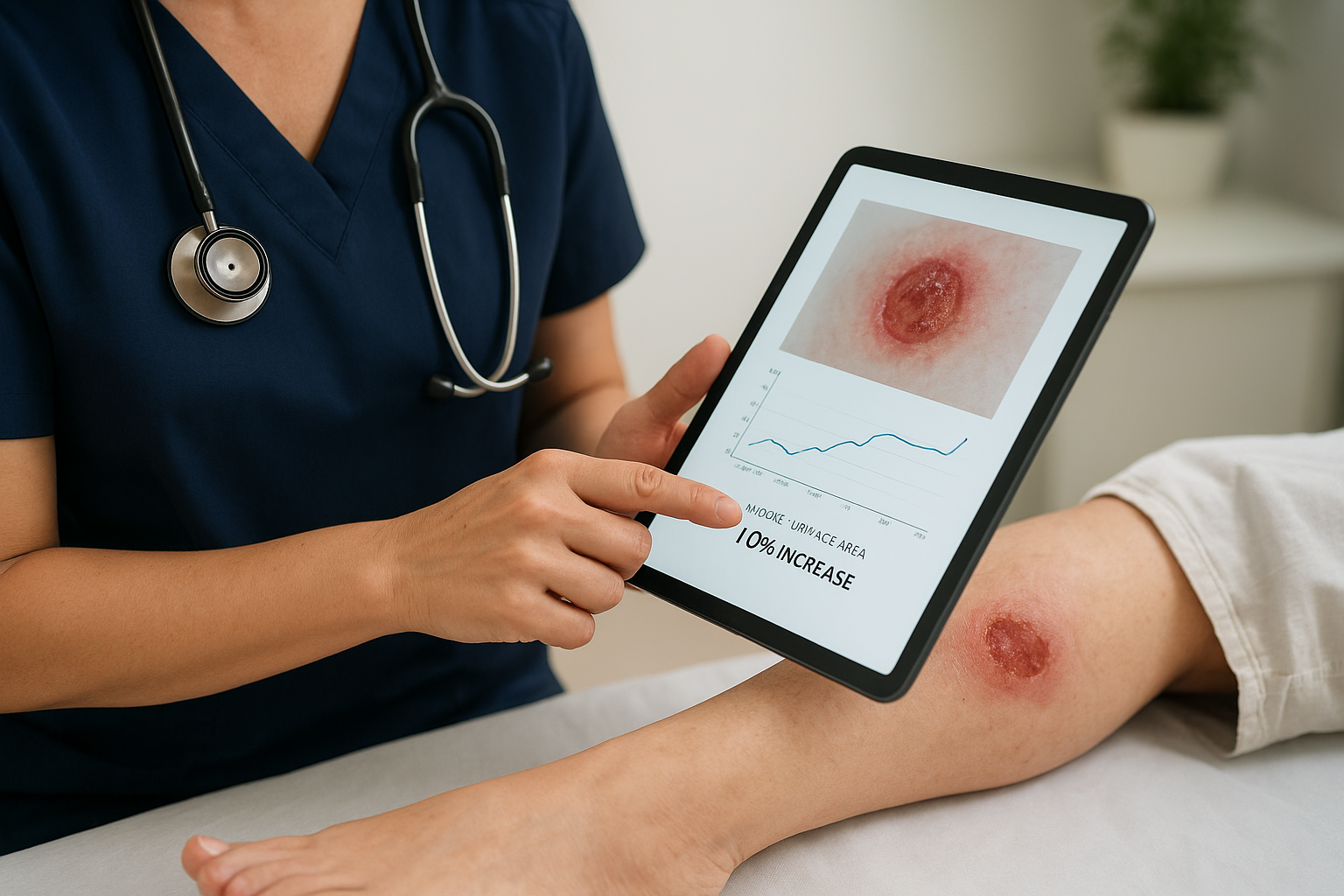
After the examination, capture your imaging and measurements before writing any narrative notes. This order matters because it keeps your documentation tied to objective platform data rather than letting a subjective impression of the wound shape what you record. Once the platform processes the image and generates updated metrics, your notes can reference specific numbers, tissue percentages, and trend indicators rather than general descriptions.
Capturing measurements before writing narrative notes keeps your documentation anchored to the wound’s actual biology, not your initial impression of how it looks.
Communicating findings to your care team
Sharing platform-generated reports with referring physicians and facility staff after each visit removes the interpretive gap that exists when care is delivered across multiple settings. Instead of a written summary that a colleague has to translate into a clinical picture, you send a structured document with current measurements, comparison images, and trend data they can read in under two minutes.
For patients in skilled nursing facilities or home settings, flagging any metrics that crossed a threshold since the last visit gives facility staff a specific item to monitor between your scheduled visits. When your platform supports automated alerts, configure them so that the right people receive notification the moment a measurement indicates a complication risk, rather than discovering the change at the next scheduled assessment.
How to choose a wound care analytics platform
Not every wound care analytics platform fits every clinical environment. Your choice needs to match the specific settings where you deliver care, the workflows your team already follows, and the technical infrastructure your organization currently supports. Evaluating a platform before committing to it saves you from adopting a system that adds administrative burden rather than reducing it.
The right platform should make structured documentation faster than unstructured documentation, not slower.
Clinical workflow compatibility
The most important criterion is whether the platform fits naturally into your existing assessment routine. A system that requires multiple extra steps per visit or depends on hardware your team doesn’t carry will fail in practice regardless of how strong its analytics capabilities look in a demo. Look for platforms that work on standard mobile devices, support offline data capture for settings with unreliable internet access, and sync automatically once a connection is available. Home visits and skilled nursing facility rounds often happen in locations where connectivity is inconsistent, and your platform needs to handle that reality without losing data.
Confirm that the platform also supports the specific wound types your patient population presents with most often. Some systems are optimized for diabetic foot ulcers and perform poorly on pressure injuries or post-surgical wounds. Ask vendors for outcome data specific to the wound types you treat before making a final decision, rather than relying on general product claims.
Integration and reporting capabilities
Your platform should connect directly to your electronic health record system so that wound measurements, images, and risk scores flow into the patient record automatically rather than requiring manual re-entry. Double documentation is one of the fastest ways to erode clinician compliance with any new system, and it introduces the transcription errors that analytics tools are specifically designed to eliminate.
On the reporting side, evaluate what the platform produces for external stakeholders. Referring physicians, facility administrators, and insurance reviewers each need different information from your wound data, and a strong platform generates structured reports your team can share without reformatting. Check whether the system supports customizable report templates and whether those reports meet the documentation standards your payers require for claim submission. A platform that produces excellent internal analytics but generates reports your billing team cannot use creates a gap that costs your practice time and revenue at every billing cycle.
Privacy, consent, and documentation requirements
Wound care analytics platforms handle some of the most sensitive patient data in clinical practice: medical images, diagnosis codes, treatment histories, and systemic health information. Handling that data correctly is not optional, and the requirements apply regardless of whether your practice operates in a hospital, a skilled nursing facility, or a patient’s private home. Every platform you evaluate needs to meet the same privacy and documentation standards that govern any other form of electronic health information.
HIPAA compliance and data security
The Health Insurance Portability and Accountability Act sets the baseline requirements for how protected health information (PHI) must be stored, transmitted, and accessed in the United States. Any wound care analytics platform you use must operate as a HIPAA-compliant Business Associate, which means your vendor should provide a signed Business Associate Agreement before your team uploads a single patient record or image. Without that agreement, your practice carries the legal exposure for any data breach involving patient wound images or clinical records.
A platform that cannot provide a signed Business Associate Agreement before onboarding is not ready for clinical use, regardless of its feature set.
Storage and transmission security are equally important. Confirm that your platform uses end-to-end encryption for data in transit and encryption at rest for stored images and records. Access controls should allow you to limit who views individual patient records, so that a facility administrator sees only the reports relevant to their residents, not your entire patient database.
Patient consent and authorization
Collecting wound images and integrating them with health records requires explicit patient consent in most clinical and legal contexts. Your documentation workflow should include a clear consent process that explains to patients what data you are collecting, how it will be stored, who can access it, and whether it may be used for quality improvement or AI model training purposes. That last point matters especially because many vendors use de-identified wound images to refine their algorithms, and patients deserve to understand that before they agree.
Keep your signed consent records accessible and linked to each patient’s file so that any audit or compliance review can confirm authorization was obtained before data collection began. For patients in skilled nursing facilities or under guardian arrangements, confirm that the appropriate authorized representative has provided consent on the patient’s behalf. Building this step into your intake process from the start prevents documentation gaps that create legal and regulatory risk for your practice later.
Common pitfalls and how to avoid them
Wound care analytics platforms fail in practice for predictable reasons, and most of them have nothing to do with the technology itself. Understanding the mistakes that clinicians and facilities make most often lets you structure your implementation to avoid them from the start, rather than diagnosing the problem after adoption has already stalled.
Treating the platform as a documentation tool only
The most common mistake is using an analytics platform purely to generate visit records rather than to drive clinical decisions. When your team captures wound images and stores measurements without reviewing trends at each visit, you collect data without using it. The platform generates accurate records, but the insight those records contain never reaches the treatment plan.
Data that gets stored but not reviewed carries the same clinical value as data that was never collected.
Fix this by requiring that every clinician pull up the patient’s trend dashboard before they begin the physical assessment. That review step changes how you approach the wound: you arrive with a specific question about whether the current trajectory is acceptable, rather than evaluating the wound in isolation. When trend review becomes part of the pre-assessment routine rather than an optional post-visit activity, your team extracts the full value of the data your platform collects.
Failing to train your entire care team
A second frequent pitfall is implementing the platform for the primary clinician who champions it while leaving facility staff, care coordinators, and referring physicians without the training to interpret reports. When the people receiving your analytics output cannot read it fluently, they default to ignoring it or requesting a separate phone call, which defeats the coordination benefit the platform is supposed to deliver.
Solve this with a short onboarding session for each stakeholder group that covers only what that group needs to act on. Facility nurses need to understand what threshold alerts mean and when to call your team. Referring physicians need to know how to read the comparison summary and where to find the measurement trend. You do not need to teach everyone how the system works internally, only how to respond to the information it surfaces. Targeted training by role keeps onboarding fast, improves adoption across your full care network, and ensures the platform functions as a genuine communication tool rather than a one-way data repository that only your practice uses.
A simple plan to start using analytics
Starting with wound care analytics does not require overhauling your entire practice at once. Pick one patient with a complex, slow-healing wound and document their next three visits using a structured platform with automated imaging and trend tracking. Review the trend data before each subsequent visit and let what you find shape how you adjust the treatment plan. That focused trial teaches your team the workflow without creating organization-wide disruption.
Once your team runs that pilot comfortably, expand to your full caseload and establish a clear review rhythm so that trend data informs every treatment decision, not just the ones that already look complicated. Share platform-generated reports with your referring physicians after each visit so the communication benefit becomes visible quickly.
If you manage complex wounds in Philadelphia and want physician-led mobile care that already integrates structured clinical tracking, request a wound care consultation to see how we work.