
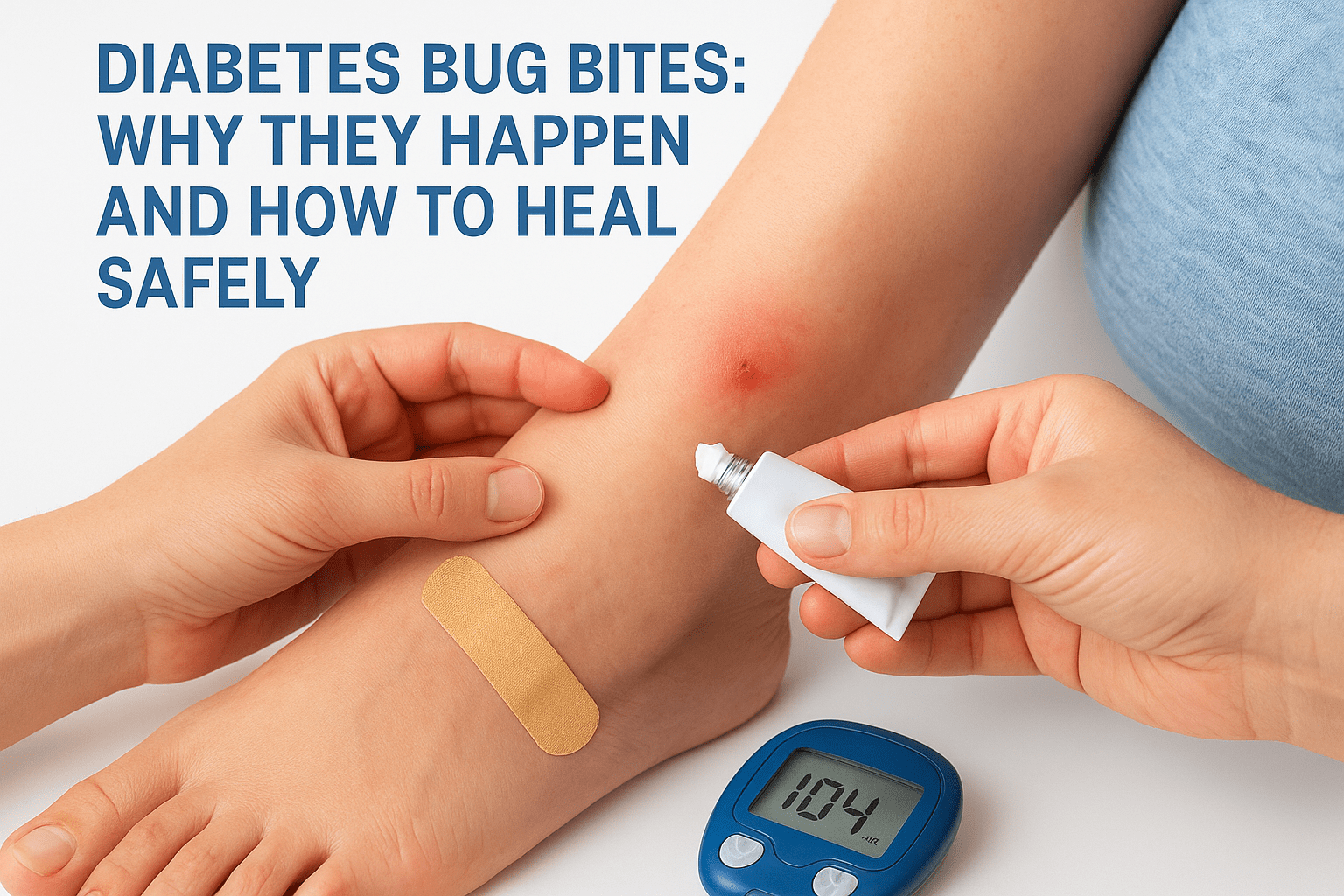
Diabetes Bug Bites: Why They Happen And How To Heal Safely
A mosquito bite that would clear up on its own for most people can turn into a real problem when you have diabetes. Diabetes bug bites tend to itch more, heal slower, and get infected more easily, and that difference isn’t random. High blood sugar changes how your skin responds to any break in its surface, from a scratch to a bite mark, and it dulls the nerve signals that would normally warn you something is wrong.
If you’re wondering why that mosquito or spider bite on your leg looks angrier by the day, the short answer is impaired circulation and reduced immune response, both common with diabetes. These same factors that slow wound healing after surgery also slow healing after a bug bite, and they can turn a minor irritation into a foothold for infection.
In this article, we’ll cover exactly why diabetes raises your risk of complicated bug bites, the warning signs of infection you should never ignore, and practical steps for safe, effective healing at home. We’ll also explain when a bite has crossed the line from annoying to dangerous and needs a specialist’s attention, not just a bandage.
Why bug bites are riskier for people with diabetes
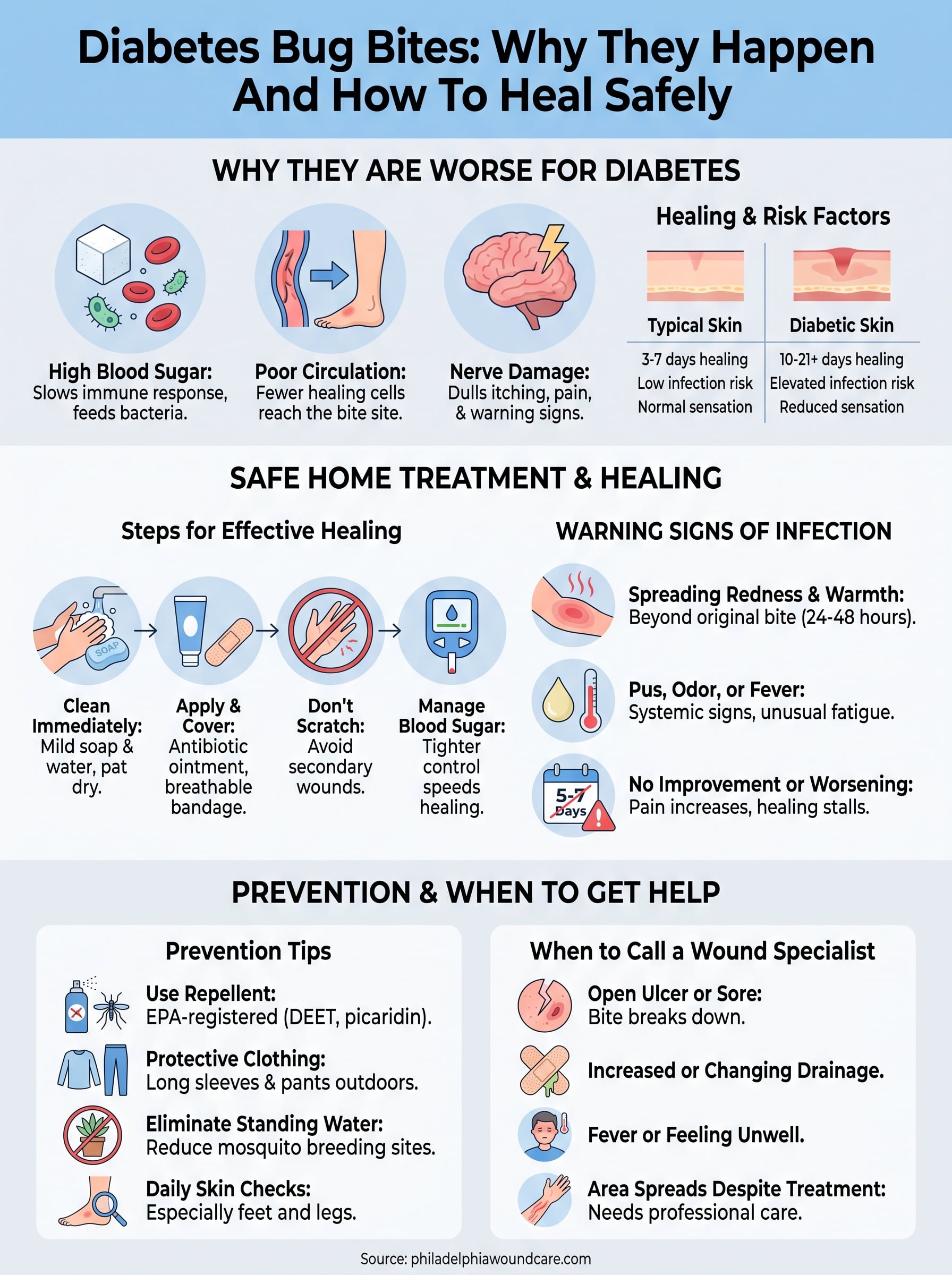
A bug bite is a small wound, and diabetes changes how your body handles every wound, big or small. Elevated blood sugar levels interfere with the chemical signals your immune system uses to fight off bacteria, while reduced blood flow to your hands, feet, and lower legs means fewer infection-fighting cells reach the bite site quickly. Add in nerve damage that dulls sensation, and you have a situation where a simple mosquito bite can quietly worsen for days before you even notice.
High blood sugar weakens your skin’s defenses
Bacteria thrive on sugar, and when glucose lingers in your bloodstream and tissues, it gives any bacteria that enters through a bite a head start. Your white blood cells, which normally rush to a wound site and destroy invaders, move slower and work less efficiently when glucose control is poor. That’s why a bite that would be a non-event for a neighbor can become a localized infection for you within 48 to 72 hours.
A bug bite is never just a bug bite when diabetes is in the picture, it’s a test of how well your body can fight infection.
Nerve damage can hide the danger
Peripheral neuropathy, common in long-standing diabetes, dulls the itching, burning, and pain that would normally alert you to a problem. You might not feel a bite getting worse, which means the visual signs, redness, swelling, or warmth, become your only early warning signs. Skipping daily skin checks isn’t an option when your body can’t reliably tell you something’s wrong.
Poor circulation slows the healing clock
Circulation problems, especially in the legs and feet, mean less oxygen and fewer nutrients reach the bite as it tries to heal. This is the same mechanism behind slow-healing diabetic ulcers, just triggered by an insect instead of pressure or friction.
| Factor | Typical healthy skin | Skin affected by diabetes |
|---|---|---|
| Healing time for a minor bite | 3 to 7 days | 10 to 21+ days |
| Infection risk | Low | Elevated, especially with poor glucose control |
| Itching or pain sensation | Normal, prompts you to leave it alone | Often reduced due to neuropathy |
| Immune response speed | Fast | Delayed, sluggish white blood cell activity |
How to treat a bug bite safely when you have diabetes
Treating diabetes bug bites correctly from the first hour matters more than most people realize. The goal isn’t just comfort, it’s stopping bacteria from getting a foothold while your body’s defenses are already working at a disadvantage.
Clean and monitor before anything else
Wash the bite with mild soap and water as soon as you notice it, then pat it dry rather than rubbing. Resist scratching, since broken skin from scratching is an open door for bacteria, and check your blood sugar if you haven’t recently, because tighter glucose control genuinely speeds healing.
Clean hands, clean skin, and steady blood sugar are your first line of defense against a bite turning serious.
Use the right products, skip the risky ones
Apply a thin layer of antibiotic ointment and cover the bite with a breathable bandage rather than leaving it exposed. Change that bandage daily and inspect the site each time.
- Use over-the-counter hydrocortisone sparingly for itching, following package directions
- Avoid harsh home remedies like bleach, vinegar soaks, or essential oils directly on skin
- Keep the area dry, especially between toes or in skin folds
- Photograph the bite daily to track changes objectively
Managing the itch matters too, since scratching with diabetic skin creates a secondary wound that heals even slower than the original bite. If swelling or redness spreads beyond the bite’s original border within a day or two, treat that as your cue to escalate care rather than wait it out.
Warning signs a bite is turning into a wound infection
Spotting trouble early is the whole game with diabetes bug bites, because infections that start small can escalate fast when your immune response is already compromised. Knowing exactly what to watch for turns a vague worry into a clear decision about whether you can manage the bite at home or need help now.
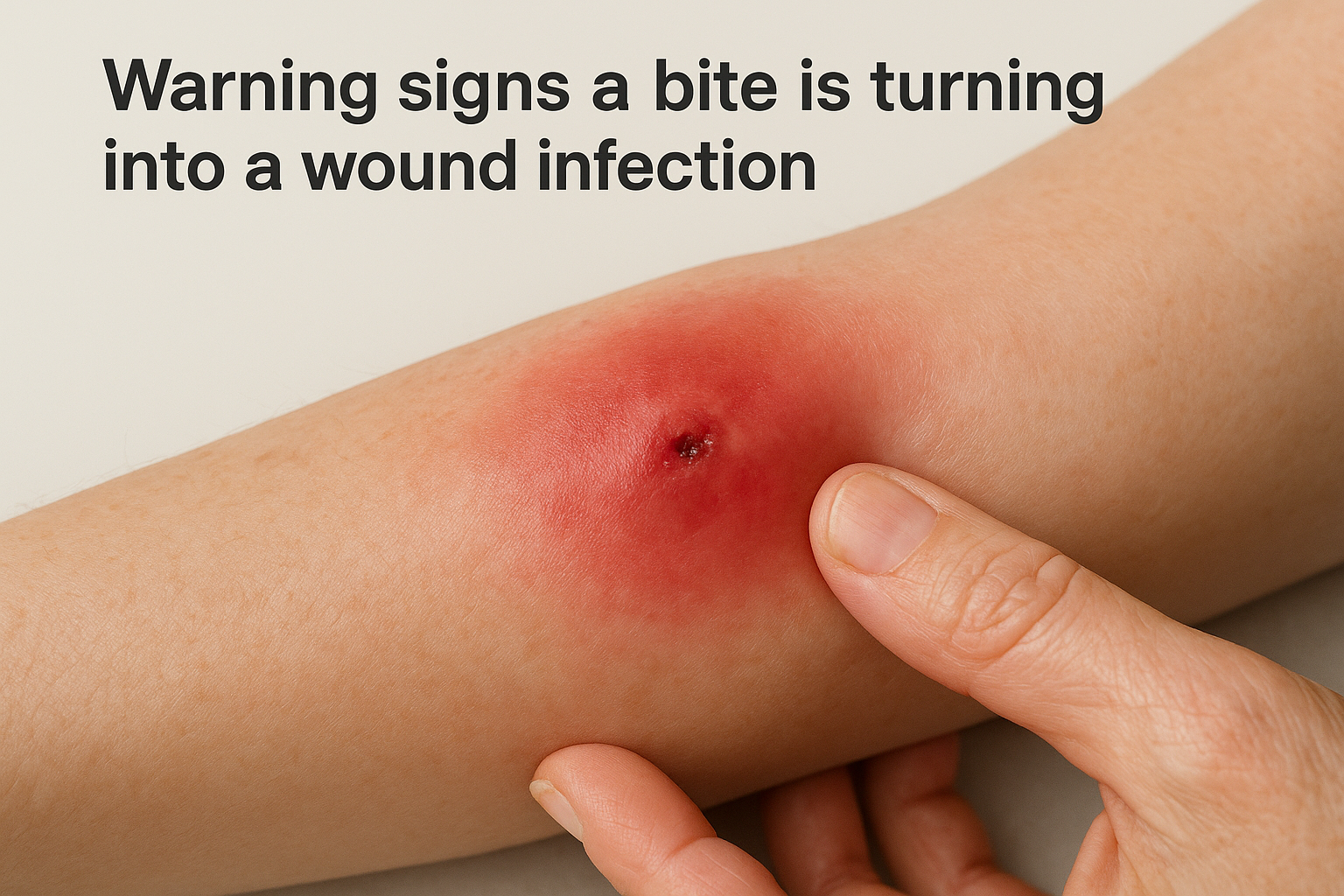
Redness, swelling, and warmth that spread
A little pink around a fresh bite is normal, but spreading redness that grows beyond the original mark within 24 to 48 hours is not. Press gently near the bite; if the skin feels noticeably warmer than the surrounding area or has become firm and swollen, that’s your body signaling an active infection, not just irritation.
When redness spreads instead of shrinking, you’re no longer looking at a bug bite, you’re looking at a wound infection.
Systemic signs that mean it’s more serious
Some symptoms point beyond the skin and toward a systemic infection that needs urgent attention. Don’t wait these out:
- Pus, cloudy drainage, or a foul odor from the bite
- Fever, chills, or feeling unusually tired or foggy
- Red streaking extending away from the bite site
- Increasing pain despite home treatment
- A bite that hasn’t started improving after 5 to 7 days
Any one of these deserves same-day evaluation, since diabetic skin infections can move into deeper tissue quickly once bacteria establish themselves.
How to prevent bug bites and protect your skin
Prevention beats treatment every time, especially when a single bite can turn into weeks of wound care. The best defense against diabetes bug bites is reducing your exposure before insects ever get near your skin, then backing that up with daily habits that catch problems while they’re still minor.
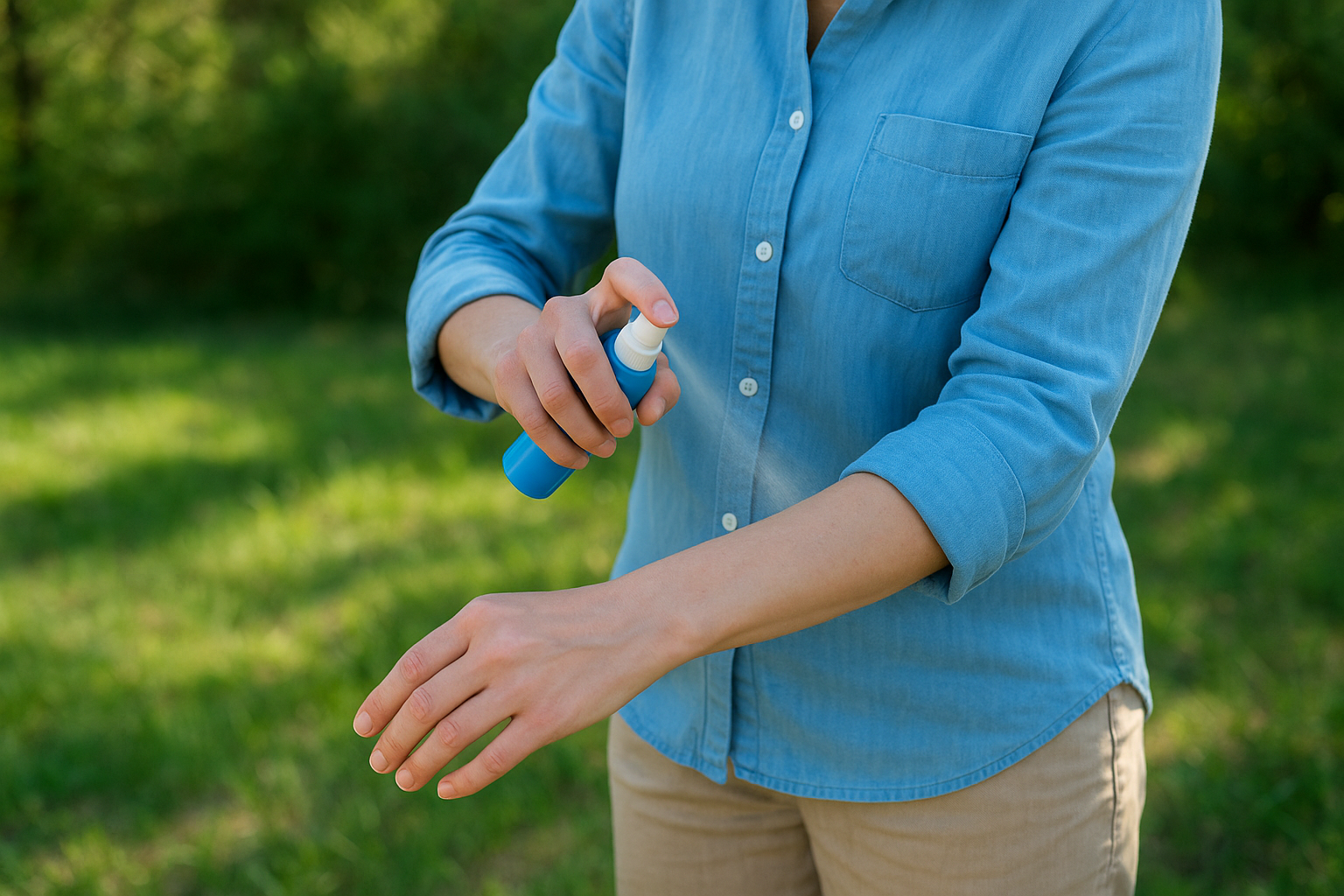
Build a repellent and clothing routine
Use an EPA-registered insect repellent containing DEET or picaridin whenever you’re outside during dawn, dusk, or after rain, when mosquitoes are most active. Long sleeves and pants in lightweight fabric add a physical barrier, particularly around ankles and lower legs where circulation is already compromised.
Prevention costs you five minutes a day, an infected bite costs you weeks of recovery.
Manage your environment and your skin
Standing water around your home is a mosquito nursery, so empty birdbaths, gutters, and plant saucers regularly. Keep window screens intact and consider a fan near outdoor seating, since moving air makes it harder for mosquitoes to land.
- Moisturize daily to prevent cracked, dry skin that’s easier for bacteria to enter
- Trim grass and clear brush near your home to reduce tick and mosquito habitat
- Check your skin every evening, especially feet and legs if you have neuropathy
- Wear closed-toe shoes and socks outdoors, even in warm weather
Consistent glucose management also plays a quiet but real role here. Better blood sugar control means your skin barrier stays stronger and your immune system responds faster if a bite does slip through your defenses.
When to call a wound care specialist
Some bug bites need more than a bandage and a watchful eye. If a bite has already broken down into an open sore, or if the skin around it looks darker, blistered, or leathery, that’s beyond what home care can fix. Diabetes bug bites that stall for more than a week despite clean dressings and stable blood sugar have usually moved past the point where waiting helps.
Signs it’s time to escalate
Call a wound care specialist or your physician right away if you notice any of the following:
- The bite has developed into an open wound or ulcer
- Drainage has increased, thickened, or changed color
- You have a fever or feel generally unwell
- The area is spreading despite treatment
- You have known peripheral artery disease or advanced neuropathy
A bite that isn’t healing on schedule is your body asking for backup, not a reason to wait longer.
Why physician-led care matters here
A specialist trained in wound management can assess tissue viability, order cultures if needed, and start advanced treatments like debridement or allograft therapy that a general checkup won’t offer. This matters more than people expect, since a bite that seems minor on the surface can hide deeper tissue damage in diabetic skin, and general practitioners aren’t always equipped to catch that early. According to the CDC, foot and lower leg wounds in people with diabetes carry a real risk of progressing to serious complications without prompt, specialized care.
Mobile wound care services exist specifically for patients who struggle to get to a clinic quickly, bringing physician-level evaluation directly to your home or facility so a small bite never becomes a bigger crisis.
Protecting your skin through every season
Bug bites will happen, no matter how careful you are with repellent and long sleeves. What matters most is how you respond once one shows up on your skin. Diabetes bug bites demand more attention than the average mosquito welt, and treating that first day or two seriously often decides whether you’re dealing with a minor annoyance or a wound that lingers for weeks.
Keep checking your skin daily, keep your blood sugar as steady as you can, and don’t talk yourself out of calling for help when a bite refuses to improve. Early intervention consistently beats waiting things out, especially for feet and legs where circulation is already working against you.
If a bite on you or someone you’re caring for isn’t healing the way it should, don’t wait for it to get worse. Reach out to our mobile wound care team and let a physician evaluate it at home, before it becomes a bigger problem.