
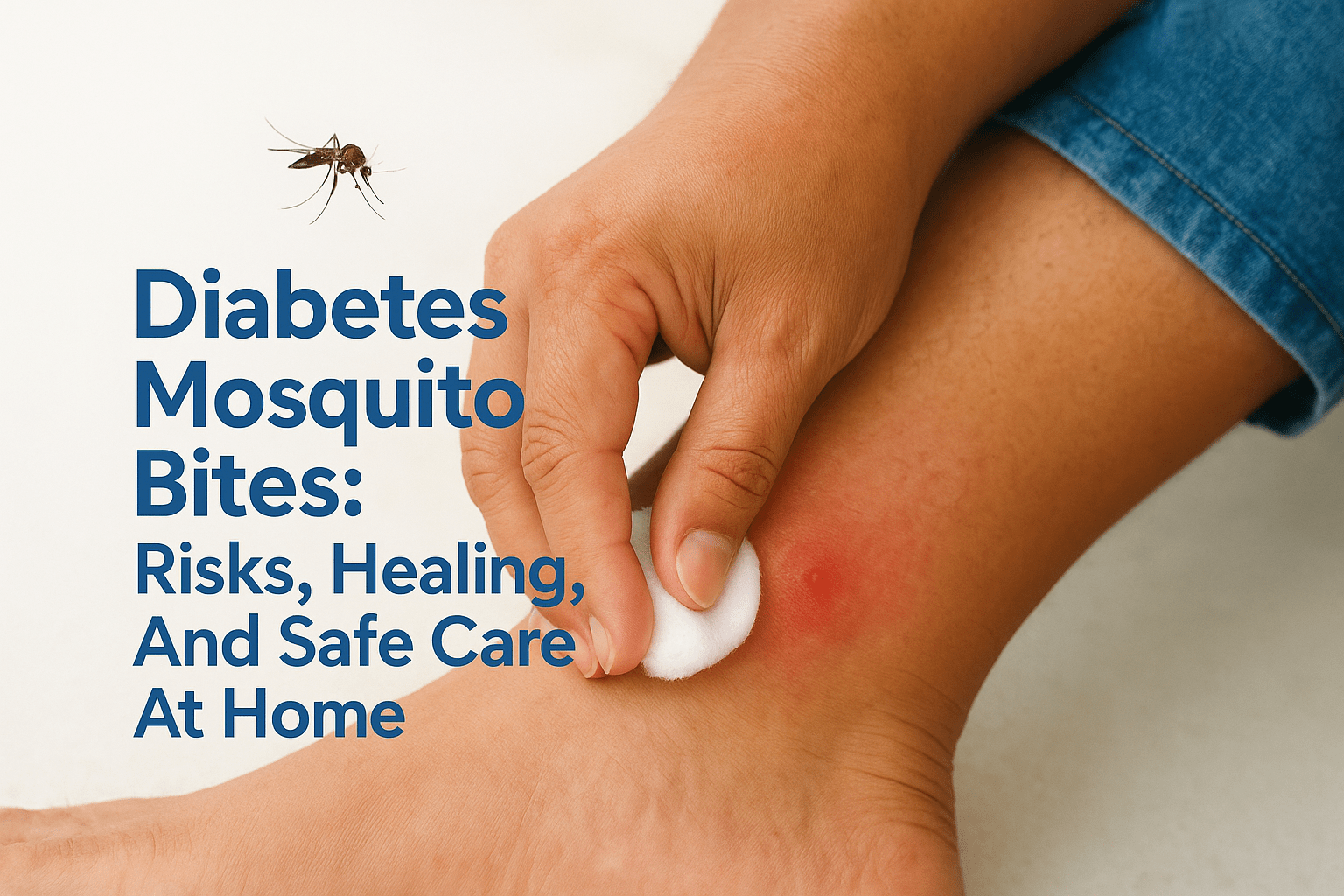
Diabetes Mosquito Bites: Risks, Healing, And Safe Care At Home
A mosquito bite is a minor nuisance for most people, a quick itch that fades in a day or two. But if you or someone you care for lives with diabetes, the situation isn’t always that simple. The connection between diabetes mosquito bites and potential complications is real: slower healing, higher infection risk, and in some cases, a small bite that spirals into a wound requiring medical attention.
People with diabetes often deal with reduced blood flow and impaired immune response, which means even a tiny break in the skin can become a serious problem. A bite that gets scratched open or goes unnoticed on a foot with diminished sensation can develop into an infected or non-healing wound, the exact type of complication our team at Philadelphia Wound Care treats through physician-led house calls across the Philadelphia area.
This article covers why diabetics may face greater risks from mosquito bites, what warning signs to watch for, and practical steps to manage bites safely at home, so a small summer annoyance doesn’t turn into a chronic wound care issue.
Why mosquito bites matter with diabetes
For most people, a mosquito bite triggers a brief immune response: the area swells, itches for a couple of days, and the body moves on. When you have diabetes, that process doesn’t follow the same timeline. Elevated blood glucose levels interfere with your body’s ability to fight off bacteria and repair damaged tissue, which means a bite that gets scratched open carries much more risk than it would for someone without the condition. Understanding that risk is the first step toward handling diabetes mosquito bites with the right level of attention.
Your immune system works harder and slower
Diabetes impairs the way your white blood cells function, reducing their ability to detect and neutralize bacteria at a wound site. When a mosquito bite breaks the skin, or you scratch through it, bacteria can enter through that opening. Your immune system responds, but the response is slower and less effective than normal. That delay gives bacteria more time to multiply, which raises the chance a minor bite develops into a localized skin infection like cellulitis, a bacterial infection of the skin and tissue beneath it that can spread quickly if not treated promptly.
A small scratch through a mosquito bite can introduce bacteria into the skin, and when your immune response is blunted by diabetes, that bacteria has a much easier path to becoming a serious infection.
Poor circulation slows the repair process
Peripheral vascular disease is a common complication of long-term diabetes, and it restricts blood flow to the extremities, particularly the feet and lower legs. Healthy wound healing depends on oxygen and nutrients reaching damaged tissue through the bloodstream. When that flow is limited, the repair process stalls, and an irritated bite can take far longer to close than it should. A wound that stays open invites further contamination, and that cycle is exactly how minor skin irritation becomes a chronic wound requiring medical care. Your lower legs and feet face the highest combined risk because both poor circulation and reduced nerve sensation tend to be most pronounced in those areas.
Do Mosquitoes Bite People With Diabetes More
This question comes up often, and the honest answer is: probably, though not because of the condition itself. Mosquitoes are drawn to specific signals your body produces, and diabetes can influence some of those signals in ways that may make you a more appealing target.
Body Heat, Carbon Dioxide, and Blood Sugar
Mosquitoes locate hosts primarily through carbon dioxide output and body heat. People with poorly controlled blood sugar sometimes experience higher metabolic activity, which can increase both. Some research also points to lactic acid and other skin compounds as attractants, and diabetes can alter the chemical composition of your sweat. None of this means every person with diabetes gets bitten more, but if your blood glucose is frequently elevated, your body chemistry may work against you during outdoor time.
Controlling blood sugar doesn’t just protect your internal health; it may also reduce the chemical signals that draw mosquitoes toward you.
Skin Bacteria and Fungal Conditions
High glucose levels feed bacteria and fungi on the skin’s surface, and certain compounds produced by that microbial activity, particularly alcohols and aldehydes, are known mosquito attractants. Studies have shown that people with higher concentrations of these skin microbiome byproducts tend to attract more bites. For anyone managing diabetes mosquito bites, this is a practical reason to keep skin clean, dry, and well-maintained, especially during warm months when mosquito activity peaks.
How Diabetes Affects Bite Swelling and Healing
When a mosquito bites you, your body releases histamine and other inflammatory compounds to contain the irritation and begin repair. With diabetes, this process works differently. Chronic inflammation caused by elevated blood glucose disrupts the normal signaling cascade, so swelling can be more intense and last longer than expected, while actual tissue repair lags behind. That gap between visible irritation and real healing is where diabetes mosquito bites become a concern worth monitoring.
The Inflammatory Response Becomes Unpredictable
Your immune system relies on a tightly coordinated set of signals to move from the swelling stage into active repair. Elevated blood sugar interferes with that coordination, leaving the inflammatory phase running longer than it should. Prolonged inflammation breaks down surrounding tissue rather than rebuilding it, which means even a simple bite can cause more localized damage over time. Scratching makes this significantly worse because it reopens the skin barrier and stalls the already-compromised healing process.
A bite that stays red, swollen, and itchy for more than a few days is a signal that your body’s healing response isn’t keeping pace.
Why Neuropathy Raises the Danger
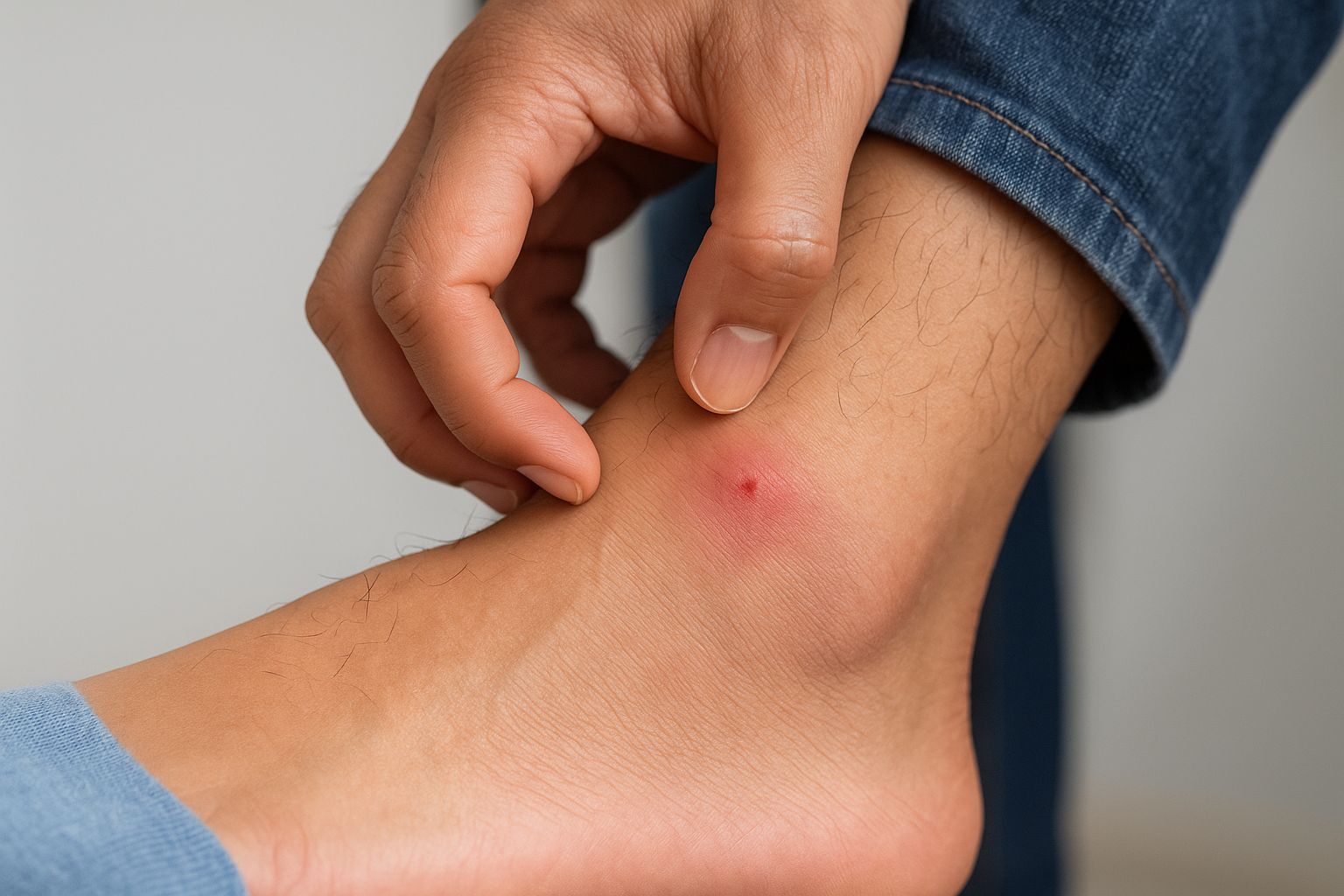
Diabetic peripheral neuropathy reduces sensation in the feet and lower legs, which means you may not feel a bite at all. Without the itch signal, you won’t notice when a bite gets scratched during sleep or irritated by footwear. By the time the bite becomes visible or swollen, it may already be infected or broken open.
How to Treat Mosquito Bites Safely at Home
Handling diabetes mosquito bites carefully at home reduces the chance that a minor irritation develops into something more serious. Your goal is to protect the skin barrier and keep the site clean so the bite can close without inviting infection.
Clean and Protect the Skin
Wash the bite site with mild soap and clean water as soon as you notice it. Pat the area dry gently, then apply a fragrance-free antiseptic to reduce the bacterial load at the surface before inflammation peaks.
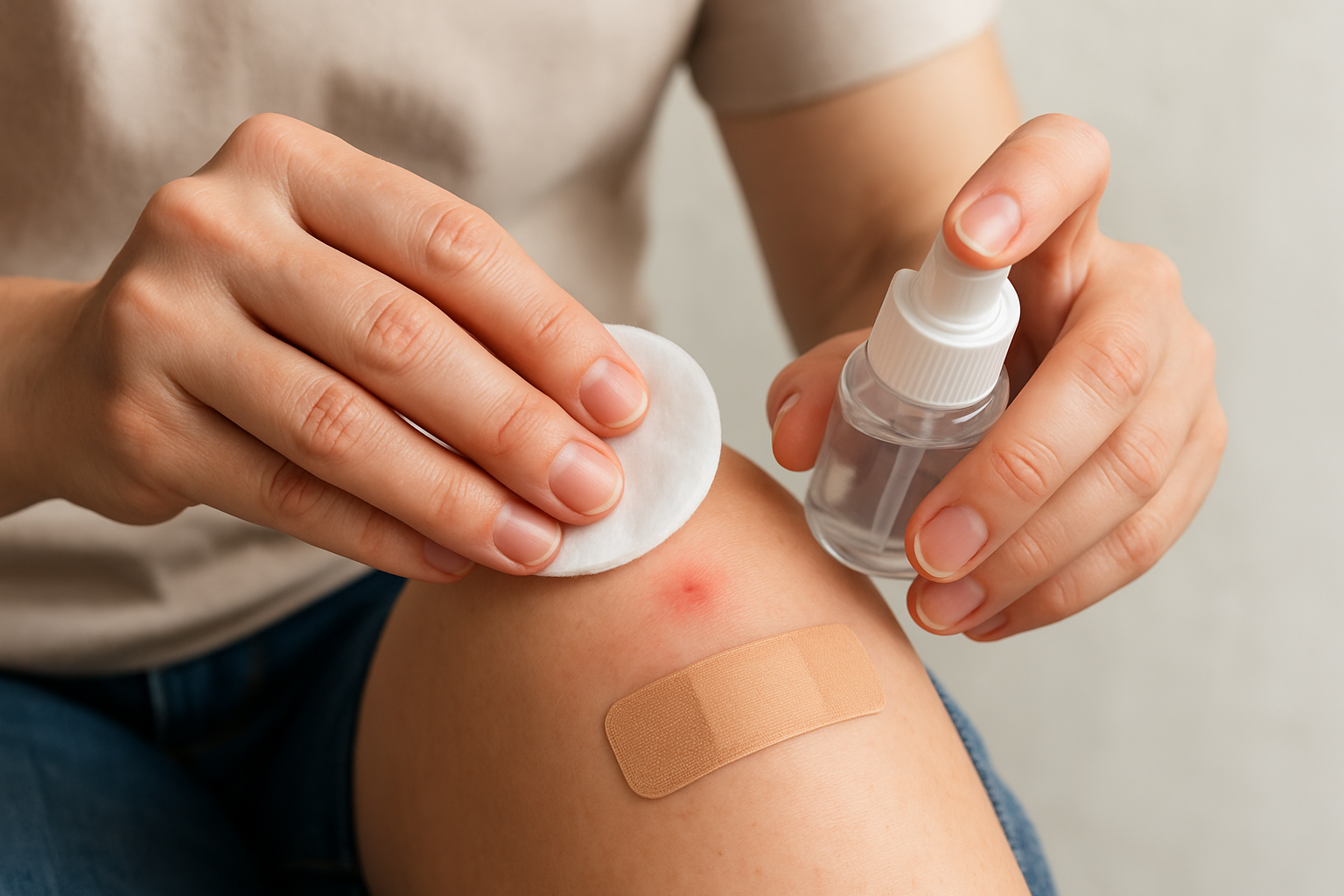
After cleaning, keep the site covered with a clean bandage, especially on your feet or lower legs. A bandage does two things: it shields the skin from friction and contaminants, and it prevents unconscious scratching during sleep, which is a real risk if you have neuropathy and may not feel the irritation happening.
Manage the Itch Safely
Scratching is the fastest way to turn a bite into an open wound. Instead, apply a cool compress for ten to fifteen minutes to calm the inflammatory response and reduce swelling. An over-the-counter 1% hydrocortisone cream applied directly to the bite reduces itching without damaging the surrounding tissue.
Controlling the itch through topical treatment rather than scratching is the single most effective step you can take to prevent a bite from becoming an open wound.
Check the site each day under good lighting. Look for expanding redness, warmth, or any discharge, all of which signal that the bite is not healing on schedule.
When to Call a Clinician About a Bite
Home care handles most diabetes mosquito bites without issue, but some situations require professional attention before the wound worsens. Knowing the line between watching and acting protects you from a bite escalating into a serious skin or soft tissue infection.
Signs the Bite Is Infected
If redness around the bite expands beyond the original site or begins spreading in streaks, that signals bacterial infection moving through the skin. Other red flags include warmth, increasing swelling after 48 hours, pus or discharge, and fever. Any one of these warrants a same-day call to your physician or wound care specialist.
Do not wait to see if an expanding red streak resolves on its own; that pattern indicates infection spreading through the lymphatic system and requires prompt treatment.
Bites on your feet or lower legs deserve faster action, because circulation is already compromised in those areas and infection spreads more aggressively where healing resources are limited.
When Location Makes the Risk Higher
A bite anywhere on your foot needs closer monitoring from the start, not just when symptoms worsen. If you have neuropathy, you may have scratched the bite open without knowing, so any bite below the ankle warrants a daily skin check and a lower threshold for calling a clinician.
An open wound on the foot that does not close within two to three days is a clear sign you need physician-led wound care, not continued home management.
A Simple Plan for the Next Bite
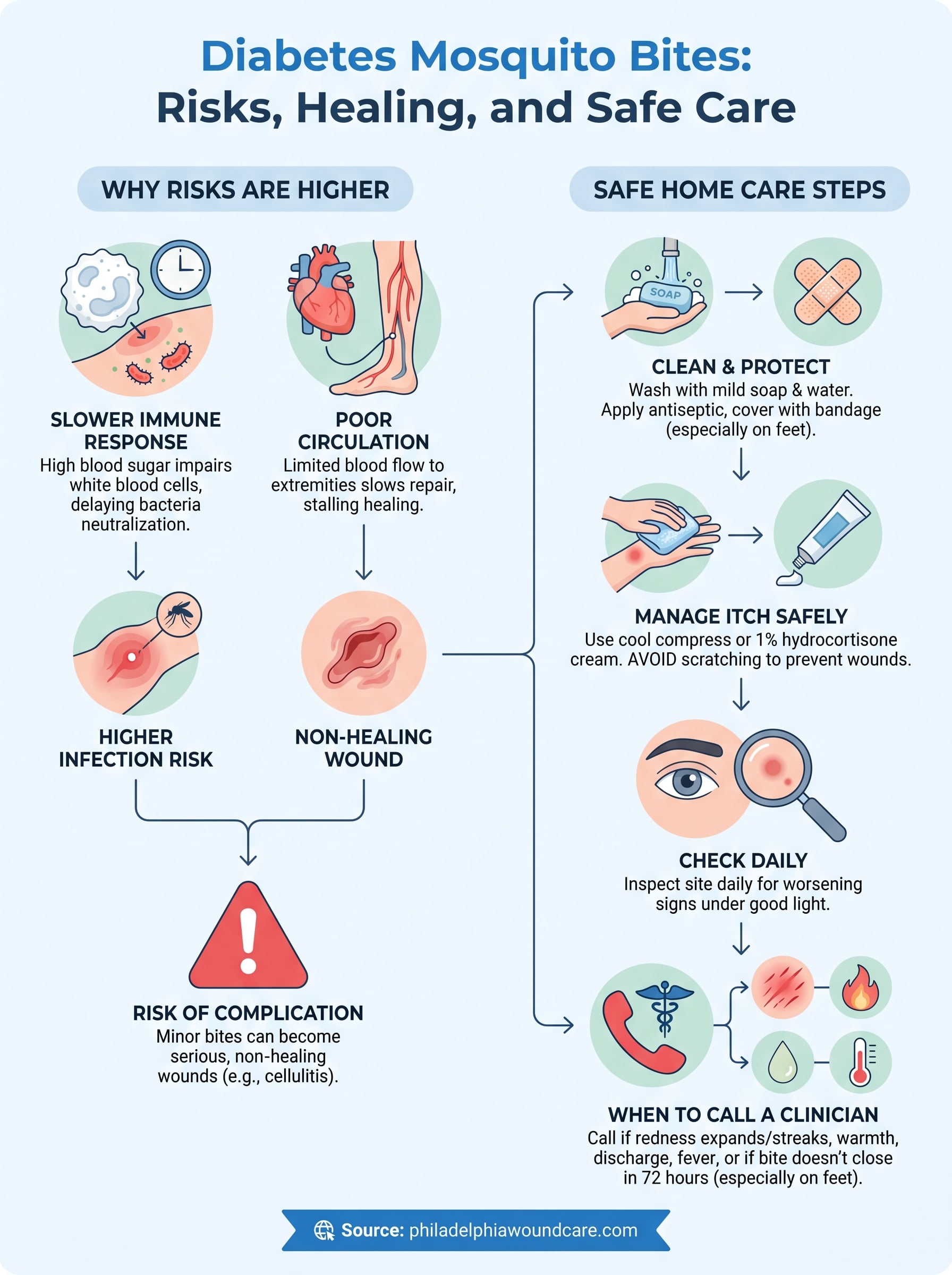
The next time a mosquito bites you, the response is straightforward: clean the area immediately, keep it covered, and check it daily. That routine handles the vast majority of diabetes mosquito bites without further intervention. Control the itch with a cool compress or hydrocortisone cream instead of scratching, and give the site two to three days to show clear improvement.
Watch for the warning signs covered in this article: expanding redness, warmth, discharge, or any bite that stays open past 72 hours. Those signals mean the wound needs professional care, not more waiting.
If you or someone you care for has a bite or wound that isn’t closing on schedule, our physician-led team brings advanced care directly to your door. Learn more about mobile wound care services in Philadelphia or reach out to get a clinician to your location without delay.