

Caloric Needs for Wound Healing: How Many Calories Daily?
Your body treats an open wound like a construction site, and construction requires fuel. When tissue is damaged, the metabolic demand for energy, protein, and micronutrients increases significantly. Yet one of the most overlooked factors in recovery is whether a patient is actually eating enough. Understanding caloric needs for wound healing can mean the difference between a wound that closes in weeks and one that stalls for months.
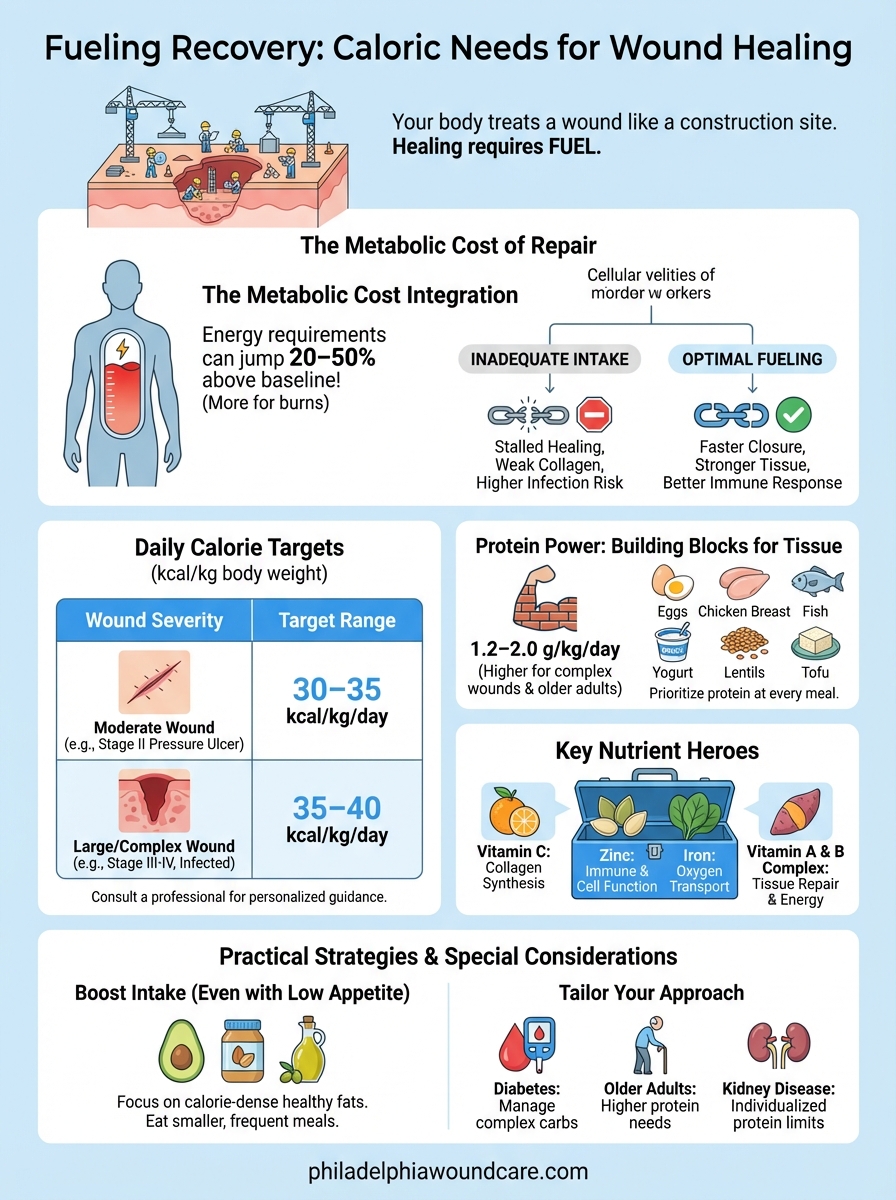
This matters especially for older adults and people managing chronic conditions like diabetes or vascular disease. Many of these patients are already at risk for malnutrition before a wound even develops. Add a pressure ulcer, surgical incision, or diabetic foot wound into the equation, and the body’s energy requirements can jump by 20–50% above baseline, a gap that standard meals often fail to cover. Without adequate calories and nutrients, the body simply cannot produce the collagen, blood vessels, and immune cells needed for repair.
At Philadelphia Wound Care, our physician-led mobile practice brings advanced wound treatment directly to patients in their homes, nursing facilities, and hospice settings across the Philadelphia area. Through that bedside work, we see firsthand how nutrition shapes healing outcomes. That’s why we put this guide together. Below, you’ll find specific daily calorie and protein targets, key vitamins and minerals involved in tissue repair, and practical ways to meet those numbers, even when appetite is low or medical conditions complicate the picture.
Why calories matter for wound healing
When a wound forms, your body immediately shifts into repair mode. This isn’t a passive process. Your immune system mobilizes white blood cells to fight infection, fibroblasts begin producing collagen to rebuild tissue, and new blood vessels grow into the damaged area. Every one of these steps burns energy. Without enough fuel, the whole cascade slows down or stops entirely.
The metabolic cost of tissue repair
Healing a wound is metabolically expensive in ways that most people underestimate. A moderate-to-large wound, such as a stage III or stage IV pressure ulcer, can increase your resting energy expenditure by 20 to 50 percent above your normal daily requirement. Burn injuries push that number even higher, sometimes doubling or tripling baseline needs. Even a surgical incision or a small but infected diabetic foot ulcer places a measurable extra demand on your body’s energy systems.
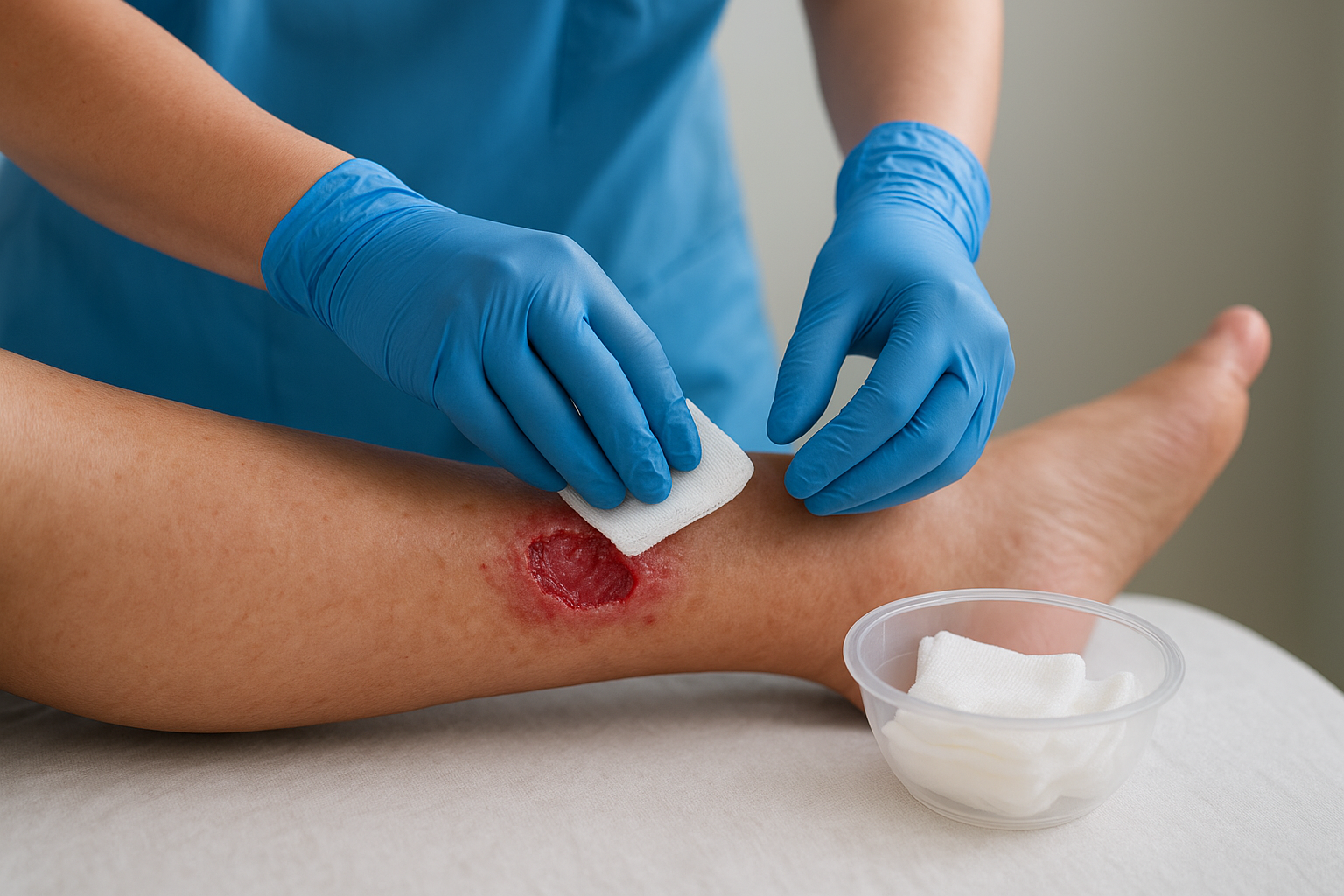
The body cannot allocate calories to wound repair that it hasn’t received. If intake doesn’t rise to meet increased demand, healing stalls.
The reason for this jump in energy use comes down to biology. Cellular proliferation, meaning the rapid production of new cells, requires adenosine triphosphate, which your body produces from carbohydrates, fats, and protein. The inflammatory phase, the proliferative phase, and the remodeling phase of wound healing all draw on these energy stores. When you’re not eating enough to cover the wound’s demands on top of your normal body functions, your system starts making difficult trade-offs.
What your body sacrifices when calories run low
Your body prioritizes survival over recovery. When your caloric intake drops below what healing requires, your system shifts energy away from wound repair and toward keeping your heart beating, your brain functioning, and your organs running. This isn’t a design flaw. It’s a survival response. But it carries real consequences for wound outcomes.
One of the first things to suffer is collagen synthesis. Collagen is the structural protein that holds new tissue together. Without enough energy and amino acids to manufacture it, wound tensile strength stays low, which increases the risk of wound breakdown or reopening. The immune response also weakens, leaving the wound more vulnerable to bacterial colonization and infection. This is why patients who are malnourished at the time a wound develops tend to have significantly longer healing times and higher complication rates.
Malnutrition and chronic wounds: a two-way problem
Understanding the caloric needs for wound healing becomes even more critical because malnutrition and wounds often fuel each other in a difficult cycle. Chronic wounds trigger ongoing inflammation, which raises metabolic demands. At the same time, the pain, immobility, and illness that accompany serious wounds tend to suppress appetite. The result is a patient who needs more calories than ever but is eating less than they normally would.
This cycle shows up consistently in clinical settings. Elderly patients with pressure ulcers, diabetic patients with foot wounds, and post-surgical patients recovering at home all face this challenge. Poor nutritional status at the time of admission to a skilled nursing facility is one of the most reliable predictors of slow wound healing. Recognizing and addressing a calorie deficit is not just supportive care. It is a core part of effective wound management.
Several factors compound the problem in older adults specifically. Reduced appetite (sometimes called anorexia of aging), difficulty chewing, medication side effects, and limited mobility to prepare food all create real barriers to adequate intake. For patients already managing diabetes or vascular disease, dietary restrictions can further limit what they feel comfortable eating, even when their body needs more. These compounding factors make it essential to assess nutritional status early and adjust calorie targets accordingly before a wound has a chance to stall.
Recommended calorie ranges for wound healing
The specific numbers matter because guessing rarely works. Most adults healing from a wound need significantly more calories than they would during normal daily life, and the gap widens with wound complexity. Clinical guidelines give us a reliable starting framework, though your individual target will depend on body weight, wound severity, and underlying health conditions. Understanding the general ranges gives you a baseline to build from before factoring in personal variables.
General calorie guidelines from clinical research
Most wound care and clinical nutrition guidelines, including those published by the National Pressure Injury Advisory Panel, point to a target of 30 to 35 calories per kilogram of body weight per day for adults actively healing from a wound. For a 150-pound (68 kg) adult, that works out to approximately 2,040 to 2,380 calories daily. Compare that to the standard recommendation of 25 to 30 kcal/kg for healthy, non-injured adults, and the difference becomes concrete. Caloric needs for wound healing run noticeably higher than what most people currently consume day to day.
A 150-pound patient healing a complex wound may need 300 to 500 more calories daily than their typical pre-wound intake.
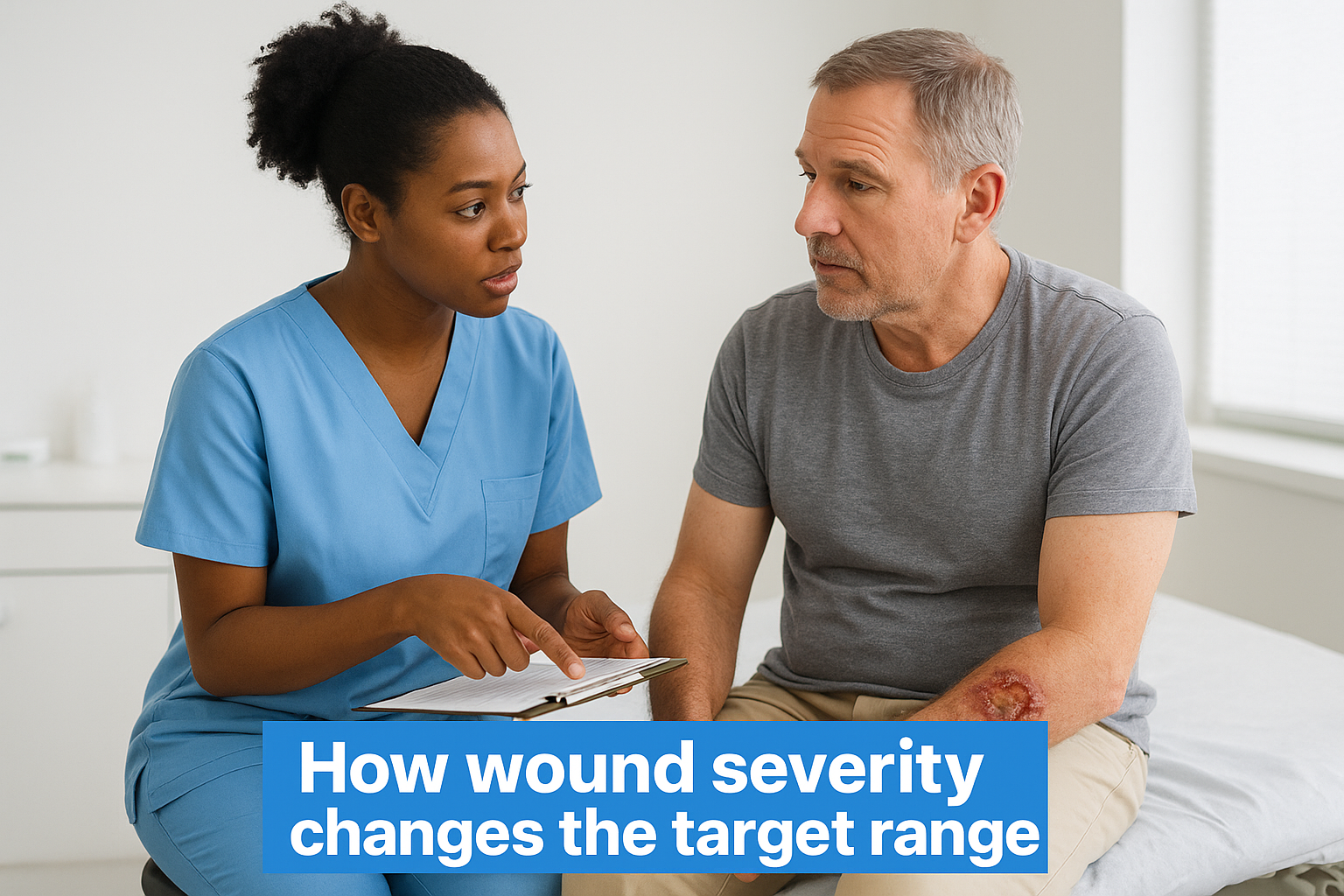
How wound severity changes the target range
Not every wound carries the same metabolic cost, and that directly affects where your calorie target lands. A minor post-surgical incision in an otherwise healthy adult sits at the lower end of the range, around 30 kcal/kg/day. A large stage III or stage IV pressure ulcer, an infected diabetic foot wound, or multiple simultaneous wounds pushes the requirement toward the upper end, between 35 and 40 kcal/kg/day in some cases. The increased demand comes from heightened immune activity, the larger volume of new tissue being synthesized, and the persistent inflammatory response that continues until the wound closes.
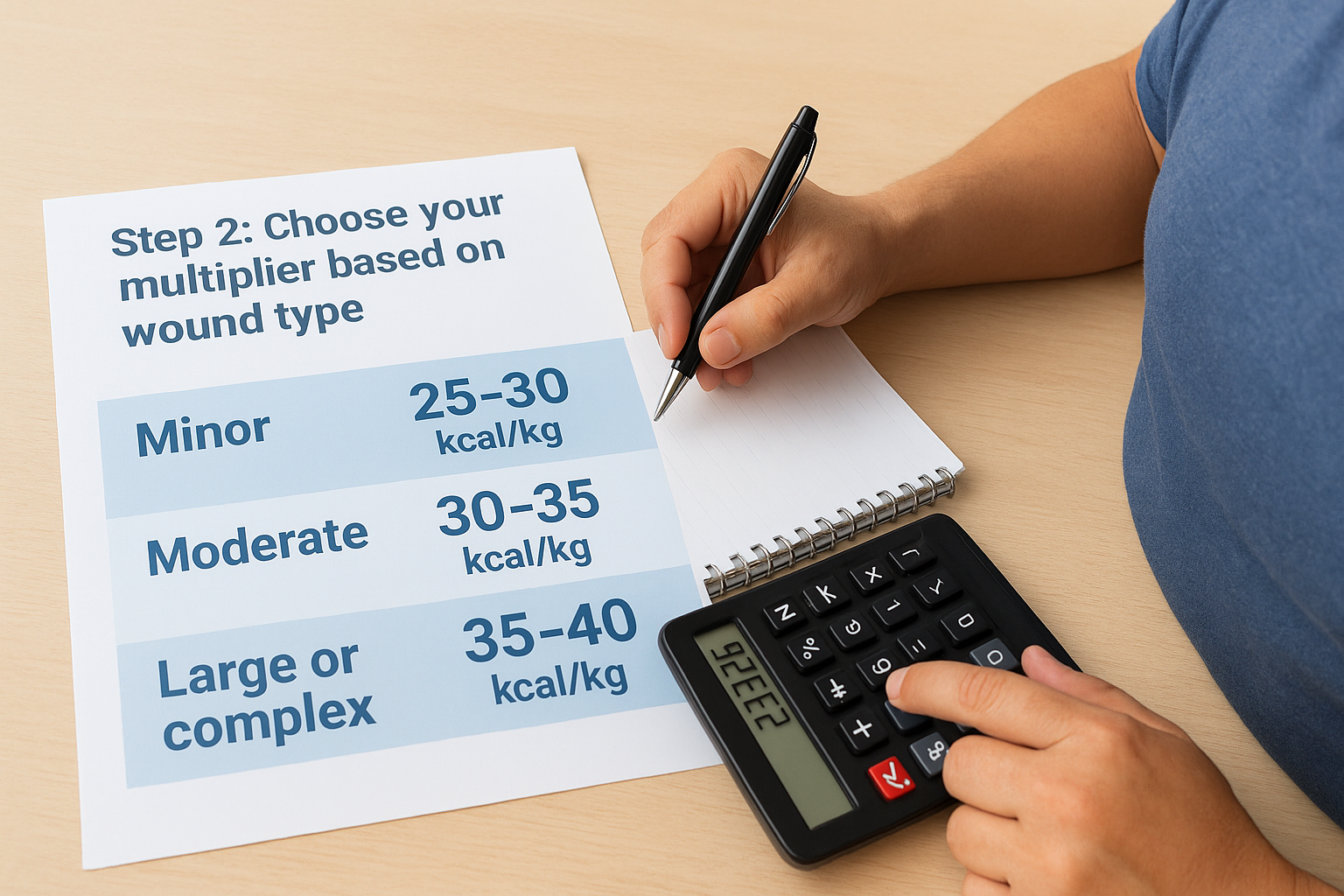
The table below maps wound type to estimated daily calorie targets, giving you a practical reference point:
| Wound Type | Estimated Daily Calorie Target |
|---|---|
| Minor surgical wound or small acute wound | 25-30 kcal/kg/day |
| Moderate wound (stage II pressure ulcer, small diabetic ulcer) | 30-35 kcal/kg/day |
| Large or complex wound (stage III-IV pressure ulcer, infected wound) | 35-40 kcal/kg/day |
These ranges are guidelines, not fixed prescriptions. A registered dietitian or your treating physician can refine them based on lab values, weight trends, and treatment response. If you’re losing weight despite eating within these ranges, or if your wound shows no measurable improvement over two to three weeks, your daily calorie target likely needs to move upward. The table gives you a starting point, but your body’s response to treatment is the most reliable signal of whether your intake is actually sufficient.
How to calculate your daily calorie goal
Calculating your calorie target for wound healing doesn’t require a nutrition degree. The weight-based formula used in clinical practice is straightforward, and you can apply it at home with a scale and a simple calculation. Once you understand the three variables involved, body weight, wound severity, and any physical stress factors, you can arrive at a realistic daily calorie goal that reflects your actual recovery needs rather than a generic average.
Step 1: Convert your weight to kilograms
Start by taking your current body weight in pounds and dividing it by 2.2. This gives you your weight in kilograms, which is the unit used in all clinical calorie calculations for wound healing. For example, if you weigh 160 pounds, your weight in kilograms is approximately 72.7 kg. Write this number down, because every step of the calculation builds directly on it.
Step 2: Choose your multiplier based on wound type
Once you have your weight in kilograms, multiply it by the appropriate calorie factor based on your wound type. As outlined in the previous section, minor wounds use a factor of 25 to 30, moderate wounds use 30 to 35, and large or complex wounds use 35 to 40 kcal/kg/day. If you’re unsure where your wound falls, default to the middle of the range and adjust based on how your body responds over the following two to three weeks.
When in doubt, err toward the higher end of your range. Undershooting caloric needs for wound healing is far more common than overshooting, and the consequences are slower closure and higher infection risk.
Using the 160-pound example, a person with a moderate diabetic ulcer would calculate: 72.7 kg multiplied by 32 kcal/kg, arriving at approximately 2,326 calories per day as their starting target.
Step 3: Adjust for physical stress and fever
Your baseline calculation assumes a relatively stable patient at rest. If you have a fever, an active infection, or significant physical stress from a recent surgery, your calorie needs climb further. A general clinical rule adds roughly 10 to 15 percent to your total for each degree Celsius of fever above normal, and active infection or sepsis can add another 20 to 30 percent on top of baseline needs. This adjustment is especially relevant for patients managing infected pressure ulcers or post-surgical wounds with complications.
For most people recovering from a wound with any of these complicating factors, this step means adding 200 to 500 calories to the number you calculated in Step 2. Track your body weight weekly during recovery. Unexplained weight loss despite eating at your target number is a reliable sign that your actual needs are running higher than calculated, and raising that with your treating physician or a registered dietitian is the right next step.
How to hit your calorie goal with real foods
Knowing your daily calorie target is useful, but knowing how to reach it consistently is what actually moves the needle on healing. For many patients managing wounds, eating 2,200 to 2,800 calories daily feels like a significant lift, especially when appetite is suppressed, movement is limited, or cooking is difficult. The good news is that caloric needs for wound healing can be met without eating large volumes of food, provided you focus on calorie-dense options that pack substantial energy into smaller portions.
Dense, calorie-rich foods to prioritize
Your first lever is food selection. Choosing foods that carry more calories per bite means you can meet your daily target without forcing yourself through large meals that feel overwhelming. Healthy fats deliver nine calories per gram compared to four calories per gram from protein or carbohydrates, making them the most efficient way to raise your daily intake without adding volume. Eggs, full-fat dairy, nut butters, avocado, olive oil, and whole grains all combine calorie density with useful nutrients that support tissue repair directly.
Swapping low-calorie filler foods for calorie-dense whole foods is often the fastest way to close a nutrition gap without increasing the volume of food you eat.
Consider building your meals around these calorie-dense options:
- Peanut or almond butter: 2 tablespoons provides roughly 180 to 200 calories plus healthy fats
- Whole eggs: Each egg delivers around 70 to 80 calories along with protein and zinc
- Avocado: Half an avocado contributes approximately 120 calories with anti-inflammatory fats
- Full-fat Greek yogurt: One cup provides 150 to 200 calories plus protein and calcium
- Olive oil drizzled on food: Each tablespoon adds 120 calories without changing meal texture or volume
- Nuts and seeds: A small handful of almonds or sunflower seeds adds 150 to 180 calories between meals
Practical strategies when appetite is low
Appetite suppression is one of the biggest practical barriers to hitting calorie targets during wound recovery. Pain, medication side effects, and the physical toll of a serious illness all reduce the drive to eat. Rather than relying on three large meals, shift to five or six smaller meals and snacks spread throughout the day, about two to three hours apart. Smaller portions feel less daunting, and frequent eating keeps your body in a steady state of fuel availability that supports ongoing tissue repair.
Adding calorie-rich ingredients to foods you already eat works better than introducing entirely new meals. Stirring a tablespoon of olive oil into soup, blending nut butter into a smoothie, or topping oatmeal with nuts and honey can add 200 to 400 calories to a single meal without any noticeable increase in food volume. These small additions accumulate across a full day and can push your intake from inadequate to sufficient without requiring a dramatically different approach to eating.
Protein needs for wound healing
Calories provide the raw energy your body needs to run its repair systems, but protein supplies the actual building material. Collagen, the primary structural protein in skin and connective tissue, is assembled directly from amino acids that come from dietary protein. Without enough protein, your body cannot manufacture collagen at the rate a healing wound demands, and tissue closure slows regardless of how many total calories you consume. For anyone managing a chronic or complex wound, protein intake is not a secondary concern. It sits at the center of effective nutritional support.
How much protein you actually need
The standard recommendation for healthy, non-injured adults is 0.8 grams of protein per kilogram of body weight per day. For wound healing, that number rises substantially. Most clinical guidelines, including those from wound care and dietetic organizations, recommend 1.2 to 1.5 grams of protein per kilogram of body weight daily for patients with moderate wounds. Large or complex wounds, including deep pressure ulcers or heavily infected wounds, may push the target to 1.5 to 2.0 grams per kilogram per day depending on the patient’s overall nutritional status and wound output.
For a 150-pound (68 kg) adult with a moderate wound, that translates to roughly 82 to 102 grams of protein per day, which is meaningfully higher than what most adults currently eat.
To hit this target, you need to think about protein at every meal, not just at dinner. Spreading protein intake across three to five eating occasions throughout the day improves absorption and keeps amino acids consistently available for tissue synthesis. A registered dietitian can help you calibrate the exact number based on lab values like serum albumin or prealbumin, which offer a clearer picture of your actual protein status than food records alone.
Best protein sources to support tissue repair
Meeting the caloric needs for wound healing and the protein targets that come with them is most practical when you build meals around foods with a high protein density. Animal-based proteins, including eggs, chicken, fish, dairy, and lean beef, provide complete amino acid profiles, meaning they supply all the essential amino acids your body cannot produce on its own. These are the most efficient sources for wound repair. Plant-based proteins like legumes, tofu, and quinoa can absolutely contribute, though combining multiple sources helps ensure full amino acid coverage throughout the day.
These foods make it straightforward to add meaningful protein to each meal:
- Chicken breast (3 oz): approximately 26 grams of protein
- Canned tuna (3 oz): approximately 22 grams of protein
- Cottage cheese (1 cup): approximately 25 grams of protein
- Lentils (1 cup cooked): approximately 18 grams of protein
- Greek yogurt (1 cup): approximately 17 to 20 grams of protein
- Whole eggs (2 large): approximately 12 grams of protein
Key vitamins and minerals for wound repair
Calories and protein set the foundation, but specific micronutrients act as the tools that carry out the actual repair work at the cellular level. Without adequate levels of certain vitamins and minerals, your body cannot run the enzymatic reactions that build collagen, regulate inflammation, or defend the wound from bacterial invasion. Meeting your caloric needs for wound healing matters far less if your diet is low in the key micronutrients that make those calories productive.
Vitamin C and zinc: the two most critical micronutrients
Vitamin C plays a direct role in collagen synthesis. Your body uses it as a cofactor for the enzymes that assemble collagen fibers, meaning that even a mild deficiency slows the entire structural repair process. Vitamin C also supports immune function and acts as an antioxidant, reducing oxidative stress at the wound site. Adults healing from moderate to complex wounds benefit from a daily intake of 500 to 1,000 mg of vitamin C, well above the standard daily value of 90 mg for healthy adults. Food sources include citrus fruit, bell peppers, strawberries, and broccoli.
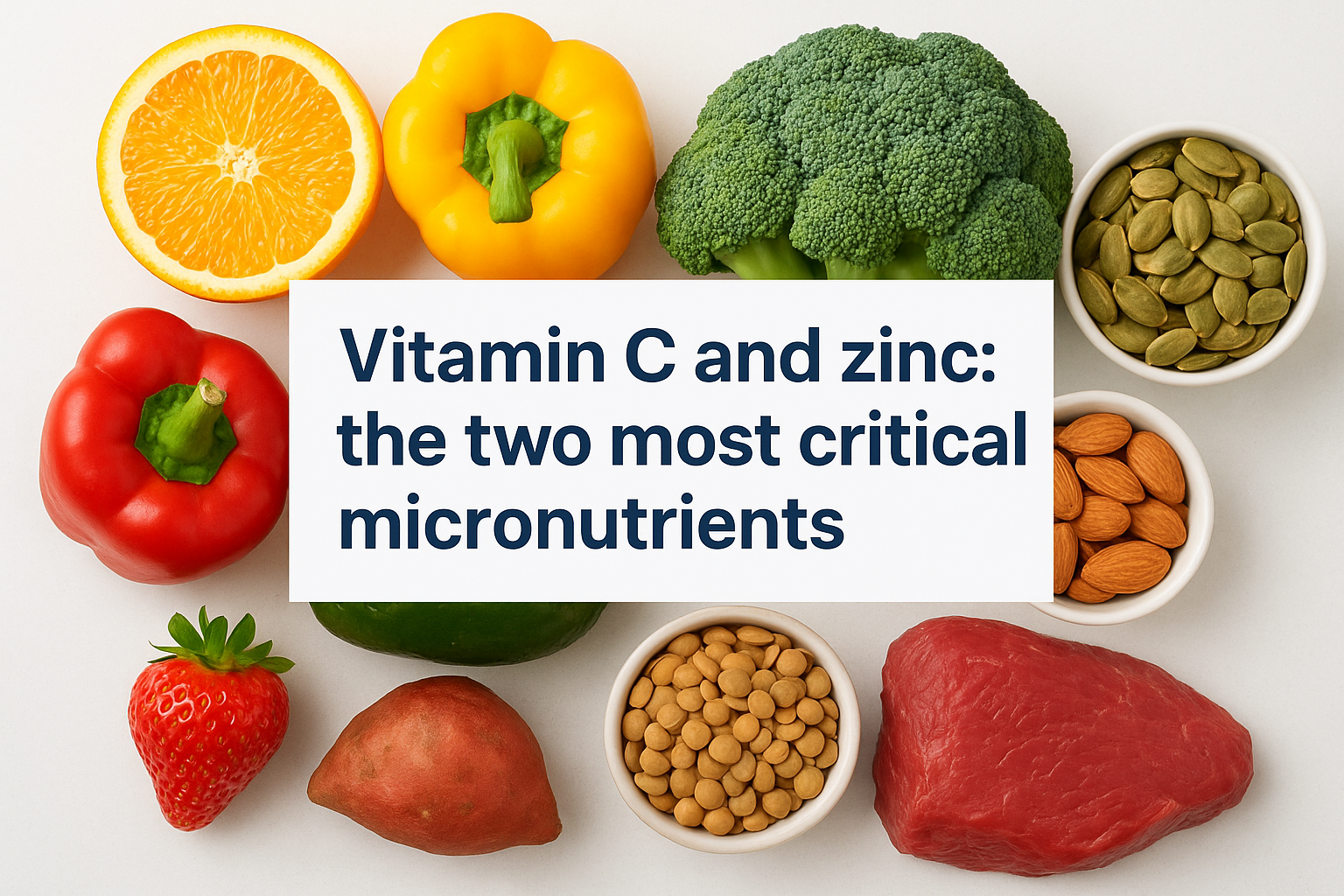
Zinc is equally critical and often deficient in patients with chronic wounds. Your body uses zinc to regulate cell division, protein synthesis, and immune signaling, all of which are central to healing. Low zinc levels are associated with delayed wound closure, impaired collagen formation, and a weaker local immune response. A typical therapeutic target during wound healing falls between 15 and 25 mg of zinc daily. Meat, shellfish, pumpkin seeds, and legumes are reliable dietary sources, though supplementation is sometimes needed when lab values confirm deficiency.
Correcting a zinc or vitamin C deficiency often produces noticeable improvements in wound trajectory within two to four weeks, making early micronutrient assessment a practical clinical priority.
Additional vitamins and minerals that support healing
Vitamin A supports the inflammatory phase of healing and promotes epithelial cell turnover, which is the process that generates new skin over a wound. Adults recovering from a wound benefit from consistent dietary sources like sweet potatoes, leafy greens, eggs, and dairy. B vitamins, particularly B1, B2, and B6, support energy metabolism and help your body convert the calories you eat into the fuel your cells actually use during repair.
Iron matters because it is required for oxygen transport through hemoglobin. Wounds heal through a process that depends heavily on adequate tissue oxygenation, and iron-deficiency anemia reduces the oxygen supply to the wound site directly. Ferritin levels and a complete blood count can identify iron deficiency before it visibly stalls healing. Lean red meat, lentils, fortified cereals, and spinach all contribute meaningful amounts of dietary iron, and pairing iron-rich foods with a source of vitamin C improves absorption significantly.
Adjustments for common conditions and age
The calorie and protein targets covered in this article apply broadly, but several common medical conditions and age-related changes require you to adjust those numbers in meaningful ways. Applying a single standard formula without accounting for your specific health context can leave you undershooting or, in certain cases, overshooting your actual needs. Knowing where your situation calls for modification helps you use nutritional support more precisely.
Diabetes and carbohydrate management
Diabetes complicates meeting your caloric needs for wound healing because the foods most efficient at delivering energy quickly, refined carbohydrates and sugars, are the same ones that disrupt blood sugar control. Uncontrolled blood glucose actively impairs wound healing by reducing circulation, weakening immune defenses, and slowing collagen production. For patients managing diabetes, the goal is to reach your total calorie target through lower-glycemic sources like legumes, whole grains, non-starchy vegetables, and healthy fats rather than relying on simple carbohydrates to close the gap.
Keeping blood glucose in your target range is as important to wound closure as hitting your calorie number, and the two goals can be balanced with the right food choices.
You do not need to reduce your total calorie target just because you have diabetes. Work with your care team to redistribute your macronutrient balance rather than restrict total intake, since calorie deficits remain harmful to healing regardless of blood sugar status.
Older adults and age-related changes
Adults over 65 face a distinct set of challenges that make it harder to meet elevated calorie and protein targets during wound recovery. Muscle mass naturally declines with age, which reduces your baseline metabolic rate, but it also means your body has fewer protein reserves to draw from during the demands of tissue repair. Older adults typically need protein at the higher end of the therapeutic range, closer to 1.5 to 2.0 grams per kilogram of body weight, even for moderate wounds.
Appetite reduction is also more pronounced in this age group. Reduced stomach acid, changes in taste and smell, and medication side effects all lower the drive to eat, making calorie-dense foods and frequent small meals a practical necessity rather than an optional strategy.
Kidney disease and protein limits
Patients with chronic kidney disease face a direct conflict between wound healing requirements and kidney function. High protein intake is standard for wound recovery, but damaged kidneys have limited capacity to process the waste products of protein metabolism. In this situation, you need individualized guidance from a nephrologist and a registered dietitian to find a protein intake level that supports healing without accelerating kidney decline.
Your treating physician can order lab work including blood urea nitrogen and creatinine levels to monitor kidney function while your wound care plan is active, allowing your care team to adjust intake in response to real data rather than fixed formulas.
Putting it all together
Wound healing is a demanding biological process, and nutrition is one of the few variables you can directly control. The framework in this article gives you a clear path: calculate your weight-based calorie target, adjust for wound severity and any complicating conditions, prioritize protein at every meal, and fill in the micronutrient gaps with vitamin C, zinc, and iron. Meeting your caloric needs for wound healing is not about eating perfectly. It is about eating consistently and deliberately enough to give your body the raw materials repair actually requires.
Nutrition alone cannot close a complex or chronic wound. Advanced clinical care, including proper wound assessment and specialized treatment, is what bridges the gap between a stalled wound and meaningful progress. If you or someone you care for is managing a wound that isn’t responding, our physician-led team brings expert treatment directly to you. Request a mobile wound care visit in Philadelphia to get started.