

How Long Do Bedsores Take To Heal? Stages 1–4 Healing Times
When a loved one develops a pressure ulcer, one of the first questions families ask is how long do bedsores take to heal. The honest answer depends on several factors, most importantly, the stage of the wound at the time it’s identified and how quickly appropriate care begins.
A Stage 1 bedsore caught early may resolve in days. A Stage 4 wound involving deep tissue damage can take months, or longer, and often requires physician-led intervention to avoid serious complications like infection or bone involvement. Understanding these timelines helps patients, families, and caregivers set realistic expectations and make informed decisions about treatment.
At Philadelphia Wound Care, our General Surgeon treats bedsores at every stage directly at the patient’s bedside, whether that’s a private home, skilled nursing facility, or hospice setting. That firsthand clinical experience with pressure ulcer progression and healing is what shaped this guide. Below, we break down healing timelines for each stage, how to recognize what you’re dealing with, and what can be done to speed recovery.
Why bedsore healing time varies
Bedsores don’t heal on a fixed schedule. How long do bedsores take to heal depends on a combination of factors working together, and in many cases a single unaddressed variable can stall progress for weeks. The wound’s depth and tissue involvement set the baseline, but your overall health, nutrition, circulation, and the consistency of care you receive all shape the final outcome. Understanding what drives these differences helps you take more targeted action rather than just waiting and hoping.
The wound’s starting condition matters most
The most obvious driver of healing time is how far the damage has already progressed before treatment begins. A Stage 1 bedsore involves only superficial skin changes, so the body can often repair it quickly with basic pressure relief. A Stage 3 or Stage 4 wound involves damage to muscle or bone, meaning the body needs to rebuild layers of tissue from the inside out, which takes considerably longer. Early identification is critical because wounds caught at Stage 1 or Stage 2 have a much higher chance of healing completely without the need for surgical intervention.
Wound size and the presence of infection also shift the timeline significantly. A clean wound that’s being properly debrided and dressed will progress differently than one with necrotic tissue or signs of bacterial involvement like redness, warmth, or discharge. Getting an accurate assessment of where the wound stands, ideally from a physician rather than a general caregiver, gives you the most reliable starting point for projecting recovery.
Your overall health status
Chronic conditions are one of the most underestimated obstacles to bedsore healing. Diabetes, for example, impairs circulation and reduces the body’s ability to deliver oxygen and nutrients to damaged tissue. Vascular disease has a similar effect. Both conditions are common in the population most likely to develop pressure ulcers, which is why healing in these patients tends to take longer than textbook estimates suggest.
Patients with poorly controlled blood sugar or compromised circulation should expect healing timelines that are significantly longer than average, even for lower-stage wounds.
Immune function and nutritional status also play a direct role. Your body needs adequate protein, vitamins C and A, and zinc to repair tissue. If someone is malnourished or has a suppressed immune system due to illness or medications, the wound healing process slows even under otherwise good care conditions. Addressing nutritional deficiencies alongside wound treatment can meaningfully shorten healing time, and a physician managing your wound care should assess both.
The care environment and consistency
Pressure relief is the single most important non-medical factor in bedsore recovery. If the pressure causing the wound isn’t removed, the tissue continues to break down regardless of what dressings or treatments are applied. Consistent repositioning every two hours for bed-bound patients, or the use of pressure-redistributing mattresses and cushions, is not optional. It’s a prerequisite for any healing to occur.
Wound dressing changes, moisture management, and monitoring for infection all require a consistent, informed approach. In home settings, this can be harder to maintain without professional support. Facilities with trained wound care protocols tend to produce faster healing outcomes than unsupported home environments, not because home care can’t work, but because consistency is easier to maintain with structured oversight. When someone on your care team isn’t following the protocol, or the protocol isn’t clearly defined, wounds stall or worsen.
Bedsore stages and typical healing times
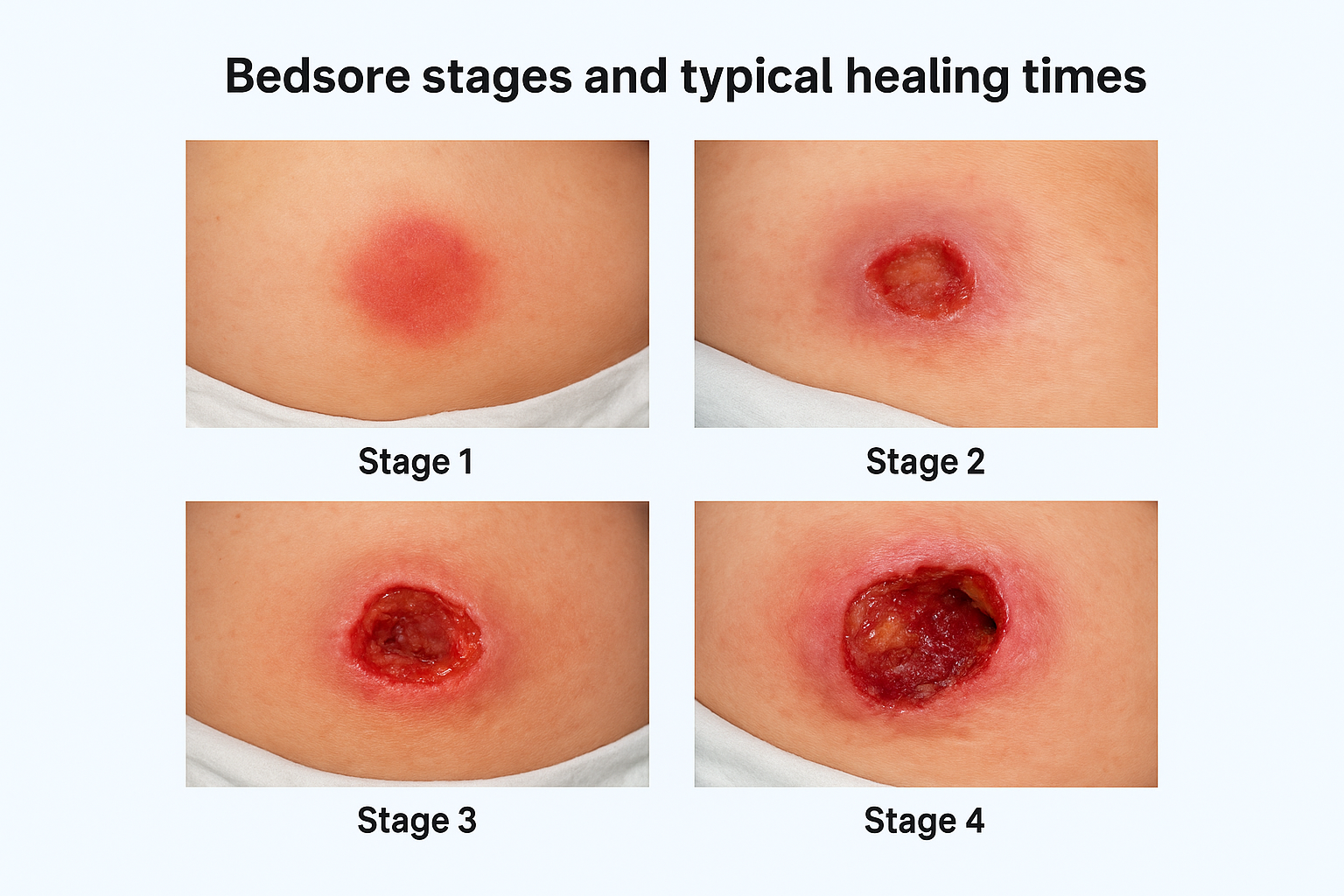
Staging a bedsore gives you the clearest indication of how long recovery will take. The National Pressure Injury Advisory Panel defines four stages based on tissue depth and damage, and each stage carries a meaningfully different healing window. Knowing which stage you’re dealing with sets a realistic baseline for what to expect.
Stage 1 and Stage 2: Wounds that can resolve with consistent care
Stage 1 bedsores involve intact skin with non-blanchable redness and no open wound. With proper pressure relief and basic skin care, these wounds typically resolve within 2 to 7 days in patients who are otherwise reasonably healthy. Catching a bedsore here is the best possible outcome.
At Stage 2, the wound has broken into a partial-thickness skin loss, presenting as a shallow open ulcer or a fluid-filled blister. These wounds take 1 to 3 weeks to close under consistent care, though underlying health conditions can push that estimate further out.
Stage 3 and Stage 4: Wounds requiring physician-led management
Stage 3 bedsores extend through the full skin thickness into the underlying fat tissue. You may see a deep crater-like wound, sometimes with necrotic tissue present. Understanding how long do bedsores take to heal at this level means accepting that recovery is measured in months, not weeks. A Stage 3 wound in a patient with adequate nutrition and circulation might close in 1 to 4 months, but that timeline stretches considerably for someone with diabetes or vascular disease.
Stage 4 wounds, where damage reaches muscle, tendon, or bone, can take 6 months to over a year to heal, and many require surgical debridement or skin grafting to close at all.
Stage 4 is a medical emergency in practice. The risk of osteomyelitis (bone infection) and sepsis rises sharply once damage reaches bone level. These wounds almost never resolve without specialist physician intervention, and managing them with basic home dressings alone puts the patient at serious risk of life-threatening complications.
What slows healing and raises complication risk
Several specific factors can stall progress regardless of what stage the wound is at. If you want to understand how long do bedsores take to heal in a worst-case scenario, look at patients dealing with multiple obstacles at once. Each one adds time, and together they can turn a manageable wound into a serious medical crisis.
Infection and wound deterioration
Bacterial infection is the most common reason bedsores stop progressing toward closure. Once bacteria colonize a wound, the body shifts resources toward fighting the infection rather than rebuilding tissue. Signs to watch for include increased redness, warmth, swelling, foul odor, or purulent discharge. Left unaddressed, a localized infection can spread to surrounding tissue (cellulitis), reach the bone (osteomyelitis), or trigger a systemic response that becomes life-threatening.
A wound that appears to be healing but then suddenly worsens, deepens, or develops new drainage should be evaluated by a physician immediately, not monitored at home.
Inadequate debridement also contributes significantly to stalled healing. Dead or necrotic tissue in the wound bed blocks new cell growth and provides a breeding ground for bacteria. Removing that tissue, whether mechanically, surgically, or through specialized dressings, is essential before the wound can move forward. Without it, dressings alone accomplish little.
Medications and systemic conditions
Certain medications directly interfere with tissue repair. Long-term corticosteroid use suppresses inflammation, which sounds beneficial, but inflammation is a necessary part of the early healing process. Patients on steroids, immunosuppressants, or anticoagulants often experience slower wound closure and higher infection rates than patients with similar wounds who are not on these drugs.
Systemic conditions compound these effects in ways that are frequently underestimated. Uncontrolled diabetes, heart failure, kidney disease, and anemia all reduce the body’s ability to deliver oxygen and nutrients to the wound site. Anemia specifically limits the red blood cells available to carry oxygen to repairing tissue, and it is often overlooked as a contributing factor in slow-healing wounds. If you or your loved one has any of these conditions, wound management needs to address them directly rather than treat the wound in isolation.
How to help bedsores heal faster at home
If you’re managing a wound at home, the actions you take between professional visits matter more than most people realize. Understanding how long do bedsores take to heal also means understanding that the right home care approach can shorten that timeline, while inconsistent care can extend it by weeks. You don’t need expensive equipment to make a real difference, but you do need to be deliberate and consistent.
Remove pressure and protect the skin
Pressure relief is non-negotiable for any wound to move forward. Reposition a bed-bound patient at least every two hours during the day and consider a pressure-redistributing mattress or overlay if you don’t already have one. For patients who sit for extended periods, a pressure-relieving cushion reduces the force on vulnerable areas like the tailbone and hips. Keep in mind that positioning alone isn’t enough if the patient slides down in bed, which creates shear forces that damage tissue just as effectively as direct compression.
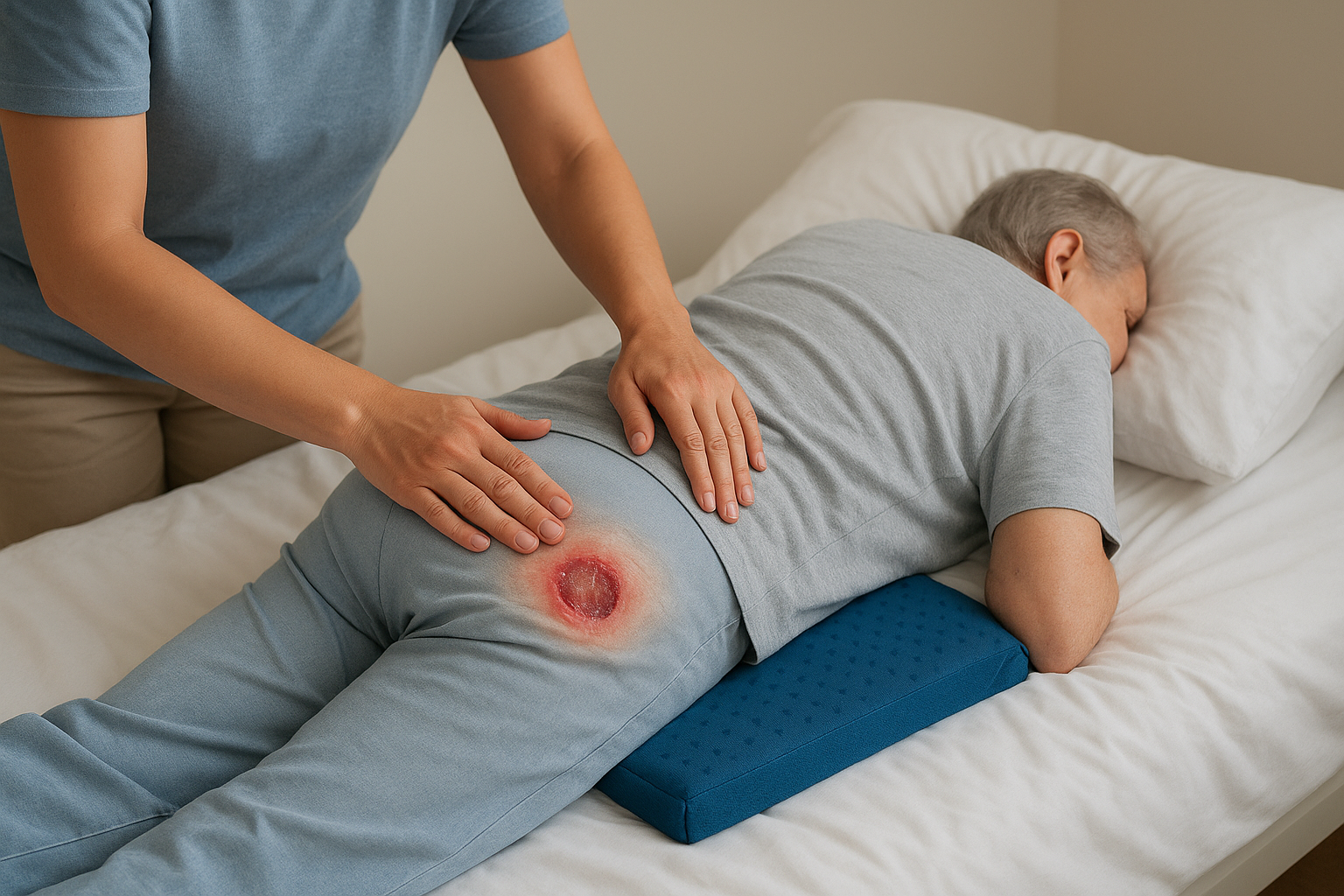
Moisture control is the second piece. Skin that stays wet from incontinence or sweat breaks down faster and creates conditions where bacteria thrive. Use barrier creams to protect intact skin around the wound, and keep wound dressings changed on schedule rather than only when they look visibly saturated. Even a low-grade Stage 1 wound can progress quickly if the surrounding skin remains macerated.
Prioritize nutrition and hydration
Wound repair is a metabolic process, and the body cannot rebuild tissue without the right building blocks. Protein is the most critical nutrient for healing, and most patients with chronic wounds are not eating enough of it. Aim for protein-rich foods at every meal, including eggs, meat, fish, dairy, or legumes, and consult with the managing physician about whether a protein supplement makes sense.
Dehydration slows circulation, reduces skin elasticity, and impairs every stage of the healing process, so fluid intake deserves as much attention as dressing changes.
Vitamins C and A along with zinc support collagen production and immune function. If a nutritious diet isn’t possible due to appetite issues or swallowing difficulties, a daily multivitamin provides a reasonable baseline. Flagging nutritional concerns to your wound care provider ensures the treatment plan addresses the whole patient, not just the wound itself.
When to call a wound care specialist
Home care protocols handle a lot, but they have limits. If you’ve been managing a bedsore consistently and the wound isn’t improving after two weeks, or if it appears to be worsening despite pressure relief and proper dressing changes, that’s a clear sign the situation needs physician-level assessment. Waiting too long to escalate is one of the most common reasons a manageable wound turns into a serious one.
Warning signs that need immediate attention
Certain changes in a wound demand prompt medical evaluation, not a wait-and-see approach. If you notice spreading redness around the wound edges, a new or worsening odor, increased drainage, or any sign of fever in the patient, infection has likely taken hold. At that point, understanding how long do bedsores take to heal becomes secondary to stopping the infection from spreading.
A wound that reaches bone or generates any systemic symptoms like fever, confusion, or chills should be treated as a medical emergency, not managed at home.
Stage 3 and Stage 4 wounds should involve a physician from the start. These are not conditions that basic nursing care or over-the-counter dressings can reverse. Deep tissue involvement, necrotic wound beds, and tunneling beneath the skin surface all require clinical intervention to address safely and effectively.
What a physician brings that home care cannot
A physician-led wound care evaluation goes well beyond examining the wound surface. Underlying contributors like vascular insufficiency, uncontrolled blood sugar, or anemia get assessed and addressed as part of a complete treatment plan. A physician can also order diagnostic imaging to rule out bone infection, prescribe targeted antibiotics, and perform or coordinate debridement when dead tissue is blocking progress.
Advanced therapies like allograft and regenerative treatments are only accessible through a licensed medical provider, and for patients covered by Medicare Part B, these treatments are often covered without requiring a hospital visit. Bringing specialist care to the patient’s bedside means there’s no logistical barrier to receiving the level of wound management that actually moves a complex wound toward closure.
Quick recap
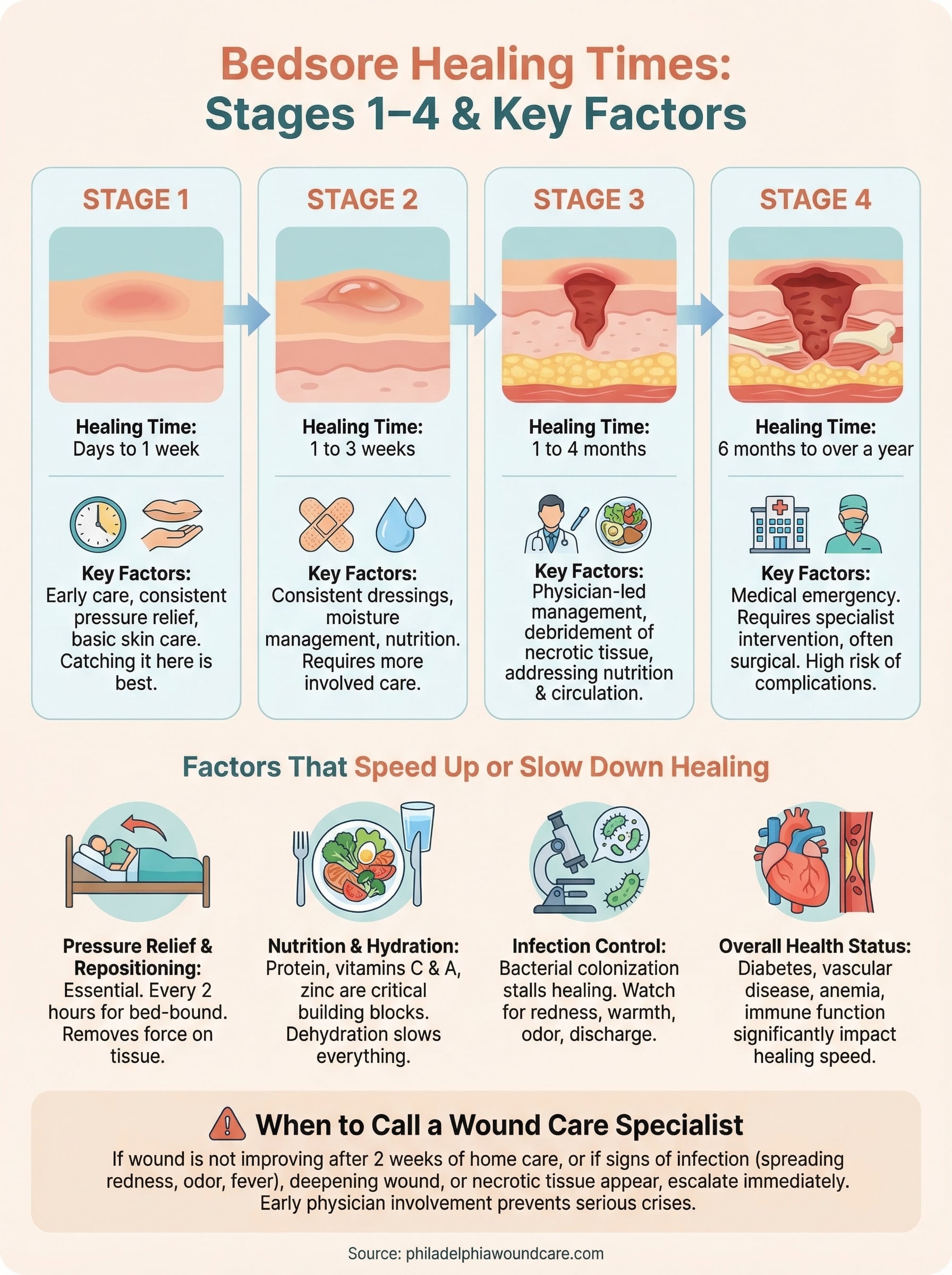
How long do bedsores take to heal comes down to stage, overall health, and how consistently care is applied. Stage 1 wounds can resolve in days, while Stage 4 wounds involving bone can take six months to over a year and almost always require physician intervention. Nutrition, pressure relief, infection control, and moisture management all directly influence how fast any wound progresses toward closure.
If a wound isn’t improving within two weeks of consistent home care, or if you notice signs of infection, that’s your signal to escalate. Waiting too long turns a manageable wound into a serious one. Advanced therapies, proper debridement, and a complete clinical assessment are only available through a physician, and for Medicare patients, these treatments are often covered without a hospital visit.
Request a mobile wound care evaluation to get physician-led care delivered directly to your door.