

How Negative Pressure Wound Therapy Works: Healing Mechanism
Chronic and complex wounds often resist standard dressings and traditional care approaches. When a wound stalls, refusing to close despite weeks or months of treatment, clinicians turn to more aggressive strategies. One of the most effective is negative pressure wound therapy (NPWT), a technique that uses controlled suction to physically change the wound environment and accelerate the body’s healing response. It’s not new, but it remains widely misunderstood by patients and caregivers who encounter it for the first time.
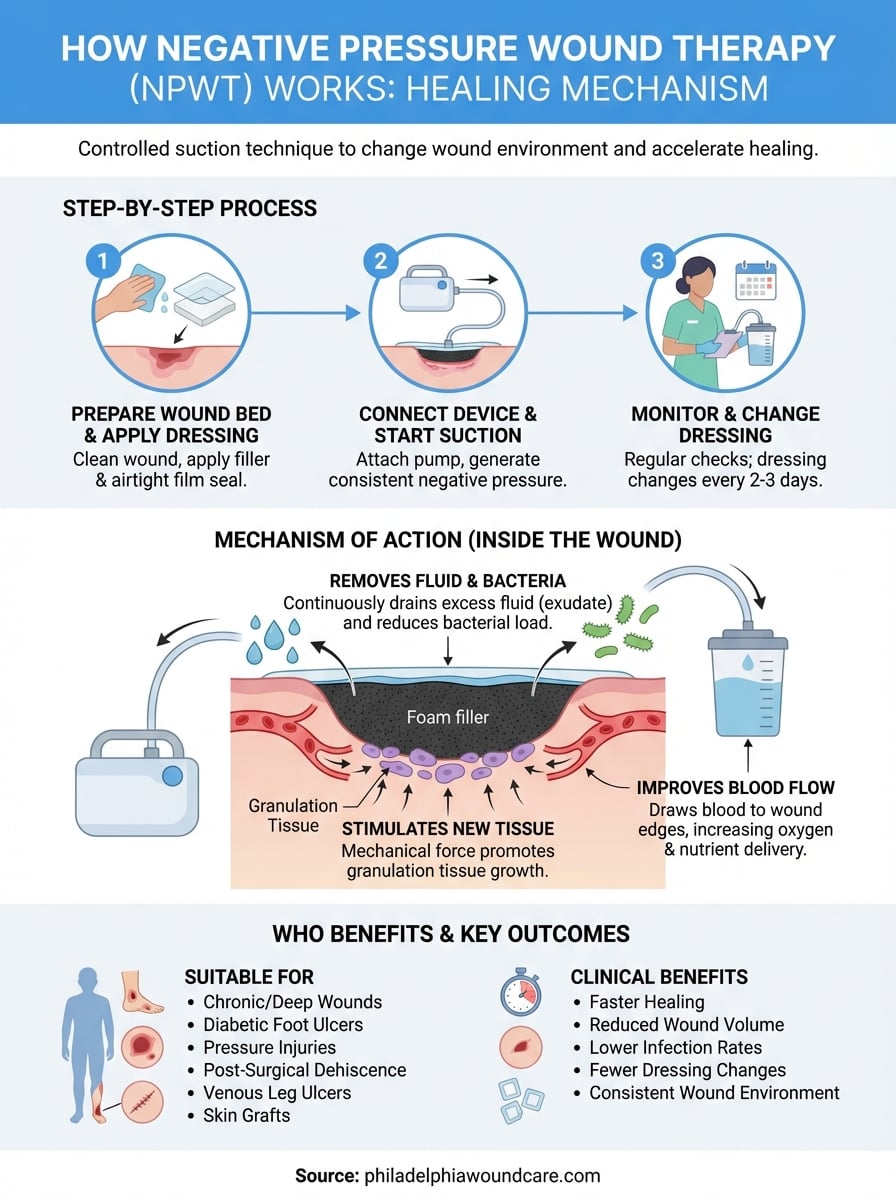
At its core, NPWT works by sealing the wound under an airtight dressing and applying a vacuum to draw out excess fluid, reduce bacterial load, and promote the growth of new tissue. The mechanism is straightforward in concept but surprisingly powerful in practice. Understanding how this process functions, from the cellular level to the bedside setup, helps patients and families make informed decisions about their care plan. It also helps referring clinicians determine when NPWT is the right call versus other advanced interventions.
At Philadelphia Wound Care, our physician-led mobile practice brings advanced wound treatments directly to patients in their homes, skilled nursing facilities, and hospice settings across the Philadelphia region. We regularly evaluate whether therapies like NPWT, allograft applications, or other interventions give a particular wound its best chance at healing. This article breaks down exactly how negative pressure wound therapy works, its mechanism of action, the clinical evidence behind it, what the treatment process looks like in practice, and the types of wounds it’s best suited for.
Why negative pressure wound therapy matters
Wound healing sounds straightforward until it isn’t. Most acute wounds close predictably over days or weeks, but chronic wounds, including pressure ulcers, diabetic foot ulcers, and post-surgical dehiscence, can stall indefinitely. Patients stuck in this cycle deal with pain, infection risk, lost mobility, and a significant burden on caregivers. Understanding how negative pressure wound therapy works starts with understanding why so many wounds fail to heal in the first place and why standard approaches run out of answers faster than most people expect.
The chronic wound problem
A wound becomes chronic when its biology gets stuck. Normal healing progresses through four stages: hemostasis, inflammation, proliferation, and remodeling. In a chronic wound, the inflammatory phase overstays its welcome. The wound bed fills with excess fluid called exudate, which carries enzymes that actively break down the new tissue your body tries to build. Bacterial colonies establish themselves, competing with healing cells for oxygen and nutrients. Dead tissue accumulates, blocking the cellular signals that would otherwise tell your body to close the wound.
Patients with diabetes, vascular disease, or compromised immune function face this problem at a higher rate than the general population. Reduced circulation means less oxygen reaching wound tissue, and without oxygen, your cells cannot perform the basic repair work healing requires. Add in neuropathy that blunts pain signals, and many patients don’t realize a wound has worsened until it’s already deep and infected. By the time a wound care specialist gets involved, the tissue environment is often so hostile that basic dressings provide little more than protection against further contamination.
Where standard care falls short
Traditional wound dressings manage moisture and protect the wound surface, but they don’t actively change the wound environment. Gauze, foam, and hydrocolloid dressings work well for wounds that are already progressing. When a wound has significant depth, high exudate output, or compromised surrounding tissue, passive dressings require frequent changes, which disturbs new tissue formation every time they’re removed. Each disruption sets the wound back. For patients living in skilled nursing facilities or at home, the sheer number of daily or twice-daily dressing changes creates a heavy logistical and physical burden.
Passive dressings protect a wound, but they cannot remodel its environment. When the wound bed itself is the problem, the intervention needs to work at that level.
Topical antibiotics and antiseptics address bacterial load to a degree, but they don’t remove the stagnant fluid that harbors bacteria between dressing changes. Debridement clears dead tissue and gives the wound a fresh start, but without a mechanism to maintain a clean, stimulated wound bed between visits, many wounds rebuild that dead tissue layer within days. Standard care, done correctly, is a foundation. For complex wounds, it often isn’t enough on its own.
The clinical evidence behind NPWT
NPWT has decades of clinical data behind it. Studies published through the National Institutes of Health’s PubMed database have documented faster granulation tissue formation, reduced wound volume, and lower infection rates in patients treated with NPWT compared to those managed with conventional moist wound dressings alone. The therapy is now a recognized standard of care for a wide range of complex wounds across major hospital systems and outpatient wound care programs.
For patients who can’t reach a wound care clinic, this matters even more. Mobile wound care services that bring NPWT directly to a patient’s home or long-term care facility close a gap that would otherwise leave many patients without access to this level of intervention. The evidence doesn’t just support the therapy’s mechanism. It supports earlier use, appropriate patient selection, and consistent monitoring as the factors that separate good outcomes from poor ones. That clinical discipline is what turns a powerful device into a real result for your wound.
How negative pressure wound therapy works step by step
Understanding how negative pressure wound therapy works in practice means following the process from the first clinical assessment through active treatment. The steps are logical and sequential, and each one builds on the last. When your clinician sets this therapy up correctly, the entire system functions as a controlled, continuous intervention rather than a passive covering sitting on top of your wound.
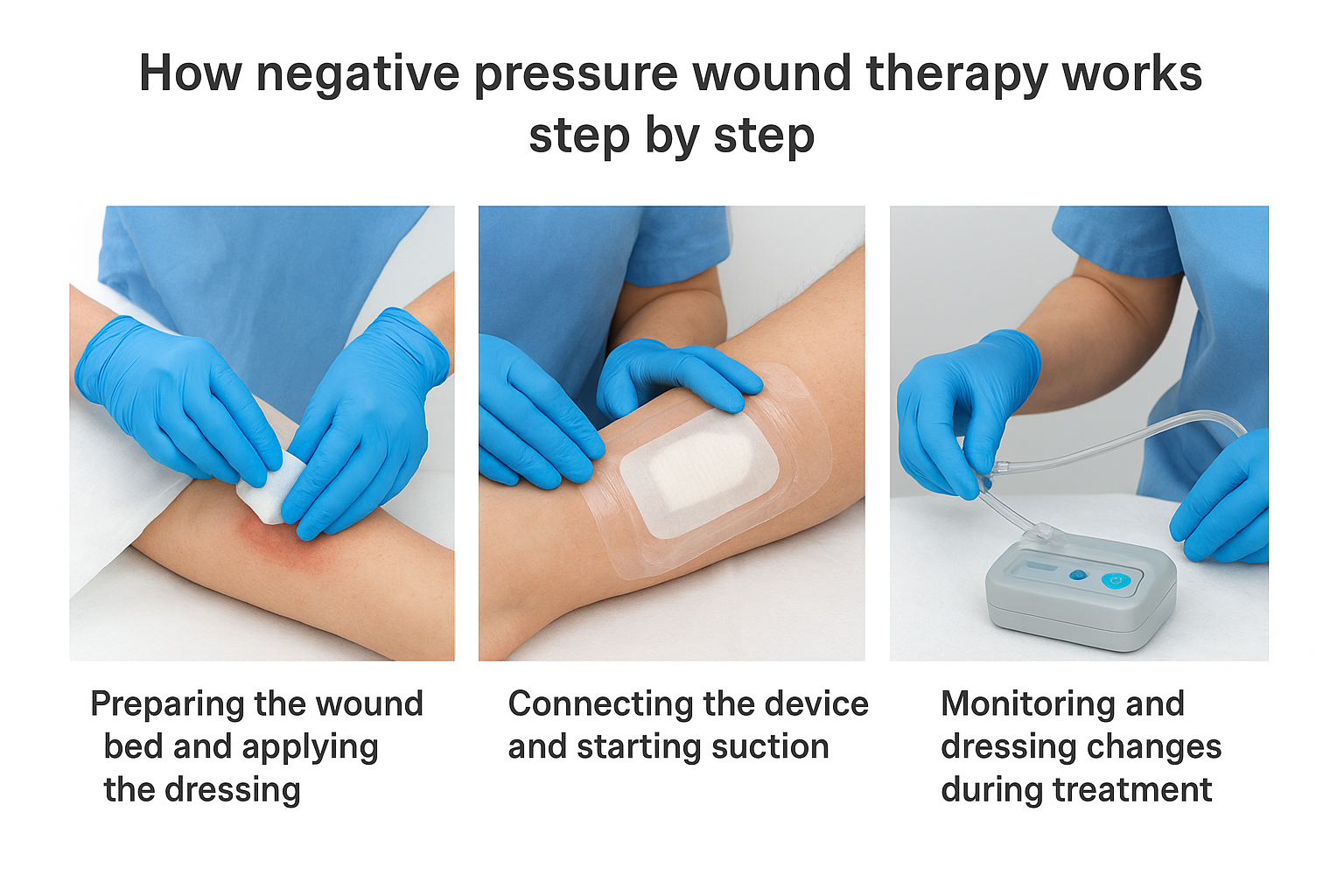
Preparing the wound bed and applying the dressing
Before any device gets connected, your wound needs a clean foundation. Your clinician will debride the wound if needed, removing dead or infected tissue that would otherwise block contact between the dressing and the viable wound bed. Once the wound is clean, a foam or gauze filler is cut to match the wound’s exact shape and depth and placed directly into the wound cavity. This filler is the contact layer that transmits suction evenly across the entire wound surface rather than concentrating pressure at a single point.
After the filler is in place, your clinician drapes a transparent adhesive film over the entire wound and several centimeters of surrounding skin, creating an airtight seal. That seal is critical. Any air leak compromises the vacuum, and without a stable vacuum, the therapy loses most of its mechanical effect. Getting that seal right on irregular skin surfaces, near joints, or around bony prominences takes skill and patience.
Connecting the device and starting suction
Once the dressing is sealed, your clinician attaches a small drainage tube to a port in the adhesive film. This tube runs to a portable pump unit, which generates a consistent vacuum at a pressure your clinician sets based on your wound type, depth, and tissue condition. Most settings fall between 75 and 125 mmHg of negative pressure, with continuous suction used for most wound types and intermittent cycling used when stimulating tissue growth is the priority.
The pump pulls fluid out of the wound continuously, which means the wound environment stays consistently drained rather than sitting in its own exudate between dressing changes.
Monitoring and dressing changes during treatment
Your clinician checks the canister attached to the device regularly to assess how much fluid is draining and what that fluid looks like. A sudden increase in drainage volume or a change in color can signal infection or deeper tissue involvement. Dressing changes typically happen every two to three days, far less frequently than with conventional wound care, which reduces disruption to fragile new tissue and lowers the physical burden on you or your caregiver.
What NPWT does inside the wound to speed healing
The mechanical action of the pump is only the visible part of the process. What happens at the cellular and tissue level is where negative pressure wound therapy works its most significant effects. Once the system is running, it sets off a cascade of biological responses that directly address the three core reasons chronic wounds stall: excessive fluid, bacterial burden, and insufficient tissue growth signals.
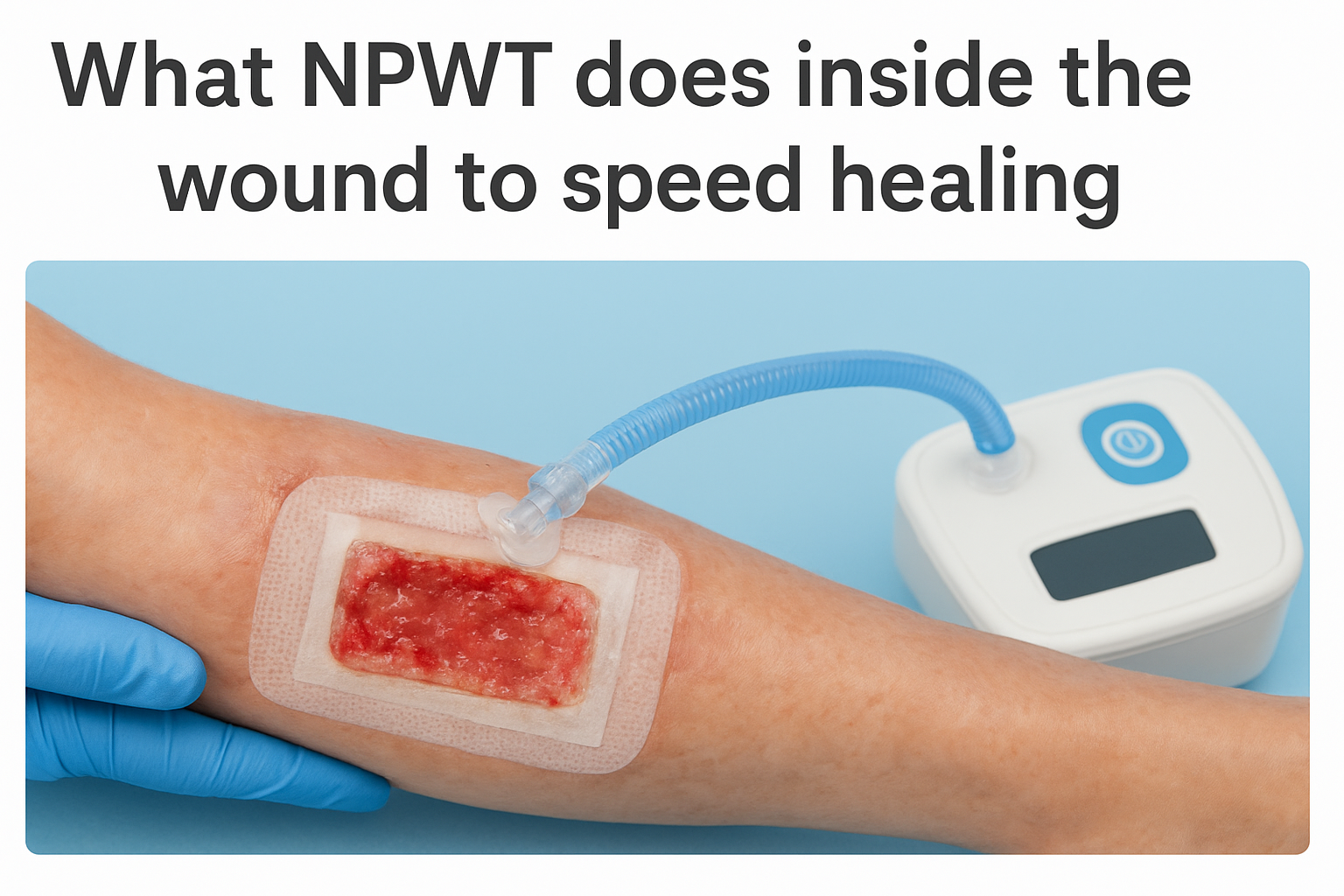
How suction clears fluid and reduces bacterial load
Wound exudate is not simply fluid. It contains matrix metalloproteinases (MMPs), inflammatory cytokines, and bacteria, all of which actively destroy the collagen matrix your body needs to build new tissue. Left to pool in a wound bed, this fluid tips the biochemical balance away from healing and toward ongoing breakdown. NPWT removes this fluid continuously, preventing it from accumulating between visits and keeping the wound environment closer to the chemical conditions that support repair.
Removing exudate is not just about keeping the wound dry. It directly changes which biological signals dominate the wound environment.
Bacterial colonies also lose their foothold when fluid removal is consistent. Bacteria depend on the moist, nutrient-rich exudate layer to establish and expand. By draining that layer continuously, NPWT reduces the bacterial concentration in the wound bed without relying solely on topical antimicrobials, which adds a layer of infection control that passive dressings simply cannot match.
How mechanical force stimulates new tissue
The foam or gauze filler inside your wound does more than fill space. When the vacuum pulls against it, the filler compresses and transmits microdeformational forces to the wound edges and base. These small, repeated mechanical stresses signal your fibroblasts, the cells responsible for building collagen and granulation tissue, to increase their activity. Your body interprets that mechanical stimulus as a demand for repair.
Granulation tissue, the pink, vascular filler material that bridges a wound before the outer skin layer closes over it, forms faster under these conditions than under standard dressings. More granulation tissue means the wound bed rises toward the skin surface at a measurable rate, which accelerates closure significantly in deep wounds.
How perfusion improves at the wound margin
Negative pressure draws blood toward the wound edges by decompressing the tissue around capillaries that edema had been squeezing shut. Better perfusion means more oxygen and nutrients reach the cells doing the repair work. For patients with vascular compromise or diabetes, this localized improvement in blood flow can be clinically significant, helping tissue survive and regenerate in areas where circulation was previously inadequate to support healing.
Who NPWT helps and when clinicians avoid it
Understanding how negative pressure wound therapy works is only part of the clinical picture. Knowing which patients stand to benefit and which patients face real risks from suction-based therapy determines whether this intervention helps or harms. Your clinician makes that determination based on wound type, vascular status, infection level, and your overall medical condition before recommending NPWT as part of your care plan.
Patients who benefit most from NPWT
NPWT delivers its strongest results for patients managing deep, high-exudate wounds that have not responded to conventional dressings over a meaningful treatment period. The therapy’s ability to drain fluid continuously, stimulate granulation tissue, and improve local perfusion makes it particularly well-suited for a defined set of wound categories.
The patients who consistently see the most clinical benefit from NPWT include:
- Diabetic foot ulcer patients whose wounds are clean but slow to close due to neuropathy and reduced circulation
- Pressure injury patients in stages three and four where the wound cavity is too deep for surface dressings to manage effectively
- Post-surgical dehiscence patients whose incisions have reopened and need a clean, stimulated wound bed to close by secondary intention
- Venous leg ulcer patients who produce heavy exudate volumes that overwhelm passive foam or hydrocolloid dressings
- Patients recovering from skin grafts, where NPWT holds the graft in firm contact with the wound bed to improve take rates
NPWT works best when the wound has viable tissue to build on. Without that foundation, suction alone cannot generate the healing response the therapy depends on.
When clinicians avoid NPWT
Not every complex wound is a candidate for this therapy. Several conditions make NPWT unsafe or counterproductive, and your clinician will screen for them before initiating treatment. Wounds with exposed blood vessels or organs are not appropriate for NPWT because the suction creates a hemorrhage risk against fragile vascular structures. Untreated osteomyelitis, or bone infection beneath the wound, also rules out NPWT in most cases because the therapy cannot address the deeper infectious source and may actually drive bacteria further into surrounding tissue if applied prematurely.
Patients with active bleeding disorders or those on anticoagulant therapy require careful evaluation before starting suction-based treatment, since continuous negative pressure can disturb clot formation at the wound bed. Malignant wounds, or wounds caused by or containing cancerous tissue, are another category where NPWT is typically avoided because the mechanical stimulation can accelerate abnormal cell growth rather than healthy granulation.
Devices, dressings, and pressure settings explained
The equipment your clinician uses to deliver NPWT varies depending on your wound location, the care setting, and your mobility level. Understanding how negative pressure wound therapy works in practice means knowing what each component does and why your clinician selects specific combinations for your situation. The device, the dressing material, and the suction level all work together, and changing one affects how the others perform.
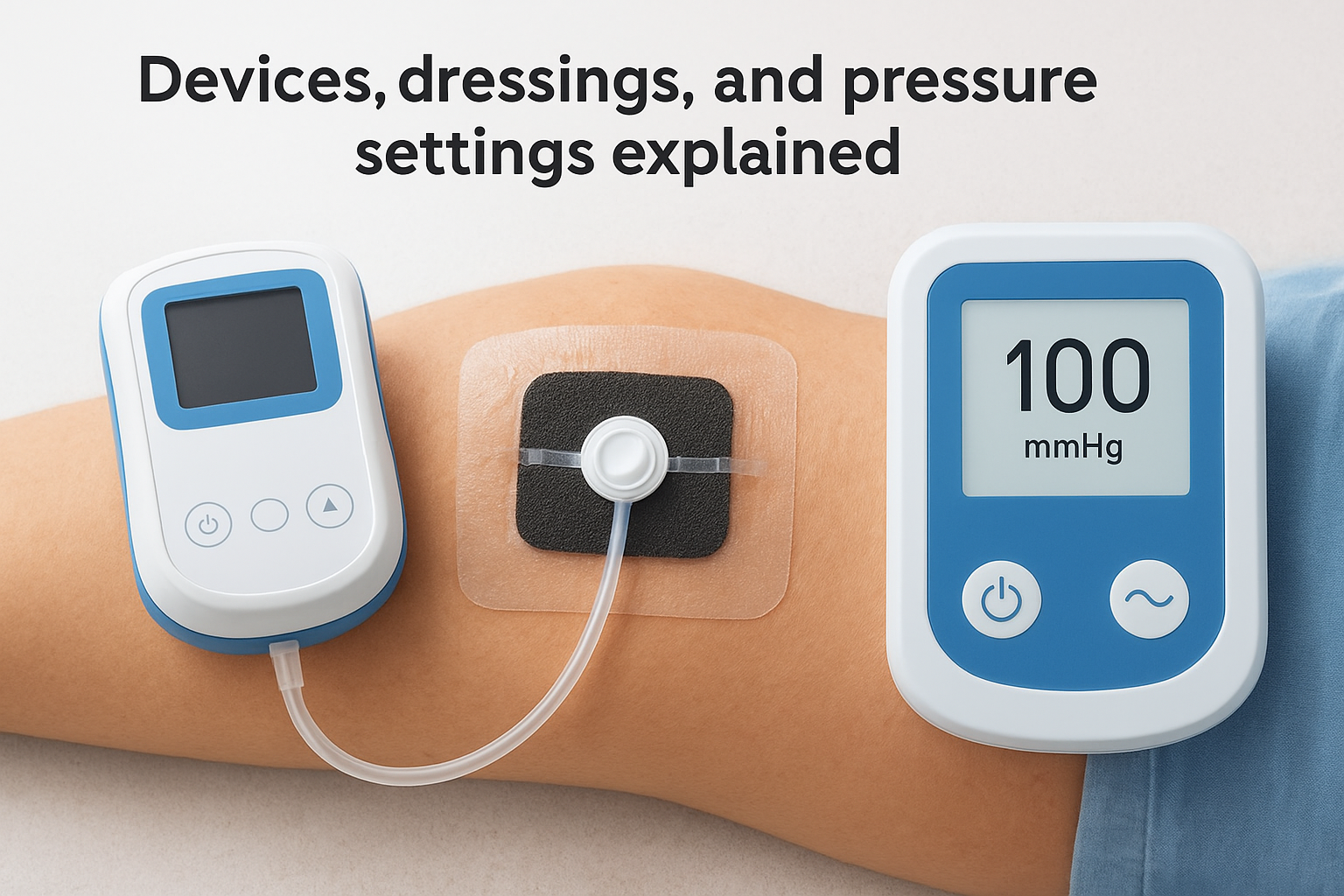
Types of NPWT devices
NPWT pumps fall into two broad categories: traditional canister-based units and newer single-use disposable devices. Traditional units are larger, connect to a reusable canister that collects wound fluid, and allow your clinician to adjust settings with greater precision. These units are common in hospital and skilled nursing facility settings where the patient stays close to a power source. Single-use disposable devices, such as those used in home settings, are battery-powered, compact enough to wear under clothing, and pre-set to deliver a fixed pressure level. They reduce the equipment burden significantly for patients recovering at home.
Portable disposable units have expanded access to NPWT considerably, allowing patients who cannot travel to a clinic to receive the same core therapy at home under physician supervision.
Choosing between foam and gauze dressings
Your clinician selects the contact material based on the wound’s shape, depth, and tissue sensitivity. Black polyurethane foam is the most common choice because its open-cell structure transmits suction evenly across the entire wound surface and actively encourages granulation tissue growth through microdeformation. White polyvinyl alcohol foam is softer and less adherent, making it the preferred option for wounds with fragile or newly forming tissue where standard black foam would cause trauma on removal. Gauze-based fillers offer an alternative when wounds have tunneling or irregular channels that foam cannot conform to cleanly. Each material transmits negative pressure differently, which is why matching the filler to the wound matters as much as choosing the right device.
How pressure settings are determined
Clinicians set suction levels based on wound type, tissue condition, and patient tolerance. The standard range runs from 75 to 125 mmHg, with 125 mmHg used most often for wounds with heavy exudate or significant depth. Lower pressure settings between 75 and 80 mmHg suit wounds with more delicate tissue, such as recently applied skin grafts, where aggressive suction could disrupt the graft interface. Continuous mode maintains steady suction throughout the day, while intermittent mode cycles suction on and off at timed intervals to create rhythmic mechanical stimulation. Your clinician may adjust these settings across treatment sessions as your wound responds and the tissue quality improves.
Benefits you can expect and what NPWT can’t do
Understanding how negative pressure wound therapy works gives you a realistic picture of what the therapy can and cannot accomplish. The clinical benefits are real and well-documented, but they depend on the right patient, the right wound, and consistent clinical oversight. Setting accurate expectations before treatment starts helps you and your care team measure progress correctly and recognize when to adjust the plan.
What NPWT delivers when applied correctly
When your wound meets the right criteria for this therapy, the results are measurable and often faster than what conventional dressings produce. Wound volume reduces at a meaningful rate as granulation tissue fills the cavity from the base upward, which your clinician can track across visits. Exudate output typically drops as the wound environment stabilizes, which signals that the chronic inflammatory cycle is breaking down.
Faster granulation tissue formation is the most reliable clinical marker that NPWT is working as intended for your wound.
Patients treated with NPWT also tend to experience fewer dressing changes per week compared to standard wound care, which reduces wound disruption and the physical discomfort that comes with frequent dressing removal. For patients in skilled nursing facilities or receiving care at home, that reduction in visit frequency lowers the logistical burden on caregivers and staff without compromising the quality of wound management. The therapy also creates a consistent, controlled wound environment between clinical visits, which passive dressings simply cannot maintain when exudate volumes are high.
Where NPWT reaches its limits
NPWT accelerates healing but does not replace the underlying medical management your wound requires. If poor circulation, uncontrolled blood sugar, or systemic infection remains unaddressed, the therapy will slow or stall regardless of how well the device is applied. Suction can improve local perfusion at the wound margin, but it cannot compensate for vascular disease severe enough to restrict meaningful blood flow to the tissue.
The therapy also cannot close every wound on its own. Some wounds require surgical intervention, such as debridement, flap reconstruction, or skin grafting, before or alongside NPWT to reach full closure. In those cases, NPWT functions as one component of a broader surgical and medical plan rather than a standalone solution. Your clinician evaluates wound depth, tissue quality, and overall healing trajectory at each visit to determine whether NPWT continues to drive meaningful progress or whether a different intervention needs to take over. Recognizing that boundary early keeps your care plan moving forward rather than running in place.
Risks, complications, and warning signs to know
Understanding how negative pressure wound therapy works includes knowing where it can go wrong. NPWT is a medical intervention with real risks, and those risks increase when the therapy runs without adequate clinical oversight. Your clinician manages most complications through careful patient selection, correct device setup, and consistent monitoring, but you and your caregivers play an active role in catching early warning signs between visits.
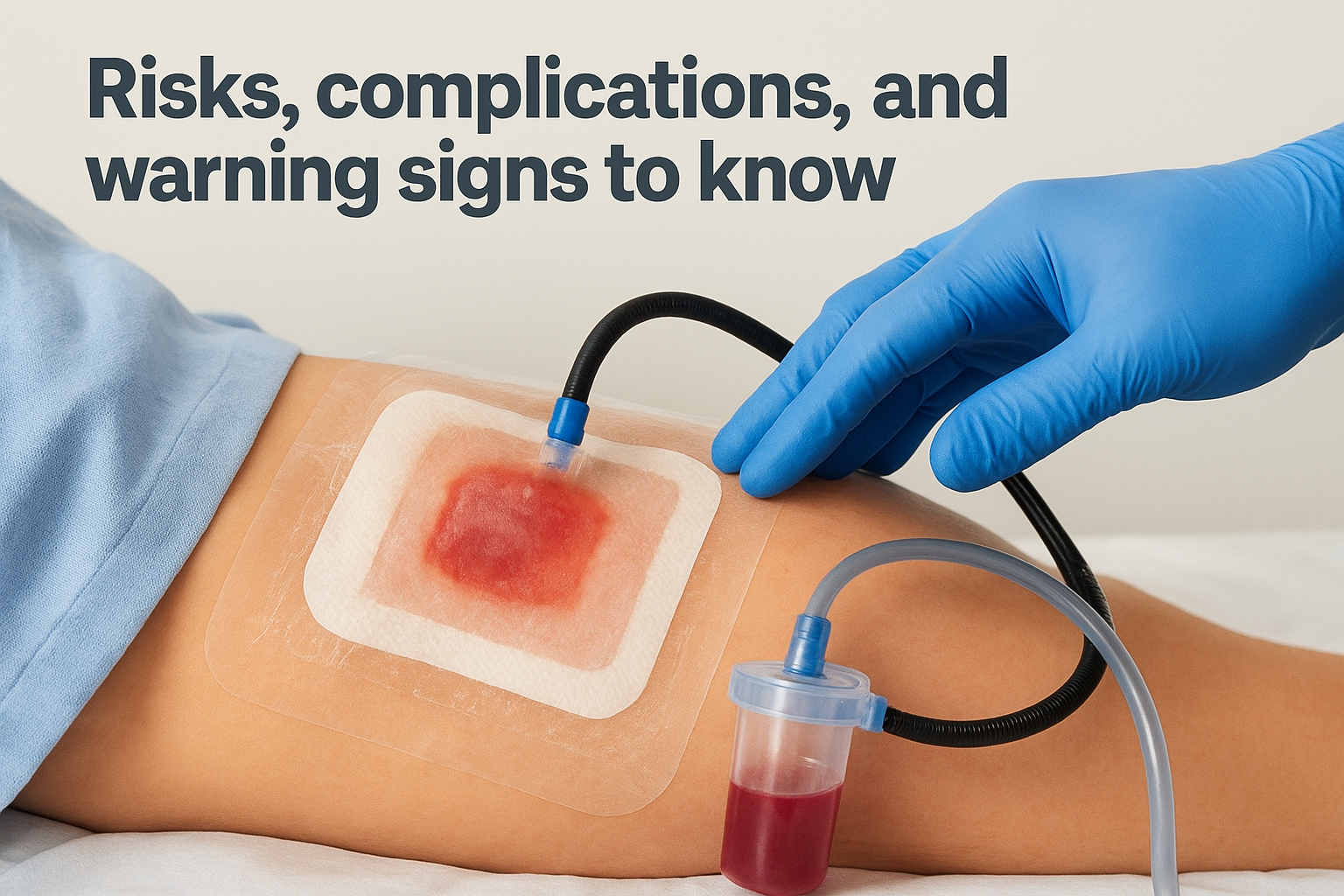
Common complications clinicians watch for
Wound pain during treatment is one of the most frequently reported complications, particularly during the first 24 to 48 hours as tissue adjusts to continuous suction. If pain persists or intensifies beyond the initial adjustment period, your clinician may lower the pressure setting, switch from continuous to intermittent mode, or change the contact dressing material to reduce trauma at the wound interface. Skin irritation or breakdown around the adhesive film seal is another common issue, especially in patients with fragile or thin skin, where repeated application and removal of the adhesive border can strip the surrounding skin layer.
Bleeding at the wound site is a more serious complication. Active or excessive bleeding into the drainage canister signals that the suction is disturbing vascular tissue, and your clinician needs to evaluate the wound immediately. Patients on anticoagulants carry a higher baseline risk for this complication, which is why anticoagulant therapy is factored into the decision to initiate NPWT in the first place.
Warning signs that require immediate attention
Some changes during NPWT treatment are routine, but others indicate that the wound or the therapy is heading in the wrong direction. Knowing which signals require an urgent call to your care team rather than a wait-and-see approach can prevent a manageable complication from becoming a serious setback.
If your drainage canister fills significantly faster than usual, or if the fluid changes from clear yellow to bright red or cloudy and foul-smelling, contact your wound care provider immediately.
Contact your clinician without delay if you notice any of the following during treatment:
- Bright red or heavy bleeding draining into the collection canister
- Fever, chills, or increased wound odor, which may signal a developing infection beneath the dressing
- Sudden loss of suction in the device without a visible seal problem, which can indicate fluid blockage or tubing failure
- Increasing pain, swelling, or warmth in the limb or surrounding tissue beyond what was present before treatment began
Reporting these signs early gives your clinician the opportunity to intervene before a complication requires escalating to a higher level of care.
What to expect at home and during follow-up care
Receiving NPWT at home changes your daily routine in specific, manageable ways. Your clinician will walk you through device operation before leaving your first visit, covering how to check that the seal holds, how to read the pump’s indicator, and what normal drainage looks and sounds like. Most patients adapt to living with the device within a few days, but knowing what to anticipate ahead of time reduces the anxiety that comes with managing unfamiliar medical equipment.
Managing the device in your daily routine
Your pump runs continuously or on a timed cycle, depending on how your clinician set the pressure mode for your wound type. Portable battery-powered units allow movement around your home, and many patients carry the pump in a small bag or wear it clipped to clothing. Showering requires a waterproof cover or temporary disconnection, which your clinician will demonstrate, since moisture that penetrates the adhesive seal disrupts the vacuum and requires an unscheduled dressing change.
Keeping a simple log of how much fluid drains into the canister each day gives your clinician useful data at every follow-up visit.
You will notice the canister filling with wound fluid between visits. A gradual reduction in daily drainage volume over time is a positive sign that the wound environment is stabilizing and the chronic inflammatory cycle is breaking down. If the canister fills faster than expected or the fluid changes in color or odor, that information belongs in your log and in a call to your care team before the next scheduled visit.
What follow-up visits cover
Your clinician returns every two to three days to change the dressing, assess the wound, and adjust settings if your response warrants it. Each visit includes a direct measurement of wound dimensions so your care team can track whether the wound bed is rising toward closure at an expected rate. If granulation tissue is forming well, your clinician may lower the suction pressure or shift the schedule as the wound matures.
Understanding how negative pressure wound therapy works in a home setting also means recognizing when the plan needs to change. If your wound plateaus despite consistent therapy, your clinician will evaluate whether a complementary intervention, such as an allograft application or a surgical consult, should enter the plan. Follow-up visits are decision points, not just maintenance checks, and your active participation in reporting symptoms and daily observations directly shapes the clinical decisions your care team makes at each one.
Key takeaways and next steps
Understanding how negative pressure wound therapy works comes down to three core actions: removing excess fluid, stimulating granulation tissue growth, and improving local blood flow through controlled suction. When applied to the right wound by a qualified clinician, this therapy consistently outperforms passive dressings for deep, high-exudate, or stalled wounds. It works best as part of a broader treatment plan that also addresses the underlying causes of your wound, whether that’s vascular disease, uncontrolled diabetes, or surgical breakdown.
Your next step is getting a physician-led evaluation that examines your wound’s specific biology, not just its surface appearance. Philadelphia Wound Care delivers mobile wound assessments directly to your home, skilled nursing facility, or hospice setting across the Philadelphia region, which means you receive advanced clinical expertise without leaving your environment. Schedule a mobile wound care evaluation to find out whether NPWT or another advanced intervention gives your wound the best path forward.