
7 Mobile Physician Services Near Me: Philly House Calls Guide
Getting quality medical care shouldn’t require a stressful trip across town, especially when you’re recovering from surgery, managing a chronic condition, or caring for a loved one with limited mobility. That’s exactly why more Philadelphia-area residents are searching for mobile physician services near me. The demand for doctors who come to you has grown steadily, and the options available today go well beyond basic check-ups.
At Philadelphia Wound Care, we see this firsthand. As a physician-led mobile practice specializing in advanced wound management, we bring surgical-level expertise directly to homes, skilled nursing facilities, and hospice settings across the region. But wound care is just one piece of the puzzle. Whether you need primary care, urgent visits, or specialty treatment at your bedside, several reputable services now operate throughout Philadelphia and the surrounding areas.
This guide breaks down seven mobile physician services available in the Philly area, what each one offers, and how to figure out which option fits your situation. We’ll cover specialties, insurance acceptance, and response times so you can make a confident, informed choice, without leaving your front door.
1. Philadelphia Wound Care, LLC
Philadelphia Wound Care, LLC is a physician-led mobile practice built around one core idea: bringing specialist-level wound care directly to patients who cannot easily travel to a clinic. A licensed General Surgeon leads every visit, which sets this service apart from the nurse-only home health teams that most patients encounter after a hospital discharge. The practice serves private homes, skilled nursing facilities, assisted living communities, and hospice settings throughout the Philadelphia region.
What they do in the home
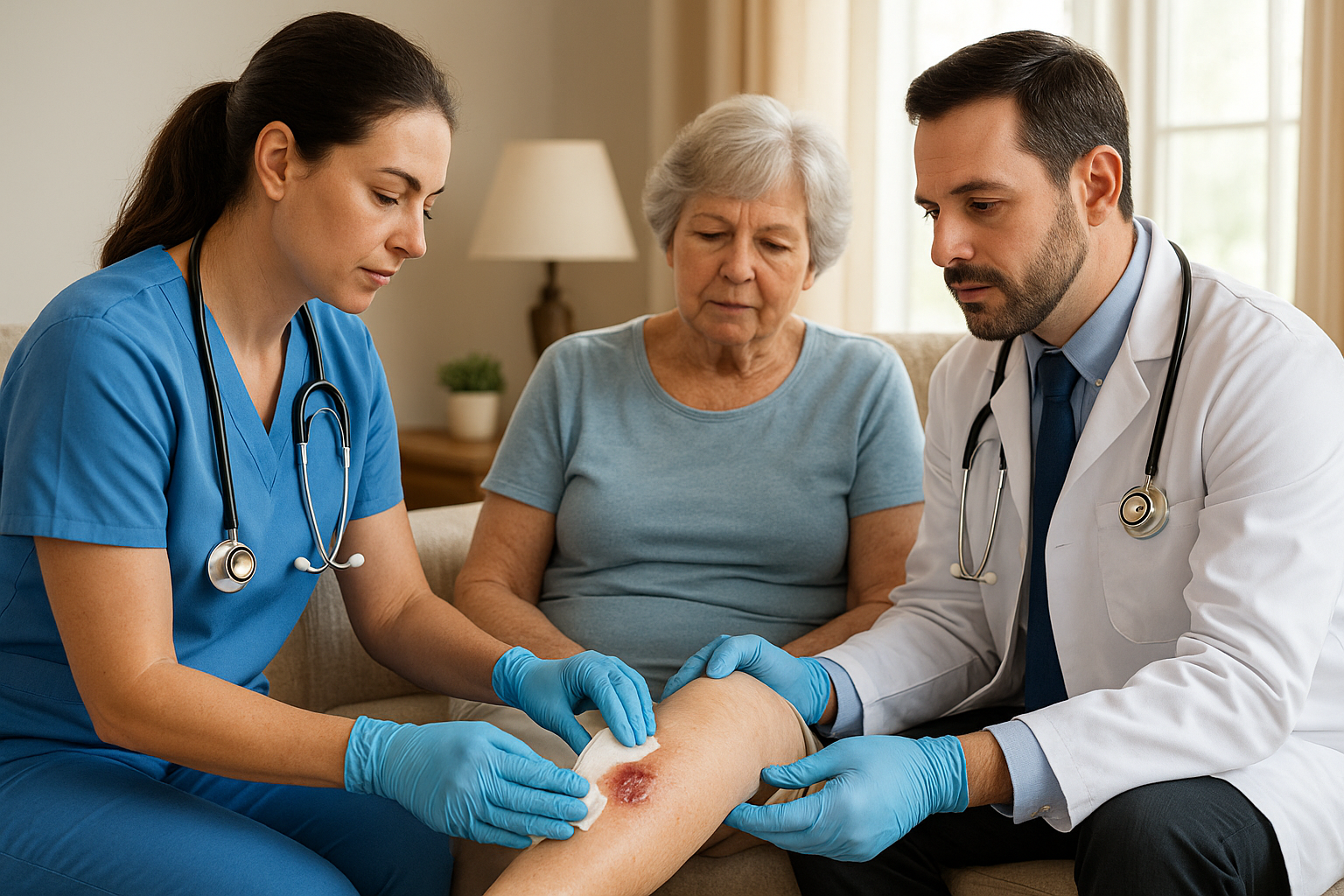
During a visit, the physician performs a comprehensive wound assessment and applies the appropriate treatment at your bedside. This includes debridement, dressing selection, infection management, and the application of allograft and regenerative therapies for wounds that have stopped responding to standard care. The team also coordinates directly with your referring physician or facility staff so that everyone involved in your care stays informed.
Advanced wound therapies like allograft application, which are typically only available in hospital outpatient settings, can be delivered directly in your home under this model.
Who this is best for
This service is the right fit if you or someone in your care has a chronic, non-healing wound such as a diabetic foot ulcer, pressure ulcer, venous ulcer, or a complicated post-surgical wound. It is especially well-suited for elderly or mobility-limited patients who face real barriers getting to a wound care clinic, as well as facility administrators who need reliable specialist backup for high-acuity residents.
When you search for mobile physician services near me and your wound has not improved after weeks of standard home health nursing, this practice offers the surgical-level expertise that can make a measurable difference.
Insurance and typical costs
Philadelphia Wound Care bills Medicare Part B directly, which covers physician evaluation and management services as well as many of the advanced wound therapies the practice provides. The practice also works with Medicare Advantage and major commercial insurance plans. For most Medicare-covered patients, out-of-pocket exposure is limited to standard Part B cost-sharing, so you avoid the surprise facility fees that often come with hospital-based wound centers.
What to ask before you book
Before scheduling your first visit, get clear answers on a few key points:
- Does the physician accept your specific insurance plan, including your Medicare Advantage carrier?
- What is the expected response time for an initial evaluation after referral?
- Can the practice coordinate directly with your primary care physician or specialist to align treatment plans?
- Are allograft or advanced therapies available for your wound type, and does your plan cover them?
2. Home-based primary care through Philly health systems
Philadelphia’s largest hospital networks, including Penn Medicine and Jefferson Health, operate home-based primary care programs for patients who qualify. These programs send a physician or advanced practice provider to your home on a scheduled basis, functioning as a direct extension of the health system’s outpatient services rather than a separate third-party arrangement.
What they do in the home
Clinicians from these programs handle routine primary care tasks such as medication management, chronic disease monitoring, and preventive screenings. They can also order labs, imaging, and specialist referrals directly through the health system’s internal network. If you are searching for mobile physician services near me through one of these health systems, expect the same electronic health record integration you would get from a standard in-office visit, which means your full medical history travels with the provider.
Who this is best for
This model works best for patients who already have an established relationship with a Penn or Jefferson provider and need ongoing primary care support delivered at home. It suits individuals with multiple chronic conditions who require coordinated, continuous management rather than episodic or one-time visits.
If your primary care physician already practices within one of these health systems, ask directly whether a formal home visit program is available for your specific situation.
Insurance and typical costs
These programs generally bill through standard Medicare Part B and most commercial insurance plans. Because services fall under familiar physician evaluation and management codes, your cost-sharing closely mirrors a regular office visit, which keeps out-of-pocket expenses predictable.
What to ask before you book
Before enrolling, get clear answers on these points:
- Does the program accept your specific Medicare Advantage carrier or commercial plan?
- How often will a licensed physician visit versus an advanced practice provider?
- What is the process for urgent concerns between scheduled appointments?
3. Home based primary care through the VA in Philadelphia
The Veterans Affairs Medical Center in Philadelphia runs a dedicated home-based primary care program specifically for veterans who have significant difficulty leaving their homes due to illness, injury, or age. This is not a concierge add-on. It is a fully staffed, interdisciplinary program that operates as a core VA clinical service, bringing the care team to the veteran rather than the other way around.
What they do in the home
VA home-based primary care teams include a physician, nurse, social worker, dietitian, and rehabilitation therapist, all coordinating around a single patient. Clinicians manage chronic conditions, medication adjustments, and functional decline directly in the veteran’s home. They also connect patients to additional VA services, including mental health support and palliative care, without requiring separate referrals through outside systems.
Because the entire team shares one medical record, every provider working with your veteran has the same information at the same time, which reduces errors and prevents care gaps.
Who this is best for
This program is designed for veterans with complex, chronic medical needs who require ongoing management rather than a one-time visit. It works particularly well for older veterans who have multiple diagnoses such as heart failure, diabetes, or dementia, and whose condition makes clinic travel genuinely unsafe or impractical.
Insurance and typical costs
Eligible veterans receive this service at no out-of-pocket cost through the VA health care system. Standard VA eligibility rules apply, so your enrollment status and service-connected disability rating may affect your priority level for enrollment in the program.
What to ask before you book
When you search for mobile physician services near me as a veteran, contact the Philadelphia VA directly and ask:
- Are you currently enrolled in VA health care and assigned to the Philadelphia campus?
- What is the current waitlist for home-based primary care enrollment?
- Can the program manage wound care or post-surgical follow-up alongside primary care services?
4. In-home urgent care medical teams
When a medical issue arises that cannot wait for a scheduled appointment but does not require an emergency room visit, in-home urgent care teams fill that gap. Several services operating in the Philadelphia region dispatch a physician or nurse practitioner to your home within a few hours to evaluate and treat acute conditions such as respiratory infections, urinary tract infections, minor injuries, and dehydration. These teams carry basic diagnostic equipment, including portable EKG devices, pulse oximeters, and point-of-care testing kits, so many common problems get resolved on the spot.
What they do in the home
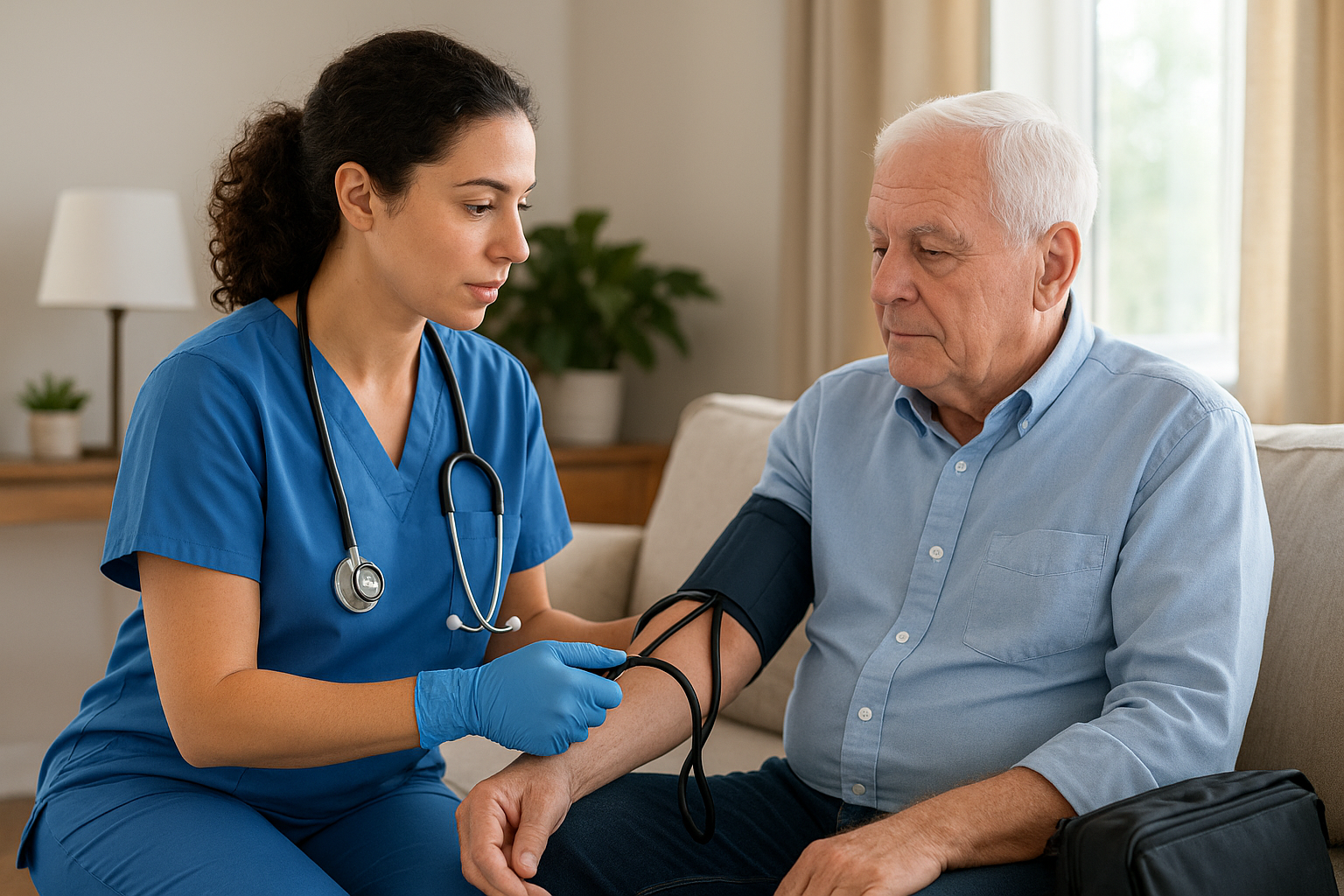
In-home urgent care providers handle non-life-threatening conditions that would otherwise send you to a crowded urgent care clinic. A clinician arrives with supplies to assess your symptoms, perform basic diagnostics, prescribe medications electronically, and administer IV fluids or injections when needed. If your condition turns out to be more serious than initially suspected, the team can coordinate a direct referral to an emergency department or specialist rather than leaving you to navigate that step alone.
For patients managing chronic wounds or post-surgical recovery, having access to rapid in-home evaluation can catch early signs of infection before they escalate.
Who this is best for
This option suits patients who need same-day medical attention but face real barriers getting to a clinic, including elderly individuals, post-surgical patients, and caregivers managing someone with limited mobility. It also works well for anyone searching for mobile physician services near me who wants faster access than a scheduled home-based primary care program provides.
Insurance and typical costs
Coverage varies widely by provider. Some teams bill Medicare and commercial insurance, while others operate on a direct-pay or membership model. Always confirm your plan’s coverage before booking to avoid unexpected costs.
What to ask before you book
- What is the typical arrival window after you request a visit?
- Does the team carry IV supplies and point-of-care testing equipment?
- Can they send documentation directly to your primary care physician after the visit?
5. Concierge doctor house calls in Philadelphia
Concierge medicine takes a different approach than health system programs or urgent care teams. Patients pay a direct monthly or annual membership fee to a physician, and in return they receive same-day or next-day access, longer appointments, and house calls when needed. Several concierge practices operate in Philadelphia, giving patients a more personalized alternative when searching for mobile physician services near me.
What they do in the home
A concierge physician handles comprehensive primary care during home visits, including physical exams, chronic disease management, medication reviews, and coordination with specialists. Because your doctor maintains a smaller patient panel, they arrive knowing your full medical history without you needing to repeat it. Many concierge practices also provide direct phone and text access to the physician outside of scheduled visits.
This direct-access model means your physician can catch a developing problem early and adjust your care plan before a condition requires emergency intervention.
Who this is best for
This model suits patients who want ongoing, relationship-based care from a single physician rather than rotating providers. It works well for professionals, high-demand caregivers, or anyone who values rapid response and minimal scheduling friction as a core part of their healthcare experience.
Insurance and typical costs
Most concierge practices in Philadelphia do not bill traditional insurance for membership fees. The monthly retainer typically ranges from a few hundred to over a thousand dollars depending on the practice. Some physicians still bill Medicare or commercial insurance for specific services like labs or procedures, so confirm the billing structure carefully before you commit.
What to ask before you book
- What does the membership fee cover, and what gets billed separately?
- How quickly does the physician respond to urgent in-home requests?
- Can they coordinate directly with your existing specialists or wound care team?
6. Home health agencies with physician oversight
Home health agencies like Bayada, Elara Caring, and similar Medicare-certified providers operate throughout the Philadelphia region, assigning a care team to support patients recovering at home. What separates higher-quality agencies from basic nursing services is the presence of a supervising physician who signs off on care plans, reviews clinical progress, and adjusts orders as your condition changes. These agencies work as a structured, ongoing support system rather than a one-time visit model.
What they do in the home
Agency nurses and therapists visit on a scheduled basis to perform wound dressings, administer medications, monitor vitals, and provide physical or occupational therapy. For patients managing complex wounds or post-surgical recovery, the agency coordinates directly with your treating specialist to ensure the bedside team follows the right protocols.
Searching for mobile physician services near me often surfaces home health agencies alongside physician house call practices, but the two serve different roles. Agencies provide consistent nursing frequency; physicians provide the clinical decision-making authority that drives the care plan.
Who this is best for
This model fits patients who need consistent, high-frequency home visits rather than episodic physician appointments. It works well after a hospital or skilled nursing facility discharge when your doctor has ordered home health as part of your structured recovery plan.
If your wound has not improved after several weeks of agency nursing care, that is a clear signal to bring in a mobile wound care physician for a higher level of assessment.
Insurance and typical costs
Medicare Part A covers home health services when you meet standard eligibility criteria, including being homebound and requiring skilled nursing or therapy. For most covered patients, out-of-pocket cost is zero under Part A, though Medicare Advantage plans may impose their own prior authorization rules.
What to ask before you book
- Is the agency Medicare-certified with a licensed physician supervising all care plans?
- How quickly can they initiate services following hospital discharge?
- Can they coordinate directly with your wound care specialist when complex needs arise?
7. Mobile diagnostics that support house call care
Mobile diagnostic companies bring lab testing, imaging, and monitoring equipment directly to your home, acting as a critical support layer for every physician house call service on this list. These providers do not replace your doctor, but they eliminate the need for separate trips to a lab or imaging center when your physician needs data to make a clinical decision.
What they do in the home
Mobile diagnostic teams perform blood draws, urinalysis, and point-of-care testing at your bedside and send results electronically to your treating physician, often within hours. Some teams also bring portable X-ray units and cardiac monitoring equipment that deliver basic imaging and EKG data without a hospital visit. For patients receiving wound care at home, these diagnostics help confirm infection, assess circulation, and track systemic factors like blood glucose or kidney function that directly affect healing.
When your wound care physician can review fresh lab results before or during a house call, the clinical decisions made at your bedside are sharper and more targeted.
Who this is best for
This service fits any patient who searches for mobile physician services near me and has conditions requiring frequent lab monitoring, such as diabetes, kidney disease, or anticoagulation therapy. It is especially useful when traveling to an outpatient lab creates a genuine safety risk.
Insurance and typical costs
Medicare Part B covers most physician-ordered diagnostic services, including mobile blood draws and portable imaging, when they are medically necessary. Your specific plan’s cost-sharing rules apply, so confirm with your insurer whether prior authorization is required before the diagnostic team visits.
What to ask before you book
- Can results be sent directly to your treating physician on the same day?
- Does the company carry portable imaging equipment, or only lab services?
- Does your plan require a physician order before each diagnostic visit?
Next steps for getting a house call
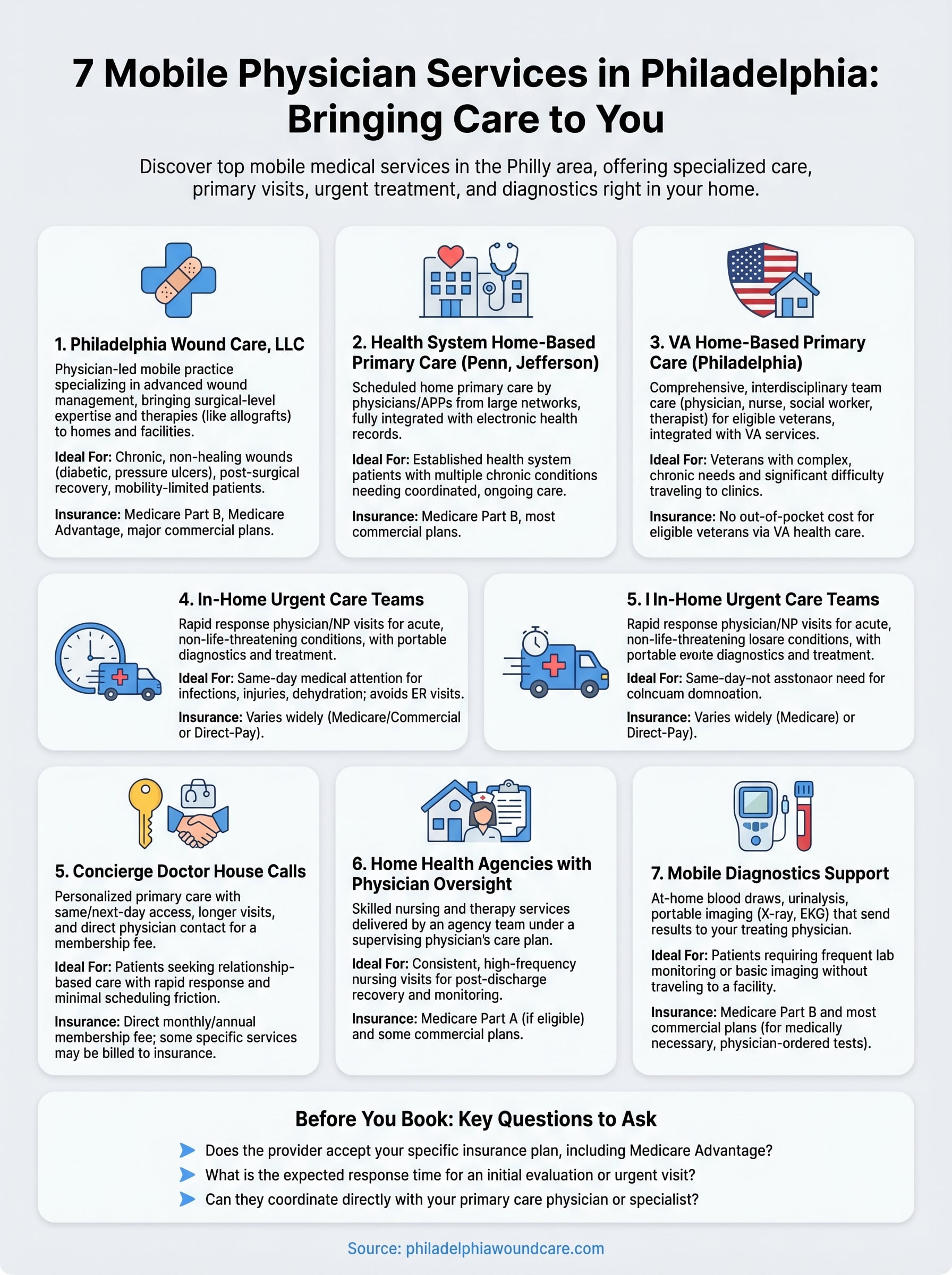
You now have a clear picture of seven mobile physician services near me operating across the Philadelphia area. The right choice depends on your specific condition, your insurance coverage, and how quickly you need care. If your main concern involves a chronic or non-healing wound, connect directly with a physician-led mobile wound care practice rather than starting with a general home health agency.
Before you make your first call, gather your insurance card and a list of current medications, since most providers ask for both upfront. Write down your wound history too, including how long it has been present and what treatments you have already tried. If you are managing a diabetic ulcer, pressure injury, or a post-surgical wound that has not improved, schedule a mobile wound care evaluation and get a licensed General Surgeon to your bedside without delay.