

Pressure Ulcer Treatment Philadelphia: Care Options Near You
A pressure ulcer can go from a small red patch to a deep, painful wound in a matter of days, especially for patients who are bedridden or have limited mobility. If you’re searching for pressure ulcer treatment Philadelphia options, you’re likely dealing with a wound that isn’t improving on its own or one that’s already progressed to a concerning stage. Either way, getting the right care quickly matters more than most people realize.
Philadelphia has several pathways for treating pressure ulcers, from hospital-based wound centers to outpatient clinics. But for patients who can’t easily travel, seniors recovering at home, residents of skilled nursing facilities, or individuals in hospice, those options can feel out of reach. That’s exactly the gap our team at Philadelphia Wound Care was built to fill. As a physician-led mobile practice, we bring advanced wound treatment directly to the patient’s bedside, whether that’s a private home, an assisted living community, or a long-term care facility. Our General Surgeon evaluates and manages pressure ulcers on-site, including advanced therapies like allografts covered under Medicare Part B.
This article breaks down what pressure ulcers are, how they’re staged, and the full range of treatment options available to you in the Philadelphia area, so you can make an informed decision about next steps.
Why pressure ulcers need prompt treatment
Pressure ulcers don’t stay manageable for long without proper intervention. What begins as skin discoloration or surface irritation can advance to a full-thickness wound exposing muscle or bone within days, particularly in patients with diabetes, poor circulation, or limited sensation.
How pressure ulcers progress by stage
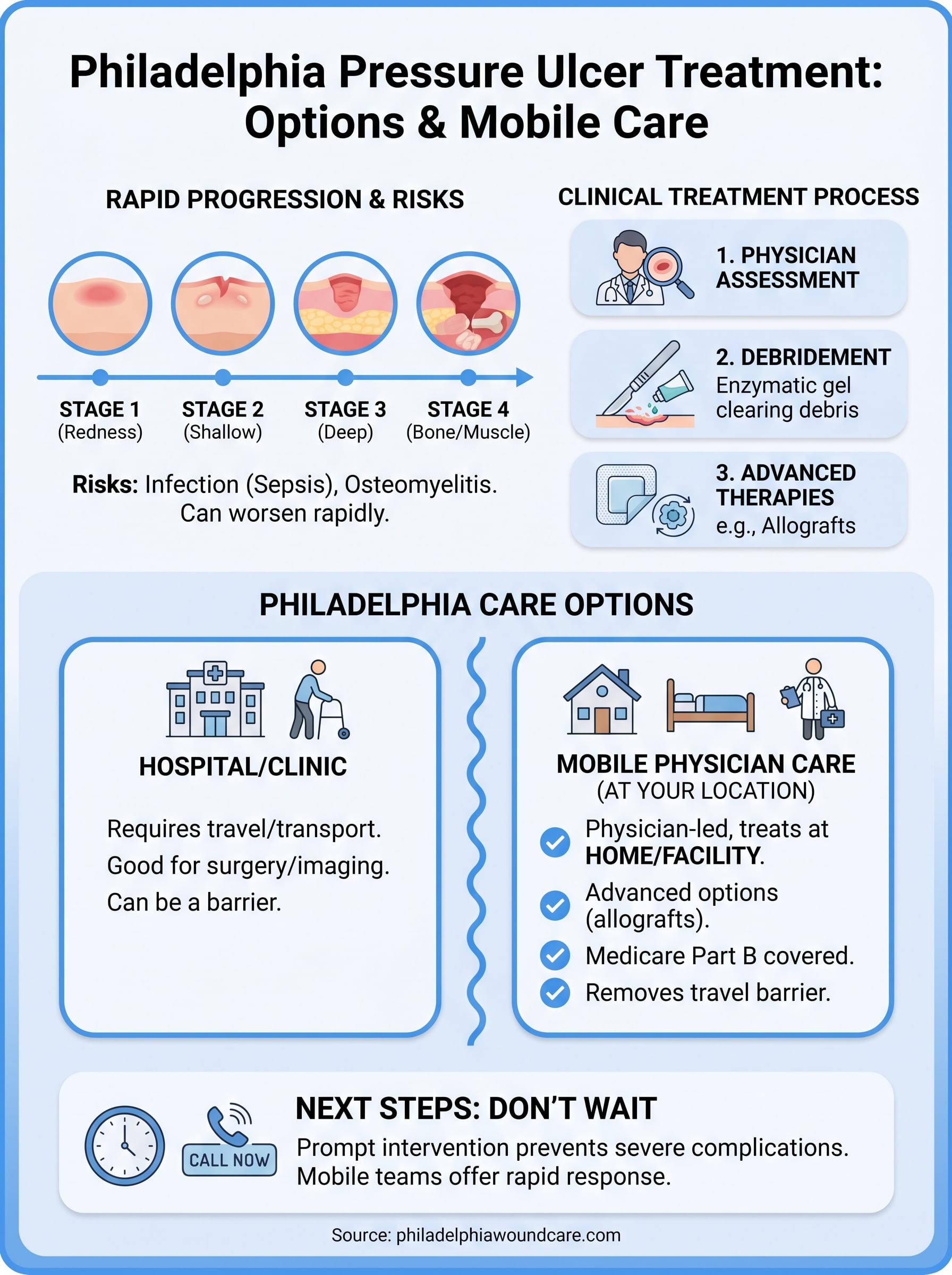
Clinicians classify pressure ulcers using a four-stage system. Stage 1 involves non-blanchable redness on intact skin. By Stage 2, the skin breaks open and forms a shallow ulcer. Stage 3 wounds reach the fat layer beneath the skin, and Stage 4 injuries expose bone, tendon, or muscle. There is also a category called unstageable, where dead tissue covers the wound base and the true depth cannot be determined without debridement.
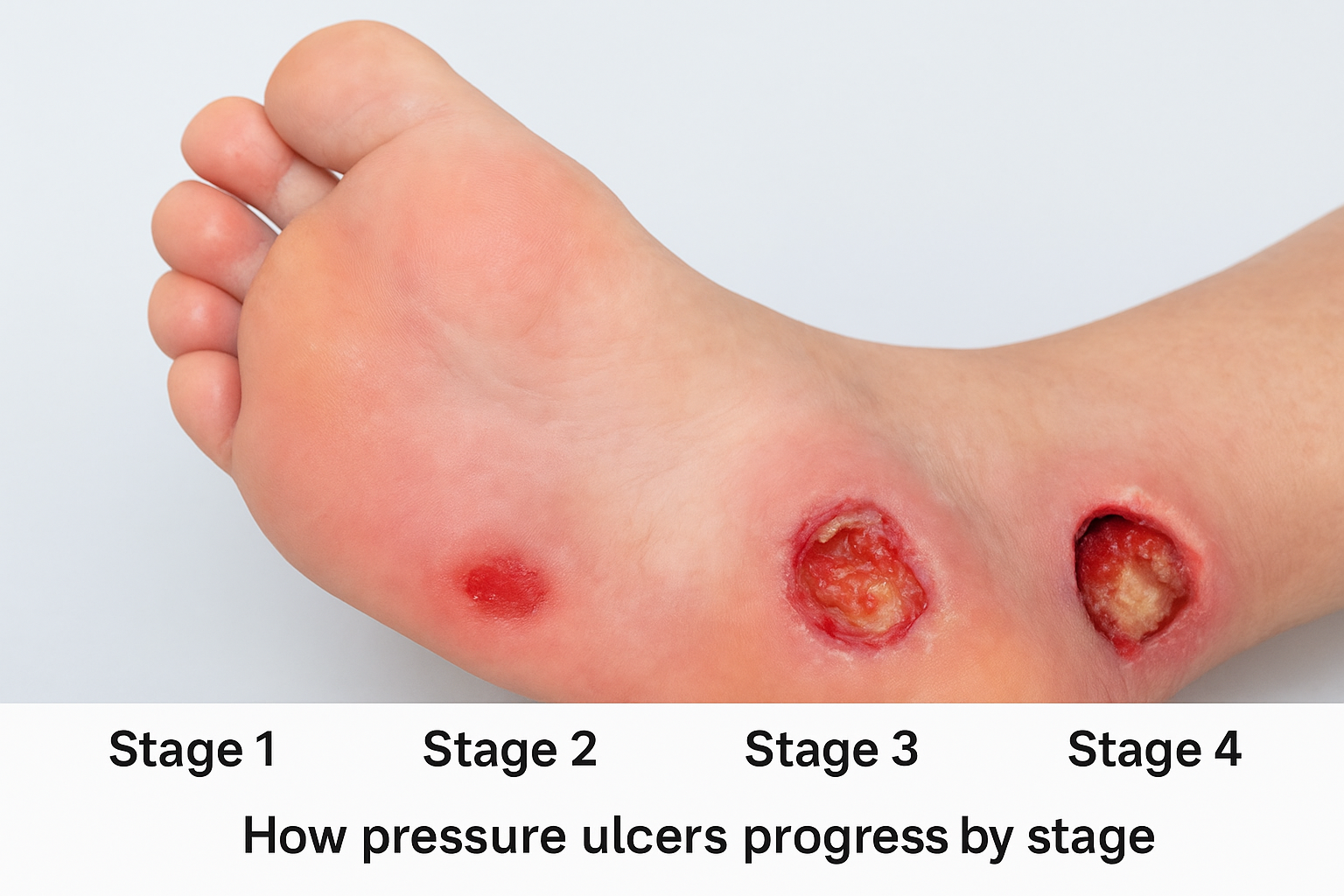
The faster a pressure ulcer is identified and treated, the lower the risk of it advancing to a life-threatening stage.
Each stage requires a different level of intervention. A Stage 1 wound may respond to repositioning and topical protection, while a Stage 3 or 4 wound typically needs advanced wound therapies or surgical debridement to remove damaged tissue and promote healing.
Complications that follow when wounds go untreated
Leaving a pressure ulcer untreated doesn’t just slow recovery. It opens the door to serious systemic complications. Infection is the most immediate risk, and it can spread from the wound site into surrounding tissue (cellulitis), into the bone (osteomyelitis), or into the bloodstream (sepsis), which carries a significant mortality risk. For elderly patients or those with compromised immune systems, these complications can escalate within hours and lead to emergency hospitalization.
Pursuing pressure ulcer treatment Philadelphia options early is not simply a precautionary measure. It is a clinical necessity that directly affects the patient’s survival and long-term quality of life.
How pressure ulcer treatment works
Effective pressure ulcer treatment follows a structured clinical process that addresses the wound itself and the underlying factors driving it. A physician will first assess the wound’s stage and condition, then build a treatment plan that matches what the wound actually needs, not a one-size-fits-all approach.
Debridement and wound bed preparation
Debridement is typically the first hands-on step when dead or infected tissue has built up in the wound. Your provider removes that tissue because necrotic material actively blocks healing and creates conditions where dangerous bacteria multiply. Common methods include:
- Sharp debridement using surgical instruments
- Enzymatic agents applied directly to the wound
- Autolytic debridement using moisture-retentive dressings
Preparing the wound bed properly is what makes every subsequent treatment effective.
Advanced dressings and regenerative therapies
Once the wound bed is clean, your care team selects a dressing or biological therapy suited to the wound’s current state. Options range from moisture-balancing dressings to allograft tissue products that support cellular repair in wounds that fail to progress.
For patients pursuing pressure ulcer treatment Philadelphia providers now make these advanced therapies accessible outside of hospital settings through mobile physician practices that treat you where you are.
Care options in Philadelphia and at home
Your location and mobility level should directly shape which treatment setting you choose. Philadelphia offers several options for pressure ulcer treatment Philadelphia residents can access, but not every option works equally well for every patient.
Hospital-based and outpatient wound centers
Hospital-affiliated wound clinics give you access to specialist-level care and diagnostic equipment under one roof. These settings work well if you can travel reliably and your wound requires imaging or surgical intervention. However, frequent clinic visits can be physically difficult for patients who are bedridden, use medical equipment, or rely on others for transportation.
If getting to a clinic requires significant physical effort or coordination, that barrier can delay treatment and allow the wound to worsen.
Mobile physician care at your location
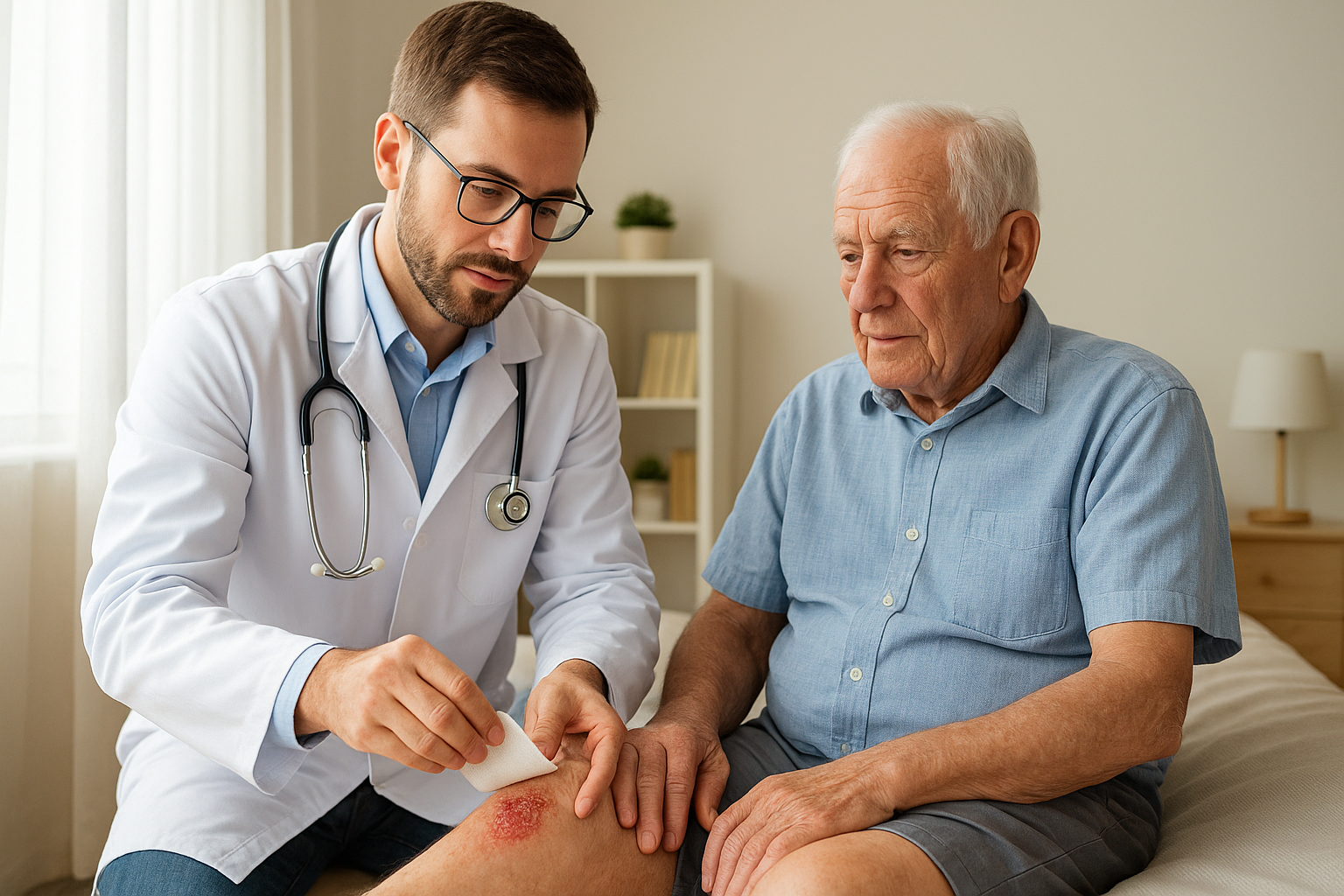
Mobile wound care removes the travel barrier entirely by bringing a physician directly to your bedside. At Philadelphia Wound Care, a licensed General Surgeon evaluates and treats your pressure ulcer on-site, whether you are at home, in an assisted living community, or in a skilled nursing facility. Advanced therapies, including allograft treatments, are provided in your own space and billed through Medicare Part B or commercial insurance, so cost doesn’t have to drive your decision.
Questions to ask a wound care provider
When you’re evaluating pressure ulcer treatment Philadelphia options, the right questions help you identify specialists with the tools and experience to handle complex wounds. Asking targeted questions upfront prevents you from committing to a provider who lacks the clinical depth your situation requires.
The quality of a provider’s answers tells you as much as their credentials do.
Questions about experience and treatment methods
Clinical experience with pressure ulcers specifically matters more than general wound care experience. Ask whether your provider treats all four stages and whether they offer advanced options like debridement or allograft therapy beyond standard dressings.
- Do you treat all four stages of pressure ulcers?
- What advanced therapies do you offer for wounds that aren’t progressing?
- Can you treat me at my home or care facility?
Questions about coordination and follow-up
Consistent communication between your wound care provider and your primary physician prevents critical details from getting missed between appointments. Ask how frequently you’ll be reassessed and what the escalation process looks like if your wound changes rapidly between scheduled visits.
- How quickly can you respond if my wound deteriorates?
- Do you coordinate directly with my referring physician or facility staff?
When neglect may play a role
Not every pressure ulcer results from negligence, but some wounds develop specifically because a care facility failed to follow basic prevention protocols. If your loved one is in a nursing home or assisted living community and develops a pressure ulcer that worsens despite staff involvement, it’s worth examining how that wound came to exist in the first place.
A rapid progression from a small wound to a deep ulcer is often a signal that repositioning, nutritional support, and skin monitoring were not being performed as required.
Signs that a wound may reflect inadequate care
Preventable pressure ulcers typically follow a recognizable pattern. Staff in licensed facilities are required to conduct routine skin assessments, implement turning schedules, and document wound changes. If those steps were skipped, the wound record will often show gaps.
- No documented turning or repositioning schedule
- Delays of days before a wound was reported to a physician
- Rapid staging progression without any change in care approach
If you suspect inadequate care contributed to your loved one’s condition, consulting a patient advocate or attorney alongside pursuing pressure ulcer treatment Philadelphia options is a reasonable and necessary next step.
Next steps
If you or someone you care for has a pressure ulcer that isn’t healing, waiting is the highest-risk option you have. The wound staging system exists precisely because each level of severity demands a different response, and a wound that’s currently manageable can become a surgical emergency within days without proper intervention. Your next move should be to connect with a physician who specializes in pressure ulcers and can assess the wound in person.
Philadelphia Wound Care brings physician-led pressure ulcer treatment Philadelphia patients need directly to their home, facility, or care setting, without requiring you to arrange transport or delay care to fit a clinic schedule. Our General Surgeon evaluates your wound on-site and builds a treatment plan that matches the actual condition of the wound, including advanced options billed through Medicare Part B. Request mobile wound care services today and get a clinical response within 24 hours.