

Redness Around A Wound: 5 Signs It’s Healing Or Infected
You notice a pink or red ring forming around a cut, a surgical site, or a chronic wound, and immediately wonder if something is wrong. That reaction makes sense. Redness around a wound is one of the most common reasons patients and caregivers reach out to our team at Philadelphia Wound Care. The tricky part is that redness can signal healthy healing or early infection, and telling the difference isn’t always straightforward.
Your body’s inflammatory response naturally causes some color change as blood flow increases to the injured area. That’s the repair process doing its job. But when redness starts spreading, intensifying, or showing up alongside other symptoms, it may point to something that needs medical attention sooner rather than later. For patients managing diabetic ulcers, pressure wounds, or post-surgical sites, especially those healing at home or in a care facility, knowing what to watch for matters.
As a physician-led mobile wound care practice serving the Philadelphia area, we evaluate these situations at the bedside every day. Below, we break down five specific signs that help you determine whether your wound is progressing normally or needs professional intervention before complications develop.
1. Redness spreads or worsens after day 2
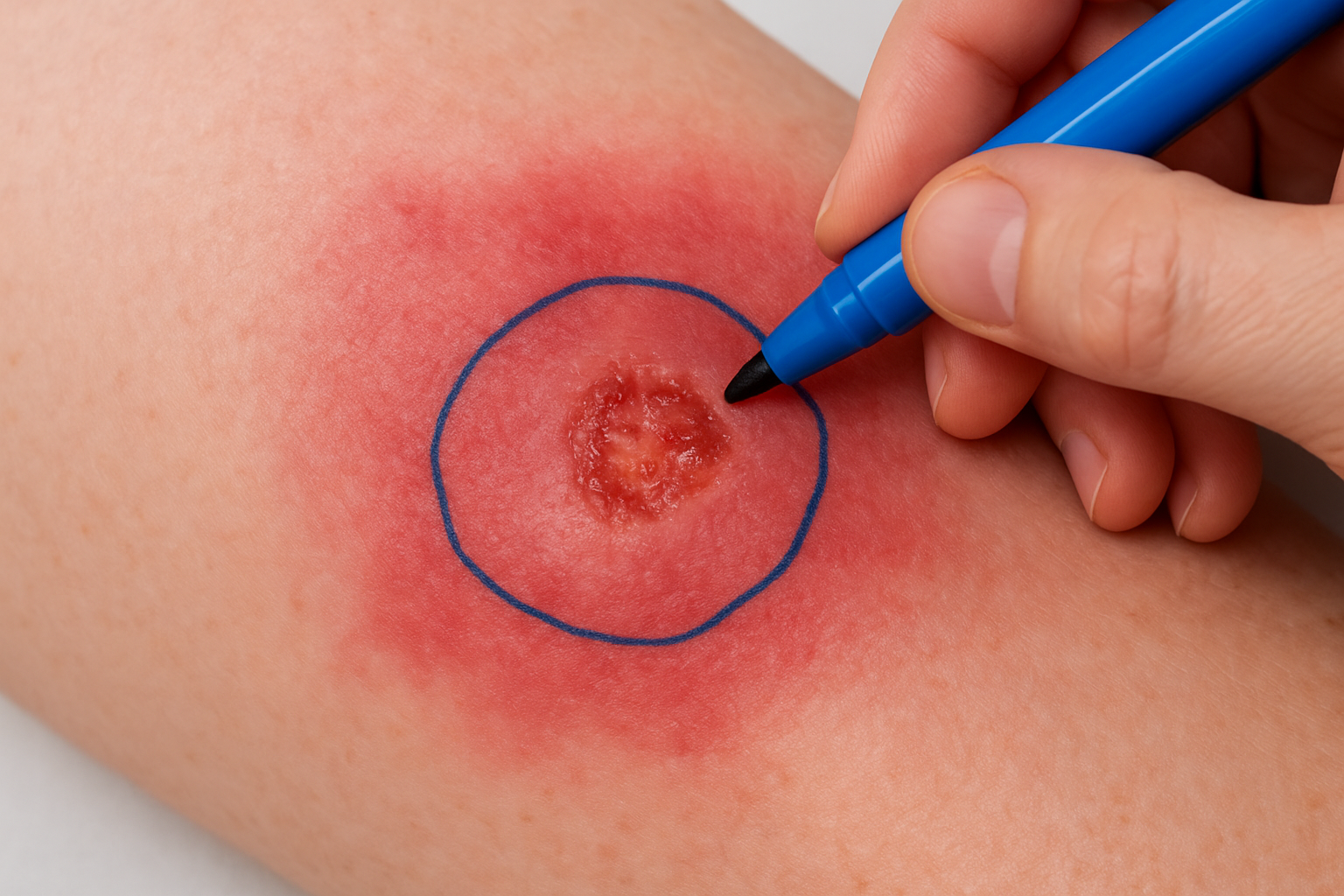
Redness around a wound in the first 48 hours is expected. Your immune system sends blood and white cells to the area as part of the initial inflammatory response, which naturally causes pinkness or mild redness at the wound edges. The problem starts when that redness doesn’t fade but instead grows larger or deeper in color beyond the second day of healing.
What it can mean
When redness expands past the wound’s edge after day two, your body is likely signaling that bacteria have taken hold in the tissue. This is often an early sign of a localized skin infection called cellulitis, where bacteria spread through the surrounding skin and trigger an escalating immune response you can see and feel.
What is normal vs concerning
Normal healing redness stays close to the wound margins, looks pink or light red, and shrinks noticeably each day. Concerning redness moves outward from the wound site, may develop a clearly defined border, and often appears deeper red or even purplish. For patients with diabetes or poor circulation, this border can advance quickly because their immune systems have a harder time containing infection in its early stages.
If the red area around your wound is measurably larger today than it was yesterday, treat that as a same-day reason to contact a medical provider.
What to do next and when to get help
Mark the outer edge of the redness with a pen or marker so you can track whether it spreads over the next few hours. If the border moves beyond your mark, call a provider immediately rather than waiting for a scheduled appointment. Patients in skilled nursing facilities or at home in the Philadelphia area can contact Philadelphia Wound Care directly for a prompt bedside evaluation.
2. Redness stays mild and shrinks each day
When redness around a wound gradually fades over several days, your body is working exactly as it should. This pattern reflects the normal resolution of the inflammatory phase, which typically peaks within the first 24 to 48 hours and then steadily improves.
What it can mean
Mild, shrinking redness tells you that your immune response triggered correctly and is now stepping back as new tissue forms. The wound is entering the repair phase, which is healthy progress.
You are moving in the right direction when each day looks noticeably calmer and lighter than the day before. That daily improvement is your body completing a process it was designed to handle.
What is normal vs concerning
Normal redness stays close to the wound edges, appears pink rather than deep red, and reduces each day without spreading. You should not see warmth or pain increasing alongside that fading color.
If your wound looks measurably better each morning, that steady improvement is your clearest sign that healing is on track.
What to do next and when to get help
Keep the wound clean and properly covered while watching for any reversal in the daily improvement trend. Contact your provider if:
- Redness returns or spreads after several days of fading
- The wound develops new pain, warmth, or discharge
3. The wound feels hotter, more painful, or swollen
Touch the skin around your wound and compare it to nearby tissue. Increased warmth and tenderness in the first 48 hours are a normal part of the inflammatory response. When those sensations intensify beyond day two, they suggest infection rather than healing progress.
What it can mean
Heat, pain, and swelling together signal that your immune system is struggling to contain bacterial growth. Your body floods the area with inflammatory chemicals, causing tissue to swell and nerve endings to become hypersensitive to touch and pressure.
Patients with diabetes or poor circulation face higher risk here because reduced blood flow limits the immune response, allowing bacteria to multiply faster than the body can neutralize them.
What is normal vs concerning
Normal healing produces mild warmth and tenderness that ease steadily after the first two days. Concerning signs include pain that worsens over time, swelling that expands rather than shrinks, or heat that feels noticeably more intense than the surrounding healthy skin.
If your wound hurts more on day three than it did on day one, that reversal alone is reason to contact a medical provider.
What to do next and when to get help
Avoid applying pressure or heat to the swollen wound site. Reach out to a provider promptly if redness around a wound comes with increasing pain, growing warmth, or new swelling appearing days into recovery rather than immediately after the injury.
4. The wound drains pus or smells bad
Discharge from a wound tells a clear story about what’s happening below the surface. Cloudy, yellow, or green fluid coming from a wound site is pus, and it almost always means bacteria are actively multiplying in the tissue.
What it can mean
Pus forms when white blood cells battle bacteria and the resulting debris accumulates in the wound. A foul smell accompanies this because bacteria release waste compounds as they break down tissue.
When you also see redness around a wound alongside these drainage changes, infection is the most likely explanation, and tissue damage will worsen without treatment.
What is normal vs concerning
Some clear or light yellow fluid in the first day or two is normal serous drainage. Thick, opaque, or foul-smelling discharge at any stage is not normal and warrants immediate attention.
Any pus or bad odor from your wound is a same-day reason to call a provider, not something to monitor through the weekend.
What to do next and when to get help
Do not probe or press on the wound to drain it yourself. Cover it with a clean dressing and contact a medical provider for prompt bedside evaluation before the infection spreads to deeper tissue. Signs requiring urgent care include:
- Expanding redness combined with pus
- Fever above 101°F
- Rapid swelling around the wound site
5. You feel sick or see red streaks
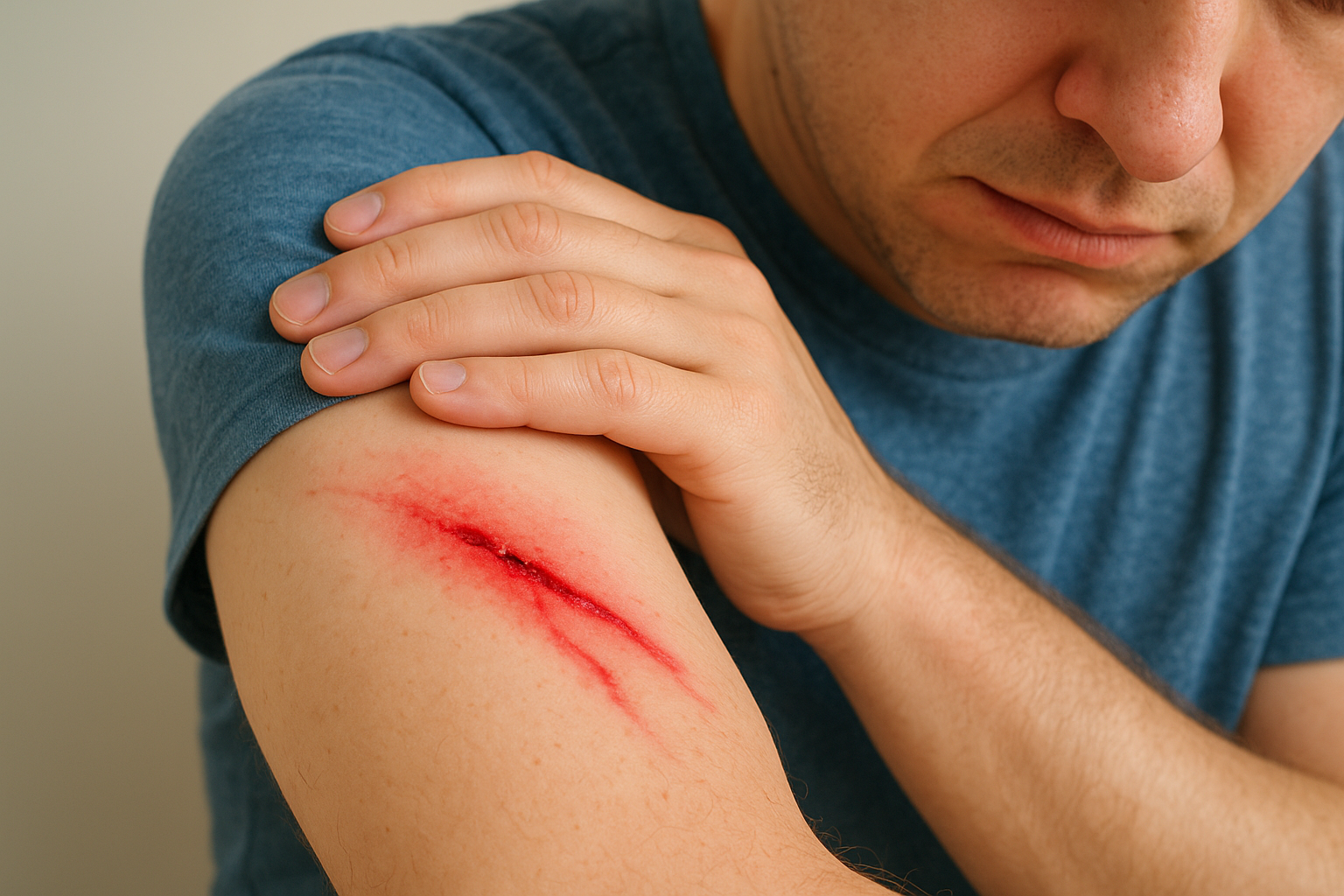
When systemic symptoms appear alongside a wound, the infection has likely moved beyond the local tissue. Red streaks extending from the wound toward your lymph nodes, combined with fever, chills, or nausea, indicate that bacteria may have entered your bloodstream.
What it can mean
Red streaks traveling away from the wound site signal lymphangitis, a condition where bacteria spread through your lymphatic system. This is a medical emergency that can progress to sepsis within hours if left untreated. Fever above 101°F alongside redness around a wound confirms your body is fighting an infection it can no longer contain on its own.
What is normal vs concerning
No systemic symptoms are normal during wound healing. Any fever, chills, rapid heartbeat, or visible streaks moving outward from the wound are immediate warning signs that require urgent medical attention.
If you see red streaks or feel genuinely sick while healing a wound, call 911 or go to an emergency room immediately.
What to do next and when to get help
Do not wait to see if these symptoms resolve. Call emergency services right away if you see streaks or develop fever with confusion. For patients in Philadelphia recovering at home or in a facility, Philadelphia Wound Care can coordinate urgent care needs alongside emergency services.
What to do now
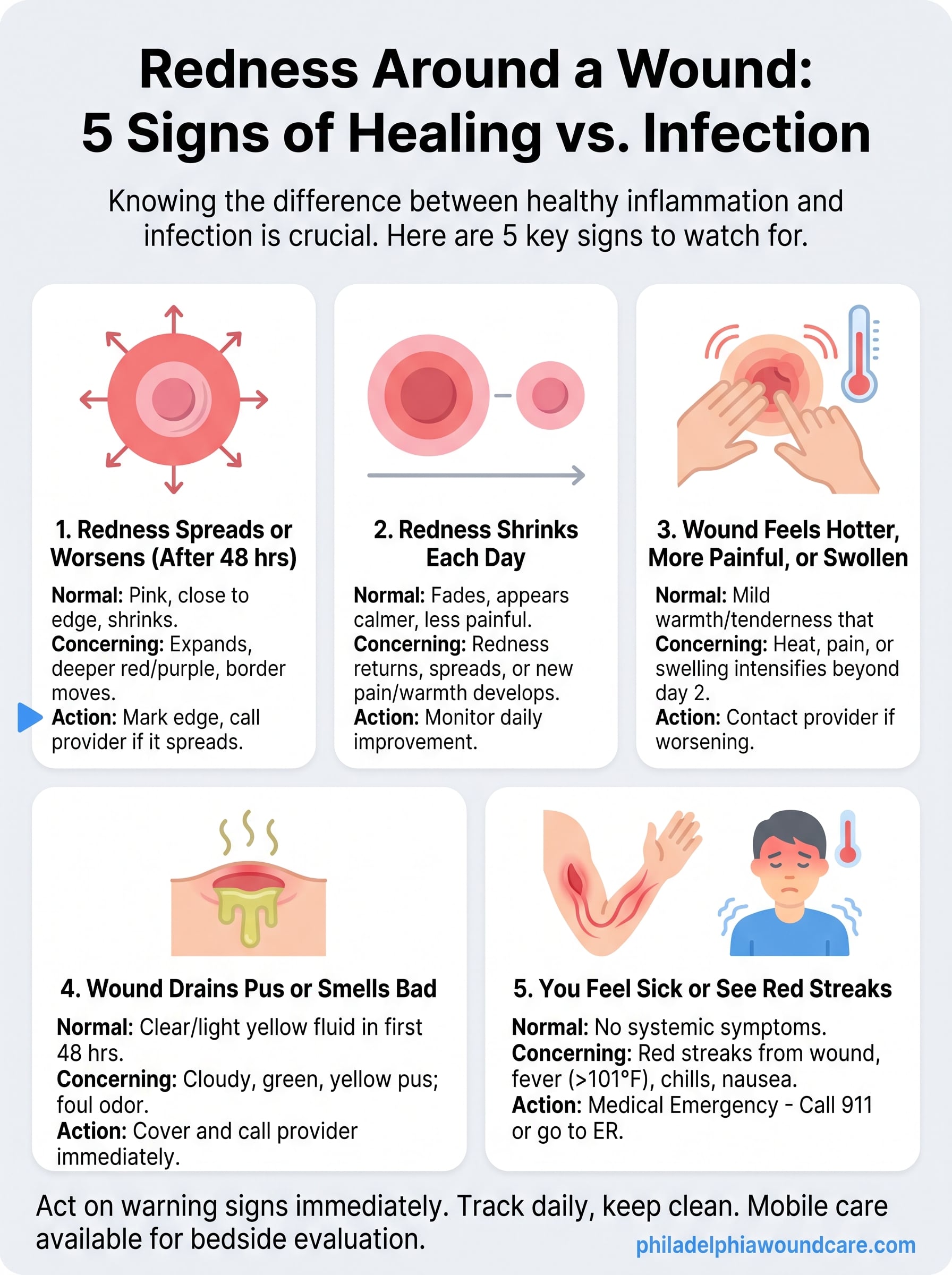
Redness around a wound falls into two clear categories once you know what to look for: a normal inflammatory response that fades steadily, or an infection that signals your body needs outside help. The five signs above give you a practical framework to make that distinction at home or in a care facility without guessing.
If your wound is healing, track it daily and keep it clean and covered. If you recognized any of the warning patterns in this article, including spreading redness, pus, worsening pain, or systemic symptoms, act on that information today rather than waiting.
Philadelphia Wound Care brings physician-led wound evaluation directly to your bedside, whether you’re at home, in a skilled nursing facility, or in an assisted living community. You don’t need to travel to get expert care. Request mobile wound care in Philadelphia and let a licensed specialist assess your wound where you are.