

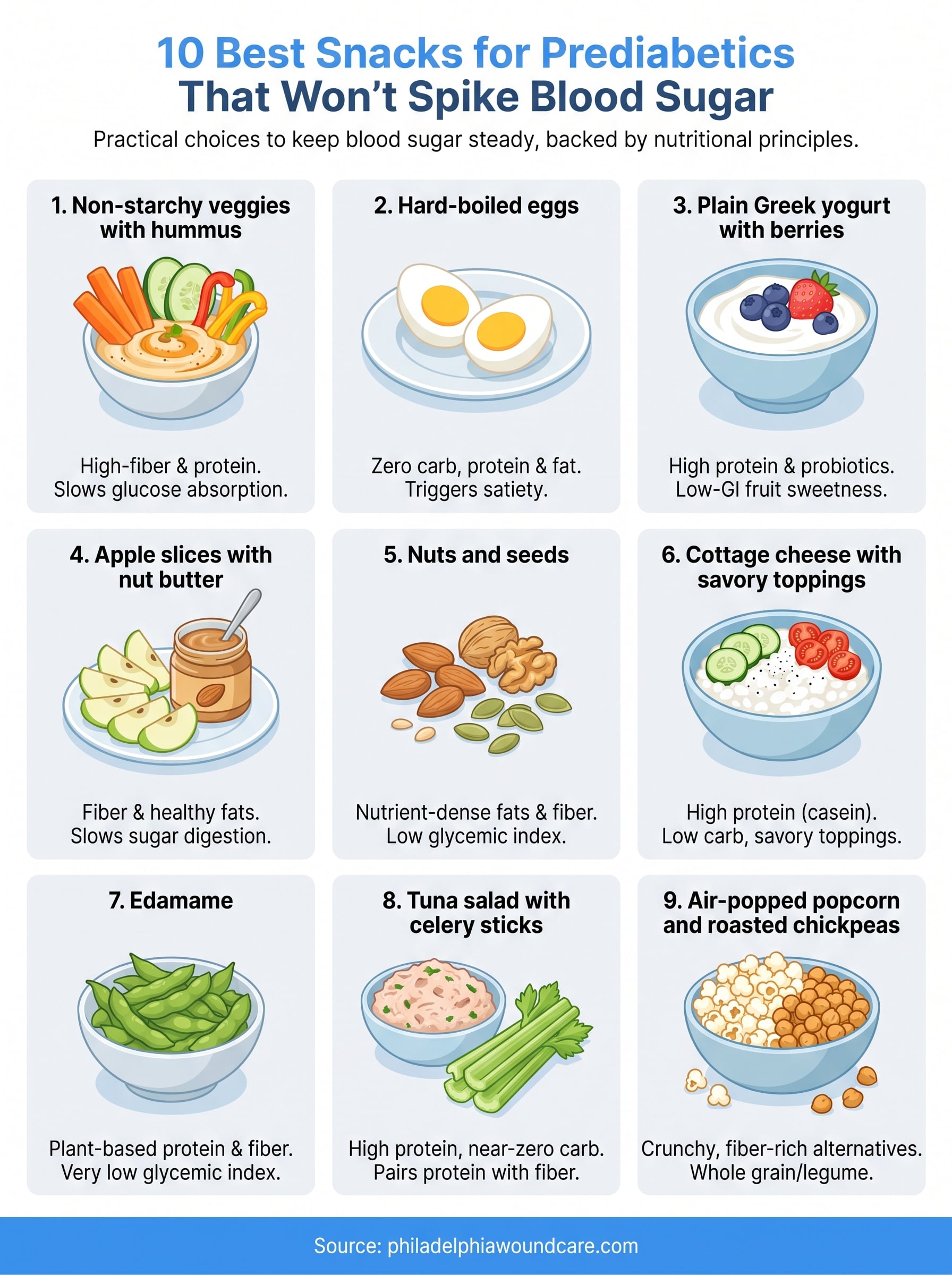
10 Best Snacks for Prediabetics That Won’t Spike Blood Sugar
A prediabetes diagnosis can make something as simple as choosing an afternoon snack feel like a minefield. You start second-guessing every cracker, every piece of fruit, every handful of trail mix, wondering if it’s about to send your glucose readings in the wrong direction. The good news is that snacks for prediabetics don’t have to be bland, boring, or overly complicated. With the right pairings and a few smart swaps, you can keep your blood sugar steady between meals while actually enjoying what you eat.
At Philadelphia Wound Care, we treat the downstream consequences of unmanaged diabetes every day, diabetic ulcers, slow-healing surgical wounds, and tissue breakdown that could have been prevented. We see firsthand how blood sugar control shapes long-term health outcomes, and that’s exactly why we care about what happens upstream, at the prediabetes stage. Keeping glucose in check now is one of the most effective ways to protect your body from complications later.
This list breaks down 10 snacks that work with your blood sugar, not against it. Each option is practical, easy to prepare, and backed by the nutritional principles that help prevent glucose spikes throughout the day. Whether you’re newly diagnosed or looking to tighten up your eating habits, you’ll walk away with real options you can use starting today.
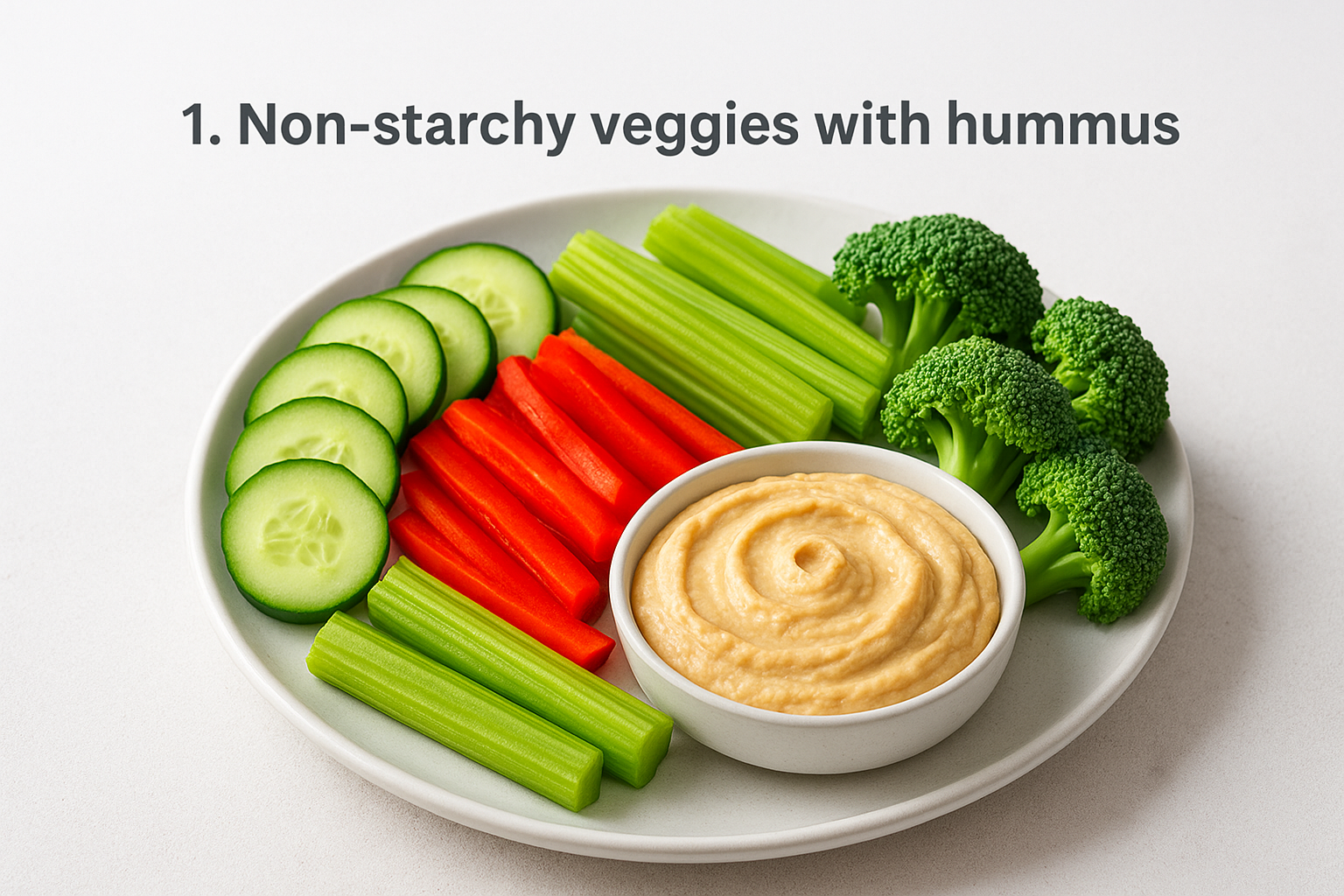
1. Non-starchy veggies with hummus
This pairing is one of the most reliable snacks for prediabetics because it combines high-fiber vegetables with a protein-and-fat-rich dip that naturally slows glucose absorption. Together, they keep you full longer and prevent the sharp blood sugar rises that come from eating refined carbohydrates on their own.
Why it works for prediabetes
Non-starchy vegetables are low in digestible carbohydrates and high in fiber, which means your body breaks them down slowly. Hummus, made primarily from chickpeas, tahini, and olive oil, adds protein and healthy fats that further blunt any glucose response. You get volume, nutrients, and satiety without the metabolic cost of a high-carb snack.
Fiber slows the rate at which glucose enters your bloodstream, making high-fiber snacks one of the most effective tools for blood sugar management at the prediabetes stage.
Best veggie pairings for steady energy
Not every vegetable falls into the non-starchy category, so choosing the right ones matters for your blood sugar. Stick with options that are low on the glycemic index and high in fiber and water content:
- Cucumber slices – crisp, nearly carb-free, and hydrating
- Bell pepper strips – slightly sweet, rich in vitamin C, and filling
- Celery sticks – adds satisfying crunch with minimal carbs
- Broccoli florets – high in fiber and holds up well with a thick dip
- Radishes and snap peas – underrated options that pair well with hummus
Rotating through these keeps your snack routine interesting and gives you variety across different nutrients without pushing your carb intake into a range that affects your readings.
Portion and carb notes
A standard serving of hummus runs about 2 tablespoons, which contains roughly 4 to 5 grams of carbohydrates. Pair that with a full cup of sliced non-starchy vegetables, typically 3 to 5 grams of carbs depending on type, and your total snack stays well under 15 grams. That range keeps post-snack blood sugar comfortably stable for most people with prediabetes.
Common pitfalls and easy swaps
The most common mistake is grabbing flavored or store-bought hummus loaded with added sugar or excess oil. Check the nutrition label and look for a version with no added sweeteners. Another pitfall is pairing your hummus with pita chips or crackers instead of vegetables, which adds rapid-digesting refined carbs that work against your blood sugar goals entirely. When in doubt, double the vegetables and skip the chips.
2. Hard-boiled eggs
Hard-boiled eggs are one of the most convenient and affordable snacks for prediabetics you can keep on hand. They require no preparation at snack time, travel well, and deliver a solid nutritional punch in a small package.
Why it works for prediabetes
Eggs contain zero grams of carbohydrates, which means they have essentially no direct impact on your blood glucose. The combination of protein and fat in each egg triggers satiety hormones that reduce hunger and limit overeating at your next meal, both of which support more stable blood sugar throughout the day.
Protein takes longer to digest than carbohydrates, which helps flatten the glucose curve after eating and reduces the likelihood of an energy crash.
How to make it more filling without extra carbs
Adding healthy fats or additional protein to your hard-boiled eggs stretches satiety without pushing carb counts up. Slice the egg over a few leaves of spinach with a drizzle of olive oil, or pair it with a small portion of avocado for extra monounsaturated fat. Both options increase fullness and keep the snack squarely in low-carb territory.
Portion and carb notes
One large hard-boiled egg contains roughly 6 grams of protein and 5 grams of fat with fewer than 1 gram of carbohydrates. Two eggs make a satisfying snack that keeps your total carb load near zero and your blood sugar response minimal.
Common pitfalls and easy swaps
The main pitfall is reaching for store-bought deviled eggs or egg salads that contain added sugar or sweetened relish. Make your own with plain Greek yogurt and mustard instead of mayonnaise loaded with additives to keep the snack clean and blood-sugar friendly.
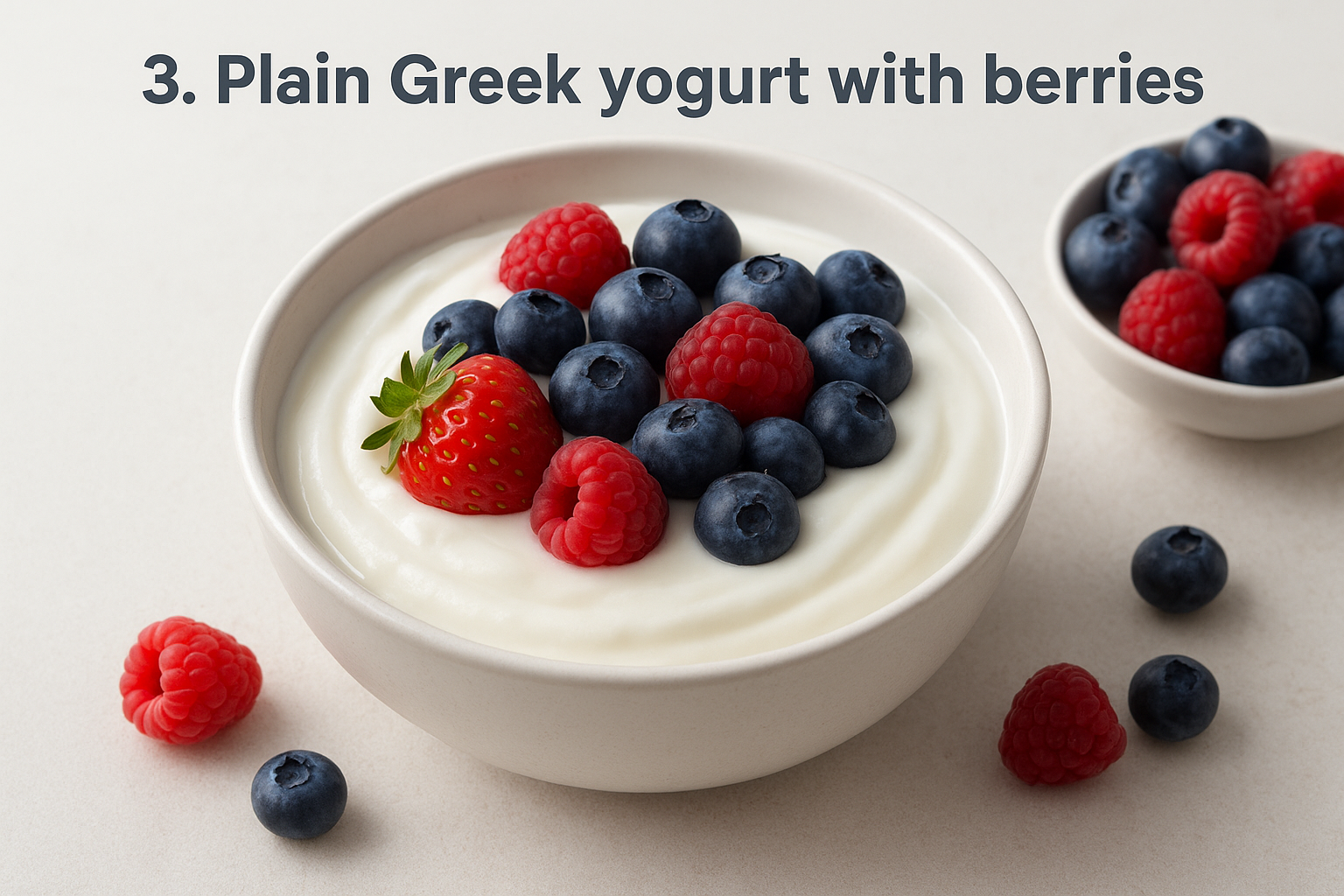
3. Plain Greek yogurt with berries
Plain Greek yogurt paired with fresh berries gives you protein, probiotics, and natural sweetness in one snack that’s well-suited for blood sugar management. It’s one of the more satisfying snacks for prediabetics because it hits multiple nutritional targets at once without pushing carb counts into problematic territory.
Why it works for prediabetes
Greek yogurt is significantly higher in protein than regular yogurt, typically 15 to 20 grams per cup, while being lower in sugar. That protein load slows digestion and moderates the glucose response. Berries add natural sweetness along with fiber and antioxidants, and they rank low on the glycemic index compared to most other fruits.
Berries like blueberries and strawberries have a glycemic index between 25 and 40, making them among the safest fruit choices for managing blood sugar.
How to keep it sweet without a sugar spike
If plain yogurt tastes too tart on its own, add a small amount of cinnamon rather than honey or maple syrup. Cinnamon has shown potential benefits for insulin sensitivity and adds warmth without spiking glucose. You can also layer in a few chopped walnuts for crunch, extra fat, and even more staying power.
Portion and carb notes
Stick to ¾ cup of plain Greek yogurt paired with ½ cup of mixed berries. That combination delivers roughly 12 to 15 grams of carbohydrates total, well within the range that supports stable post-snack blood sugar readings.
Common pitfalls and easy swaps
The biggest mistake is grabbing flavored Greek yogurt from the store, which often contains 15 to 20 grams of added sugar per serving. Always check the label and choose plain, unsweetened varieties instead. Swap flavored versions for plain yogurt and add your own berries so you control exactly what goes in.
4. Apple slices with nut butter
Apple slices with nut butter hit a sweet spot among snacks for prediabetics because they combine natural fruit sugars with protein and fat that slow how quickly glucose enters your bloodstream. The result is a snack that satisfies a sweet craving without the sharp spike you’d get from eating fruit alone.
Why it works for prediabetes
Apples contain fiber, particularly pectin, which forms a gel-like substance in your digestive tract and delays sugar absorption. Pairing them with nut butter adds fat and protein that further moderate the glucose response, making this combination more blood-sugar-friendly than either food on its own.
The fiber in one medium apple accounts for roughly 4 grams, enough to meaningfully slow the digestion of its natural sugars when combined with a fat source.
How to balance fruit with protein and fat
The key is keeping the nut butter portion intentional rather than free-pouring from the jar. One to two tablespoons of almond or natural peanut butter delivers the fat and protein you need without adding excessive calories. Choose options with no added sugar or hydrogenated oils, typically labeled as "natural" with only nuts and salt in the ingredient list.
Portion and carb notes
Half a medium apple with one tablespoon of nut butter lands around 15 to 18 grams of carbohydrates total. That range keeps your post-snack glucose response manageable and well within the target window for most people managing prediabetes.
Common pitfalls and easy swaps
The most common mistake is choosing flavored or sweetened nut butters like honey-roasted peanut butter, which adds significant sugar on top of the apple’s natural carbohydrates. Swap those out for plain, unsweetened varieties and confirm that the ingredient list is short, ideally just nuts and salt.
5. Nuts and seeds
Nuts and seeds rank among the most portable and nutrient-dense snacks for prediabetics available. They require zero preparation, store easily at room temperature, and deliver a combination of healthy fats, protein, and fiber that actively supports blood sugar stability between meals.
Why it works for prediabetes
The fat and protein in nuts and seeds slow gastric emptying, which means your body absorbs any carbohydrates present at a much slower rate. This blunts the post-snack glucose response and helps you stay fuller longer. Most nuts also carry a low glycemic index, making them one of the most reliable snack choices at the prediabetes stage.
Research consistently links regular nut consumption with improved insulin sensitivity and lower fasting blood glucose levels in people with prediabetes.
How to choose the best options at the store
Not all nuts are equal when it comes to blood sugar impact. Almonds, walnuts, and pistachios tend to be the best choices because they offer high fiber content alongside their fat and protein. Look for raw or dry-roasted varieties without added oils, sugar coatings, or sweeteners that quietly inflate the carb content of what seems like a simple snack.
Portion and carb notes
A standard one-ounce serving of almonds contains roughly 6 grams of carbohydrates with 3.5 grams of fiber, bringing the net carb count down to around 2.5 grams. That makes nuts an extremely low-carb snack option that rarely moves the glucose needle in any meaningful direction.
Common pitfalls and easy swaps
The main problem with nuts is that portion control becomes difficult when eating straight from the bag. Pre-measure one ounce into a small container before you sit down so you’re not grazing without limits. Swap honey-glazed or flavored nut mixes for plain varieties to cut the hidden sugars that come standard in most trail mixes.
6. Cottage cheese with savory toppings
Cottage cheese is one of the most underestimated snacks for prediabetics because it delivers high protein with a modest carbohydrate count and works just as well with savory additions as it does with fruit. Leaning into savory toppings specifically keeps the carb count lower while adding flavor and texture that make it genuinely satisfying.
Why it works for prediabetes
Full-fat cottage cheese is high in casein protein, a slow-digesting dairy protein that keeps you full for hours and reduces the likelihood of overeating later. Its carbohydrate content is relatively low compared to other dairy snacks, and that combination of protein and fat produces a minimal glucose response when eaten on its own or with low-carb toppings.
A half-cup serving of full-fat cottage cheese contains roughly 13 grams of protein and only 4 to 5 grams of carbohydrates, making it one of the more blood-sugar-friendly dairy options available.
Simple topping ideas that keep carbs low
Skip the fruit preserves and reach for toppings that add flavor without adding significant sugar. Sliced cherry tomatoes, cucumber, and cracked black pepper work well together and keep your carb count near zero. A drizzle of olive oil with everything bagel seasoning is another option that adds richness and makes the snack feel substantial.
Portion and carb notes
A half-cup serving is the right starting point and keeps your total carbohydrate intake around 5 grams before toppings. Add non-starchy vegetables on top and your snack stays well under 10 grams of carbs in total.
Common pitfalls and easy swaps
Avoid flavored or fruit-on-the-bottom cottage cheese products, which can contain 10 to 15 grams of added sugar per serving. Instead, buy plain, unsweetened cottage cheese and build your own toppings so you stay in control of what goes into your snack.
7. Edamame
Edamame sits in a category of its own among snacks for prediabetics because it offers the rare combination of plant-based protein, fiber, and healthy fat in a snack that’s also genuinely easy to prepare. You can buy it frozen, steam it in minutes, and have a filling option ready before any craving has a chance to send you toward something worse.
Why it works for prediabetes
Edamame is a whole soy food with a low glycemic index of around 18, meaning your body digests and absorbs it slowly without triggering a significant glucose response. It delivers 8 grams of protein per half-cup serving alongside 4 grams of fiber, both of which slow digestion and promote lasting fullness between meals.
Edamame’s combination of protein and fiber makes it one of the few plant-based snacks that can genuinely flatten your post-snack glucose curve.
Quick ways to season it without added sugar
You can keep edamame interesting without reaching for sauces that add hidden sugar. A pinch of sea salt and a squeeze of lemon juice is the simplest option that works every time. If you want more depth, try a light sprinkle of smoked paprika or garlic powder for flavor that costs you zero extra carbs.
Portion and carb notes
A half-cup serving of shelled edamame contains roughly 9 grams of total carbohydrates and 4 grams of fiber, landing your net carb count around 5 grams. That range makes it easy to fit into any snacking window without worrying about a glucose spike.
Common pitfalls and easy swaps
The main pitfall is buying pre-seasoned edamame products that list sugar, soy sauce, or honey in the ingredients. Stick to plain frozen edamame and season it yourself so you stay in complete control of what goes into the snack.
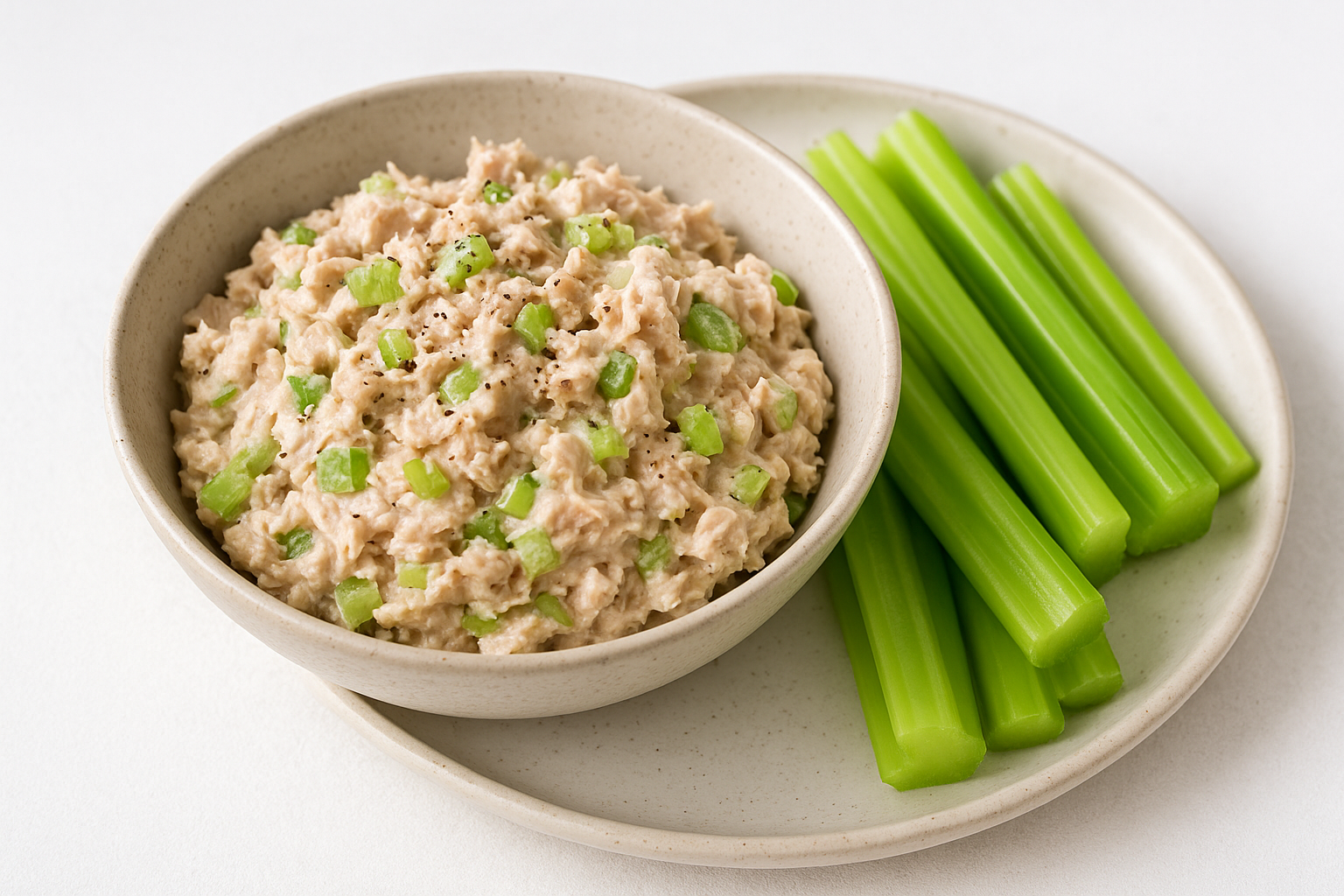
8. Tuna salad with celery sticks
Tuna salad with celery sticks is a high-protein, near-zero-carb combination that belongs in your regular rotation of snacks for prediabetics. It’s quick to prepare, easy to pack, and delivers real staying power between meals without any meaningful impact on your glucose readings.
Why it works for prediabetes
Canned tuna is one of the most protein-dense foods you can build a snack around, with roughly 20 grams of protein per three-ounce serving and zero carbohydrates. That protein load slows digestion and suppresses hunger without creating any glucose response, making it one of the cleanest options available when you’re managing blood sugar.
Pairing a zero-carb protein source with a high-fiber, low-carb vegetable like celery is one of the most effective strategies for keeping your post-snack blood sugar flat.
How to build a better tuna salad
Mix your tuna with plain Greek yogurt or mashed avocado instead of traditional mayonnaise packed with additives. Add chopped celery directly into the salad for extra crunch and fiber, then season with mustard, lemon juice, and black pepper to build flavor without introducing sugar or refined ingredients.
Portion and carb notes
A three-ounce serving of tuna with two tablespoons of Greek yogurt and three to four celery sticks keeps your total carb count under 5 grams. That range makes this snack virtually invisible to your blood sugar and a reliable option at any point in the day.
Common pitfalls and easy swaps
The most common mistake is serving tuna salad on crackers or bread instead of celery sticks. Both add fast-digesting carbohydrates that undercut the blood sugar benefit of the tuna entirely. Swap the crackers for more celery, cucumber rounds, or sliced bell pepper strips to keep the snack firmly in low-carb territory.
9. Air-popped popcorn and roasted chickpeas
When you need something crunchy, these two options stand out as the best chip alternatives among snacks for prediabetics. Both give you the texture and satisfaction of a salty snack without the refined carbohydrates and seed oils that make traditional chips a problem for blood sugar management.
Why they work as crunchy chip swaps
Air-popped popcorn is a whole grain with a surprisingly high fiber content relative to its calorie count, which slows digestion and moderates your glucose response. Roasted chickpeas bring protein and fiber together in a snack that takes longer to digest than any chip on the shelf, keeping your blood sugar flatter after eating.
Whole grains and legumes consistently rank lower on the glycemic index than refined grain snacks, making them smarter choices for blood sugar control at the prediabetes stage.
How to flavor them without sugar overload
Season both options with spices rather than sauces to keep added sugar out of the picture. Smoked paprika, cumin, garlic powder, and chili flakes all work well on chickpeas. Popcorn pairs well with nutritional yeast, black pepper, or a light drizzle of olive oil for richness without sweetness.
Portion and carb notes
A three-cup serving of air-popped popcorn delivers about 18 grams of carbohydrates with 3 grams of fiber, keeping the net impact manageable. A half-cup of roasted chickpeas contains roughly 17 grams of carbohydrates and 5 grams of fiber, landing in a similar range.
Common pitfalls and easy swaps
Avoid microwave popcorn bags that contain added butter flavoring, salt overload, or hidden sugars. Swap pre-packaged roasted chickpeas with seasoning-heavy coatings for a plain variety you season yourself at home.
Next steps
Choosing the right snacks for prediabetics is one of the most practical things you can do right now to protect your long-term health. Every time you reach for non-starchy vegetables, a hard-boiled egg, or a handful of nuts instead of a processed snack, you’re giving your body a real opportunity to bring those glucose readings back into a healthy range before complications develop.
Blood sugar management matters far beyond the numbers on your monitor. Uncontrolled prediabetes progresses to type 2 diabetes, and with it comes a significantly higher risk of chronic wounds, circulation problems, and tissue damage that becomes harder to reverse over time. Start with your snack choices, stay consistent, and work closely with your care team to build a full management plan.
If you or a loved one is already dealing with a wound that isn’t healing, our team can help. Learn more about our mobile wound care services in Philadelphia and how we bring expert care directly to you.