

Stimulen Collagen Powder: Uses, Benefits, And Where To Buy
When a wound stalls and refuses to close, the treatment plan needs to go beyond basic dressings. Stimulen collagen powder is one of those advanced tools that clinicians and caregivers reach for when standard care isn’t enough, a topical wound care product designed to support the body’s natural healing process at the cellular level.
At Philadelphia Wound Care, our physician-led mobile practice treats chronic and complex wounds directly at the bedside, in homes, skilled nursing facilities, and hospice settings across the Philadelphia area. We regularly work with patients whose diabetic ulcers, pressure injuries, and surgical wounds have stopped responding to conventional treatment. Products like collagen powder often play a role in getting those wounds back on track, which is why understanding what’s available matters for patients and caregivers alike.
This article breaks down what Stimulen collagen powder is, how it works, the types of wounds it’s used for, and where you can buy it. Whether you’re a family caregiver researching options or a facility coordinator evaluating wound care products, you’ll walk away with a clear, practical understanding of this product and how it fits into a broader treatment plan.
What Stimulen collagen powder is
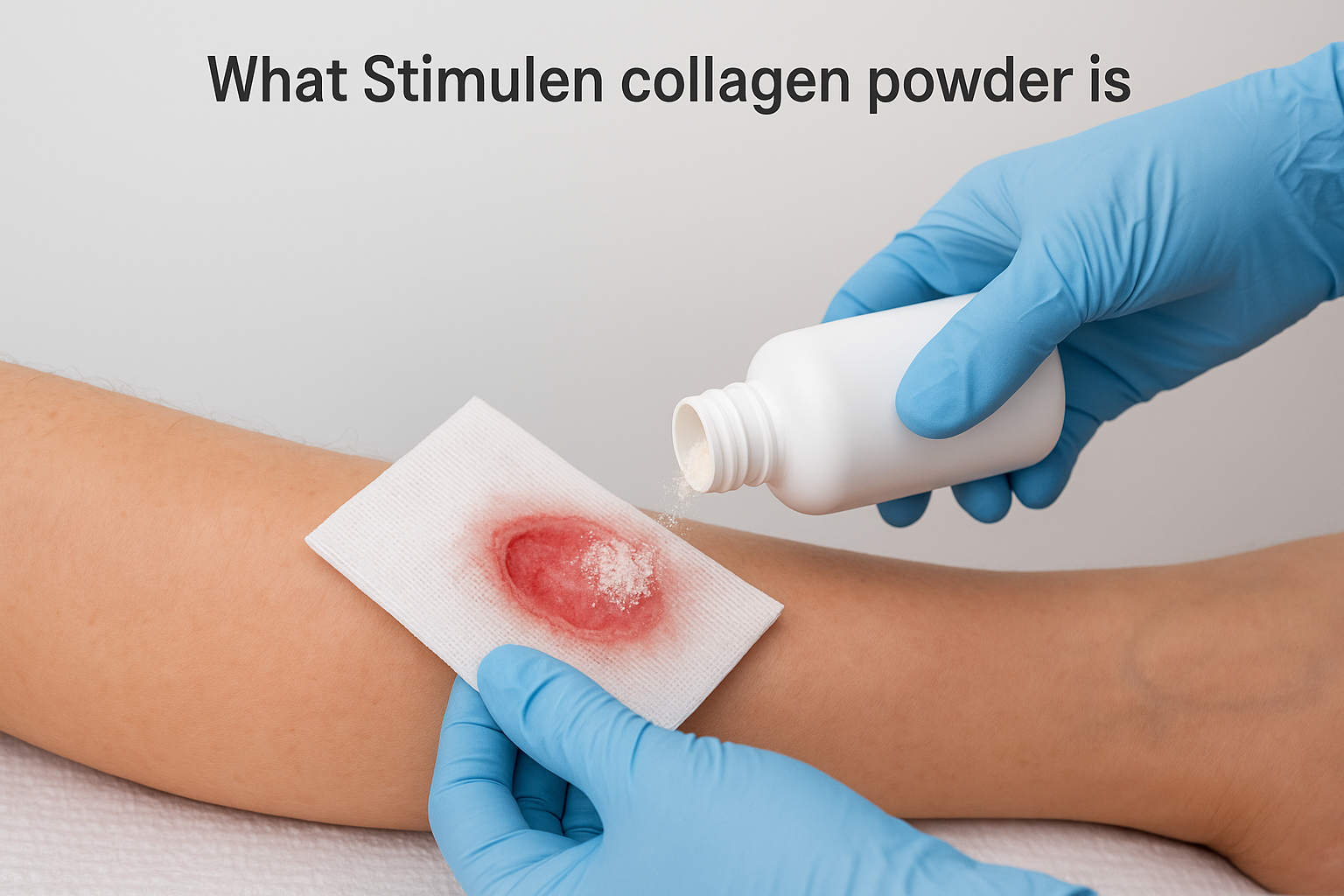
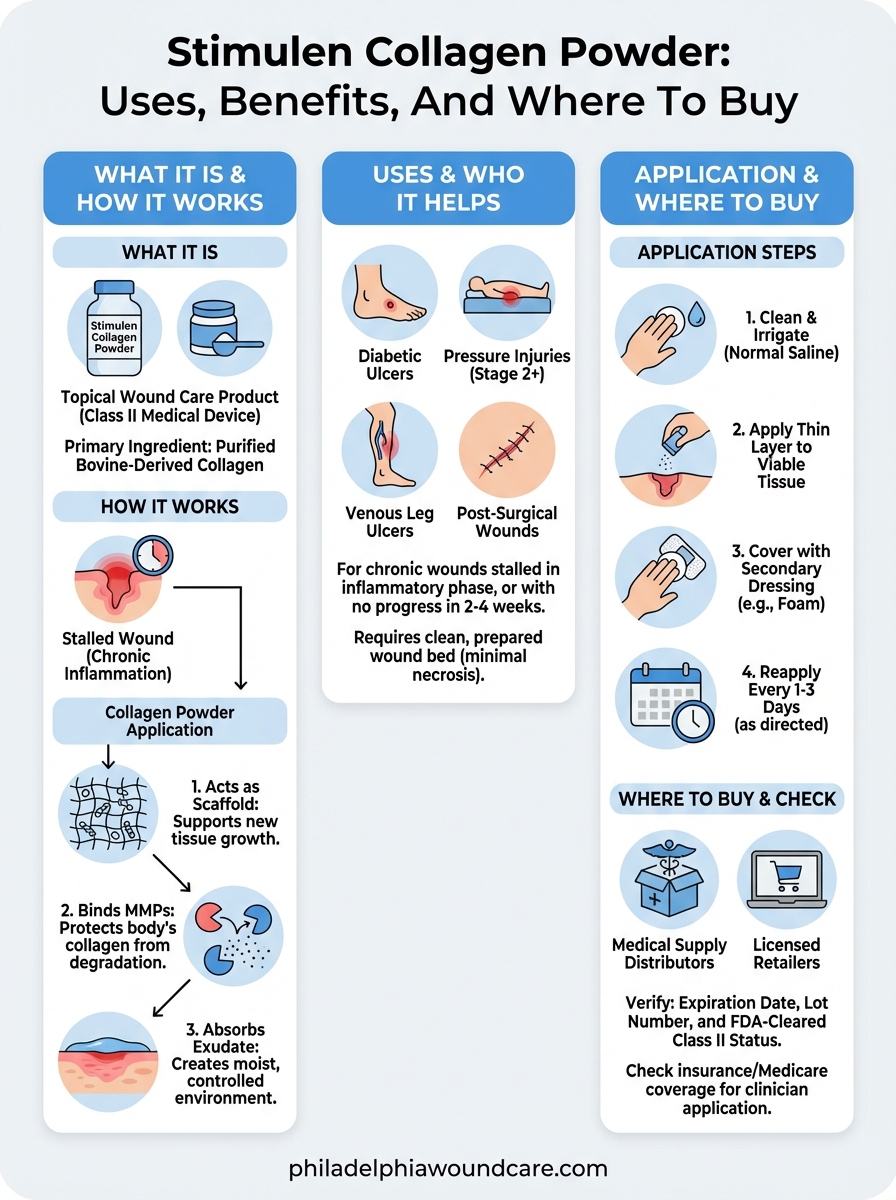
Stimulen collagen powder is a topical wound care product manufactured by Southwest Technologies. It contains purified bovine-derived collagen as its primary active ingredient, processed into a fine powder that you apply directly to the wound bed. The product is classified as a Class II medical device by the FDA, which means it’s regulated, tested, and intended for clinical use rather than general skincare.
Where the collagen comes from
Bovine collagen is sourced from cattle tissue and purified to create a biologically compatible material. Your body recognizes collagen as a natural structural protein, so it doesn’t treat the applied powder as a foreign substance. Instead, it incorporates it into the wound healing cascade, a series of biological steps your body uses to rebuild damaged tissue.
Collagen makes up roughly 70 to 80 percent of the dry weight of skin, which is why replenishing it directly at a wound site supports the tissue repair process in a meaningful way.
The collagen used in this product is processed to remove cellular components that could trigger an immune reaction. This makes it suitable for patients with compromised immune systems or chronic conditions like diabetes or vascular disease, who often have the most difficulty healing wounds.
What the powder form does differently
The powder format gives clinicians and caregivers a practical advantage over sheet or gel-based collagen products. Because it’s loose, you can apply stimulen collagen powder precisely to irregularly shaped wounds, deep cavities, or tunneling ulcers where sheets don’t conform well.
As it works, the powder absorbs wound exudate, keeping the local environment moist without becoming waterlogged. A moist wound environment promotes faster, cleaner tissue regrowth, and the controlled absorption the powder provides also helps prevent maceration of the surrounding skin.
Why clinicians use collagen powder on wounds
Chronic wounds often stall in the inflammatory phase of healing, where the body keeps breaking down tissue without building new collagen to replace it. Clinicians use collagen powder to interrupt that cycle by introducing exogenous collagen directly into the wound bed, giving the tissue what it needs to shift into the proliferative phase.
How collagen changes the wound environment
Collagen acts as a structural scaffold for new tissue. When a wound has been open for weeks or months, the local collagen is degraded by enzymes called matrix metalloproteinases (MMPs). Stimulen collagen powder works as a preferential substrate, binding those enzymes so your body’s own collagen can rebuild without being broken down.
Chronic wounds have significantly elevated MMP levels compared to acute wounds, which is one reason they resist standard treatment and require targeted intervention.
Clinicians reach for collagen powder when a wound shows no measurable progress after two to four weeks of standard care. At that point, the goal shifts to correcting the biochemical environment of the wound bed rather than simply managing its surface, and collagen powder addresses that directly.
How to use Stimulen collagen powder safely
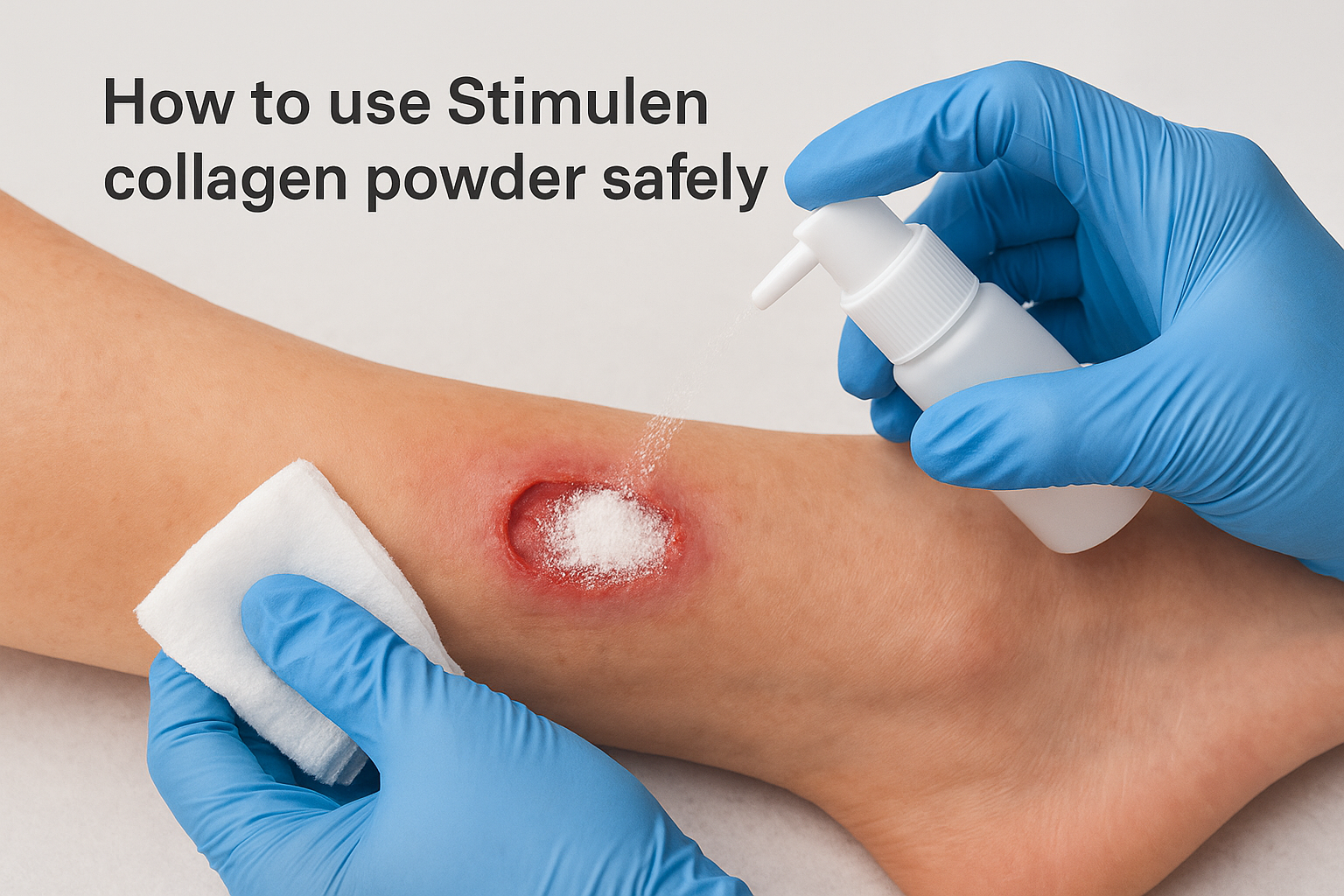
Applying stimulen collagen powder correctly determines how well it performs. Before you apply anything, clean the wound thoroughly and pat the surrounding skin dry. Clinicians typically irrigate the wound bed with normal saline to remove debris, then allow the area to drain before application.
Application steps and coverage
Pour or sprinkle a thin, even layer of the powder directly onto the wound bed, covering the entire surface without packing it heavily. You want the powder to contact the viable tissue at the base, not just sit on top of necrotic material. If tunneling is present, use a small applicator to reach the interior.
A thin, even coverage layer is enough; excess powder does not improve outcomes and may interfere with the dressing’s ability to manage exudate.
Dressing and frequency
Cover the wound with a secondary dressing appropriate for the exudate level, such as a foam or non-adherent layer. Your clinician determines change frequency, but most protocols call for reapplication every one to three days depending on drainage volume and wound condition. Never skip a scheduled change, as pooled exudate can counteract the collagen’s effect on the wound bed.
Who it helps and when to avoid it
Stimulen collagen powder works best on wounds that have plateaued despite standard care. The patients who see the most benefit share common traits: chronic wound diagnoses, reduced healing capacity, or wounds that have been open for more than four weeks without measurable progress.
Collagen-based products perform best on a clean, well-prepared wound bed, which is why debridement often precedes application.
Patients who benefit most
Diabetic foot ulcer patients, those with pressure injuries, and individuals managing vascular disease typically respond well because they share elevated MMP activity and reduced natural collagen synthesis. These are exactly the conditions this product targets. The following wound types are among the most common candidates:
- Diabetic ulcers
- Pressure injuries (Stage 2 and above)
- Venous leg ulcers
- Post-surgical wounds with delayed healing
When to hold off
You should avoid applying collagen powder when the wound contains heavy necrotic tissue or signs of active infection, as the product cannot overcome a bacterial load that overwhelms the wound bed. Patients with a known sensitivity to bovine-derived materials should not use it under any circumstances. Your clinician should evaluate the full wound status before any collagen therapy begins, confirming the wound bed is prepared and infection is fully controlled.
Where to buy and what to check first
Stimulen collagen powder is available through medical supply distributors and licensed healthcare product retailers. You can find it on platforms like Amazon, though purchasing through a clinical supplier is generally the better route if you’re managing care under a physician’s guidance, since those channels often offer volume options and verified product authenticity.
Buying from a verified distributor reduces the risk of receiving expired or improperly stored product, both of which affect how well collagen powder performs on a wound.
What to verify before you order
Before placing an order, check the expiration date and lot number on any listing you review. Collagen-based products degrade over time, and compromised product delivers weaker results. Confirm that what you’re purchasing is FDA-cleared as a Class II medical device and not a generic collagen supplement, which carries no clinical regulation and no guarantee of wound-specific performance.
Also verify that your insurance or Medicare plan covers the product when a licensed clinician applies it during a scheduled visit. Coverage varies by plan and diagnosis, and a physician-led wound care provider can help you confirm eligibility before you commit to any purchase.
What to do next
If your wound has been open for weeks without progress, waiting for it to close on its own is not a strategy. Stimulen collagen powder is a clinically grounded tool, but it performs best when a physician evaluates the wound first, confirms the bed is ready, and builds it into a complete treatment plan rather than applying it as a standalone fix. Self-managing a chronic wound without medical oversight increases the risk of infection, delayed healing, and complications that are far harder to reverse later.
Philadelphia Wound Care brings physician-led wound evaluation and treatment directly to your home, skilled nursing facility, or hospice setting across the Philadelphia area. You don’t need to travel to a clinic to access advanced care. If you or someone you’re caring for has a wound that isn’t healing, reach out through our mobile wound care services in Philadelphia and get a proper assessment scheduled.