
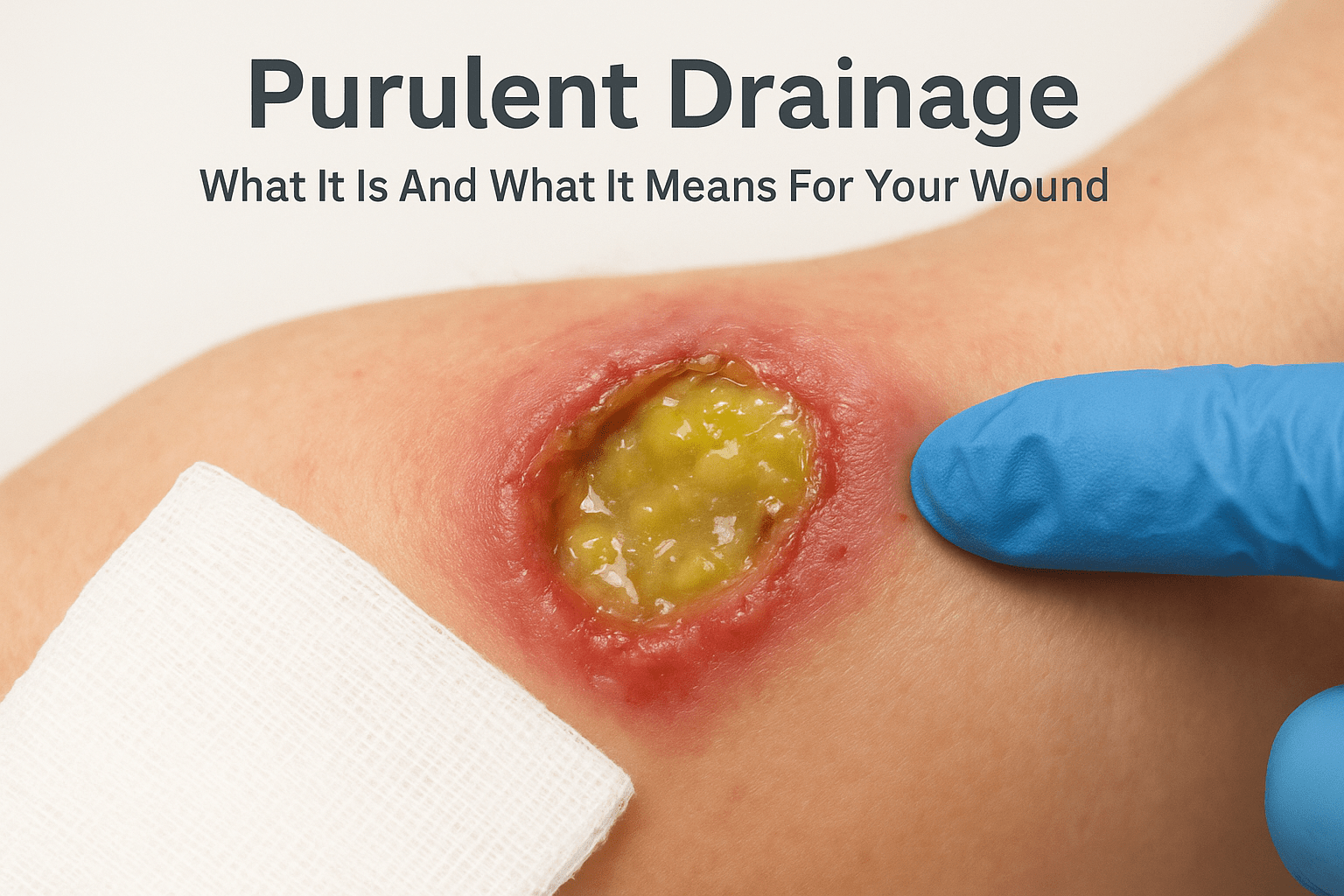
Purulent Drainage: What It Is And What It Means For Your Wound
You checked the dressing and something looks off. The fluid isn’t clear anymore, it’s thick, cloudy, maybe yellow or green, and it smells bad. That’s purulent drainage, and it’s one of the clearest signs your body is sending that something in the wound has gone wrong. Ignoring it or hoping it clears up on its own is how small infections turn into serious ones.
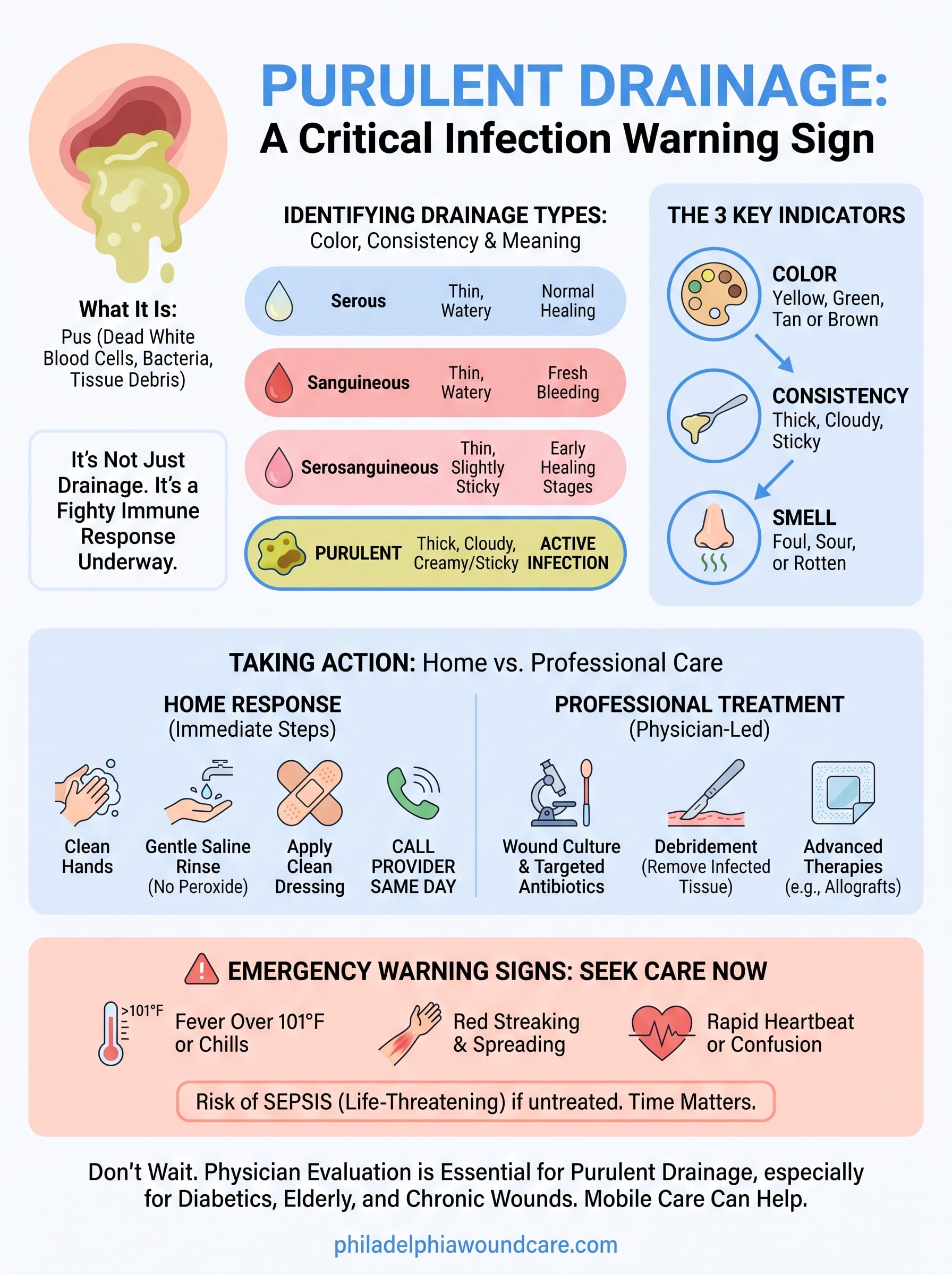
Purulent drainage is pus, plain and simple, made up of dead white blood cells, bacteria, and tissue debris that build up as your immune system fights an infection at the wound site. Its color, thickness, and odor actually tell you a lot about what’s happening beneath the surface and how urgently you need care. Recognizing it early, and knowing the difference between normal healing fluid and a genuine warning sign, can save you a trip to the ER later.
In this article, we’ll break down exactly what purulent drainage looks like, what causes it, and the treatment steps that actually work for diabetic ulcers, pressure sores, surgical wounds, and other chronic wounds we see every day treating patients across Philadelphia.
Why purulent drainage is a warning sign to take seriously
Infection doesn’t announce itself with a knock on the door. It builds quietly, and purulent drainage is often the first physical proof that bacteria have taken hold in tissue that should be healing. Your body isn’t producing pus for no reason. It’s actively fighting a battle, and the presence of that thick, discolored fluid means the fight is already underway, not just a possibility on the horizon.
What’s actually happening in the wound
Underneath the dressing, white blood cells are rushing to the wound site to attack invading bacteria. As they die off in the process, they mix with bacterial remains and damaged tissue to form pus. This is your immune response working exactly as designed, but it also means the infection has progressed past the point where a simple cleaning will fix it. Chronic wounds like diabetic foot ulcers and pressure sores are especially vulnerable because reduced blood flow slows down the delivery of immune cells and antibiotics to the area, giving bacteria more time to multiply before your body can catch up.
Purulent drainage means your body is already fighting an infection, not warning you one might start.
Who faces the highest risk
Some patients face steeper odds when infection sets in, and it’s worth knowing where you or your loved one stands:
- Diabetics, because elevated blood sugar impairs circulation and immune function
- Elderly patients, whose skin is thinner and immune response is naturally slower
- Bedbound or wheelchair-dependent individuals, who develop pressure ulcers prone to deep infection
- Post-surgical patients, whose incision sites can harbor bacteria beneath the surface
- Anyone with vascular disease, since poor circulation starves tissue of oxygen needed to fight infection
Each of these groups makes up a large share of the patients we treat through mobile visits across Philadelphia, and in nearly every case, catching purulent drainage early changed the course of recovery.
What happens if it’s left untreated
Unaddressed, an infected wound doesn’t stay contained. Bacteria can spread into surrounding tissue, causing cellulitis, or travel deeper toward bone, leading to osteomyelitis, a serious bone infection that’s difficult to treat and sometimes requires surgical intervention. Worse still, untreated wound infections can progress to sepsis, a life-threatening condition where the body’s response to infection damages its own organs. According to the CDC, sepsis requires emergency treatment and can be fatal within hours if not addressed quickly. That escalation, from a wound with pus to a hospital admission for sepsis, happens faster than most families expect, which is exactly why purulent drainage deserves immediate attention rather than a wait-and-see approach.
How to identify purulent drainage and tell it apart from other types
Not every fluid coming from a wound spells trouble. Wounds naturally produce drainage as part of healing, and learning to tell the difference saves you unnecessary worry, or worse, missed warning signs. Purulent drainage stands apart from normal wound fluid in three specific ways: color, thickness, and smell. Once you know what to look for, spotting it becomes second nature.
The color and consistency tell the story
Healthy drainage, called serous fluid, is thin and clear or slightly yellow, similar to water with a faint tint. Purulent drainage looks nothing like that. It’s thick, opaque, and ranges from yellow to green to tan or even brown, depending on the bacteria involved. Texture matters just as much as color here, since true pus has a creamy or sticky consistency that clings to gauze rather than soaking through it cleanly.
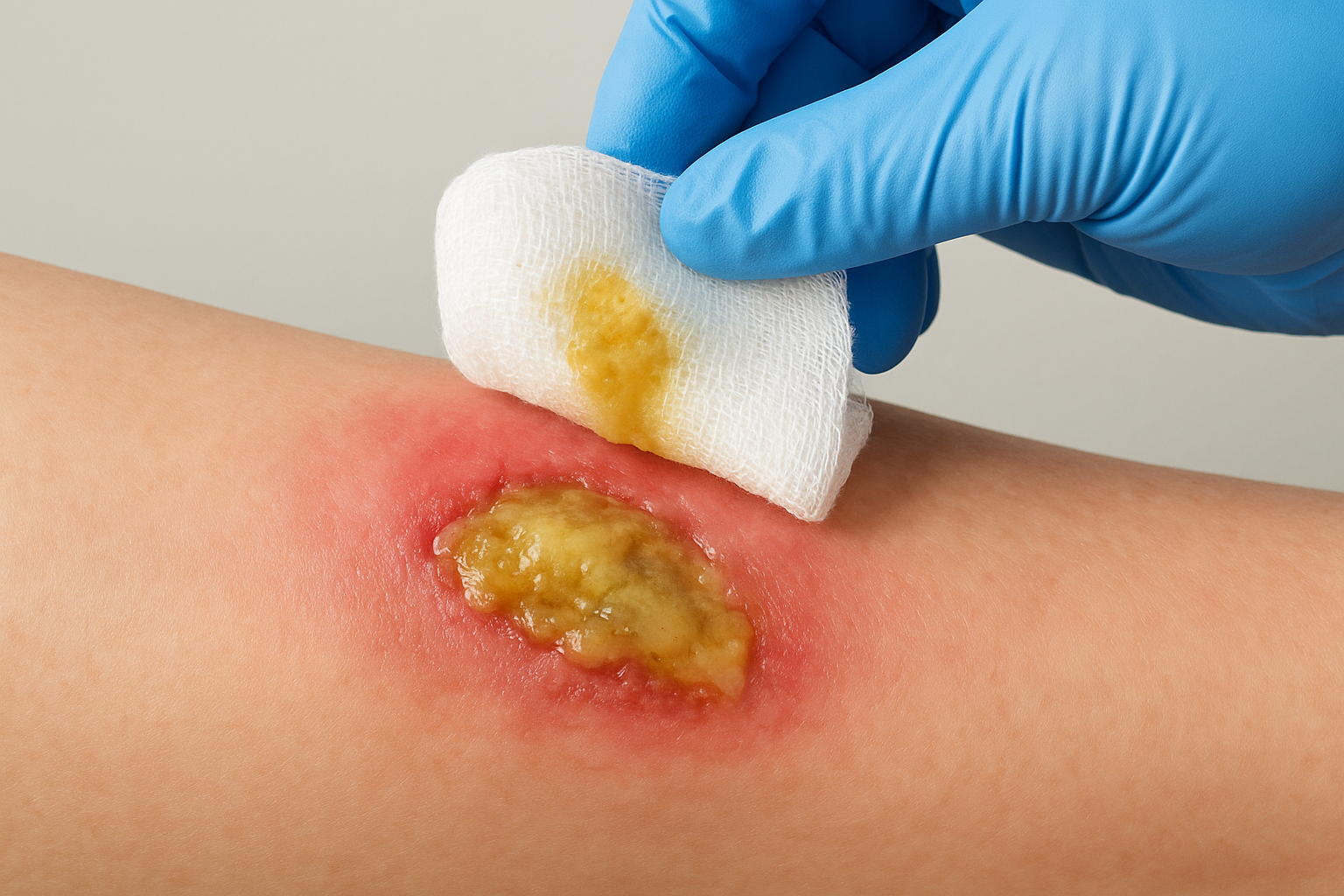
| Drainage Type | Color | Consistency | What It Usually Means |
|---|---|---|---|
| Serous | Clear to light yellow | Thin, watery | Normal healing |
| Sanguineous | Red | Thin, watery | Fresh bleeding or new tissue growth |
| Serosanguineous | Pink | Thin, slightly sticky | Common in early healing stages |
| Purulent | Yellow, green, tan, or brown | Thick, cloudy | Active infection |
If the drainage smells bad and looks thick, treat it as infected until proven otherwise.
The smell is a reliable clue
Odor is one of the most underused signs in wound assessment, yet it’s often the giveaway families notice first. Normal wound fluid has little to no smell. Purulent drainage, on the other hand, frequently carries a foul, sour, or rotten odor caused by bacterial byproducts. If a dressing change reveals an unpleasant smell that wasn’t there before, that shift alone is worth reporting to a wound care provider, even if the color still looks borderline. Combine odor with increased drainage volume, and you have a strong signal that infection has set in and needs professional evaluation.
How to respond when you notice purulent drainage at home
Spotting purulent drainage doesn’t mean you need to panic, but it does mean you need to act within the day, not next week. What you do in the first few hours after noticing it can slow the infection’s progress and give your provider a clearer picture of what’s going on when they arrive or when you reach out.
Steps to take right away
Getting this right matters more than getting it fast, so work through these steps in order:
- Clean your hands before touching the wound or dressing to avoid introducing more bacteria
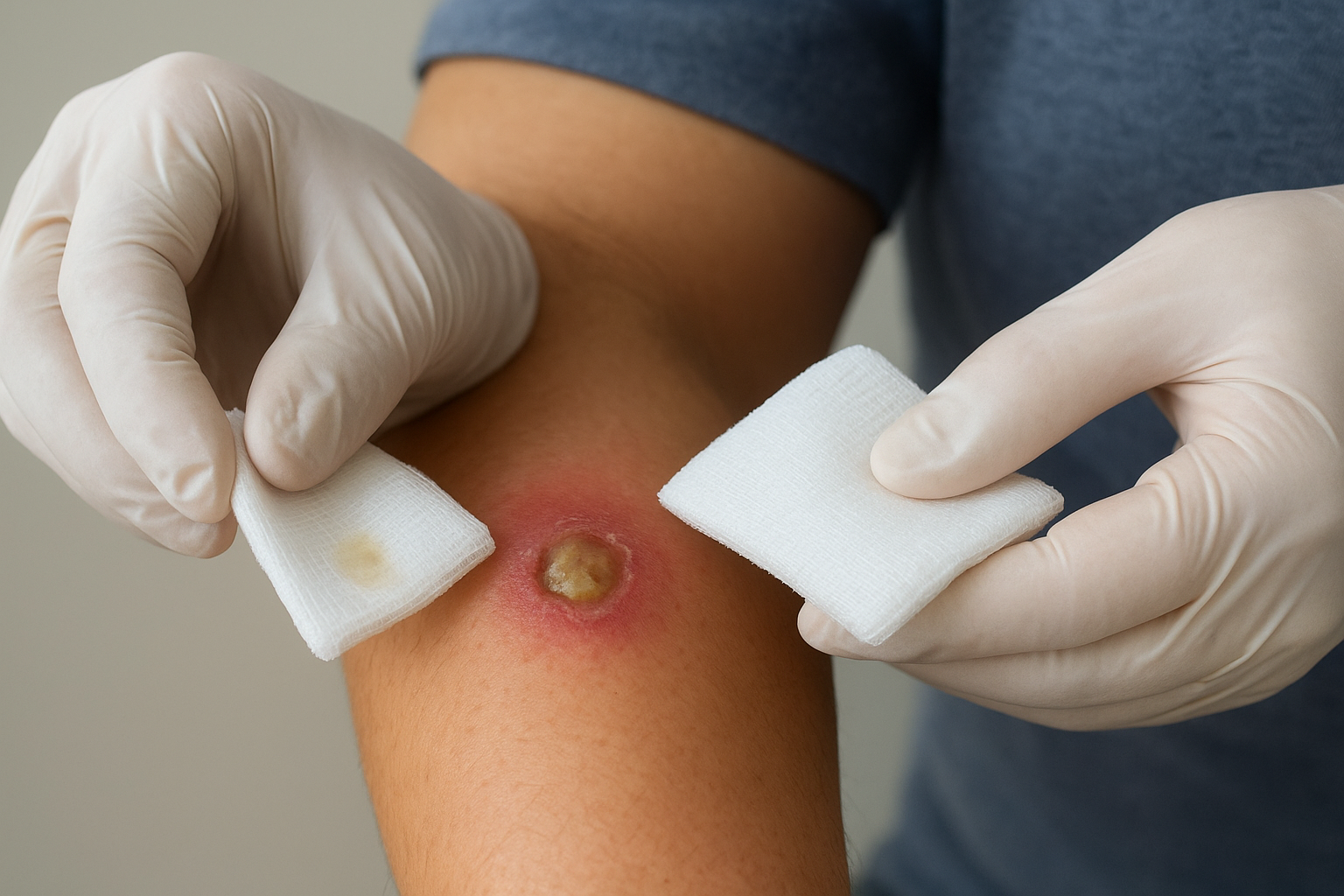
- Remove the old dressing carefully and note the color, thickness, and smell of the drainage
- Rinse the wound gently with saline or clean water, never hydrogen peroxide or alcohol, which damage healing tissue
- Apply a clean, dry dressing as a temporary measure until a provider can assess it
- Take a photo of the wound for your records and to share with your care team
- Call your wound care provider or physician the same day you notice the change
A wound with purulent drainage needs a same-day phone call, not a wait-and-see approach.
What to avoid doing
Certain instincts, though well-meaning, actually make things worse. Squeezing or pressing on the wound to "push out" the pus can force bacteria deeper into surrounding tissue. Covering the area with a tight bandage traps heat and moisture, giving bacteria an even better environment to multiply. Skipping antibiotics your doctor already prescribed, or stretching them out to save money, lets the infection regain ground. Home remedies like essential oils or over-the-counter ointments not specifically recommended for your wound type can also interfere with proper healing and mask symptoms your provider needs to see.
Monitoring matters just as much as treating. Track how much drainage soaks through the dressing between changes, whether the surrounding skin looks red or feels warm, and whether you develop a fever, since these details help your provider decide how urgently you need to be seen.
What professional wound care treatment involves
Once purulent drainage shows up, home care alone won’t resolve the underlying infection. A physician needs to examine the wound, determine what’s causing the infection, and start treatment that actually addresses the bacteria involved rather than just managing symptoms. This is where mobile wound care makes a real difference for patients who can’t easily get to a clinic, since a licensed physician can evaluate the wound bedside and start treatment the same day.
The clinical evaluation
During an in-home or facility visit, the provider does more than glance at the wound. They’ll measure it, assess the surrounding tissue for warmth or spreading redness, and often send a wound culture to identify the exact bacteria causing the infection. That culture result guides which antibiotic will actually work, rather than guessing with a broad-spectrum option that may not touch the specific organism involved.
Debridement and advanced therapies
Removing dead or infected tissue, called debridement, is usually necessary before healing can restart, since bacteria hide in tissue that’s already compromised. For wounds that resist standard treatment, physicians may introduce allograft therapy, a regenerative treatment that supplies healthy tissue matrix to jumpstart healing in stalled diabetic ulcers, pressure sores, or surgical wounds. Medicare Part B typically covers this treatment when medically necessary, which removes a major barrier for patients who might otherwise skip advanced care.
Getting a wound culture and starting the right antibiotic beats guessing every time.
Ongoing monitoring
Treatment doesn’t end after one visit. A provider tracks the wound over follow-up visits, adjusts the treatment plan as drainage changes, and coordinates with the referring physician, facility staff, or hospice team so everyone involved has the same picture. If you’re managing a wound with purulent drainage right now, our team at Philadelphia Wound Care can schedule a bedside evaluation and start this process directly at home.
When to seek urgent medical care for a draining wound
Some situations move faster than a scheduled home visit can handle. Knowing the line between "call your provider today" and "go to the emergency room now" can protect you from a dangerous delay when an infection accelerates.
Signs that mean you need emergency care
Certain symptoms signal that infection has spread beyond the wound itself and needs immediate attention:
- Fever above 101°F or chills that come and go
- Red streaking extending outward from the wound
- Rapid heartbeat, confusion, or dizziness
- Swelling that spreads well beyond the original wound edges
- Severe pain that worsens suddenly instead of gradually improving
- Foul-smelling drainage combined with a fever, which together point toward a systemic infection
These combinations often indicate the infection has moved past the wound and into the bloodstream, a progression toward sepsis that the CDC identifies as a medical emergency requiring hospital-level treatment.
Fever plus spreading redness around a draining wound is an emergency, not a scheduling decision.
Why timing changes the outcome
Delaying care once these signs appear gives bacteria hours to multiply and spread, and hours matter enormously with sepsis. Hospitals can administer IV antibiotics and fluids that a home visit or clinic appointment simply can’t provide fast enough once the infection has progressed this far. Patients with diabetes, vascular disease, or advanced age face steeper risk here because their bodies compensate more slowly, so what looks like a mild fever in a younger, healthier person can represent a much more serious shift for them.
What to tell the ER team
Bring whatever information you have gathered, including photos of the wound over time, a list of current medications, and details about when the drainage changed. Mentioning that you’re already working with a wound care physician helps the ER team coordinate follow-up care once you’re discharged, rather than starting from zero.
Getting the right help for a healing wound
Purulent drainage is your body telling you an infection has already taken hold, not a symptom to monitor from a distance. The color, thickness, and smell you notice at the next dressing change give you real information about how urgent the situation is, and acting on that information within hours, not days, protects you from complications like cellulitis, osteomyelitis, or sepsis. Home care has its place, but it can’t replace a physician’s evaluation once pus shows up, especially for diabetic ulcers, pressure sores, or surgical wounds that resist standard treatment.
You don’t need to manage this alone or wait for a clinic appointment weeks out. Our physician-led team brings bedside wound evaluations directly to homes, nursing facilities, and hospice settings across Philadelphia, often the same day you call. If you’re seeing signs of infection right now, schedule a mobile wound care visit and get the right treatment started before it escalates.