

Wound Care Support Services: What They Are And How They Help
A chronic wound that won’t close on its own affects more than the skin. It disrupts daily routines, limits mobility, and places enormous stress on both patients and the people caring for them. For many, especially older adults managing diabetes, vascular disease, or recovery after surgery, getting to a clinic regularly just isn’t realistic. That’s exactly where wound care support services step in, bringing specialized medical treatment directly to the patient rather than asking the patient to chase it down.
These services cover a broad range of clinical interventions, from physician-led assessments and advanced therapies to coordinated care planning with hospitals and nursing facilities. They exist to close the gap between what a wound needs to heal and what a patient can reasonably access from home or a care facility.
At Philadelphia Wound Care, this is our entire focus. As a physician-led mobile practice, we deliver expert wound management at the bedside, in private homes, skilled nursing facilities, assisted living communities, and hospice settings across the Philadelphia region. This article breaks down what wound care support services actually include, who they’re designed for, and how they work in practice to improve outcomes for patients with complex or non-healing wounds.
Why wound care support services matter
When a wound stalls, consequences compound fast. Infection risk rises, tissue breaks down further, and what started as a manageable wound can escalate into a limb-threatening or life-threatening emergency. For patients managing diabetes, peripheral vascular disease, or reduced mobility, the window for effective intervention is narrow, and missing it carries serious clinical consequences.
Delayed wound treatment is one of the leading contributors to preventable amputations in diabetic patients across the United States.
The gap between hospital discharge and real recovery
Hospitals stabilize patients and send them home. What they cannot always guarantee is consistent, specialized follow-up once the patient leaves. Surgical wounds, pressure injuries, and vascular ulcers rarely resolve without ongoing clinical attention. If you or someone you care for has been discharged with an open wound, the days and weeks immediately after discharge are when professional wound care support services matter most.
For many patients, especially those over 65 or managing multiple chronic conditions, the issue is not a lack of willingness to seek treatment. It is access. Transportation barriers, limited mobility, and the physical toll of traveling to outpatient appointments all reduce the likelihood that a wound gets the consistent attention it needs to close properly.
Why physician-led oversight changes outcomes
Not all wound care delivers the same results. Nurse-led services handle dressing changes and basic wound monitoring, but complex wounds often require physician-level assessment to determine whether a treatment plan is working or needs to change. A physician can order imaging, adjust medications, prescribe advanced therapies such as allograft, and identify early signs of systemic complications before they become emergencies.
When you receive physician-led wound care in your home or facility, you are not simply gaining convenience. You are gaining clinical decision-making at the bedside, which directly influences how quickly your wound progresses toward closure. That level of oversight makes a measurable difference in patients whose wounds have already failed to respond to standard treatment approaches.
What wound care support services include
Wound care support services cover more than changing a bandage. They combine clinical evaluation, targeted treatment, and ongoing coordination to address the full range of factors that prevent a wound from healing. Here is a breakdown of what that looks like in practice.
Clinical assessment and hands-on treatment
Your care starts with a physician evaluating wound depth, tissue quality, signs of infection, and circulation. From there, the treatment plan may include debridement, appropriate dressing selection, and pain management. Each visit produces a documented clinical record that tracks wound progression and guides next steps.
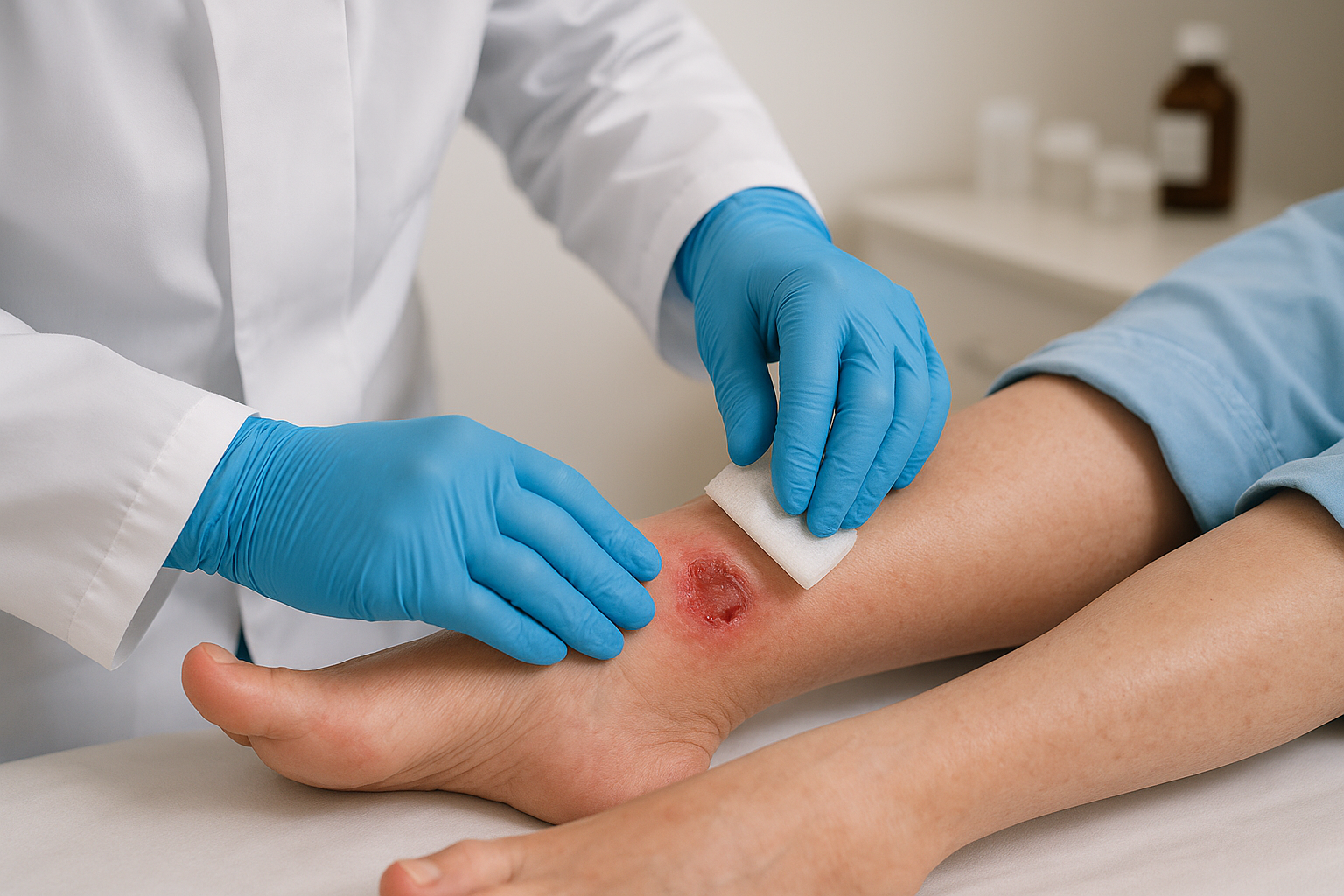
Common hands-on treatments include:
- Debridement to remove non-viable tissue
- Advanced dressing application and wound packing
- Topical antimicrobial therapy for infected wounds
- Compression therapy for venous ulcers
Advanced therapies
For wounds that do not respond to standard care, allograft and regenerative therapies introduce biological material that stimulates the body’s own healing response. These treatments are covered under Medicare Part B when medically necessary, which removes a significant financial barrier to accessing advanced wound care.
Allograft therapy can meaningfully reduce healing time for chronic wounds that have stopped responding to standard dressing protocols.
Coordination with your care team
No wound heals in isolation. Your referring physician, facility staff, and case managers all need current, accurate information about your wound’s status. Effective services include regular progress updates and collaborative planning across every provider involved in your recovery.
Keeping all stakeholders informed and aligned also reduces the risk of conflicting treatments and prevents care gaps that often cause setbacks in wound closure.
Who benefits and when to seek urgent care
Wound care support services help a wide range of patients, but they are particularly valuable for anyone whose wound has not improved after two to four weeks of standard care. If you are managing a chronic condition or recovering from surgery while facing mobility limitations, these services are built around your situation.
Who these services are designed for
The patients who benefit most include older adults with diabetic foot ulcers or pressure injuries, people with peripheral vascular disease, post-surgical patients with complications, and residents of skilled nursing or assisted living facilities. Having a physician manage care at the bedside reduces both clinical risk and caregiver burden for families supporting a loved one at home.
Common patient profiles include:
- Adults 65+ with non-healing diabetic or venous ulcers
- Post-surgical patients with wound complications after discharge
- Facility residents with recurring pressure injuries
- Patients who have already failed standard outpatient wound treatment
Signs you need urgent wound care
Some wound changes signal that standard monitoring is no longer enough. If you notice increasing redness, warmth, or swelling, foul odor or unusual discharge, fever alongside a worsening wound, or no visible improvement after several weeks, contact a physician promptly.
Wounds showing signs of infection require physician evaluation within 24 hours to prevent systemic complications.
Ignoring these signs delays intervention and raises the risk of serious infection spreading beyond the wound. Acting quickly gives your wound the best chance of closing without further complications.
How care works in the home and in facilities
Wound care support services adapt to your environment rather than forcing you into a clinical setting. Whether you are recovering at home or living in a skilled nursing facility, the process follows a consistent structure designed to deliver physician-level care wherever you are.
What a home visit looks like
A physician arrives at your residence with the clinical tools needed to evaluate and treat your wound on-site. The visit covers wound assessment, treatment application, and documentation within a single appointment. Your family members or in-home caregivers can observe the process and ask questions directly, which helps them support your recovery between visits. After each appointment, your care team updates your treatment plan based on what the wound shows that day.
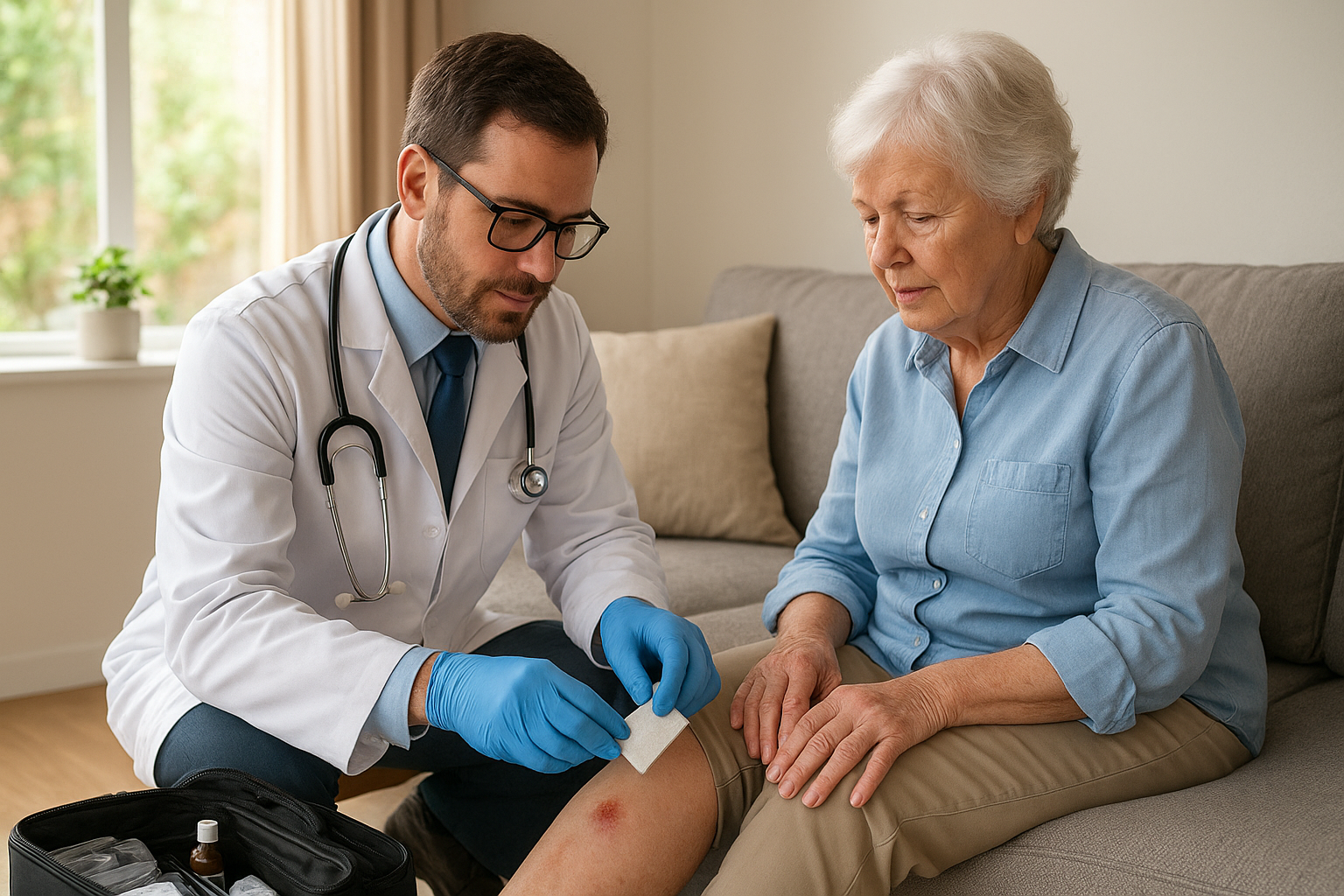
Receiving physician care at home removes the transportation burden that causes many patients to miss critical follow-up appointments.
Care delivery in skilled nursing and assisted living facilities
Facility-based patients receive the same standard of physician oversight as home patients. The physician coordinates directly with your nursing staff and facility care team to align wound treatment with your broader care plan. This prevents conflicting protocols and keeps everyone managing your recovery informed.
Progress notes and clinical updates flow back to your referring physician and case manager after each visit. That communication loop keeps your wound’s status visible across every provider involved, reducing the risk of care gaps that slow down healing or lead to preventable complications.
How to find and pay for services in Philadelphia
Finding the right wound care support services in the Philadelphia area starts with identifying a provider that offers physician-led mobile care rather than a nurse-only service. A physician brings clinical decision-making authority to each visit, which matters when your wound requires prescription treatments, advanced therapies, or a change in clinical strategy.
What to look for in a provider
Look for a practice that responds quickly, documents wound progress after every visit, and coordinates directly with your referring physician or facility. Philadelphia Wound Care serves private residences, skilled nursing facilities, assisted living communities, and hospice settings across the Philadelphia region. You can expect a response within 24 hours of a referral, which limits the time a deteriorating wound goes without professional attention.
A provider who communicates with your care team keeps your wound’s status visible across every clinician involved in your recovery.
Key qualities to confirm before choosing a provider:
- Physician-led oversight, not nurse-only care
- Documented progress notes after every visit
- Direct coordination with your referring physician and facility staff
Understanding your insurance coverage
Medicare Part B covers physician-led mobile wound care, including advanced treatments such as allograft therapy, when medically necessary. Medicare Advantage and major commercial insurance plans also cover these services in many cases. Philadelphia Wound Care handles direct insurance billing, which removes the administrative burden from you and your family.
Before your first visit, confirm your plan details and ask the provider to verify coverage on your behalf. Most patients find that out-of-pocket costs are minimal when physician-led wound care is billed correctly through their plan.
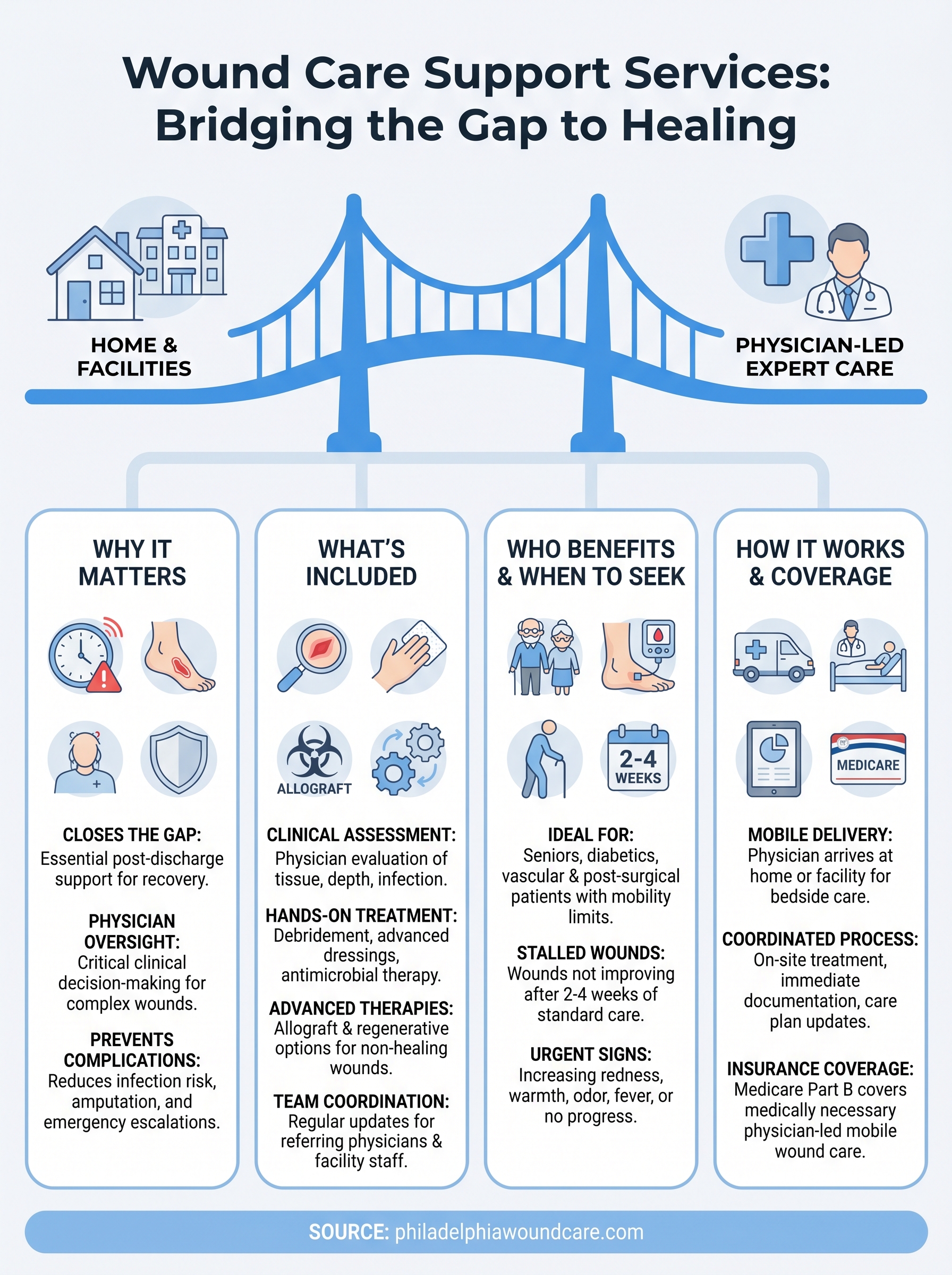
Next steps
A wound that has not closed after weeks of standard treatment needs more than patience. Wound care support services give you access to physician-level clinical oversight at your bedside, whether you are at home, in a skilled nursing facility, or in an assisted living community. That direct access shortens the time between a stalled wound and an effective treatment change, which directly improves your chances of full closure without complications.
Your next move is straightforward. If you are a patient, family caregiver, or healthcare professional looking for a reliable wound care partner in the Philadelphia area, getting started takes less than 24 hours. Philadelphia Wound Care responds quickly and coordinates directly with your existing care team so nothing falls through the gaps.
Reach out today and take the first step toward proper wound management. Request mobile wound care in Philadelphia and get a response within one business day.