

Biologic Wound Regeneration In Philadelphia: Your Options
Chronic wounds that resist weeks or months of standard treatment aren’t just frustrating, they’re a serious medical problem that can lead to infection, hospitalization, or worse. For patients and caregivers in the Philadelphia area searching for something beyond basic wound care, biologic wound regeneration Philadelphia providers offer a different approach. These advanced therapies use human-derived tissues, growth factors, and cellular products to actively restart the healing process in wounds that have stalled.
Biologic therapies, including allografts, amniotic membrane products, and other regenerative treatments, have changed how physicians treat diabetic ulcers, venous wounds, pressure injuries, and post-surgical complications. They work by supplying the biological building blocks that damaged tissue can no longer produce on its own. For many patients, especially those who are elderly or managing chronic conditions like diabetes, these treatments can mean the difference between a wound that closes and one that doesn’t.
At Philadelphia Wound Care, we bring physician-led biologic wound treatments directly to patients at home, in skilled nursing facilities, and in assisted living communities. Many of these therapies are covered under Medicare Part B, which removes one of the biggest barriers to access. This article breaks down your options for biologic wound regeneration in Philadelphia, what’s available, how these treatments work, and what to consider when choosing a provider.
Why biologic wound regeneration matters
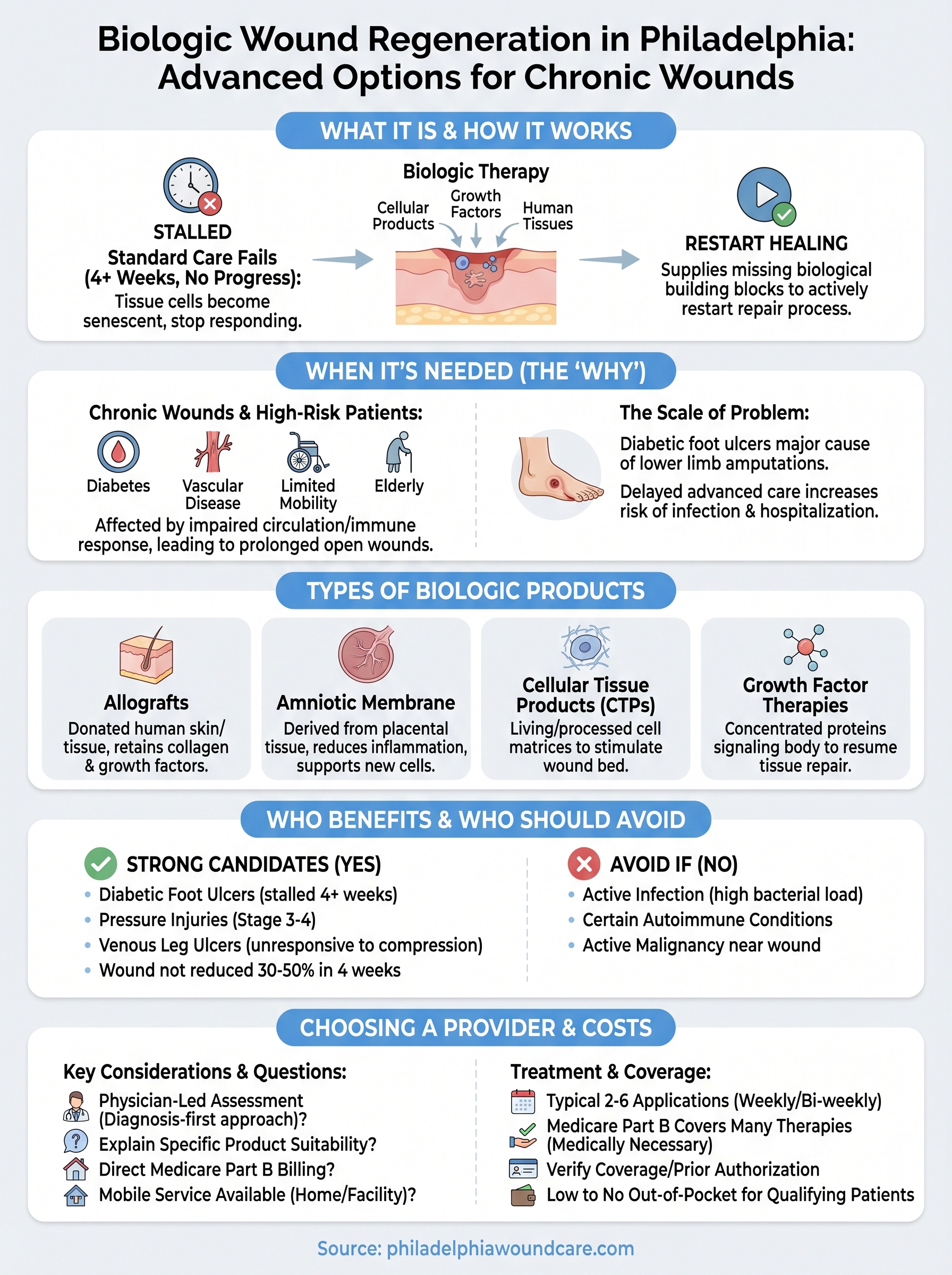
Standard wound care, including cleaning, dressing changes, and offloading pressure, works well for most acute wounds. But if your wound has been open for four weeks or longer without measurable progress, the tissue environment has changed. The cells responsible for healing become senescent and stop responding to normal repair signals. Standard treatments cannot fix that problem because they do not address what is happening at the cellular level.
A wound that has stalled for more than a month is no longer just a surface issue – it is a failure of the body’s own repair system, and it needs a different kind of intervention.
The scale of the problem
Chronic wounds affect a large share of the population, particularly people managing diabetes, vascular disease, or limited mobility. Diabetic foot ulcers alone are responsible for the majority of lower limb amputations in the United States each year. Many of those amputations occur because patients do not receive advanced wound care soon enough, often due to limited access to specialist treatment.
For older adults or those recovering at home, making repeated trips to a wound care clinic is not always realistic. If you or a loved one cannot travel easily for specialist care, wounds often go undertreated until the risk of infection, bone involvement, and hospitalization increases sharply.
Why conventional treatments fall short
Once a wound enters a chronic state, the tissue loses its growth factors, collagen scaffolding, and cellular signaling proteins. Antimicrobial dressings and compression therapy can manage the wound environment, but they cannot replace what is missing at the biological level. This is the gap that biologic wound regeneration Philadelphia providers are specifically equipped to address.
Biologic products supply the proteins, cells, and structural components that damaged tissue can no longer produce on its own, giving the wound what it needs to resume closing rather than stalling indefinitely.
What counts as biologic and regenerative wound care
Not every advanced wound treatment qualifies as biologic. The term specifically refers to products derived from human or biological tissue that introduce active cellular or structural components directly into the wound environment. These are fundamentally different from synthetic dressings or topical antimicrobials, which manage the wound surface but do not supply any biological signaling material that can restart tissue repair.
Biologic therapies are regulated by the FDA and must meet strict manufacturing and clinical standards, which is why you should only receive them from a licensed medical provider.
The main categories of biologic products
Providers offering biologic wound regeneration Philadelphia patients need access to a range of product types, since no single therapy works for every wound type or patient condition. The most widely used categories include:
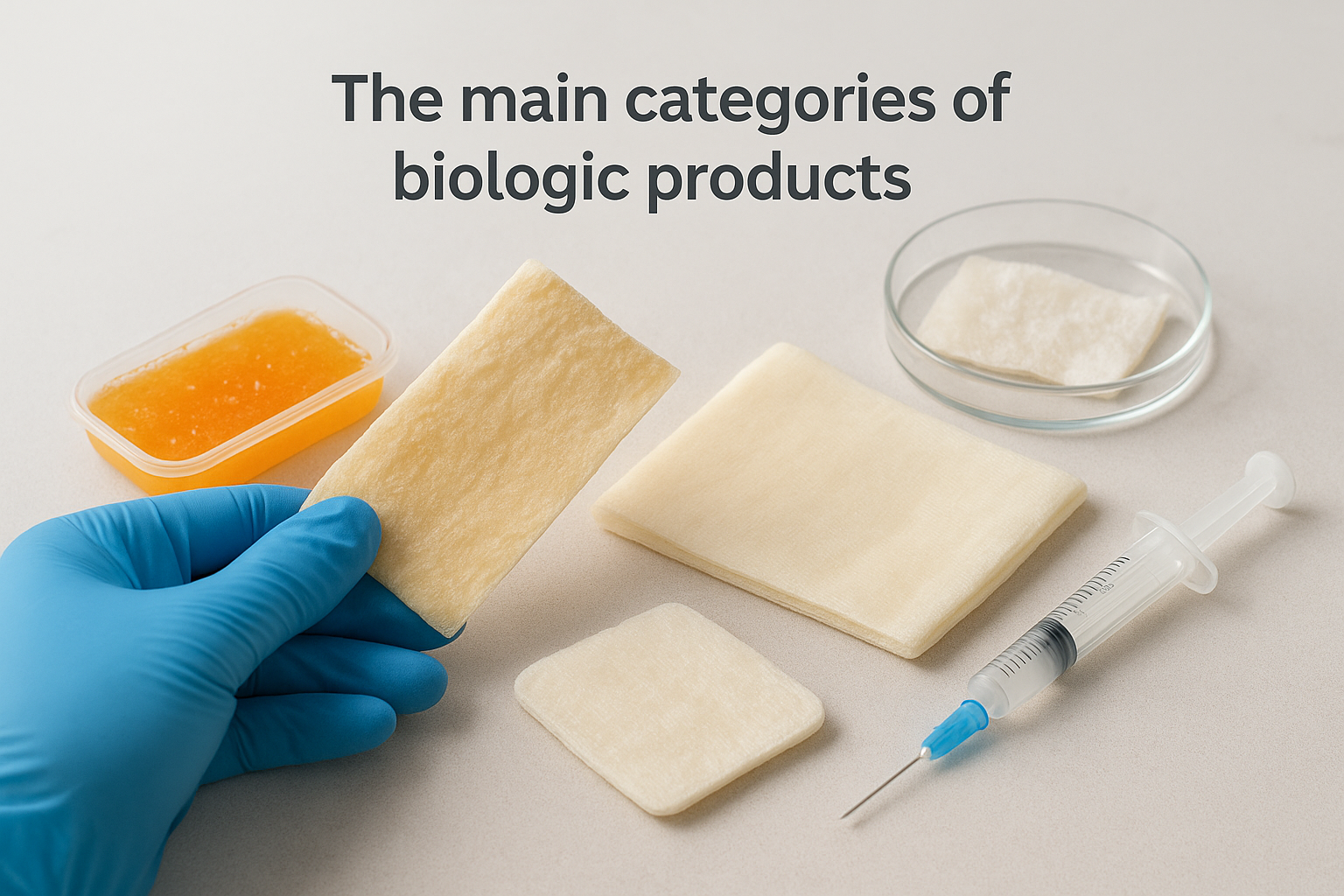
- Allografts: Donated human skin or tissue, processed to retain collagen structure and growth factors
- Amniotic membrane products: Derived from placental tissue, rich in proteins that reduce inflammation and support new cell growth
- Cellular tissue products (CTPs): Living or processed cell matrices that actively stimulate the wound bed
- Growth factor therapies: Concentrated proteins that signal the body to resume tissue repair
Who benefits and when to avoid it
Biologic wound regeneration works best when standard care has already failed. If your wound has been open for four or more weeks without meaningful progress, you may be a strong candidate, particularly if you manage diabetes, vascular disease, or another condition that slows healing.
Patients most likely to benefit
Older adults and people with impaired circulation or immune response see the strongest results from biologic therapies. Providers specializing in biologic wound regeneration Philadelphia patients rely on typically look at wound duration, tissue quality, and depth before selecting a product.
Strong candidates generally include patients with:
- Diabetic foot ulcers that have not improved after four weeks of care
- Pressure injuries at stage 3 or 4
- Venous leg ulcers unresponsive to compression therapy
If your wound has not reduced in size by 30 to 50 percent after four weeks of standard care, ask your physician about biologic options.
When to avoid biologic therapy
You should not receive biologic therapy if your wound has active infection or high bacterial load, since applying these products before controlling infection can make things significantly worse. Patients with certain autoimmune conditions or active malignancy near the wound site may also need to address those issues first.
These situations require infection management or oncology clearance before biologic therapy begins. Your provider will screen for both before making a recommendation.
How to choose a provider in Philadelphia
Not every practice offering advanced wound care has the same clinical depth. When you’re looking for biologic wound regeneration Philadelphia providers, you need to evaluate both the specific products they carry and the credentials of the clinician applying them. A physician-led practice is meaningfully different from a nurse-led service, particularly for complex wounds requiring a diagnosis-first approach.
Applying the wrong biologic product to a wound that has not been properly assessed can delay healing rather than accelerate it.
Questions to ask before committing
Before you choose a provider, confirm they can answer these questions clearly before scheduling your first visit:
- Who performs the wound assessment – a physician or a nurse?
- What biologic products do they carry, and can they explain why a specific product suits your wound type?
- Do they bill Medicare Part B directly, or will you manage claims yourself?
- Can they come to your home or facility, or do you need to travel?
Why physician-led oversight matters
For patients who cannot travel easily, mobile physician-led services remove the access barrier that prevents many people from receiving advanced care. A general surgeon evaluating your wound in person can adjust the treatment plan immediately if the tissue is not responding, which a remote or nurse-only service typically cannot offer.
What to expect from treatment and costs
When you start biologic wound regeneration Philadelphia treatment, your physician will first assess the wound bed to confirm it is ready to receive a biologic product. Most applications take 20 to 45 minutes and are performed at your location if you use a mobile service. Your physician may apply the product weekly or bi-weekly depending on how your wound responds after each session.
How many sessions you will need
Most patients require between two and six applications before the wound closes, though complex or deeper wounds may take longer. Your provider tracks wound measurements and tissue quality at each visit to determine whether the current product is working or whether switching to a different biologic makes more sense.
Understanding your costs
Medicare Part B covers many biologic wound products, including cellular tissue products and amniotic membrane grafts, when they are medically necessary and properly documented. If you hold Medicare Advantage, coverage terms vary by plan, so confirm your benefits before treatment begins.
Ask your provider to verify your coverage before the first application, since prior authorization is sometimes required for certain biologic products.
Out-of-pocket costs depend on your specific plan and deductible, but many patients pay little to nothing for physician-applied biologic therapy under Medicare Part B.
Next steps if a wound will not heal
If your wound has not responded to standard care, waiting longer will not improve the outcome. The longer a chronic wound stays open, the more the surrounding tissue deteriorates and the harder it becomes to close. Biologic wound regeneration Philadelphia providers are specifically trained to assess whether your wound is ready for advanced therapy and to select the right product for your wound type, rather than continuing treatments that are not working.
Your next step is to request a specialist evaluation. Philadelphia Wound Care brings physician-led wound assessment directly to you at home, in a skilled nursing facility, or in an assisted living community. You do not need to travel, and most biologic treatments are covered under Medicare Part B with little to no out-of-pocket cost for qualifying patients.
Do not let a non-healing wound progress to infection or amputation. Schedule a mobile wound care evaluation and get a physician’s assessment at your location today.