

Regenerative Wound Care Philadelphia: Treatments & Options
Chronic wounds affect roughly 8.2 million Americans, and for many of them, standard treatments simply aren’t enough. That’s where regenerative wound care in Philadelphia comes in, a category of advanced therapies that use biologic materials like allografts and tissue-based products to restart the healing process when conventional methods have stalled.
At Philadelphia Wound Care, we bring these treatments directly to patients through physician-led house calls. Our General Surgeon provides allograft and regenerative therapies at the bedside, whether that’s a private home, a skilled nursing facility, or a hospice setting. Many of these treatments are covered under Medicare Part B, which removes one of the biggest barriers patients face when trying to access specialist-level care outside a hospital.
This article breaks down what regenerative wound care actually involves, which therapies are available in the Philadelphia area, and how to determine whether they’re right for your situation. We’ll cover the specific treatment options, how they work at a biological level, and what to expect from the process, so you can make an informed decision about your next step in care.
Why regenerative wound care matters
Chronic wounds don’t just fail to heal; they actively drain the body’s resources while exposing patients to serious complications. Infection, sepsis, and amputation are real outcomes for people whose wounds go untreated or receive only surface-level care. Understanding why regenerative approaches exist helps you see why physicians now reach for these therapies when conventional treatment hits a wall.
When standard treatments stop working
Most wound care starts with debridement, moisture management, and compression therapy. For many patients, that’s enough. But for a significant portion, particularly those living with diabetes, vascular disease, or reduced immune function, these methods fail to generate a healing response. The wound stays open for weeks or months, increasing the risk of bone infection and systemic illness.
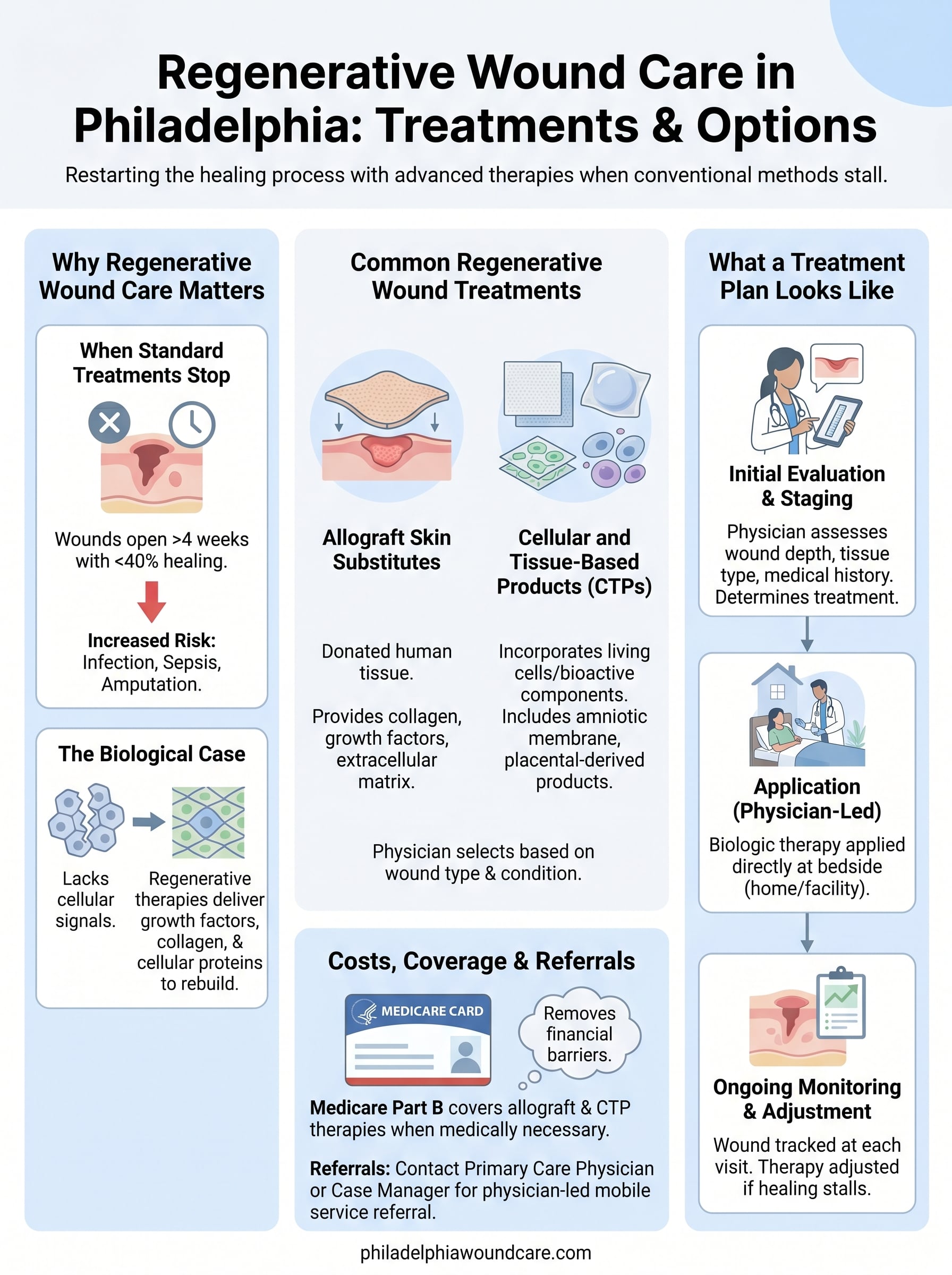
A wound that has not reduced in size by at least 40% after four weeks of standard care is considered a strong candidate for advanced biologic therapies.
At that stage, the underlying problem isn’t just the wound itself. It’s that the body lacks the cellular signals it needs to build new tissue. Standard dressings can protect the wound; they cannot repair what the biology is missing.
The biological case for regenerative therapies
Regenerative wound care in Philadelphia addresses the problem at that cellular level. Allograft materials and biologic tissue-based products deliver growth factors, collagen scaffolding, and cellular proteins that a compromised wound bed cannot produce on its own. Essentially, these therapies give the body a blueprint and the raw materials to begin rebuilding.
This matters because earlier access to regenerative therapies can prevent amputations, shorten treatment timelines, and reduce hospital readmissions. For elderly patients or those with limited mobility, avoiding those outcomes isn’t just medical; it’s a direct measure of quality of life.
Common regenerative wound treatments
Patients pursuing regenerative wound care in Philadelphia have access to several biologic therapies, each targeting a different part of the healing process. Your physician selects a treatment based on wound type, tissue condition, and how long the wound has remained open without meaningful progress.
Allograft skin substitutes
Allografts are donated human tissue products that are processed and applied directly to the wound bed. They deliver collagen, growth factors, and extracellular matrix proteins that prompt the body to rebuild damaged tissue. Most are applied during a physician visit at the bedside and require consistent follow-up evaluations to monitor how well the graft is integrating into the wound.
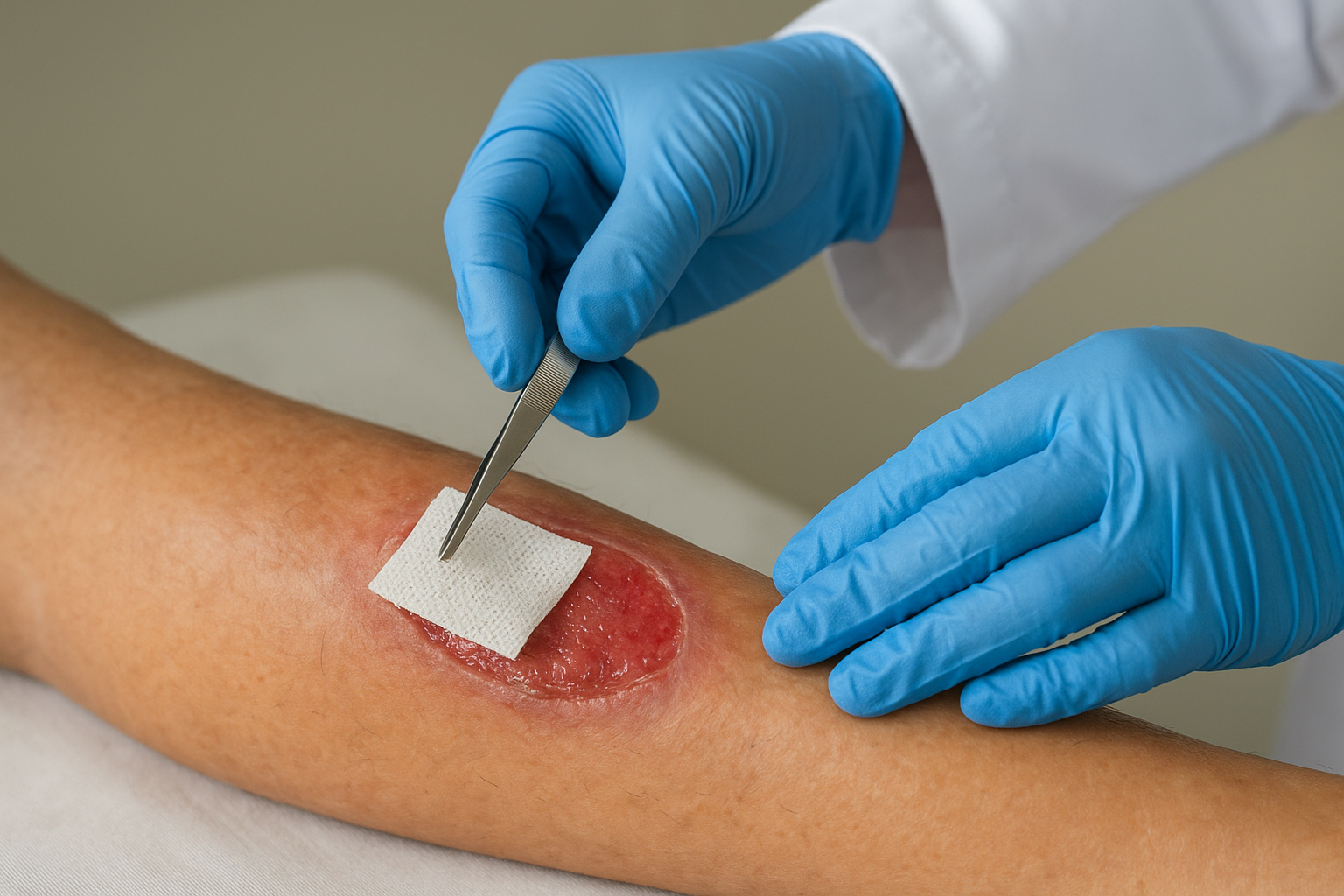
Allograft therapy qualifies for coverage under Medicare Part B when medically necessary, which significantly reduces out-of-pocket costs for eligible patients.
Cellular and tissue-based products
Beyond allografts, cellular and tissue-based products (CTPs) incorporate living cells or bioactive components to reduce inflammation and stimulate tissue repair. These products address wounds that have not responded to allografts alone. Your physician will assess wound depth, chronicity, and surrounding tissue quality before recommending a specific product. Common options include:
- Amniotic membrane grafts
- Placental-derived tissue products
- Collagen matrix dressings
What a treatment plan looks like
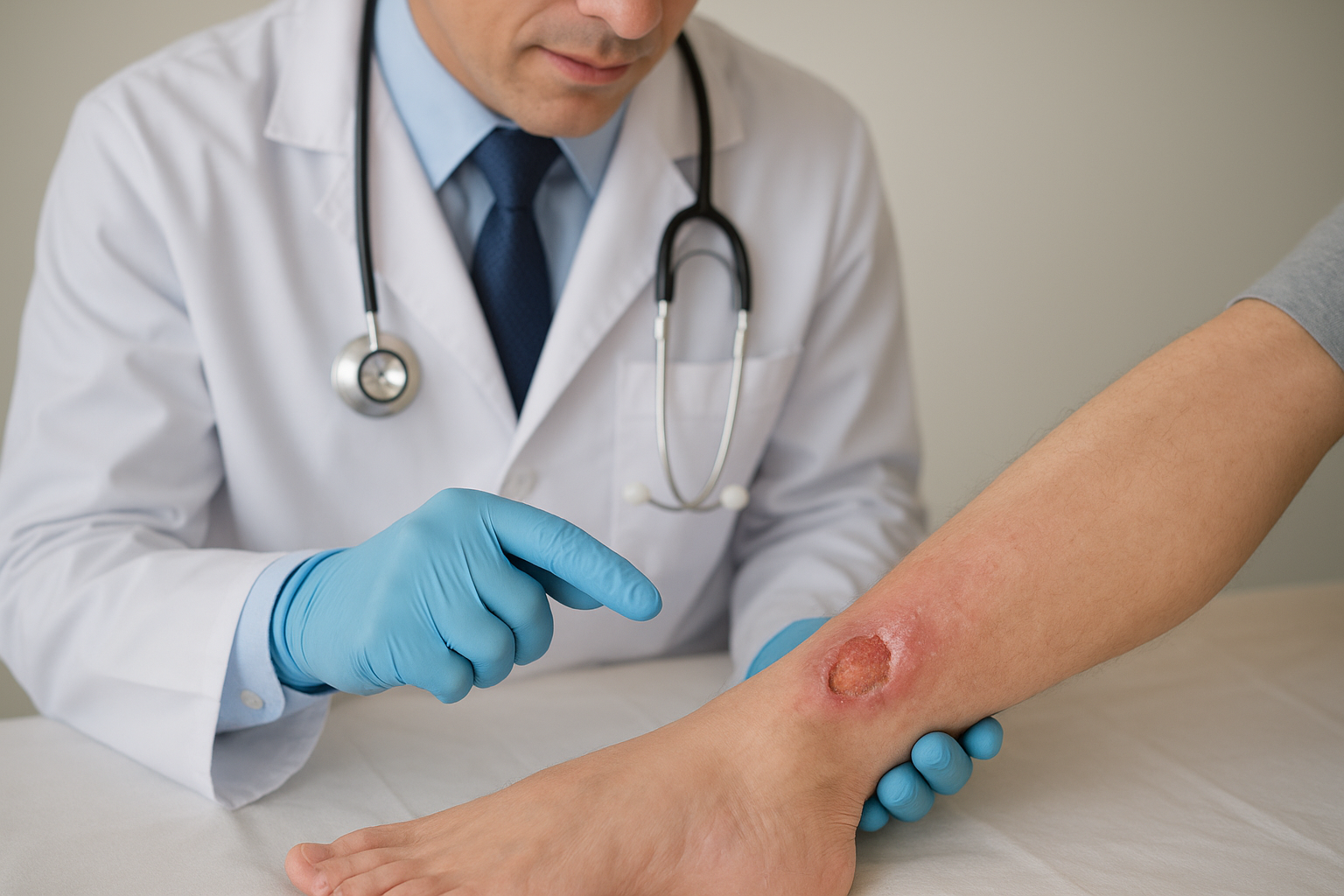
A regenerative wound care plan isn’t a single appointment. It’s a structured sequence of evaluations, applications, and follow-up visits designed to move the wound through each stage of healing. Your physician starts by assessing the wound bed, documenting size and tissue condition, and determining which biologic therapy fits your specific clinical profile.
Initial evaluation and staging
Your first visit focuses on gathering the information your physician needs to build an effective plan. The wound gets measured, photographed, and graded by depth and tissue type. Your medical history, including any diabetes, vascular disease, or immune conditions, shapes which treatment pathway your physician recommends.
Patients receiving regenerative wound care in Philadelphia through a mobile service skip the logistical burden of clinic travel while still getting physician-level assessment at the bedside.
Ongoing monitoring and adjustment
Treatment rarely follows a straight line. Your physician tracks wound dimensions at each visit and adjusts the therapy if healing slows or stalls. A graft that works well in the first two weeks may need to be paired with a different cellular product later in the plan to maintain forward progress.
How to choose a Philadelphia provider
Not every provider offering regenerative wound care in Philadelphia delivers the same level of clinical oversight. When evaluating your options, physician leadership and evidence-based treatment selection should be your two primary criteria.
The difference between a physician-led service and a nurse-led program matters most when your wound requires biologic therapies that need prescribing authority to access.
Look for physician-led care
A wound care service led by a licensed physician, particularly a General Surgeon or wound care specialist, carries different clinical authority than nurse-led programs. Your physician should be the one assessing your wound, selecting the appropriate biologic product, and adjusting the plan at each visit. Look for providers who:
- Document wound measurements and photographs at every visit
- Hold prescribing authority for advanced biologic therapies
- Coordinate directly with your referring physician
Confirm mobile service availability
For patients with limited mobility, traveling to a clinic adds unnecessary physical risk and logistical burden. A mobile provider brings physician-level care directly to your home, skilled nursing facility, or assisted living community.
Ask any prospective provider whether their physician comes to you or whether you’re expected to travel. Services that bring physician oversight to the bedside operate with a fundamentally different structure from those that require you to arrange transportation and navigate a clinic setting.
Costs, coverage, and referrals
Understanding what regenerative wound care in Philadelphia costs before you start treatment helps you avoid financial surprises. Medicare Part B covers allograft and cellular tissue-based therapies when a physician determines they are medically necessary, which applies to most patients with chronic wounds who have already attempted standard care without measurable progress.
Medicare Part B coverage for advanced biologic therapies removes the most common financial barrier patients face when accessing regenerative care outside a hospital.
Getting a referral
Your primary care physician or treating specialist can submit a referral directly to a mobile wound care provider. If you’re being discharged from a hospital or skilled nursing facility, ask your case manager to initiate the referral before you leave. Most mobile providers respond within 24 hours of receiving a request.
- Contact your referring physician or facility case manager
- Confirm your Medicare or commercial insurance details
- Request a physician-led evaluation to document medical necessity
What to ask about billing
Before your first visit, confirm that the provider bills Medicare Part B directly and handles the documentation required to establish medical necessity. Also ask whether your secondary insurance covers any remaining balance. Getting clear answers upfront keeps billing from becoming a distraction during your treatment.
Next steps for healing
If your wound has stopped responding to standard care, regenerative wound care in Philadelphia gives you a concrete path forward without requiring you to travel to a clinic. A physician-led mobile service brings biologic therapies, clinical assessments, and treatment adjustments directly to your home, skilled nursing facility, or assisted living community. That means you start treatment from a position of stability rather than spending energy on logistics.
Your next move is straightforward. Contact your primary care physician or facility case manager and ask for a referral to a mobile wound care provider. Confirm that your Medicare Part B or commercial insurance covers advanced biologic therapies, and ask the provider about their 24-hour response commitment so you know what to expect after the referral goes in.
When you’re ready to take that step, request a wound care referral in Philadelphia and a physician will follow up with you directly.