
BAYADA Home Health Care Locations: 7 Ways To Find Offices
BAYADA Home Health Care operates one of the largest home health networks in the country, but tracking down the right office for your area isn’t always straightforward. Whether you’re a family caregiver arranging services for a loved one or a facility case manager coordinating post-discharge support, knowing how to search BAYADA Home Health Care locations efficiently can save you real time and frustration.
At Philadelphia Wound Care, we work alongside home health providers like BAYADA every day. Our physician-led mobile wound care practice regularly coordinates with home health teams to ensure patients recovering from chronic or surgical wounds receive seamless, continuous care, so we understand how critical it is to connect with the right local office.
Below, you’ll find seven practical methods to locate BAYADA offices near you, from their online tools to lesser-known options you might not have considered. Each approach is broken down so you can pick the one that fits your situation and get connected fast.
1. Contact Philadelphia Wound Care first
If you’re managing a chronic wound like a diabetic ulcer, pressure injury, or post-surgical site, reaching out to Philadelphia Wound Care directly may be the fastest path to the coordinated care you need. Rather than tracking down BAYADA home health care locations on your own and piecing together a plan from scratch, you can work with a physician-led practice that already has established relationships with home health providers across the Philadelphia region, including BAYADA.
How it works
Philadelphia Wound Care operates as a mobile wound care service, meaning a General Surgeon comes directly to your home, skilled nursing facility, or assisted living community to evaluate and treat your wound. During that visit, your physician can assess what level of home health support you need and coordinate directly with the appropriate agency on your behalf.
This coordination removes the guesswork from your situation. Your care team handles the referral process, communicates your clinical needs to the home health agency, and follows up to confirm services start on the right timeline. You avoid navigating two separate systems at once while already dealing with a complex recovery.
When your wound care and home health services connect through the same clinical picture, care transitions are smoother and gaps in treatment are far less likely.
When it works best
This approach works best when you or your family member has just been discharged from a hospital or is dealing with a wound that hasn’t responded to standard home care. Getting a wound care physician involved early means you have a clinical advocate who understands both the wound itself and the broader recovery plan, so nothing falls through the cracks between providers.
It also works well for facility case managers and discharge planners who need a dependable specialist partner. Rather than coordinating home health separately from wound management, you can initiate a single referral to Philadelphia Wound Care and let the clinical team manage the rest of the logistics on the medical side.
What to verify before you schedule
Before your first visit, confirm that Philadelphia Wound Care serves your specific address or facility location. The practice covers Philadelphia and surrounding Pennsylvania regions, but a quick call to the office will confirm whether your home or facility falls within the active service area.
You should also verify insurance coverage before scheduling. Philadelphia Wound Care bills directly with Medicare, Medicare Advantage, and major commercial insurers, so most patients face minimal out-of-pocket costs. That said, confirm your specific plan is accepted upfront so there are no billing questions after your first appointment. Advanced treatments like allograft therapy are covered under Medicare Part B, which is a meaningful financial benefit for patients who assumed those treatments were only available in a clinical facility.
2. Use BAYADA’s Find an Office page
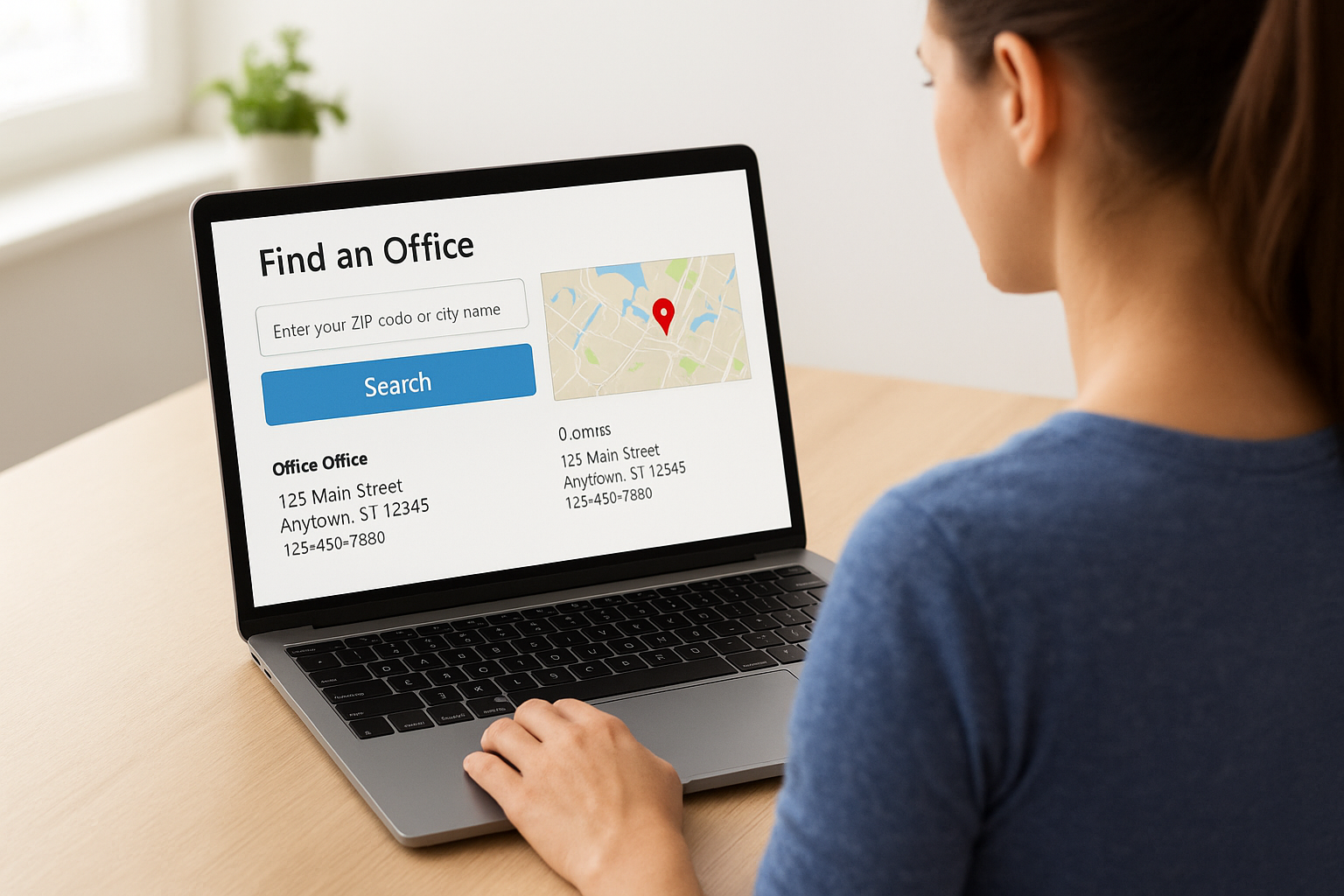
BAYADA maintains a dedicated office locator on its website that lets you search BAYADA Home Health Care locations by ZIP code, city, or state. This is the most direct way to pull up a list of offices in your area without having to sift through general search results or make multiple phone calls to find the right branch.
How it works
Navigate to the BAYADA website and look for their "Find an Office" tool, typically accessible from the main navigation or the contact section. You enter your ZIP code or city name, and the tool returns a list of nearby offices along with their phone numbers, addresses, and the types of services each location provides. From there, you can contact the specific branch that serves your address directly.
Using the official locator reduces the risk of calling a regional hub that can’t actually schedule services in your specific neighborhood.
When it works best
This method works best when you already know the type of service you need, such as skilled nursing, home health aide support, or therapy, and simply want to confirm which office covers your ZIP code. It’s also a strong starting point if you’re a facility administrator or case manager running a quick check on BAYADA’s footprint before initiating a formal referral conversation.
What to verify before you call
Before you dial the number listed, confirm that the office you found actually handles your service category. Some BAYADA branches specialize in particular lines of care, so the nearest location may not cover the specific service your patient or family member requires. Ask the office directly which services they schedule out of that location.
You should also verify the current hours of operation for that branch, since not every office maintains the same schedule. Calling during active intake hours will get you connected to someone who can answer clinical and scheduling questions on the spot.
3. Browse BAYADA location pages by service line
BAYADA organizes much of its website by service line, meaning you can navigate directly to pages dedicated to home health, hospice, habilitation, or pediatric care and find offices from there. This approach is useful when you know the specific type of care you need and want to skip the general search and go straight to a filtered list of relevant locations.
How it works
From the BAYADA website, navigate to the service category that matches your need, such as skilled nursing, therapy, or hospice support. Each service line section typically includes a way to search or browse offices that offer that specific care. Rather than pulling up every BAYADA location in your state, you see only the branches equipped to deliver what you’re actually looking for. This saves you from calling an office only to find out it doesn’t handle your service type.
Browsing by service line first narrows your results before you make a single phone call, which cuts down on back-and-forth significantly.
When it works best
This method works best when you’re coordinating care for a patient with a specific clinical need, like pediatric skilled nursing or palliative support, where not every BAYADA office will apply. It’s also a practical route for case managers reviewing BAYADA home health care locations across a region to identify which branches cover the right combination of services for multiple patients at once.
What to verify before you call
Once you identify an office through a service line page, confirm that the listed services are currently active at that branch and not just listed as a general capability. Staffing and service availability can shift, so ask the office directly whether they have open intake capacity for new patients in your ZIP code. A brief intake call will confirm coverage before you move forward with a referral or family decision.
4. Search Google with your city and ZIP code
A basic Google search is often the fastest starting point for locating BAYADA home health care locations near you, and it works reliably when you pair the company name with specific geographic details. A targeted query pulls up results that go beyond the BAYADA website itself, including local Google Business profiles with current contact information and hours already visible directly in the search results.
How it works
Type a phrase like "BAYADA home health [your city]" or "BAYADA home health care [ZIP code]" directly into Google. The results will include the company’s own website pages, but more importantly, they surface Google Business Profile listings for nearby offices that display addresses, phone numbers, and operating hours at a glance. You can click to call or get directions without navigating additional pages.
Running a ZIP code search rather than a city name returns more precise results, especially in metro areas where several offices may cover different neighborhoods within the same city limits. This distinction matters more than most people expect when you’re looking for the branch that actually handles your specific block or facility address.
When it works best
This method works best when you need a quick answer on service coverage and don’t want to spend time navigating an unfamiliar website structure. It’s particularly useful when you’re searching from a mobile device and want to reach an office directly from the results page without bouncing between tabs.
A ZIP code search consistently outperforms a city-name search when you’re near the border between two service areas.
What to verify before you call
Cross-check the phone number and address from your Google results against BAYADA’s official website before you dial. Google Business Profile listings can carry outdated details if an office hasn’t refreshed its profile recently. Confirming through the official site takes under a minute and ensures you reach the correct branch on your first attempt rather than getting routed to a hub that doesn’t handle your area.
5. Use Google Maps to find nearby offices
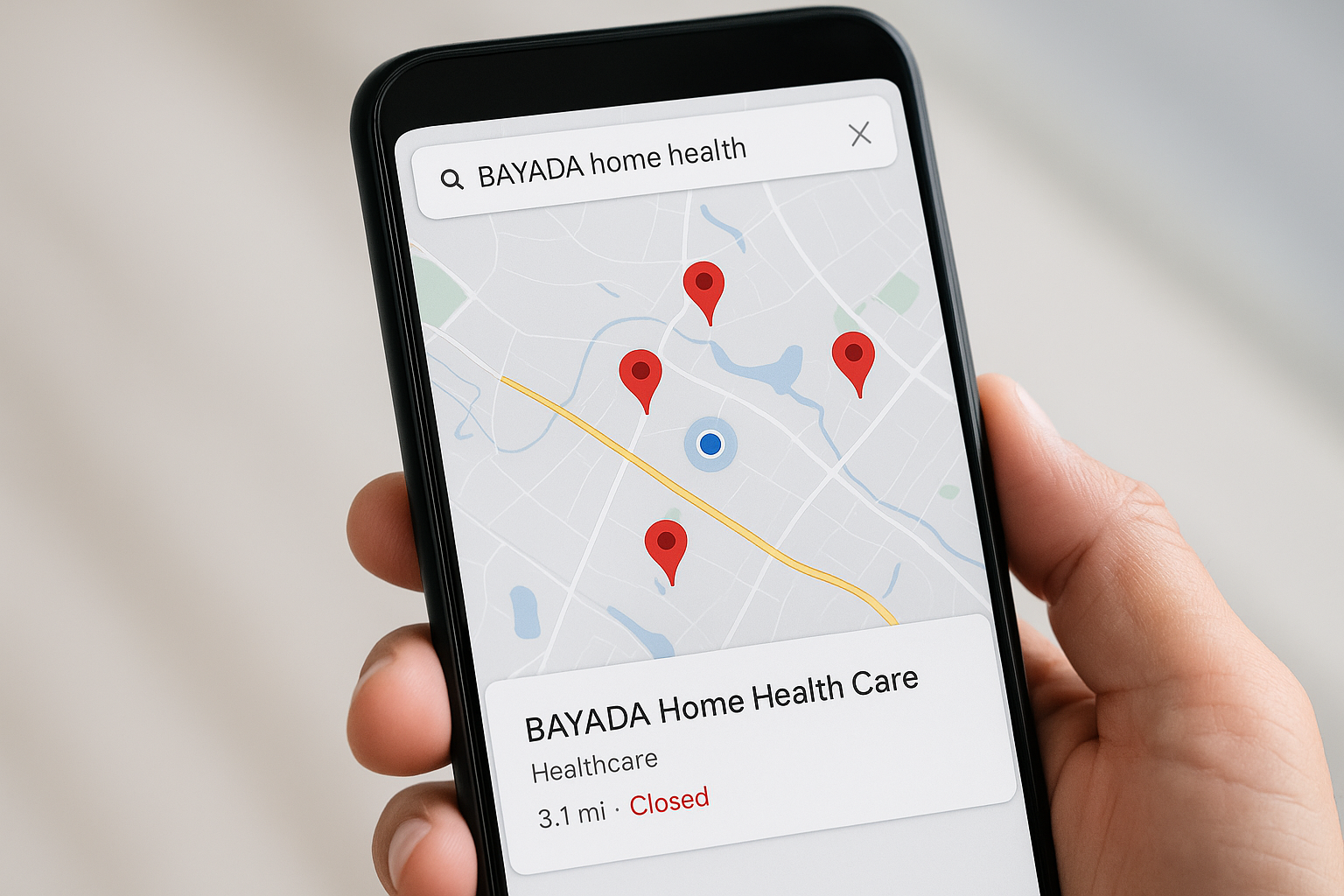
Google Maps gives you a visual way to locate BAYADA home health care locations that a standard text search can’t match. Instead of reading through a list of results, you see exactly where each office sits relative to your address, which is especially useful when you’re trying to determine which branch is closest to a patient’s home or a specific facility.
How it works
Open Google Maps and type "BAYADA home health" into the search bar. The map populates with pinned office locations in your visible area, and each pin links to a profile with the address, phone number, current hours, and user reviews. You can zoom in to your specific neighborhood or ZIP code to see which branch falls within the most practical distance. Tapping or clicking a pin pulls up the full listing so you can call directly from the app without copying anything down.
Zooming into the map rather than searching a broad city name gives you a more accurate picture of which office actually serves your immediate area.
When it works best
This method works best when you’re comparing multiple office locations and want to weigh travel distance or confirm that a branch is close to a patient’s discharge address. It’s also practical when you’re on a mobile device and want a one-tap option to call the office or pull up turn-by-turn directions to visit in person.
What to verify before you call
Google Maps listings are user-maintained and not always updated in real time, so treat the hours and contact details as a starting point rather than a final source. Before you commit to an office, verify the phone number and service area through BAYADA’s official website. A two-minute cross-check prevents you from reaching a branch that has relocated or no longer serves your ZIP code.
6. Ask a discharge planner or facility care team
Hospital discharge planners and facility social workers are some of the most underused resources when it comes to locating BAYADA home health care locations in your area. These professionals coordinate home health referrals every single day, so they already know which agencies serve your ZIP code and which ones have current capacity to take on new patients without a long wait.
How it works
When a patient is preparing to leave a hospital, rehabilitation center, or skilled nursing facility, the discharge planning team evaluates what home services they will need after leaving. You or your family member can ask the planner directly whether BAYADA covers your address and whether they have an established relationship with a specific local branch. Many planners keep direct contacts at regional offices and can make a warm introduction on your behalf, cutting several steps out of the intake process entirely.
A warm referral from a discharge planner often moves you through intake faster than a cold call to an office line.
When it works best
This approach works best when a patient is actively going through a care transition, such as moving from a hospital to home following surgery or a wound-related hospitalization. The discharge team is already building an outbound care plan at that moment, so naming BAYADA as your preferred agency puts that request directly in front of the right person rather than leaving you to start the process from scratch after you get home.
What to verify before you call
Even when a discharge planner hands you a specific BAYADA branch contact, verify that the office handles your exact service category before committing to anything. Planners work from established referral networks that may not always reflect the most current service availability at a given location. A brief direct call to the branch confirms active intake capacity and ensures the services outlined in your discharge plan will actually be in place on the day you arrive home.
7. Cross-check third-party directories
Third-party healthcare directories offer another layer of verification when you’re tracking down BAYADA home health care locations in your area. Sites like Medicare’s Care Compare tool at medicare.gov list certified home health agencies by ZIP code and include quality ratings, inspection data, and contact details that BAYADA’s own website doesn’t consolidate in one place.
How it works
Medicare’s Care Compare database lets you search for home health agencies by location and filter results by quality scores and service categories. You enter your ZIP code and pull up a list of certified agencies, including BAYADA branches, with verified contact information and quality ratings drawn directly from CMS inspection data. This gives you an independent view of which offices are currently operating and certified in your specific area, rather than relying entirely on what the agency publishes about itself.
When it works best
This approach works best when you want to confirm a branch’s certification status before committing to a referral or family care decision. It’s also useful when you’re comparing BAYADA against other agencies in your region and want an objective quality benchmark rather than information that comes directly from the agency’s own materials.
Medicare’s Care Compare data reflects CMS inspection records, giving you a factual baseline that no agency self-report can replace.
What to verify before you call
Cross-referencing a directory listing against BAYADA’s official website is still a necessary step even after you locate an office through a third-party source. Directory data doesn’t always reflect recent staffing changes, service line updates, or current intake capacity, so treat the listing as a starting point for your outreach rather than a complete picture. Confirm the branch’s active services and coverage boundaries directly with their staff before you or a family member commits to a care arrangement built around that specific office.
Next steps
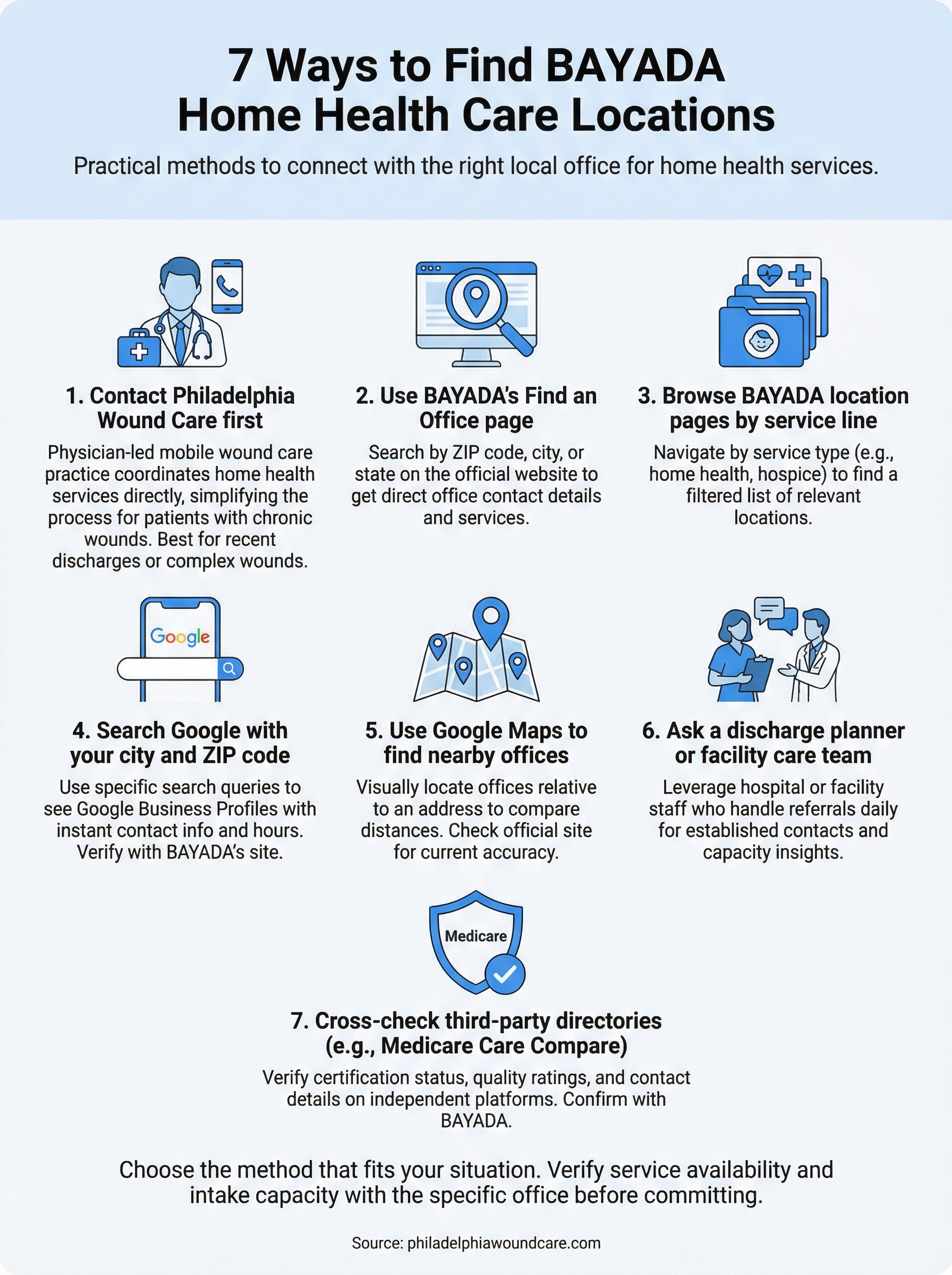
You now have seven concrete methods to locate BAYADA home health care locations across the region, from the company’s own office finder to Medicare’s Care Compare tool. Each approach gets you closer to the right branch, but the fastest path depends on what’s driving the search. If a chronic or non-healing wound is at the center of the situation, the most efficient move is getting specialized clinical care in place first and letting an experienced team handle the coordination from there.
Philadelphia Wound Care brings physician-led wound management directly to patients at home, in skilled nursing facilities, and in assisted living communities throughout the Philadelphia area. Your care team handles referral coordination, insurance verification, and clinical follow-up so you don’t have to manage every piece separately. If you’re ready to get expert wound care started, schedule a mobile wound care visit in Philadelphia and let us take it from there.