

Chronic Wound Care Philadelphia: Options, Costs, Next Steps
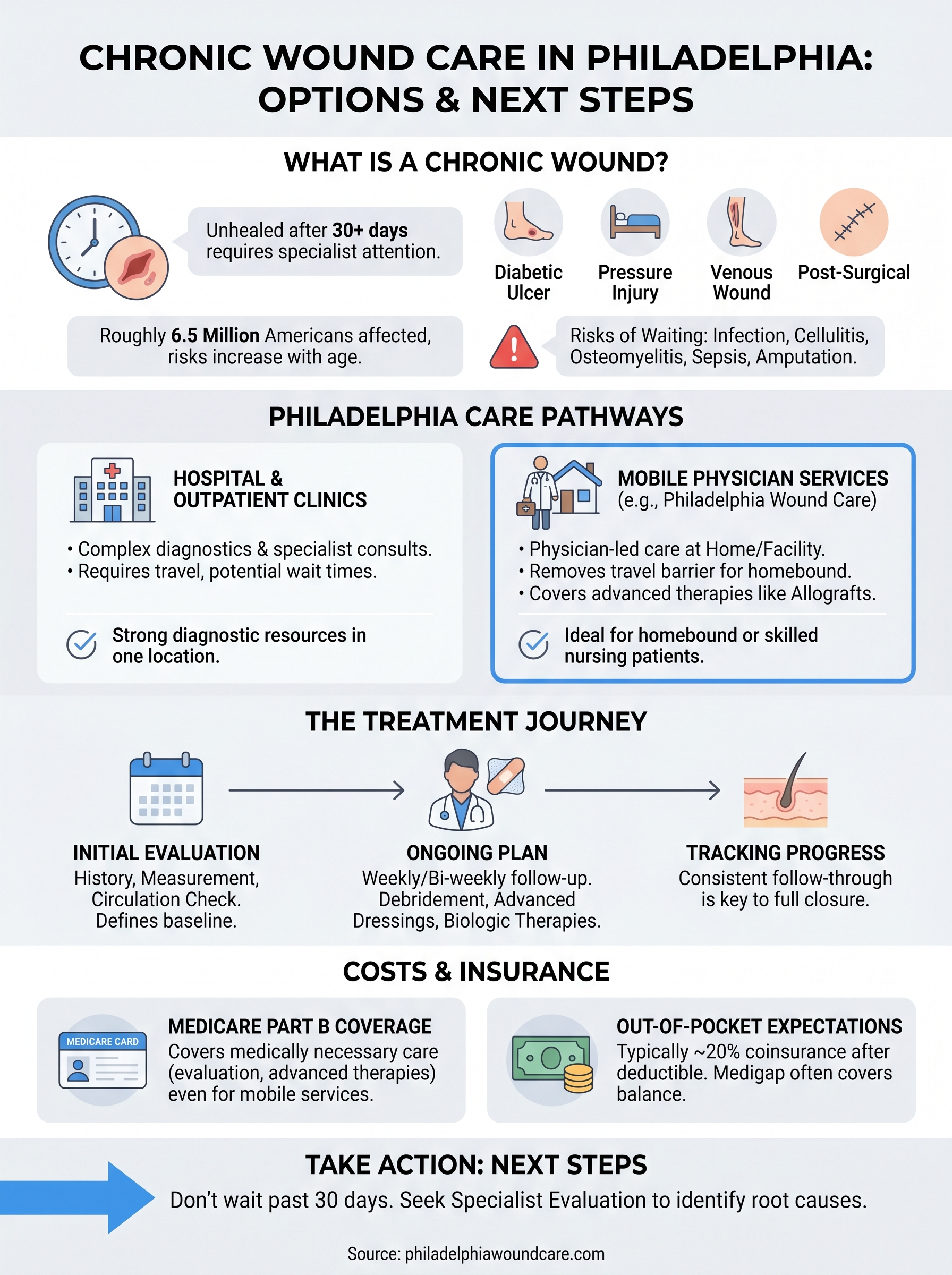
A wound that refuses to heal after 30 days isn’t just frustrating, it’s a medical problem that demands specialist attention. If you’re searching for chronic wound care Philadelphia options, you’re likely dealing with a diabetic ulcer, pressure injury, venous wound, or post-surgical complication that hasn’t responded to standard treatment. You’re not alone. Roughly 6.5 million Americans live with chronic wounds, and the numbers climb every year as the population ages.
Philadelphia has several pathways for chronic wound treatment, from hospital-based wound centers to outpatient clinics to mobile physician services like Philadelphia Wound Care. Each option differs in cost, convenience, the level of medical oversight you receive, and whether advanced therapies like allografts are available. For patients who are homebound or living in skilled nursing facilities, the choice matters even more, because getting to a clinic may be the biggest barrier to healing.
This article breaks down your options for chronic wound care in the Philadelphia area, what to expect in terms of costs and insurance coverage, and the concrete next steps to get treatment started.
Why chronic wounds need specialist care
A wound becomes chronic when the normal healing process breaks down completely. Healthy tissue repair moves through four stages: hemostasis, inflammation, proliferation, and remodeling. Chronic wounds get stuck, most often in the inflammatory phase, where the body keeps triggering an immune response instead of building new tissue. Without specialist intervention, that cycle repeats, and the wound grows larger or becomes infected rather than closing.
What makes a wound stop healing
Several underlying conditions block the healing process at a biological level. Diabetes reduces circulation and nerve sensitivity, meaning tissue damage often goes unnoticed until a wound is already deep. Peripheral vascular disease limits the blood flow that wounds need to repair themselves. Pressure injuries develop when sustained weight cuts off circulation to vulnerable skin, particularly in patients who are bedbound or use wheelchairs. In each of these cases, treating only the wound surface ignores the systemic problem driving it, which is why general wound care from a primary care provider frequently falls short.
A wound that doesn’t respond to basic care after 30 days requires a full medical evaluation to identify and treat the root cause, not just the symptom.
The real risks of waiting for treatment
Delayed specialist care raises your risk of serious complications fast. Wound infections can progress to cellulitis or osteomyelitis (bone infection) within days in a patient with compromised circulation. For people with diabetes, an unresolved foot ulcer is one of the leading causes of lower-limb amputation in the United States. Sepsis from an infected chronic wound is life-threatening, and it develops faster in older adults or those with weakened immune systems. Accessing chronic wound care Philadelphia specialists provide means those risks get identified early, and evidence-based treatments like debridement, advanced dressings, and biologic therapies get applied before complications escalate into a hospital admission.
Common chronic wounds treated in Philadelphia
Understanding which wound type you’re dealing with shapes every treatment decision that follows. Different wound types have different root causes, and a treatment plan that works for a diabetic foot ulcer won’t necessarily work for a pressure injury. Most chronic wound care Philadelphia specialists encounter the same four wound categories repeatedly.
Diabetic foot ulcers and pressure injuries
Diabetic foot ulcers form when reduced circulation and nerve damage allow small injuries to go unnoticed and untreated. Because the skin heals poorly in patients with uncontrolled blood sugar, even minor friction or pressure can create a wound that becomes deep and infected within days. These ulcers typically appear on the bottom of the foot or around the toes, and they account for the majority of non-traumatic lower-limb amputations in the United States.
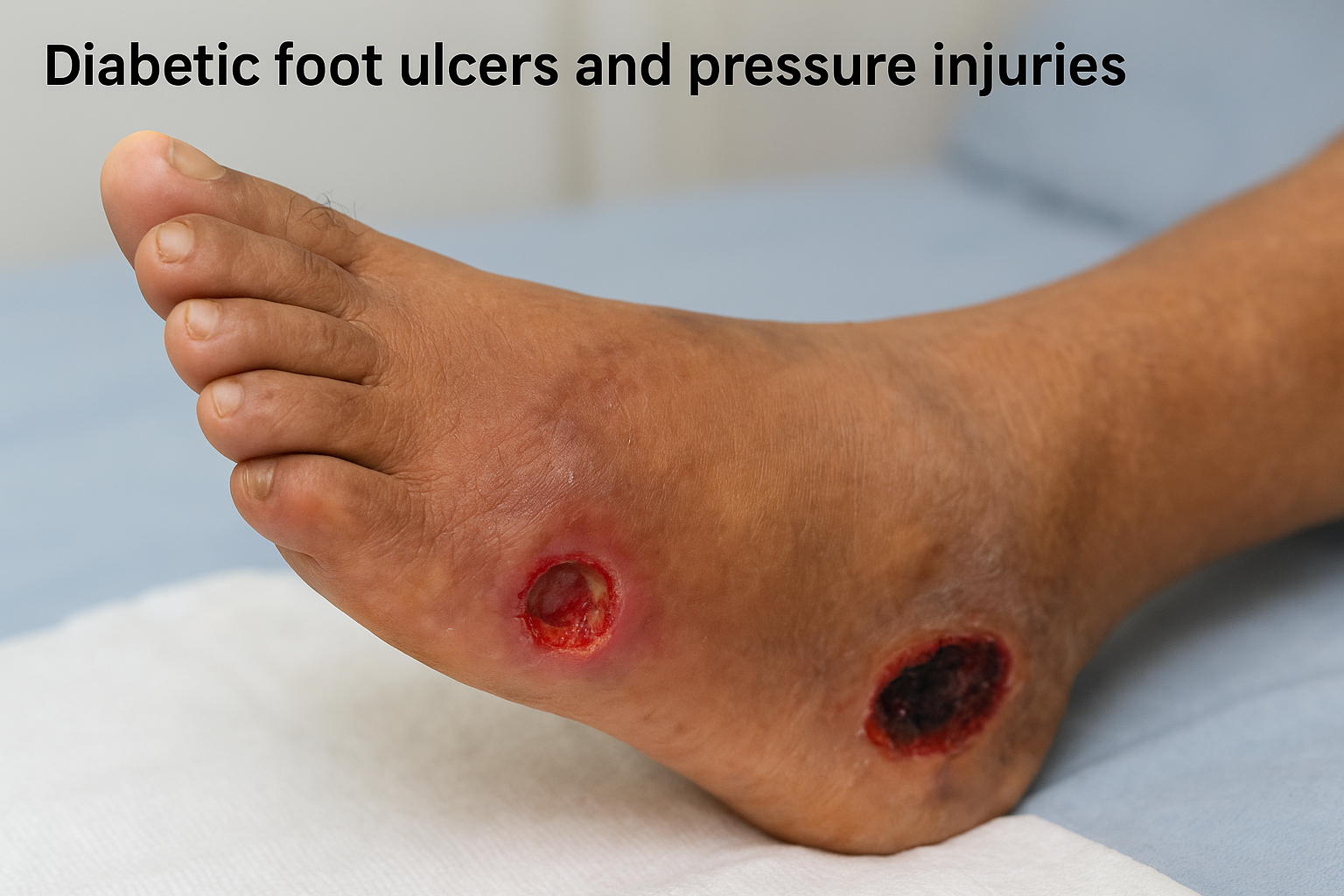
Pressure injuries (also called bedsores or decubitus ulcers) develop when sustained pressure cuts off blood supply to skin and underlying tissue. Patients who are bedbound, wheelchair-dependent, or have limited mobility face the highest risk. Bony prominences like the heels, sacrum, and hips are the most common sites, and these wounds can progress from surface redness to deep tissue destruction quickly if left unmanaged.
Venous ulcers and post-surgical wounds
Venous leg ulcers result from faulty valves in the leg veins, which cause blood to pool and create pressure that damages tissue. Post-surgical wounds become chronic when infection, poor blood supply, or underlying illness prevents normal closure after an operation.
Identifying the exact wound type is the first step any specialist takes, because the wrong treatment approach can actively delay healing.
Chronic wound care options in Philadelphia
Philadelphia offers three main pathways for chronic wound management: hospital-based wound centers, outpatient clinics, and mobile physician services. Your mobility, wound severity, and need for advanced therapies determine which option fits best, so understanding what each delivers helps you make a faster, more informed decision.
Hospital-based wound centers and outpatient clinics
Hospital-affiliated wound centers give you access to vascular testing, imaging, and multidisciplinary specialist consultations under one roof. For complex wounds that need a full diagnostic workup, this level of infrastructure is hard to match. The significant downside is that travel requirements and appointment backlogs can delay treatment, which matters when a wound deteriorates quickly.
Outpatient wound clinics typically offer shorter wait times and more flexible scheduling than hospital-based programs. You still get professional wound management, but without the full diagnostic infrastructure of a hospital setting.
If you can travel reliably, a hospital or outpatient clinic gives you access to a strong range of diagnostic resources in one location.
Mobile wound care services
Mobile physician services bring licensed medical care directly to your home, skilled nursing facility, or assisted living community. For homebound patients, this model removes the transportation barrier entirely while still making advanced treatments like allograft therapy available under Medicare Part B. Philadelphia Wound Care operates on this model, with a board-certified surgeon delivering physician-led chronic wound care Philadelphia patients can receive without leaving their care setting.

Mobile services typically include:
- Wound evaluation and debridement at your bedside
- Advanced dressing application and biologic therapy
- Direct coordination with your referring physician or facility staff
What to expect at the first visit and beyond
Knowing what happens during your first appointment removes uncertainty and helps you prepare. Whether you visit a clinic or receive mobile chronic wound care Philadelphia specialists provide at your location, the first visit follows a consistent medical process designed to identify what’s blocking your wound from healing.
The initial wound evaluation
Your specialist will start by reviewing your full medical history, including any conditions like diabetes, vascular disease, or prior surgeries that affect healing. They will measure the wound, assess tissue quality, check for signs of infection, and evaluate circulation in the surrounding area. This evaluation forms the baseline for every treatment decision that follows.
Your first appointment is a diagnostic visit as much as a treatment visit, so bring a complete list of your current medications and any prior wound care records.
Ongoing treatment and follow-up
After the initial evaluation, your provider will build a structured treatment plan with scheduled follow-up appointments, typically weekly or bi-weekly depending on wound severity. Each follow-up includes wound measurement, debridement if needed, dressing changes, and reassessment of whether advanced therapies like allograft or biologic treatments are appropriate. Progress is tracked against measurable benchmarks, usually a percentage reduction in wound size per week, so your care team can adjust the plan quickly if the wound stops responding. Consistent follow-through on your scheduled appointments is the single biggest factor in reaching full closure.
Costs and insurance for chronic wound care
Cost is one of the first questions most patients and families ask, and the answer depends largely on your insurance coverage and the type of treatment your wound requires. For the majority of chronic wound care Philadelphia patients, Medicare or Medicare Advantage covers the bulk of specialist services, including advanced therapies that many people assume are only available in expensive hospital settings.
Medicare and Medicare Advantage coverage
Medicare Part B covers medically necessary wound care services delivered by a physician, including evaluation, debridement, and advanced biologic treatments like allograft therapy, when performed in an approved care setting. Mobile physician services bill under the same Part B framework, so homebound patients receive the same level of covered care as those who travel to a clinic.
Confirming your provider accepts your specific Medicare Advantage plan before your first visit prevents unexpected billing surprises later.
Out-of-pocket costs to expect
Even with Medicare, you will typically owe a 20% coinsurance on covered services after your annual deductible is met. For advanced treatments like allografts, that 20% can add up over multiple visits, so asking your provider for a clear cost estimate upfront helps you plan. Supplemental Medigap policies often cover that remaining coinsurance, which can reduce your direct costs significantly. If you carry commercial insurance, coverage levels vary by plan, and your provider’s billing team can verify your benefits before treatment begins.
Your next steps
If your wound hasn’t closed in 30 days, waiting will only allow the damage to progress. Specialist evaluation is what breaks the cycle, identifies the root cause, and gets the right treatment applied. Philadelphia offers real pathways to care, and your insurance coverage likely covers more than you expect, including advanced biologic therapies under Medicare Part B.
The fastest path forward is connecting directly with a specialist who can evaluate your wound without delay. For homebound patients and those in care facilities, Philadelphia Wound Care delivers physician-led chronic wound care Philadelphia patients can receive at their bedside. A board-certified surgeon assesses your wound, coordinates with your existing care team, and builds a treatment plan matched to your specific situation. Request a mobile wound care consultation and receive a response within 24 hours.