
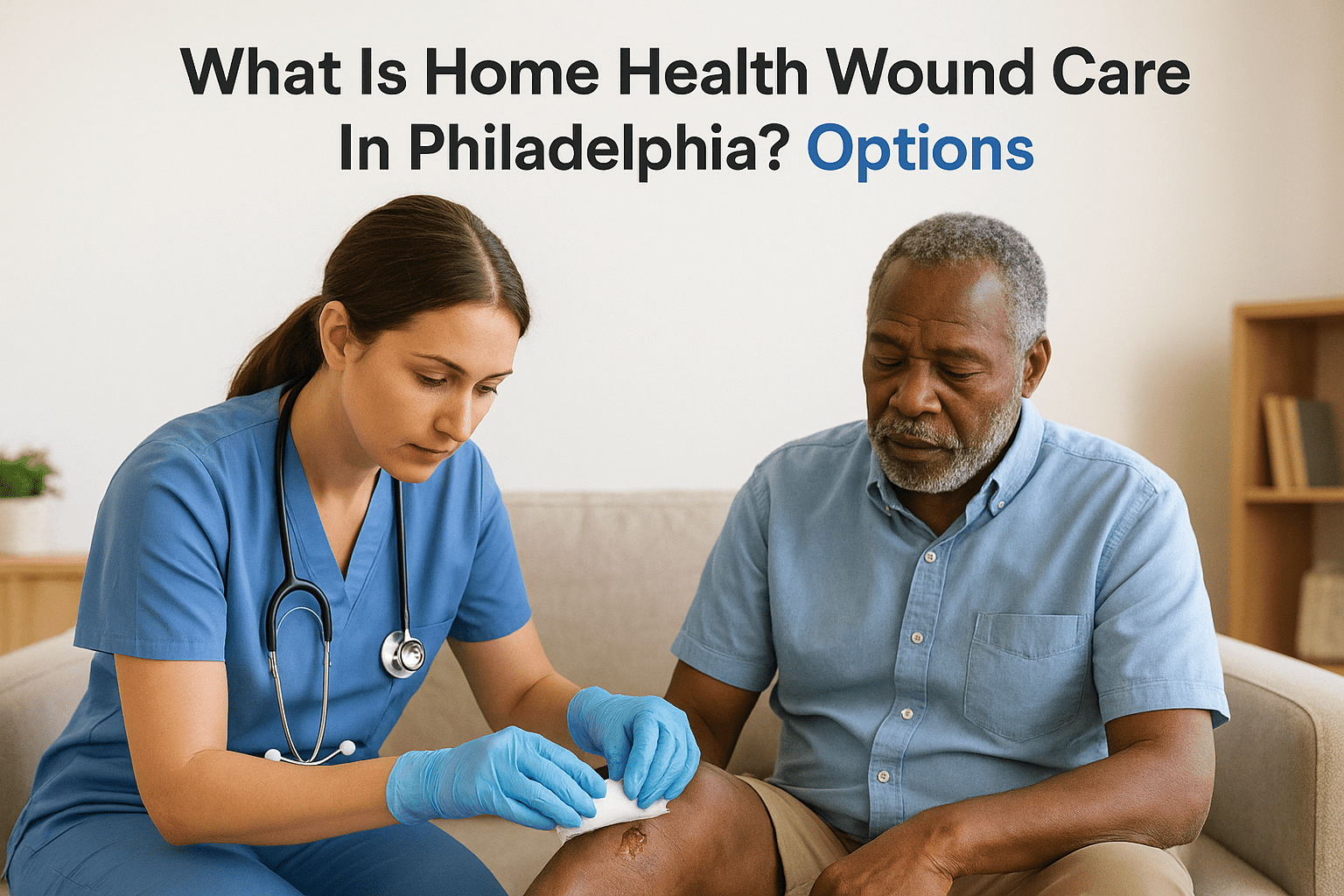
What Is Home Health Wound Care In Philadelphia? Options
Not every patient recovering from a chronic or surgical wound can make it to a clinic. Some are homebound. Others are in skilled nursing facilities without on-site specialists. That’s exactly where home health wound care in Philadelphia fills a critical gap, bringing physician-level treatment directly to the patient’s bedside, whether that’s a private residence, an assisted living community, or a hospice setting.
At Philadelphia Wound Care, we operate as a mobile, physician-led practice built around this model. Dr. Hyland, a licensed General Surgeon, provides advanced wound management, including allograft and regenerative therapies, in settings where patients actually live and recover. It’s a different approach from nurse-only home health visits, and it changes outcomes for people dealing with diabetic ulcers, pressure injuries, vascular wounds, and post-surgical complications.
This article breaks down what home health wound care actually involves, how it works in the Philadelphia area, what types of services are available, and how to determine whether it’s the right option for you or someone in your care. We’ll also cover insurance considerations, including Medicare Part B coverage, and explain what separates physician-led mobile wound care from standard home health services.
Why home health wound care matters in Philadelphia
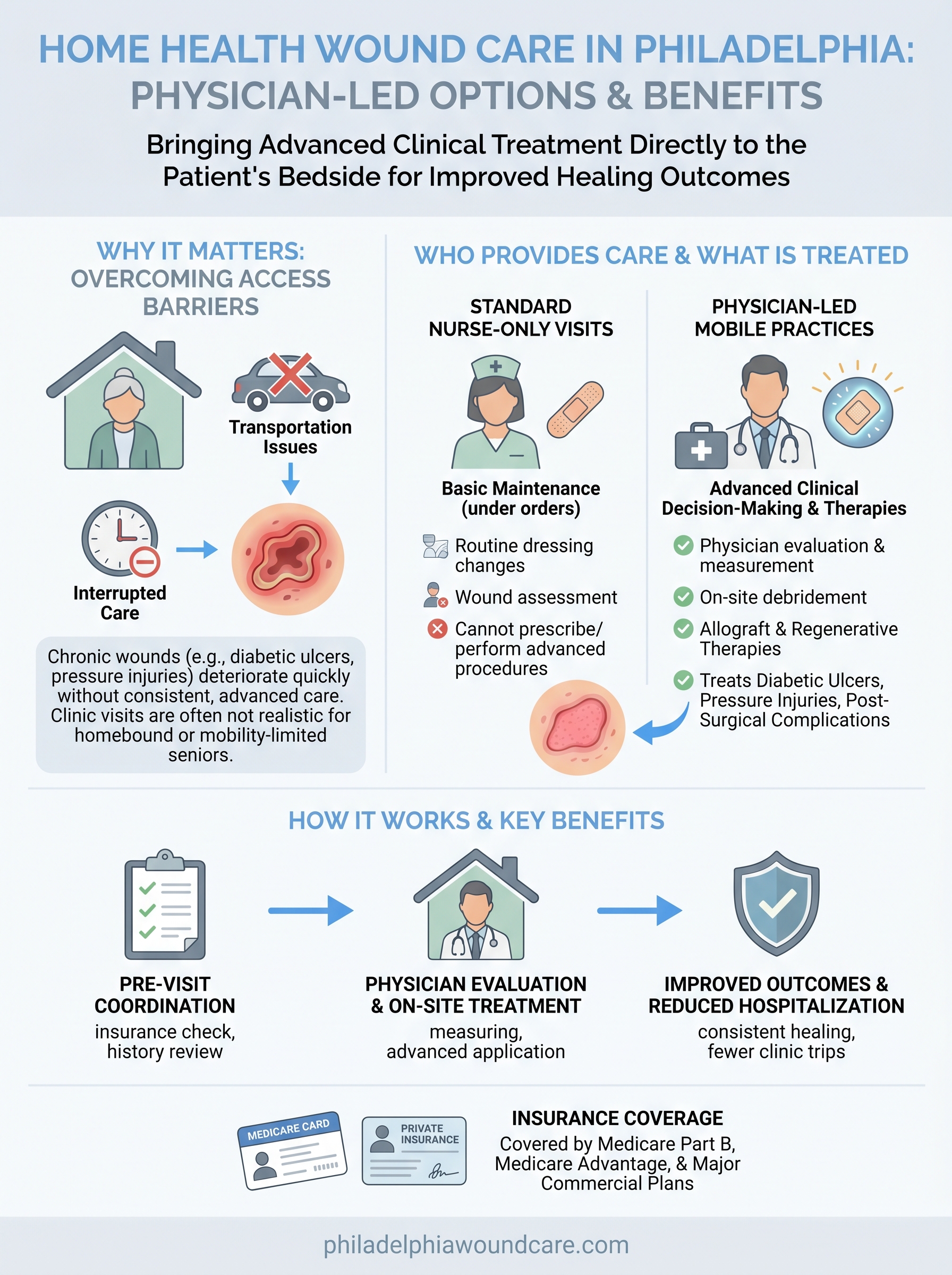
Philadelphia is home to a large population of seniors and patients with chronic conditions such as diabetes, peripheral artery disease, and limited mobility. For many of these individuals, getting to an outpatient wound clinic is not realistic. Transportation barriers, post-surgical recovery restrictions, and physical exhaustion from illness all interrupt consistent treatment, and interrupted care is one of the most common reasons chronic wounds fail to heal.
Philadelphia’s Patients Face Real Access Barriers
Many patients who need specialist wound care live in areas of Philadelphia where reliable transportation and specialist availability are limited. Skilled nursing facilities, assisted living communities, and private residences throughout the region house people who need regular, expert follow-up without the option of traveling for every appointment. Home health wound care in Philadelphia removes that obstacle by bringing clinical-grade evaluation and treatment directly to wherever you or your family member is located.
When care reaches the patient consistently, rather than only when travel is possible, healing outcomes improve significantly.
Untreated or Under-Treated Wounds Deteriorate Fast
A wound that receives only basic nursing attention without physician oversight can worsen quickly. Diabetic foot ulcers, pressure injuries, and venous leg wounds carry serious risks when a qualified physician does not evaluate and manage them on a regular basis. Infection, tissue necrosis, and emergency hospitalization become far more likely when specialist involvement comes too late.
Bringing a licensed physician into your care setting earlier changes those risks. When advanced options like allograft and regenerative therapy are available at the bedside, patients gain access to treatments they might otherwise never receive outside of a hospital. In a city like Philadelphia, where post-acute wound management demand consistently outpaces what standard home health agencies can handle, that access makes a direct difference.
Who provides in-home wound care in Philadelphia
Not all in-home wound care providers are built the same. In the Philadelphia area, you’ll find two main types of services, and knowing the difference shapes what kind of treatment your wound actually receives.
Standard Home Health Agencies
Most home health agencies send registered nurses or licensed practical nurses to perform wound assessments and dressing changes at your home. These visits cover basic wound maintenance and are suitable for straightforward, healing wounds. However, nurses operate under physician orders and cannot independently prescribe treatments, perform advanced procedures, or apply regenerative therapies like allograft. If your wound is complex or has stopped responding to standard care, a nurse-only service may not be enough.
When a wound isn’t responding to basic treatment, the level of clinical oversight you receive becomes the deciding factor in whether it heals.
Physician-Led Mobile Practices
Philadelphia also has physician-led mobile practices, like Philadelphia Wound Care, where a licensed General Surgeon evaluates and manages your wound directly at your location. This model brings full clinical decision-making, advanced therapies, and care coordination to your bedside. When you need home health wound care Philadelphia families and facility managers can count on for complex cases, physician oversight is what separates an adequate visit from a genuinely effective one.
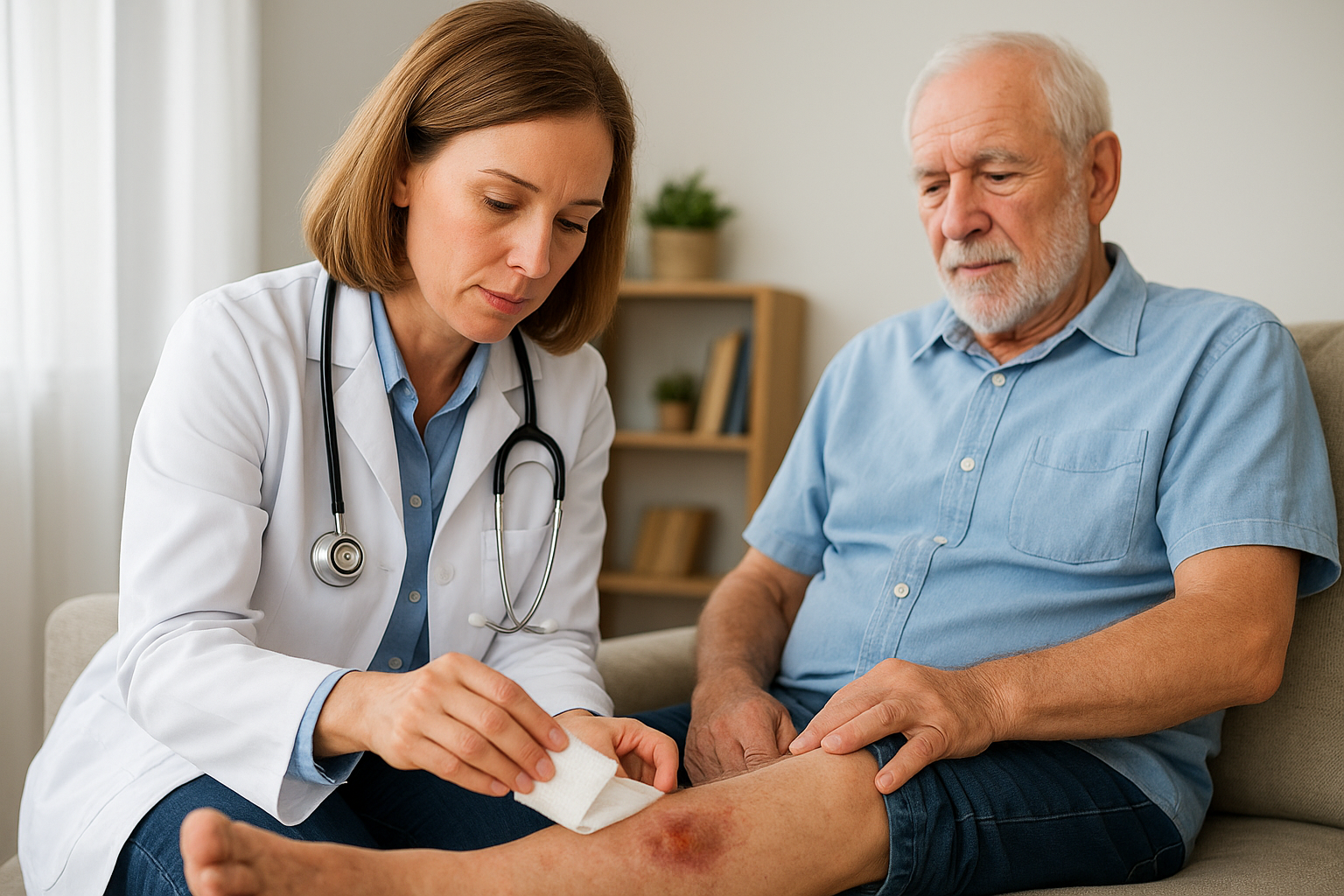
What home wound care can treat and manage
Home health wound care in Philadelphia covers a wider range of conditions than most people realize. Whether you’re managing a long-standing chronic wound or recovering from a recent surgical procedure, a physician-led mobile service can address wound types that standard home nursing visits often cannot fully manage on their own.
When wounds are complex or non-healing, physician involvement at the bedside expands your treatment options significantly.
Common Wound Types Treated at Home
Diabetic foot ulcers, pressure injuries (bedsores), and venous or arterial leg ulcers are the most frequently treated wound types in a home setting. These wounds tend to persist or worsen without specialist management, and your physician can apply advanced therapies like debridement and allograft directly at your location to promote active healing.
Post-surgical wounds are also routinely managed through mobile wound care. If you develop complications like wound separation or signs of infection after a procedure, your physician can evaluate the site, adjust the treatment plan, and apply specialized wound products or biological grafts at your bedside, reducing your need for unnecessary clinic or hospital visits.
How home health wound care visits work
When you schedule home health wound care Philadelphia patients rely on for complex wounds, the process is more structured than a standard nursing check-in. Your care team coordinates with your referring physician or facility before the first visit to review your medical history, current wound status, and any prior treatments that have already been attempted.
What Happens Before Your First Visit
Your provider collects referral information and insurance details upfront, so the visit itself focuses entirely on your wound and your treatment plan. Philadelphia Wound Care verifies Medicare, Medicare Advantage, or commercial insurance coverage in advance, meaning you arrive at your first visit without paperwork delays or unresolved billing questions.
When logistics are handled before the physician walks in the door, you get more time focused on actual care.
What the Physician Does During the Visit
Your physician evaluates the wound directly, measuring, documenting, and assessing tissue health and signs of infection. Based on that evaluation, the physician applies the appropriate treatment at your bedside, whether that is debridement, allograft application, advanced dressings, or a combination of therapies. Your plan gets adjusted at each visit based on how your wound responds, keeping your care current and precise.
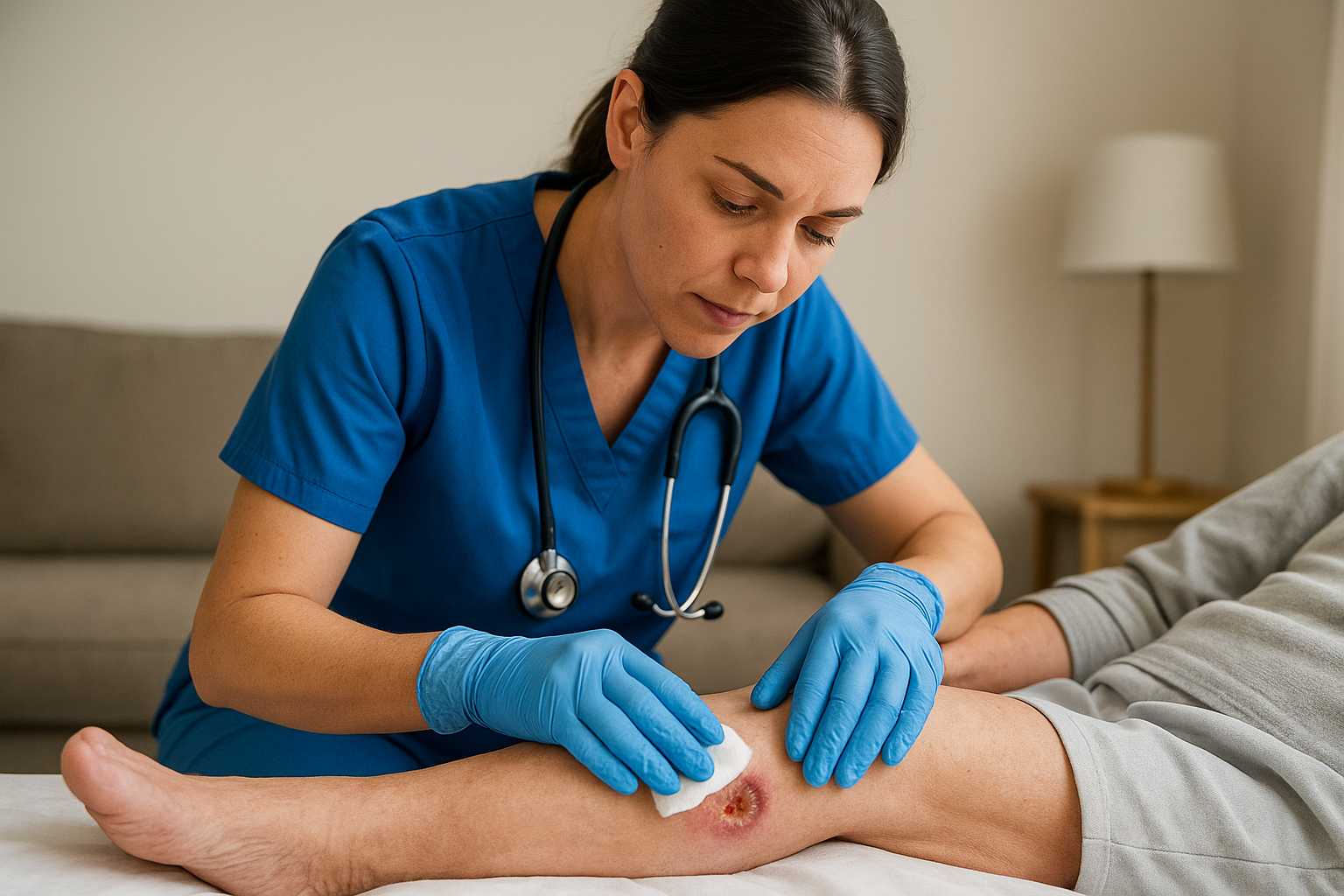
How to choose the right in-home wound care team
When evaluating home health wound care Philadelphia options, the most important factor is clinical oversight level. A nurse-only service handles routine wound maintenance, but if your wound is chronic, infected, or unresponsive to standard treatment, you need a physician-led team with the authority to prescribe treatments, perform procedures, and apply advanced therapies at your location.
The provider’s credentials and scope of practice determine what treatments are actually available to you at the bedside.
Questions to Ask Before Committing
Before scheduling your first visit, confirm who performs the wound evaluations and what treatments the provider can deliver on-site. Ask whether the service bills Medicare or Medicare Advantage directly, so you understand your out-of-pocket exposure before care begins. Transparency on billing before the first visit is a strong indicator of how the practice operates overall.
Your wound care team should also demonstrate clear communication with your referring physician or facility staff and commit to a 24-hour response time when your wound status changes unexpectedly. That coordination keeps your treatment accurate between visits and reduces the risk of setbacks going unaddressed for too long.
Next Steps
If you or someone in your care is dealing with a wound that is not healing, has become infected, or requires more than routine nursing attention, home health wound care Philadelphia providers can bring the right level of clinical oversight directly to you. You do not need to manage a complex wound with limited resources when physician-led mobile care is available and covered under Medicare, Medicare Advantage, and major commercial insurance plans.
Start by confirming what type of wound you are dealing with and how long it has been present without measurable improvement. That information helps your care team prepare the right treatment approach before the first visit. Whether you are a patient, a family caregiver, or a facility care manager, getting the right specialist involved earlier reduces the risk of serious complications.
Contact Philadelphia Wound Care today to schedule an evaluation or submit a wound care referral for your patient.