

5 Hospital Wound Care Centers In Philadelphia (2026)
Finding the right hospital wound care Philadelphia provider can feel overwhelming, especially when you or a loved one is dealing with a chronic wound that refuses to heal. These specialized centers offer multidisciplinary teams, advanced therapies like hyperbaric oxygen treatment, and structured programs designed for complex cases, from diabetic ulcers to post-surgical complications.
But not every patient can physically get to a hospital-based clinic. That’s exactly why we built Philadelphia Wound Care, a physician-led mobile practice that brings advanced wound management directly to your bedside, whether you’re at home, in a skilled nursing facility, or in hospice. We work alongside these hospital programs, not against them, filling the gap for patients who need specialist-level care without the burden of travel.
Below, we break down five hospital wound care centers across Philadelphia worth knowing about in 2026, what they offer, who they serve, and how to reach them.
1. Philadelphia Wound Care Mobile Physician Service
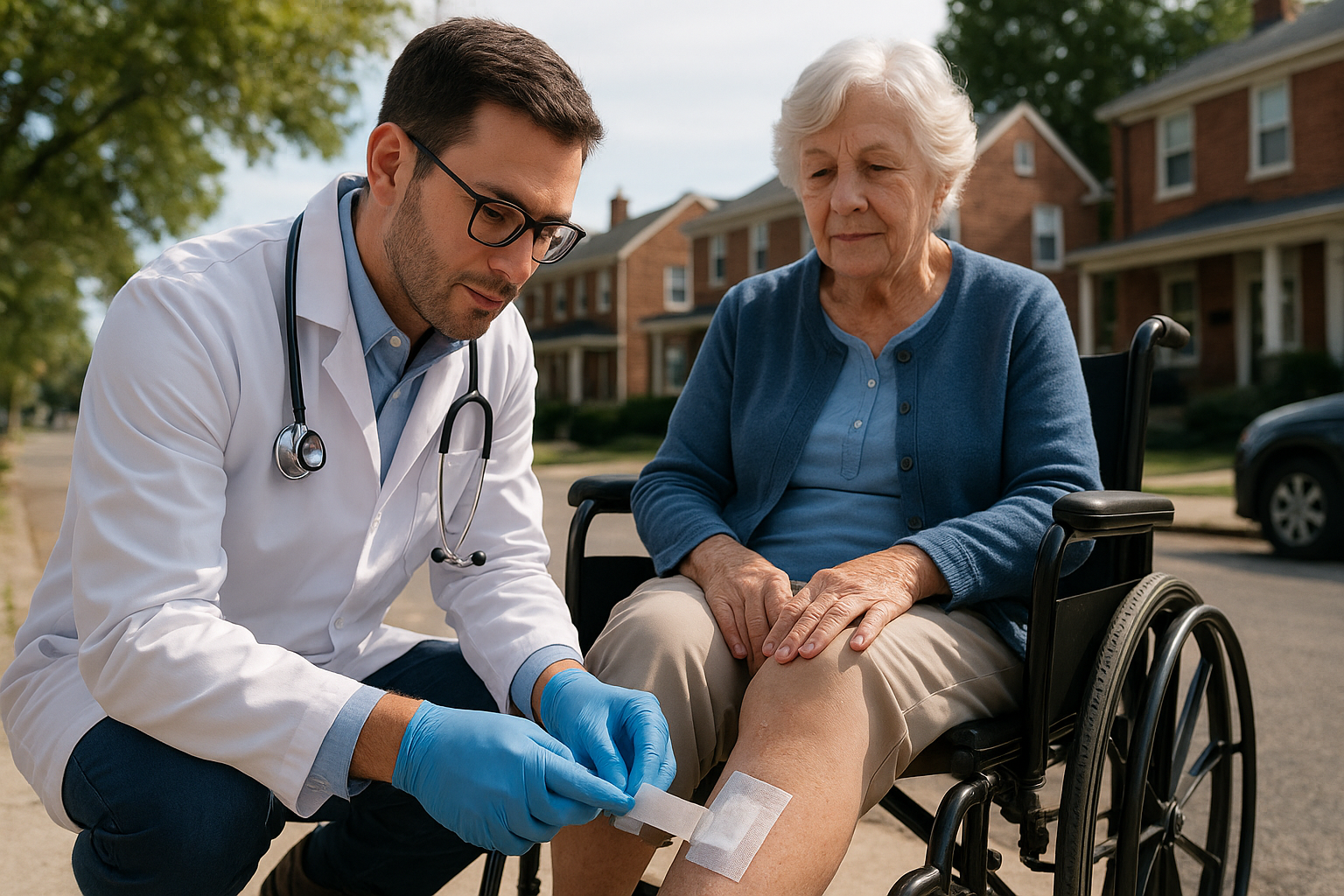
Philadelphia Wound Care is a physician-led mobile medical practice that specializes in advanced wound management. Unlike hospital-based programs, this service comes to you, so you never need to arrange transportation or sit in a waiting room when you are already managing a difficult recovery.
What it is and how it differs from hospital clinics
Most home health wound care is nurse-led. Philadelphia Wound Care puts a licensed General Surgeon at your bedside, which means you receive physician-level evaluation, diagnosis, and treatment decisions without leaving your home or facility.
This distinction matters most for patients with complex or non-responsive wounds who need specialist oversight, not just dressing changes.
What wounds they treat and what therapies they provide
The practice handles diabetic ulcers, pressure ulcers, venous and vascular ulcers, and post-surgical wounds. Beyond standard wound management, they provide advanced regenerative therapies including allograft applications designed to stimulate healing in wounds that have stopped responding to conventional treatment.
Where they see patients across Philadelphia
Philadelphia Wound Care travels to private residences, skilled nursing facilities, assisted living communities, and hospice settings throughout the Philadelphia area and surrounding Pennsylvania regions. Your location does not determine whether you qualify for advanced care.
How referrals, scheduling, and response times work
You can be referred by a hospital case manager, a facility administrator, or your own physician. The practice commits to a 24-hour response time for urgent needs, and the referral process is straightforward to reduce delays in getting care started.
Insurance basics and what to ask about coverage
Philadelphia Wound Care bills Medicare, Medicare Advantage, and major commercial insurance providers directly. Ask specifically whether allograft therapy qualifies under your Medicare Part B plan, since this coverage removes a significant financial barrier for patients needing regenerative treatment.
2. Penn Medicine Penn Wound Care Center
Penn Medicine runs one of the more established hospital wound care Philadelphia programs in the region, with locations across the city and Main Line connected to its broader health system.
Where it is and how to contact the center
You can reach Penn’s scheduling team through the Penn Medicine website or their main appointment line. Referrals from your primary care physician are typically required, so contact your doctor before calling to book an appointment.
What services and therapies they typically provide
Penn’s program covers debridement, compression therapy, advanced wound dressings, and hyperbaric oxygen therapy for qualifying patients. The team includes wound care physicians, vascular surgeons, and podiatrists depending on your wound type and underlying condition.
If your wound involves vascular disease or has not responded to prior treatment, Penn’s multi-specialty network gives you access to several disciplines within one system.
Who this center fits best
This center works best for patients with complex wounds from diabetes, vascular disease, or surgical complications who can travel to a clinic and benefit from coordinated specialist care.
What to ask about referrals, records, and follow-ups
Ask your referring physician to send your complete wound history and prior treatment records before your first visit. Confirm how follow-up appointments are scheduled and whether Penn communicates directly with your primary care provider.
Practical visit planning for patients and caregivers
Parking and accessibility vary by Penn Medicine location, so call ahead to confirm logistics. Bring your insurance cards, current medication list, and any previous wound care documentation with you.
3. Jefferson Health Wound Care and Hyperbaric Therapy
Jefferson Health runs a dedicated hospital wound care Philadelphia program with hyperbaric oxygen services across multiple city locations, making it a practical choice for patients who need more than standard dressing protocols.
Where to go and how to contact the program
Jefferson operates wound care at multiple Philadelphia campuses. Contact their scheduling team through jefferson.edu or call their main appointment line to confirm the nearest location and whether you need a physician referral before your first visit.
What hyperbaric oxygen therapy involves
HBOT places you inside a pressurized chamber where you breathe pure oxygen, driving higher oxygen concentrations into damaged tissue to restart healing in wounds that have not responded to conventional care.
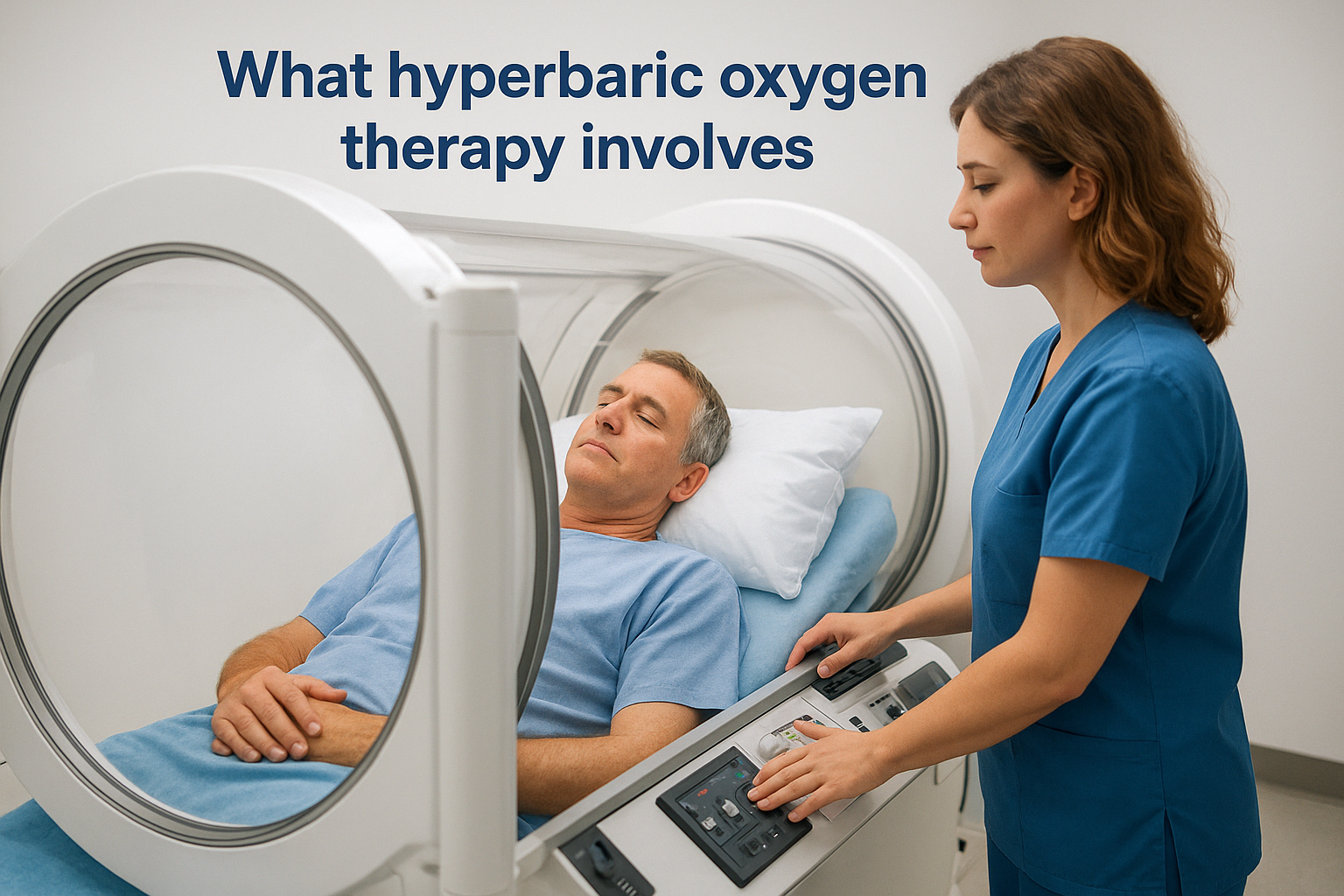
Jefferson evaluates each patient before recommending HBOT, since not every wound type qualifies for this treatment.
Common wound types they manage
Jefferson’s program addresses several chronic and complex conditions, including:
- Diabetic foot ulcers
- Pressure injuries
- Radiation-damaged tissue
- Vascular wounds
Who benefits most from this option
Patients with radiation injuries or diabetes-related ulcers that have stopped responding to conventional treatment get the most value from Jefferson’s combined wound care and hyperbaric program.
What to ask about referrals and care coordination
Confirm whether Jefferson will share treatment updates directly with your referring physician or facility care team so your overall medical management stays coordinated throughout your wound care course.
4. Temple Health Advanced Wound Care
Temple Health offers a hospital wound care Philadelphia program at its North Philadelphia campus, making it a practical option for patients on the northern side of the city who need specialist-level wound management without crossing town.
Location basics and how to schedule
Temple’s wound care services are based at Temple University Hospital on North Broad Street. Visit the Temple Health website or call their scheduling line to book an appointment, and verify whether a physician referral is required before your first visit.
What conditions and wounds they treat
Temple manages several chronic and complex wound types, including:
- Diabetic foot ulcers and lower extremity wounds
- Pressure injuries and venous ulcers
- Wounds linked to poor circulation or systemic illness
What therapies patients may receive
Patients may receive debridement, advanced wound dressings, and compression therapy based on wound type and healing status.
Ask whether you qualify for skin substitute or regenerative therapies, since eligibility depends on wound size, duration, and prior treatment history.
Who this center fits best
Temple fits North Philadelphia residents and patients already within the Temple Health system who need wound specialist oversight coordinated alongside their existing medical care.
What to ask about imaging, labs, and follow-up care
Ask whether Temple will order vascular imaging or lab work during your initial evaluation, since circulation problems directly affect the treatment approach. Confirm that progress notes reach your primary physician after each visit so your overall care stays coordinated.
5. Roxborough Memorial Wound Care and Hyperbaric Center
Roxborough Memorial Hospital provides a hospital wound care Philadelphia option for patients on the northwest side of the city, combining wound management with hyperbaric oxygen therapy in a community hospital setting.
Where it is and how to reach the team
Roxborough Memorial is located at 5800 Ridge Avenue in Northwest Philadelphia. Call the hospital directly or visit their website to schedule an appointment and confirm whether a physician referral is required before your first visit.
What services and adjunctive therapies they provide
The center offers debridement, advanced wound dressings, and compression therapy alongside hyperbaric oxygen for qualifying patients. Treatment planning is based on your wound type, size, and prior healing history.
How hyperbaric oxygen therapy works
HBOT places you in a pressurized chamber where you breathe pure oxygen, pushing higher oxygen concentrations into damaged tissue to restart stalled healing.
Patients typically complete multiple sessions before seeing measurable progress, so ask how many treatments your specific wound type usually requires.
Who this center fits best
This program suits Northwest Philadelphia residents who need wound specialist care close to home without traveling across the city.
What to ask about discharge planning and home care
Ask whether Roxborough coordinates with home health agencies or mobile wound care providers after your clinic course ends so your wound continues receiving attention between visits.
Next Steps
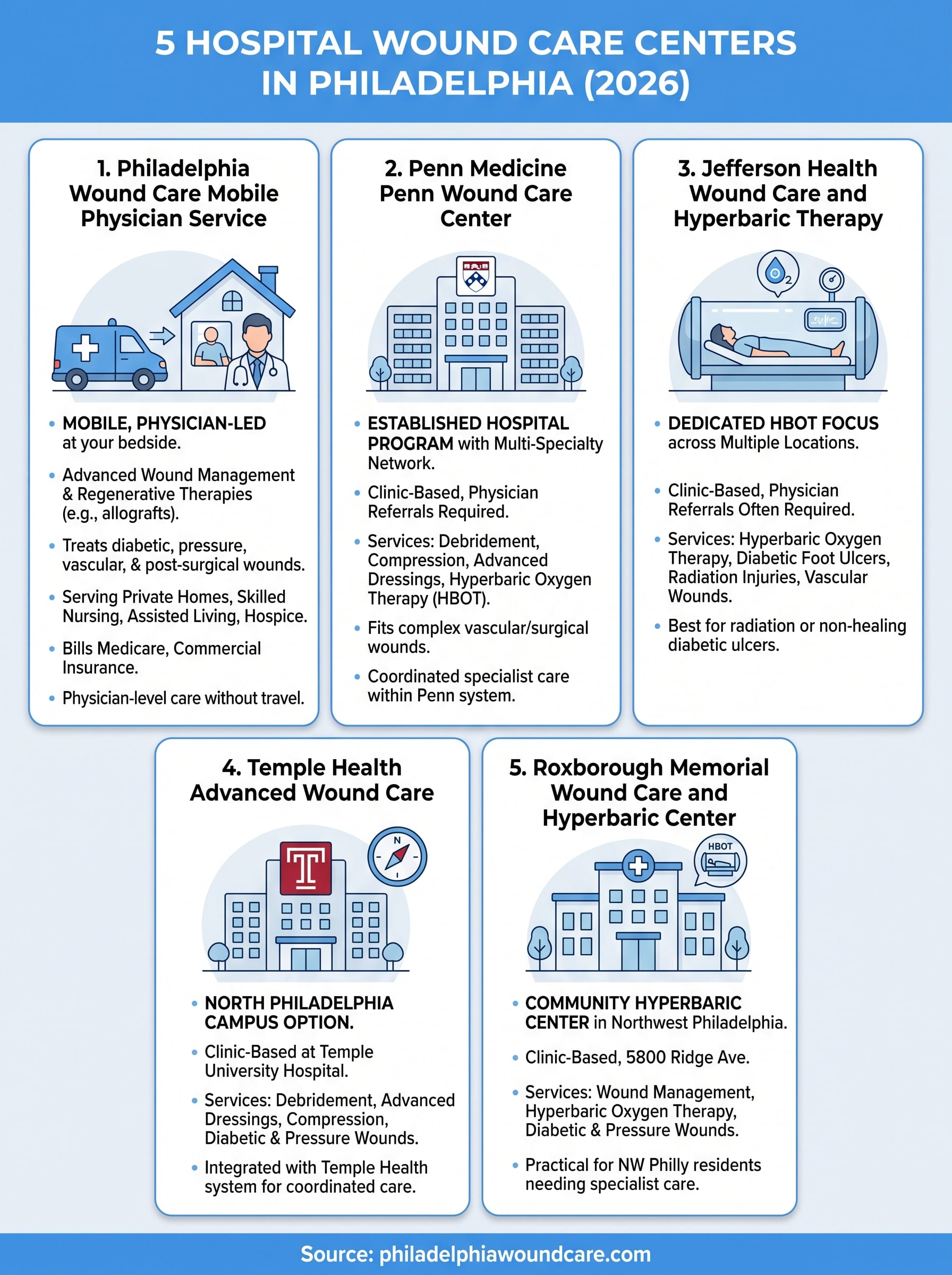
Each of these five hospital wound care Philadelphia programs brings something different to the table, from Penn’s multi-specialty network to Roxborough’s community-based hyperbaric program. Your best choice depends on your wound type, your location, and whether you can realistically get to a clinic for regular visits.
If travel is a barrier, Philadelphia Wound Care brings physician-led wound management directly to you. A licensed General Surgeon evaluates and treats your wound at your bedside, whether you are at home, in a skilled nursing facility, or in hospice. You receive the same specialist-level care without coordinating transportation or sitting in waiting rooms while managing a difficult recovery.
Coverage through Medicare, Medicare Advantage, and major commercial insurance is available, including advanced regenerative therapies under Medicare Part B. Request a mobile wound care consultation and the team will respond within 24 hours.