

In-Home Wound Care Philadelphia: What To Expect At Home
Getting to a wound care clinic isn’t always realistic. Between limited mobility, chronic pain, and the sheer logistics of transportation, many patients in the Philadelphia area struggle to access the specialist-level treatment their wounds actually need. That’s exactly why in-home wound care Philadelphia services exist, to bring the physician, the expertise, and the advanced therapies directly to the patient’s bedside.
At Philadelphia Wound Care, we provide physician-led mobile wound management across private homes, skilled nursing facilities, assisted living communities, and hospice settings throughout the region. Our General Surgeon delivers the same caliber of care you’d receive in a clinical setting, including allograft and regenerative therapies, without requiring you or your loved one to leave home.
But if you’ve never had a wound care specialist come to your home before, you probably have questions. What does a visit actually look like? What treatments are available? How does insurance work? This article breaks down what to expect from in-home wound care, step by step, so you can make a confident and informed decision about your next move.
Why in-home wound care matters
Chronic wounds don’t follow a schedule, and they don’t wait for a patient to find a ride across town. For many patients in Philadelphia, delayed wound treatment is one of the most direct reasons a manageable wound becomes a serious infection or eventually requires a surgical emergency. When care comes to you instead, that delay disappears entirely.
The real cost of skipped appointments
Many patients skip wound care appointments not because they want to, but because getting there is genuinely not possible. Transportation barriers, fatigue, and post-procedure pain make routine clinic visits extremely difficult for elderly patients or anyone recovering from surgery. Missing even one or two appointments can allow a wound to regress, undoing weeks of prior treatment in a short period of time.
When a wound care specialist comes to your door, compliance improves dramatically because the biggest barrier to consistent care is removed entirely.
For patients managing diabetic ulcers or pressure injuries, consistent clinical monitoring is not optional. These wound types deteriorate quickly without regular oversight, and the consequences range from deep tissue damage to limb amputation.
How staying home supports healing
Recovery is not just physical. Stress and disruption from repeated travel can slow the healing process, particularly in older patients whose immune systems are already under strain. In-home wound care Philadelphia services allow patients to receive treatment in a familiar, comfortable environment where the body isn’t fighting additional stressors on top of an open wound.
Your body also heals better when a wound site isn’t being disturbed by repeated movement between locations. Minimizing physical disruption between appointments is a genuine clinical advantage, and mobile wound care is specifically designed to deliver exactly that.
Who provides in-home wound care in Philadelphia
Not all home health providers offer the same level of clinical expertise. In Philadelphia, you’ll find options ranging from visiting nurses to certified wound care nurses to full physician-led practices, and the type of provider you choose directly impacts both the treatments available and the outcomes you can realistically expect.
Physician-led vs. nurse-led services
Most home health agencies send registered nurses or certified wound care nurses to handle dressing changes and monitor progress. This is appropriate for straightforward wounds, but it reaches its limits quickly when a wound fails to respond to standard treatment protocols.
Philadelphia Wound Care operates differently. A licensed General Surgeon leads every evaluation and treatment plan, giving you direct access to advanced interventions like allograft and regenerative therapies. For patients managing diabetic ulcers, pressure injuries, or post-surgical wounds, that level of physician oversight is often the difference between a wound that heals and one that continues to deteriorate.
Choosing a physician-led in-home wound care Philadelphia service means you’re getting specialist-level medical decisions at your bedside, not just routine dressing changes.
What to expect during the first home visit
The first visit from an in-home wound care Philadelphia provider sets the foundation for your entire treatment plan. A physician arrives at your home with clinical-grade equipment and conducts a thorough evaluation before any treatment begins.
What the clinician evaluates
During the initial assessment, the General Surgeon examines the wound’s depth, size, tissue condition, and signs of infection. Your medical history, current medications, and underlying conditions like diabetes or vascular disease all factor into this evaluation.
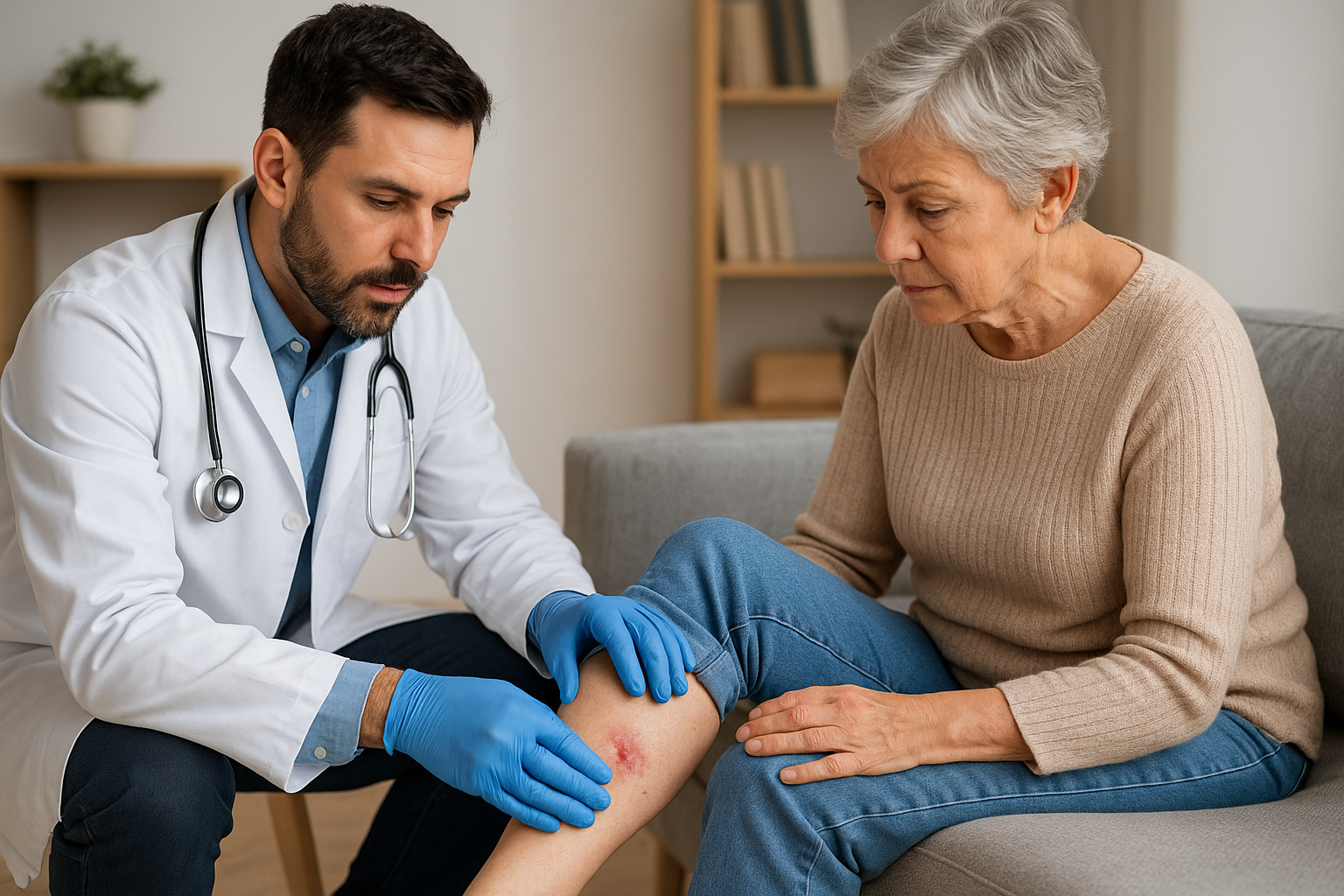
A thorough first assessment is what separates a treatment plan that works from one that simply keeps the wound stable without making real progress.
Your circulation, nutritional status, and mobility are also reviewed because wound healing depends heavily on factors beyond the wound site itself.
What happens after the assessment
Once the evaluation is complete, the physician debrides the wound if needed, applies appropriate dressings, and discusses the treatment plan directly with you or your caregiver. You’ll receive clear instructions about what to watch for between visits, including warning signs that require immediate attention like increased redness, warmth, or drainage. Nothing is left vague.
How treatment works between visits
The work doesn’t stop when the physician walks out your door. Wound healing is a continuous process, and what you do between scheduled visits directly affects how quickly your wound closes. Your physician gives you a clear care protocol before leaving, so you’re never guessing about what needs to happen next.
Dressing changes and monitoring at home
Between visits, you or your caregiver will follow specific dressing change instructions tailored to your wound type. The frequency and method depend on the wound’s condition, but the physician keeps the process as straightforward as possible. Moisture balance, wound protection, and infection prevention are the core goals during this phase.
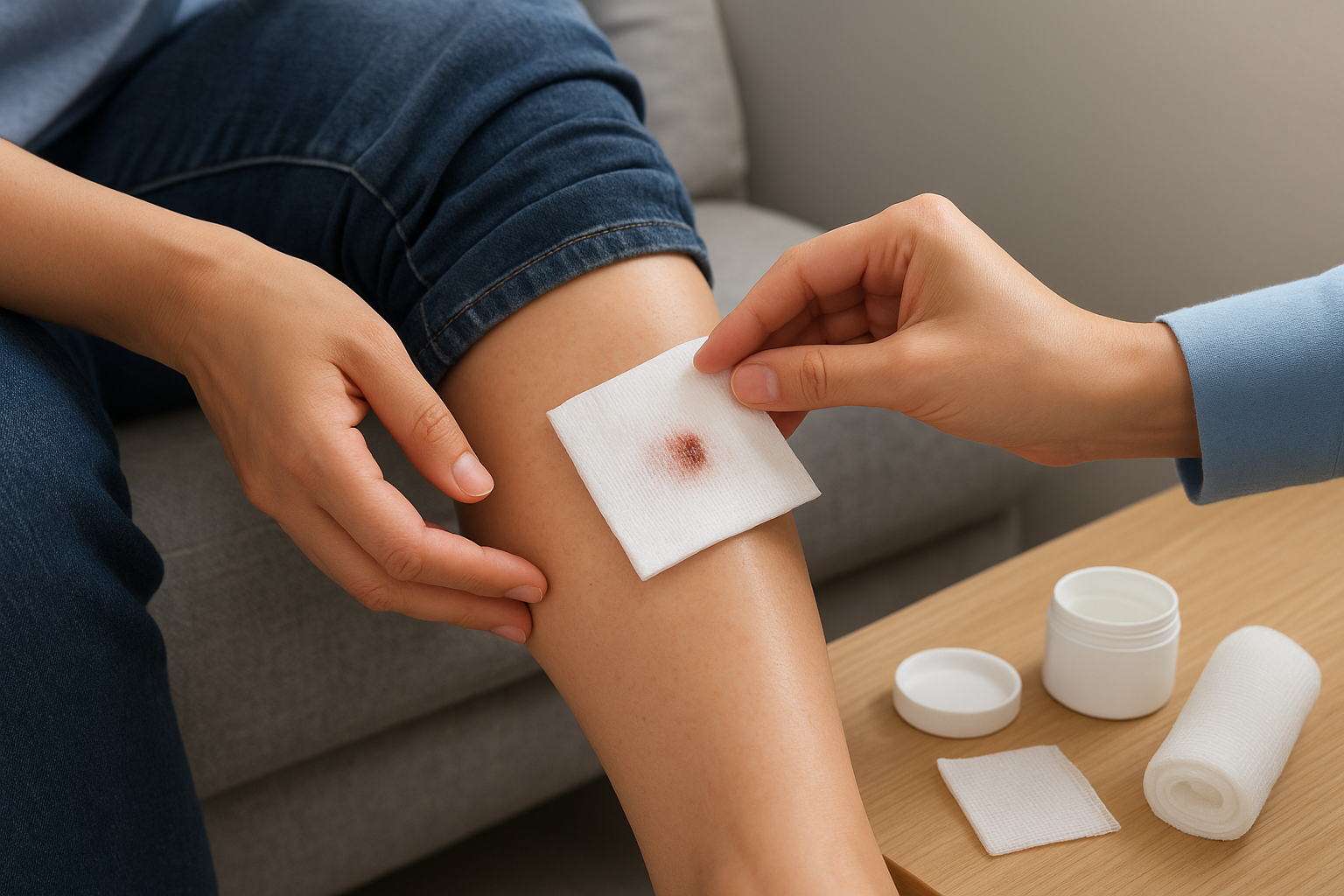
Consistent at-home care between visits is what allows the clinical treatment to build on itself, visit after visit.
When to contact your care team
You should reach out immediately if you notice increased redness, swelling, warmth, or unusual drainage from the wound site. Philadelphia Wound Care maintains a 24-hour response commitment, so you’re never left waiting if something changes unexpectedly between appointments.
Staying in close contact with your in-home wound care Philadelphia team is the safest way to catch complications early and keep the treatment plan on track.
Costs, insurance, and referrals in Philadelphia
One of the most common concerns people have about in-home wound care Philadelphia services is cost. The good news is that Medicare Part B covers advanced wound care treatments, including allograft and regenerative therapies, when provided by a qualified physician. This removes the financial barrier that often stops patients from accessing specialist-level care outside of a hospital.
How insurance billing works
Philadelphia Wound Care bills Medicare, Medicare Advantage, and major commercial insurance plans directly, so you don’t have to navigate complex paperwork on your own. A referral from your primary care physician or a hospital case manager is typically all that’s needed to get started.
Most patients are surprised to find that physician-led in-home wound care costs them little to nothing out of pocket when Medicare coverage applies.
Getting a referral
Referrals can come from your primary care physician, a hospital discharge planner, or a skilled nursing facility. If you’re unsure whether you qualify, contact Philadelphia Wound Care directly. The team reviews your insurance coverage and eligibility quickly so you know exactly where you stand before the first visit is scheduled.
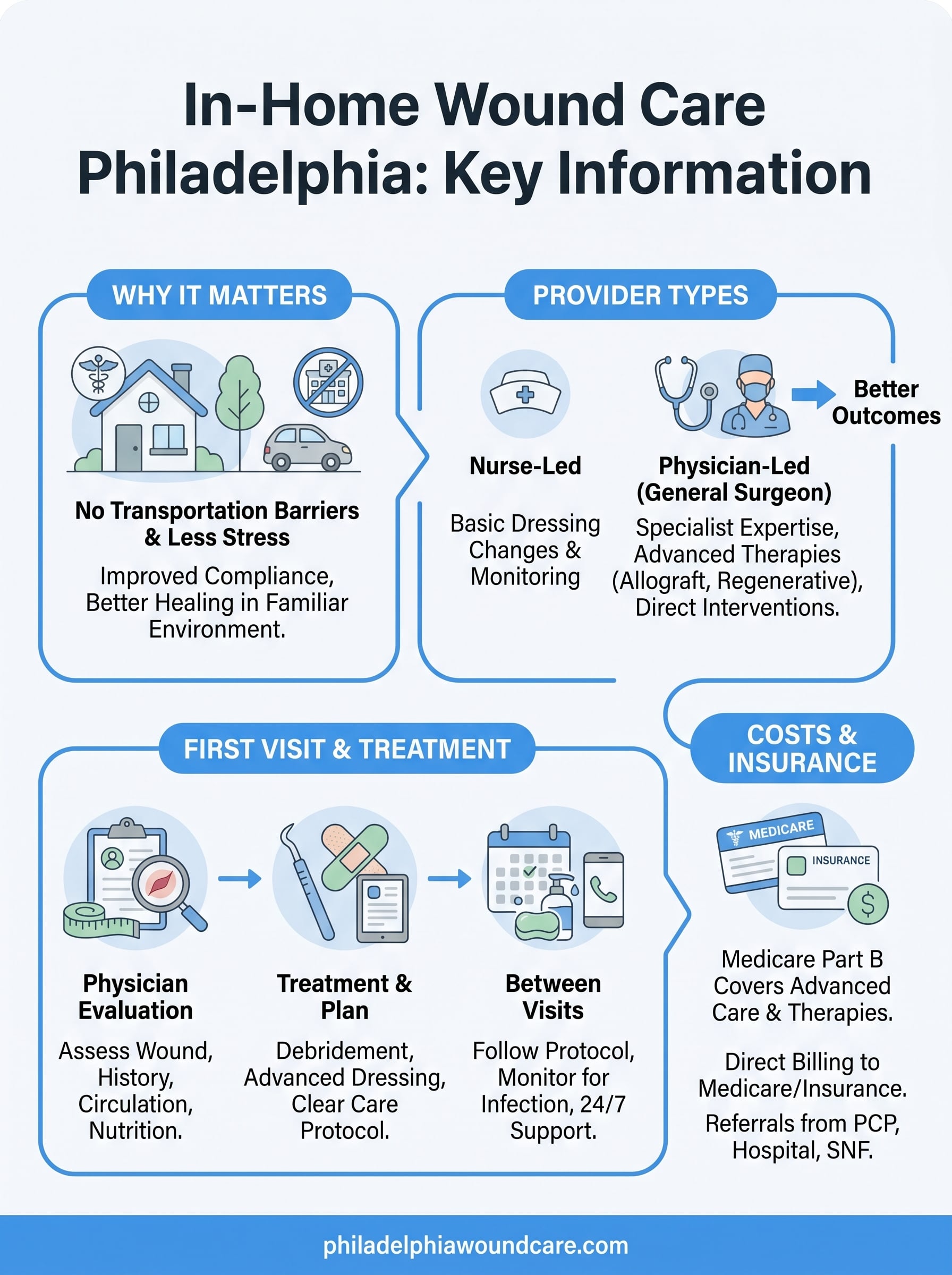
Next Steps
If you’ve been managing a wound that isn’t improving, or supporting a loved one through a difficult recovery, waiting is rarely the right call. Chronic wounds deteriorate faster than most people expect, and the sooner a physician evaluates the situation, the more treatment options remain available to you.
Philadelphia Wound Care brings specialist-level clinical care directly to your door across the Philadelphia region. Whether you’re dealing with a diabetic ulcer, a pressure injury, or a post-surgical wound, our General Surgeon builds a treatment plan around your specific condition and delivers it where you are.
Your next move is straightforward. Contact the team to confirm your insurance coverage and eligibility, or ask your physician, discharge planner, or facility coordinator to submit a referral. For patients and caregivers ready to get started, request your in-home wound care Philadelphia appointment today and get a response within 24 hours.