

Medicare Guidelines For Skin Substitutes: 2025–2026 Updates
Medicare’s coverage rules for skin substitutes, now officially classified as Cellular and/or Tissue-Based Products (CTPs), have shifted significantly over the past two years. If you’re a clinician, facility administrator, or caregiver trying to understand the current Medicare guidelines for skin substitutes, you’re dealing with a moving target. New Local Coverage Determinations (LCDs), revised billing codes, and stricter clinical eligibility criteria have changed how these products are approved, documented, and reimbursed.
At Philadelphia Wound Care, we use advanced allografts and regenerative therapies daily as part of our mobile wound management services across the Philadelphia region. These policy changes directly affect how we treat patients with chronic diabetic ulcers, venous wounds, and pressure injuries, and how those treatments are covered under Medicare Part B. We’ve tracked every update closely because our patients depend on it.
This article breaks down the 2025 and 2026 Medicare policy updates for skin substitutes and CTPs. You’ll find the current LCD requirements, clinical criteria your wound must meet for coverage, and the reimbursement changes that matter most, whether you’re a referring provider, a facility case manager, or a family member trying to understand what Medicare will actually pay for.
What counts as a skin substitute under Medicare
Medicare no longer uses the term "skin substitute" in its official coverage language. The Centers for Medicare and Medicaid Services (CMS) now groups these products under the umbrella term Cellular and/or Tissue-Based Products (CTPs). Understanding this classification is the first step to navigating the medicare guidelines for skin substitutes, because coverage, billing, and documentation requirements all flow from how CMS categorizes the product you’re using.
The CTP classification
A CTP is any product applied to a wound that contains living cells, extracellular matrix components, or biological scaffolding designed to support tissue regeneration. This includes products derived from human donors (allografts), animal sources (xenografts), and lab-grown synthetic matrices. What these products share is a clinical purpose: they substitute for or supplement damaged skin when the body cannot heal on its own.
CMS defines a CTP as distinct from a simple wound dressing. If the product’s mechanism of action involves biological activity at the wound bed, it falls under CTP coverage rules.
Product categories Medicare recognizes
CMS assigns CTPs to one of two billing categories based on cost and complexity. High-cost CTPs are billed using Q-codes and reimbursed at a higher rate under Medicare Part B. Low-cost CTPs fall into a separate payment bundle. The category your product lands in determines which code you submit and how much Medicare pays.
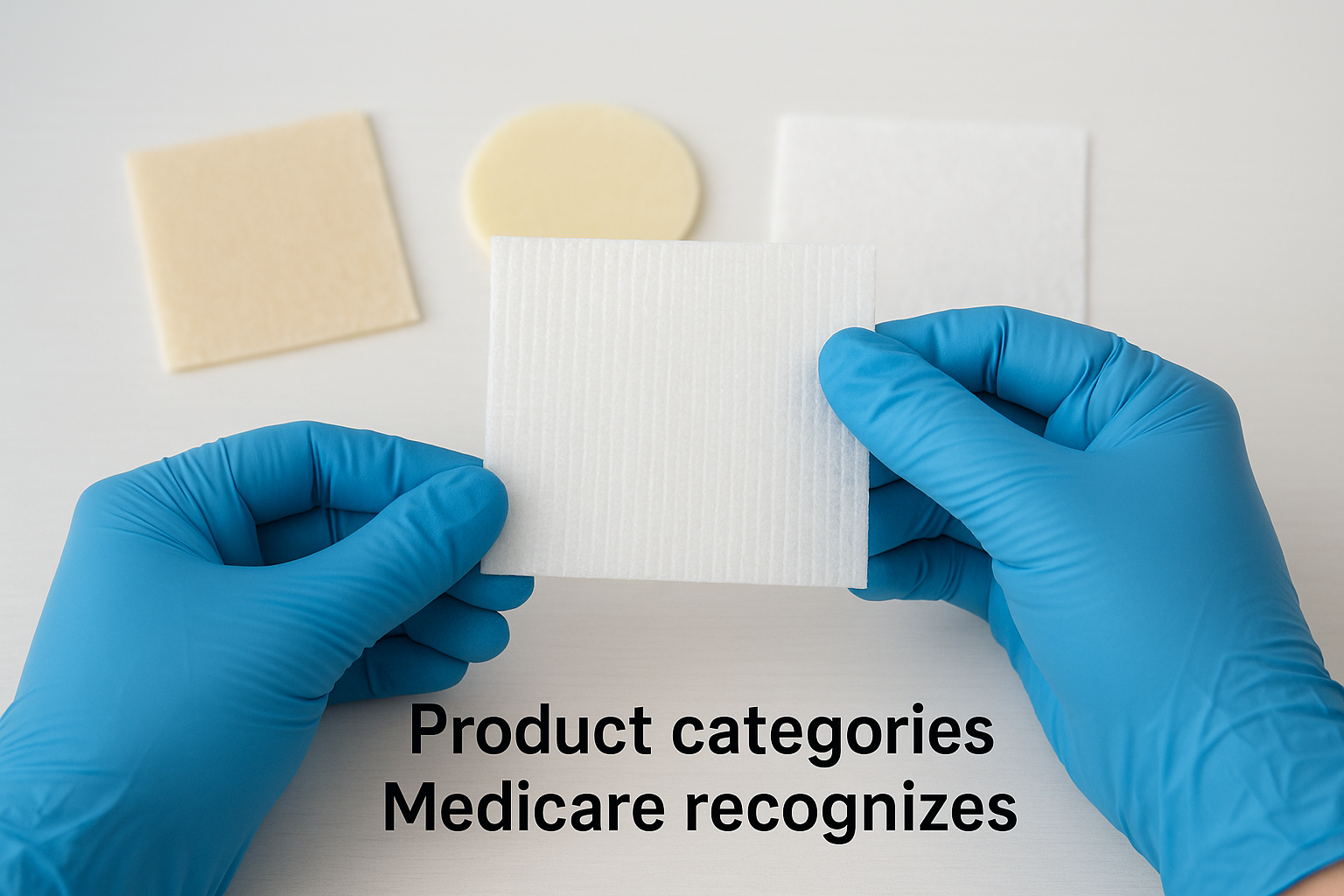
Products currently recognized under Medicare’s CTP framework include:
- Human-derived allografts (amniotic, placental, and dermal matrices)
- Xenograft-based products from porcine or bovine sources
- Synthetic and bioengineered skin substitutes that meet CMS biological activity standards
- Combination products with both cellular and acellular components
If a product does not appear on CMS’s approved product list for a given billing period, Medicare will not reimburse it, regardless of clinical indication.
Why the rules changed in 2025 and 2026
The CTP policy overhaul stems from years of documented billing abuse and inconsistent clinical outcomes. CMS identified that a large share of CTP claims lacked evidence of medical necessity, were applied too early in the treatment timeline, or used products with limited clinical evidence. The Office of Inspector General flagged skin substitute spending as a high-risk area, which pushed CMS to act.
The cost problem CMS was solving
Medicare spending on skin substitutes grew dramatically between 2015 and 2023. CMS responded by restructuring the payment classification system and tightening LCD requirements to ensure products are used only when conservative wound care has already failed. For providers trying to understand medicare guidelines for skin substitutes, this means the bar for clinical justification is now higher than it has ever been.
CMS data showed that CTP expenditures under Medicare Part B more than doubled between 2018 and 2022, raising red flags for program integrity.
The 2026 updates went further by requiring prior authorization for certain high-cost CTPs and establishing new documentation standards tied to wound measurement and treatment history. These changes affect every provider billing for these products, so knowing the current rules protects both your patients and your reimbursement.
LCD coverage criteria for DFUs and VLUs
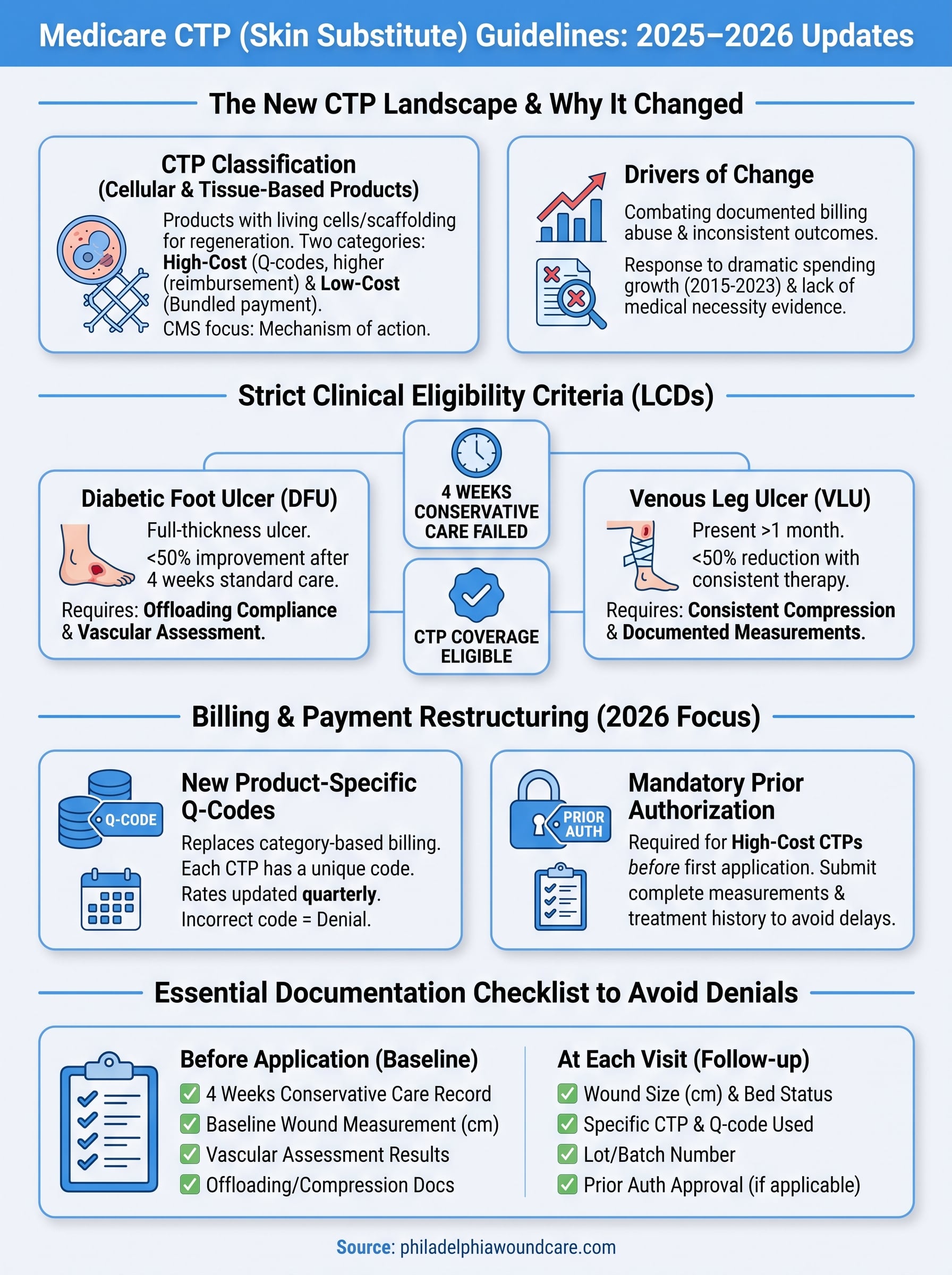
The current LCDs set specific clinical thresholds your patient must meet before Medicare will approve CTP use. Under the medicare guidelines for skin substitutes, coverage applies only after conservative wound care has failed over a defined treatment period, typically four weeks for most wound types.
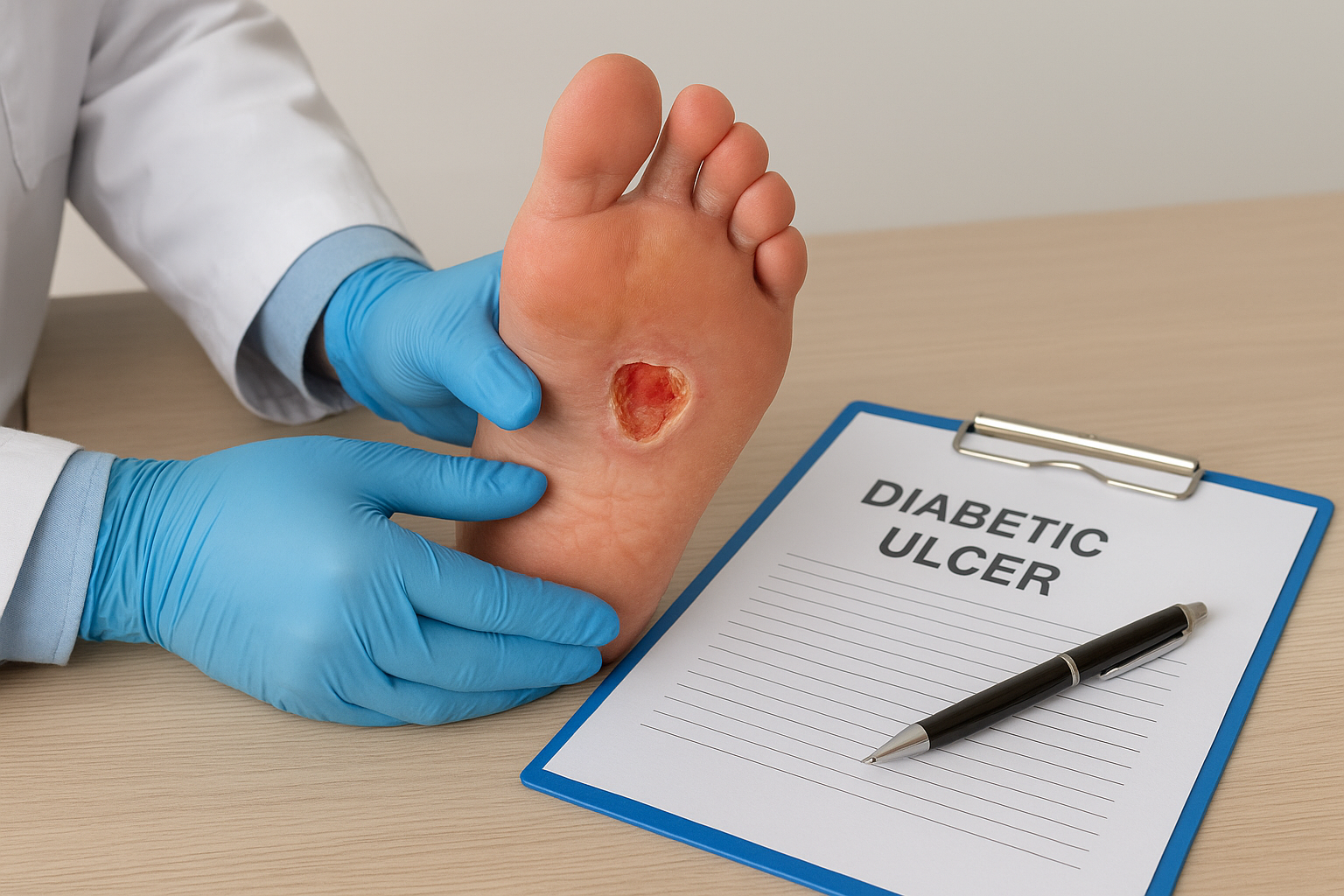
Diabetic foot ulcer requirements
For a DFU, the wound must be a full-thickness ulcer that has not improved by at least 50% after four weeks of standard care. Your documentation must confirm offloading compliance, adequate blood supply, and blood glucose management. Medicare will not approve a CTP application unless these baseline conditions are recorded in the chart before the application date.
CMS requires evidence of a vascular assessment, such as an ankle-brachial index or toe pressure measurement, before approving CTP use on a DFU.
Venous leg ulcer requirements
VLUs carry their own threshold. The wound must be present for at least one month and show less than 50% reduction in size despite consistent compression therapy. Your records need to confirm the compression regimen used, wound measurements taken at each visit, and a clear clinical explanation for why the wound has not responded to that standard treatment.
Billing and payment changes for 2026
The 2026 updates introduced the most significant billing restructuring since CTPs were first covered under Medicare Part B. If you’re submitting claims for skin substitutes, you need to know that product-specific Q-codes now replace the older category-based billing structure. Each CTP has its own assigned code, and submitting the wrong code will result in an automatic denial regardless of clinical justification.
The new Q-code structure
CMS published a revised Q-code list effective January 1, 2026, which aligns reimbursement rates directly to individual product classifications rather than cost tiers. This means your reimbursement amount depends on which specific product you applied, not simply whether it falls into a high-cost or low-cost bucket. Review the updated CMS fee schedule before each application to confirm the current rate for the product you’re using.
CMS updates Q-code assignments and payment rates quarterly, so a code that was valid in January may carry a different rate or status by April.
Prior authorization requirements
For high-cost CTPs, prior authorization is now mandatory before the first application in a benefit period. This requirement directly affects how you schedule and plan treatment under the current medicare guidelines for skin substitutes. Submit your authorization request with complete wound measurements, treatment history, and vascular assessment results to avoid delays in patient care.
Documentation checklist to avoid denials
Following the medicare guidelines for skin substitutes requires more than clinical skill. Your chart is the first thing a Medicare auditor reviews, and missing or incomplete documentation is the most common reason claims get denied, even when the treatment was medically appropriate.
What your chart must show before application
Your records must establish a clear baseline before you apply any CTP. Include a dated wound measurement, confirmation of four weeks of conservative care, vascular assessment results, and documentation of any offloading or compression used. If any of these elements is absent, Medicare has grounds to deny the claim.
A single missing vascular assessment can void an otherwise valid CTP claim, regardless of how well the wound responded to treatment.
What to record at each visit
At every follow-up, you need wound size measurements in centimeters, a description of wound bed status, and notes confirming the patient’s continued eligibility. Record the specific CTP product applied, the Q-code used, and the lot or batch number. If prior authorization was required, keep a copy of the approval in the chart. These records protect your reimbursement and support the medical necessity case if a claim is ever reviewed.
Next steps
The 2025 and 2026 policy updates have made the medicare guidelines for skin substitutes more demanding, but not impossible to navigate. If you’re a clinician, case manager, or caregiver, your biggest risk is falling behind on documentation requirements or applying a CTP before the patient meets clinical eligibility. Review your chart templates against the LCD criteria covered in this article, and confirm that your billing team has updated to the current Q-code structure before submitting any new claims.
For patients and families in the Philadelphia area, accessing these advanced therapies does not have to mean a trip to a clinic or hospital. Philadelphia Wound Care brings physician-led wound management directly to your home, skilled nursing facility, or assisted living community, and we handle Medicare billing coordination as part of that care. If you have a non-healing wound that has not responded to standard treatment, request a mobile wound care visit to get a specialist evaluation where you are.