

Mobile Wound Care Philadelphia: What It Is And Who It Helps
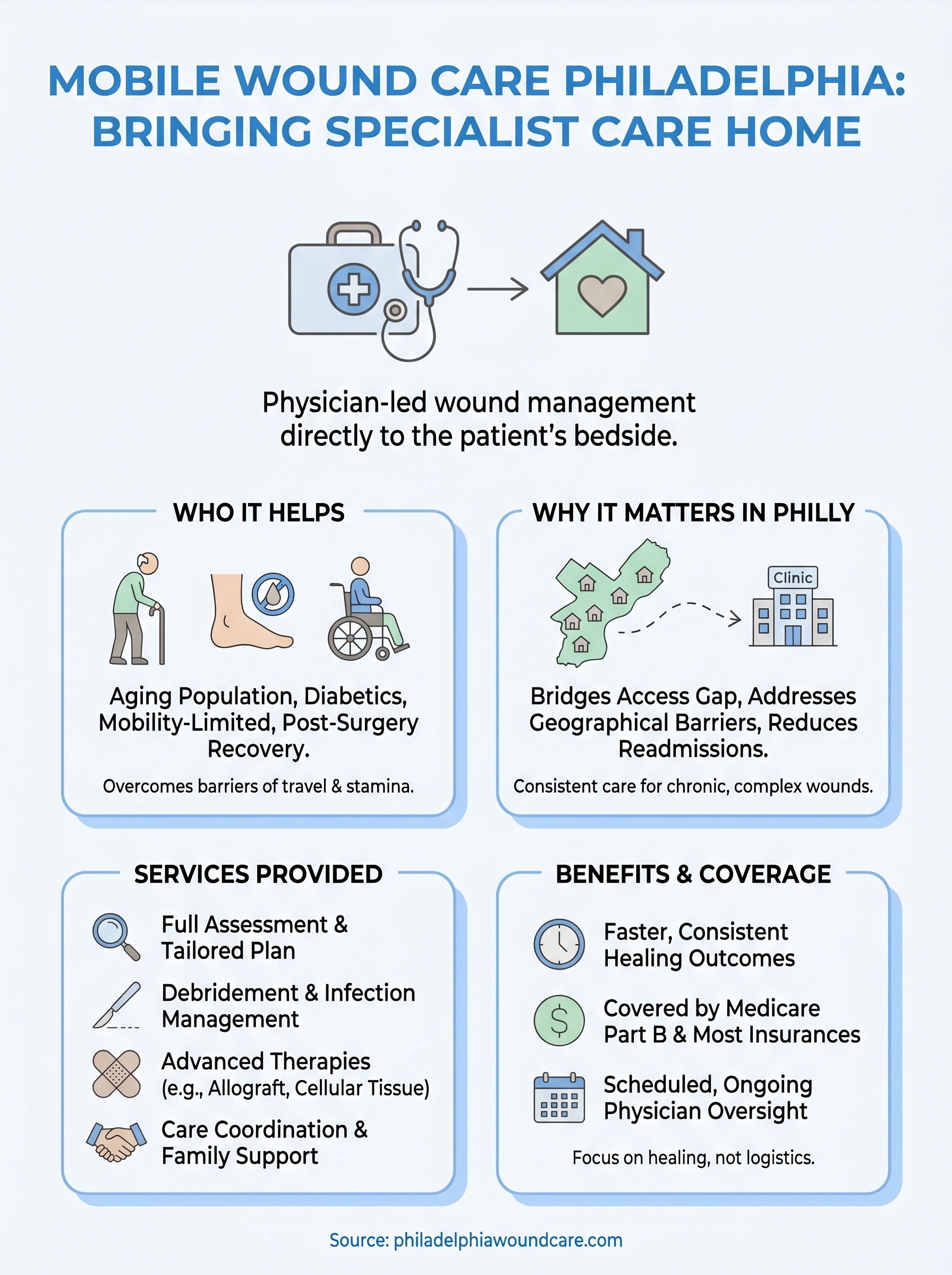
Not every patient who needs advanced wound treatment can make it to a clinic. For people recovering from surgery at home, managing diabetic ulcers in a skilled nursing facility, or dealing with pressure injuries that won’t close, the trip alone can be a barrier to getting better. That’s exactly the problem mobile wound care Philadelphia services are built to solve, bringing physician-led wound management directly to the patient’s bedside, wherever that bedside happens to be.
At Philadelphia Wound Care, this is the core of what we do. Our General Surgeon provides specialized evaluations and treatments in private homes, assisted living communities, nursing facilities, and hospice settings across the Philadelphia area. We work with patients whose wounds are chronic, complex, or non-healing, the kinds that require more than standard home health nursing and often fall through the cracks after hospital discharge or between provider handoffs.
This article breaks down what mobile wound care actually involves, who benefits from it most, and how it differs from traditional outpatient wound clinics. Whether you’re a patient, a family caregiver, or a facility case manager trying to coordinate care, you’ll walk away with a clear picture of how this model works and when it makes sense to use it.
Why mobile wound care matters in Philadelphia
Philadelphia has a large aging population dealing with chronic conditions that make wound healing difficult. Diabetes, vascular disease, and limited mobility are widespread among residents across the city, and these conditions slow or prevent wound closure on their own. If you or someone you care for needs specialized wound treatment, getting to a traditional outpatient clinic requires reliable transportation, physical stamina, and consistent caregiver support, none of which every patient can count on.
For many Philadelphia patients, the distance between their bed and the nearest wound clinic is the single biggest reason their wound does not heal.
The access gap in post-acute wound care
After a hospital stay, patients often return home or transfer to a skilled nursing facility without a clear path to specialized wound follow-up. Primary care physicians and home health nurses provide solid general care but are not always equipped to manage complex wounds like tunneling pressure injuries or non-healing diabetic ulcers. That gap creates a window where wounds can stall, worsen, or become infected before anyone with surgical-level expertise steps in to reassess the treatment plan. Left unaddressed, that window drives preventable readmissions and longer recovery times for patients who were already discharged from hospital care.
Philadelphia’s geography makes the problem worse
The city and surrounding region include dozens of skilled nursing facilities, assisted living communities, and dense residential neighborhoods where mobility-limited patients live close together but still face real logistical barriers. A patient in Northeast Philadelphia or Chester County does not have the same easy clinic access as someone located near a major hospital campus. Mobile wound care Philadelphia services address this directly by bringing the physician to the patient, cutting the lag time between wound identification and the start of advanced, physician-directed treatment that can actually move the healing process forward.
How mobile wound care works at home and in facilities
The process is straightforward. A board-certified General Surgeon travels to your location with the clinical tools and supplies needed to evaluate and treat your wound on-site. Most treatments that previously required a clinic visit can be completed at your bedside, removing the physical toll of travel entirely.
What happens during a visit
Your first visit includes a full wound assessment covering measurements, tissue evaluation, and infection screening. The physician reviews your medical history and builds a tailored treatment plan based on your wound type and current healing status.
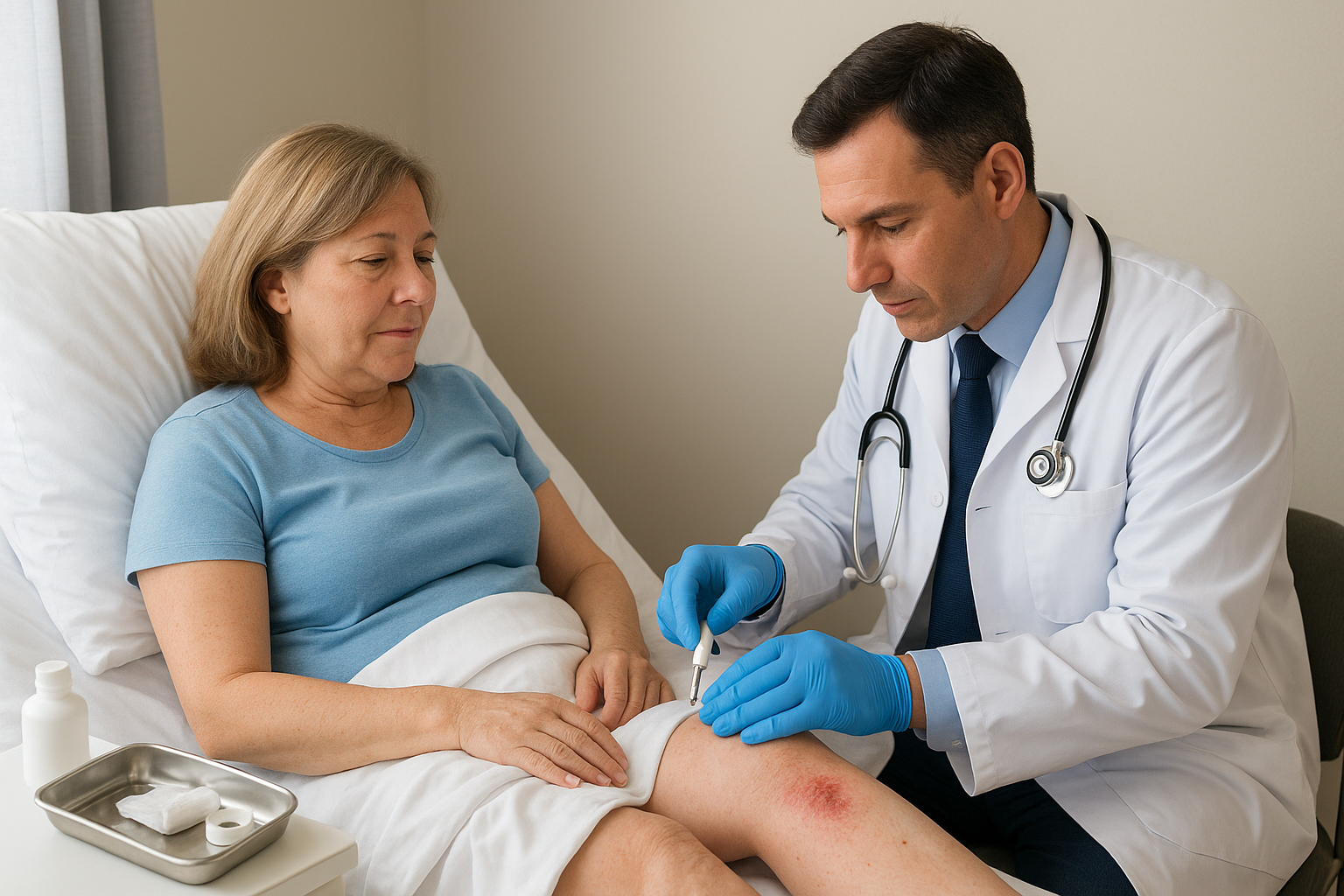
Each follow-up visit tracks wound progress and adjusts the plan based on how your tissue is responding. This ongoing clinical judgment at each visit is what drives faster and more consistent healing outcomes.
Consistent physician oversight at every visit is what separates mobile wound care Philadelphia services from standard home health nursing.
Care in nursing facilities and assisted living
If you reside in a skilled nursing facility or assisted living community, the model works the same way. Your physician coordinates directly with the facility’s nursing staff and keeps your primary care provider updated so everyone stays aligned on your treatment plan.
Family members benefit too, since they can attend visits without arranging complex transportation or taking time away from work.
Who benefits and which wounds we treat
Mobile wound care Philadelphia services are built for people whose wounds are complex, chronic, or slow to close despite standard treatment. Elderly patients, individuals managing diabetes or vascular disease, and people recovering from surgery at home are among those who gain the most from physician-led care delivered at their location. Family caregivers and facility staff in nursing homes and assisted living communities also benefit, since they get specialist-level oversight without arranging outside transport.
Patients who are best served
If you are homebound or mobility-limited, leaving for clinic appointments on a consistent basis is often too difficult to manage. That inconsistency breaks the treatment cycle that wound healing depends on.
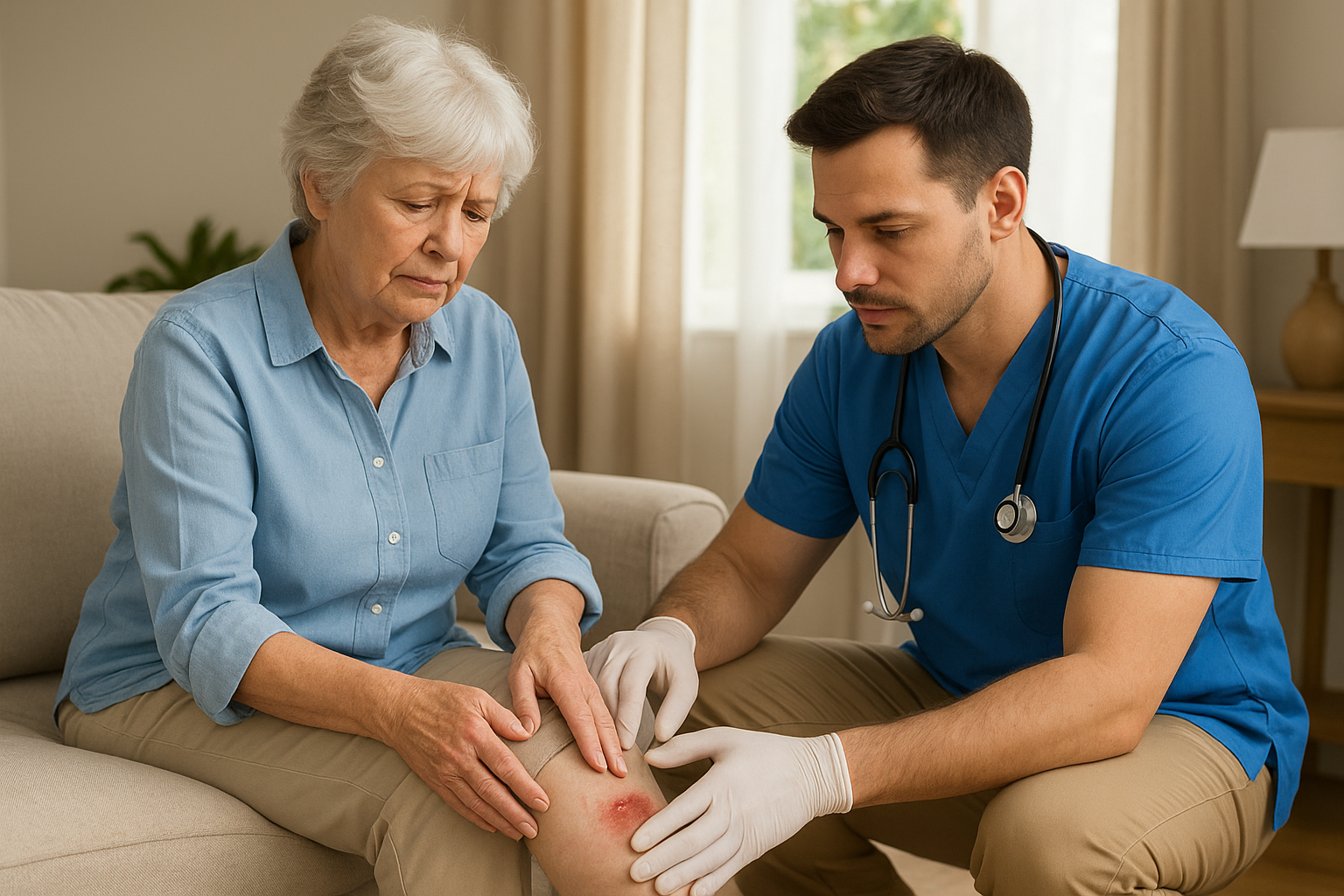
Patients in skilled nursing facilities, hospice settings, or assisted living communities share the same barrier, and mobile physician visits eliminate it entirely. Family members benefit as well, since they can be present at each visit without coordinating complicated travel.
Consistent, scheduled physician visits matter more to wound healing outcomes than any single treatment applied once and left.
Wound types we treat
Diabetic foot ulcers, pressure injuries, venous and vascular ulcers, and non-healing post-surgical wounds are the primary conditions we address. Each of these requires ongoing clinical reassessment and treatment adjustments that go beyond what standard home health nursing typically provides.
What treatments a mobile wound doctor can provide
A mobile wound physician brings a wider range of clinical tools than most patients expect. Debridement, infection management, and advanced dressing protocols are all performed at your bedside, addressing the wound directly rather than scheduling a separate clinic appointment to handle each step.
The treatments available through mobile wound care Philadelphia are not a reduced version of clinic care; they are the same interventions, delivered where you are.
Advanced therapies and regenerative treatments
Allograft and cellular tissue matrix therapies are among the most effective tools for non-healing wounds, and your physician can apply them during a standard visit. These regenerative treatments stimulate new tissue growth in wounds that have stopped responding to conventional dressings, and they are covered under Medicare Part B when medically necessary.
Your physician also manages wound cultures, topical antimicrobials, and compression therapy when vascular or venous conditions are involved. Each visit includes a clinical review that determines which treatment your wound needs next, rather than applying a fixed protocol regardless of how your tissue is responding. This level of individualized, physician-directed adjustment at every appointment is what drives consistent progress in complex or chronic wounds.
How to start care, referrals, and insurance basics
Starting mobile wound care Philadelphia services is simpler than most patients expect. You can reach out directly as a patient or family caregiver, or a referring physician, hospital case manager, or facility staff member can submit a referral on your behalf. We respond within 24 hours of your initial contact.
Getting a referral
Your referral can come from several sources, and each pathway connects you to the same specialist-level care:
- Primary care physicians referring patients following hospital discharge
- Hospital case managers coordinating transitions to home or facility-based care
- Skilled nursing or assisted living staff managing residents with complex or non-healing wounds
You do not need to manage complicated paperwork on your own to access specialist wound care at your location.
Insurance and Medicare coverage
Medicare Part B and Medicare Advantage cover physician-led wound care services, including advanced therapies like allograft treatment, when medically necessary. We handle direct billing and coverage coordination so you focus on healing rather than insurance logistics.
Most major commercial insurance plans are also accepted. Our team confirms your specific coverage details before your first visit so there are no surprises once care begins.
Next steps
If you have a wound that is not closing, stalling after hospital discharge, or simply not responding to standard home health care, specialist-level treatment should not require a clinic trip you cannot make. Mobile wound care Philadelphia services exist specifically for situations like yours, bringing physician-led evaluations and advanced treatments directly to your location so your healing does not get delayed by logistics.
Your next step is straightforward. Contact our team, share the basics about your wound and your situation, and we will confirm coverage and schedule your first visit within 24 hours. You can also ask your primary care physician, hospital case manager, or facility staff to send a referral directly on your behalf.
Reach out today and get your wound in front of a specialist without leaving your home. Visit our mobile wound care services page to learn more or connect with our team to get started.