
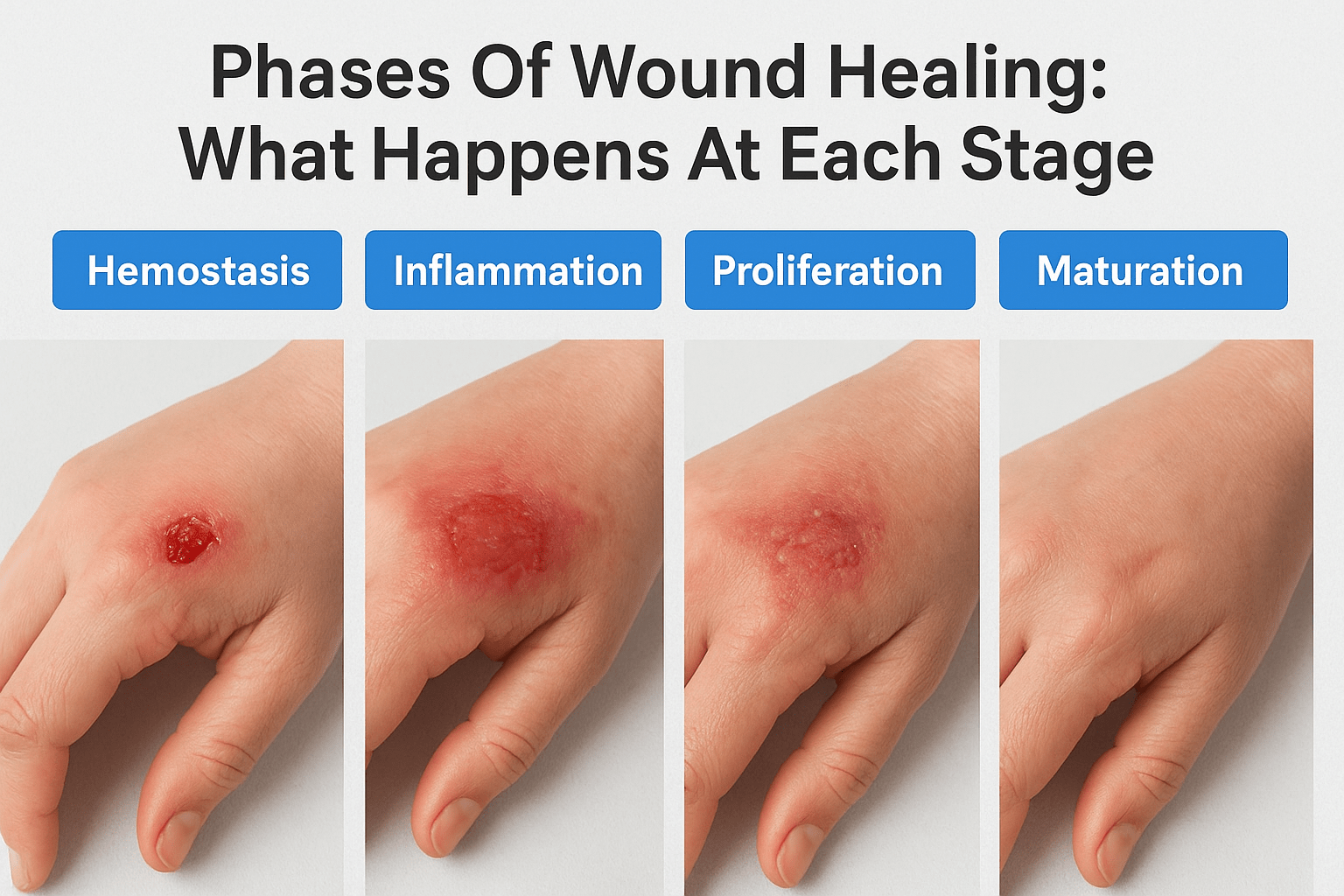
Phases Of Wound Healing: What Happens At Each Stage
Watching a wound day after day and not knowing if it’s healing on schedule or stalling out is unsettling, especially when it belongs to an elderly parent or a patient you’re responsible for at a facility. Understanding the phases of wound healing process gives you a real benchmark instead of guesswork. Every wound, from a surgical incision to a diabetic ulcer, moves through the same biological sequence, and knowing what should be happening tells you whether progress is normal or whether something needs attention.
This article breaks down each stage in plain terms: hemostasis and inflammation, where the body stops bleeding and clears debris, followed by proliferation and maturation, where new tissue forms and the wound gains strength. You’ll see what to expect in each phase and roughly how long it should take.
We treat chronic and complex wounds throughout Philadelphia every day, often stepping in exactly when a wound has stalled in one of these stages. That hands-on experience shapes what follows, so you get a practical timeline and clear warning signs for when a wound needs specialist care rather than more waiting.
Why the phases of wound healing matter for recovery
Every wound, no matter how it happened, follows the same four-stage biological script: hemostasis, inflammation, proliferation, and maturation. Skipping ahead isn’t possible, and getting stuck in one stage is exactly what turns a routine wound into a chronic one. Recognizing which phase a wound is in tells you what’s normal, what’s a red flag, and what kind of care actually helps at that moment. This matters most for older adults and people with diabetes or vascular disease, whose wounds often move through these stages slower or get stuck entirely.
Hemostasis: stopping the bleed
Within minutes of an injury, blood vessels constrict and platelets clump together to form a clot. This is hemostasis, and it typically lasts a few minutes to a couple of hours. You’ll see this as the initial bleeding slows, then stops, and a scab or fibrin network begins forming over the wound. For patients on blood thinners or with clotting disorders, this phase can drag on and needs closer monitoring.
Inflammation: the cleanup crew
Over the next two to five days, the body sends white blood cells to the site to fight bacteria and clear out damaged tissue. This is why a healing wound looks red, feels warm, and swells a bit, that’s normal inflammation, not necessarily infection. Caregivers often panic at this stage because it looks alarming, but some redness and drainage is the immune system doing its job. The trouble starts when this phase runs long. In patients with diabetes or poor circulation, inflammation can stretch on for weeks instead of days, and that delay is one of the most common reasons wounds turn chronic.
A wound stuck in inflammation past the one-week mark is the single clearest sign that something is interfering with normal healing.
Proliferation: rebuilding the tissue
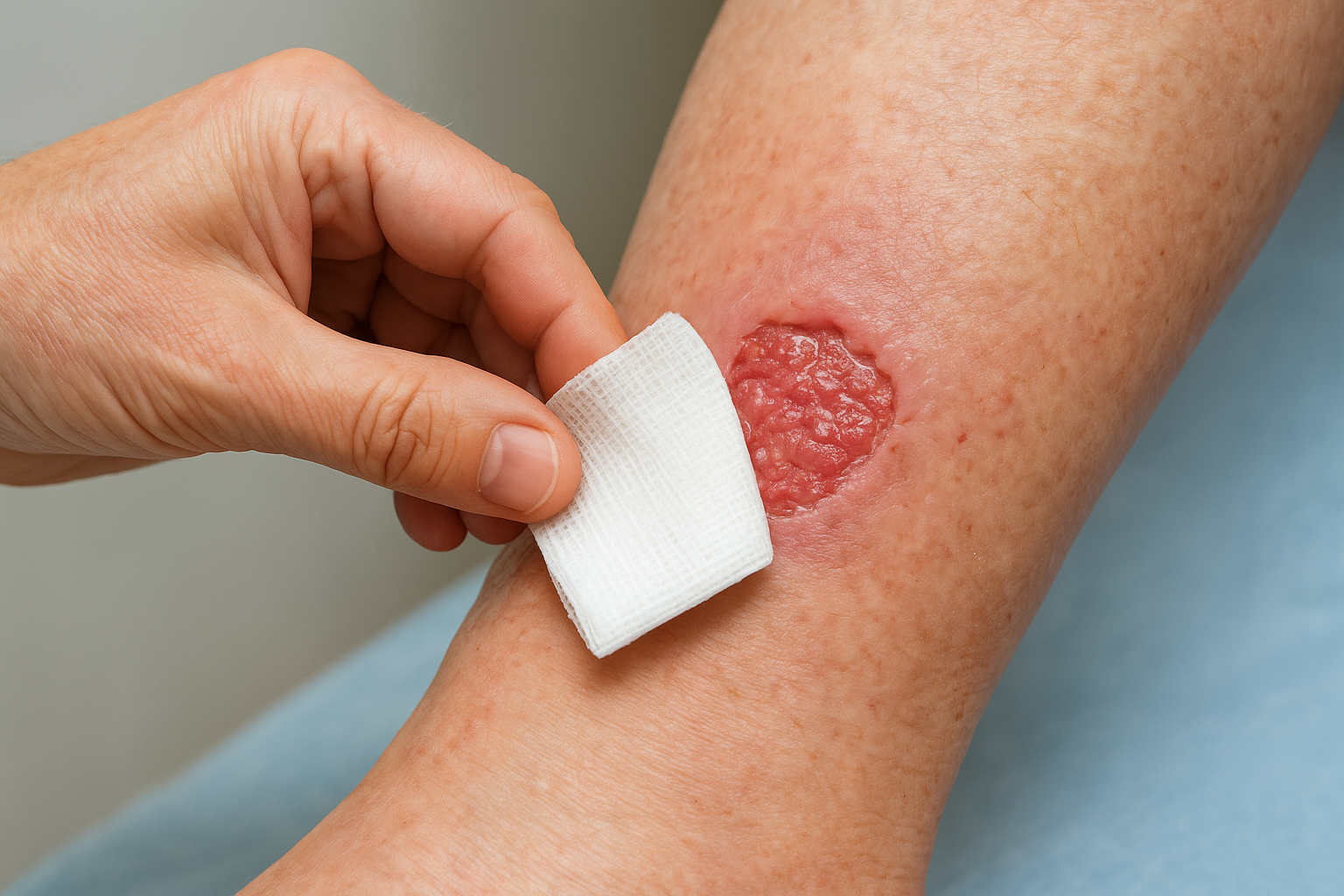
Somewhere between day four and day twenty-four, the body shifts into building mode. New blood vessels form, collagen fills the wound bed, and you’ll see pink or red granulation tissue appear along with new skin edges creeping inward. This is the proliferation phase, and it’s the stretch where visible progress usually becomes obvious to caregivers and patients alike. A wound that isn’t showing granulation tissue by the two-to-three week mark is worth flagging to a wound care specialist, since that’s often where advanced therapies like allografts make the biggest difference.
Maturation: strengthening for the long haul
The final stage, maturation, is the longest by far, running anywhere from three weeks to two full years depending on the wound’s size and the patient’s overall health. Collagen fibers reorganize and strengthen, and the new tissue slowly gains tensile strength, though it never quite matches the original skin. Scars often look flat and pale by the end of this phase, but that outward calm doesn’t mean healing is instant; tensile strength keeps building quietly for months.
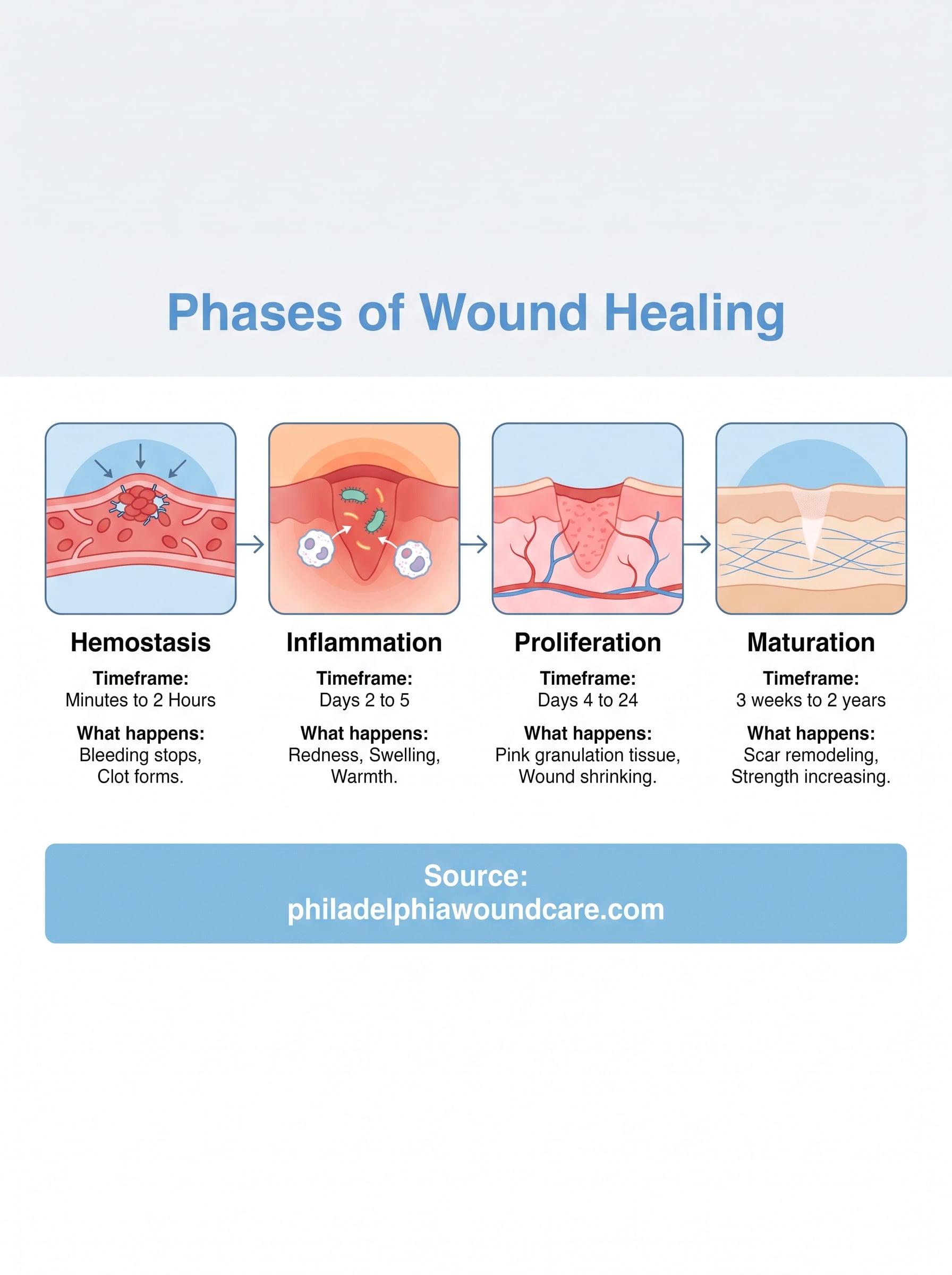
Here’s a quick reference for how these phases typically line up:
| Phase | Typical Timeframe | What You’ll See |
|---|---|---|
| Hemostasis | Minutes to 2 hours | Bleeding stops, clot forms |
| Inflammation | Days 2 to 5 | Redness, swelling, warmth |
| Proliferation | Days 4 to 24 | Pink granulation tissue, wound shrinking |
| Maturation | 3 weeks to 2 years | Scar remodeling, strength increasing |
Without this framework, it’s easy to mistake normal inflammation for infection, or to wait too long while a wound sits stalled in proliferation. Knowing the expected timeline gives caregivers and patients a real yardstick, not a guess.
How to support your body through each healing phase
Supporting the body through each stage isn’t about heroic interventions, it’s about clearing out the obstacles that slow down what the body already knows how to do. The right nutrition, hydration, and wound protection matter far more than any specialty cream, and they matter differently depending on which phase a wound is in. Getting these basics right during inflammation and proliferation is usually what separates a wound that closes on schedule from one that stalls for months.
Fuel the rebuild with the right nutrition
Protein is the raw material for collagen, and collagen is what builds new tissue during proliferation. Patients who aren’t eating enough protein, which is extremely common in elderly and hospitalized patients, simply don’t have the building blocks to close a wound no matter how good the dressing regimen is. Vitamin C and zinc also play a direct role in collagen formation and immune function.
- Aim for 1.2 to 1.5 grams of protein per kilogram of body weight daily for patients with open wounds
- Add vitamin C-rich foods like citrus and peppers
- Include zinc sources such as lean meat, beans, or a supplement if intake is low
- Keep fluid intake steady, dehydration thickens blood and slows nutrient delivery to the wound
A wound can’t build new tissue faster than the body delivers the protein it needs to build it.
Keep the wound bed moist, not wet
Modern wound care depends on moisture balance, not drying a wound out with air exposure like older advice suggested. A moist wound bed speeds cell migration during proliferation, while a wound that’s too wet invites maceration and infection. This is why the right dressing choice, changed on schedule, does more for healing than most people expect.
Manage the conditions working against healing
Diabetes, poor circulation, and swelling are the three conditions most likely to keep a wound stuck in one phase indefinitely. Blood sugar above 180 mg/dL slows white blood cell function during inflammation, and untreated edema keeps oxygen from reaching the wound bed during proliferation. Controlling these underlying issues, through medication adherence, compression, or elevation, does more to move a wound forward than any topical product on the shelf.
How to tell if a wound is healing normally
Most caregivers ask the same question: is this normal or should I be worried? The answer comes down to matching what you see against the phase the wound should be in. Normal healing signs shift week by week, so a wound that looked alarming on day three can look perfectly healthy by day ten, and vice versa. Learning these markers takes the guesswork out of daily wound checks.
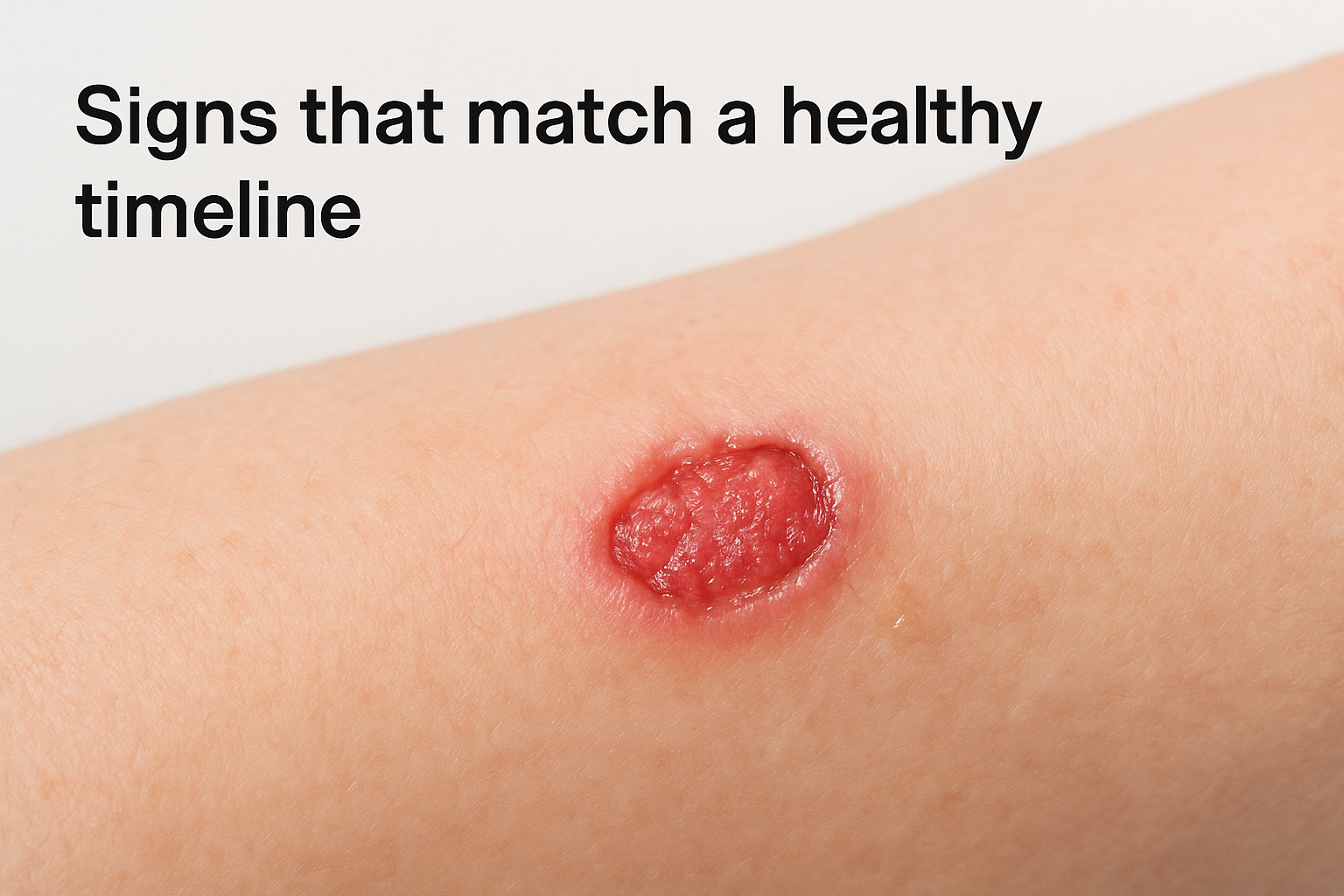
Signs that match a healthy timeline
During the first week, mild redness, warmth, and a small amount of clear or slightly yellow drainage are expected. That’s the inflammation phase doing its job, not a sign of infection. By week two, you should see the wound bed filling in with pink or beefy-red granulation tissue, and the edges should look like they’re pulling inward. Steady size reduction week over week is the clearest sign a wound is on track, even if the pace feels slow to a worried caregiver.
- Drainage lightens in color and amount over time
- Wound edges show visible new skin, called epithelialization
- Odor is minimal or absent
- Pain gradually decreases rather than increases
- The area around the wound stays a consistent color, not spreading redness
A wound that’s smaller, less painful, and less drainage-heavy than it was a week ago is healing the way it should.
Signs that mean something has gone off track
Compare the wound to itself over time, not to a single snapshot. If a wound looks the same or worse after two full weeks, that’s your signal to stop watching and start asking questions. Spreading redness beyond the wound border, thick yellow or green drainage, a foul smell, or new fever all point toward infection rather than normal inflammation. Increasing pain, especially pain that gets worse instead of better after the first few days, is another marker that shouldn’t be brushed off.
Track it instead of guessing
Measurement beats memory every time. Use a paper ruler or phone photo with a coin for scale, taken from the same angle each time, and jot down size, drainage color, and pain level twice a week. This turns a subjective impression into an objective healing record you or a clinician can actually compare across weeks. Facility staff and family caregivers who track this way catch stalled wounds far earlier than those relying on visual memory alone, and that early catch is often the difference between a topical fix and a referral for advanced treatment.
What can slow down or stall the healing process
Every wound has enemies working against it, and most of them are quiet. A wound doesn’t announce that it’s stuck in inflammation for the fourth week running, it just sits there looking unchanged while the underlying cause goes unaddressed. Understanding these obstacles is part of understanding the phases of wound healing process itself, because each phase has its own specific vulnerabilities. Catching the culprit early is almost always easier than reversing months of stalled progress later.
Underlying health conditions that block progress
Diabetes, peripheral artery disease, and venous insufficiency are the three conditions most likely to trap a wound in one phase indefinitely. Poor circulation starves the wound bed of the oxygen and nutrients proliferation depends on, while uncontrolled blood sugar cripples the white blood cells that should be finishing up inflammation within days. Kidney disease and autoimmune conditions add another layer, since both interfere with the protein synthesis collagen production relies on.
A wound rarely stalls because of the dressing on it, it stalls because of what’s happening underneath the skin.
Local factors at the wound site
Some obstacles sit right in the wound itself rather than in the body’s systems. Infection is the most common, and it hijacks the inflammation phase, keeping the immune system fighting bacteria instead of moving forward to rebuilding. Pressure and repeated friction, especially over bony areas in patients who spend long hours in bed or a wheelchair, physically disrupt the fragile granulation tissue forming during proliferation.
- Infection or heavy bacterial load in the wound bed
- Necrotic or dead tissue that hasn’t been debrided
- Ongoing pressure from immobility or poor positioning
- Excess moisture or dryness, both disrupt cell migration
- Poor blood flow to the affected limb or area
Lifestyle habits that quietly delay healing
Smoking narrows blood vessels and cuts oxygen delivery to healing tissue, which is why smokers routinely take significantly longer to close even minor wounds. Malnutrition, dehydration, and certain medications, particularly steroids and some chemotherapy drugs, suppress the very cellular activity that proliferation and maturation depend on. Age itself slows every phase somewhat, but age alone rarely explains a truly stalled wound, there’s almost always one of these other factors compounding it.
Getting help when a wound won’t heal on its own
Knowing the phases of wound healing process turns worry into a plan. You now know what hemostasis, inflammation, proliferation, and maturation should look like, and just as important, what it looks like when a wound gets stuck between them. That knowledge is your early warning system, not a substitute for treatment once things stall.
Once a wound sits unchanged for two weeks, or shows signs of infection, poor circulation, or spreading damage, home remedies and waiting stop being reasonable options. Diabetic ulcers, pressure sores, and post-surgical wounds that stall need a physician’s eyes on them, not another week of dressing changes and hope. Our team brings that physician-led evaluation directly to the bedside across Philadelphia, with advanced therapies like allografts available when a wound needs more than time. If a wound you’re watching has stopped moving through its phases, schedule a mobile wound care visit and get it back on track.