

Protein Tissue Repair: How It Speeds Wound Healing
If you or a family member has a wound that just won’t close, your doctor has probably mentioned protein. That’s not a throwaway comment. Protein tissue repair is the biological engine behind every stage of wound healing, and when protein intake falls short, wounds stall no matter how good the dressing changes are. This matters even more for seniors managing diabetes, pressure ulcers, or recovery from surgery, since age and chronic illness both drain the body’s protein reserves fast.
So how exactly does protein rebuild damaged tissue, and how much do you actually need? The short answer: protein supplies the amino acids your body uses to make new collagen, rebuild blood vessels, and fight off infection at the wound site. Most healing patients need noticeably more protein than the general population, often 1.2 to 2.0 grams per kilogram of body weight daily.
In this article, we break down the science of protein and wound repair in plain terms, walk through the specific foods and supplements that speed recovery, and flag warning signs that a wound needs more than nutrition alone, like a specialist evaluation from a wound care physician.
Why protein matters for wound healing
Every wound, whether it’s a diabetic foot ulcer or a surgical incision, needs raw materials to close. Amino acids from protein are those raw materials. Your body uses them to build new skin cells, manufacture collagen, and produce the enzymes and antibodies that keep infection at bay. Without a steady supply, the repair process simply doesn’t have what it needs to move forward, and a wound that should heal in weeks can drag on for months.
Building new tissue from the ground up
Collagen makes up roughly 70 to 80 percent of the dry weight of healthy skin, and your body can’t manufacture it without adequate protein intake. Fibroblasts, the cells responsible for laying down new collagen, rely on a constant amino acid supply to do their job. When that supply runs low, fibroblast activity slows, and the wound bed stays fragile instead of filling in with strong, organized tissue. This is why chronic wound patients often plateau even with excellent wound care technique. According to the National Institutes of Health, adequate protein intake is directly tied to faster wound closure rates in clinical studies of pressure ulcers and surgical wounds (NIH).
Without enough protein, a wound has the dressing it needs but not the materials to actually rebuild itself.
What happens when protein runs short
Protein deficiency shows up in predictable, measurable ways at the wound site. Nurses and wound physicians see this pattern constantly in patients recovering from illness, surgery, or extended bed rest.
- Slower wound closure: Fewer new cells form each day, so the wound edges take longer to meet.
- Weaker scar tissue: Collagen that does form is thinner and less resilient, raising the risk the wound reopens.
- Higher infection risk: Protein fuels antibody production and white blood cell activity, both critical for fighting bacteria at an open wound.
- More fluid buildup: Low albumin, a blood protein, contributes to swelling around the wound that further slows healing.
Geriatric patients are especially vulnerable here. Aging naturally reduces how efficiently the body absorbs and uses protein, and chronic conditions like diabetes or kidney disease compound the problem. That’s exactly why protein status is one of the first things a wound care physician should assess during a home visit.
How protein works through each healing stage
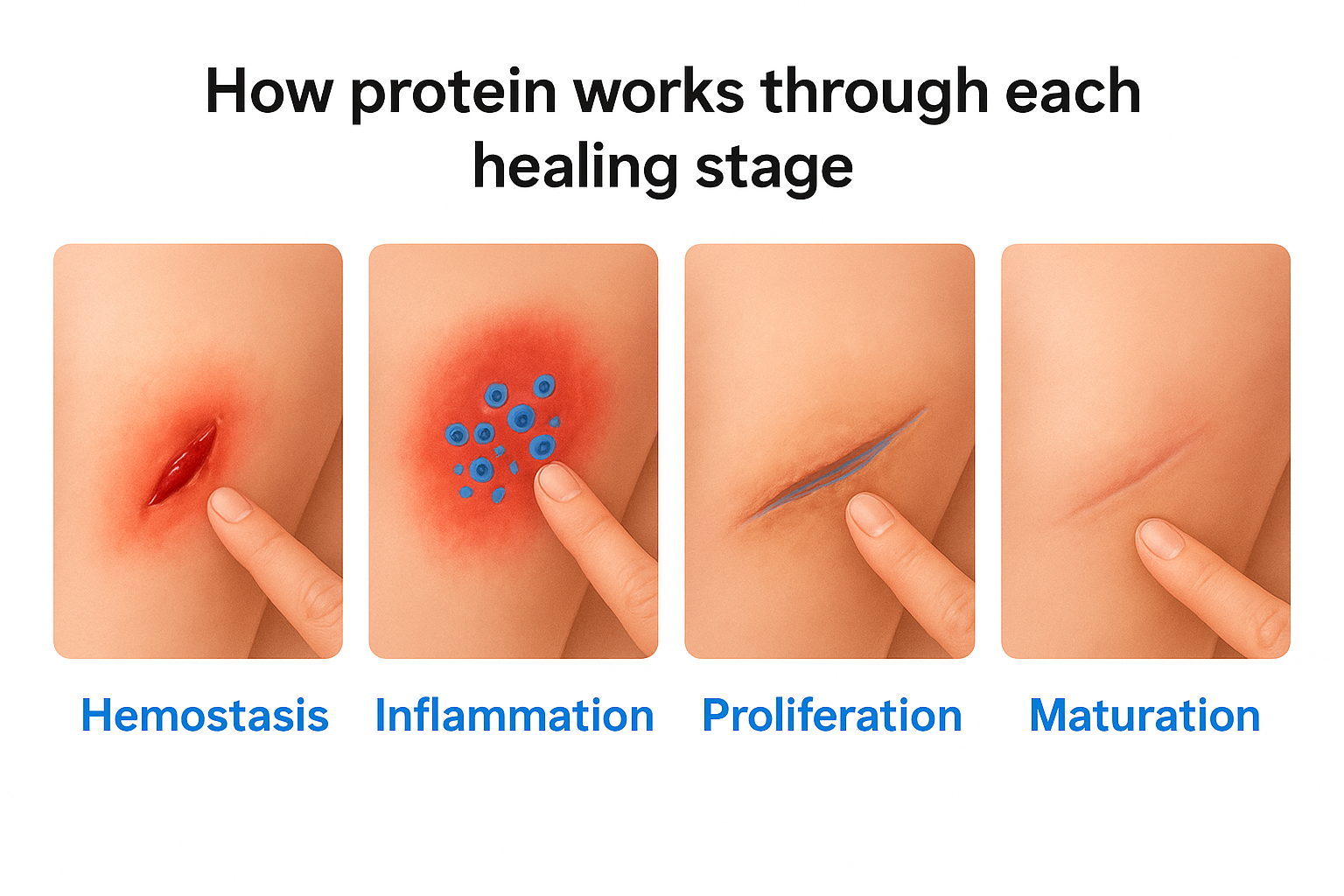
Wound healing moves through four distinct stages, and protein plays a different, specific role in each one. Skipping ahead to reason about "more protein equals faster healing" misses how targeted the body’s use of amino acids actually is at each phase. Wound healing stages each demand a slightly different protein job, from clotting to scar strength.
From clotting to closing the wound
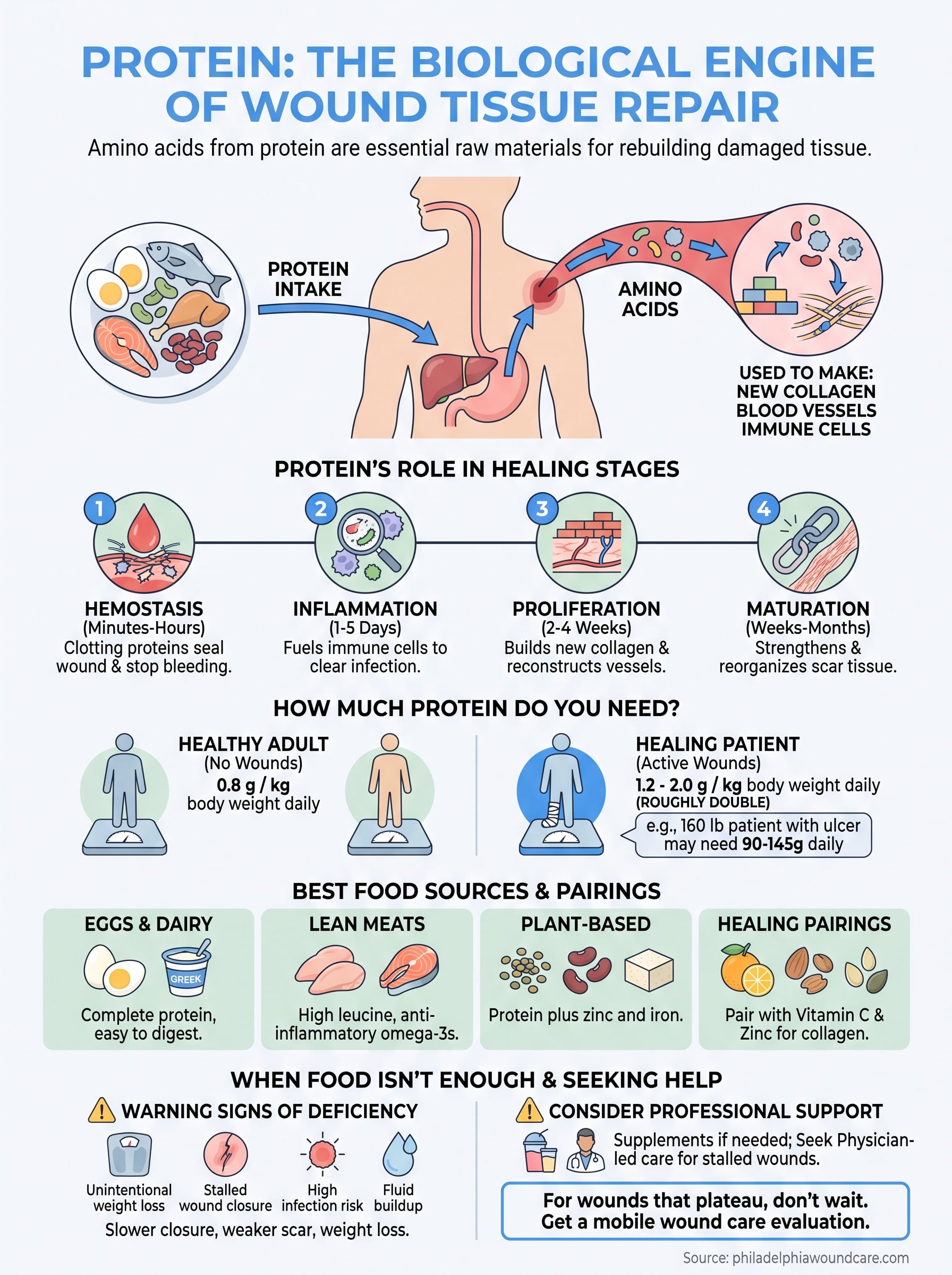
Hemostasis comes first, within minutes of injury, when platelets and clotting proteins seal the wound and stop blood loss. Inflammation follows over the next few days, and this is where protein-dependent immune cells, neutrophils and macrophages, clear bacteria and damaged tissue so rebuilding can start. Proliferation is the longest phase, often lasting two to four weeks, and it’s where fibroblasts use amino acids to lay down new collagen and rebuild blood vessels across the wound bed. Maturation, sometimes called remodeling, can stretch on for months as the body reorganizes collagen fibers into stronger, more organized scar tissue.
Protein doesn’t just help wounds close, it determines whether the tissue that forms is strong enough to stay closed.
| Stage | Timeframe | Protein’s role |
|---|---|---|
| Hemostasis | Minutes to hours | Clotting proteins seal the wound |
| Inflammation | 1 to 5 days | Fuels immune cells fighting infection |
| Proliferation | 2 to 4 weeks | Builds new collagen and vessels |
| Maturation | Weeks to months | Strengthens and reorganizes scar tissue |
Gaps in protein intake during any one of these stages create a ripple effect on the next. A patient who’s protein-deficient during proliferation, for example, often ends up with a wound that looks closed on the surface but reopens weeks later because the underlying tissue never gained enough strength.
How much protein you need during recovery
Healing wounds demand far more protein than everyday maintenance does, and most guidelines land between 1.2 and 2.0 grams per kilogram of body weight each day for patients with active wounds. That’s roughly double the standard 0.8 grams per kilogram recommended for healthy adults, according to guidance published by the National Institutes of Health on nutrition in wound care (NIH). A 160-pound patient with a stage III pressure ulcer, for instance, might need 90 to 145 grams of protein daily just to keep pace with tissue rebuilding.
Recovering tissue needs roughly double the protein a healthy body requires just to keep up with daily repair.
Daily protein targets by situation
Targets shift depending on wound severity, body size, and kidney function, so a one-size-fits-all number rarely works well in practice.
| Patient situation | Protein target (per kg body weight/day) |
|---|---|
| Healthy adult, no wounds | 0.8 g |
| Minor wound or post-surgical | 1.0 to 1.2 g |
| Chronic wound (diabetic ulcer, pressure ulcer) | 1.2 to 1.5 g |
| Large or multiple wounds | 1.5 to 2.0 g |
| Kidney disease patients | Adjusted individually with a physician |
Kidney disease changes this math significantly, since excess protein stresses already-compromised kidneys. Patients on dialysis or with reduced kidney function should never set their own protein targets without medical guidance.
Tracking whether intake is enough
Simply eating more protein doesn’t guarantee it’s working. Physicians often track blood albumin and prealbumin levels, unintentional weight loss, and wound measurements over two to four week intervals to confirm nutrition is translating into actual healing progress at the wound site.
Best food sources of protein for tissue repair
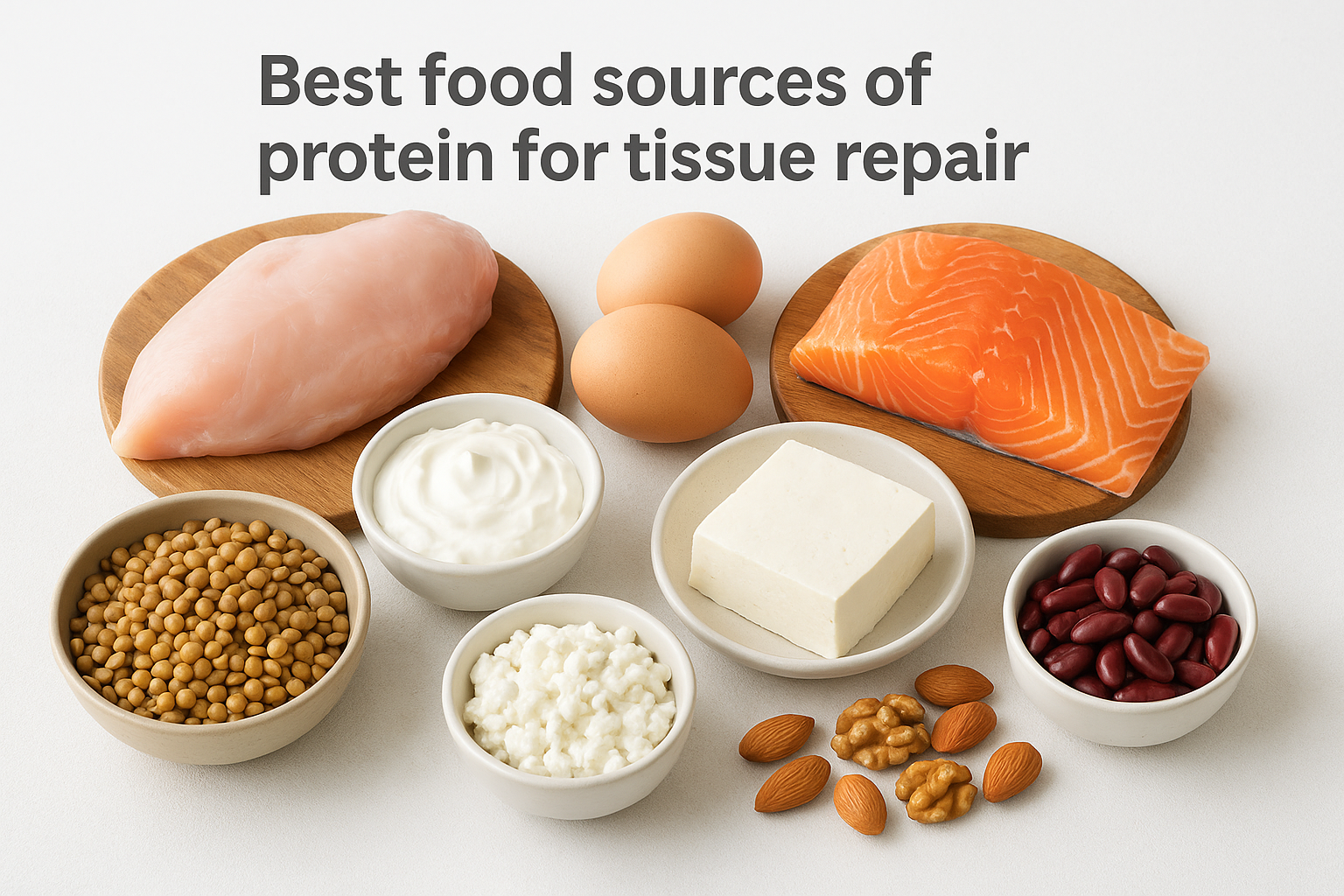
Whole foods should be the foundation of any wound-healing diet, since they deliver protein alongside the vitamins and minerals your body needs to actually use it. Lean meats, eggs, and fish supply complete protein with all nine essential amino acids, while dairy products like Greek yogurt and cottage cheese add both protein and calcium for tissue strength. Plant sources, including lentils, beans, and tofu, work well too, though they usually need to be combined to cover the full amino acid profile.
High-quality protein foods to prioritize
Certain foods pack more usable protein per serving and are easier for older adults to eat regularly, which matters when appetite is already reduced during illness or recovery.
| Food | Protein per serving | Why it helps |
|---|---|---|
| Eggs (2 large) | 12g | Complete amino acids, easy to digest |
| Chicken breast (4 oz) | 35g | High leucine content for muscle and tissue repair |
| Greek yogurt (1 cup) | 20g | Protein plus probiotics for gut health |
| Salmon (4 oz) | 28g | Protein and anti-inflammatory omega-3s |
| Lentils (1 cup cooked) | 18g | Plant protein plus zinc and iron |
No supplement replaces a plate built around real, protein-dense food.
Pairing protein with healing nutrients
Vitamin C and zinc both work alongside protein to support collagen formation, so citrus fruits, bell peppers, nuts, and seeds deserve a regular spot on the plate too. Combining these nutrients at meals, rather than relying on protein alone, gives fibroblasts everything they need to rebuild tissue efficiently.
When to consider protein supplements or professional support
Most patients can hit their protein targets through food alone, but appetite loss, chewing difficulty, or a wound severe enough to demand 100+ grams of protein daily often make that unrealistic. Oral nutrition supplements, like protein shakes or fortified puddings designed for wound care, fill that gap without requiring someone to eat six full meals a day. Ask your physician before starting any supplement, since some formulations concentrate potassium or phosphorus in ways that matter for patients with kidney disease.
Signs food isn’t covering the gap
Watch for these signals that supplementation deserves a conversation with your care team:
- Unintentional weight loss of more than 5 percent over a month
- Persistent low albumin on routine bloodwork
- Stalled wound measurements despite consistent dressing changes
- Reduced appetite from medication side effects or illness
A wound that stops shrinking despite good care is often a nutrition problem, not a technique problem.
When it’s time for a wound care physician
Nutrition fixes only go so far when a wound has underlying vascular disease, infection, or tissue damage that a dietary change can’t reverse. Signs like increasing drainage, foul odor, black or yellow tissue in the wound bed, or a wound that hasn’t progressed in two to four weeks warrant an evaluation beyond what a primary care visit typically covers. Physician-led mobile wound care, the kind Philadelphia Wound Care provides at bedside in homes and facilities, combines nutritional guidance with advanced treatments like allograft therapy for wounds that plateau despite good protein intake. Getting that evaluation early, rather than after months of stalled healing, often makes the difference in whether a wound closes at all.
Supporting recovery with the right nutrition
Getting protein tissue repair right comes down to a simple habit: eat enough of the right protein, consistently, at every stage of healing. Skipping this step doesn’t just slow recovery, it can undo weeks of otherwise excellent wound care. Wounds heal on a timeline that protein either supports or stalls, and no dressing technique can substitute for the amino acids your body actually needs to rebuild tissue.
Still, nutrition has limits. A wound that refuses to progress despite good protein intake usually signals something a diet change can’t fix, whether that’s poor circulation, infection, or tissue damage that needs hands-on clinical attention. If a loved one’s wound has plateaued for weeks, don’t wait for it to get worse before asking for help. Philadelphia Wound Care brings physician-led evaluation and advanced treatment directly to the bedside, at home or in a facility. Schedule a mobile wound care visit and get a real answer for why healing has stalled.