

Puracol Plus Collagen Dressing: Uses, Benefits, Application
When a chronic wound stalls and stops responding to standard dressings, the next step often involves a biologically active material that works with the body’s own healing process. Puracol Plus collagen dressing is one such product, a native collagen matrix designed to support tissue regeneration in wounds that need more than basic coverage. It’s used across clinical settings, from hospitals to skilled nursing facilities and private homes, for ulcers, surgical wounds, and other hard-to-heal injuries.
At Philadelphia Wound Care, our physician-led mobile practice treats these exact wound types at the patient’s bedside. We regularly evaluate and recommend advanced wound care products as part of individualized treatment plans. This article breaks down what Puracol Plus is, how it works, when it’s appropriate, and how it fits into a broader wound management strategy, so patients, caregivers, and referring clinicians can make informed decisions.
Why clinicians use collagen dressings for wounds
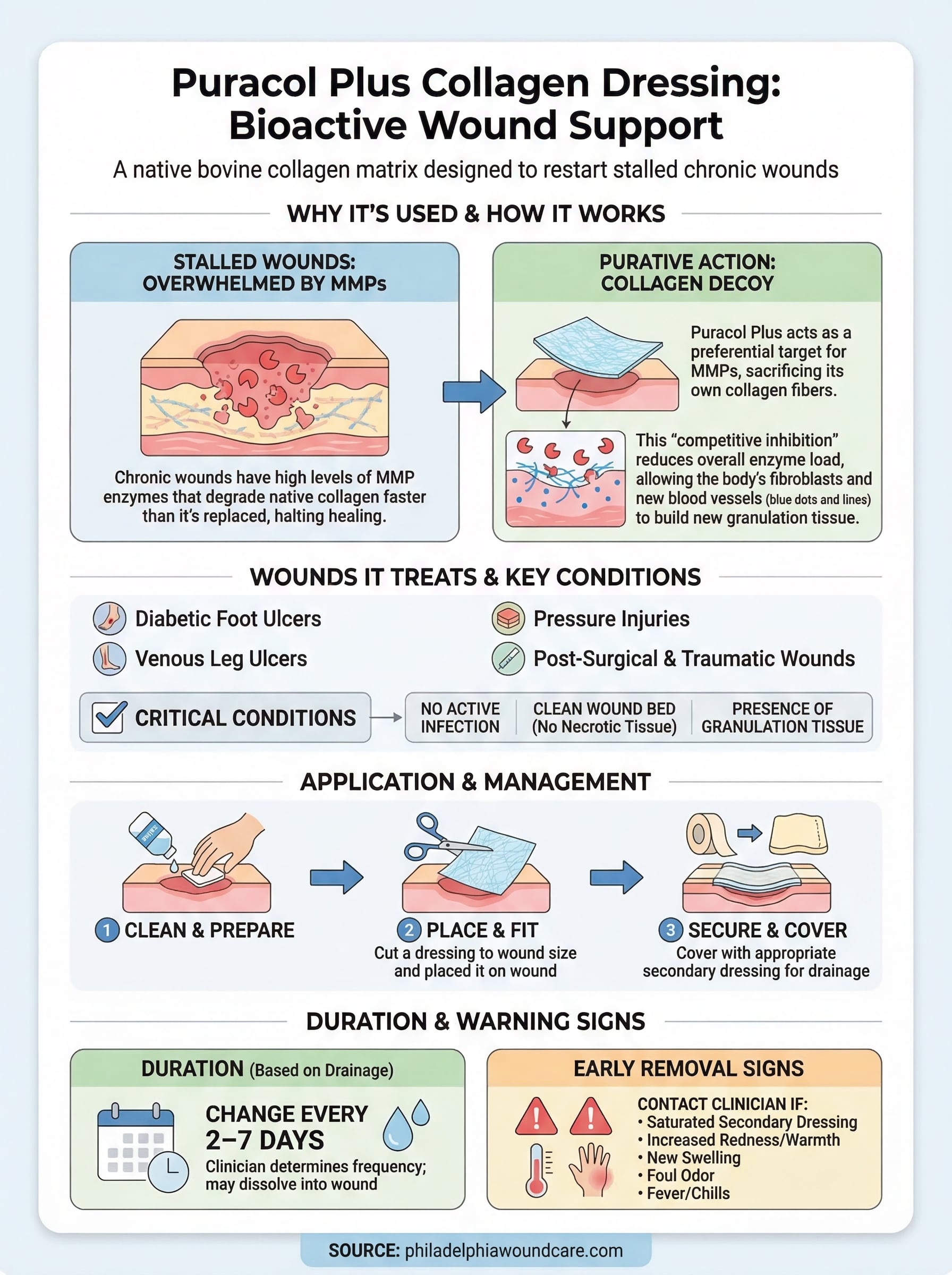
The body produces collagen as the primary structural protein in skin and connective tissue. In a chronic or complex wound, that system is overwhelmed. Enzymes called matrix metalloproteinases, or MMPs, break down native collagen faster than the body can replace it, creating a hostile environment where tissue growth stalls. Clinicians use collagen-based dressings to counter this imbalance by supplying the wound bed with an external source of the protein it needs to rebuild.
The role of collagen in wound repair
Collagen drives three of the four main stages of wound healing: hemostasis, the proliferative phase, and remodeling. During the proliferative phase, fibroblasts migrate along collagen fibers to lay down new granulation tissue. During remodeling, those fibers reorganize into stronger, more durable structures. When the wound environment lacks this scaffold, both processes slow down significantly. A collagen dressing provides a temporary extracellular matrix that supports cell migration and attachment, giving the body a physical framework to build on. Without that framework, even well-managed wounds can plateau.
Collagen dressings shift the wound environment from one that degrades tissue to one that actively supports rebuilding it.
When standard dressings fall short
Foam, hydrocolloid, and gauze dressings serve a clear purpose: managing moisture and protecting the wound surface from contamination. For acute wounds, this is often enough. For chronic wounds that have been open for weeks or months without measurable progress, it is not. These wounds require a shift from passive coverage to active biological intervention.
Products like Puracol Plus collagen dressing introduce a bioactive element that can interrupt the cycle of breakdown and restart the healing process. Your clinician can evaluate whether this type of dressing is appropriate based on wound size, depth, and duration. When passive dressings have stopped making a difference, a collagen-based product gives the treatment plan a new mechanism to work with.
What Puracol Plus is and what wounds it treats
Puracol Plus collagen dressing is manufactured by Medline and made from 100% native bovine collagen in a sheet form. Unlike chemically cross-linked collagen products, the native structure of Puracol Plus allows it to be absorbed and remodeled by the body rather than simply acting as a physical barrier. The dressing comes in multiple sizes and can be cut to fit the wound contour directly at the bedside.
Wound types that respond well to this dressing
Clinicians apply this dressing to a specific range of chronic and complex wounds, including diabetic foot ulcers, venous leg ulcers, pressure injuries, and post-surgical or traumatic wounds that have entered a stalled healing phase. The dressing performs best in wounds that show granulation tissue but lack the biological momentum to close on their own.
Puracol Plus is indicated for partial and full-thickness wounds, including those with tunneling or undermining.
Your wound needs to be free of active infection before a collagen dressing goes on. If there is significant bacterial burden or necrotic tissue present, those issues require treatment first. Your clinician will assess the wound bed to confirm that conditions support the use of a collagen-based product.
How Puracol Plus supports healing in the wound bed
Once placed in the wound, Puracol Plus collagen dressing works by sacrificing its own collagen fibers to the destructive enzymes present in a chronic wound. Rather than attacking the patient’s own tissue, those enzymes target the dressing instead, a process known as competitive inhibition. This gives the body a window to start rebuilding by acting as a preferential target that draws MMP activity away from the fragile new cells forming at the wound base.
How native collagen redirects wound enzymes
Because Puracol Plus uses native, uncross-linked collagen, the wound enzymes can break it down easily. That sounds counterintuitive, but it is exactly the point. The dressing absorbs MMP activity that would otherwise destroy the patient’s own regenerating tissue, reducing the overall enzyme load in the wound bed. As MMP levels drop, the conditions shift toward tissue growth rather than destruction.
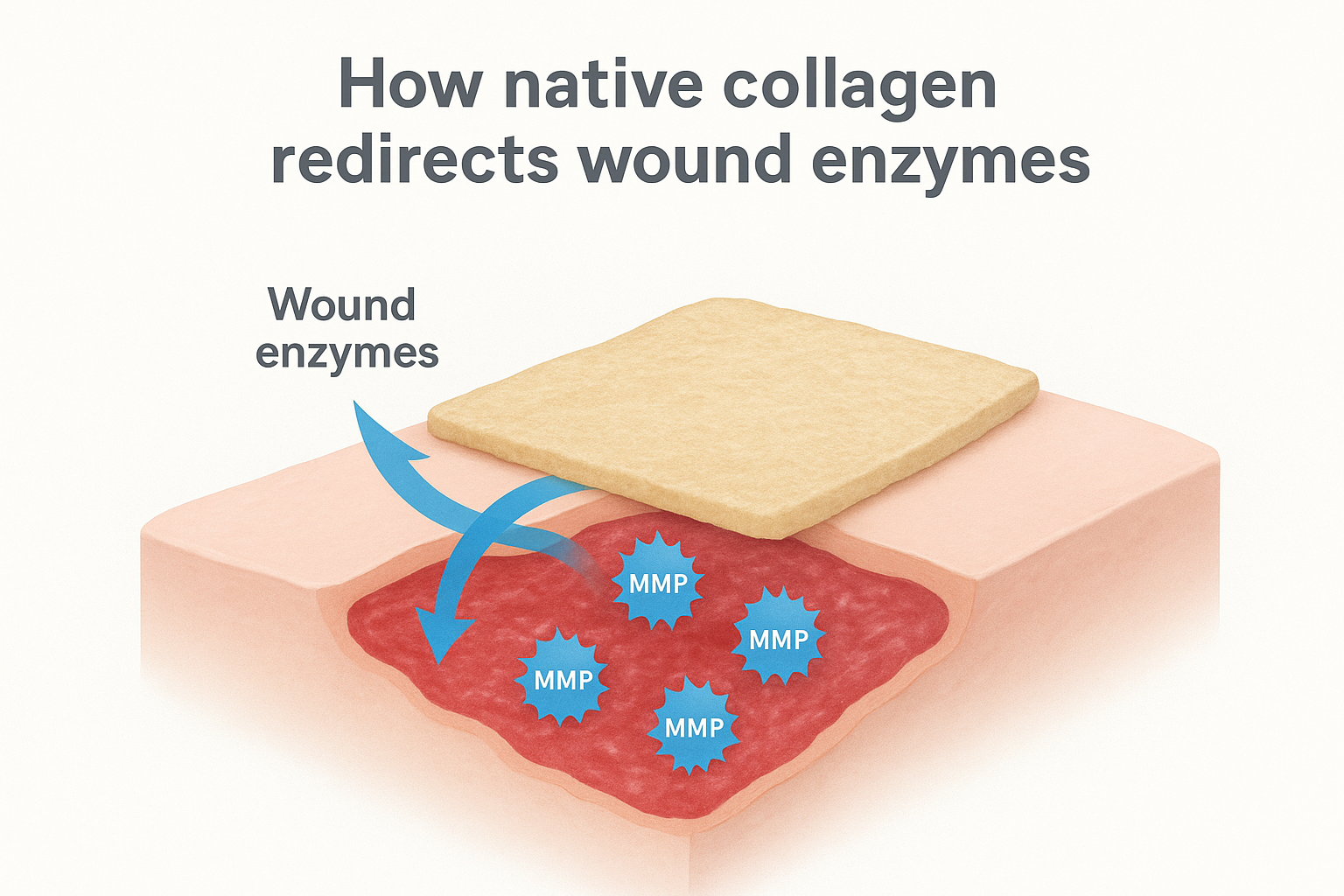
Lowering MMP activity in the wound environment is the key mechanism that allows stalled wounds to resume healing.
What this means for granulation tissue
As the wound bed becomes less hostile, fibroblasts and new blood vessels can migrate into the area and begin laying down granulation tissue. This is the visible sign that the wound is moving forward again, and it is what your clinician looks for at each visit to confirm the dressing is doing its job.
How to apply Puracol Plus dressing step by step
Applying Puracol Plus collagen dressing correctly is as important as choosing it. Errors in preparation or placement can compromise the dressing’s contact with the wound bed and reduce its effectiveness. Follow the steps below exactly as your clinician directs, and reach out if anything looks unexpected during a dressing change.
Precise application ensures the collagen fibers maintain full contact with the wound surface where they can do the most work.
Preparing the wound bed
Before placing the dressing, clean the wound thoroughly using saline or a clinician-approved wound cleanser. Pat the periwound skin dry to help the secondary dressing adhere properly. The wound bed should be moist but not pooling with fluid.
- Wash your hands and put on clean gloves.
- Irrigate the wound gently with saline.
- Remove any loose debris without disturbing fragile tissue.
- Dry the surrounding skin before proceeding.
Placing and securing the dressing
Cut the dressing to fit the wound dimensions if needed, then lay it flat and in full contact with the wound surface. Avoid overlapping onto intact periwound skin.
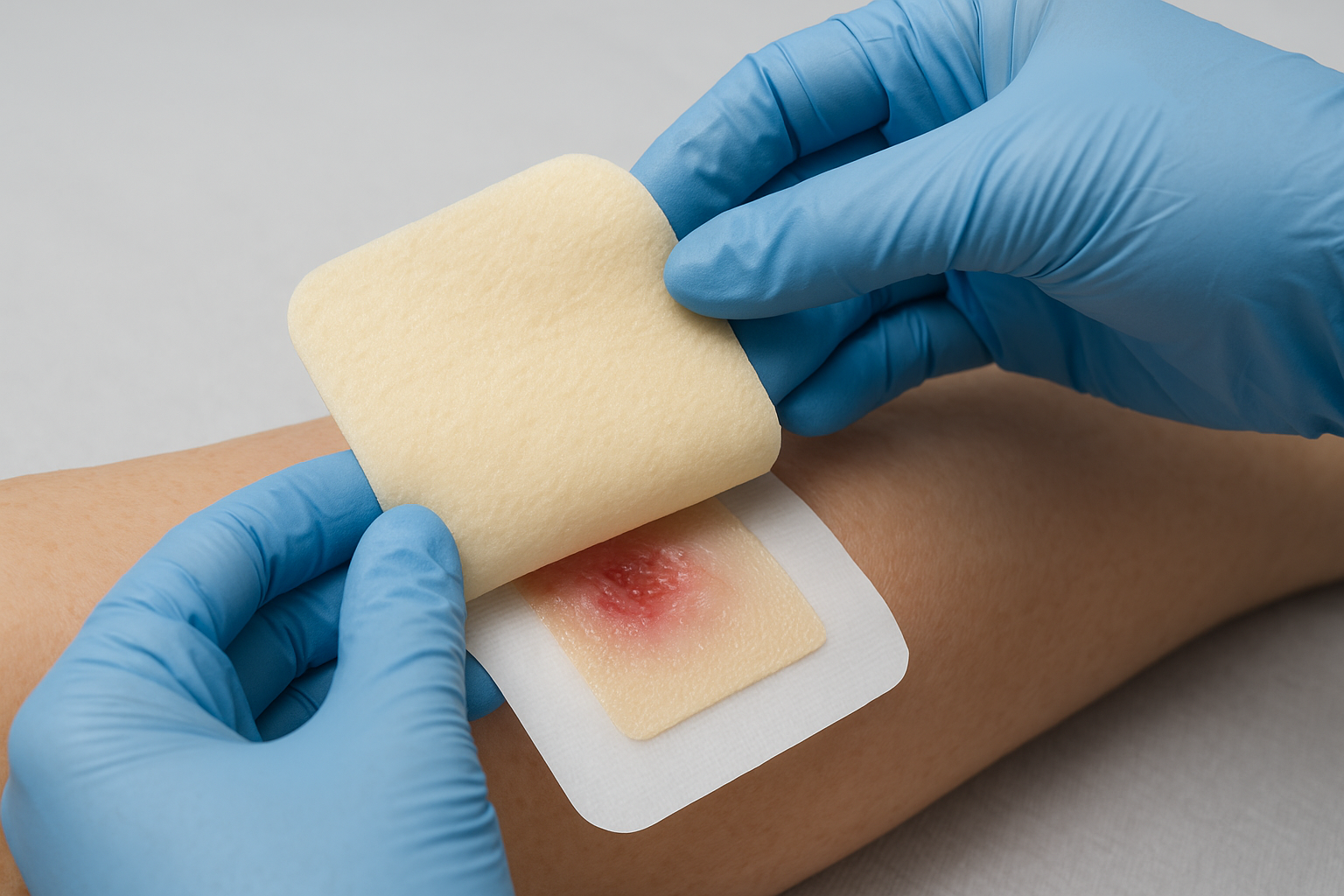
Cover it with a secondary dressing matched to the wound’s drainage level, such as foam for moderate output or a non-adherent pad for minimal exudate. Secure all edges with medical tape or a bordered cover dressing to keep the collagen layer in consistent contact with the wound bed.
How long to leave it on and what can go wrong
Puracol Plus collagen dressing stays in place until it has fully absorbed into the wound or your clinician determines a change is needed. In most cases, that means changing the dressing every two to seven days, depending on the wound’s drainage level. A heavily exuding wound may require more frequent changes, while a wound producing minimal fluid can go longer between visits.
Your clinician sets the change schedule based on your specific wound, not a fixed interval that applies to everyone.
Signs that the dressing needs to come off sooner
If the secondary dressing becomes saturated, remove it and contact your clinician promptly. Other signs that warrant early removal and reassessment include:
- Increased redness or warmth around the wound edges
- New or worsening swelling
- Foul odor from the wound site
- Fever or chills in the patient
These signs can indicate elevated bacterial load or a developing infection that requires clinical reassessment before you reapply any collagen-based product.
What to expect during removal
When you remove the dressing, the collagen sheet may appear partially dissolved, which confirms it absorbed into the wound bed as intended. Avoid pulling at tissue that has integrated with the material. If removal causes significant bleeding or pain, stop immediately and contact your care team before proceeding.
Next steps for wound care support
Puracol Plus collagen dressing works best as part of a structured wound care plan, not as a standalone fix. If you are managing a chronic wound at home or in a facility, having physician oversight at each stage of treatment makes a measurable difference in outcomes. A clinician can confirm whether the wound bed is responding, adjust the dressing choice when conditions change, and catch complications before they set back your progress.
Philadelphia Wound Care brings that level of oversight directly to your location. Our physician-led mobile service evaluates and treats chronic wounds at the patient’s bedside, without requiring a trip to a clinic. We work with patients at home, in skilled nursing facilities, and in assisted living settings across the Philadelphia region. If you need a specialist involved in your wound management plan, contact our mobile wound care team to schedule an evaluation.