

Red Around A Wound: 5 Clues It’s Normal Or Infected At Home
You changed the bandage and noticed red around the wound, and now you’re staring at it, trying to decide if something is wrong. That moment of uncertainty is one of the most common concerns we hear from patients and caregivers who reach out to Philadelphia Wound Care. The truth is, some redness is a normal part of how your body heals. But redness can also be an early warning sign of infection, especially in chronic or slow-healing wounds.
The difference between "healing as expected" and "needs medical attention" often comes down to a few specific details that are easy to spot once you know what to look for. This article breaks down five practical clues to help you evaluate the redness around a wound at home, so you can act with confidence rather than guesswork. As a physician-led mobile wound care practice, we treat these situations at the bedside every day, and these are the exact indicators we assess during an evaluation.
1. Redness keeps spreading instead of shrinking
The size of the red zone around a wound is one of the most reliable early indicators of whether your body is healing or fighting an infection. A small ring of redness directly at the wound edge is expected. The problem starts when that ring keeps growing outward day after day instead of pulling back toward the wound.
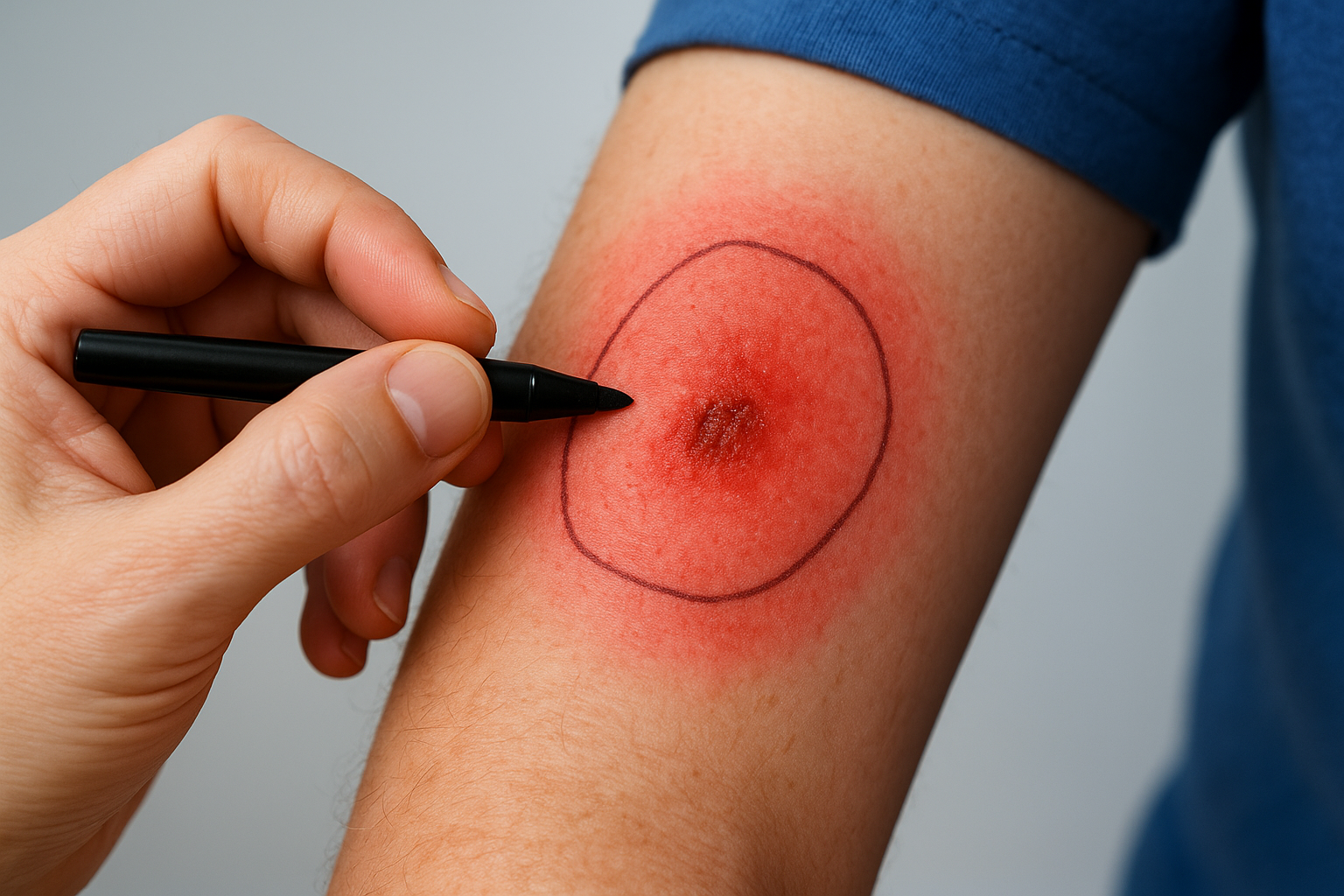
What you may see with normal healing
In the first two to three days, your immune system triggers an inflammatory response that causes redness, mild swelling, and warmth close to the wound. This redness typically stays within half an inch of the wound edges and begins to fade by day three or four as the repair process moves forward.
What makes it more likely to be an infection
Infection-related redness looks different. You will notice red streaks extending outward from the wound site, or the entire red border growing larger each time you check it. If the redness continues to expand over 24 to 48 hours, bacteria are likely driving the inflammation rather than normal tissue repair.
Any redness that doubles in size within 24 hours needs medical attention, not a wait-and-see approach.
How to check it at home in the next 24 hours
Use a pen or marker to trace the outer edge of the red around wound at a fixed time. Check the marking 12 to 24 hours later. If the redness has grown beyond the line you drew, the border is actively spreading and warrants professional assessment.
- Mark the border at the same time each day
- Note whether the color is deepening or staying consistent
- Check for new streaks that were not present earlier
When to get a same-day wound evaluation
Call for a same-day evaluation if the border grows past your pen line or if red streaks appear. Patients with diabetes or poor circulation face a higher risk of rapid spread and should not delay reaching out to a wound care specialist.
2. Pain and swelling get worse after day two
Some discomfort and puffiness around a fresh wound is expected in the first 48 hours. The concern is when those symptoms keep building instead of easing up.
What you may see with normal healing
Mild tenderness and swelling typically peak around day two and then gradually improve. Your body is sending fluid and immune cells to the site, so some puffiness and sensitivity during this window is part of the process, not a warning sign.
What makes it more likely to be an infection
If pain and swelling increase after day two, bacteria may be taking hold. You might also notice the red around wound looking angrier and more inflamed rather than settling down.
Worsening pain after the 48-hour mark is one of the clearest early signs that infection is developing.
How to check it at home in the next 24 hours
Rate your pain level on a 1-to-10 scale each morning at the same time. Also press gently around the wound edges and note whether tenderness is spreading farther from the center than the previous day.
When to call for medical treatment
Call a wound care specialist if your pain score rises two or more points on back-to-back days or if swelling is noticeably larger than it was yesterday.
3. Heat and redness intensify, not fade
A wound that feels warm to the touch in the first 48 hours is expected. The concern is when that heat keeps building rather than fading as days pass.
What you may see with normal healing
Your body increases blood flow to the injury site, making tissue feel warm and red for the first two to three days. This is a normal part of your immune response.
That warmth fades by day three as inflammation settles and new tissue forms at the wound edges.
What makes it more likely to be an infection
Infected tissue feels noticeably hotter than surrounding skin and stays that way past day three. If the red around wound deepens alongside rising heat, bacteria are driving the response rather than your body’s normal repair process.
Persistent heat that does not fade by day three is a reliable sign your wound needs professional attention.
How to check it at home in the next 24 hours
Press the back of your hand against the wound and compare it to skin two inches away. Repeat 12 hours later to track whether warmth is spreading or easing.
- Mark the time of each check for accuracy
- Note if the skin feels tighter or more tender than before
When to go to urgent care or the ER
Go to urgent care that same day if heat and redness keep intensifying alongside visible swelling or streaking.
Head to the emergency room immediately if you also develop a fever above 101°F or notice the skin blistering or turning dark.
4. Drainage turns cloudy, yellow, or smelly
Some fluid from a wound is expected, but the color and smell of that drainage reveal a great deal about what is happening beneath the surface. Changes in drainage are often the clearest signal that bacteria are actively multiplying at the wound site.
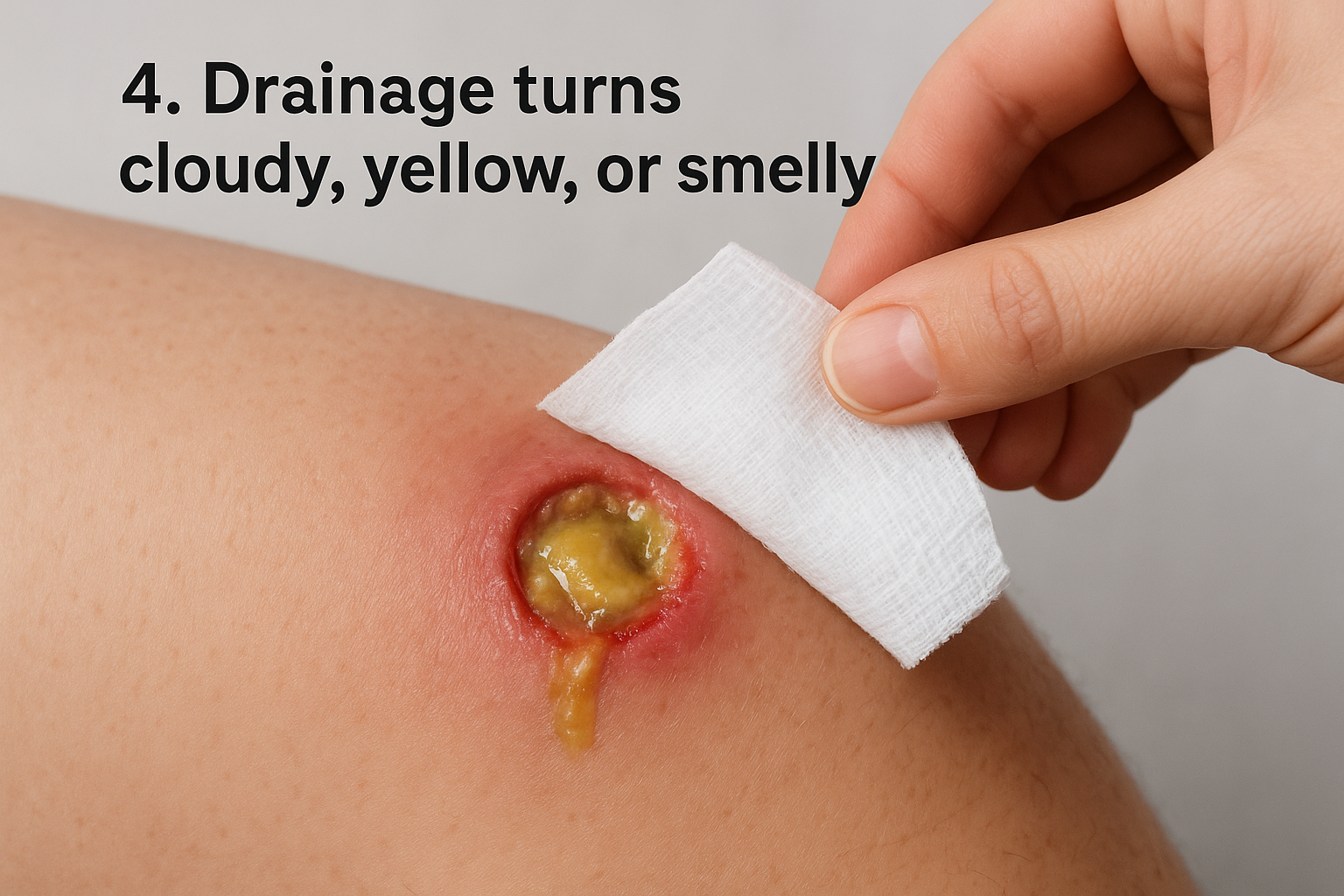
What you may see with normal healing
Clear or light pink fluid in the first few days is a sign your body is doing its job. This fluid carries nutrients to the healing tissue and helps keep the wound bed moist during early repair.
What makes it more likely to be an infection
Drainage that turns cloudy, yellow, green, or develops a foul smell signals bacterial activity. If you also see red around wound edges deepening alongside this change, you are likely dealing with an active infection that requires treatment.
Thick, discolored drainage with an odor is not something to monitor at home for several more days.
How to check it at home in the next 24 hours
Check the color and consistency of drainage each time you change the dressing. Note whether it appears thicker or more discolored than the previous change.
- Track drainage color: clear, pink, yellow, or green
- Note any new or worsening odor with each dressing change
When you need a wound culture or antibiotics
Call your doctor if drainage turns yellow, green, or smells foul. A wound culture identifies the specific bacteria present, which guides the right antibiotic choice and prevents further delays in healing.
5. You develop fever, chills, or feel confused
A wound infection does not stay local forever. When bacteria overwhelm your body’s defenses, the immune response goes systemic, meaning you start feeling sick all over rather than just noticing red around wound edges.
What you may see with normal healing
Feeling a low-grade temperature of 99°F or below in the first 24 hours after an injury can be normal. Your body runs slightly warmer as it mounts an initial immune response, and this typically settles on its own without treatment.
What makes it more likely to be an infection
Shaking chills, a fever above 101°F, or sudden confusion are signs infection has entered your bloodstream. These symptoms indicate the problem is no longer limited to the wound site and requires immediate medical intervention.
If you feel confused, disoriented, or unusually weak alongside wound symptoms, call 911 or go to the ER now.
How to check it at home in the next 24 hours
Take your temperature twice daily and log each reading. Also note any sudden changes in mental clarity, energy level, or whether you feel chills that are unrelated to the room temperature.
When to treat it as an emergency
Call 911 if you have a fever above 103°F, cannot stay alert, or develop rapid breathing alongside wound symptoms. These signs point to sepsis, a life-threatening condition that progresses quickly without hospital treatment.
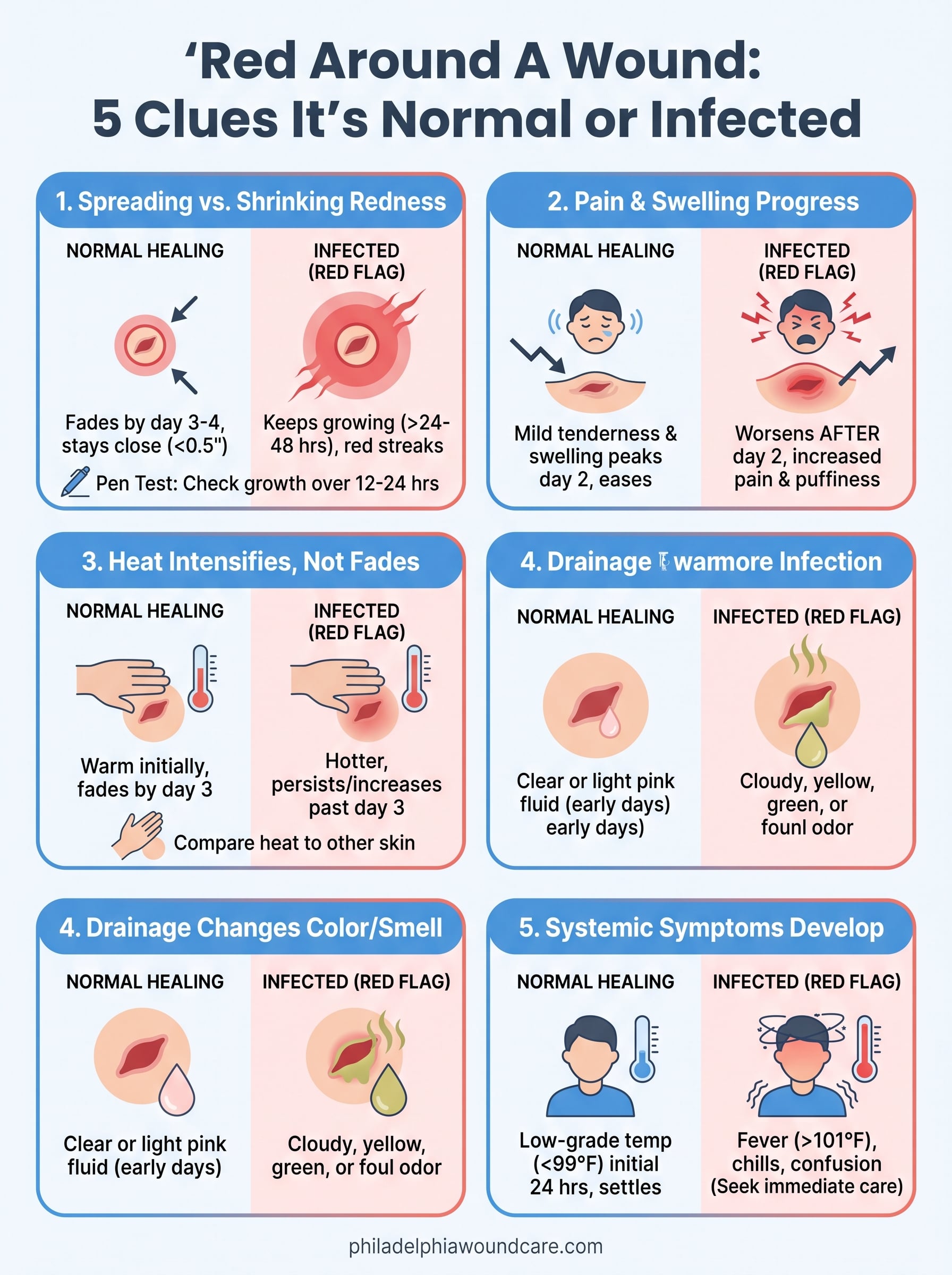
What to do next
These five clues give you a practical framework for reading what red around wound tissue is telling you. Normal healing redness fades, stays close to the wound edge, and improves each day. Infection-related redness spreads, deepens, and brings other symptoms along with it, such as fever, worsening pain, or foul drainage.
Knowing the difference matters, but acting on it matters more. If you checked yourself against these clues and something feels off, do not wait for your next scheduled appointment. Delayed treatment turns manageable infections into serious complications, especially for patients with diabetes, vascular disease, or wounds that have already been slow to heal.
Philadelphia Wound Care brings physician-led wound evaluation directly to your home, nursing facility, or assisted living community. You do not need to arrange transport or sit in a waiting room to get expert care. Request a same-day mobile wound evaluation and get the right treatment started today.