

Regenerative Therapy For Chronic Wounds: Options & Results
Chronic wounds affect millions of Americans, and for patients who’ve tried standard treatments without seeing progress, the frustration is real. Regenerative therapy for chronic wounds represents a meaningful shift in how clinicians approach these stubborn, non-healing injuries, moving beyond basic wound management toward treatments that actively stimulate the body’s own repair processes.
At Philadelphia Wound Care, our physician-led mobile practice brings these advanced options directly to patients in their homes, skilled nursing facilities, and assisted living communities. We specialize in allograft and regenerative therapies specifically because we see, firsthand, how many chronic wounds, diabetic ulcers, pressure injuries, venous ulcers, simply don’t respond to conventional care alone. Medicare Part B covers many of these treatments, which removes a significant barrier for the patients who need them most.
This article breaks down what regenerative therapy actually involves, the specific treatment options available for chronic wounds, and what the clinical evidence says about their effectiveness. Whether you’re a patient, a caregiver, or a referring provider, the goal here is to give you a clear, practical understanding of how these therapies work and who stands to benefit from them.
Why chronic wounds stall and why regeneration matters
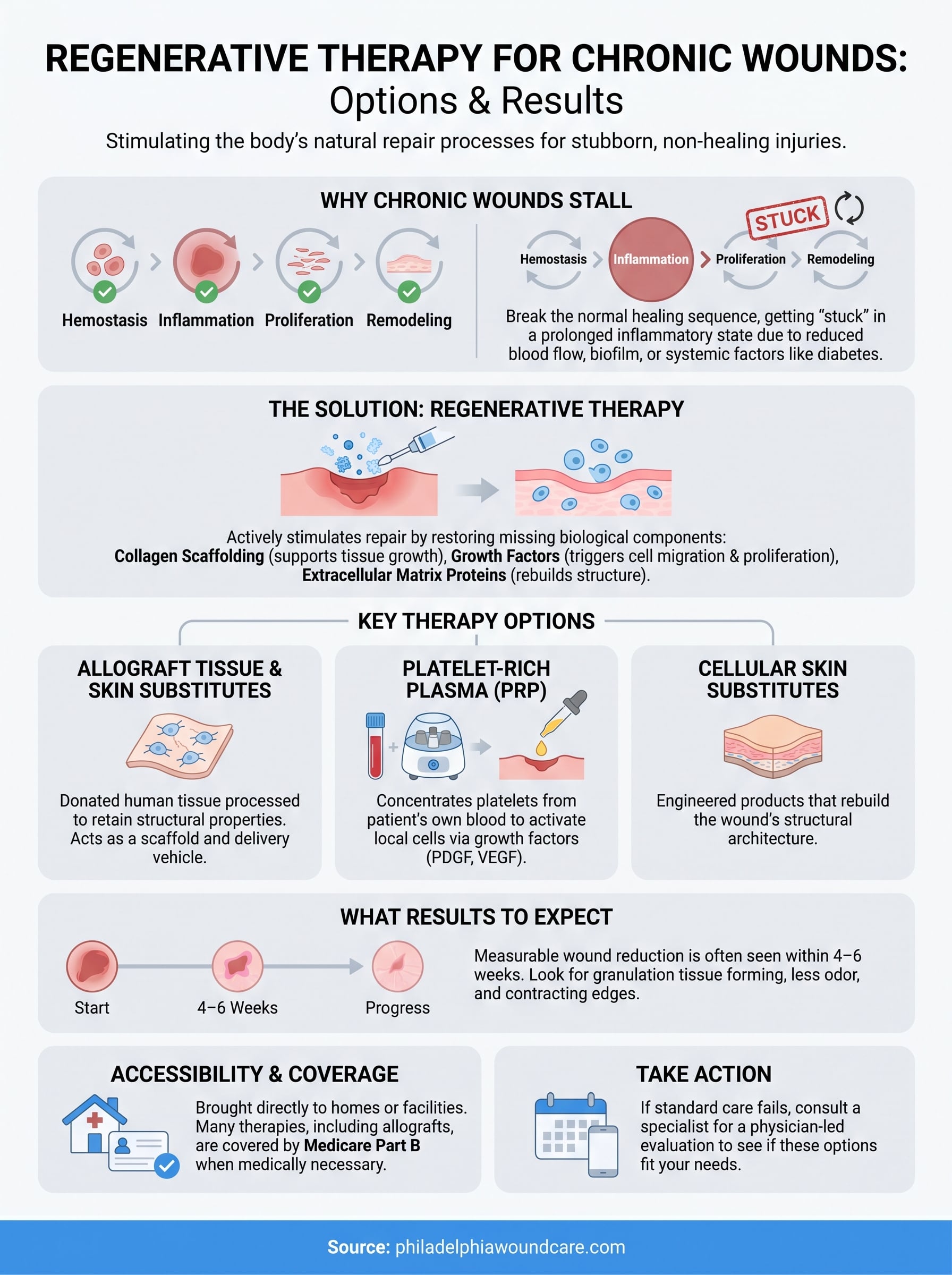
A normal wound moves through four phases: hemostasis, inflammation, proliferation, and remodeling. Chronic wounds break this sequence, typically getting stuck in a prolonged inflammatory state where tissue never transitions into the repair phase. For patients with diabetes, vascular disease, or limited mobility, multiple physiological factors compound this problem at once, making it extremely difficult for standard care alone to restore the healing cycle.
When a wound stays in the inflammatory phase for weeks or months, the local tissue environment becomes hostile to repair, with elevated enzymes that destroy new cells as fast as the body tries to build them.
What keeps wounds from healing
Reduced blood flow is one of the most common culprits. Without adequate circulation, oxygen and nutrients can’t reach wound tissue in the concentrations needed to support cell growth. Patients with peripheral artery disease or chronic venous insufficiency face this challenge directly. Bacterial biofilm compounds the problem further. Biofilm is a structured colony of bacteria embedded in the wound bed that resists standard antibiotics and continuously re-triggers the inflammatory response.
Systemic conditions layer onto these local factors. Elevated blood glucose in diabetic patients damages the nerve pathways that signal tissue repair and impairs the white blood cells responsible for clearing debris and infection. Your wound’s local biology, in short, becomes primed to stall rather than progress.
Why conventional dressings aren’t enough
Standard wound dressings do important work, protecting the wound surface, managing moisture, and reducing infection risk. They don’t, however, replenish the growth factors, extracellular matrix proteins, or cellular signals that a chronic wound has depleted. This is exactly where regenerative therapy for chronic wounds fills the gap, by introducing biological material that restores the conditions the wound needs to start healing again. Common components these therapies restore include:
- Collagen scaffolding to support new tissue growth
- Growth factors that trigger cell migration and proliferation
- Extracellular matrix proteins that rebuild structural architecture
Regenerative therapy options used for chronic wounds
Several therapies fall under the regenerative umbrella, each working through a different biological mechanism. Allograft tissue, platelet-rich plasma, and cellular skin substitutes represent the most widely used options in clinical wound care today, and understanding what each one does helps you ask the right questions before treatment begins.
Allograft tissue and skin substitutes
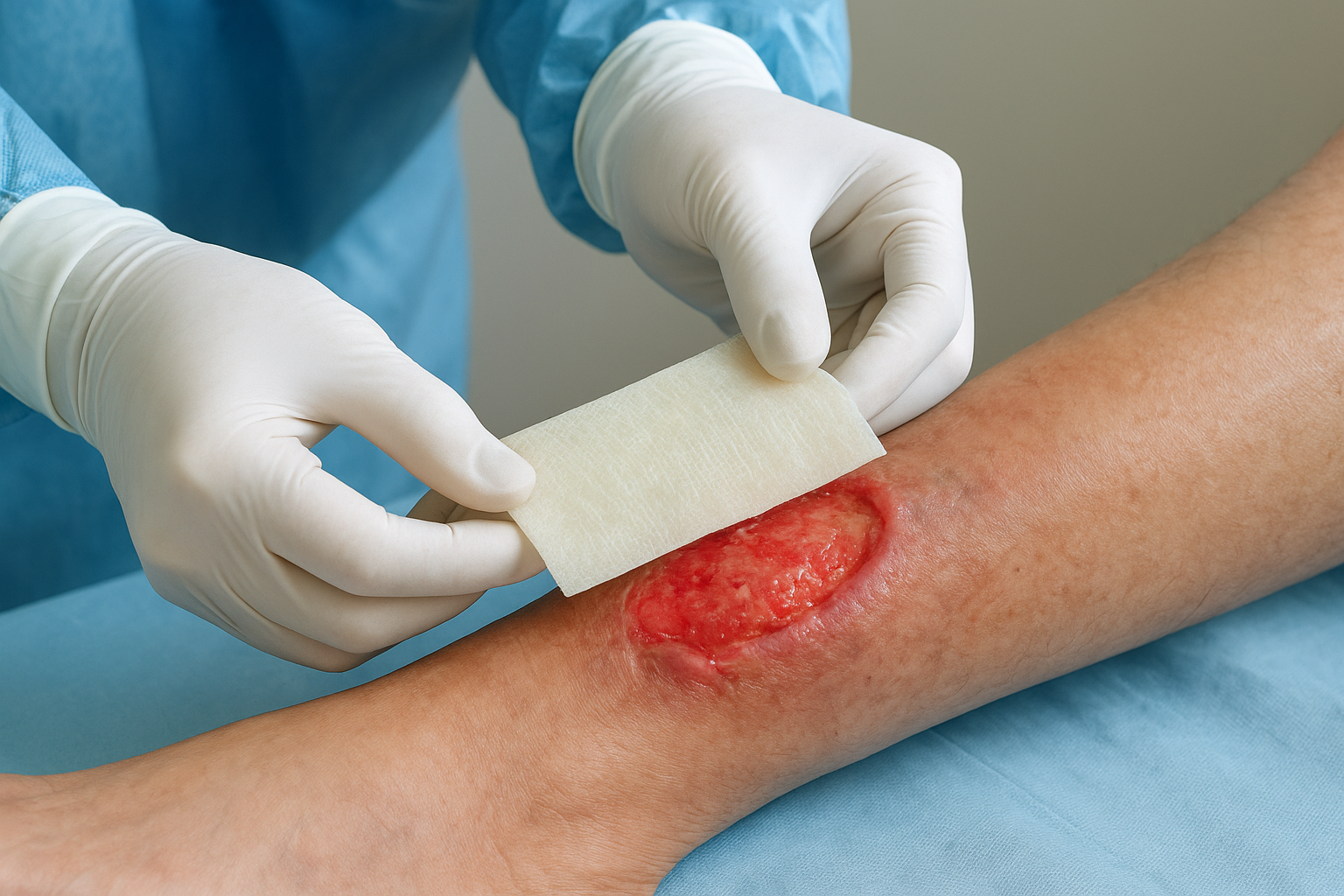
Allograft products use donated human tissue processed to retain its structural and biological properties. When applied to your wound bed, the graft acts as a scaffold and delivery vehicle, providing the collagen, growth factors, and extracellular matrix proteins the wound can no longer generate on its own. This makes allograft the most commonly used form of regenerative therapy for chronic wounds in mobile and physician-led care settings. Common allograft forms include:
- Amniotic membrane allografts
- Dermal matrix substitutes
- Placental tissue products
Allograft therapies are covered under Medicare Part B when medically necessary, removing the financial barrier for most qualifying patients.
Platelet-rich plasma therapy
PRP therapy draws a small sample of your own blood, concentrates the platelets, and applies the resulting solution directly to the wound bed. Growth factors within the platelets, including PDGF and VEGF, activate local cells to begin migrating and proliferating into the damaged tissue.
Clinicians often pair PRP with a protective scaffold material to hold the concentrated solution in contact with the wound long enough to trigger a sustained repair response.
How clinicians decide which therapy fits
No single regenerative therapy works for every wound, and selecting the right option depends on a structured clinical assessment rather than a fixed protocol. A physician evaluates several wound and patient-level factors before recommending any form of regenerative therapy for chronic wound management, because applying the wrong product to an unprepared wound produces little meaningful result.
Wound characteristics that guide the decision
Wound depth, tissue type, and the overall condition of the wound bed each influence which therapy gives you the best chance of a sustained healing response. A wound covered in necrotic tissue requires debridement before any regenerative product can work effectively. Key factors your clinician assesses include:
- Wound size and precise surface area measurements
- Presence of biofilm, infection, or exposed structures
- Tissue perfusion and local blood supply
Applying a regenerative therapy to a poorly prepared wound bed significantly reduces its effectiveness, which is why debridement and infection control always come first.
Patient health and coverage factors
Your systemic health status, including blood glucose management, circulation, and nutritional condition, shapes how well your body responds to any regenerative treatment. Clinicians also factor in your Medicare or insurance coverage early in the process, since Part B eligibility for allograft therapy determines which products are both clinically appropriate and financially accessible for your specific situation.
What results to expect and how long healing takes
Regenerative therapy for chronic wounds doesn’t produce overnight results, and setting realistic expectations upfront helps you track progress accurately. Most patients see measurable wound reduction within four to six weeks of starting treatment, though the full healing trajectory depends on wound severity, your overall health, and how consistently the therapy is applied.
Typical healing timelines
Wound size and depth directly influence how many treatment cycles you need. A superficial diabetic ulcer treated early in its course may close within six to eight weeks, while a deep pressure injury with compromised blood supply may require several months of consecutive applications before reaching full closure. Your clinician will measure wound surface area at each visit to confirm that the therapy is producing a consistent reduction in wound dimensions.
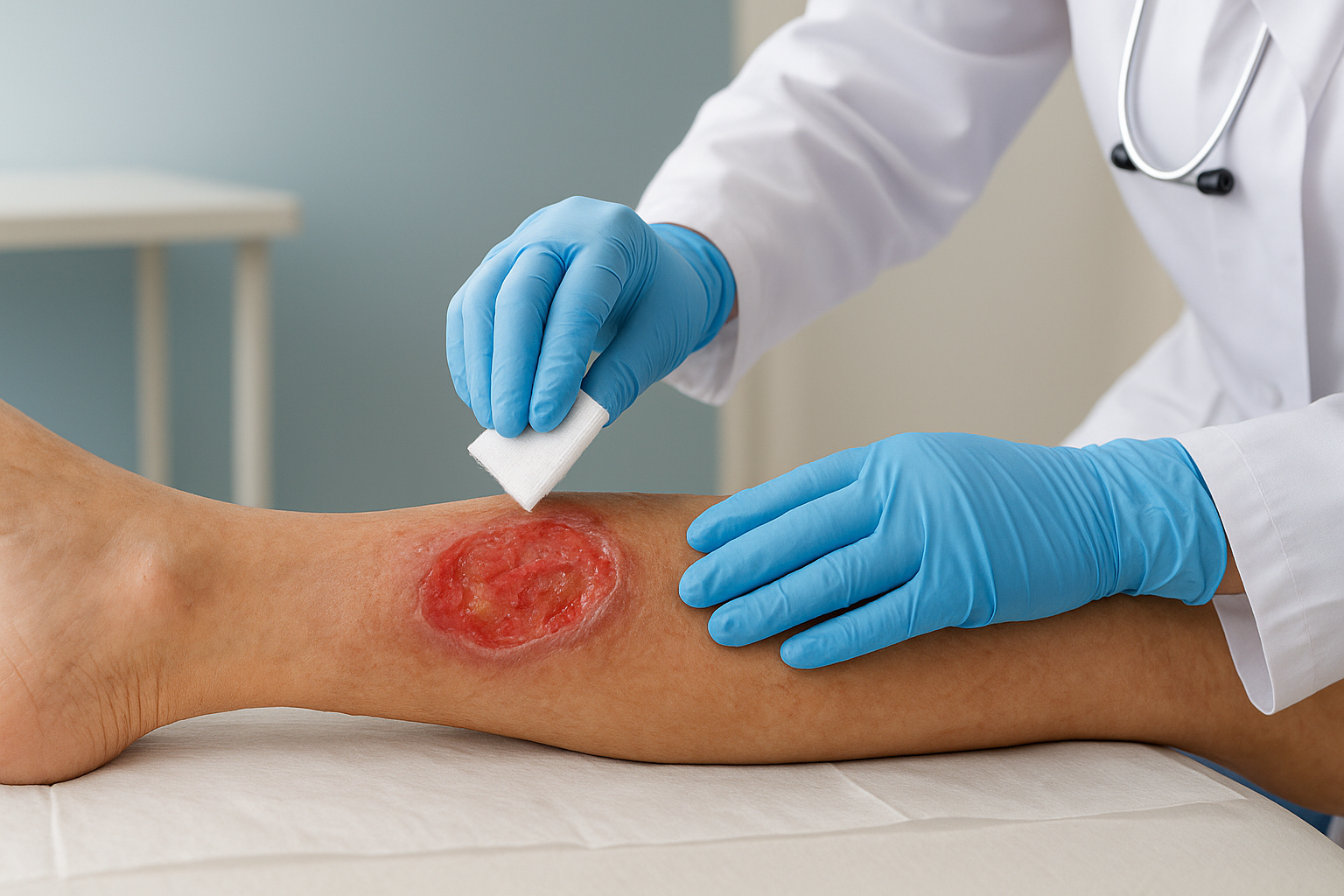
Wounds that show at least 40 to 50 percent reduction in surface area within four weeks are statistically more likely to reach full closure with continued treatment.
Signs that treatment is working
Granulation tissue forming in the wound bed is one of the earliest positive indicators. You should also notice decreased wound odor, reduced exudate, and edges that begin contracting inward. These visible changes confirm that the biological repair process has restarted and that the regenerative therapy is producing the response your wound needs.
Safety, risks, and insurance coverage
Regenerative therapy for chronic wounds carries a strong overall safety record, particularly with allograft and PRP-based options. Tissue screening protocols and processing standards for allograft products are rigorous, and most patients tolerate these therapies without significant complications when the wound bed is properly prepared beforehand.
Risks to know before you start
Infection and local inflammatory reactions represent the most commonly reported adverse events, though both are manageable when your clinician monitors the wound closely at each visit. Allergic reactions to allograft products are rare but possible, and your physician will review your medical history to screen for any contraindications before applying any regenerative agent.
Poorly controlled blood glucose or active wound infection significantly raises your risk of a suboptimal response, which is why stabilizing these factors before treatment starts matters.
How Medicare and insurance coverage works
Medicare Part B covers medically necessary allograft and skin substitute therapies, provided your physician documents the wound’s failure to respond to standard care. Your clinician handles this documentation as part of the referral and treatment process. Most commercial insurance plans follow similar coverage criteria, and your care team can verify your specific benefits before treatment begins so you face no unexpected costs.
What to do next
If your wound hasn’t responded to standard care, regenerative therapy for chronic wounds is worth a direct conversation with a specialist. The options covered in this article, allograft tissue, PRP, and cellular skin substitutes, are clinically proven, Medicare-covered, and available outside of a hospital setting. You don’t need to schedule a clinic visit or arrange transportation to access this level of care.
Philadelphia Wound Care brings physician-led wound management directly to your home, skilled nursing facility, or assisted living community. A board-certified General Surgeon evaluates your wound, identifies whether a regenerative approach fits your clinical picture, and coordinates all documentation for insurance coverage on your behalf. If you’re a caregiver, facility administrator, or referring provider, the process works the same way. Reach out today through our mobile wound care services page to request an evaluation or ask about next steps for your specific situation.