

Silver Dressings For Venous Leg Ulcers: Do They Help?
Venous leg ulcers are notoriously stubborn wounds. They recur often, heal slowly, and carry a real risk of infection, especially for older adults managing other chronic conditions. When infection enters the picture, it can stall healing entirely. That’s why clinicians have long turned to silver dressings for venous leg ulcers as a way to control bacterial burden and support the wound environment. But the question patients and caregivers keep asking is fair: do they actually work better than standard wound dressings?
The answer isn’t as straightforward as many wound care product manufacturers suggest. Clinical research on silver dressings has produced mixed results, and the decision to use them depends heavily on the individual wound’s status, the patient’s overall health, and what other treatments are in play. Understanding the evidence, both for and against, helps patients, families, and referring providers make informed choices rather than defaulting to assumptions.
At Philadelphia Wound Care, our physician-led mobile practice treats venous ulcers directly in patients’ homes, skilled nursing facilities, and assisted living communities across the Philadelphia area. Dr. evaluates each wound individually, using advanced therapies when they’re warranted and avoiding unnecessary interventions when they’re not. This article breaks down what the research says about silver dressings, when they may offer a genuine benefit, and when other approaches might serve you better.
Why silver dressings get used for venous leg ulcers
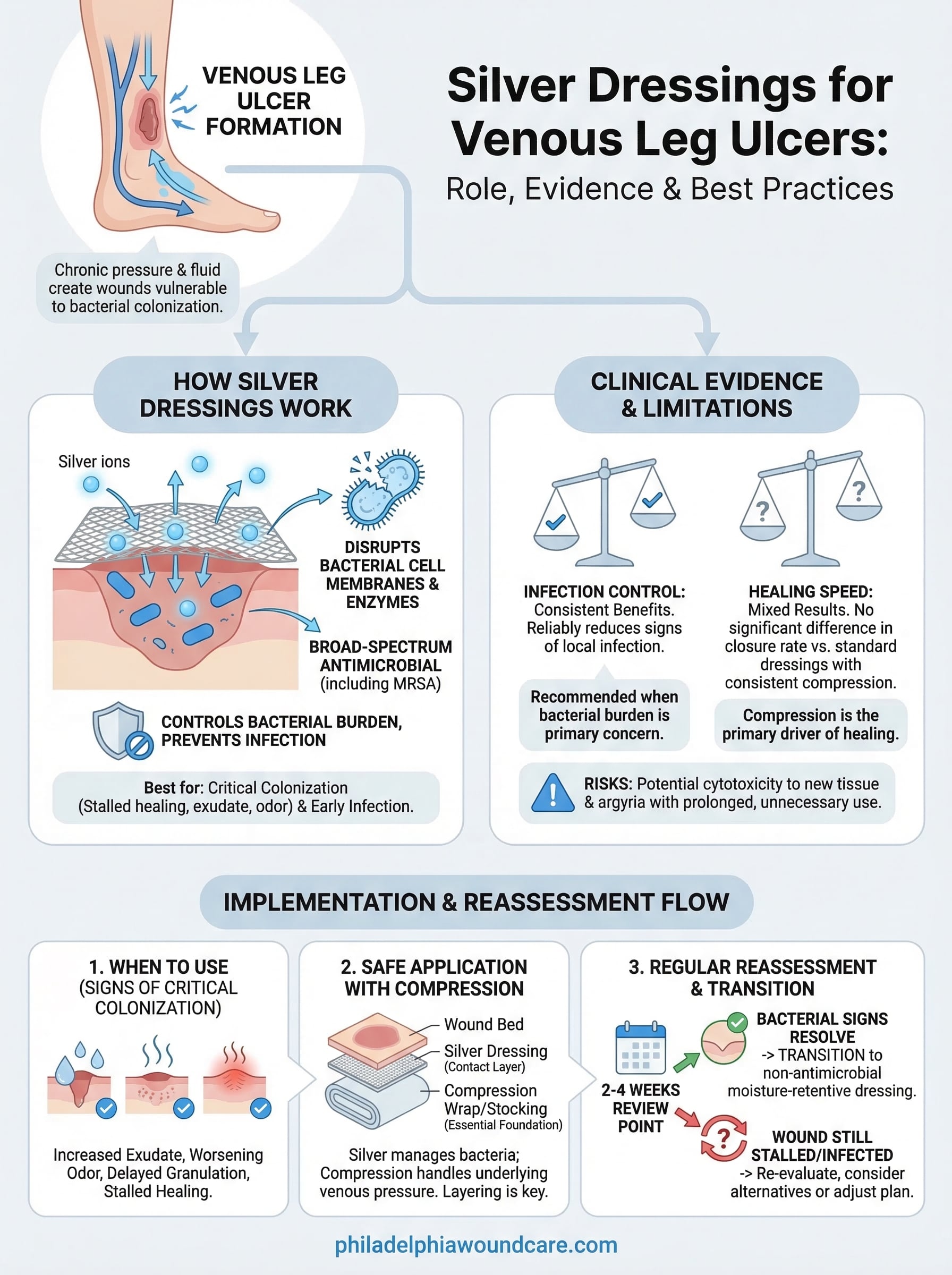
Venous leg ulcers develop when poor blood return in the leg veins causes fluid and pressure to build in the lower limb tissue. That chronic pressure damages skin, creates open wounds, and leaves the area vulnerable to bacterial colonization. Bacteria in a wound don’t just cause infection in the traditional sense; even sub-clinical levels of bacteria can disrupt the healing process by triggering inflammation and breaking down new tissue before it can close the wound.
The role of bacteria in stalled venous ulcers
When a venous ulcer fails to close over weeks or months, bacterial burden is frequently a contributing factor. The wound surface may show signs like increased exudate, odor, or delayed tissue granulation without meeting the formal criteria for a clinical infection. This state, often called critical colonization, sits in a difficult middle ground where systemic antibiotics may not be appropriate, but doing nothing allows bacteria to keep stalling the wound.
Addressing bacterial burden early in a stalled venous ulcer can prevent critical colonization from progressing to a full wound infection.
If your wound care provider suspects critical colonization, they need a localized, broad-spectrum option that reduces bacterial load without systemic side effects. That need pushed clinicians toward topical silver-based products, which had a well-established track record in burn care and surgical wounds before being applied to chronic ulcers.
How silver works as an antimicrobial agent
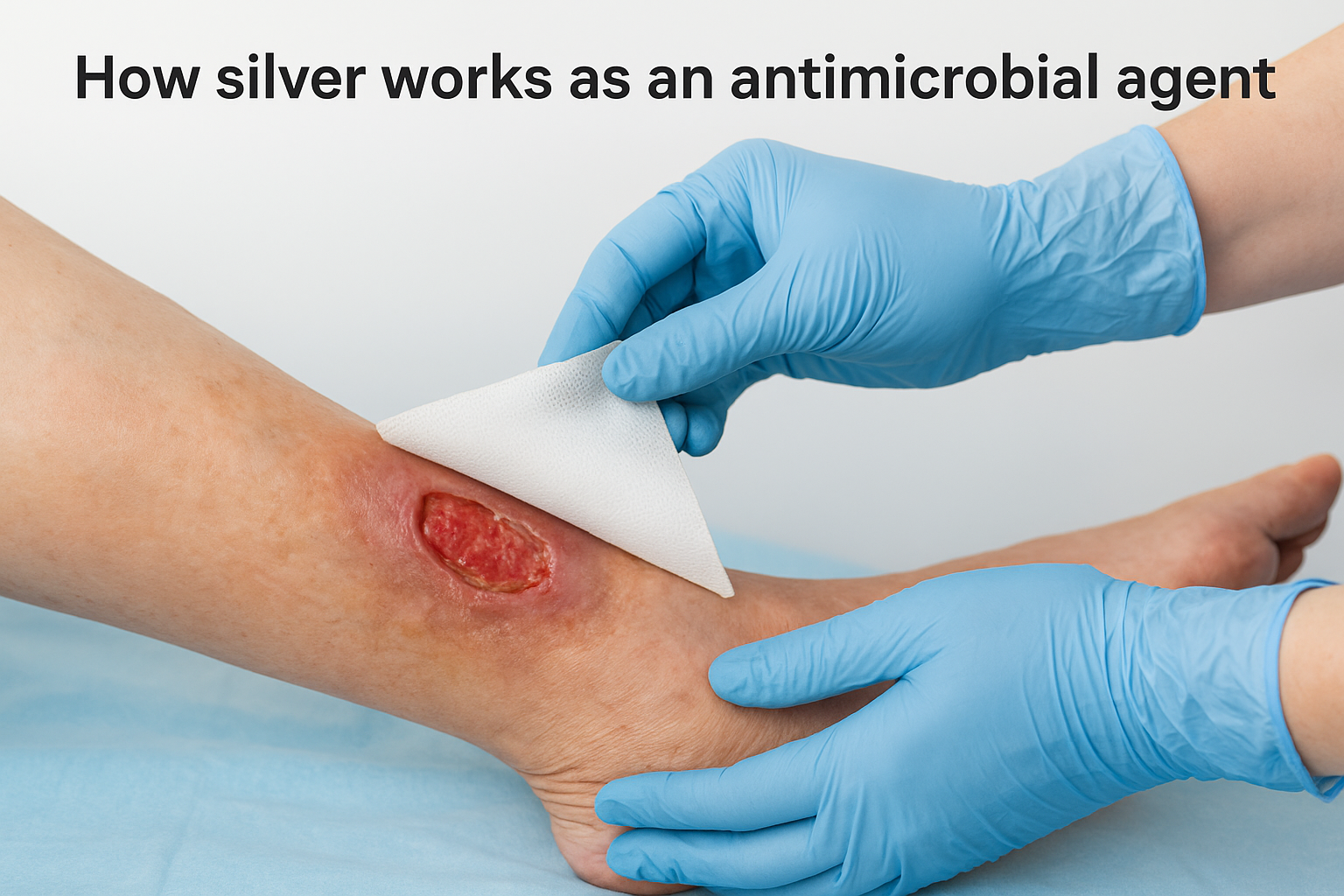
Silver releases ions that disrupt bacterial cell membranes and enzyme function, effectively stopping microbial reproduction at the wound surface. Modern silver dressings for venous leg ulcers deliver these ions in a controlled, sustained way, maintaining therapeutic levels across dressing changes without overwhelming surrounding healthy tissue. The mechanism is broad-spectrum, meaning it targets a wide range of bacteria including antibiotic-resistant strains like MRSA.
What research shows about healing and infection control
If you are evaluating treatment options, the clinical evidence on silver dressings for venous leg ulcers is substantial but nuanced. Several randomized controlled trials have examined whether silver dressings reduce infection rates and close wounds faster compared to non-antimicrobial alternatives. The results show consistent benefits for controlling bacterial load but a less definitive picture for accelerating wound closure on their own.
Infection control versus healing speed
Research, including a Cochrane systematic review on wound care dressings, found that silver-containing products reliably reduce signs of local infection in critically colonized venous ulcers. Patients treated with silver-based options showed fewer clinical infection indicators compared to those using standard foam or hydrocolloid dressings, making silver a reasonable choice when bacterial burden is the primary concern.
Silver dressings are better supported by evidence for controlling infection than for speeding up wound closure independently.
Where the evidence becomes less conclusive is time to full closure. Multiple trials show no statistically significant difference in healing rates between silver and non-silver dressings when compression therapy is applied consistently. Silver targets the bacterial barrier effectively, but compression remains the primary driver of venous ulcer healing.
When silver dressings help and when they do not
Silver dressings perform well in specific clinical scenarios, but they are not universally appropriate for every venous ulcer. Knowing the difference helps you and your care team make a smarter treatment decision.
When silver dressings are a good fit
Silver dressings for venous leg ulcers work best when your wound shows clear signs of critical colonization or early infection, such as increased exudate, worsening odor, or tissue that stops granulating despite good compression adherence. In those cases, a silver dressing gives your clinician a targeted way to reduce bacterial load without resorting to systemic antibiotics.
If your wound has plateaued despite consistent compression, bacterial burden may be the missing piece your care plan needs to address.
When silver dressings are not the right choice
When a venous ulcer is healing steadily and shows no signs of infection, adding silver offers little benefit and may become an unnecessary cost. Silver dressings also carry considerations for wounds with surrounding fragile skin, where repeated dressing changes can cause irritation. In those situations, a standard moisture-retentive dressing paired with compression is usually the more clinically appropriate and cost-effective path.
How clinicians use silver dressings safely with compression
Silver dressings work best as part of a structured treatment plan, not a standalone fix. For venous ulcers, compression therapy remains the non-negotiable foundation, and silver dressings layer on top of that foundation rather than replacing it. Using both together gives your care team a way to tackle the two biggest obstacles to healing: elevated venous pressure and bacterial burden.
Layering silver dressings within a compression system
When your clinician applies silver dressings for venous leg ulcers, the dressing goes directly against the wound bed, and compression bandaging or a compression stocking is applied over it. The silver layer manages bacterial burden at the wound surface while compression addresses the underlying venous pressure that drives the ulcer.
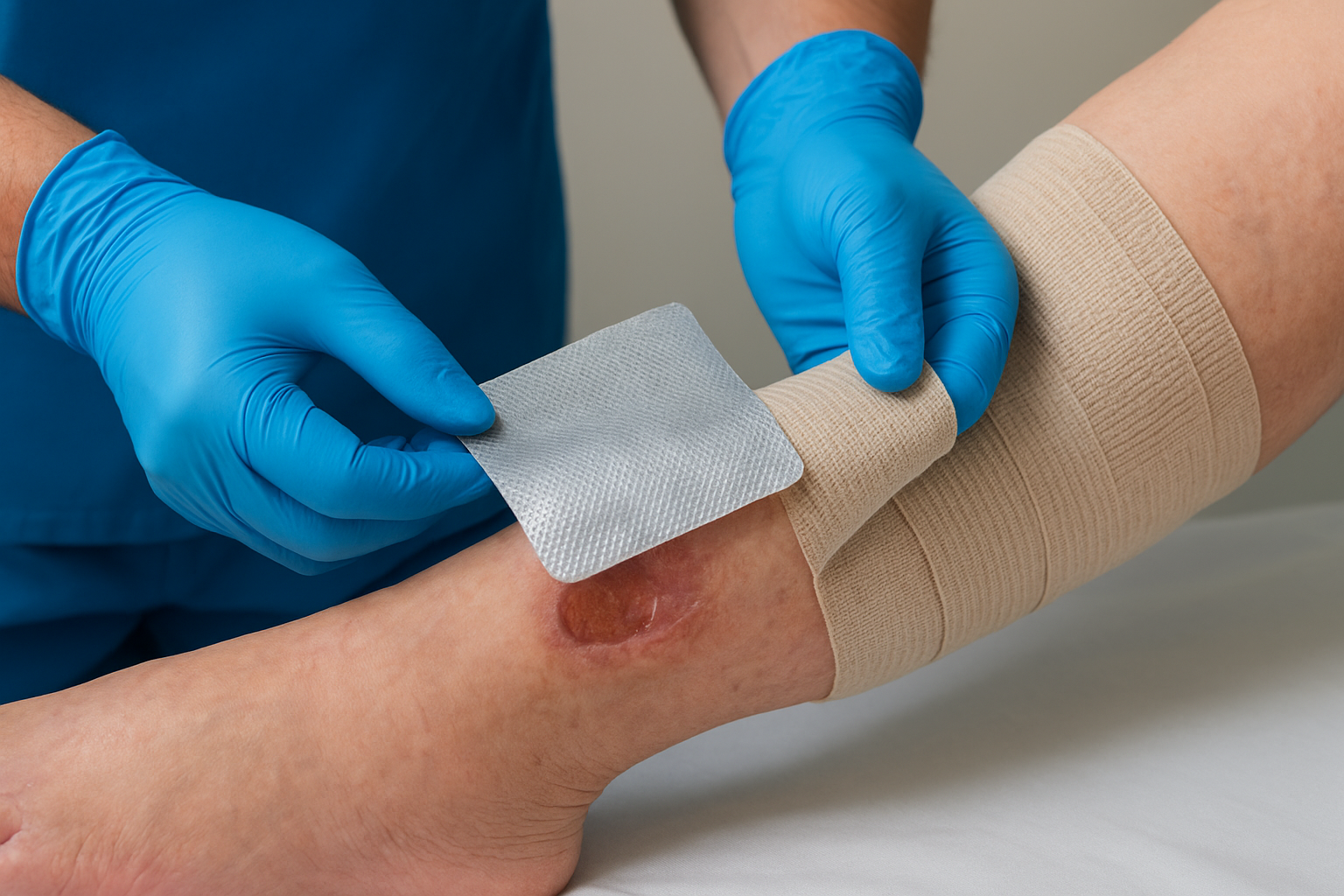
Compression handles the root cause; silver handles the bacterial barrier that is slowing healing down.
Your clinician selects the appropriate silver product based on exudate levels, wound depth, and the antimicrobial activity the wound needs. High-exudate wounds may call for silver foam dressings, while lower-output wounds often respond well to silver-impregnated contact layers.
Monitoring and dressing change frequency
At each scheduled visit, your care team will reassess the wound to determine whether the silver dressing is still warranted. Most silver dressings stay in place for two to seven days depending on exudate output and the specific product used.
Once bacterial signs resolve, your clinician will typically transition you to a non-antimicrobial moisture-retentive dressing to reduce unnecessary silver exposure and keep the treatment plan cost-appropriate.
Risks, downsides, and better alternatives in some cases
Silver dressings are generally well-tolerated, but they carry real limitations that your care team needs to weigh before committing to them long-term. Using silver dressings for venous leg ulcers beyond what the wound requires can lead to unnecessary costs and, in some cases, delayed tissue formation.
When silver exposure becomes a concern
Prolonged silver use at high concentrations can slow fibroblast activity, which is the cellular process responsible for building new tissue in the wound bed. Extended exposure without reassessment also risks argyria, a rare but permanent skin discoloration caused by silver deposits accumulating in the skin.
Silver should be a short-term intervention with regular clinical reassessment, not an indefinite standing order.
Most clinicians set a defined review point of two to four weeks to decide whether silver is still warranted. Once the wound shows reduced bacterial signs, your provider should transition you to a standard moisture-retentive dressing.
Alternatives worth considering
When your wound shows no infection signs, non-antimicrobial foam or hydrocolloid dressings paired with compression often deliver equivalent outcomes at a lower cost. For wounds with biofilm involvement, consider these alternatives:
- Cadexomer iodine: tackles resistant bacterial communities through a different antimicrobial mechanism
- Honey-based dressings: provide antimicrobial activity with lower cytotoxicity risk
- Plain foam dressings: best for clean, actively healing wounds managing moderate exudate
Next steps for venous leg ulcer care
Managing a venous leg ulcer well requires more than choosing the right dressing. Compression therapy, regular reassessment, and physician oversight are what drive real healing outcomes. Silver dressings for venous leg ulcers serve a specific purpose within that broader plan, and knowing when to use them, and when to stop, is a clinical judgment your care team needs to make based on your wound’s current status.
If your wound has stalled, shows signs of infection, or you are managing care for someone who cannot travel to a clinic, a physician-led evaluation at your home or care facility gives you the most complete picture. Philadelphia Wound Care brings advanced wound assessment directly to patients in the Philadelphia area, including skilled nursing and assisted living settings, so you get specialist-level care without the transportation barrier. Schedule a mobile wound care visit to get a clear, evidence-based plan for your wound.