

UPenn Wound Care Center: Locations, Hours, Hyperbarics Info
The UPenn Wound Care Center, formally part of Penn Medicine, is one of the Philadelphia region’s most recognized resources for treating chronic and complex wounds. It offers clinic-based services including hyperbaric oxygen therapy, vascular wound management, and diabetic ulcer treatment across multiple locations. If you’re researching where to go, what to expect, or how to schedule an appointment, this guide breaks down the key details you need.
At Philadelphia Wound Care, we work alongside centers like Penn Medicine as part of the broader wound care network in our area. Our physician-led mobile practice brings advanced wound treatment directly to patients’ homes, skilled nursing facilities, and hospice settings, often serving people before or after they’ve received care at a hospital-based center. We know firsthand how important it is for patients and caregivers to understand all available options for specialized wound care in Philadelphia.
Below, you’ll find a practical overview of the UPenn Wound Care Center’s locations, office hours, services offered, and what makes their hyperbaric medicine program distinct, so you can make an informed decision about your next step.
What the UPenn Wound Care Center is
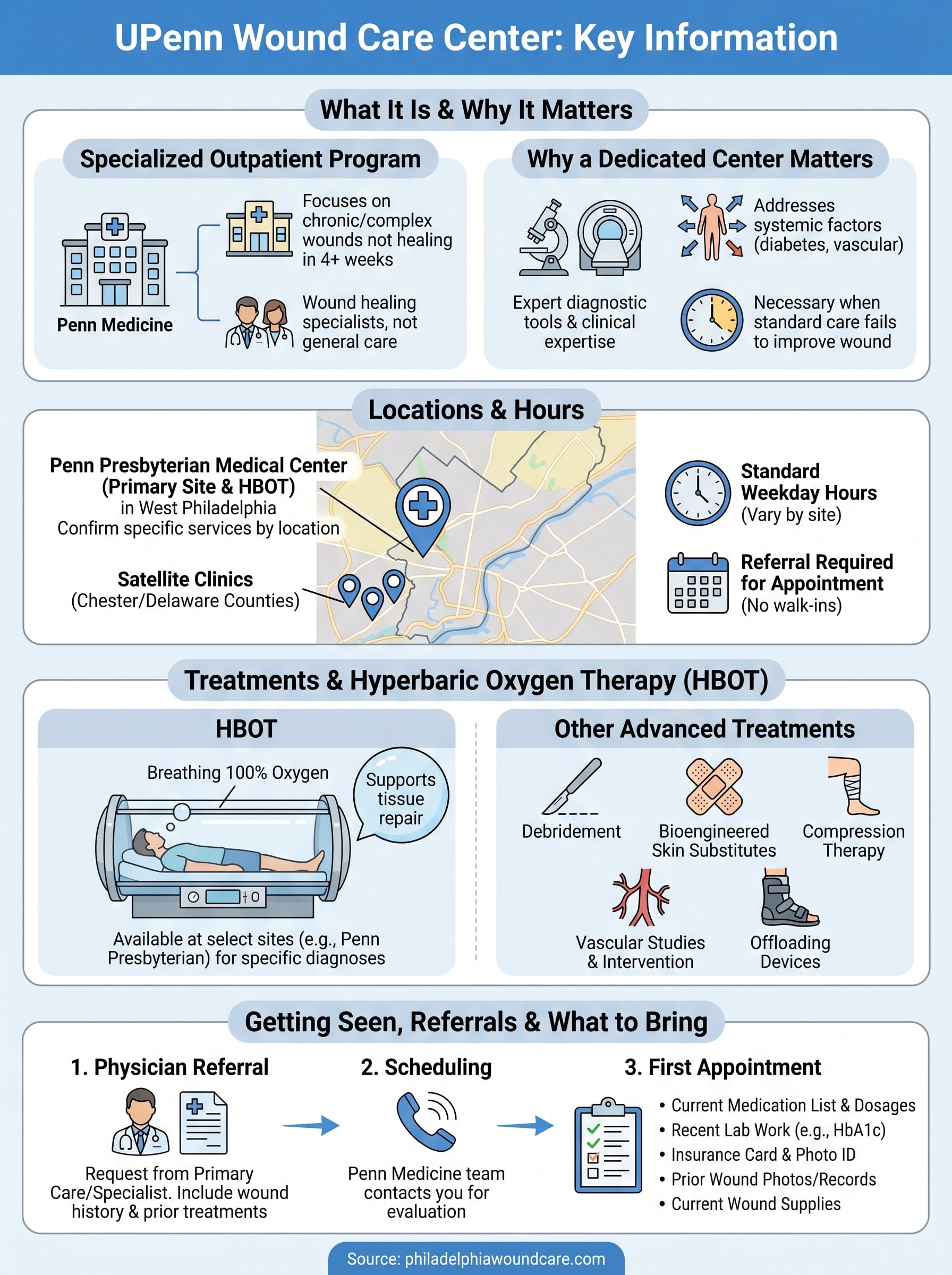
The UPenn Wound Care Center operates as a specialized outpatient program within the Penn Medicine health system, one of the largest academic medical centers in the United States. It focuses on wounds that have not healed through standard medical care, typically defined as wounds that fail to close after four weeks of conventional treatment. Patients referred here receive evaluation and treatment from physicians who specialize in wound healing rather than general practitioners managing wound care as a secondary concern.
Part of the Penn Medicine Network
Penn Medicine connects its wound care services across multiple hospital campuses and outpatient locations throughout the Philadelphia region and surrounding counties. This structure means you can access wound specialists without necessarily traveling to the main University of Pennsylvania campus in University City. Each site coordinates with Penn’s broader clinical teams, which include vascular surgeons, endocrinologists, plastic surgeons, and infectious disease specialists who contribute to [complex case management](https://web.developer-zannatul.com/complex-wound-management-philadelphia/) when needed.
Because Penn Medicine operates as an academic medical center, its wound care teams often have access to clinical research protocols and newer treatment options that community-based practices may not offer.
How the center classifies and treats wounds
The center handles a specific range of wound types, including diabetic foot ulcers, venous leg ulcers, pressure injuries, and non-healing post-surgical wounds. Clinicians use a systematic approach: they assess wound depth, infection status, blood supply, and the patient’s overall health before building a treatment plan. That plan can include debridement, bioengineered skin substitutes, compression therapy, or hyperbaric oxygen therapy, depending on what the wound requires. The goal at each visit is measurable progress toward closure, not ongoing symptom management without a clear endpoint.
Why a dedicated wound center matters
Most primary care providers and home health nurses can handle routine wound dressing changes and basic infection monitoring. However, chronic wounds, those that haven’t closed after four or more weeks, require a different level of intervention. A specialized wound center brings together diagnostic tools and clinical expertise that a standard clinic visit simply cannot replicate.
When a wound stops responding to standard treatment
If your wound shows no measurable improvement over several weeks, a referral to a dedicated center becomes necessary rather than optional. At a place like the UPenn Wound Care Center, clinicians run vascular studies, culture wound tissue, and consult specialists from multiple disciplines before adjusting your plan.
A wound that fails to progress is not just a surface problem; it often signals an underlying issue with circulation, infection, or metabolic control that requires specialist-level diagnosis.
Your treatment plan at a dedicated center also accounts for systemic factors like diabetes or vascular disease that directly affect your body’s ability to heal. Managing those variables alongside the wound itself is what separates specialized wound care from general wound management.
UPenn wound care center locations and hours
The UPenn Wound Care Center operates out of several outpatient sites across the Philadelphia region, making it accessible to patients in different parts of the city and surrounding counties. Penn Medicine’s wound care program is available at locations including Penn Presbyterian Medical Center and additional satellite clinics that Penn continues to expand throughout the area.
Where the clinics are located
Penn Presbyterian Medical Center, located at 51 N. 39th Street in West Philadelphia, is the primary site where wound care and hyperbaric services are available. Additional Penn Medicine outpatient locations in Chester County and Delaware County also offer wound care services, though not all sites provide hyperbaric oxygen therapy. Before scheduling, call the specific location to confirm which treatments are available there.

Confirming available services before your first visit saves you from making an unnecessary trip if hyperbaric therapy or a specific specialist is only offered at select sites.
Office hours and scheduling
Most Penn Medicine wound care clinic locations operate during standard weekday business hours, typically Monday through Friday. Hours vary by site, so contact the clinic directly or visit Penn Medicine’s official website to confirm current availability. Walk-ins are generally not accepted; your first appointment requires a physician referral to get on the schedule.
Services and treatments, including hyperbarics
The upenn wound care center offers a structured range of clinical treatments designed to address wounds that have stopped responding to standard care. Your treatment plan gets built around the specific wound type and underlying cause, not a one-size approach that applies the same protocol to every patient.
Hyperbaric oxygen therapy
Hyperbaric oxygen therapy (HBOT) involves breathing 100% oxygen inside a pressurized chamber, which raises oxygen levels in the bloodstream and supports tissue repair at the wound site. Penn Medicine provides this service at select locations, primarily Penn Presbyterian Medical Center. Not every wound qualifies, so clinicians evaluate your case before recommending it.
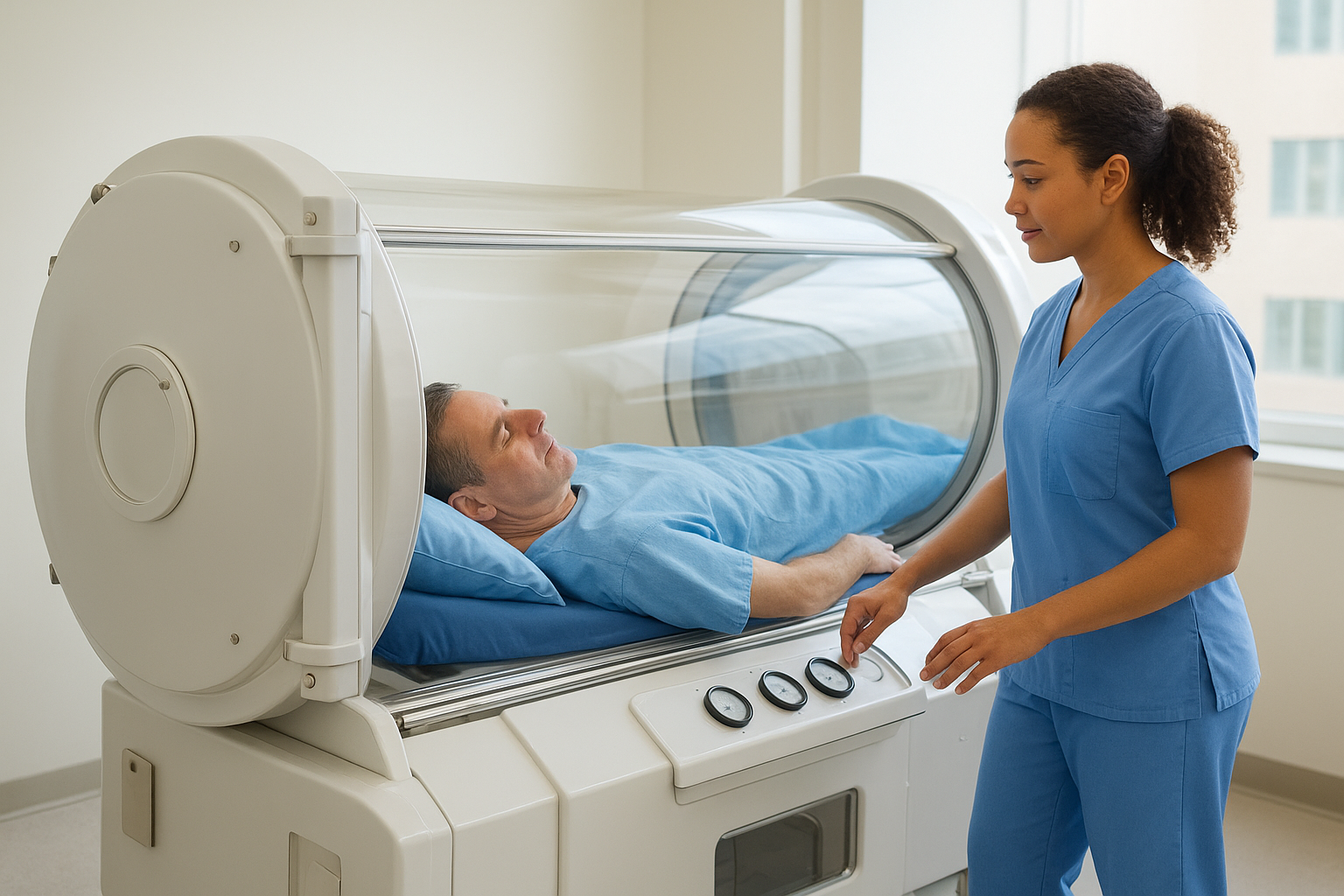
HBOT is covered under Medicare Part B for specific wound diagnoses, which can significantly reduce your out-of-pocket cost if you meet the eligibility criteria.
Other wound treatments offered
Beyond hyperbaric therapy, the center provides debridement, bioengineered skin substitutes, compression therapy, and infection management. Clinicians also coordinate with vascular specialists when poor circulation is limiting your healing. The range of treatments available includes:
- Surgical and enzymatic debridement
- Negative pressure wound therapy
- Allograft and skin substitute application
- Offloading devices for diabetic foot wounds
- Vascular studies and referrals for intervention
How to get seen, referrals, and what to bring
Getting an appointment at the upenn wound care center starts with a physician referral. Your primary care doctor, vascular specialist, or hospital discharge team can submit a referral on your behalf. Once Penn Medicine receives it, their scheduling team contacts you to set up an initial evaluation.
Getting a referral
Ask your current provider to document your wound’s history and prior treatments when submitting the referral. This helps the wound care team triage your case accurately and assign the right specialist from the start.
The more detailed your referral documentation, the faster the wound care team can build a treatment plan without repeating diagnostic steps you’ve already completed.
What to bring to your first appointment
Arriving prepared shortens your first visit and gives clinicians the full picture they need to act quickly. Bring the following to your appointment:
- A complete list of current medications and dosages
- Recent lab work, including HbA1c results if you have diabetes
- Prior wound photos or treatment records
- Your insurance card and photo ID
- Any wound care supplies or dressings currently in use
Confirming your insurance coverage before the visit also prevents billing surprises, especially if hyperbaric therapy is part of your plan.
Next Steps
If you’re dealing with a wound that hasn’t responded to standard care, the upenn wound care center gives you access to specialist-level diagnosis and treatments like hyperbaric oxygen therapy in a structured outpatient setting. Start by contacting your primary care physician or specialist to request a formal referral, and ask them to include your wound history and prior treatment records when submitting it.
Not every patient can travel to a clinic, though. If you or someone you care for has mobility limitations or lives in a skilled nursing facility, getting to a hospital-based center for each appointment can become a real barrier to consistent care. That’s where a physician-led mobile wound care service fills the gap. Philadelphia Wound Care brings advanced wound treatment directly to you, handling complex cases without requiring you to leave home. Reach out through our mobile wound care services in Philadelphia page to learn more about how we can help.