

Vitamin C For Healing Wounds: Best Dose, Foods, Safety Tips
Your body can’t build new tissue without the right raw materials, and vitamin C for healing wounds plays a role that no other nutrient can fill. It’s directly responsible for collagen production, the protein that gives skin its structure and strength during every phase of repair.
Yet many patients we treat at Philadelphia Wound Care, particularly older adults managing diabetic ulcers, pressure injuries, or surgical wounds, aren’t getting enough of it. Low vitamin C levels slow healing, weaken new tissue, and can turn a straightforward recovery into a prolonged one. As a mobile wound care practice bringing physician-led treatment to patients across the Philadelphia area, we see firsthand how nutritional gaps stall progress even when clinical care is on track.
This article breaks down how vitamin C supports wound repair, the dosages backed by clinical evidence, the best food and supplement sources, and important safety considerations to keep in mind.
Why vitamin C matters for wound healing
Vitamin C is a water-soluble nutrient that your body cannot produce on its own, which means every milligram must come from your diet or supplements. When it comes to vitamin C for healing wounds, the science is direct: without adequate levels, the repair process stalls at nearly every step. Your body depends on this single nutrient to drive several critical biological functions that convert a raw wound into closed, functional tissue.
Collagen synthesis: the structural foundation
Collagen is the most abundant protein in your body, and vitamin C is essential for its production. Specifically, vitamin C acts as a cofactor for two enzymes, prolyl hydroxylase and lysyl hydroxylase, that stabilize and cross-link collagen fibers into a durable structure. Without this process working properly, the collagen your body builds is structurally weak. New tissue tears more easily, wound edges struggle to hold together, and the skin surface remains fragile long after it should be fully closed.
Collagen accounts for roughly 70% of the dry weight of skin, so any nutrient that limits its synthesis has an outsized impact on wound outcomes.
Beyond structure, vitamin C also supports the production of proteoglycans and fibronectin, two components that form the scaffolding your cells migrate across during repair. This matrix is what allows cells to physically reach the wound site and carry out their role in rebuilding tissue.
How deficiency slows your recovery
Low vitamin C levels are far more common than most people expect, particularly in older adults, smokers, people with diabetes, and patients who have recently undergone surgery. Research available through the National Institutes of Health indicates that illness and physical stress can deplete circulating vitamin C rapidly, leaving patients in a subclinical deficiency even when their everyday diet appears adequate.
When your levels drop, wound healing time increases measurably. Studies document that patients with vitamin C deficiency experience delayed collagen deposition, reduced tensile strength in healing tissue, and a higher rate of wound dehiscence, meaning the wound reopens before it has fully knit together. Your immune response also weakens at the wound site, raising the risk of infection. For patients already managing complex wounds like diabetic ulcers or pressure injuries, even a mild deficiency can push a borderline recovery into a serious and prolonged complication.
How vitamin C supports each healing phase
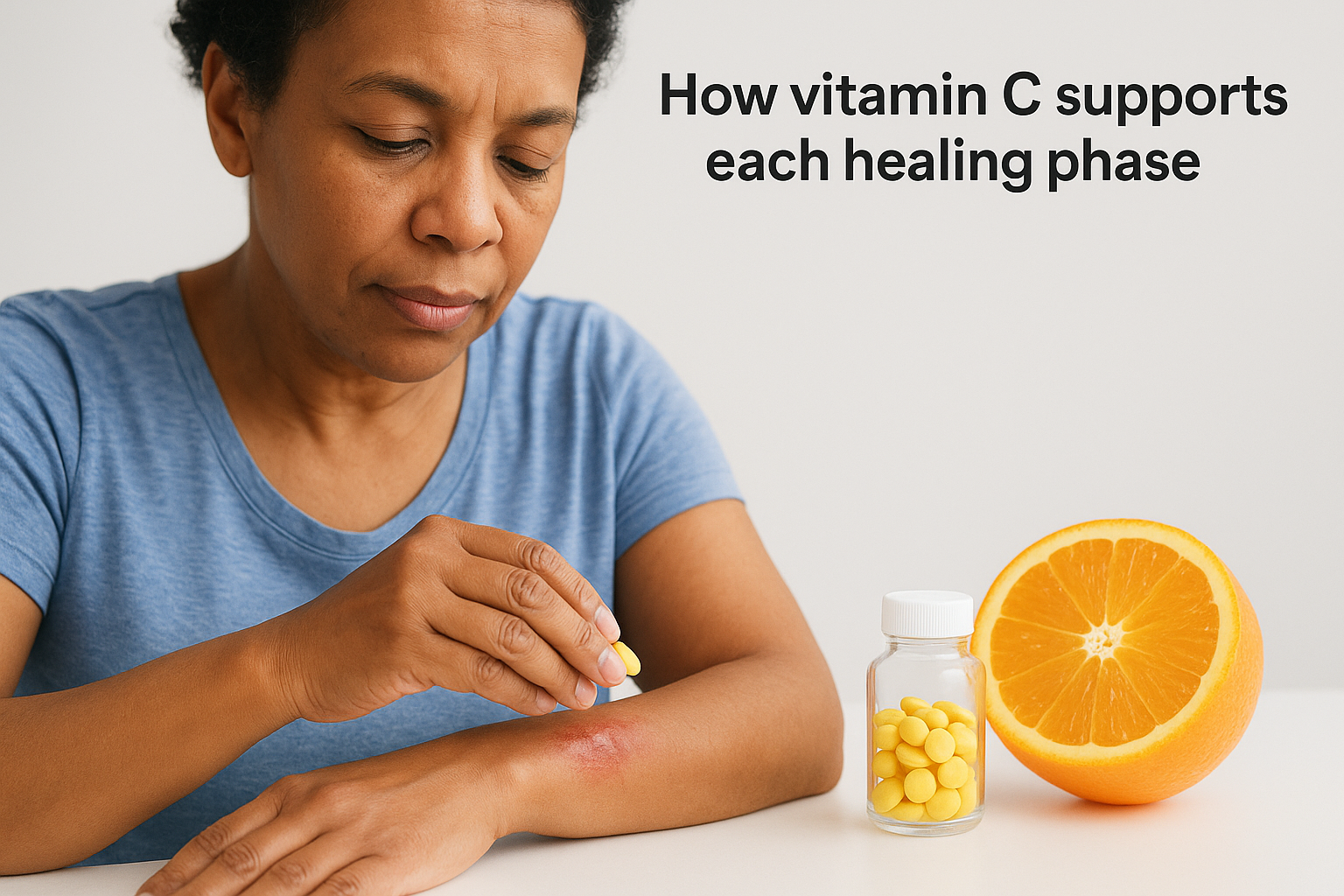
Wound healing unfolds in four overlapping stages: hemostasis, inflammation, proliferation, and remodeling. Vitamin C for healing wounds plays an active role in at least three of these stages, which explains why a deficiency at any point during recovery can set back your progress in ways that are difficult to reverse without addressing the root nutritional gap.
Inflammation and immune defense
During the inflammatory phase, your immune system dispatches neutrophils and macrophages to the wound site to clear debris and fight bacteria. These cells depend on high intracellular concentrations of vitamin C to function effectively; neutrophils accumulate vitamin C at levels up to 80 times higher than what circulates in your blood plasma. When your stores run low, this immune response weakens, leaving the wound more vulnerable to infection and prolonging the inflammatory stage far longer than necessary.
Prolonged inflammation is one of the most common reasons chronic wounds fail to advance into the repair stages, and vitamin C deficiency is a correctable contributor to that stall.
Tissue rebuilding and remodeling
Once inflammation resolves, your body shifts into the proliferative phase, where new collagen fibers fill the wound bed and new blood vessels form through angiogenesis. Vitamin C directly supports both of these mechanisms: it drives the hydroxylation reactions that stabilize collagen and acts as an antioxidant that protects fragile new tissue from oxidative damage at the wound site.
The remodeling phase that follows, sometimes lasting several months, involves collagen fibers reorganizing into stronger, more aligned structures. Maintaining adequate vitamin C throughout this stage ensures your tissue reaches its maximum tensile strength, reducing the risk of the wound reopening under normal physical stress.
Best vitamin C dose for healing wounds
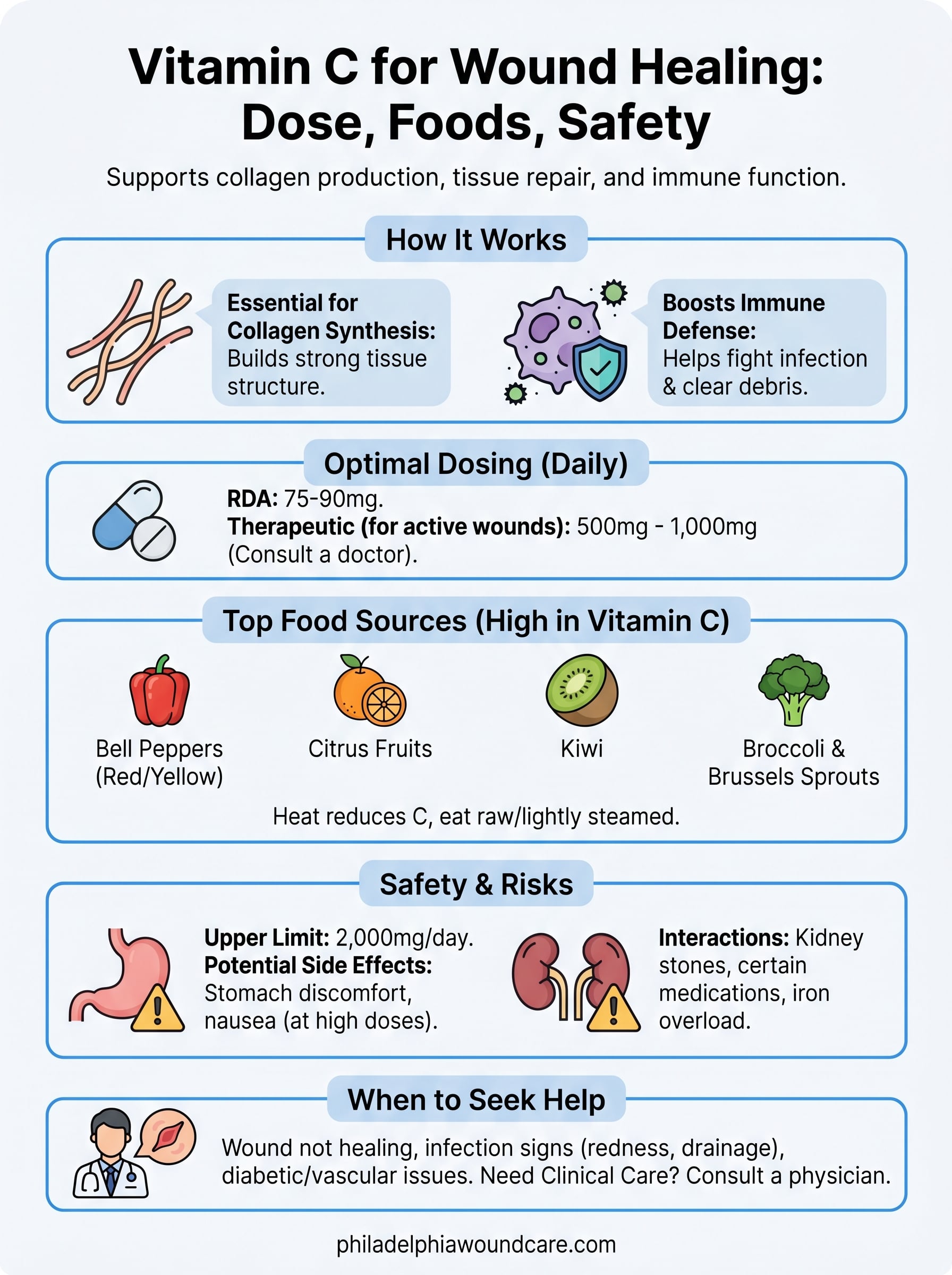
The right amount of vitamin C for healing wounds depends on where you’re starting from and how significant the wound is. The standard Recommended Dietary Allowance sits at 75 mg per day for adult women and 90 mg per day for adult men, according to the National Institutes of Health Office of Dietary Supplements. That baseline is enough to prevent deficiency under normal circumstances, but it falls well short of what your body needs when it’s actively repairing damaged tissue.
Standard daily requirements vs. therapeutic needs
When a wound is present, your body consumes vitamin C at a significantly accelerated rate. Oxidative stress at the injury site, increased collagen turnover, and heightened immune activity all draw on your available stores simultaneously. Clinical guidelines reviewed in wound care literature commonly suggest 500 mg to 1,000 mg per day as a therapeutic range for patients with active wounds, particularly those managing pressure injuries or post-surgical healing.
For patients with confirmed vitamin C deficiency, short-term supplementation at higher therapeutic doses has been shown to restore collagen synthesis rates and improve wound closure outcomes.
Dosing after surgery or for chronic wounds
Patients recovering from surgery or managing a non-healing chronic wound often benefit from guidance tailored to their specific situation. Some wound care protocols support supplementing at 500 mg twice daily until the wound closes, then stepping down to a maintenance dose. Your physician or wound care specialist should review your current intake and any bloodwork before recommending a specific amount, since factors like kidney function and other medications directly affect how much is safe and appropriate for you.
Foods and supplement forms to consider
Getting enough vitamin C for healing wounds doesn’t require a complicated regimen. Your first step should be identifying whether your current diet provides a reasonable base, then using supplements to fill the gap when food alone won’t cover your therapeutic needs.
Food sources worth prioritizing
Whole foods deliver vitamin C alongside other nutrients that support recovery, making them the best starting point for most patients. The following options are among the most concentrated sources you can add to regular meals:
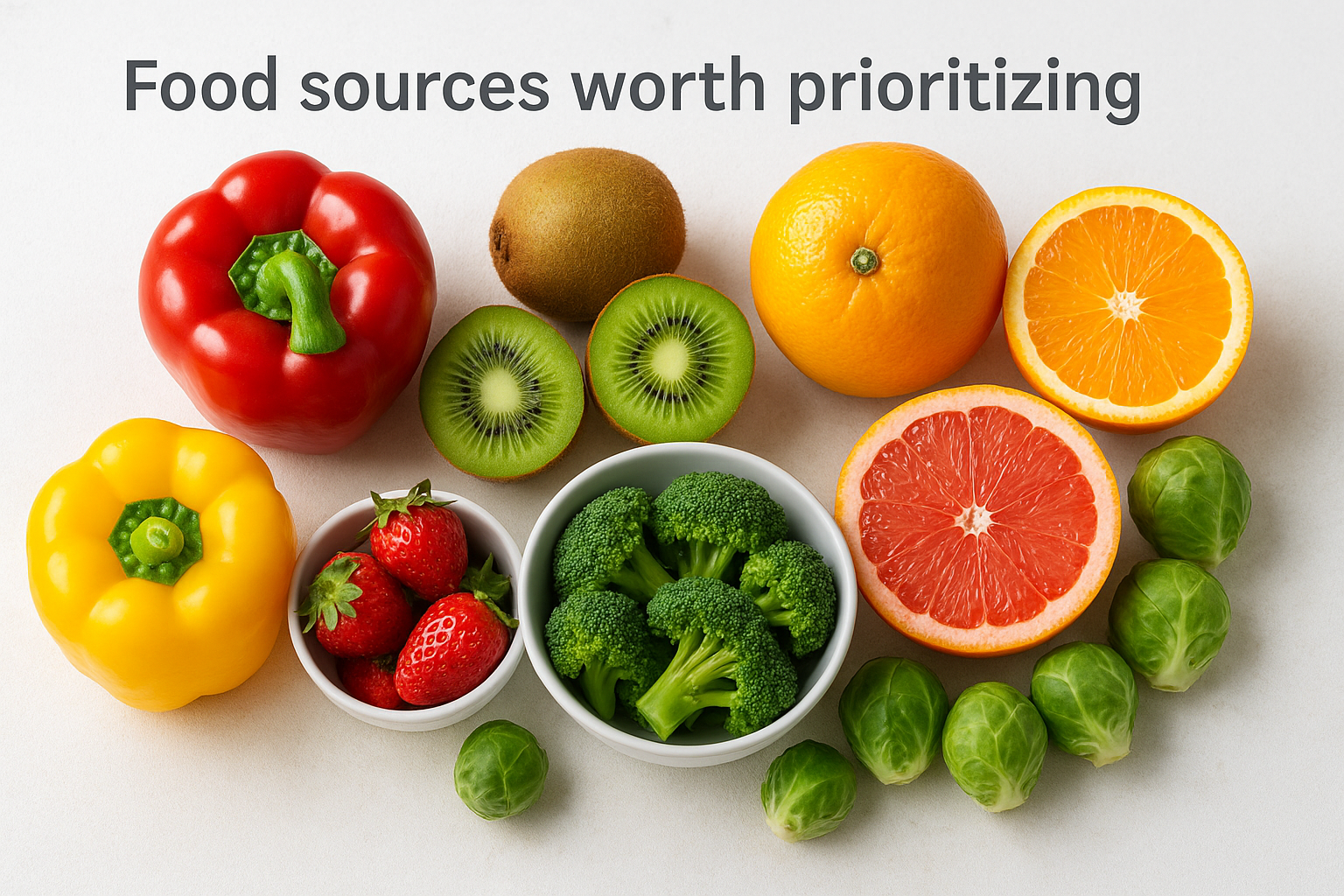
- Bell peppers (red or yellow): One medium pepper provides over 150 mg
- Kiwi fruit: One kiwi delivers roughly 70 mg
- Citrus fruits (oranges, grapefruit): A medium orange contains about 70 mg
- Broccoli and Brussels sprouts: A half-cup serving cooked provides 50 to 60 mg
- Strawberries: One cup delivers approximately 85 mg
Heat and prolonged cooking reduce vitamin C content significantly, so eating these foods raw or lightly steamed preserves more of their value.
Choosing a supplement form
When food intake isn’t enough to reach therapeutic levels, supplements bridge the gap reliably and affordably. Standard ascorbic acid is the most widely available form and absorbs well for most people. If you have a sensitive stomach, buffered forms like calcium ascorbate are easier to tolerate at higher doses.
Time-release capsules slow absorption across several hours, which can help your body use the nutrient more efficiently at doses above 500 mg. Liposomal vitamin C offers higher bioavailability in some studies, though the research is still developing. For most patients managing an active wound, a standard ascorbic acid supplement taken with food is a practical and cost-effective choice.
Safety, side effects, and interactions
Vitamin C is one of the safest nutrients to supplement, but using it at therapeutic doses still requires some basic awareness. Most adults tolerate it well at the 500 mg to 1,000 mg range commonly used for active wound management, but exceeding that without medical input introduces risks worth understanding before you start.
Common side effects at higher doses
At doses above 1,000 mg per day, gastrointestinal discomfort is the most frequent complaint. Your intestines can only absorb a limited amount at one time, and the excess draws water into the bowel. Splitting your daily amount into two or three smaller doses taken with food reduces this problem significantly, and switching to a buffered form like calcium ascorbate helps if stomach irritation persists.
Common side effects at higher doses include:
- Nausea or stomach cramps
- Loose stools or diarrhea
- Heartburn at doses above 2,000 mg
The tolerable upper intake level for vitamin C in adults is 2,000 mg per day, as established by the National Institutes of Health, and staying below that threshold keeps side effects manageable for most people.
Drug and health interactions
Vitamin C for healing wounds is compatible with most common medications, but certain combinations require attention before you begin supplementing. High-dose vitamin C can affect how your body processes specific chemotherapy agents and some statins, so always disclose your full supplement list to your prescribing physician.
Patients with a history of kidney stones, particularly oxalate stones, should stay cautious above 1,000 mg daily, since your body converts excess ascorbic acid to oxalate. Anyone managing hemochromatosis must check with their doctor first, because vitamin C enhances iron absorption and can worsen iron overload in that condition.
When to get extra help
Vitamin C for healing wounds supports the repair process, but nutrition alone cannot close a wound that needs clinical attention. If your wound shows signs of infection, fails to reduce in size after several weeks, produces increasing drainage, or develops dark or necrotic tissue, you need a physician evaluation, not just a supplement adjustment. The same applies if you have diabetes, vascular disease, or a history of pressure injuries, where underlying systemic factors often drive the problem beyond what any dietary change can fix.
Getting the right wound care early prevents minor complications from becoming serious ones. Older adults and patients managing multiple health conditions are especially vulnerable to delays that allow wounds to worsen. If you or someone in your care is dealing with a wound that isn’t responding to basic treatment, reach out to a specialist who can assess what’s actually happening. Request mobile wound care in Philadelphia and get a physician-led evaluation at your location.