

Wound Care Consultation Services: What They Include, Cost
A wound that refuses to heal after weeks, or months, raises a critical question: is the current treatment plan enough? For many patients dealing with diabetic ulcers, pressure injuries, or post-surgical complications, the answer often lies in wound care consultation services provided by a specialist who can evaluate what’s actually going on beneath the surface. These consultations go well beyond a basic checkup, and understanding what they include can shape the entire course of recovery.
At Philadelphia Wound Care, our physician-led mobile practice brings these specialized evaluations directly to patients at home, in skilled nursing facilities, and in assisted living communities across the Philadelphia area. We built our service around a simple reality: the people who need expert wound assessment the most are frequently the ones who have the hardest time getting to a clinic. That gap between needing care and accessing it is exactly what a consultation service is designed to close.
This article breaks down what a wound care consultation actually involves, what it typically costs, how insurance factors in, and how to know when it’s time to request one. Whether you’re a patient, a family caregiver, or a facility case manager weighing your options, you’ll walk away with a clear picture of the process and what to expect from your first appointment forward.
What wound care consultation services are
A wound care consultation service is a formal, structured medical evaluation performed by a trained specialist whose sole focus is assessing why a wound is not healing and building a targeted, evidence-based treatment plan to correct it. Unlike a routine office visit where wound management is a secondary concern, a consultation puts the wound at the center of the appointment. The specialist reviews your full medical history, examines the wound in careful detail, and works to identify every underlying condition that may be slowing or blocking your recovery.
A consultation is not a repeat of care you’ve already received; it’s a specialist-level clinical review applied specifically to a wound that isn’t responding to standard treatment.
How consultations differ from routine wound care
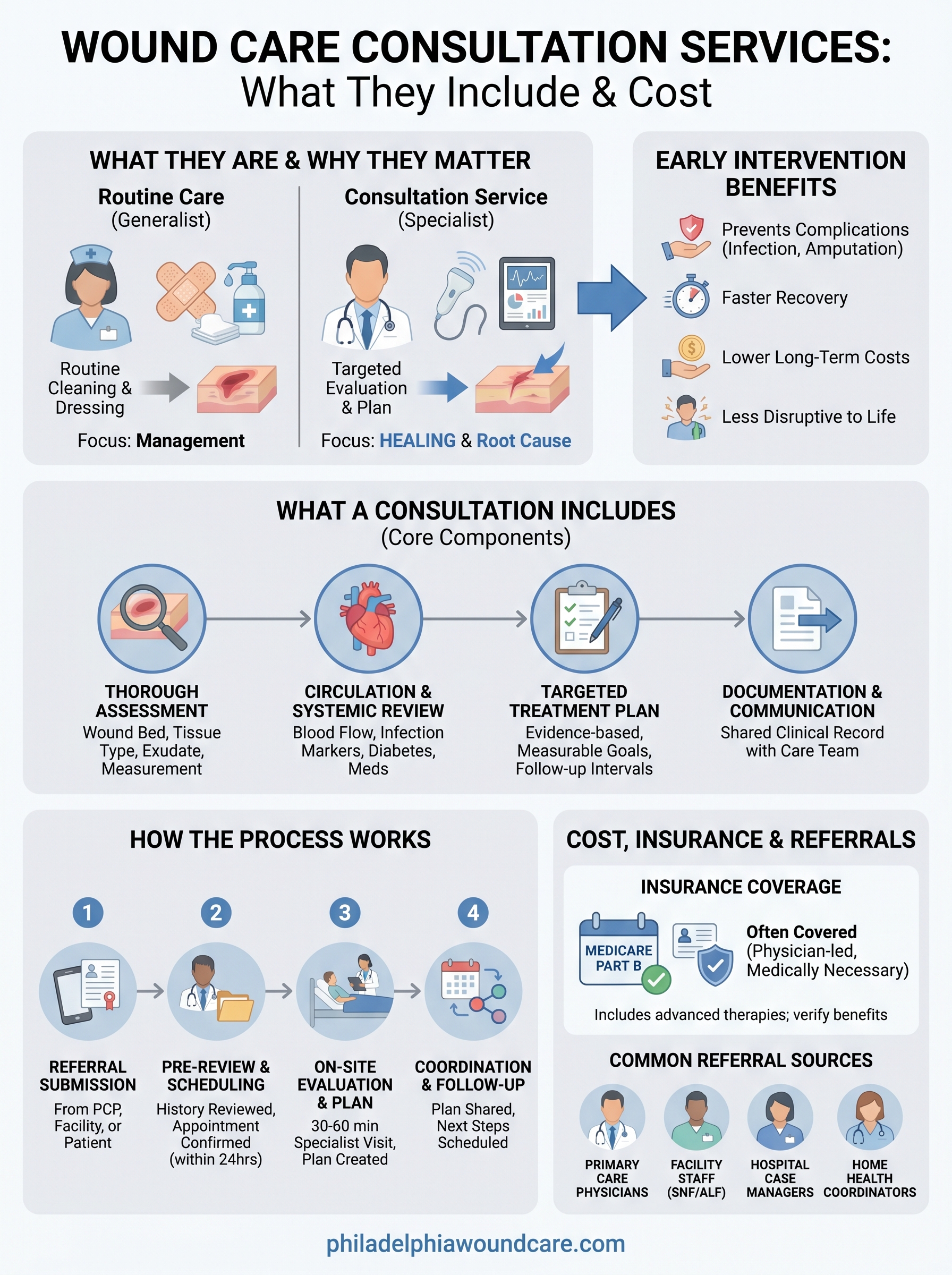
Standard wound care, performed by a general practitioner or home health nurse, typically covers routine cleaning, dressing changes, and basic monitoring. A consultation goes several steps further. A wound care specialist brings targeted diagnostic tools and focused clinical expertise that allow them to identify issues like tissue infection, compromised blood flow, or inadequate pressure offloading. These are factors a generalist may not fully evaluate during a standard follow-up visit, and missing any one of them can set back your recovery by weeks.
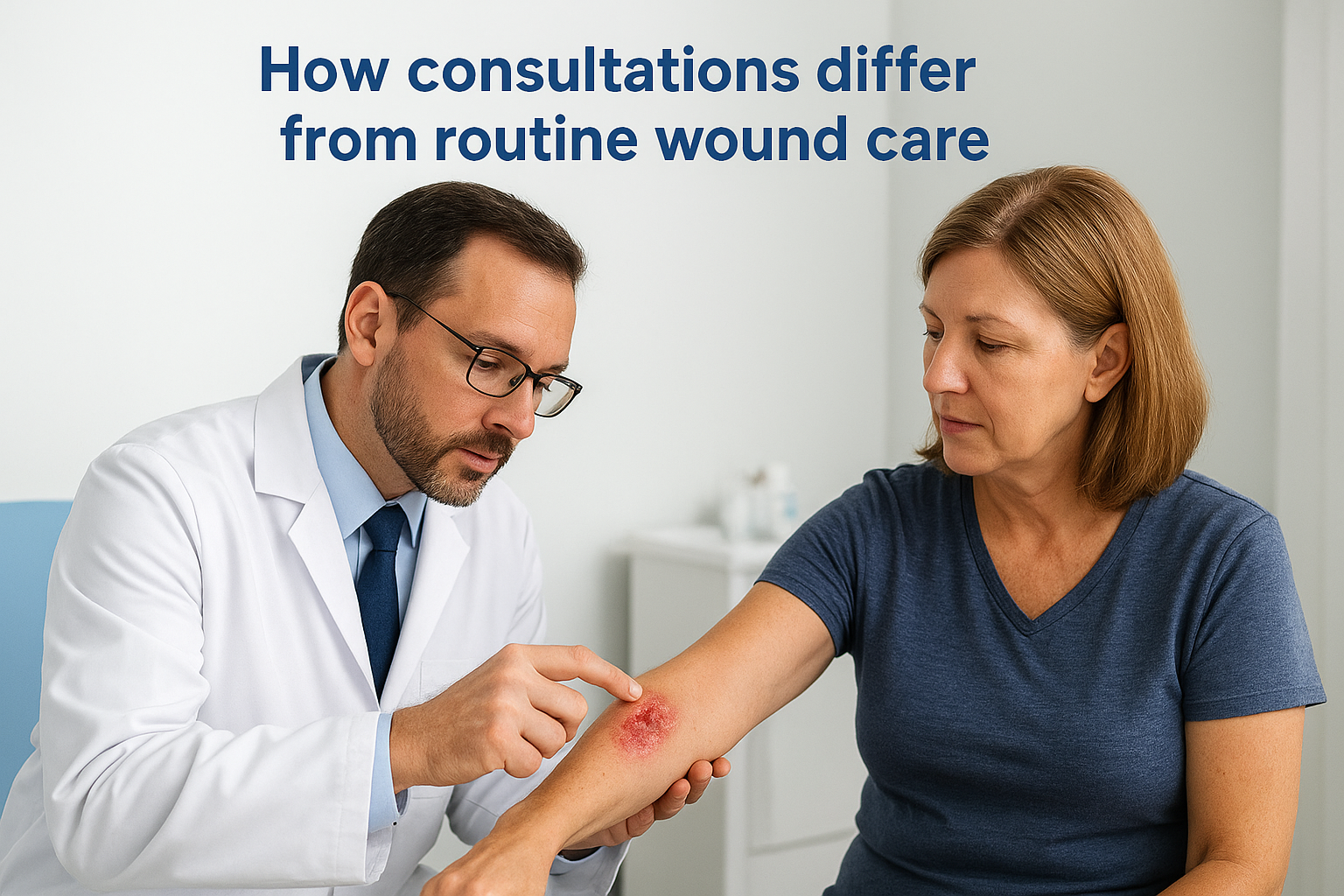
When you request wound care consultation services, you’re asking for a specialist-level assessment of both the wound and the systemic factors driving it. Physicians, surgeons, and in some practices nurse practitioners with wound care certification are the most common providers. In mobile practices like Philadelphia Wound Care, a board-certified General Surgeon leads each evaluation, bringing hospital-level expertise directly to your location rather than requiring you to travel. The clinical background of your provider directly shapes the accuracy of the diagnosis and the quality of the care plan that follows, which is why specialist-led consultations consistently produce more targeted outcomes for complex or chronic wounds than generalist assessments do.
Why timely wound consults matter
Delaying specialist evaluation is one of the most preventable drivers of wound complications, including deep tissue infection, bone involvement, and amputation. A wound that appears stable in week two can deteriorate significantly by week six if the root cause has not been identified and addressed. For patients with diabetes, vascular disease, or limited mobility, that window closes faster than most people expect.
Early access to wound care consultation services gives your care team the clinical information needed to intervene before the wound reaches a stage that requires hospitalization or surgery.
What delayed evaluation can cost you
When you wait too long to request a specialist consultation, the options available to your care team shrink considerably. Infections that were manageable with targeted topical therapy can progress to a point requiring IV antibiotics or surgical debridement. Each escalation adds recovery time, cost, and physical risk to an already difficult situation.
Wound deterioration also creates compounding pressure on caregivers and facility staff, who face increasingly complex dressing routines without the diagnostic support needed to make real progress. Requesting a consultation early keeps treatment simpler, faster, and far less disruptive to your daily life.
What a wound care consultation includes
A wound care consultation covers far more ground than a single dressing change or a quick visual inspection. Your specialist will conduct a thorough clinical assessment of the wound bed, surrounding tissue, and any underlying conditions affecting your body’s ability to heal. This typically includes wound measurement, tissue classification, assessment of exudate levels, and a detailed review of your current medications and systemic health factors that may be interfering with recovery.
Core components of a consultation
Most wound care consultation services follow a structured evaluation framework that produces both a precise diagnosis and a documented treatment plan your entire care team can act on. Your provider will assess circulation, infection markers, nutritional status, and pressure offloading where relevant.
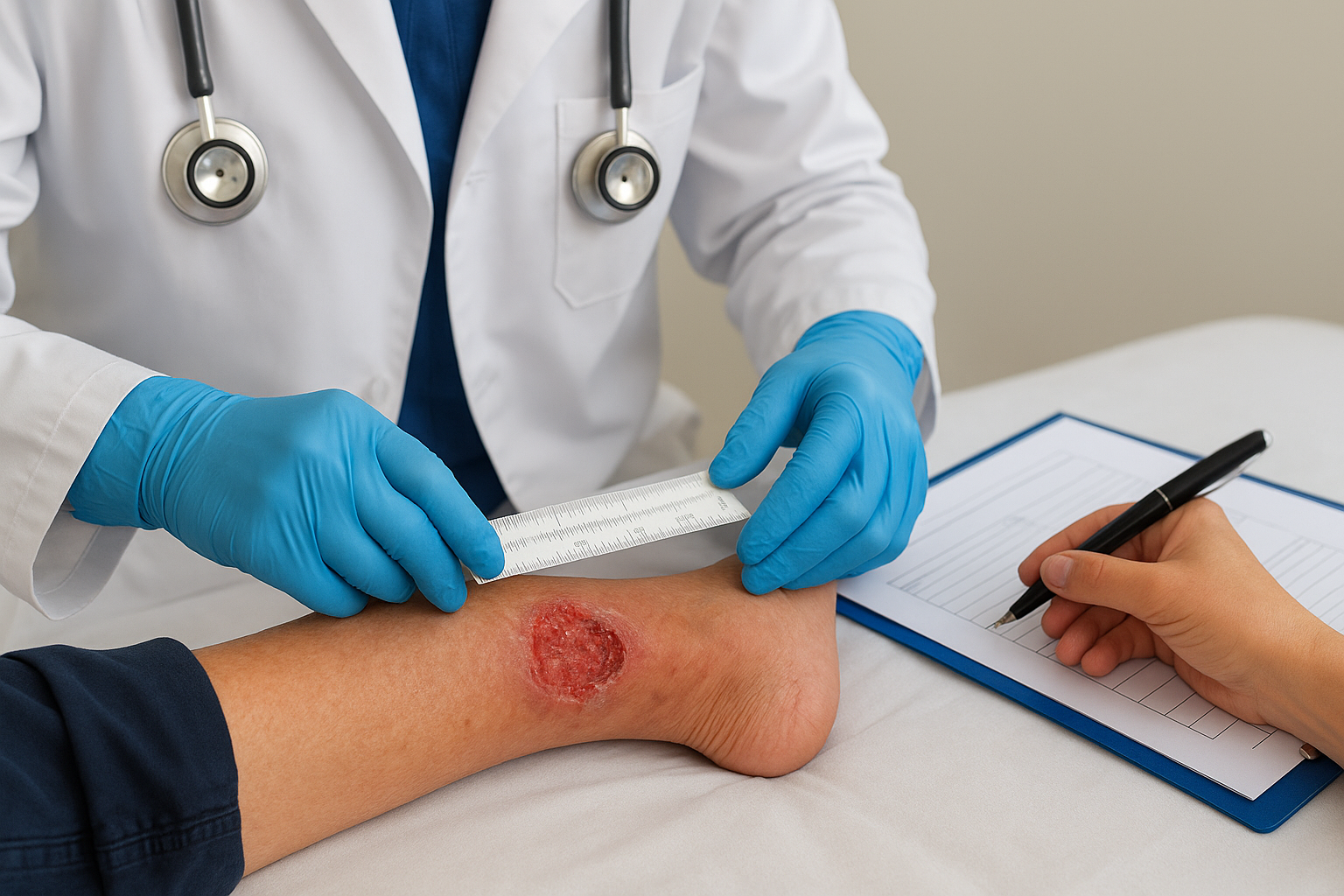
A complete wound consultation generates a clinical record that your referring physician, facility staff, and follow-up providers can all reference to stay aligned on your care.
Key components typically covered during a consultation include:
- Wound measurement and photographic documentation
- Tissue and wound bed classification
- Infection and biofilm assessment
- Review of systemic conditions such as diabetes or vascular disease
- A defined treatment plan with follow-up intervals and measurable healing goals
How the consultation process works
Most wound care consultation services follow a predictable sequence that begins before the specialist even walks through your door. Your referring physician or facility case manager submits a referral, after which your medical history and current wound documentation are reviewed in advance. This preparation allows the consultation itself to move directly into clinical evaluation rather than spending time on administrative catch-up.
Knowing what to expect from each step helps you and your care team prepare, which makes the appointment more productive from the first minute.
What happens during and after your visit
During the appointment, your specialist will examine the wound, gather additional clinical history, and discuss any systemic factors affecting your recovery. The visit typically takes between 30 and 60 minutes depending on wound complexity. After the evaluation, your provider documents a detailed treatment plan and communicates findings to your referring physician and any facility staff involved in your daily care. Follow-up intervals are scheduled at that point based on how your wound is responding, so your next steps are clear before the consultation ends.
For mobile consultations like those offered through Philadelphia Wound Care, the process also includes coordinating directly with your existing care providers so that everyone managing your recovery stays informed and aligned from day one.
Cost, insurance, and referrals
The cost of wound care consultation services varies based on wound complexity, provider type, and your insurance coverage. Medicare Part B covers physician-led wound consultations when they are medically necessary, meaning most patients 65 and older pay little to no out-of-pocket cost for their evaluation. Advanced therapies like allograft treatment are also covered under Medicare Part B in many cases, which removes a significant barrier for patients who need more than standard dressing changes to heal.
If you are unsure whether your plan covers a wound care consultation, your provider’s office can verify your benefits before the appointment and walk you through any expected costs.
How referrals work
You do not need to navigate the referral process alone. Your primary care physician, hospital case manager, or facility staff can submit a referral directly to a wound care specialist on your behalf. Philadelphia Wound Care accepts referrals from all of these sources and responds within 24 hours to confirm scheduling.
Common referral sources include:
- Primary care physicians managing chronic conditions like diabetes
- Hospital discharge planners and case managers
- Skilled nursing facility or assisted living staff
- Hospice and home health coordinators
How to get started
Getting started with wound care consultation services is more straightforward than most patients expect. If you’re a patient or caregiver, contact Philadelphia Wound Care directly or ask your primary care physician to submit a referral on your behalf. If you manage a skilled nursing facility or assist with hospital discharge planning, you can submit a referral through our wound care referral page and receive a confirmed response within 24 hours. Our team handles the scheduling coordination from there, so your next step is simply making the call.
Your location is not a barrier to receiving expert care. Philadelphia Wound Care brings physician-led evaluations directly to you, whether you’re at home, in a skilled nursing facility, or in an assisted living community. Every evaluation is led by a board-certified General Surgeon who reviews your wound, builds a treatment plan, and communicates directly with your existing care team. Schedule your mobile wound care visit today and take the first concrete step toward healing.