

Wound Care Supplies: 8 Must-Haves For Healing At Home
If you are caring for a loved one with a wound that will not close, you have probably stood in the pharmacy aisle wondering which box of wound care supplies actually belongs in your cart. Diabetic ulcers, pressure sores, and post-surgical incisions do not heal on gauze and hope alone. The wrong dressing can trap bacteria, dry out healthy tissue, or fall off within hours, setting recovery back weeks.
This list breaks down the eight essentials every home caregiver in the Philadelphia area should keep on hand, from saline cleansers to compression wraps, so you can manage day-to-day dressing changes with confidence between clinical visits. We built it around what we actually use and recommend for patients we treat bedside, not generic drugstore advice.
You will also learn when a wound has moved beyond what any supply kit can fix. Slow healing, increasing drainage, or a wound that looks worse after two weeks are signals that call for a physician-led evaluation, not another trip to the pharmacy. Philadelphia Wound Care brings that level of care directly to your home, so stocking the right supplies becomes part of a bigger plan, not a substitute for one.
1. Sterile gauze pads and non-stick dressings
Gauze is the backbone of almost every home wound care kit, and for good reason. It absorbs drainage, protects the wound bed from dirt and bacteria, and gives you a clean surface to check for changes in color or odor at each dressing change. Non-stick dressings, often labeled telfa pads, solve the biggest complaint caregivers have about plain gauze: it sticks to the wound and rips away healing tissue when you remove it. For fragile or newly closing skin, that difference matters more than most people realize.
What it does
Sterile gauze pads soak up exudate (the fluid a wound produces) and shield the area from friction, clothing, and airborne contaminants. Non-stick versions add a thin, non-adherent layer between the gauze and the wound itself, so you get the absorbency without the trauma of a painful peel-off. Together, these two products handle roughly 80% of the dressing changes we see in home settings, from surgical incisions to minor pressure sores.
How to use it safely
Always wash your hands and put on clean gloves before touching the wound or the dressing. Change gauze whenever it becomes saturated, and never let a wet dressing sit against the skin for more than a day, since trapped moisture breeds bacteria and slows healing.
A wound left under a soaked dressing heals slower than one left uncovered.
Discard used gauze in a sealed bag, and inspect the wound each time for new redness, swelling, or a foul smell.
What to look for when buying
Not every box on the shelf works for every wound. Use this quick checklist when you shop:
- Sterility packaging: individually wrapped pads stay sterile until opened, which matters for open or post-surgical wounds.
- Size range: keep 2×2, 4×4, and larger ABD pads on hand for wounds of different sizes.
- Non-adherent layer: look for "non-stick" or "telfa" on the label for wounds with exposed tissue.
- Latex-free options: important if the patient has any known sensitivities.
According to the Wound, Ostomy and Continence Nurses Society, dressing selection should always match the wound’s drainage level, not just what happens to be in the cabinet.
2. Medical tape and adhesive bandages
Once gauze is in place, you need something to hold it there without damaging the skin underneath. Medical tape and adhesive bandages do that job, but the wrong kind can peel off fragile skin along with it, especially in older patients whose skin thins with age. Choosing the right adhesive is one of those small decisions that makes a real difference in how a wound heals week over week.
What it does
Tape and bandages secure gauze or dressings against movement, keeping the wound bed protected during normal daily activity like walking, sitting, or shifting in bed. Some tapes also help maintain a slight barrier against moisture, which supports the healing environment underneath. For patients who are mobile or restless, a secure dressing prevents constant readjustment, which itself can slow healing.
How to use it safely
Apply tape only to intact skin, never directly over the wound itself. Paper tape works well for patients with sensitive or fragile skin, since it holds securely but tears away with less trauma than standard cloth tape.
Skin damage from tape removal is one of the most preventable setbacks in home wound care.
Remove tape slowly, in the direction of hair growth, and consider an adhesive remover wipe if the patient reports pain during changes.
What to look for when buying
Look for hypoallergenic tape if the patient has sensitive skin or a known adhesive allergy. Choose breathable, porous materials over plastic-backed tape, which traps moisture. Keep both narrow and wide rolls on hand for different dressing sizes, and always confirm the product is latex-free before use.
3. Saline solution and wound cleansers
Before you place a single piece of gauze, the wound needs to be clean. Saline solution and wound cleansers rinse away dead tissue, old drainage, and bacteria without damaging the fragile cells trying to grow back. This is the step caregivers skip most often when they are rushed, and it is often why a wound that should be healing keeps stalling out.
What it does
Saline solution matches the salt concentration of your body’s own fluids, so it flushes debris from the wound bed without stinging or killing the healthy tissue underneath. Commercial wound cleansers do the same job with added surfactants that lift stuck-on drainage more effectively, which is useful for wounds with heavier exudate or crusting. Both products prepare the wound for a fresh dressing and let you actually see what is going on underneath.
How to use it safely
Irrigate gently, using enough solution to rinse visible debris without blasting the wound bed. Never use hydrogen peroxide or rubbing alcohol on an open wound; both damage new tissue and slow closure despite being common medicine cabinet staples.
Cleaning a wound the wrong way can undo a week of healing in seconds.
Pat the surrounding skin dry with clean gauze before applying a new dressing.
What to look for when buying
Choose sterile, single-use saline pods or spray bottles for open or post-surgical wounds. For heavier drainage, look for a pH-balanced cleanser without added fragrance or dye, since both can irritate compromised skin.
4. Antimicrobial ointments and creams
Once a wound is clean and dry, many caregivers reach for an antibiotic ointment out of habit. That instinct is not wrong, but it needs limits. Antimicrobial ointments and creams help control bacteria on the wound surface, yet slathering them on every wound, every time, can do more harm than good, especially with wounds that already have a healthy amount of natural drainage.
What it does
These products create a thin barrier that slows bacterial growth on the wound surface and keeps the tissue from drying out between dressing changes. Petroleum-based ointments like plain petrolatum also maintain a moist wound environment, which speeds healing far more reliably than letting a wound scab over and crack. Antibacterial versions, such as bacitracin, add an extra layer of protection for wounds at higher risk of infection, like abrasions or minor surgical sites.
How to use it safely
Apply a thin layer only, roughly the thickness of the ointment itself spread across the wound, never a thick coat packed into the tissue. Overuse of antibiotic ointments can actually delay healing by keeping the wound too wet or triggering a skin reaction in patients with sensitivities.
More ointment does not mean faster healing; a thin layer works better than a thick one.
Watch for a rash or increased redness around the wound, which often signals an allergic reaction rather than infection.
What to look for when buying
Skip products with added pain relievers or fragrance, since both can irritate healing skin. Choose plain petrolatum for most surface wounds, and reserve antibiotic formulas for wounds with visible risk factors, following your clinician’s guidance whenever the wound looks unusual.
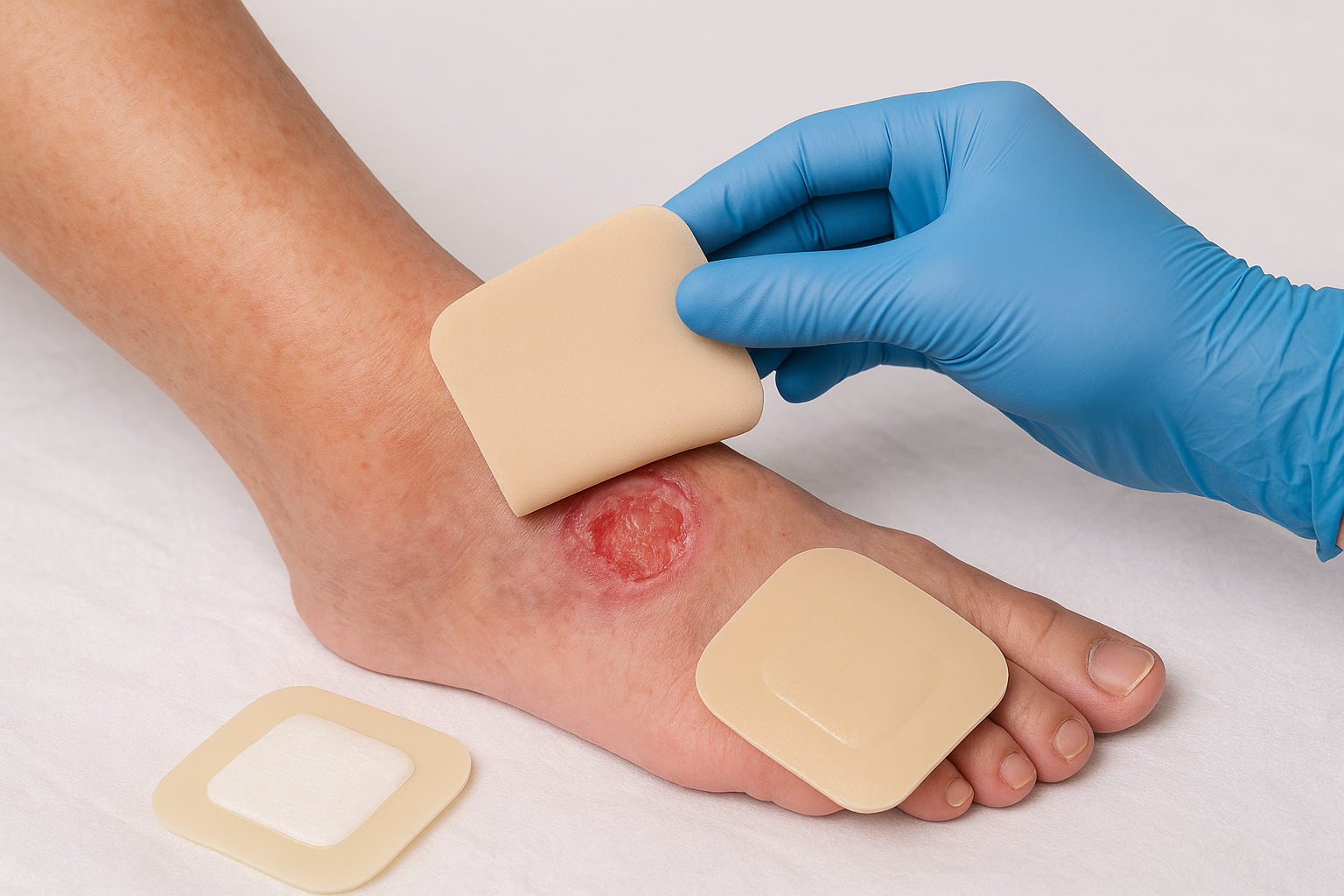
5. Advanced dressings for chronic or non-healing wounds
Basic gauze runs out of usefulness when a wound stalls past the two- to four-week mark. Diabetic ulcers, deep pressure sores, and venous wounds often need something with more clinical horsepower: hydrocolloid, alginate, or foam dressings built to manage heavier drainage and create a healing environment that plain cotton cannot match. These are the products caregivers usually discover only after standard supplies stop working.
What it does
Hydrocolloid dressings form a gel as they absorb drainage, keeping the wound bed moist while sealing out bacteria for several days at a time. Alginate dressings, made from seaweed fibers, pull large volumes of exudate from heavily draining wounds, which matters for ulcers that soak through gauze in hours. Foam dressings cushion the area while managing moderate drainage, making them useful for pressure points on the heel or sacrum.
How to use it safely
These dressings depend on correct wound assessment, since using the wrong type on the wrong drainage level can trap fluid against the skin.
The right advanced dressing heals in days what the wrong one can worsen in a week.
Change schedules vary by product, some last three to seven days, so follow the packaging or your clinician’s instructions rather than defaulting to daily changes out of habit.
What to look for when buying
Match the dressing to drainage level: alginate for heavy exudate, hydrocolloid for light to moderate, foam for cushioning over bony areas. Confirm the size covers the wound margin by at least an inch, and check whether the wound qualifies for coverage through Medicare Part B before purchasing out of pocket.
6. Compression wraps and bandages
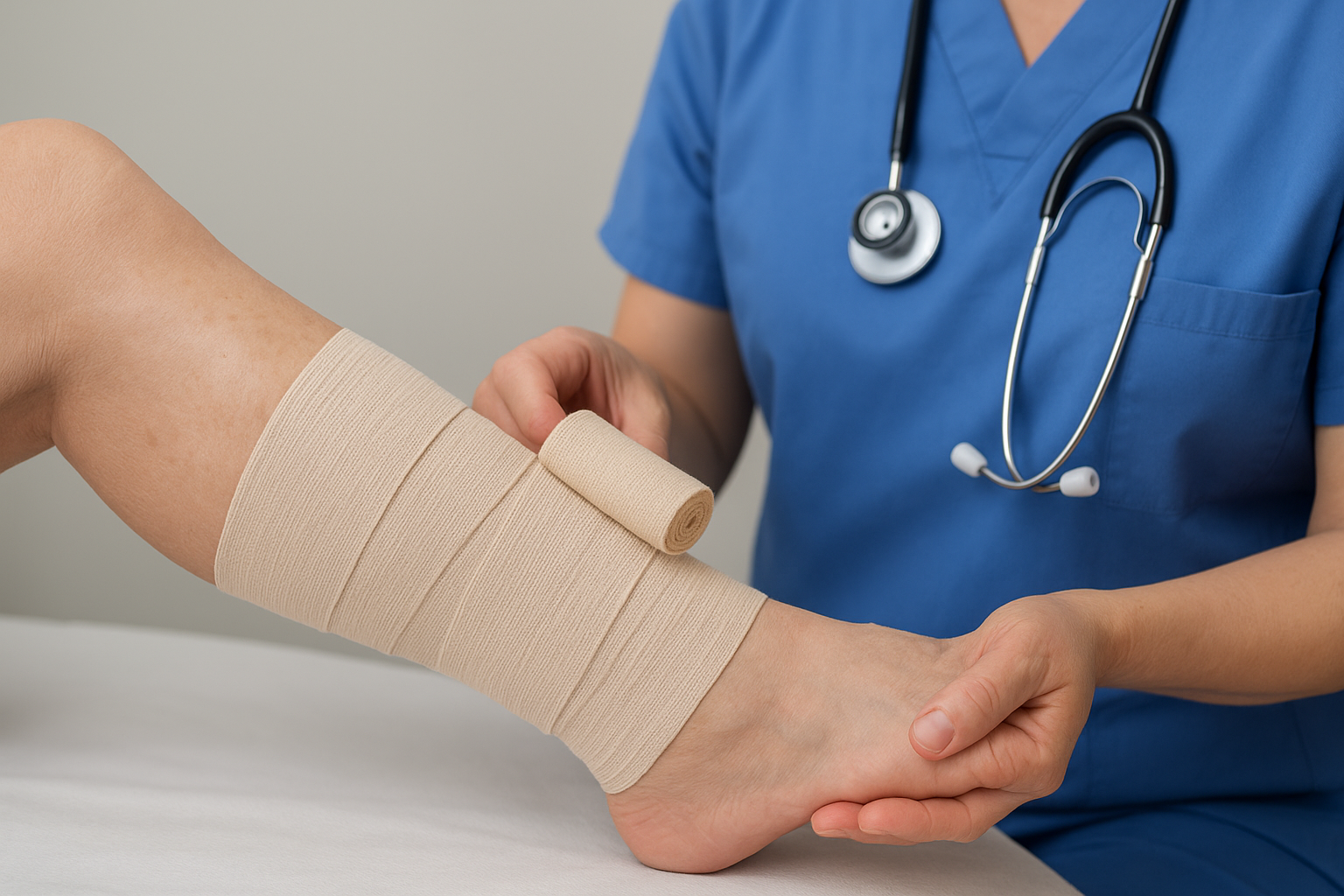
Venous leg ulcers behave differently than most other wounds because gravity, not bacteria, is usually the main obstacle to healing. Compression wraps push fluid out of the lower leg and back toward the heart, reducing the swelling that keeps venous wounds open for months. Without compression, even the best dressing on the market struggles to close a venous ulcer.
What it does
Compression bandages apply steady, graduated pressure that is tighter at the ankle and looser toward the knee, encouraging blood and fluid to move upward instead of pooling. This reduces edema around the wound bed and improves circulation to the tissue trying to repair itself. For patients with chronic venous insufficiency, compression is often the single most important part of the treatment plan, more so than any topical product.
How to use it safely
Never apply compression to a leg with untreated arterial disease, since restricted blood flow can cause serious harm rather than help.
Compression heals venous ulcers by fixing circulation, not by covering the wound.
Check toes for color and warmth after wrapping, and loosen immediately if the foot feels numb, cold, or turns pale.
What to look for when buying
Short-stretch bandages hold pressure longer during activity, while long-stretch versions are easier for caregivers to apply correctly at home. Multi-layer compression systems, often used under physician guidance, combine several wrap types for consistent pressure over multiple days. Confirm proper ankle-brachial index testing has ruled out arterial disease before starting any compression regimen, since this step protects the patient from avoidable injury.
7. Skin protectants and moisture barrier creams
Skin surrounding a wound takes a beating from drainage, adhesive tape, and repeated cleaning. Moisture barrier creams and skin protectants guard that surrounding tissue so caregivers are not fighting a second problem on top of the original wound. This matters most for incontinent patients or anyone with heavy wound drainage, where skin breakdown around the wound can spread faster than the wound itself.
What it does
Zinc oxide and dimethicone-based creams create a water-resistant layer on intact skin, blocking urine, stool, or wound exudate from causing irritation or breakdown. Skin protectant wipes do a similar job in a thinner, faster-drying form, useful for quick touch-ups between full dressing changes. Both products prevent the kind of secondary skin damage that turns a manageable wound into a much bigger care problem.
How to use it safely
Apply barrier cream only to intact, healthy skin around the wound, never directly onto open tissue. Thick, visible layers work better than a thin rub-in, since the goal is a physical barrier, not absorption into the skin.
Protecting the skin around a wound is just as important as treating the wound itself.
Reapply after each cleaning, and watch for cracking or peeling skin, which signals the barrier needs reinforcement more often.
What to look for when buying
Choose fragrance-free, dye-free formulas to avoid irritating already-stressed skin. Zinc oxide concentrations above 10% offer stronger protection for heavy drainage or incontinence-related breakdown. Avoid petroleum-heavy products under adhesive dressings, since they interfere with tape adhesion.
8. Mobile physician support for wounds that won’t heal
Every item on this list has a limit, and that limit shows up the moment a wound stops responding to standard wound care supplies. A pressure sore that looks the same after three weeks, a diabetic ulcer with increasing drainage, or a surgical site that reopens all point to something beyond what gauze and cream can fix. That is where mobile physician support becomes the eighth essential, not as a product on a shelf, but as a resource you keep in your back pocket.
What it does
A physician-led mobile wound care visit brings clinical evaluation, debridement, and advanced treatments like allograft therapy directly to the bedside, whether that bedside is a private home, a skilled nursing facility, or a hospice room. Instead of transporting a frail patient to a clinic, the specialist comes to them, which matters when mobility itself is part of the problem.
How to use it safely
Call for an evaluation as soon as a wound plateaus, worsens, or shows signs of infection like odor, spreading redness, or fever. Waiting past two weeks of no visible progress rarely helps and often makes recovery longer.
A wound that stalls for two weeks needs a physician’s eyes, not another dressing change.
What to look for when buying
Look for a general surgeon-led team, direct Medicare Part B billing for advanced therapies, and a documented response time under 24 hours. Philadelphia Wound Care meets all three, and a referral takes minutes to start.
Putting your home wound care kit together
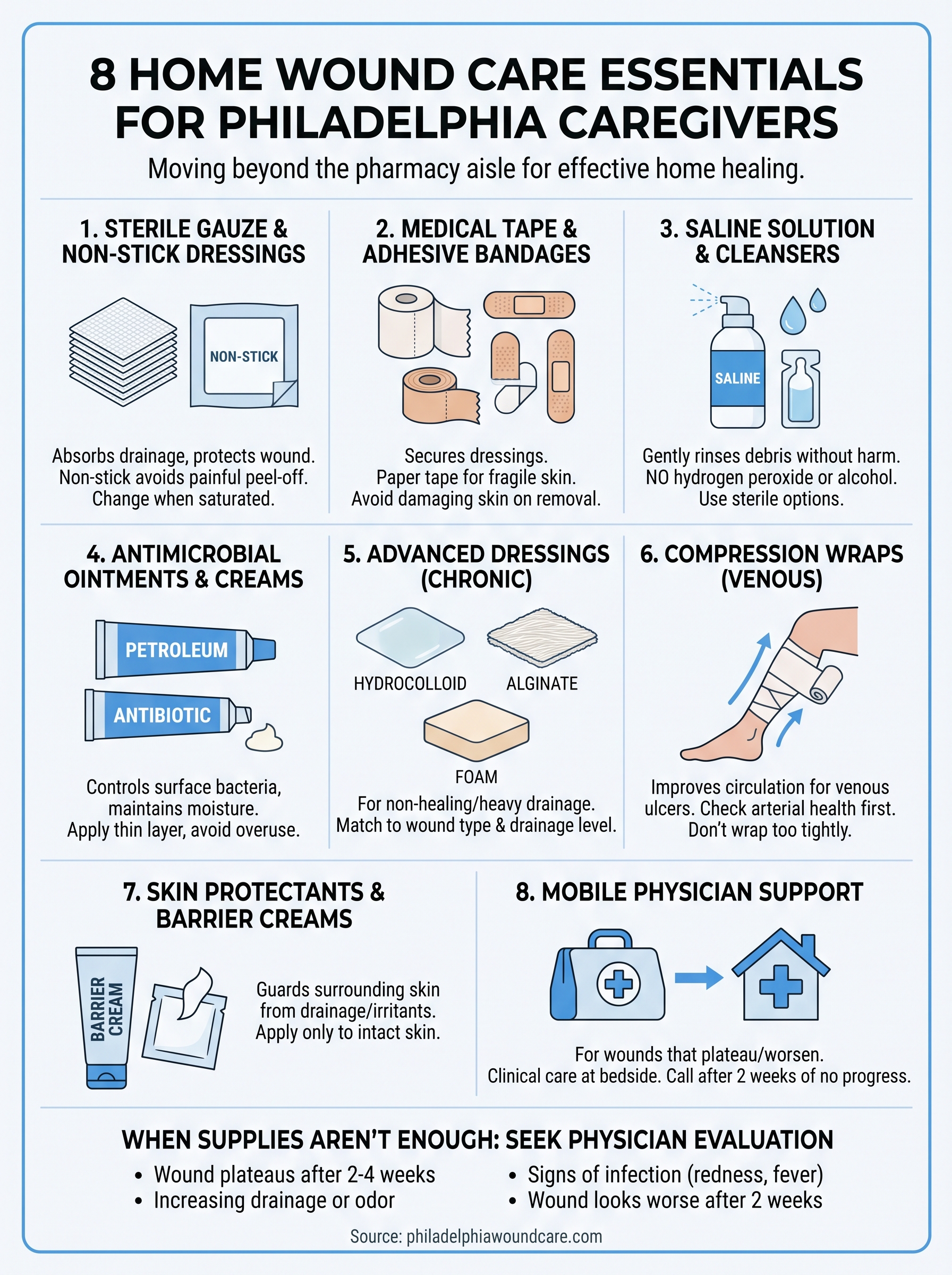
A well-stocked kit covers gauze, tape, saline, ointment, advanced dressings, compression wraps, and barrier cream, but supplies alone don’t heal a stalled wound. Wound care supplies handle the daily maintenance; they can’t replace a clinical eye when healing plateaus or drainage worsens. Think of your kit as the first line of defense, not the whole strategy.
Stock what’s on this list, watch for the warning signs we’ve flagged in each section, and don’t wait weeks to ask for help once you notice a wound isn’t progressing. Caregivers who call early almost always see faster, less complicated recoveries than those who wait until a wound turns into an emergency.
If you’re caring for someone in the Philadelphia area and a wound isn’t responding the way it should, don’t keep guessing at the pharmacy. Schedule a mobile wound care visit and get a physician’s evaluation at the bedside, often within 24 hours.