
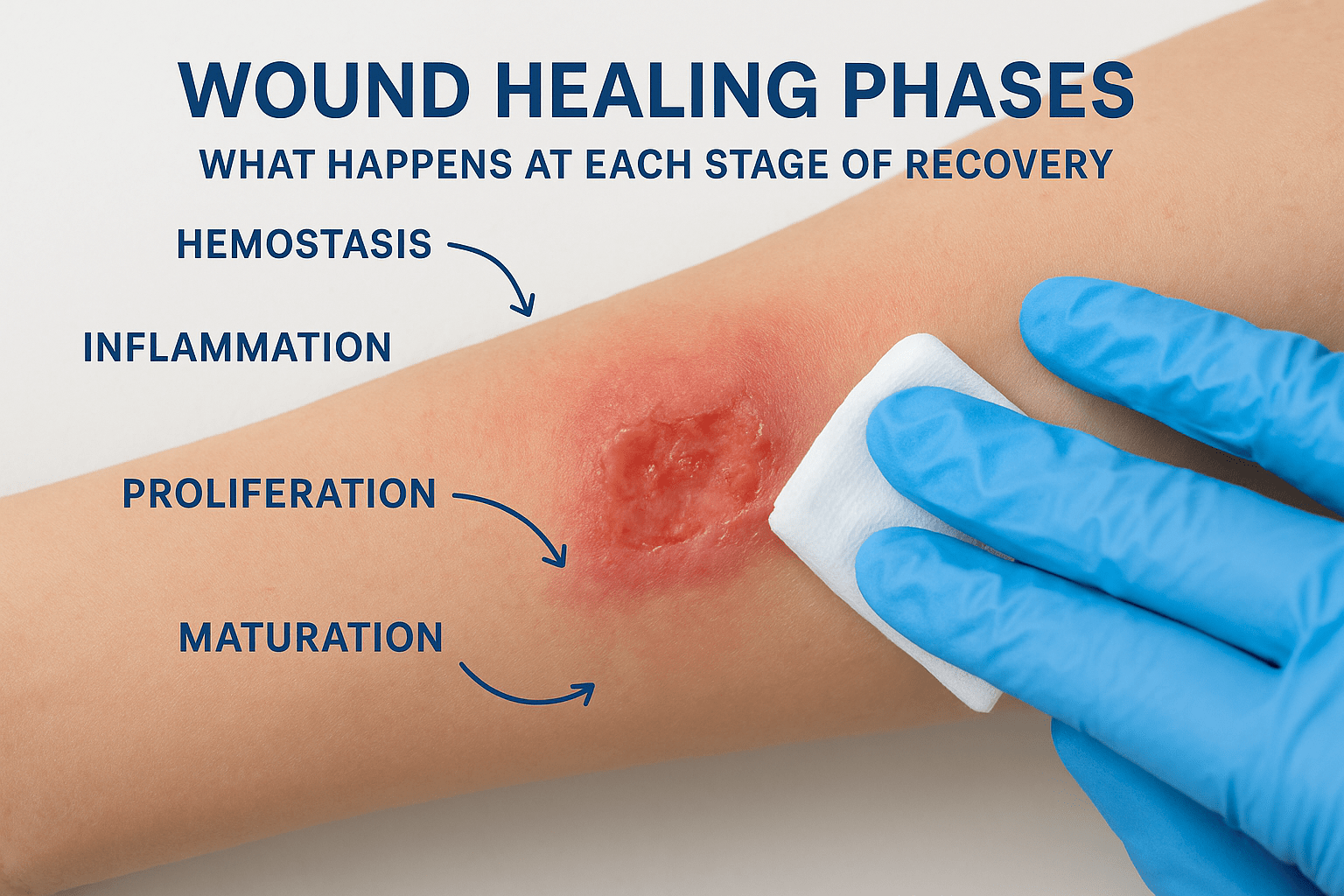
Wound Healing Phases: What Happens at Each Stage of Recovery
A wound that lingers for weeks can feel like a mystery. Is it getting better or stuck? Understanding the wound healing phases gives you a way to answer that question instead of just guessing. Every wound, from a small surgical incision to a stubborn diabetic ulcer, moves through the same biological sequence, and knowing what should happen at each point helps you spot trouble before it becomes a bigger problem.
This article breaks down the four stages of wound healing: hemostasis, inflammation, proliferation, and maturation. We’ll walk through what your body is doing at each stage, roughly how long it should last, and the visible signs that tell you healing is on track or has stalled. This isn’t textbook theory. It’s the same framework our physicians use every day when evaluating wounds at the bedside.
If you’re caring for an aging parent, managing a resident’s care plan at a skilled nursing facility, or watching your own wound heal slower than expected, this breakdown gives you a practical way to track progress. And if a wound has stopped moving forward, you’ll also learn what that stalled phase might mean and when it’s time to bring in specialized care.
Why the wound healing phases matter for recovery
Knowing the wound healing phases gives you a map instead of a guess. Wounds don’t heal randomly. They follow a predictable biological sequence, and each phase has a job to finish before the next one can properly start. When you understand what should be happening at day 2 versus day 10 versus week 6, you stop wondering if a wound "looks normal" and start recognizing whether it’s actually on schedule. That distinction matters most for chronic wounds like diabetic ulcers or pressure sores, where a stalled phase can quietly persist for months without treatment.
Hemostasis: the first few minutes
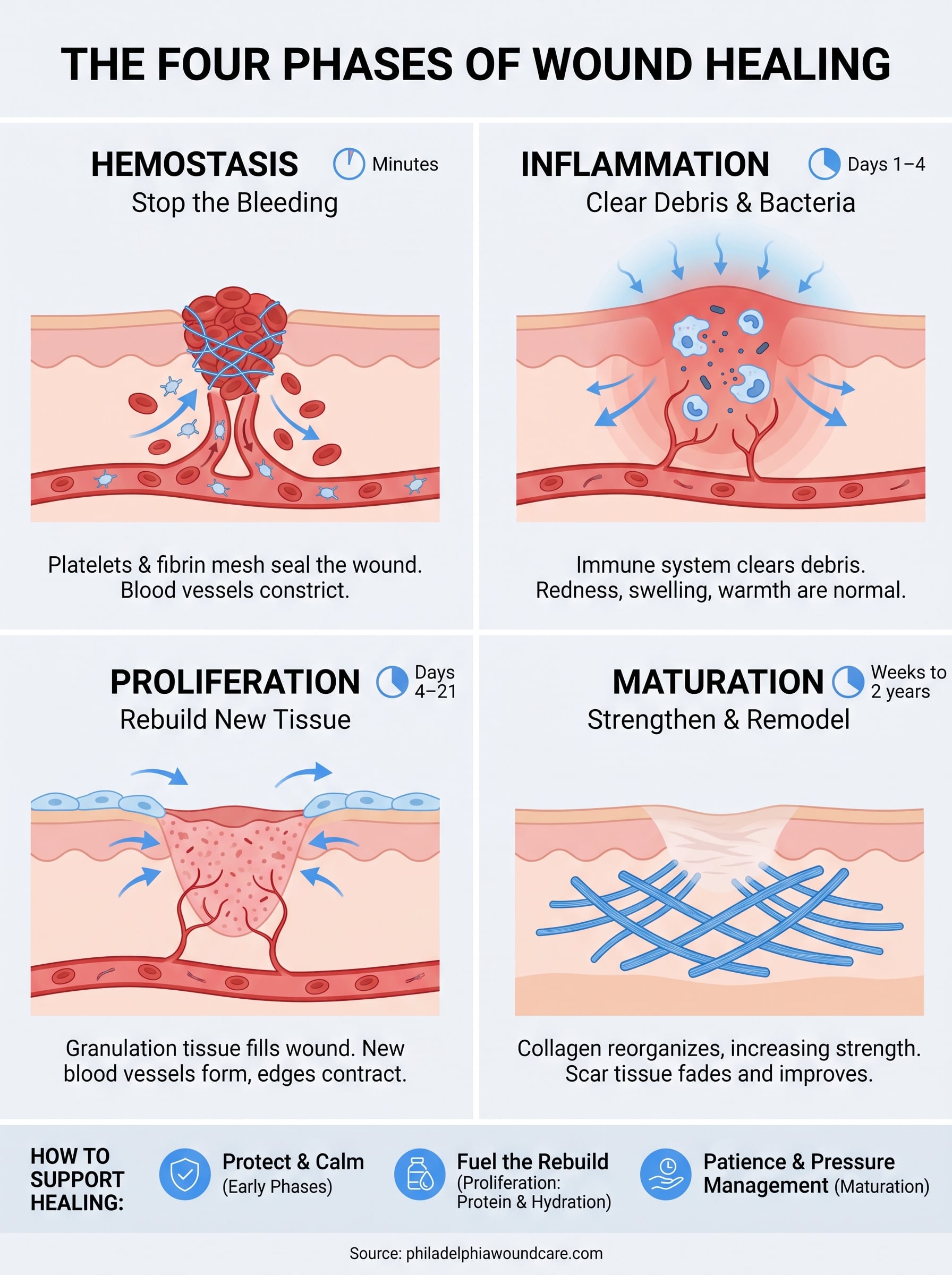
The moment skin breaks, your body activates hemostasis, the clotting process that stops blood loss. Platelets rush to the site, blood vessels constrict, and a fibrin mesh forms to seal the wound. This phase lasts minutes, not days. If bleeding won’t stop or a wound reopens repeatedly, that’s often an early clue that something beyond the wound itself, like a medication or a clotting disorder, needs attention.
Inflammation: days one through four
Redness, swelling, warmth, and some drainage aren’t signs of infection by default. They’re signs of inflammation, the phase where your immune system clears debris and bacteria from the wound bed. This typically peaks within the first 48 to 72 hours and should start settling by day four or five. A wound that stays angry-looking well past that window is often stuck, not healing.
A wound that’s still inflamed after a week isn’t taking longer to heal, it’s stalled and needs evaluation.
Proliferation: days four through twenty-one
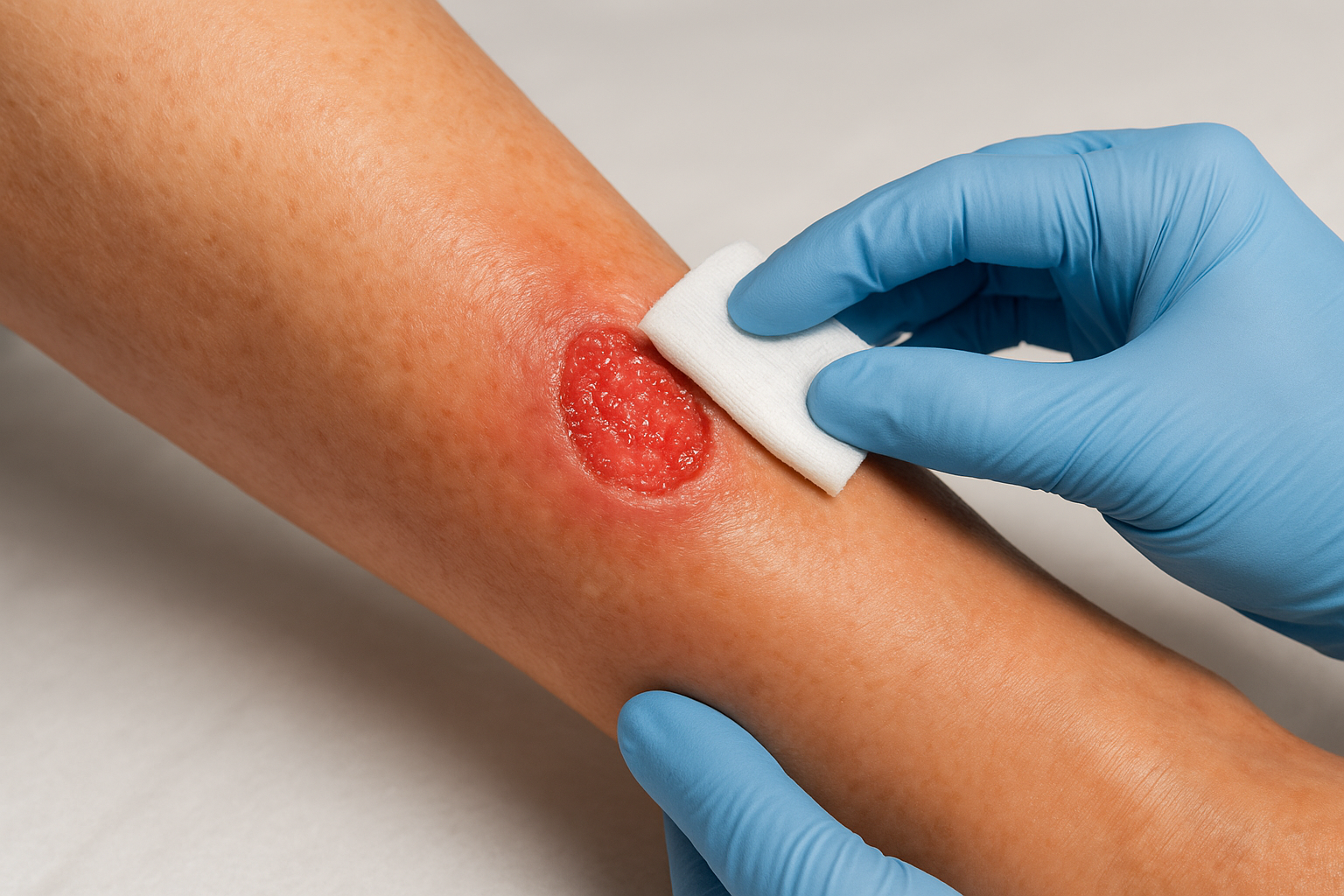
During proliferation, your body builds new tissue. Granulation tissue fills the wound bed, new blood vessels form, and the wound edges begin to contract and close. This is the phase families notice most, because the wound visibly shrinks and changes color from beefy red to pink. A wound that never reaches this stage, or reaches it and then regresses, usually needs more than time.
Maturation: weeks to years
The final phase, maturation, is where collagen reorganizes and the new tissue gains strength. This can continue for months or even up to two years, according to research summarized by the National Library of Medicine. The scar will never be as strong as the original skin, but it should keep improving in texture and durability over time.
Here’s how the timeline typically breaks down:
| Phase | Typical Timeframe | What You Should See |
|---|---|---|
| Hemostasis | Minutes | Bleeding stops, clot forms |
| Inflammation | Days 1–4 | Redness, mild swelling, some drainage |
| Proliferation | Days 4–21 | Pink granulation tissue, shrinking wound size |
| Maturation | Weeks to 2 years | Scar strengthens, color fades |
For most acute wounds, this sequence runs smoothly without intervention. For chronic wounds tied to diabetes, poor circulation, or prolonged pressure, one or more phases often gets interrupted, which is exactly why tracking progress against this timeline matters so much.
How to support the body through each healing phase
Each of the wound healing phases responds to different kinds of support. You can’t rush biology, but you can remove the obstacles that slow it down, and that’s where most of the real progress happens. Think of your role less as a healer and more as a caretaker of the conditions healing needs.
Early phases: protect and calm
During hemostasis and inflammation, the priority is keeping the wound clean and protected. Gentle cleansing, appropriate dressings, and avoiding unnecessary disruption of the wound bed let the clotting and immune response do their work without interference. Elevating an injured limb and managing pain also reduce swelling, which keeps inflammation from lingering longer than it should.
Healing speeds up not from doing more to the wound, but from doing less to interrupt it.
Proliferation: fuel the rebuild
New tissue formation demands raw materials. Protein and hydration matter enormously here, since collagen production and new blood vessel growth both depend on adequate nutrition. Moisture-balanced dressings, rather than dry gauze, also support granulation tissue better, according to guidance from the Centers for Disease Control and Prevention. Pressure relief is equally critical for anyone with limited mobility, since even brief pressure can cut off the blood supply new tissue needs to survive.
Maturation: patience and pressure management
Given that maturation stretches over months, consistent follow-through matters more than any single intervention. Scar tissue benefits from protection against sun exposure and continued pressure offloading, since it remains more fragile than surrounding skin for a long time.
A few habits support the whole process, regardless of phase:
- Keep blood sugar controlled if you’re managing diabetes
- Reposition immobile patients every two hours to prevent new pressure injuries
- Stay hydrated and prioritize protein-rich meals
- Avoid smoking, which restricts the blood flow healing depends on
- Follow dressing change schedules exactly as prescribed
Understanding what your body needs at each stage turns you from a bystander into an active part of the recovery team, and for chronic wounds especially, that involvement often makes the difference between a wound that closes and one that lingers.
Factors that can slow down or disrupt healing
Even when you do everything right, certain conditions can pull a wound off the timeline outlined above. Recognizing these factors helps you understand why a wound might be stuck in inflammation for three weeks instead of four days, or why proliferation never quite gets underway. Most stalled wounds we see in home visits trace back to one or more of these issues, and identifying which one is at play changes how we approach treatment.
Medical conditions that interfere
Diabetes and vascular disease are the two biggest disruptors we encounter in mobile wound care. High blood sugar damages small blood vessels and impairs white blood cell function, which stalls the immune response inflammation depends on. Poor circulation, whether from peripheral artery disease or venous insufficiency, starves new tissue of the oxygen and nutrients proliferation requires. Kidney disease and autoimmune conditions add further complications by weakening the body’s ability to build and maintain new tissue.
A wound rarely heals slower just because of age. It heals slower because of what’s happening underneath the skin.
Lifestyle and environmental factors
Smoking and poor nutrition rank among the most preventable causes of delayed healing, since nicotine constricts blood vessels and inadequate protein intake starves the rebuilding process. Repeated pressure on a wound site, common in patients with limited mobility, cuts off blood flow before new tissue can establish itself. Moisture imbalance works both directions: a wound that’s too dry can’t support cell migration, while excess moisture can macerate healthy skin at the wound edges.
Medications and infection
Certain medications actively work against the healing sequence. The table below summarizes common culprits:
| Factor | How It Disrupts Healing |
|---|---|
| Steroids | Suppress the inflammatory response needed early on |
| Chemotherapy drugs | Slow cell division during proliferation |
| Blood thinners | Extend hemostasis and increase bleeding risk |
| Untreated infection | Keeps the wound locked in inflammation |
Infection deserves special mention because it doesn’t just slow healing, it actively reverses it, pulling a wound back into inflammation even after proliferation has started. Left unaddressed, that cycle can repeat indefinitely, which is why persistent drainage, odor, or increasing pain always warrants a closer look rather than more waiting.
Warning signs your wound isn’t healing normally
Recognizing when a wound has strayed from the normal wound healing phases is the single most useful skill a caregiver can build. Most chronic wounds don’t announce trouble with a dramatic event. They send small, easy-to-dismiss signals over days or weeks, and catching those signals early is what keeps a stalled wound from becoming a hospital admission.
Signs at the wound site
Watch the wound bed itself for changes that contradict its expected phase. A wound stuck in inflammation past day five, tissue that stays pale or dusky instead of turning pink, or granulation tissue that suddenly looks slick and gray instead of beefy red all point to a stalled healing process. Drainage that increases in volume, thickens, or develops a foul odor after the first few days is rarely a normal part of proliferation. Edges that fail to contract inward over two to three weeks, or a wound that actually grows larger, both signal that something is interfering with the sequence rather than simply slowing it down.
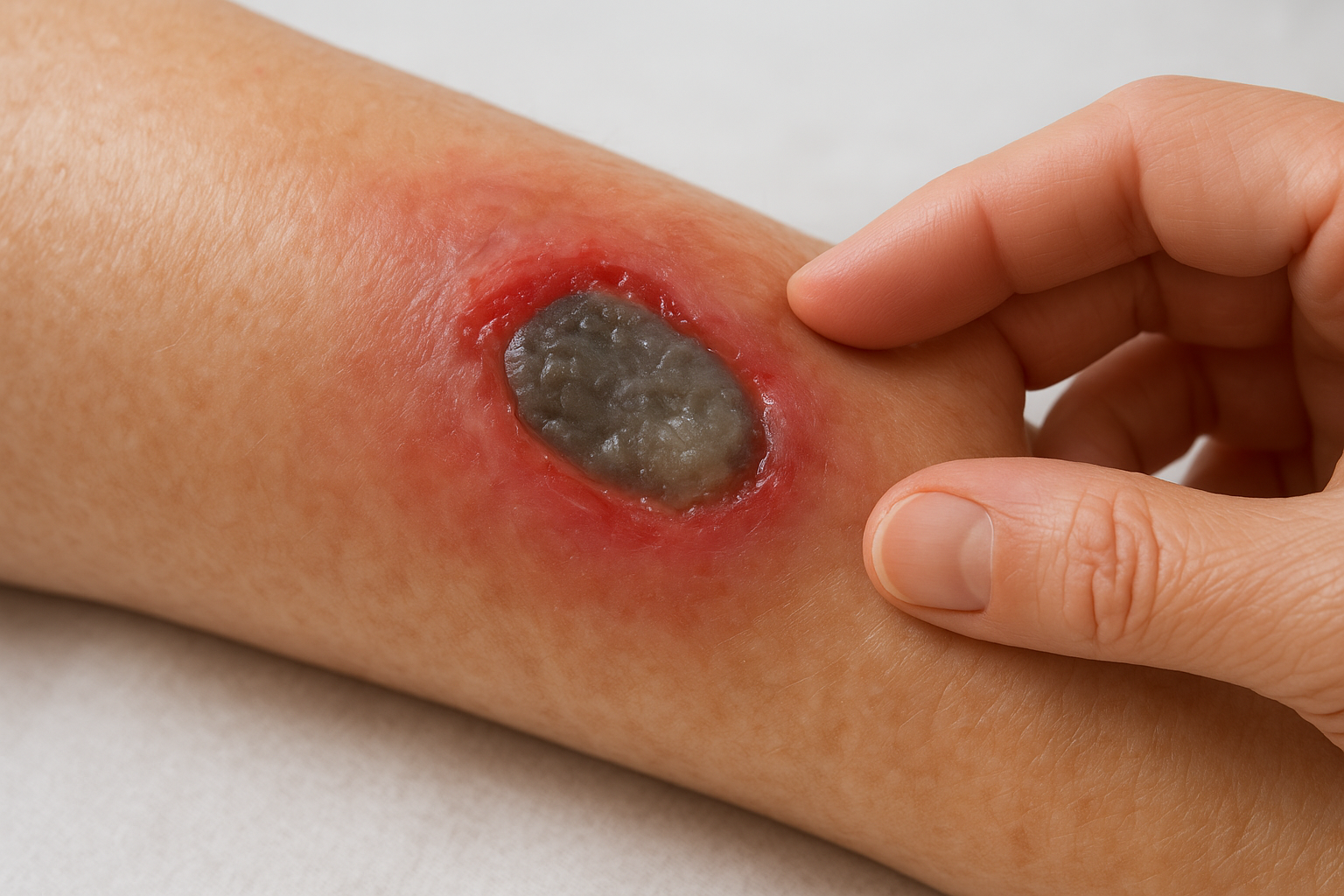
When a wound looks the same, or worse, than it did a week ago, that’s the clearest sign the healing sequence has stalled.
Signs beyond the wound
Escalating pain, especially pain that worsens after initially improving, often means infection has taken hold underneath tissue that looks fine on the surface. Fever, chills, or new confusion in an elderly patient can indicate the infection has moved beyond the wound itself, which the Centers for Disease Control and Prevention identifies as a serious complication requiring prompt medical evaluation. Swelling that spreads well beyond the wound margins, red streaking up a limb, or new warmth in surrounding skin are additional red flags that shouldn’t wait for the next scheduled dressing change.
Here’s a quick checklist worth keeping near any care plan:
- Wound size unchanged or larger after two weeks
- Drainage that’s increasing, discolored, or foul-smelling
- Pain that’s worsening rather than improving
- Fever, chills, or confusion in the patient
- Skin around the wound that’s spreading redness or new warmth
Any one of these deserves a call to a wound specialist rather than another week of watching.
Supporting your recovery every step of the way
The wound healing phases aren’t abstract biology, they’re a checklist you can use right now. Hemostasis stops the bleeding, inflammation clears the debris, proliferation rebuilds the tissue, and maturation locks in the strength. When a wound moves through each stage on schedule, that’s a good sign to keep doing what you’re doing. When it stalls, that stall has a cause, and that cause almost always responds to the right intervention.
Getting a wound back on track rarely happens by waiting longer. It happens by bringing in physician-led care that can identify exactly which phase is stuck and why, whether that’s circulation, nutrition, infection, or something else underneath the surface. If a wound in your care has stopped progressing the way it should, don’t let another week pass watching it. Reach out through our mobile wound care services in Philadelphia and get a physician evaluating that wound at the bedside, wherever your loved one calls home.