
8 Facility Wound Care Program Options for Nurse Training
Nurses handle wound assessments and dressing changes daily, yet most nursing programs spend surprisingly little time on advanced wound management. That gap shows up at the bedside, delayed healing, inconsistent documentation, and avoidable complications that put patients at risk. A structured facility wound care program gives clinical staff the hands-on knowledge they need to identify wound types accurately, select appropriate treatments, and escalate when a wound isn’t responding.
At Philadelphia Wound Care, we provide physician-led mobile wound treatment inside skilled nursing facilities, assisted living communities, and private homes across the Philadelphia area. We work alongside facility nurses every day, and the difference between a well-trained wound care team and an undertrained one is measurable in healing times and patient outcomes. Strong internal training doesn’t replace specialist intervention, it makes the collaboration between facility staff and wound care physicians far more effective.
This article breaks down eight respected wound care training and certification programs built specifically for nurses and clinical staff working in facility settings. Whether you’re a nurse looking to specialize, a director of nursing upgrading your team’s skills, or a case manager trying to standardize wound care protocols, you’ll find options here that range from introductory certifications to advanced clinical programs.
1. Philadelphia Wound Care facility partner training
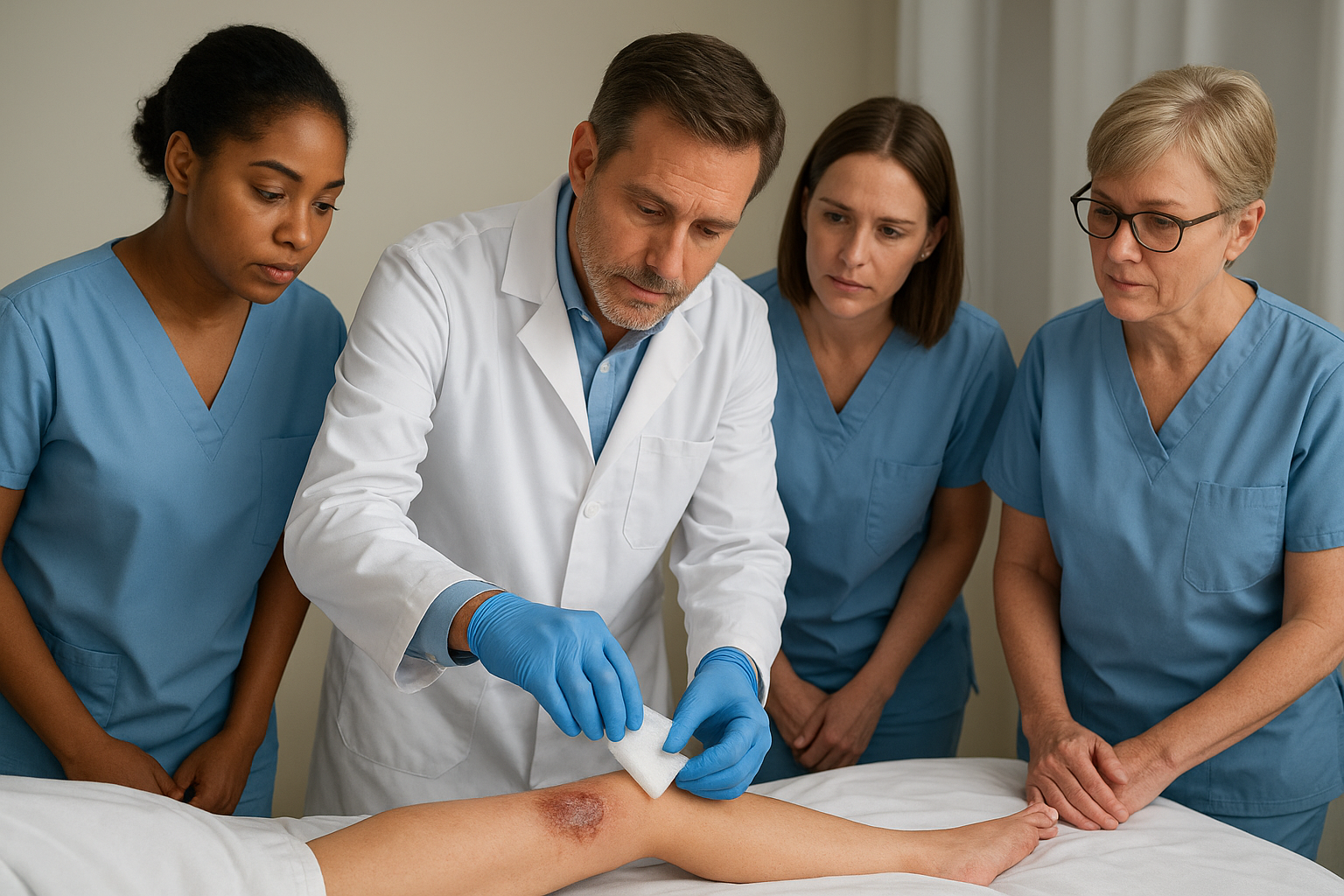
Philadelphia Wound Care partners directly with skilled nursing facilities, assisted living communities, and similar settings across the Philadelphia region to train clinical staff on-site. This isn’t a packaged online module. It’s a hands-on collaborative model where a board-certified General Surgeon works alongside your nurses to build practical wound care competency rooted in real patient cases from your own census.
Program format and time commitment
Training takes place at your facility, built around your schedule and patient population. Sessions combine direct bedside instruction with structured case review, so your staff learns in the same environment where they apply those skills. The number of sessions varies by team size and existing knowledge gaps, but most facilities complete an initial training cycle within a small number of coordinated visits rather than pulling nurses off the floor for extended classroom time.
Curriculum and skills covered
The curriculum covers the clinical areas that matter most in a facility wound care program: wound classification, staging, and documentation, debridement basics, dressing selection, infection recognition, and when to escalate to a specialist. Staff also learn how to support regenerative therapies like allograft, which are covered under Medicare Part B, so nurses understand what those treatments involve and how to assist effectively during physician visits.
Nurses who understand the full clinical picture, not just the dressing protocol, catch complications earlier and document more accurately for reimbursement.
Who it fits in a facility
This program fits nursing staff at SNFs, ALFs, and hospice settings who manage chronic wounds regularly but haven’t had structured wound-specific training. It also works well for Directors of Nursing who want to standardize wound protocols across shifts and reduce the documentation inconsistencies that affect quality metrics and survey outcomes.
Requirements, CE, and credential
There are no prerequisite certifications required to participate. Training is tailored to the existing skill level of your team. Continuing education credit availability and any formal documentation of training completion can be discussed during the intake process. This program prioritizes practical clinical application over a standalone exam credential.
Pricing and how to enroll
Pricing is based on facility size, session frequency, and the scope of training needed. Philadelphia Wound Care scopes each partnership individually rather than publishing a fixed fee schedule. To enroll or request a consultation, contact the Philadelphia Wound Care team directly through the website. The team typically responds within 24 hours of initial outreach.
2. WOCN Society accredited WOC nursing programs
The Wound, Ostomy and Continence Nurses Society (WOCN) runs one of the most recognized credentialing pathways in clinical wound care. For nurses who want to specialize at a high level within a facility wound care program, the WOC nursing credential carries significant clinical and professional weight with employers and surveying bodies.
Program format and time commitment
WOCN-accredited programs are available through several approved academic institutions and run in a blended or distance-learning format paired with required clinical practicum hours. The full WOC program typically takes between 4 and 6 months depending on the institution and how many specialty tracks you pursue.
Curriculum and skills covered
The curriculum covers wound care, ostomy management, and continence care in depth. Wound-specific content includes etiology, assessment, wound bed preparation, debridement techniques, and evidence-based dressing selection. You also cover documentation standards and care planning that translate directly to improved facility outcomes and survey readiness.
Nurses who complete accredited WOC programs bring a level of clinical reasoning to wound assessment that significantly reduces misclassification and reimbursement errors.
Who it fits in a facility
This program fits RNs seeking to become dedicated wound care specialists within a SNF, hospital, or long-term care setting. It works especially well for facilities that want to designate a lead wound nurse who owns the program, mentors peers, and drives protocol consistency across shifts.
Requirements, CE, and credential
You need an active RN license and documented clinical practice hours to qualify. Completion earns eligibility to sit for the CWON board exam. Ongoing CE requirements apply to maintain the credential.
Pricing and how to enroll
Tuition varies by institution, typically ranging from $3,000 to $6,000. You can locate WOCN-accredited programs through the WOCN Society’s official website at wocn.org.
3. Wound Care Education Institute WCEI
The Wound Care Education Institute (WCEI) is one of the more accessible entry points into wound care certification for nurses who need structured training without a lengthy academic commitment. WCEI offers targeted programs that nurses working inside a facility wound care program can complete without stepping away from their clinical roles for months at a time.
Program format and time commitment
WCEI delivers courses in both live seminar and online formats, giving facility administrators flexibility when scheduling staff training. The core wound care certification course runs over 4 days in a live setting or at a self-paced online format, which works well for nurses who can’t block out consecutive days.
Curriculum and skills covered
The curriculum focuses on wound assessment, wound bed preparation, and dressing selection across all major wound types including pressure injuries, diabetic foot ulcers, and venous ulcers. You also cover infection management and documentation practices that support accurate coding and reimbursement in SNF and long-term care settings.
Nurses who complete WCEI training report stronger confidence in wound classification and dressing decisions, which directly reduces unnecessary escalations and supply waste.
Who it fits in a facility
WCEI fits LPNs and RNs working in skilled nursing, assisted living, or home health settings who need a practical credential without the full academic load of a university-based WOC program. It’s a strong fit for facilities that want to train multiple staff members quickly without a large per-seat cost.
Requirements, CE, and credential
You need an active nursing license to enroll. Completion makes you eligible to sit for the WCC (Wound Care Certified) exam through the National Alliance of Wound Care and Ostomy. CE contact hours are awarded upon completion.
Pricing and how to enroll
Course pricing varies by format, with online options typically starting around $500 to $700. You can review current pricing and register through the WCEI website directly.
4. NAWCO wound certification programs
The National Alliance of Wound Care and Ostomy (NAWCO) offers certification programs widely recognized across long-term care and acute settings. If your facility needs a standardized wound care credential that clinical staff can earn without stepping away from their roles for weeks, NAWCO’s programs are worth a close look.
Program format and time commitment
NAWCO delivers certification preparation through online self-study modules that nurses complete at their own pace. Most candidates finish the preparatory coursework in 2 to 4 weeks before sitting for the certification exam, making this one of the more flexible options for active clinical staff who can’t leave the floor for extended training.
Curriculum and skills covered
The curriculum covers the core clinical areas your nurses need most in a facility wound care program:
- Wound classification and staging across pressure injuries, diabetic ulcers, and surgical wounds
- Infection recognition and management
- Dressing selection and wound bed preparation
- Documentation practices that support accurate coding and reimbursement
Nurses who can document wound etiology and staging precisely give physicians the clinical detail needed to adjust treatment plans without delays.
Who it fits in a facility
NAWCO programs fit LPNs and RNs in SNFs, long-term care, and outpatient settings who want a nationally recognized credential without a lengthy academic commitment. This is a practical choice for facilities looking to credential multiple staff members and raise the baseline skill level across their wound care team.
Requirements, CE, and credential
Candidates need an active nursing license and documented clinical practice hours to qualify. Passing earns the WCC (Wound Care Certified) credential, with ongoing CE requirements to maintain it.
Pricing and how to enroll
Exam and preparatory fees typically fall in the $300 to $600 range. You can review current costs and register through the NAWCO website directly.
5. ABWM Certified Wound Specialist CWS
The American Board of Wound Management (ABWM) offers the Certified Wound Specialist (CWS) credential, which is well recognized across both acute and post-acute care settings. For nurses who want a credential that carries clinical credibility with physicians and facility administrators alike, the CWS sits at a higher level of rigor than most entry-level wound certifications.
Program format and time commitment
The ABWM does not require a specific preparatory course before sitting for the exam. Most candidates use self-directed study through clinical references and review materials over a period of several weeks to a few months depending on their existing experience level. The exam itself is administered through testing centers or remotely, giving nurses flexibility around their shift schedules.
Curriculum and skills covered
The CWS exam covers a broad clinical scope, including wound etiology, physiology, and healing mechanisms, along with assessment techniques, advanced treatment modalities, and infection management. You also answer questions on documentation, care planning, and outcome measurement, which directly supports the quality standards required in a facility wound care program.
Nurses holding the CWS credential demonstrate a depth of wound knowledge that strengthens both individual patient outcomes and facility-wide quality metrics.
Who it fits in a facility
The CWS is best suited for experienced RNs and other licensed clinicians who already have a strong wound care background and want formal recognition of that expertise. It works well for facilities looking to designate a clinical lead for wound program oversight.
Requirements, CE, and credential
Candidates need an active clinical license and documented wound care practice hours. Ongoing CE is required to maintain the credential.
Pricing and how to enroll
Exam fees are typically in the $300 to $500 range. You can review current requirements and register through the ABWM website.
6. Vohra facility-based wound certification
Vohra Wound Management offers a wound certification program built specifically for nurses working in long-term care and post-acute settings. Unlike general nursing CE courses, Vohra’s design centers on the clinical realities of SNF and ALF environments, making it one of the more practical options for facilities looking to strengthen their internal wound care capabilities.
Program format and time commitment
The Vohra program runs entirely online and on-demand, which means your nurses complete it around their shift schedules without pulling them off the floor. Most participants finish the coursework in approximately 8 hours of total study time, split across modules that can be paused and resumed between shifts.
Curriculum and skills covered
Content covers the full range of wounds your staff encounters in a facility wound care program, including pressure injuries, diabetic foot ulcers, and venous ulcers. Modules address wound staging, dressing selection, and documentation practices that align directly with long-term care survey standards.
Nurses who document wound progression accurately reduce facility survey risk and support better reimbursement outcomes across the entire patient census.
Who it fits in a facility
Vohra’s program fits LPNs and RNs in SNFs, assisted living, and long-term care who need structured wound training without a multi-day commitment. It works well for facilities that want to credential entire nursing shifts rather than just a single designated wound nurse.
Requirements, CE, and credential
You need an active nursing license to enroll in the program.
Completion earns CE contact hours and the Vohra Wound Certificate, which demonstrates facility-specific wound competency to surveyors and administrators.
Pricing and how to enroll
Pricing is available through Vohra’s website, where you can register directly for individual seats or facility group packages if you’re training multiple staff members at once.
7. Relias wound care education for staff
Relias is a learning management platform widely used across healthcare settings, including long-term care and SNFs. Their wound care course library gives facility administrators a practical way to deliver standardized wound education to large nursing teams without scheduling off-site training or pulling nurses from the floor for extended periods.
Program format and time commitment
Relias delivers wound care content through short, self-paced online modules that nurses complete directly within the platform. Individual modules typically run 20 to 45 minutes, so staff can finish training between shifts or during scheduled education time without interrupting patient care workflows.
Curriculum and skills covered
Courses cover the core topics that matter most in a facility wound care program, including pressure injury prevention, wound staging, dressing selection, and infection identification and documentation. Content aligns with CMS survey standards, which means what your nurses learn applies directly to the quality requirements your facility already has to meet.
Nurses who complete documentation-focused wound training reduce the charting errors that lead to reimbursement denials and survey deficiencies.
Who it fits in a facility
Relias works best for SNFs and assisted living communities that already use the platform for general staff education and want to add wound care content without adopting a separate system. It is a strong fit for facilities that need to train large nursing teams across multiple shifts at scale.
Requirements, CE, and credential
You need an active Relias facility account to access wound care modules. Completion awards CE contact hours, and administrators can track staff completion and compliance directly within the platform dashboard.
Pricing and how to enroll
Pricing is structured through facility-level subscriptions rather than per-course purchases. Contact Relias directly through their website to request a quote based on your team size and module needs.
8. Wound Learning Academy SNF wound course
The Wound Learning Academy offers a skills-focused wound course built specifically for nurses working in skilled nursing facilities. This program addresses the practical gaps that show up most often in SNF wound documentation and staging, making it a direct fit for facilities that need structured clinical training without the overhead of a university-based program.
Program format and time commitment
The course runs entirely online and self-paced, so your nurses complete it around their existing shift schedules. Most participants finish the full course in 4 to 6 hours of total study time, broken into focused modules that do not require extended time away from patient care.
Curriculum and skills covered
Content targets the wound types and clinical decisions that SNF nurses face most often inside a facility wound care program, including pressure injury staging, wound bed assessment, and dressing selection based on wound characteristics. Modules also address the documentation practices that directly affect survey outcomes and reimbursement accuracy.
Nurses who understand staging criteria at a clinical level document with greater precision, which reduces the errors that trigger survey deficiencies.
Who it fits in a facility
This course fits LPNs and RNs in SNF settings who need focused wound training without committing to a multi-day seminar or a lengthy certification pathway. It works well for facilities that want to build foundational wound competency across their entire nursing team.
Requirements, CE, and credential
You need an active nursing license to enroll. Completion awards CE contact hours and a certificate of completion that documents wound care training for your staff records.
Pricing and how to enroll
Pricing is available through the Wound Learning Academy website, where individual and group enrollment options are listed for facility administrators.
Next steps
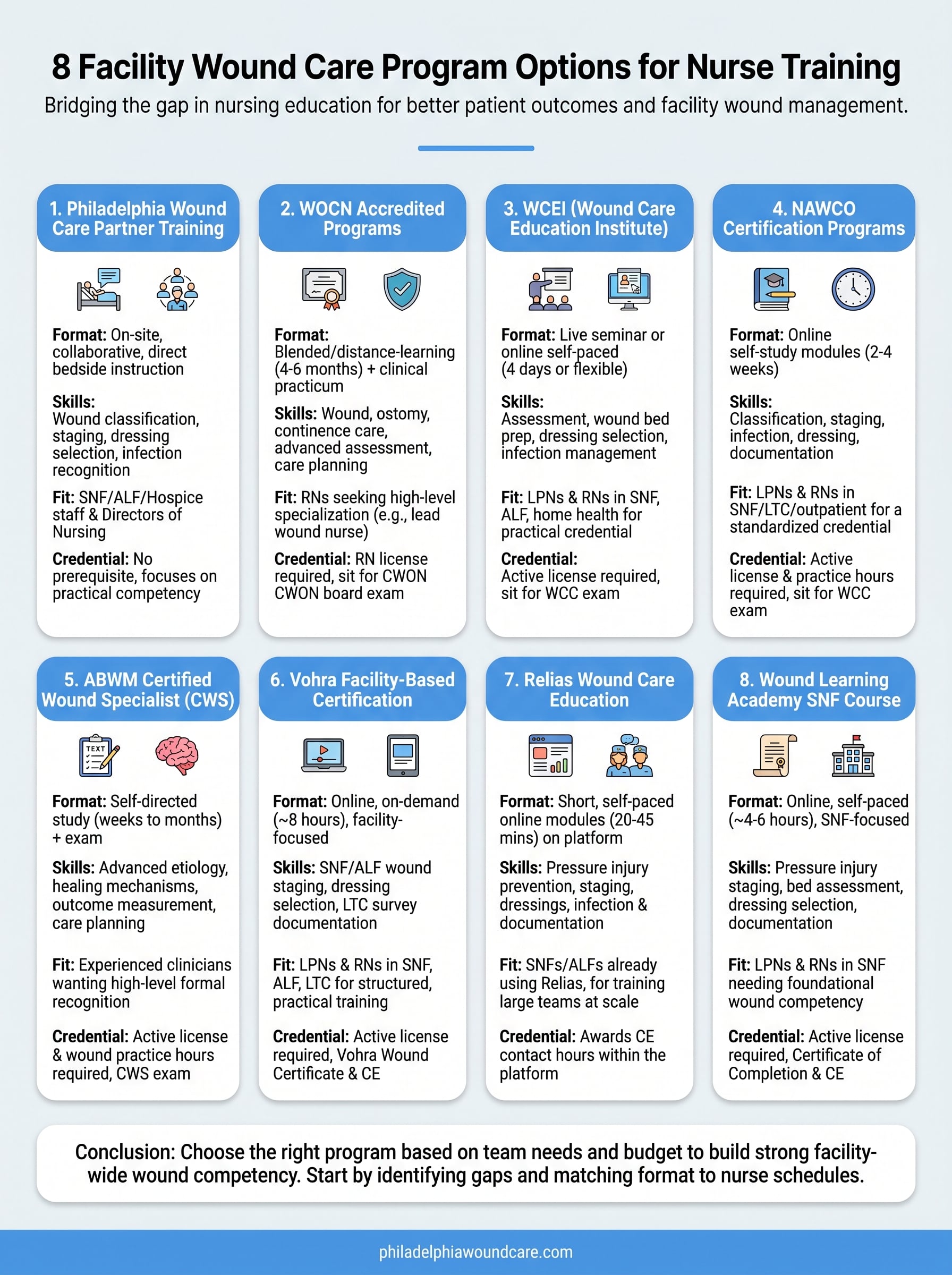
Each of the eight programs above addresses a different level of training need, from a quick SNF-focused online course to a multi-month credentialing pathway. The right choice depends on your team’s current skill level, your facility’s budget, and whether you need to train one designated wound nurse or build competency across your entire staff. Start by identifying your biggest documentation or staging gaps, then match the program format to what your nurses can realistically complete without disrupting patient care.
Training your nurses well is one part of a strong facility wound care program. The other part is having a physician-level clinical resource available when wounds stop responding to standard care. Philadelphia Wound Care brings board-certified surgical expertise directly to your facility, working alongside your trained staff to manage complex cases and support the outcomes your team works toward every day. Contact us to discuss a facility wound care partnership for your SNF or assisted living community.