
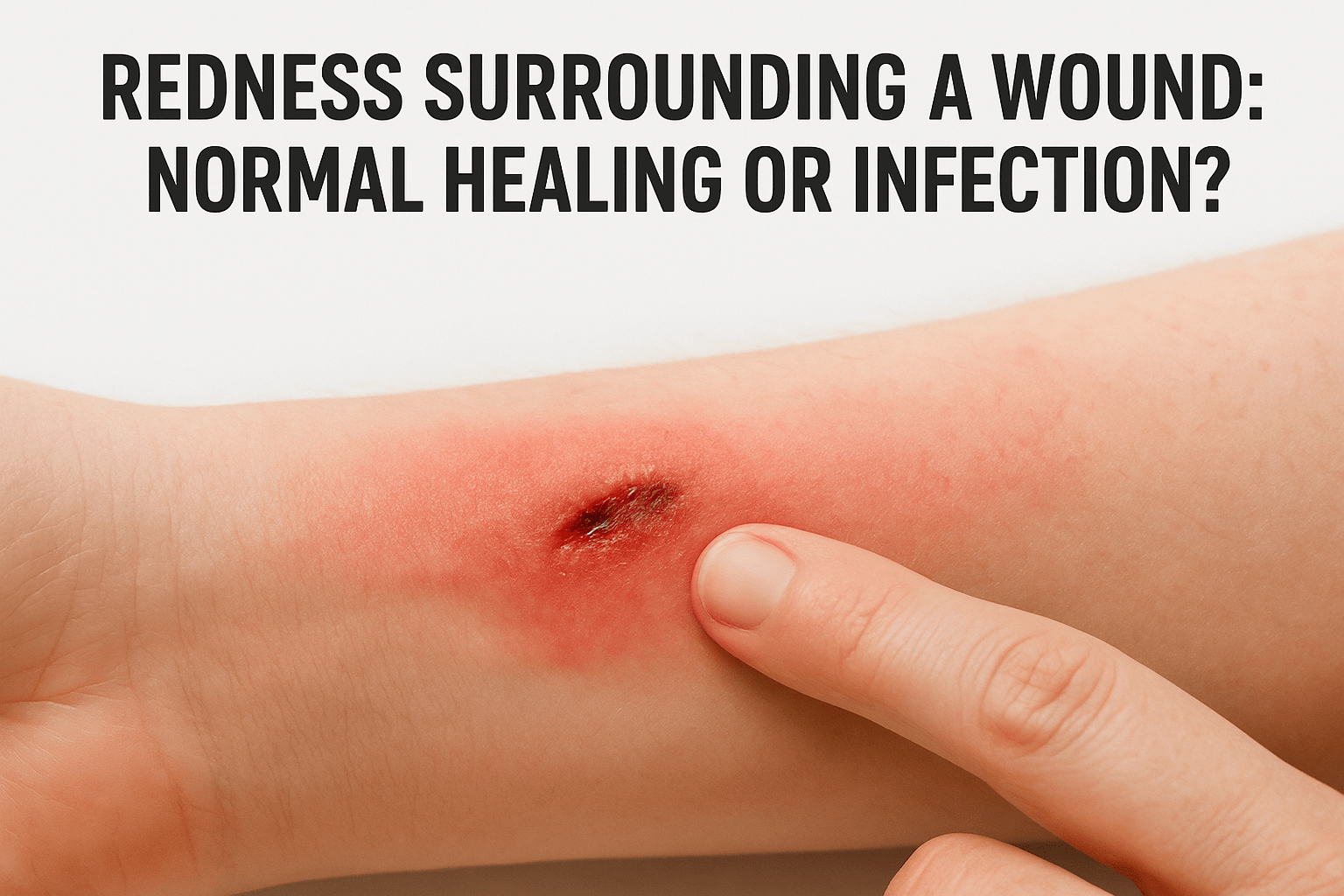
Redness Surrounding a Wound: Normal Healing or Infection?
You changed the dressing, looked down, and saw pink or red skin spreading out from the edges of the wound. Your first thought is probably right to be cautious. Redness surrounding a wound can mean two very different things: a normal part of the body’s repair process, or the first sign of an infection that needs treatment fast.
Here’s the short answer. Mild, even redness that fades within a few days and stays close to the wound edges is usually just inflammation, your body’s normal healing response. Redness that spreads outward, feels hot, grows more intense, or comes with increasing pain and swelling points toward infection. The difference often comes down to timing, pattern, and what other symptoms show up alongside it, like fever or drainage.
In this article, we’ll walk through exactly how to tell healing redness from infected redness, what a normal healing timeline looks like, and the specific warning signs, including streaking, odor, and worsening pain, that mean you shouldn’t wait to get evaluated. For patients with chronic wounds or limited mobility, we’ll also cover when a mobile physician visit makes more sense than a trip to urgent care.
Why redness shows up around a healing wound
Redness around a wound is your body doing exactly what it’s supposed to do. When skin is cut, scraped, or opened by a pressure sore, the tissue underneath sends out chemical signals that widen nearby blood vessels. That extra blood flow delivers white blood cells and healing nutrients straight to the damaged area, and it’s what turns the skin pink or red. Doctors call this the inflammatory phase, and it’s the first of three stages every wound moves through on its way to closing.
The inflammatory phase explained
Swelling and warmth usually show up alongside the redness during this stage, and that’s normal too. This phase typically peaks within 48 to 72 hours after the injury or procedure, then starts settling down as the body shifts into rebuilding new tissue. You might also notice mild tenderness when you touch the area, which is different from the sharp, worsening pain that signals a problem.
Redness that shows up early and fades within a few days is your body’s repair crew at work, not a warning sign.
What a normal timeline looks like
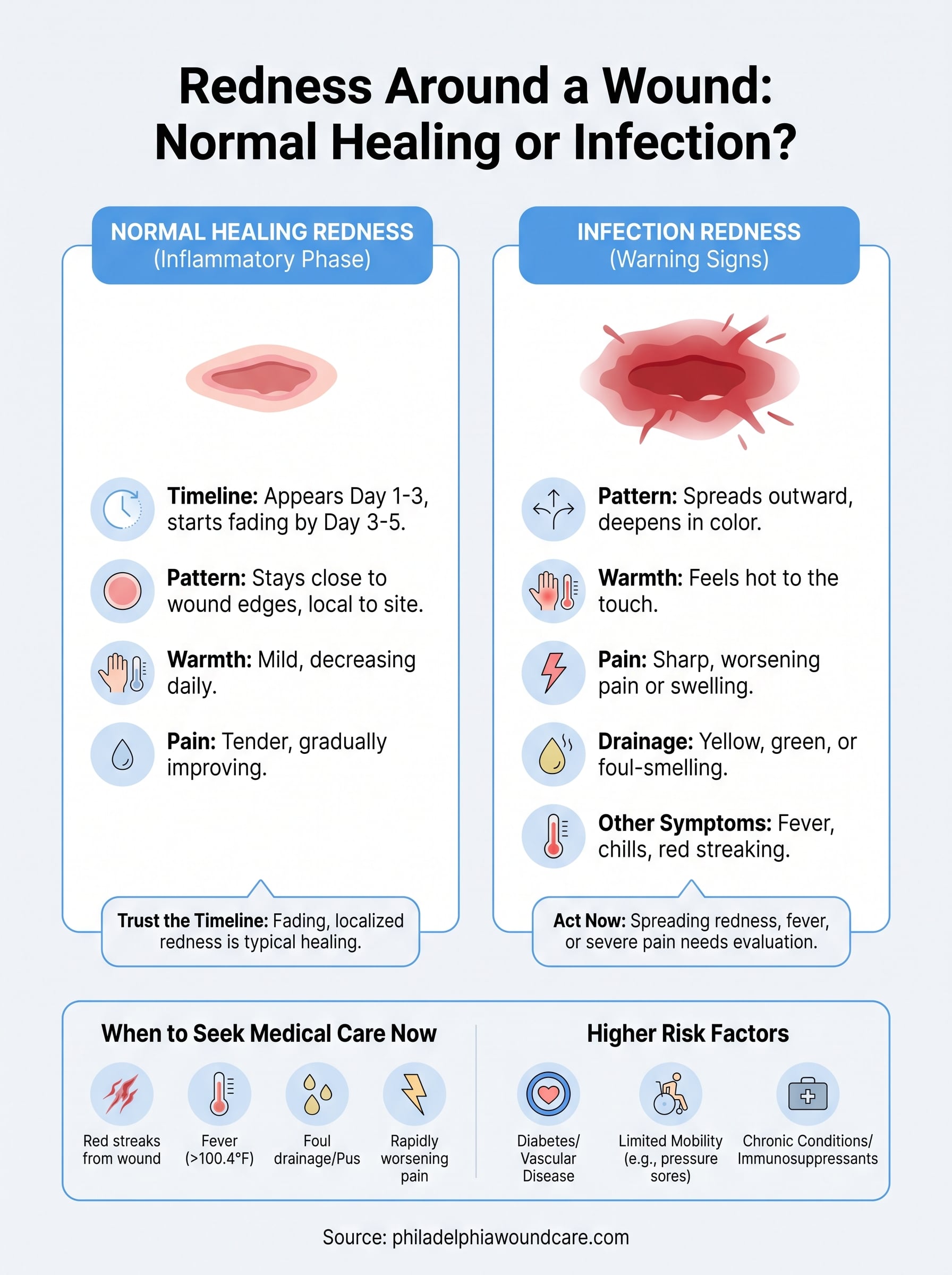
Healing redness follows a fairly predictable pattern, and knowing that pattern helps you spot when something’s off:
- Days 1-3: Redness appears, stays close to the wound edges, and may come with mild swelling.
- Days 3-5: Redness should start fading, not spreading.
- Day 5 and beyond: Color should look more like light pink than deep red, with less warmth and tenderness each day.
Understanding this timeline matters most for patients managing chronic wounds, like diabetic ulcers or pressure sores, since these wounds often stall in the inflammatory phase longer than a typical cut or surgical incision. When redness doesn’t follow this fading pattern, it’s usually your first clue that infection, not healing, is taking over.
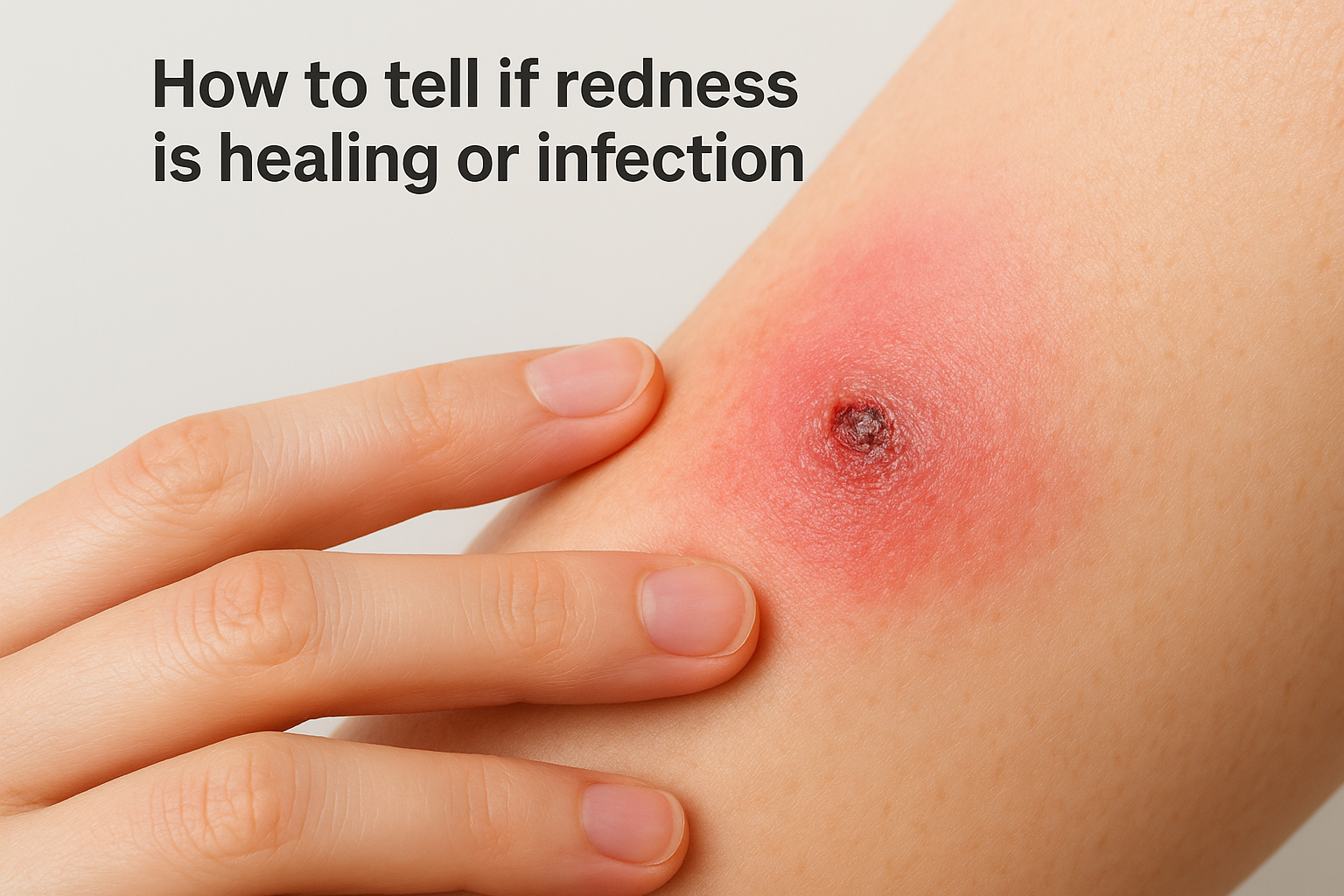
How to tell if redness is healing or infection
Spotting the difference comes down to watching how the redness behaves over a day or two, not just how it looks in one snapshot. Healing redness stays contained, fades gradually, and doesn’t come with a fever or foul smell. Infected redness spreads, deepens in color, and often travels away from the wound in streaks or blotchy patches that weren’t there the day before.
| Signal | Normal Healing | Possible Infection |
|---|---|---|
| Color | Light pink, fading | Deep red, darkening |
| Border | Stays at wound edge | Spreading outward |
| Warmth | Mild, decreasing | Hot to touch |
| Pain | Tender, improving | Sharp, worsening |
| Drainage | Clear or light | Yellow, green, or foul-smelling |
| Other symptoms | None | Fever, chills, red streaking |
If the redness is spreading, darkening, or paired with drainage and fever, treat it as infection until a clinician says otherwise.
Tracking these details daily, even snapping a quick photo at the same time each day, gives you and your care team a clear picture of whether the wound is healing on schedule or heading in the wrong direction.
How to care for a red wound at home
Basic home care can support healing and keep mild redness from turning into something worse. Clean technique matters more than any product you buy, so start there and keep the routine simple and consistent.
Daily cleaning and dressing steps
Gently rinse the wound with saline or mild soap and water, pat it dry with a clean cloth, and apply a fresh dressing suited to the wound type. Avoid scrubbing, hydrogen peroxide, or alcohol, since these damage new tissue and slow healing.
- Wash your hands before and after touching the wound.
- Change the dressing once daily, or sooner if it’s wet or dirty.
- Keep the wound covered and moist, not dry or exposed.
- Elevate the area if swelling is present.
Good wound care at home is about consistency, not intensity.
Watching for changes day to day
Snap a photo each morning under the same lighting so you can compare redness patterns over time instead of relying on memory. Note any change in drainage color, odor, or pain level, and write it down. Quietly tracking these details gives you real evidence if you need to call a nurse or physician about worsening symptoms.
Who faces a higher risk of wound infection
Some patients need to watch redness more closely than others, because their bodies simply can’t fight infection as efficiently. Chronic health conditions slow circulation and immune response, which gives bacteria more time to take hold before symptoms even show up clearly.
Conditions that raise the stakes
Diabetes tops the list, since high blood sugar impairs both circulation and white blood cell function. Vascular disease, kidney disease, and any condition that reduces blood flow to the extremities create similar problems. Patients on immunosuppressants, chemotherapy, or long-term steroids also face higher odds of infection, since their bodies can’t mount the usual inflammatory response.
The less mobile and more medically complex a patient is, the faster a small red patch can turn into a real emergency.
Mobility and age matter too
Limited mobility is its own risk factor. Patients who spend most of the day in a bed or wheelchair develop pressure ulcers that heal slowly and infect easily. Add advanced age, which naturally thins skin and slows healing, and you get a population that needs more frequent wound checks, not fewer, especially when redness appears without an obvious cause.
When to seek medical care for a red wound
Certain signs mean you shouldn’t wait and watch anymore. Red streaking running away from the wound, a fever above 100.4°F, or a sudden spike in pain all point to an infection that’s moving beyond the wound site and into surrounding tissue or the bloodstream. Foul-smelling drainage, pus, or a wound that suddenly feels much hotter than the skin around it also warrants same-day evaluation, not a wait-and-see approach.
When redness comes with fever, streaking, or spreading pain, that’s your body telling you it needs help now, not tomorrow.
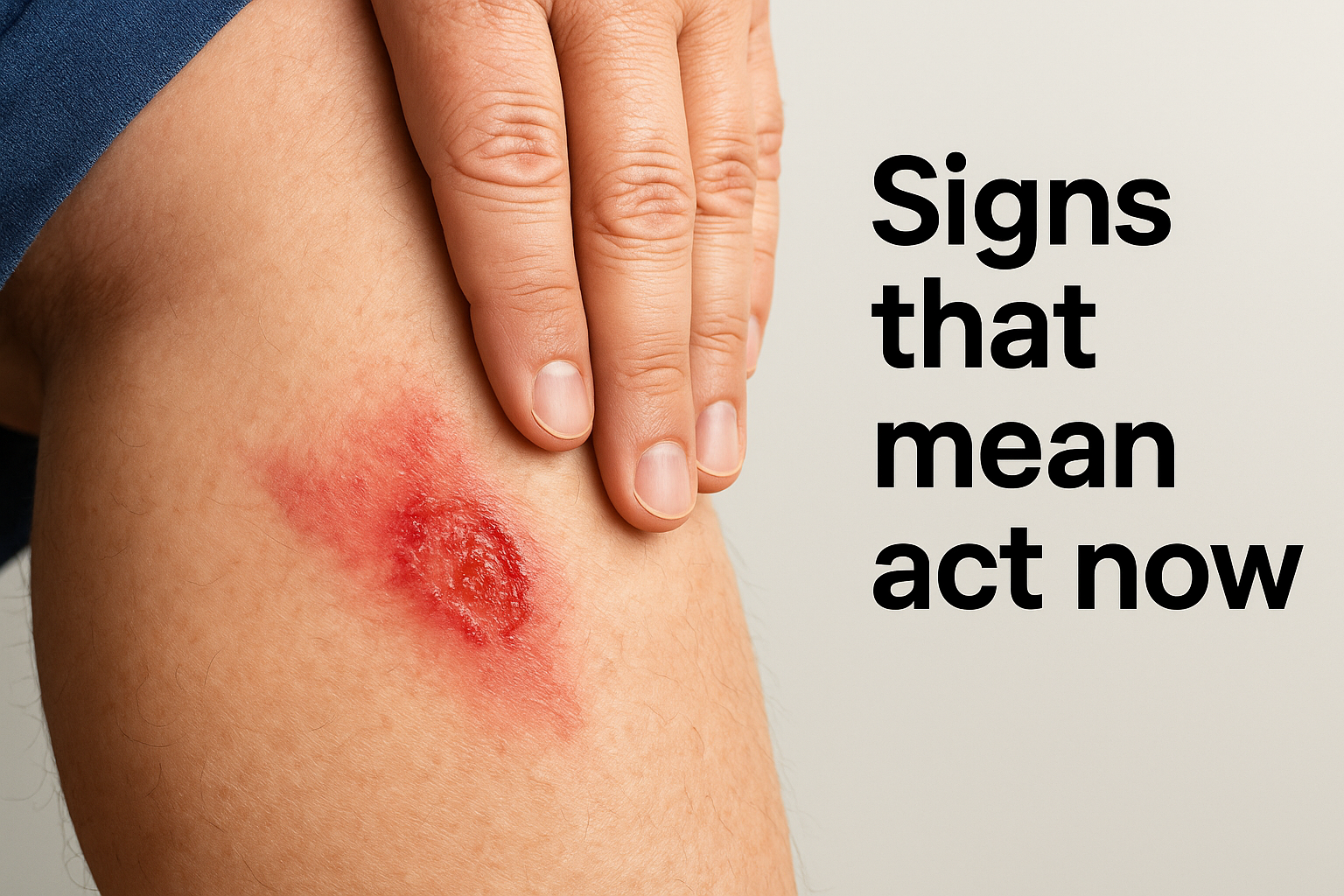
Signs that mean act now
- Red streaks extending from the wound
- Fever, chills, or feeling generally unwell
- Pus or foul-smelling drainage
- Rapidly worsening pain or swelling
- Wound edges pulling apart or turning black
For patients with limited mobility or chronic conditions like diabetes, getting to urgent care or an ER isn’t always simple, and delays raise the risk of hospitalization. That’s exactly where a mobile wound care physician earns its value: a same-day house call from a general surgeon can assess, culture, and treat an infected wound before it escalates, without the ordeal of transport.
Keeping an eye on your recovery
Most redness around a wound is just your body doing its job, not a reason to panic. Trust the timeline: fading color, less warmth, and improving pain each day are all signs healing is on track. What deserves your attention is the opposite pattern, redness that spreads, darkens, or shows up with fever, streaking, or foul-smelling drainage.
You don’t have to guess or wait for symptoms to worsen before getting help, especially if you or a loved one deal with diabetes, limited mobility, or a chronic wound that’s been slow to close. Daily photos and honest tracking give you the evidence you need to act quickly instead of second-guessing yourself.
If redness around a wound has you worried, don’t wait for an urgent care line. Schedule a mobile wound care visit in Philadelphia and get a physician’s eyes on it, right at home.