

Redness Around The Wound: When It’s Healing vs. Infection
You changed the dressing, took a look, and now you’re staring at pink or red skin around the edges of the wound. Is that normal, or is it the first sign something’s going wrong? Redness around the wound is one of the most common things patients and family caregivers worry about, and it’s not always obvious which category it falls into just by looking at it once.
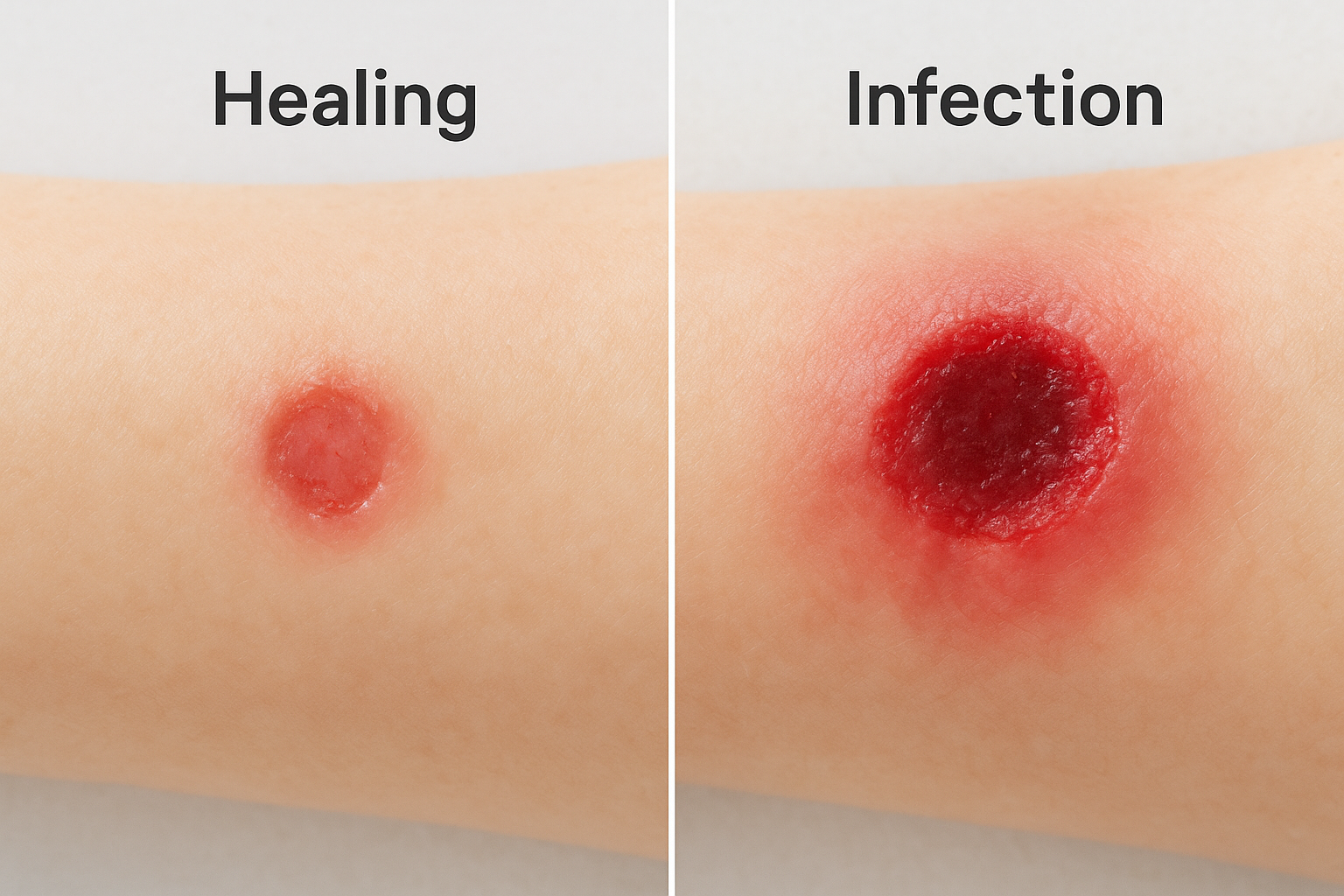
Here’s the short answer: healing redness is usually mild, pink, and fades within a few days, while infection tends to bring spreading redness that gets darker or warmer and shows up alongside swelling, pain, or drainage that wasn’t there before. The difference often comes down to timing, texture, and what else is happening at the site, not just the color itself.
In this article, we’ll walk through exactly what normal healing redness looks like at each stage, the specific red flags that suggest infection, and when a chronic or slow-healing wound needs a specialist’s eyes on it rather than another week of watching and waiting. If you’re caring for an elderly parent or managing a wound that surgery or home remedies haven’t fixed, this breakdown will help you know what you’re actually looking at.
Why redness around a wound deserves close attention
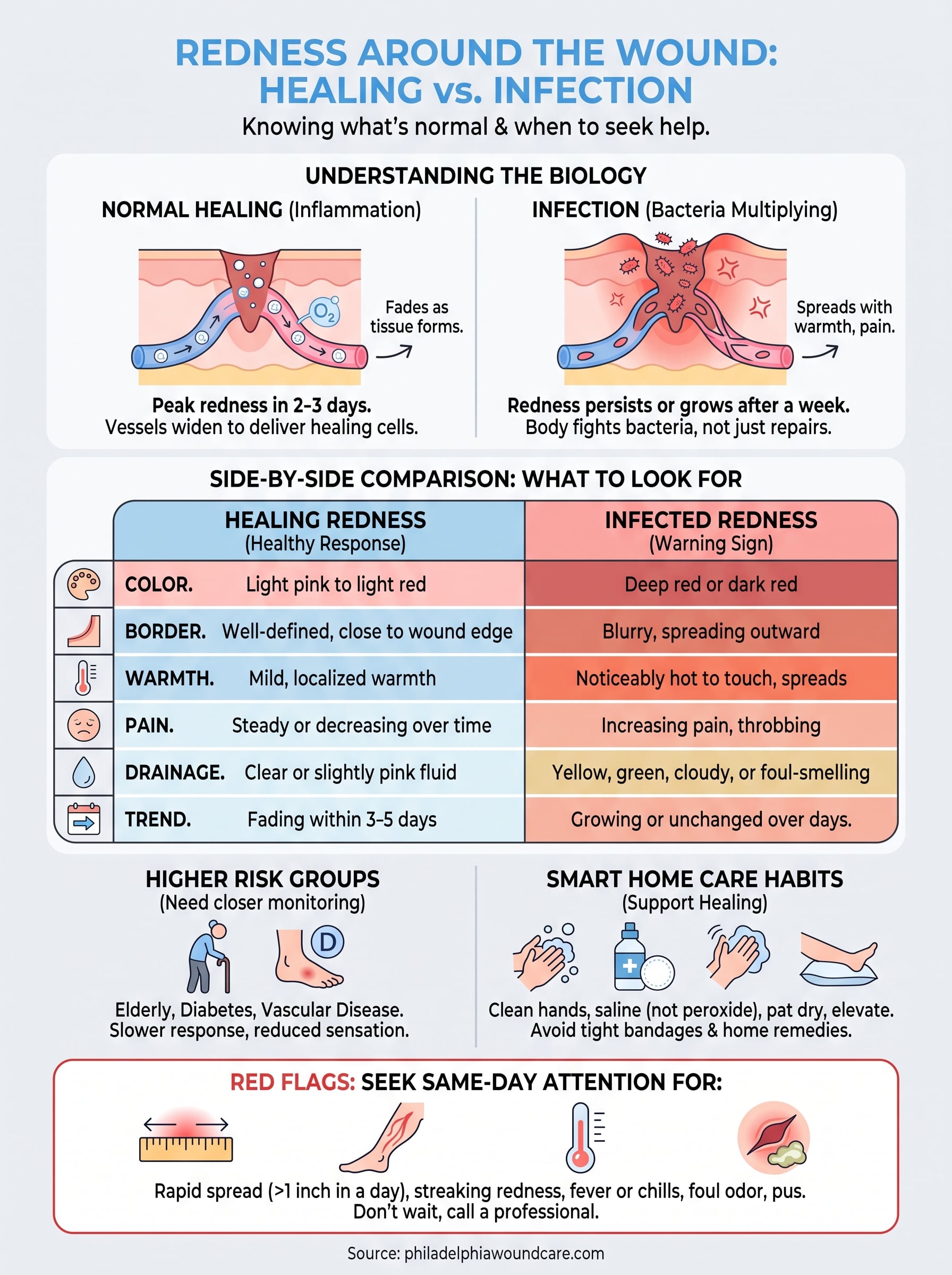
Redness happens because your body is doing exactly what it’s supposed to do after an injury. Blood vessels near the wound widen to deliver more oxygen, white blood cells, and clotting factors to the area, a process called inflammation. This is a normal, necessary part of healing, and it’s why almost every wound looks a little pink or red in the first few days after it forms. The problem is that this same biological response is also the body’s reaction to bacteria multiplying in the tissue, which means healing redness and infected redness can look deceptively similar at a quick glance.
The biology behind wound redness
Understanding what’s happening under the skin helps explain why timing matters so much. In a healthy wound, that inflammatory redness peaks within the first two to three days and then gradually shrinks as new tissue forms. If the redness is still there, or worse, growing, a week or more after the wound appeared, your body is likely fighting something rather than finishing a normal repair job.
Redness that grows instead of fading is your body telling you it’s still fighting, not finishing.
Why some patients face higher stakes
For most healthy adults, a misread patch of redness is an inconvenience. For the patients we see most often, elderly individuals, people with diabetes, and anyone with poor circulation, it can be far more serious. Diabetic patients often have reduced nerve sensation, so they may not feel the pain that would normally alert someone to a worsening infection. Vascular disease slows blood flow to the extremities, which means the immune response that should be containing bacteria arrives late or weak. In these populations, a small area of redness can progress to a limb-threatening infection faster than a family caregiver would expect.
That’s exactly why the CDC’s guidance on wound infection emphasizes catching changes early rather than waiting for obvious signs like fever. A wound that seems to be behaving normally on Monday can look very different by Friday, especially in someone managing diabetes or a chronic vascular condition. Watching redness closely from day one, rather than only when it becomes alarming, gives you and any physician involved a real chance to intervene before a manageable issue becomes a hospital admission.
How to tell if redness means healing or infection
Most caregivers want a quick way to check, not a biology lecture. Look at three things every time you change a dressing: the color, the border, and what’s happening around it. Healing redness stays confined close to the wound edge, feels warm but not hot, and softens in intensity day over day. Infected redness does the opposite. It spreads outward, the border blurs instead of staying crisp, and the skin often feels hotter than the surrounding area.
A side-by-side comparison
Putting these signs next to each other makes the distinction easier to spot in the moment, especially if you’re checking a parent’s wound and second-guessing yourself.
| Sign | Healing | Infection |
|---|---|---|
| Color | Light pink to light red | Deep red or dark red |
| Border | Well-defined, close to wound | Blurry, spreading outward |
| Warmth | Mild | Noticeably hot to touch |
| Pain | Steady or decreasing | Increasing |
| Drainage | Clear or slightly pink | Yellow, green, or foul-smelling |
| Trend over 3-5 days | Fading | Growing or unchanged |
If the redness is winning the argument with time instead of losing it, that’s infection, not healing.
Trend matters more than any single observation. Snap a photo of the wound every day, at the same time, with the same lighting, and compare them side by side. A wound that’s genuinely healing will show visible progress within three to five days. One that’s stuck, or getting angrier looking, is telling you something needs a closer look, not just another day of waiting.
How to care for a red or irritated wound at home
Once you’ve confirmed the redness looks like normal healing, your job is to support that process without disturbing it. Gentle, consistent care matters more than any special product you can buy at the pharmacy. Clean hands before every dressing change, and resist the urge to poke, scrub, or re-bandage more tightly than needed just because the skin looks a little pink.
Daily habits that support healing
A few simple steps, done the same way every day, give your body the best environment to close the wound on its own.
- Wash your hands for at least 20 seconds before touching the dressing.
- Clean the wound with saline or the solution your provider recommended, not hydrogen peroxide or alcohol.
- Pat the surrounding skin dry instead of rubbing it.
- Apply a fresh dressing that keeps the area covered but breathable.
- Elevate the area if it’s a leg or foot wound, to reduce swelling.
A wound heals fastest when you leave it alone between careful, deliberate dressing changes.
What to avoid while redness is present
Certain habits slow healing down even when the redness itself is harmless. Skip tight bandaging, which traps heat and moisture against the skin. Steer clear of home remedies like essential oils, powders, or over-the-counter creams not specifically prescribed for the wound, since they can irritate already-sensitive tissue. Never pick at scabs or peeling skin at the wound edge, even if it looks ready to come off.
Tracking your observations also helps. Note the date, what the redness looked like, and any changes in a small log or your phone, so you have real evidence to share if a provider asks how things have progressed over the past week.
When redness signals the need for professional care
Sometimes the decision isn’t close. Certain signs mean you shouldn’t wait for another dressing change to see if things improve, especially with chronic wounds like diabetic ulcers or pressure sores that already have a harder time healing. Recognizing these signals quickly can be the difference between a same-day treatment and a trip to the emergency room.
Red flags that need same-day attention
Call a provider immediately, rather than waiting overnight, if you notice any of the following:
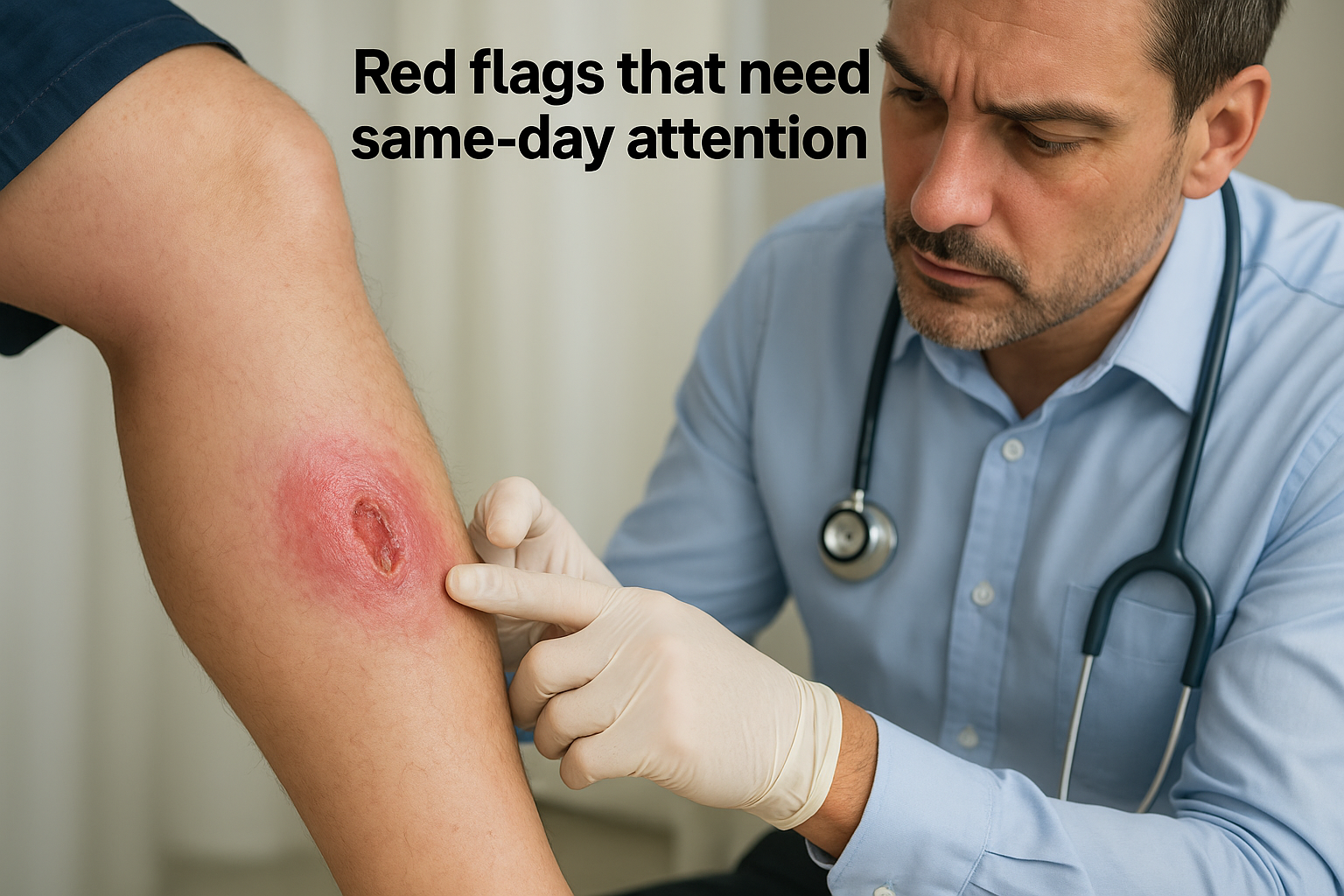
- Redness that has spread more than an inch beyond the wound edge in a day
- Streaking redness that runs up the limb, away from the wound
- A fever, chills, or feeling generally unwell alongside the redness
- Pus, cloudy fluid, or a foul odor coming from the wound
- Skin that feels hot, tight, or shiny around the injury
- Increasing pain instead of gradual improvement
Streaking redness moving away from a wound is never something to watch and wait on.
Why a mobile physician visit beats waiting it out
Getting a homebound or mobility-limited patient to an urgent care clinic often takes hours of coordination, and that delay matters when infection is spreading. A physician-led house call lets a specialist examine the wound at the bedside, order appropriate treatment, and catch complications that a family caregiver isn’t trained to see. If you’re managing a wound that’s stalled, worsening, or simply not behaving the way it should, scheduling a mobile evaluation puts a General Surgeon in front of the patient without the stress of a hospital trip.
Trusting what your wound is telling you
Redness isn’t something you need to fear every time you see it, but it is something worth reading correctly. Mild, fading redness in the days right after an injury usually means your body is doing its job. Spreading, darkening, or worsening redness, especially paired with heat, drainage, or new pain, means the situation has shifted and someone with medical training should take a look.
You don’t have to guess alone, and you shouldn’t have to load an elderly parent into a car for a same-day appointment just to get a straight answer. Trust the pattern you’re seeing over a few days, keep your notes and photos, and act on the red flags rather than waiting them out. When something looks off, reach out to schedule a mobile evaluation and get a physician’s eyes on the wound where your loved one already is.