

BIOPAD Collagen Wound Dressing: Uses, Indications & Tips
Collagen-based dressings have become a go-to option for clinicians managing chronic and complex wounds, and for good reason. Among the available products, the BIOPAD collagen wound dressing stands out as a reliable choice for supporting the body’s natural healing process. At Philadelphia Wound Care, our physician-led mobile practice regularly evaluates and applies advanced wound care products like these at the bedside, whether that’s in a patient’s home, a skilled nursing facility, or a hospice setting.
If you’re a caregiver, facility administrator, or referring physician trying to understand what BIOPAD is, when it’s indicated, and how it’s properly applied, you’re in the right place. Choosing the right dressing matters, it can mean the difference between a wound that stalls and one that progresses toward closure. This is especially true for patients dealing with diabetic ulcers, pressure injuries, or surgical wounds that haven’t responded to standard care.
This article breaks down BIOPAD’s composition, its clinical indications, step-by-step application guidance, and practical tips drawn from hands-on wound management experience. Whether you’re exploring options for a specific patient or building your knowledge of collagen dressing products, you’ll walk away with the details you need to make an informed care decision.
What BIOPAD collagen wound dressing is
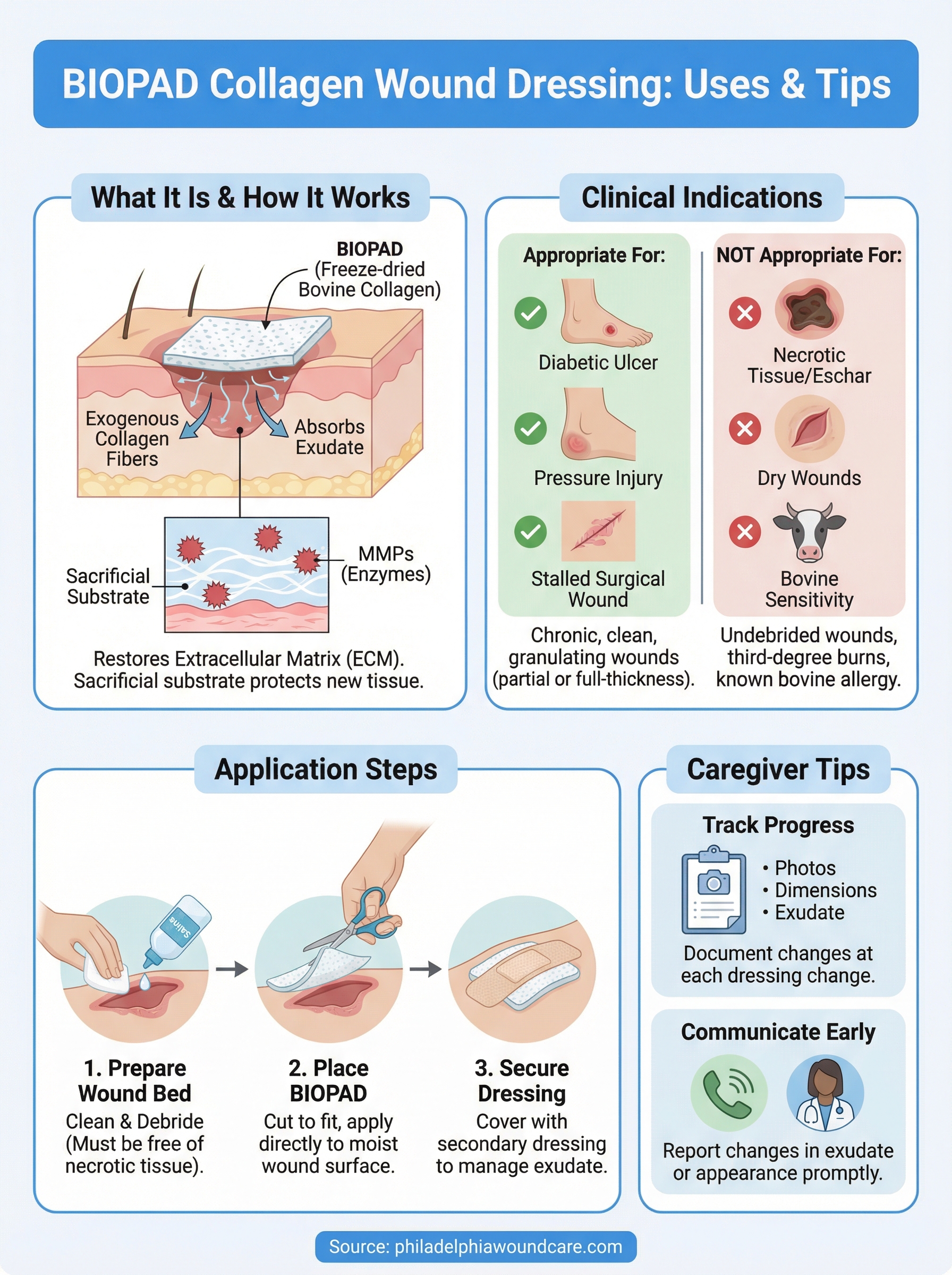
BIOPAD is a freeze-dried collagen pad derived from bovine (cow) sources. It belongs to a class of wound care products that deliver exogenous collagen directly into the wound bed, helping to restore the extracellular matrix (ECM) that chronic wounds often lack. You’ll find it sold in sterile, single-use pads in various sizes to accommodate different wound dimensions.
Composition and form
Made from highly purified, lyophilized (freeze-dried) bovine collagen, this dressing preserves the collagen’s structural integrity through the freeze-drying process. When it contacts wound fluid, it rehydrates and conforms to the wound surface. Each pad is absorbent, drawing exudate into its matrix while maintaining a moist healing environment that supports tissue regeneration.
The BIOPAD collagen wound dressing comes as a flat, off-white pad that stays pliable enough to fit irregular wound shapes. It requires a secondary dressing to hold it in position, and you can cut it to match the specific wound dimensions without affecting its performance. That flexibility makes it a practical choice across a wide range of wound types and locations on the body.
How it works at the wound site
Once applied, BIOPAD supplies native collagen fibers that the wound uses as a scaffold for new tissue growth. Chronic wounds often stall because they produce excessive matrix metalloproteinases (MMPs), which are enzymes that break down the body’s own collagen before healing can progress. The exogenous collagen acts as a sacrificial substrate, absorbing those destructive enzymes and protecting the newly forming tissue underneath.
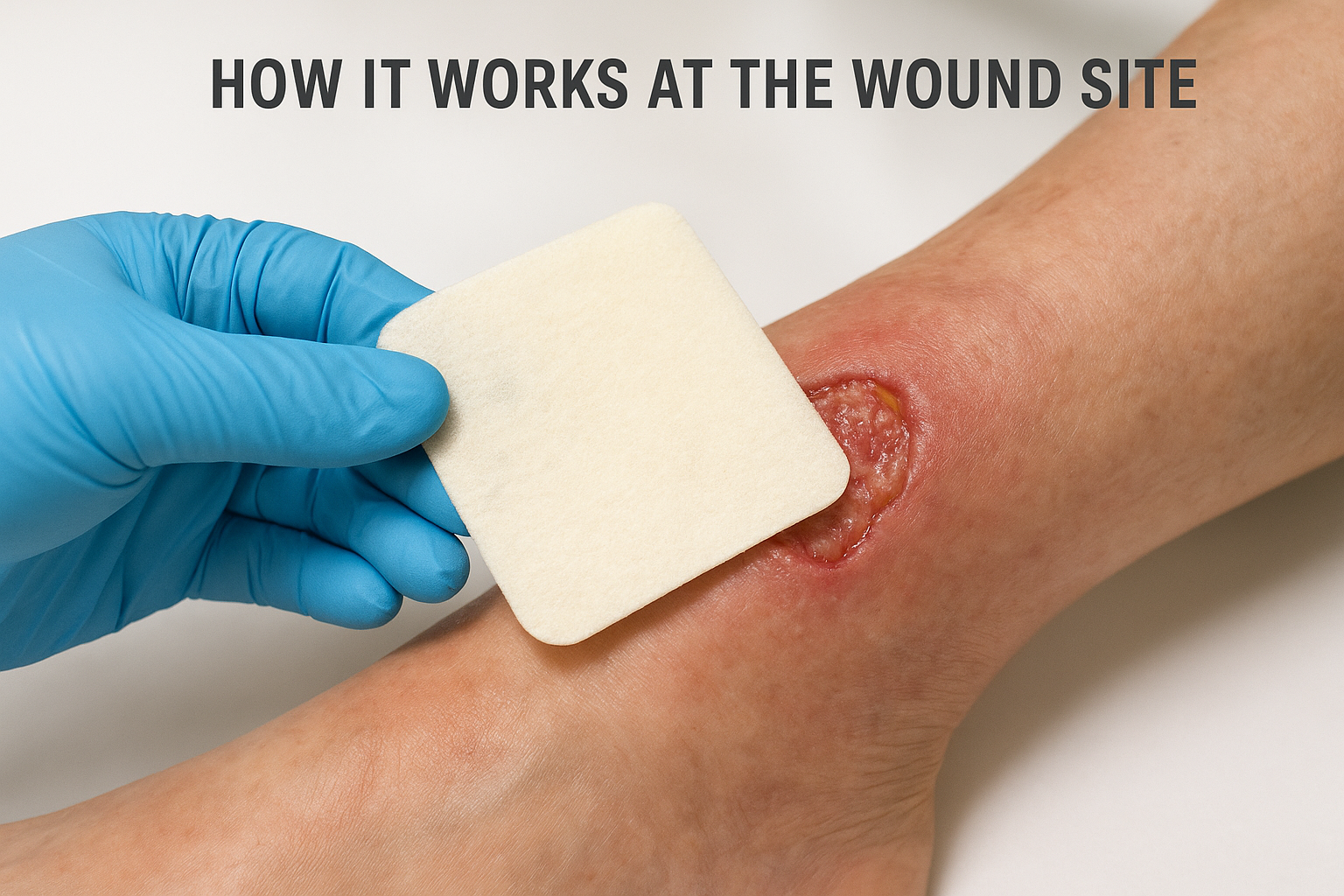
Supplying a collagen scaffold gives the wound bed the structural foundation it needs to move from the inflammatory phase into active proliferation.
This mechanism is what separates collagen dressings from basic wound covers that only shield the surface without contributing to the healing process itself.
Why clinicians use collagen dressings
Collagen dressings address one of the core problems in chronic wound management: the wound environment actively works against healing. Standard moisture-retentive dressings protect the wound surface, but they don’t correct the biochemical imbalance that keeps many wounds stuck in the inflammatory phase.
The role of collagen in the healing cascade
Collagen makes up roughly 80% of the skin’s dry weight, and the body depends on it to rebuild damaged tissue. When a wound becomes chronic, local proteases destroy collagen faster than the body can produce it. Applying a product like the biopad collagen wound dressing gives the wound bed an external collagen source that both supplements the rebuilding process and neutralizes those destructive enzymes.
Collagen dressings don’t just cover a wound; they actively change the wound environment to support tissue repair.
Managing exudate while promoting tissue growth
Moderate-to-heavy exudate is a common challenge in chronic wounds, and uncontrolled drainage delays healing. Collagen pads absorb exudate into their matrix while keeping the wound surface moist enough for cell migration. That dual function is why you’ll see clinicians consistently reach for collagen-based options when a wound plateaus despite conventional care.
When BIOPAD is appropriate and when it is not
Knowing where the biopad collagen wound dressing fits in your treatment plan prevents misuse and sets realistic expectations. This product performs best in specific wound conditions, and applying it outside those conditions won’t accelerate healing.
Wounds that respond well to BIOPAD
Chronic, partial- or full-thickness wounds with a clean, granulating wound bed are the primary candidates. These include diabetic foot ulcers, venous leg ulcers, pressure injuries, and post-surgical wounds that have stalled despite standard care. The wound bed should be free of necrotic tissue before application, because collagen cannot function effectively over dead tissue.
A granulating, moist wound bed is the baseline requirement before you reach for any collagen dressing.
Cases where BIOPAD is not the right choice
You should not apply BIOPAD to wounds that have not been debrided, as eschar or slough blocks the collagen from contacting viable tissue. Third-degree burns typically require a different intervention protocol. Patients with a known sensitivity to bovine-derived materials are also not candidates, since the product’s collagen comes from bovine sources. Additionally, dry wounds with minimal exudate may not provide enough moisture to rehydrate the pad effectively, reducing its therapeutic impact.
How to apply BIOPAD step by step
Correct application directly affects how well the biopad collagen wound dressing performs. Skipping any preparation step reduces the dressing’s contact with viable tissue and limits its therapeutic effect on the wound bed.
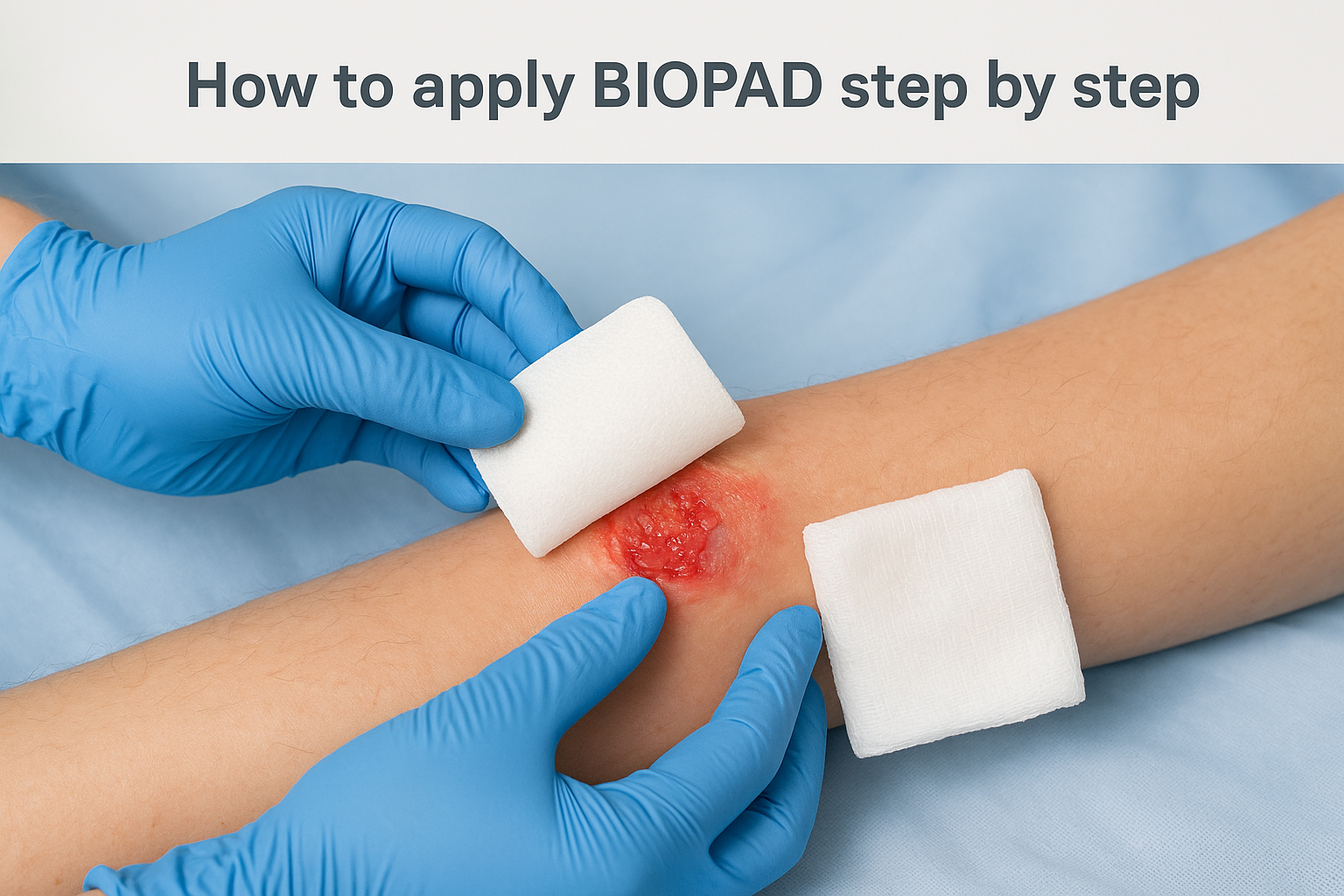
Prepare the wound site
Wound preparation comes before everything else. Clean the wound thoroughly using saline or an approved wound cleanser, then assess the bed for any remaining necrotic tissue or slough. If the wound is not fully debrided, address that before placing any collagen product.
A clean, debrided wound bed is the single most important factor in getting full value from a collagen dressing.
Follow these steps before you open the BIOPAD package:
- Wash hands and put on sterile or clean gloves.
- Irrigate the wound with saline or an approved cleanser.
- Pat the periwound skin dry to protect it from maceration.
- Confirm the wound bed is granulating and free of debris.
Place and secure the dressing
Cut the pad to match the wound dimensions if needed, then lay it directly onto the wound surface. Ensure full contact with the wound bed by gently pressing the edges into place.
Apply a secondary dressing over the BIOPAD to hold it in position and manage exudate that saturates the pad. Change frequency depends on exudate levels but typically ranges from every two to four days.
Practical tips for caregivers and facilities
Managing wound care at home or in a facility setting means staying consistent with both the product and the process. When you use the biopad collagen wound dressing, small habits around documentation and communication have a direct impact on outcomes for the patient.
Track the wound at each dressing change
Photograph the wound at each change and note the dimensions, exudate color, and any changes in the periwound skin. These records help the overseeing physician spot trends early and adjust the treatment plan before a wound deteriorates. Consistent documentation also protects your facility from liability and supports insurance reimbursement for advanced dressings.
Accurate wound tracking turns isolated observations into a clear clinical picture over time.
Keep a simple log that includes:
- Date of dressing change
- Wound dimensions (length, width, depth)
- Exudate volume and character
- Any signs of infection such as increased redness, warmth, or odor
Communicate early with the supervising clinician
Report changes in exudate level or wound appearance promptly rather than waiting for the next scheduled visit. Early communication prevents avoidable setbacks and allows the physician to modify the care plan before a complication develops. A brief phone call or care note can save the patient days of lost healing progress.
Next steps for safer healing
Using the biopad collagen wound dressing correctly is a meaningful step, but it works best as part of a broader, physician-supervised wound care plan. Selecting the right dressing, preparing the wound properly, and adjusting care based on documented progress are all decisions that benefit from expert oversight, especially for patients managing diabetic ulcers, pressure injuries, or post-surgical wounds at home.
If you’re a caregiver, facility coordinator, or referring physician in the Philadelphia area, you don’t have to navigate these decisions alone. Philadelphia Wound Care brings physician-led wound evaluations and advanced treatment directly to the patient, whether that’s a private residence, skilled nursing facility, or assisted living community. You get the same level of clinical oversight you’d expect in a hospital setting, without the burden of transport or discharge delays. Reach out today to schedule a mobile wound care consultation and get a care plan built around your patient’s specific needs.